
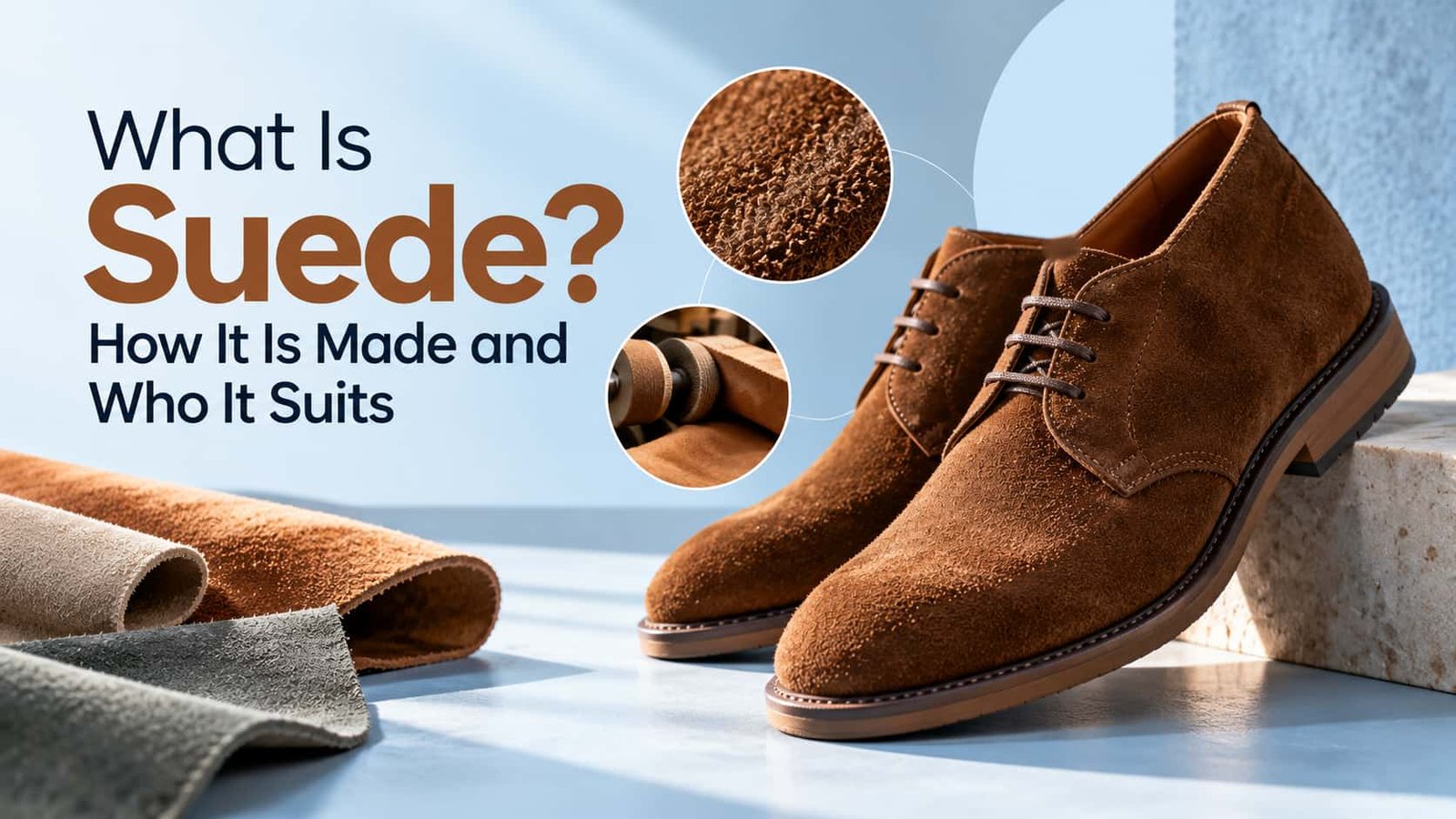
What Is Suede? How It Is Made and Who It Suits
Editorial Guide · Footwear Materials ·
Summarise this suede guide with AI
Open an assistant and submit the prefilled request. The assistant reads the page only after you submit it.
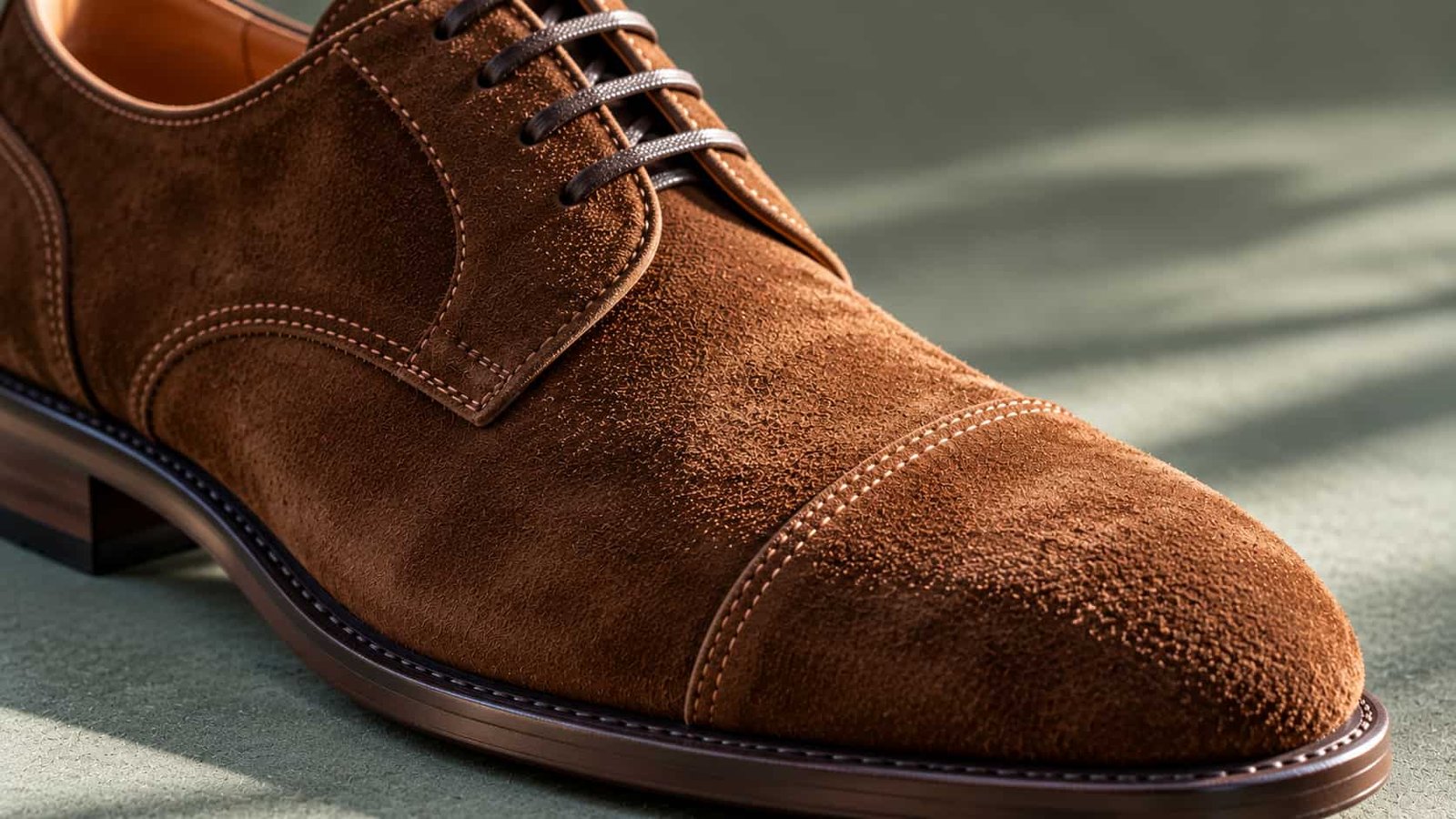
Suede is real leather with a soft, raised surface called the nap. It is usually made from the flesh side or a split layer of the hide, then buffed to lift fine fibres. That texture gives suede its velvety look, but it also makes it absorb water and mark more easily than smooth leather. Suede suits casual and occasion shoes in dry, mild weather and needs gentle, dry care.
Key Takeaways
- Suede is leather. Its character comes from how the surface is buffed, not from a different material.
- The nap decides the look and the care. It creates the soft feel and shading, and it also traps dust and moisture.
- Suede breathes well but soaks up water. Wet suede stains and dries slowly.
- Care means dry methods. Brushing and erasing work. Soaking, oils and heat cause lasting damage.
- Suede suits dry-weather and casual wear best. Rotate it with other pairs for longevity.
What Suede Is
Suede is not a separate animal, a fabric or a synthetic. It is leather whose surface has been processed so that a fine, even layer of fibres stands up across it.
The hide has several layers. The outer grain carries the smooth, pored surface you see on many dress shoes. Beneath it is a thicker fibrous structure, and below that is the flesh side, which is more open. Suede comes from this lower part, either the flesh side itself or a split layer separated during processing.
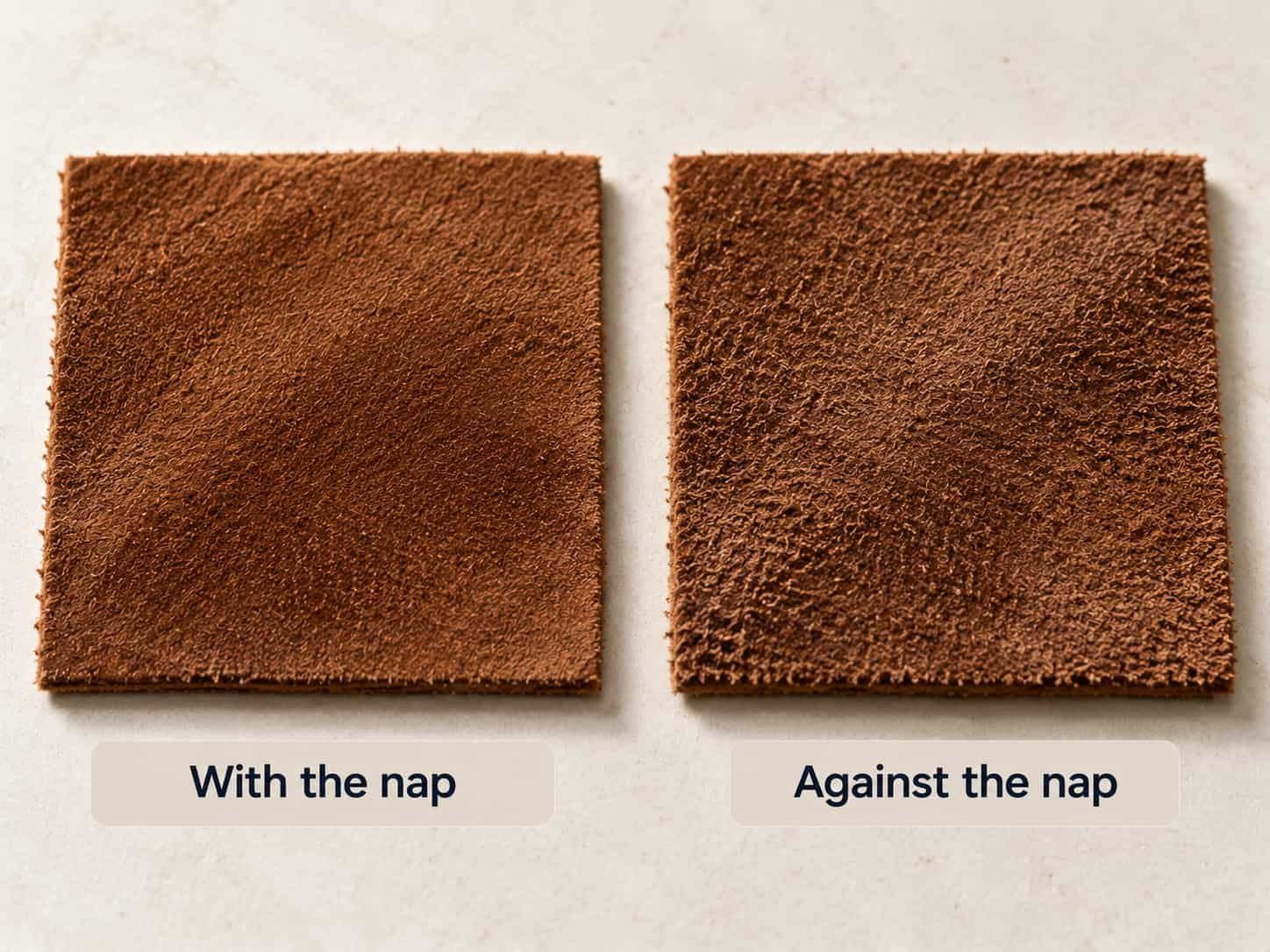
Once the grain is removed from that side, the surface can be buffed. Buffing lifts the fibres into the nap. That nap is what you touch, see and care for every time you wear the shoes.
For a broader view of leather and other footwear materials, see the shoe materials guide.
How Suede Is Made
Methods vary between tanneries. The steps below are a general outline, not a fixed specification.
- Tanning. The hide is treated so its protein fibres are stable and will not decay. Chrome and vegetable tanning are both common, and they produce different feels and colours.
- Splitting. The hide is split to a consistent thickness. The grain is usually kept for smooth leathers, while the flesh side or a lower split becomes suede.
- Buffing. Fine abrasives raise the nap. Light buffing gives a firmer, smoother surface. Heavier buffing gives a softer, deeper, more velvety finish.
- Dyeing. The napped surface is coloured. Dye that penetrates the fibres tends to hold its shade through brushing and wear.
- Finishing and drying. Some suedes receive a water-repellent or other treatment. Careful drying keeps the leather flexible, which matters because heat can damage the nap.
Quality depends on the process and the source layer, not on the word “suede” alone. Carefully made suede can outperform a weak smooth leather, while poorly processed suede can lose its nap within a few wears.
Suede, Nubuck, Faux Suede and Smooth Leather
Suede is most often confused with nubuck, which is also brushed. The difference is the side of the hide that is buffed. Suede comes from the flesh side or a split layer. Nubuck is buffed from the grain side, which gives a finer, closer surface.
Faux suede is a different case altogether. It is usually polyester or microfibre, designed to look like suede, and it is not leather.
| Feature | Suede | Nubuck | Faux Suede | Smooth Leather |
|---|---|---|---|---|
| Made from | Flesh side or split layer | Grain side | Synthetic fibre | Grain layer |
| Surface | Soft, open nap | Fine, close nap | Uniform nap | Smooth, grain visible |
| Breathability | Good | Good | Varies | Varies with finish |
| Water handling | Absorbs water without treatment | Absorbs water, slightly less than suede | Varies by fabric | Usually more resistant |
| Stain handling | Marks easily | Marks less easily | Often easier to wipe | Most forgiving |
| Care effort | High, dry methods | High, dry methods | Low to medium | Medium |
| Typical use | Casual and occasion shoes | Casual and outdoor shoes | Budget and vegan shoes | Dress and everyday shoes |
Nubuck shows marks a little less than suede, because its finer surface is more compact. Faux suede is easier to wipe clean and is often cheaper, but it is not leather and cannot be resoled in the same way. Check the material information on the label to know which you are buying.
For more on the nubuck side of this comparison, read what is nubuck.
How Suede Feels and Wears
Suede feels soft and slightly warm. The nap gives the surface a grip-like texture, and the leather usually flexes easily from the first wear. Thin suede drapes with the foot, while thicker suede holds its shape better.
The look changes with the light. Brushing in one direction creates shading, a lighter or darker tone that depends on the viewing angle. This is normal and shows the nap is intact.
Wear shows first at the vamp, where the foot bends, and at the heel. The nap can flatten or go shiny in these areas. Brushing restores much of the texture, although a worn patch may look slightly different from the rest of the shoe.
Breathability and Comfort
The open nap lets air move through the surface. That is one reason suede suits casual shoes in warm weather. Compared with coated or patent finishes, which seal the surface, suede usually feels less stuffy.
The trade-off is moisture. The same open structure absorbs water and sweat, and damp suede feels heavy and cool. It also dries slowly. Breathability only helps if the shoe can dry out afterwards.
Comfort also depends on the lining, the insole and the fit. A well-fitting suede shoe with a suitable lining can be very comfortable. A poorly fitting one will rub, however soft the leather feels.
How Long Suede Lasts
There is no reliable fixed lifespan for suede. Five factors matter most:
- Quality and thickness. Thicker, well-made suede tends to hold its shape longer.
- Sole construction. A stitched or welted sole can usually be repaired. A glued sole often cannot.
- Use. Daily wear on rough pavement wears suede faster than occasional wear in dry weather.
- Care. Regular brushing and dry storage stop grit grinding into the fibres.
- Rotation. Rotating pairs lets the nap recover between wears.
Worn nap in a small area is usually cosmetic. Deep abrasion or cracking in the leather is much harder to fix.
Water, Weather and Stains
Water is suede’s main weakness. The nap soaks up moisture quickly, and water can leave dark marks or tide lines as it dries. Stains set if they are left, so act quickly and gently.
Some suede is sold with a water-repellent treatment. This can slow water absorption and make stains easier to lift. It does not make suede waterproof, and it wears off with use. Test any product on a hidden area and reapply as the label directs. For wet-weather options and protection methods, see how to waterproof suede shoes.
If suede gets wet:
- Press off surface water with a dry cloth. Do not rub.
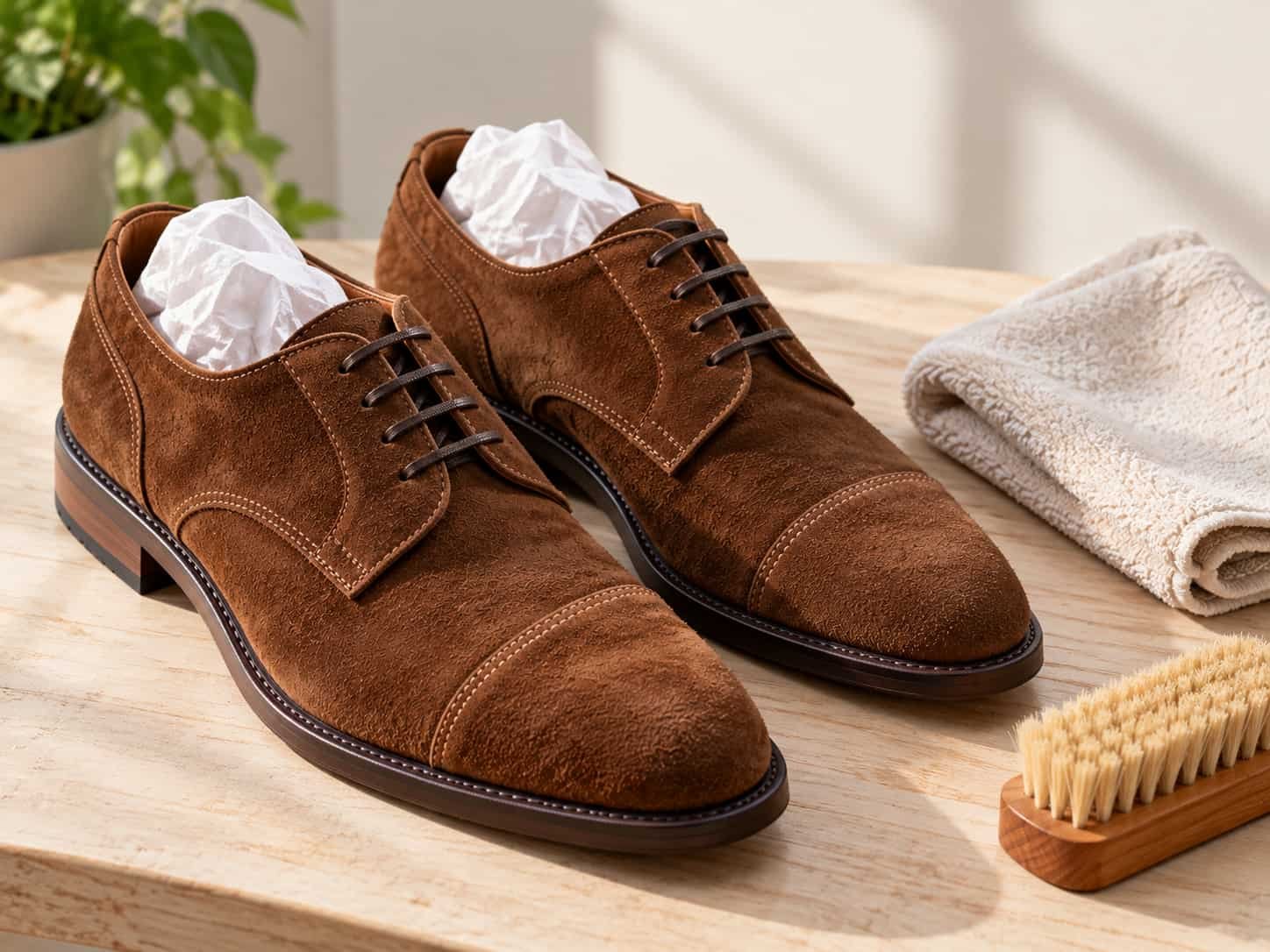
- Stuff the shoes with paper to hold their shape.
- Dry them at room temperature, away from radiators, hair dryers and direct sun.
- Brush the nap once fully dry.
Never dry wet suede with heat. It can set stains, harden the leather and flatten the nap permanently.
Pros and Cons
What suede does well
- Soft, textured look for casual and smart-casual outfits
- Breathes better than many coated finishes
- Often comfortable from the first wear
- Brushing restores its appearance
- Pairs well with denim, chinos and tailored casual clothes
Where suede struggles
- Absorbs water and stains more easily than smooth leather
- Needs regular brushing and careful handling
- Shows oil, marks and shading clearly
- Slow to dry once wet
- Not suited to heavy rain, mud or snow without protection
A Simple Suede Care Routine
Suede care is dry care. The aim is to lift dirt out of the nap without flattening it or pushing it deeper.
- Brush after every wear with a soft brass or nylon suede brush, moving in one direction.
- Erase dry marks with a suede eraser, then brush the area to restore the nap.
- Let mud dry first. Wet mud rubbed in spreads and sets. Brush it off once dry.
- Treat oil quickly. An absorbent powder can draw up fresh oil. Test on a hidden area first.
- Clean only when needed. Use a suede-specific cleaner, follow the label, and let the shoes dry fully before brushing.
- Store dry and cool, ideally with shoe trees and away from direct sunlight.
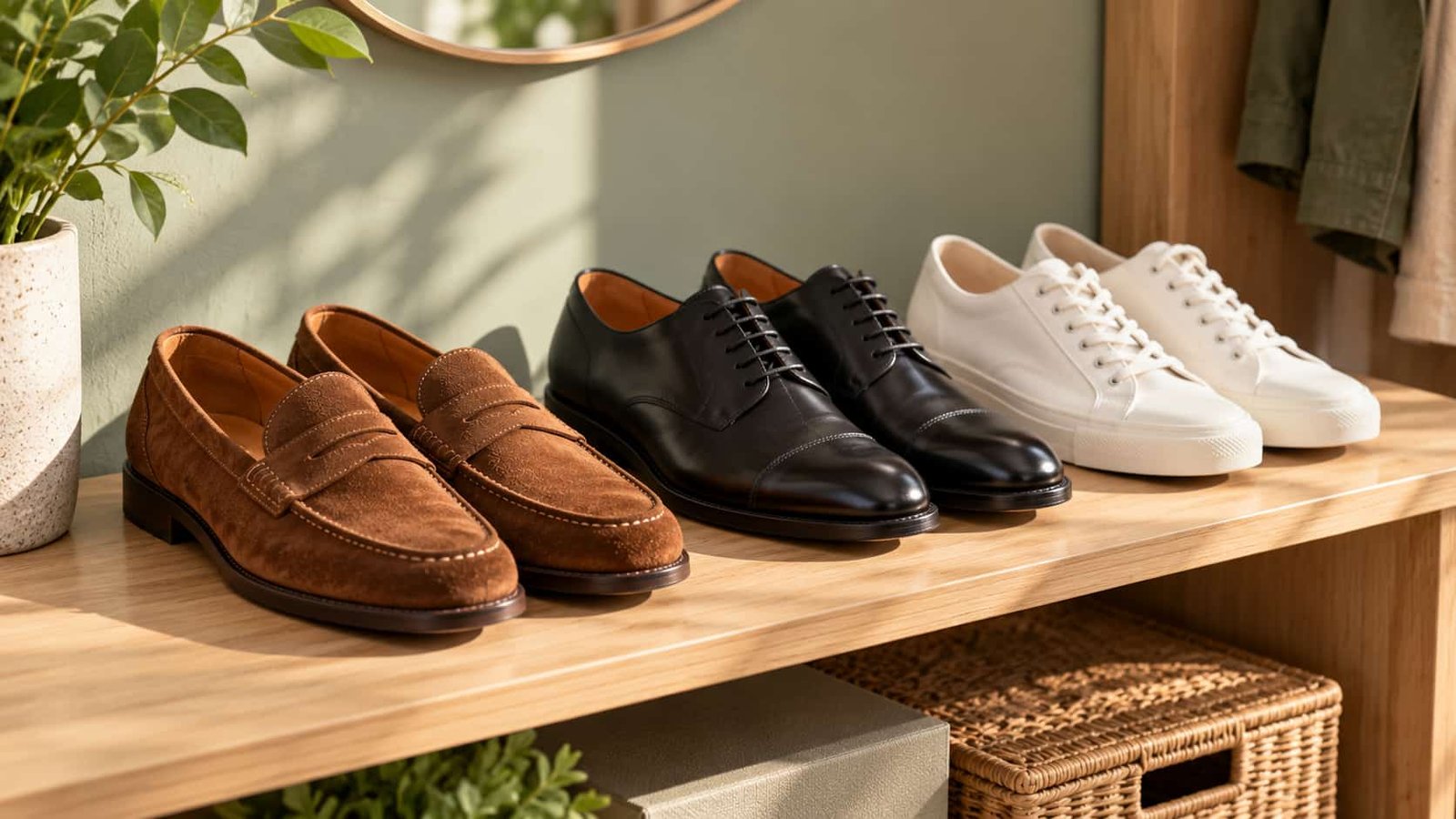
Avoid soaking suede, household detergents, oils, polishes and heat. They stiffen the leather, leave lasting marks and flatten the nap.
For a full routine across materials, see how to clean shoes and maintain them. For suede-specific steps, see how to clean suede shoes.
Who Should Choose Suede
Suede suits certain shoe styles and lifestyles better than others. Here is a practical guide.
Suede suits you well if:
- You want suede loafers, chukka boots or Chelsea boots for smart-casual looks.
- Your weather is mild and mostly dry.
- You can brush and store shoes regularly.
- You have other pairs to rotate with.
Consider another material if:
- You need one pair for daily commuting in rain or mud.
- You need a polished, formal finish. Smooth leather or patent suits occasions better.
- You want very low-maintenance footwear. Smooth leather or faux suede is easier to wipe.
A practical rule: Treat suede as a casual or occasion pair you can keep dry. For daily wear in unpredictable weather, choose smooth or treated leather, or a water-resistant material.
For help narrowing options by style and use, the shoe finder is a practical next step. If you are weighing a more formal finish, see what is patent leather.
Myths Worth Dropping
- “Suede is a different animal.” It is leather from a different layer or side of the hide.
- “Suede cannot be cleaned.” Dry methods work well. Soaking does more harm than most marks.
- “A spray makes suede waterproof.” A treatment repels light moisture but does not make suede waterproof.
- “Brushing damages suede.” Gentle brushing in one direction protects the nap. Hard, stiff brushing can damage the fibres.
Frequently Asked Questions
Is suede real leather?
Yes. Suede is made from animal hide and is classed as leather. The difference is the surface, which has been buffed rather than left smooth. Because it is real leather, it breathes better than most synthetics, though it absorbs water more readily.
What is the difference between suede and nubuck?
Suede is buffed from the flesh side or a split layer. Nubuck is buffed from the grain side, giving a finer, more compact surface that resists marks a little better. Both need dry care. Check the product description to see which one a shoe uses.
Is faux suede the same as suede?
No. Faux suede is a synthetic fabric, usually polyester or microfibre, made to look like suede. It is easier to wipe clean and is often cheaper, but it is not leather and cannot be resoled in the same way.
Is suede good for everyday wear?
It can be, if your everyday life is mostly dry and mild. Suede is comfortable and breathable, but it stains, absorbs water and wears at the flex points. Rotate it with other pairs and brush it regularly. For daily wear in wet or muddy conditions, choose a more water-resistant material.
Can suede shoes get wet?
Yes, but dry them carefully. Press off the water, stuff the shoes with paper, and let them dry at room temperature. Brush the nap once dry. Never use a hair dryer or place wet suede near a heater.
How do I remove stains from suede?
Let dry mud dry fully, then brush or scrape it off. Use a suede eraser for light dry marks. For oil or wet stains, use a suitable suede cleaner and test it on a hidden area first. Avoid soaking and household detergents. The full steps are in how to clean suede shoes.
Does suede breathe?
Generally yes, better than coated leather, because the open nap lets air pass through. Breathability drops when the shoes are wet, and it also depends on the lining and fit.
Is suede suitable for formal occasions?
It can suit smart-casual events, but it is less formal than polished smooth leather or patent. Marks and water stains show more easily, so check the dress code before choosing suede.
Final Thoughts
Suede is leather with a brushed, napped surface, and that surface shapes its look, feel and care. It breathes well and often feels comfortable, but it absorbs water and needs regular dry brushing. It suits casual and occasion shoes in mild, dry weather and works best as part of a rotation.
Before you buy, check the material information, think about where you will wear the shoes, and decide how much care you will give them. The shoe materials guide is a good place to compare materials side by side.
External References
- Suede overview: Wikipedia
- Leather structure and tanning: Encyclopaedia Britannica
- Leather and imitation leather guidelines: U.S. Federal Trade Commission guidelines (16 CFR Part 24)