

What Is Nubuck Leather? Feel, Durability and Weather Resistance
Editorial Guide | Footwear Materials |
Summarise this nubuck guide with AI
Open an assistant and submit the prefilled request. The assistant reads the page only after you submit it.
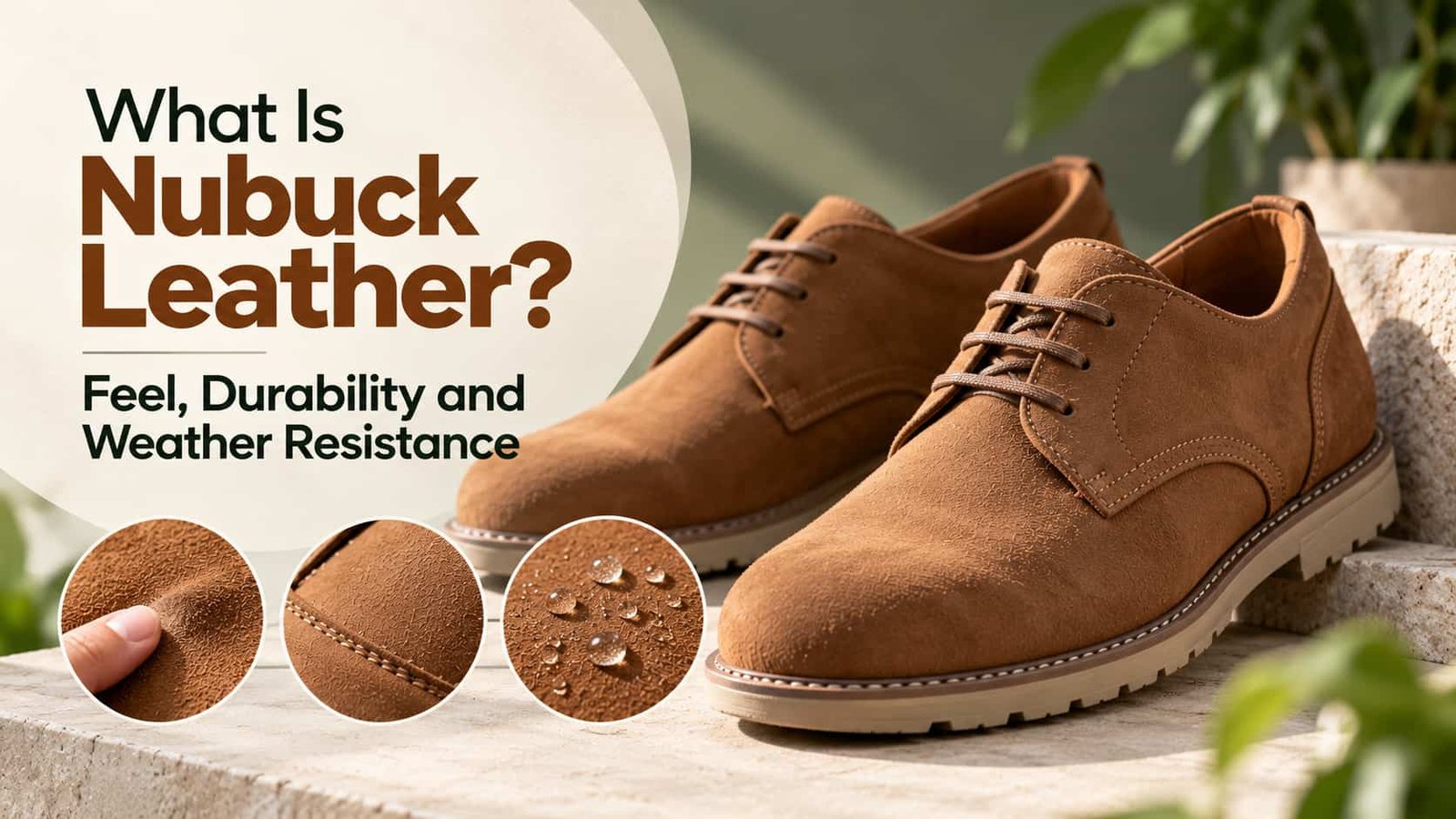
Nubuck is leather that has been sanded on the grain side to raise a fine, velvety nap. It is usually made from full or top-grain hide, so it keeps more structure than suede. That finish feels soft and looks matte, but it marks easily and absorbs water unless treated. Nubuck suits casual boots and shoes in mild conditions, and it needs dry, gentle care.
Key Takeaways
- Nubuck is sanded grain, not suede. Suede comes from the flesh side. Nubuck is buffed from the outer grain, which gives it a finer, more compact surface.
- The fine nap defines the look and feel. It is soft and matte, but it traps dust and moisture.
- It is not waterproof by default. Treatments help, and they wear off.
- Care is dry care. Brushing and erasing work. Soaking, oils and heat cause lasting damage.
- Nubuck suits mild, casual wear. For heavy rain or mud, choose a more water-resistant material.
What Nubuck Is
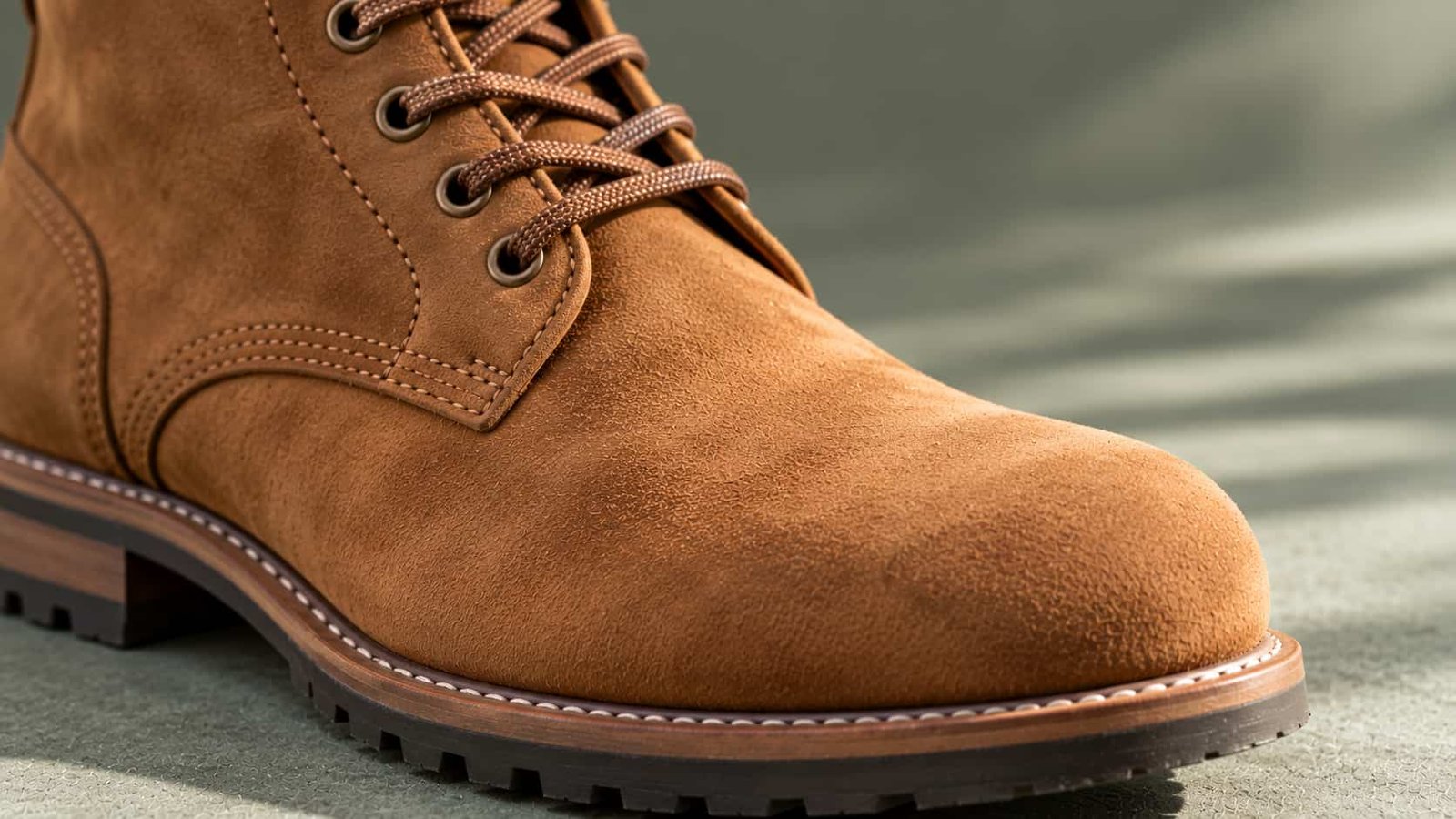
Nubuck is leather. Its distinctive look comes from how its surface is finished. Instead of leaving the grain smooth, the surface is lightly sanded so that the outer layer forms a short, fine nap.
Sanding the grain side is what separates nubuck from suede. Suede is buffed from the flesh side, the less refined underside of the hide, which gives a looser, more open surface. Nubuck starts from the grain, so its surface is closer and more compact. That is why nubuck usually looks more even and handles marks slightly better than suede.
You will often see the word “nubuck” used loosely. Some products labelled nubuck are heavily sanded, while others are lightly finished. The quality depends on the hide, the sanding and the finish, not only on the name.
For the broader picture of leather and other footwear materials, see the shoe materials guide.
How Nubuck Is Made
Methods vary between tanneries, so these steps describe the general process rather than one fixed standard.
- Tanning. The hide is tanned so its fibres are stable and will not decay. Chrome and vegetable tanning are both common, and each produces a different feel and colour.
- Selecting the grain. Makers usually choose a hide with a good grain, since sanding will remove some of the surface. Fewer blemishes mean less sanding is needed.
- Sanding. The grain side is sanded with fine abrasives to raise a short, dense nap. Light sanding gives a tighter, smoother feel. Heavier sanding gives a softer, deeper, more velvety surface.
- Dyeing and finishing. The napped surface is coloured. Some nubucks get a water-repellent or protective treatment, and this differs from maker to maker.
- Drying and conditioning. Careful drying keeps the leather flexible. Heat can harden the surface and damage the nap.
Quality depends on the starting hide and the skill of the sanding. A well-made nubuck can look rich and wear evenly, while a poorly sanded one can feel thin or lose its nap quickly.
Nubuck, Suede and Smooth Leather
Nubuck and suede are often mixed up, because both are brushed. The main difference is the side of the hide that is treated. The table below compares them with smooth leather, the usual alternative.
| Feature | Nubuck | Suede | Smooth leather |
|---|---|---|---|
| Surface source | Grain side, sanded | Flesh side or split layer, buffed | Grain side, not sanded |
| Nap | Fine, close | Soft, open | None; grain visible |
| Feel | Soft, slightly firm | Velvety, looser | Smooth, can be firm |
| Mark resistance | Better than suede | Marks more easily | Most forgiving |
| Water handling | Absorbs water; treatment helps | Absorbs water readily | Usually more resistant |
| Care effort | High, dry methods | High, dry methods | Medium |
| Typical use | Casual boots, outdoor shoes | Casual and occasion shoes | Dress and everyday shoes |
Nubuck is generally more durable on the surface than suede because the sanded grain is more compact. Neither nubuck nor suede is a good choice for constant wet weather. Look at the label and product description to see which material a shoe uses.
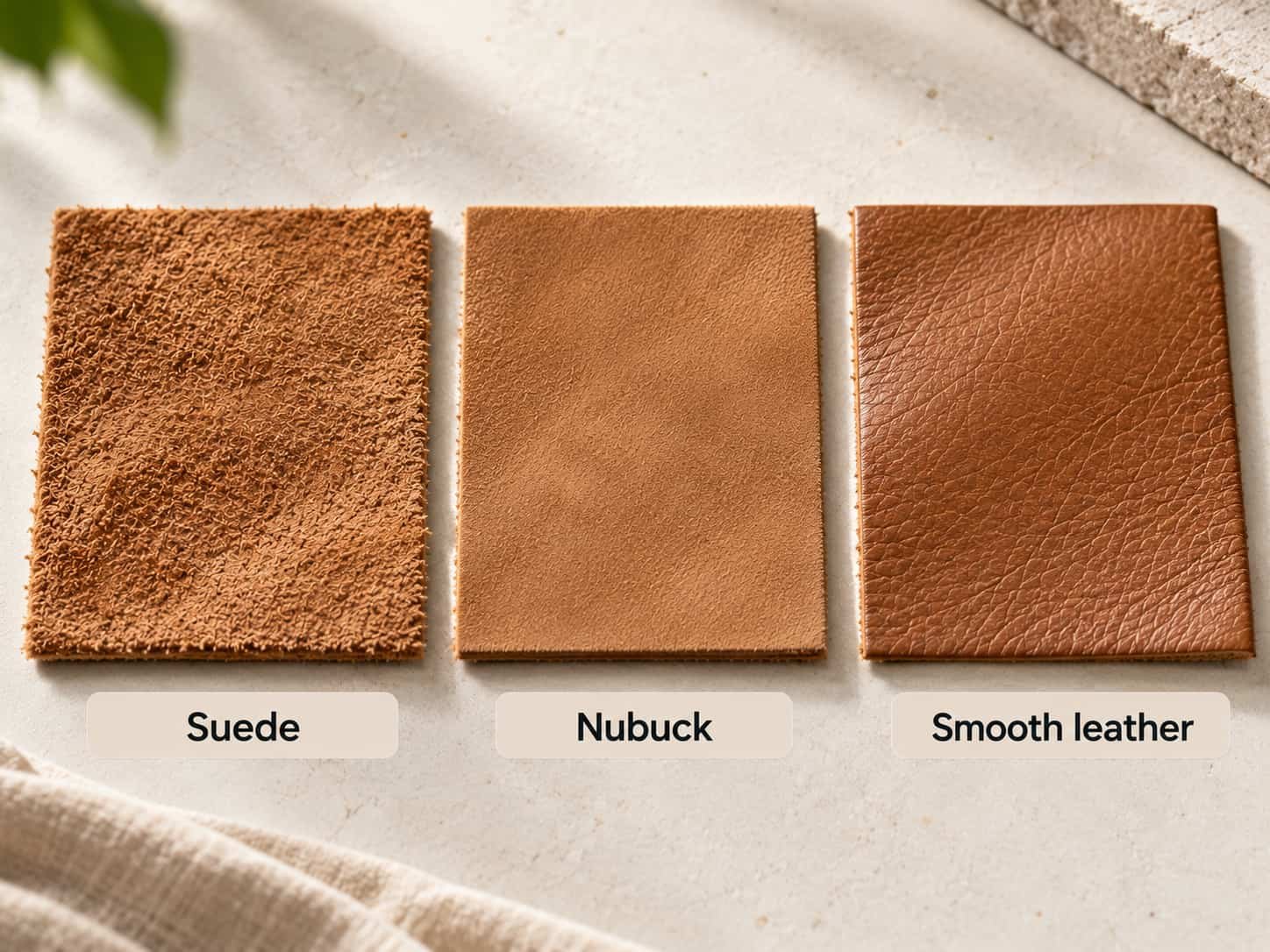
For a fuller head-to-head comparison, see suede vs nubuck. For suede’s own definition, read what is suede.
How Nubuck Feels and Looks
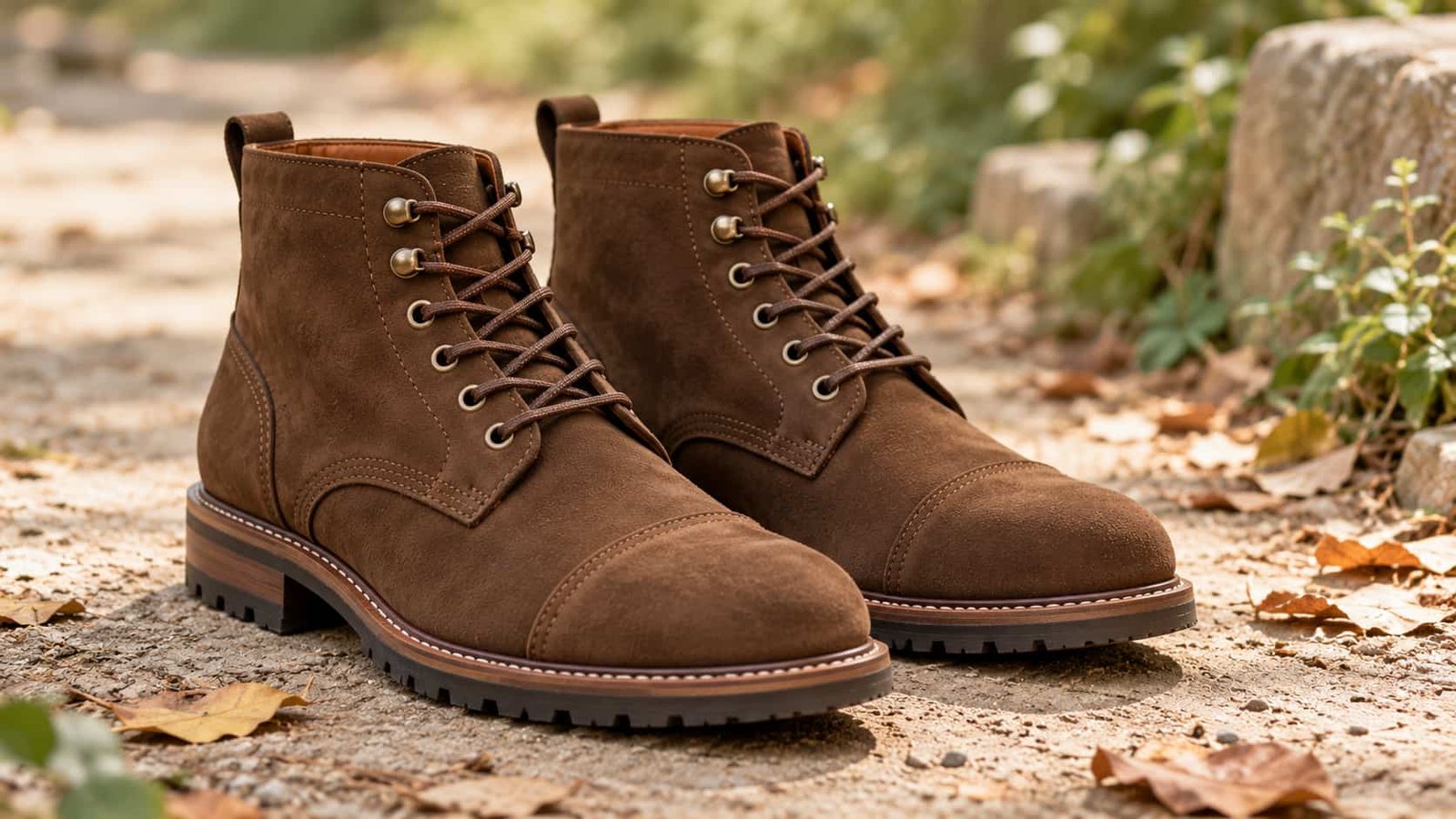
Nubuck feels soft and slightly velvety, with a matte finish. The nap is fine, so the surface feels smoother than suede. It usually flexes easily from the first wear, although thicker nubuck holds its shape better.
The colour can look uneven under some lighting. Brushing in one direction changes the shade, a normal effect of any raised surface. A shoe that looks patchy in one photo may look even in daylight, so view it in good light before buying.
Wear shows first at the vamp, where the foot bends, and at the toe box. The nap can flatten or darken there. Gentle brushing restores much of the texture, though a worn patch may still look slightly different.
How Long Nubuck Lasts
There is no reliable fixed lifespan for nubuck. These factors matter most:
- Hide quality and thickness. Thicker, well-sanded nubuck tends to resist wear better.
- Sole construction. A stitched or welted sole can be repaired. A glued sole usually cannot.
- Use. Daily wear on rough ground wears the nap faster than occasional wear in dry conditions.
- Care. Brushing and dry storage prevent grit from grinding into the surface.
- Rotation. Rotating pairs lets the nap recover between wears.
Worn nap in a small area is usually cosmetic. Deep scuffs or cracks in the leather are harder to fix.
Weather and Water Resistance
Nubuck is not waterproof by default. The fine nap absorbs water, and rain can leave dark marks or stiffness once it dries. Repeated wetting and drying can also dry out the leather over time.
Some nubuck is sold with a water-repellent treatment. Treatments can slow water absorption and make marks easier to lift, but they do not make the leather waterproof, and they wear off with use and cleaning. Test any product on a hidden area and reapply as the label directs.
For wet-weather options and protection methods, see how waterproof shoes work and waterproof vs water resistant shoes.
If nubuck gets wet:
- Press off surface water with a dry cloth. Do not rub.
- Stuff the shoes with paper to hold their shape.
- Dry them at room temperature, away from radiators, hair dryers and direct sun.
- Brush the nap gently once fully dry.
Never dry wet nubuck with heat. It can harden the leather, stain the surface and flatten the nap.
Pros and Cons
What nubuck does well
- Soft, matte look that suits casual and outdoor outfits
- Holds up better to marks than suede
- Breathes reasonably well for a leather
- Brushing restores much of its appearance
- Works well with jeans, chinos and casual boots
Where nubuck struggles
- Absorbs water and needs a treatment for light protection
- Shows marks, oil and shading more than smooth leather
- Needs regular brushing and careful storage
- Slow to dry once wet
- Not suited to constant rain, mud or snow
A Simple Nubuck Care Routine
Nubuck care is dry care. The aim is to lift dirt from the nap without pushing it deeper or flattening it.
- Brush after wear with a soft brass or nylon suede or nubuck brush, moving in one direction.
- Erase dry marks with a suede or nubuck eraser, then brush the area.
- Let mud dry first. Brush it off once dry rather than rubbing wet mud in.
- Treat oil quickly. An absorbent powder can help. Test on a hidden area first.
- Clean only when needed. Use a cleaner made for nubuck, follow the label, and let the shoes dry fully.
- Store dry and cool, ideally with shoe trees and away from direct sunlight.
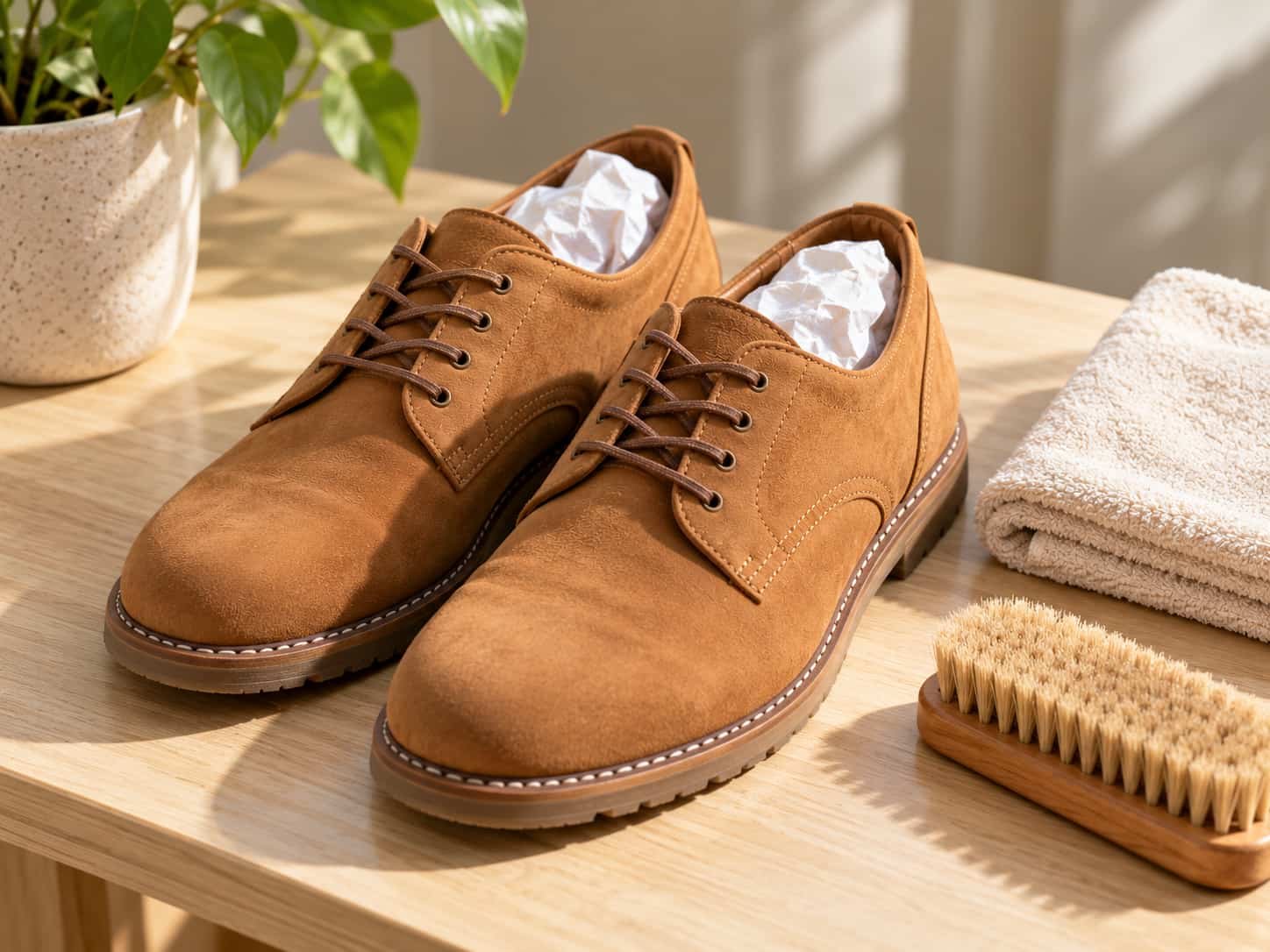
Avoid soaking, household detergents, oils, polishes and heat. They stiffen the leather, leave lasting marks and flatten the nap.
For a full routine across materials, see how to clean shoes and maintain them. For nubuck-specific steps, see how to clean nubuck. If you own Timberland boots, see how to clean Timberlands.
Who Should Choose Nubuck
Nubuck suits certain shoes and lifestyles well. Here is a practical guide.
Nubuck suits you well if:
- You want casual boots or outdoor shoes with a soft, matte look
- Your weather is mostly dry or mild
- You can brush and store your shoes regularly
- You want a surface that handles marks a little better than suede
Consider another material if:
- You need one pair for daily wear in rain or mud
- You want a glossy or formal finish
- You want very low-maintenance shoes
If you are shopping, the shoe finder can help narrow choices by use and style.
Myths Worth Dropping
- “Nubuck is the same as suede.” Both are brushed, but nubuck is sanded from the grain side and suede from the flesh side.
- “Nubuck is waterproof.” It absorbs water unless treated, and treatments wear off.
- “Nubuck cannot be cleaned.” Dry methods work well. Soaking does more harm than most marks.
- “Nubuck always lasts longer than suede.” Its surface is more compact, but construction, care and use matter more.
Frequently Asked Questions
What is nubuck leather?
Nubuck is leather whose grain side has been sanded to create a fine, velvety nap. It is still real leather, and it is generally more compact on the surface than suede. It needs dry care and is best suited to casual and outdoor shoes.
Is nubuck the same as suede?
No. Suede is buffed from the flesh side or a split layer of the hide. Nubuck is sanded from the grain side, so its surface is finer and more compact. Both are brushed leathers and both need dry care.
Is nubuck waterproof?
No. Nubuck absorbs water unless it has been treated, and treatments reduce absorption but do not make the leather waterproof. They also wear off over time. For wet weather, choose a material designed for water.
Is nubuck good quality?
It can be. Quality depends on the starting hide, how evenly it was sanded and how it was finished. Judge a specific pair by its construction and the material information, not by the name alone.
What is nubuck made of?
Nubuck is made from animal hide, usually full-grain or top-grain leather. The grain side is sanded to create the nap. The hide is tanned, dyed and finished in a process that varies by maker.
Does nubuck breathe?
Generally yes, better than coated leather, because the open nap lets some air pass through. Breathability falls when the shoes are wet, and it also depends on the lining and fit.
How do I clean nubuck shoes?
Brush off dry dirt with a soft nubuck or suede brush, and erase dry marks with a suitable eraser. Let mud dry before brushing it off. For stains, use a cleaner made for nubuck and test it on a hidden area first. Avoid soaking and household detergents. Full steps are in how to clean nubuck.
Are nubuck boots more durable than regular leather boots?
Not reliably. Nubuck’s compact surface can resist marks better than suede, but durability depends on the hide, the sole construction and how the boots are used and cared for. A well-made smooth leather boot with a stitched sole can outlast a poorly made nubuck boot.
Final Thoughts
Nubuck is leather with a fine, sanded nap, and that surface shapes its feel, look and care. It is soft and matte, handles marks better than suede, but absorbs water unless treated. It suits casual and outdoor shoes in mostly dry conditions and works best with regular brushing.
Before buying, check the material information, think about the weather you will face, and decide how much care you will give the shoes. For the wider context, start with the shoe materials guide.
External References
- Nubuck overview: https://en.wikipedia.org/wiki/Nubuck
- Leather, hide structure and tanning: https://www.britannica.com/technology/leather
- FTC Guides for Select Leather and Imitation Leather Products (16 CFR Part 24), for leather and imitation-leather labelling: https://www.ecfr.gov/current/title-16/chapter-I/subchapter-B/part-24


