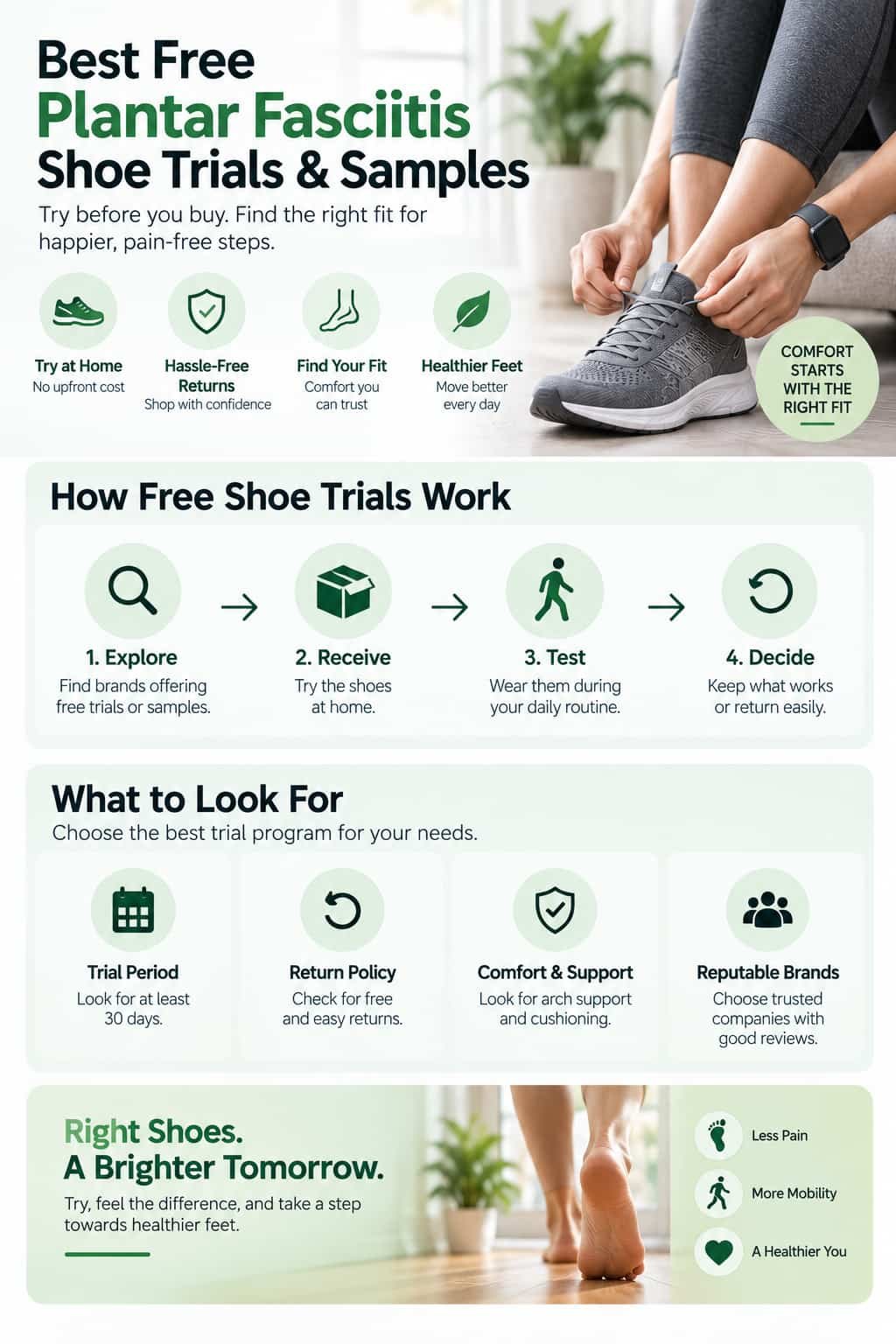
A free plantar fasciitis shoe trial lets you test a supportive shoe at home before committing, but not every shoe qualifies for a free trial. The safest approach is to check the individual Amazon listing for Try Before You Buy or its current return eligibility, then test fit, heel cushioning, arch support, width, and walking comfort before keeping the pair.
✨AI SUMMARY
Get AI Summary
Let AI summarize this free plantar fasciitis shoe trial guide.
What Does a Free Plantar Fasciitis Shoe Trial Actually Mean?
A free plantar fasciitis shoe trial doesn’t necessarily mean the shoes themselves are free. In practice, shoppers should distinguish between an Amazon Try Before You Buy offer, a standard return window, a retailer’s satisfaction guarantee, and a promotional sample program.
Amazon’s Try Before You Buy program has been offered on eligible fashion products, with Amazon describing a 7-day trial period for participating items. Eligibility is product-specific, though, so shoppers should verify the option shown on the actual listing before ordering.
That’s an important distinction when you’re buying shoes for plantar fasciitis. A shoe can look perfect on paper and still feel wrong once you’re walking around your home.
For example, a shoe may have plenty of cushioning but a narrow forefoot. Another may have a comfortable heel but an arch contour that doesn’t match your foot. A return-friendly purchase gives you the chance to identify those problems before you’re stuck with an uncomfortable pair.
Why Does a Trial Matter When You Have Plantar Fasciitis?
Fit is a mechanical issue, not just a comfort preference. The shoe has to work with your foot shape, walking pattern, activity level, and the amount of support or cushioning you actually need.
Research supports the broader role of footwear and orthotic interventions in plantar heel pain, but it doesn’t mean every supportive shoe will work for every person. One randomized trial found that new athletic footwear reduced average 24-hour pain compared with participants’ regular shoes, while adding custom orthoses produced additional benefits in first-step pain.
That’s why I prefer a test-and-return mindset rather than buying a shoe solely because the product page uses words such as “orthopedic,” “arch support,” or “plantar fasciitis.”
A good trial should answer five questions:
Does the heel stay centered?
Does the arch support feel supportive rather than intrusive?
Do your toes have enough room to spread?
Does the cushioning remain comfortable after 30 to 60 minutes?
Can you walk naturally without changing your stride?
If the answer to several of these is no, the shoe isn’t a good fit for you.
What Should You Test During a Plantar Fasciitis Shoe Trial?
1. Heel Fit
Your heel should feel secure without being squeezed.
A loose heel can allow excessive movement, while an overly tight heel counter can create pressure or rubbing. When trying shoes indoors, walk slowly, climb a few stairs if practical, and notice whether your heel lifts excessively.
2. Arch Position
Don’t assume that a higher arch is automatically better.
The arch contour should sit in a useful position beneath your foot rather than pressing aggressively into the middle of your arch. People with flat, medium, and high arches can respond differently to the same shoe.
3. Forefoot Width
The widest part of your foot should have enough room inside the shoe.
A shoe can technically be the correct length while still being too narrow. This is particularly important for shoppers with bunions, wider forefeet, swelling, or high-volume feet.
4. Cushioning
More foam isn’t automatically better.
A very soft midsole can feel wonderful for the first ten minutes but may feel unstable later. A firmer platform can sometimes provide a more predictable base for walking. The right balance depends on your weight, gait, activity, and personal preference.
5. Flex and Transition
Pay attention to how the shoe bends as you walk.
The shoe shouldn’t force your foot into an unnatural movement. Walk at your normal speed and check whether the shoe rolls smoothly from heel strike toward toe-off.
Reviews of Free plantar fasciitis shoe
Which Men’s Shoes Are Best for a Plantar Fasciitis Trial?
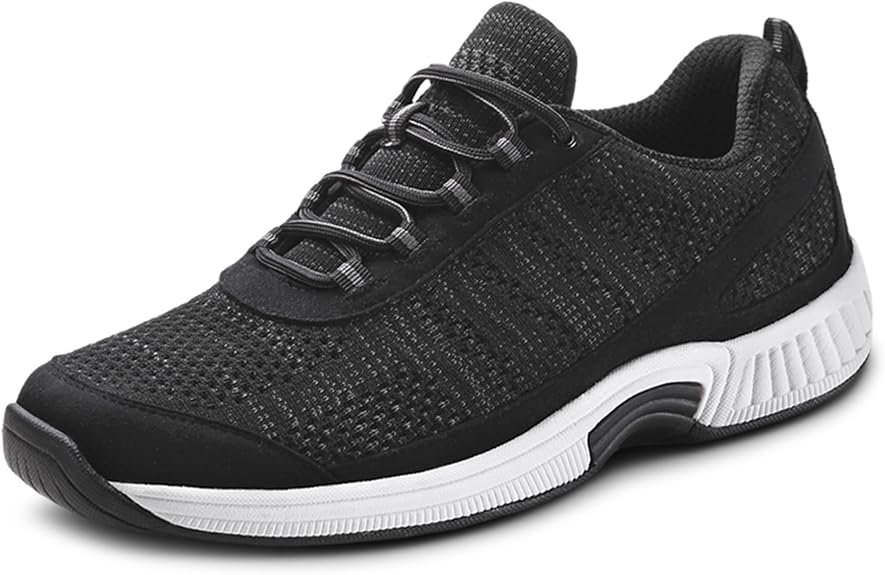
Orthofeet Lava Men’s Walking Shoes
Orthofeet Lava
Best for: Men who need a roomy fit and extra attention to pressure-sensitive areas.
The Orthofeet Lava stands out because its design combines a wide toe box, stretchable upper, anatomical arch support, and padded interior. For someone who spends long periods walking or standing, those construction choices can be more important than simply chasing the softest midsole.
The supplied Amazon listing shows a 4.3/5 rating from 4,400 reviews and a listed price of $84.99 with a 15% discount at the time of the supplied product data.
Why it works: The wide toe box can reduce crowding at the forefoot, while the anatomical insole provides a more structured support platform.
Pros
Wide toe box
Stretchable upper
Anatomical arch support
Padded interior
Designed for walking
Cons
More expensive than budget walking shoes
The structured insole won’t suit everyone
The roomy construction may feel less streamlined
Skip this if: You prefer a conventional narrow athletic-shoe shape or don’t like noticeable underfoot structure.
Best for: Men with wide feet, high insteps, or difficulty getting into conventional shoes.
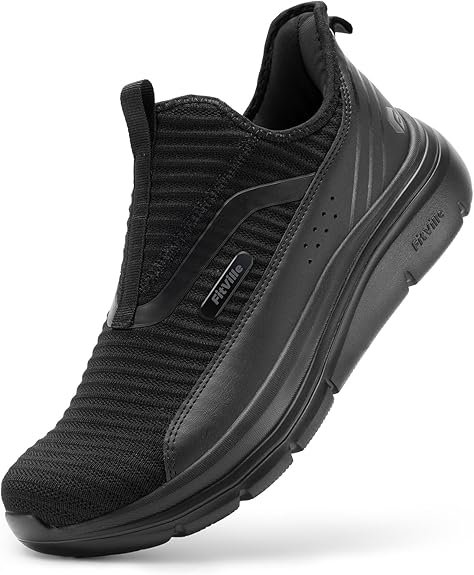
The FitVille Stepease V2 is one of the more practical choices in this group. Its extra-wide construction, high-instep design, stretchable upper, and slip-on format target a very specific problem: getting enough volume around the foot without forcing the toes into a narrow front.
The supplied listing shows 4.4/5 from 2,652 reviews and $39.89 with a 13% discount.
Why it works: The shoe provides a broad platform and more vertical room, which can be useful when standard athletic shoes feel restrictive.
Pros
Extra-wide design
High-instep construction
Slip-on convenience
Cushioned platform
Lower price
Cons
Slip-on designs don’t provide the same adjustability as traditional laces
The wide shape may feel too roomy on narrow feet
Less suitable when you want a performance-running feel
Skip this if: Your feet are narrow or you need highly adjustable lockdown around the heel.
Best for: Men who prioritize maximum cushioning for walking.
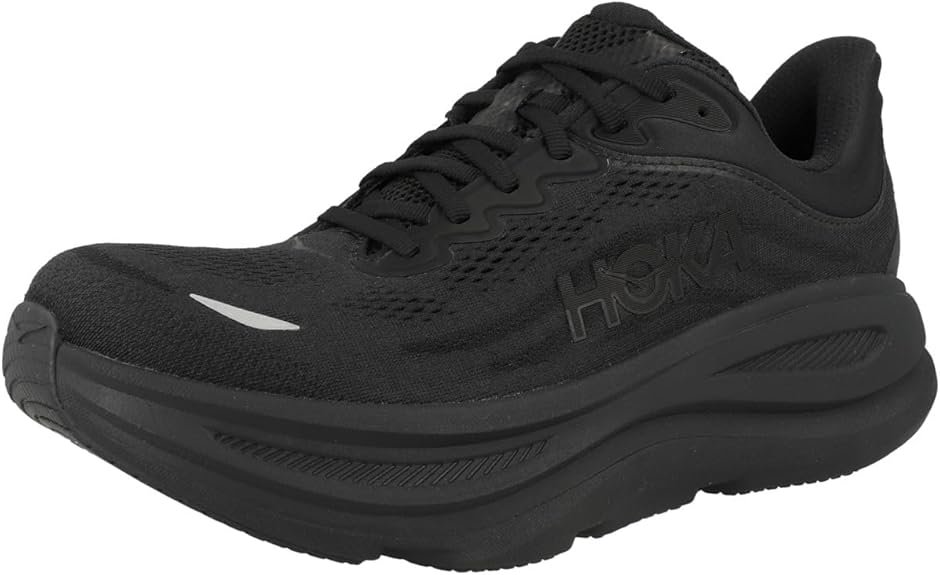
The Bondi 9 is the premium cushioning option in this men’s group. Its EVA midsole and maximum-cushioning design make it attractive for shoppers who dislike the feel of firm, minimalist footwear.
The supplied listing shows 4.5/5 from 3,288 reviews at $174.
The important trial question is whether the large, cushioned platform feels stable under your particular gait. Some people love the soft ride; others prefer a lower-profile shoe that gives them more direct contact with the ground.
Pros
Maximum cushioning
EVA midsole
Breathable mesh
Strong option for road walking
Premium construction
Cons
High price
Bulky compared with traditional walking shoes
Cushioning preference is highly individual
Skip this if: You dislike substantial shoes or prefer a firmer, more connected walking feel.
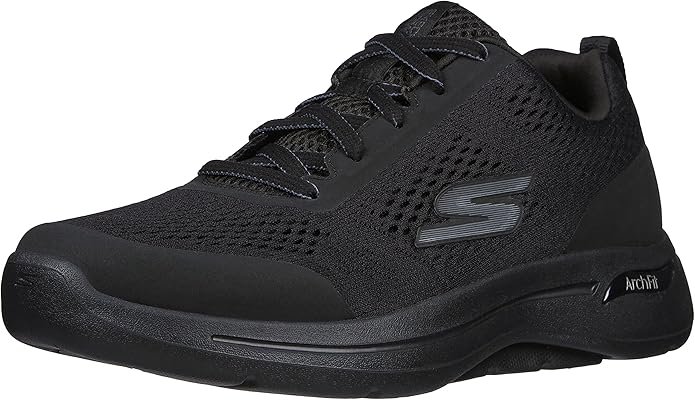
Best for: Men who want everyday walking comfort with structured arch support.
The Skechers Go Walk Arch Fit combines a removable Arch Fit insole system with ULTRA GO cushioning and a breathable mesh upper. The supplied listing reports 4.5/5 from 11,882 reviews and a price of $69.99.
Its removable insole is useful if you already have an orthotic you prefer. The tradeoff is that an arch-support system designed around one foot shape won’t necessarily feel ideal for every arch.
Pros
Large review base
Removable insole
Arch support
Lightweight cushioning
Breathable mesh
Cons
Neutral arch geometry won’t suit everyone
Not water resistant
Mesh upper offers less weather protection
Skip this if: You need a waterproof shoe or have already found that structured arch inserts irritate your foot.
Which Women’s Shoes Are Best for a Plantar Fasciitis Trial?
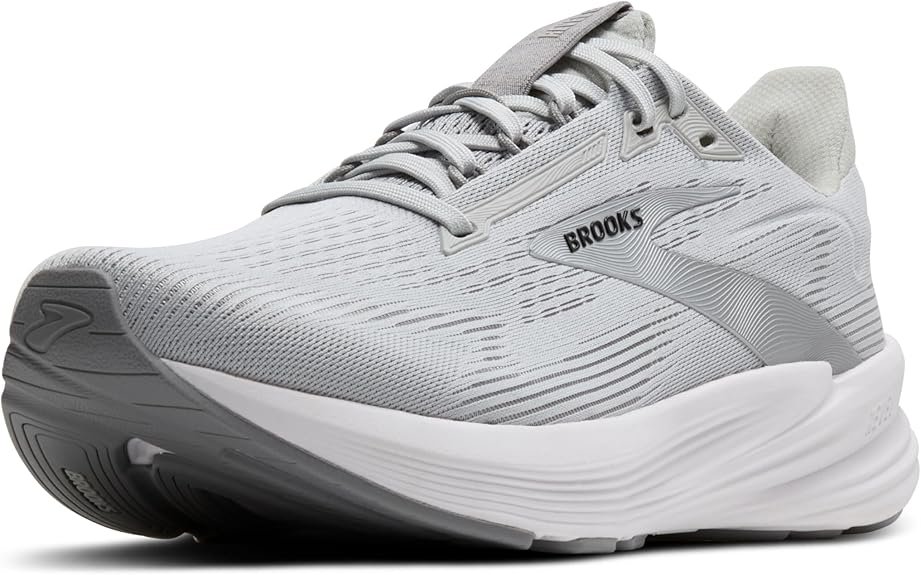
Brooks Women’s Revel 8
Brooks Revel 8
Best for: Women who want a versatile running and walking shoe.
The Revel 8 is one of the strongest all-around choices in the women’s group. It uses DNA LOFT v2 cushioning, an engineered mesh upper, and a RoadTack rubber outsole. The supplied listing also identifies an APMA Seal of Acceptance.
It has a 4.3/5 rating from 2,839 reviews and a supplied price of $68.95 with 31% savings.
Why it works: It provides a balanced athletic-shoe platform without going to the extreme cushioning level of the Bondi 9.
Pros
APMA Seal of Acceptance
DNA LOFT v2 cushioning
Breathable upper
Walking and running versatility
Attractive sale price in supplied data
Cons
Neutral design may not provide enough stability for everyone
Less roomy than dedicated extra-wide footwear
Not waterproof
Skip this if: You know you need a very wide toe box or strong motion-control support.
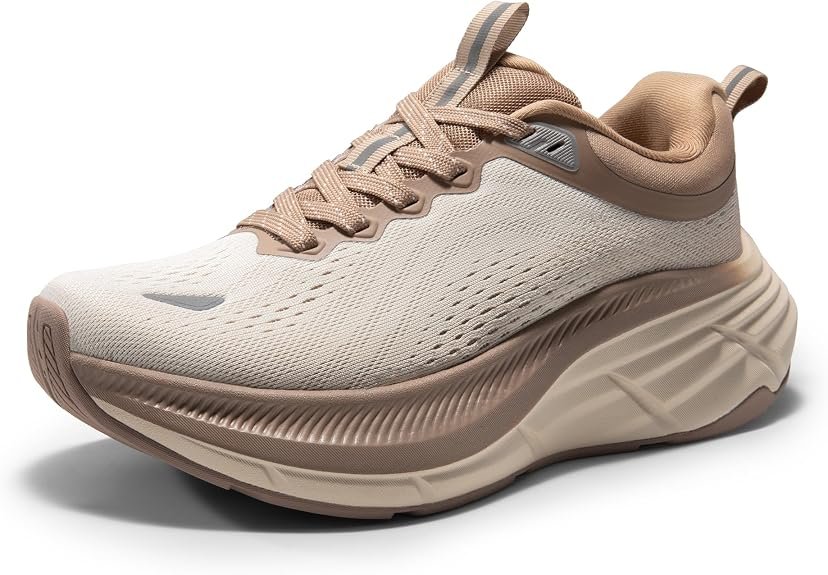
Best for: Women who want cushioning at a lower price.
The NORTIV 8 ActiveBreeze combines a thick EVA midsole, mesh upper, and rubber outsole. The supplied listing shows 4.2/5 from 4,557 reviews and $59.48 with 15% savings.
This is a sensible budget trial candidate because you don’t have to spend $150-plus to find out whether a cushioned walking platform works for your feet.
Pros
Lower price
EVA cushioning
Breathable mesh
Slip-resistant rubber outsole
Suitable for walking and workouts
Cons
Neutral arch design
Less specialized than orthopedic footwear
Fit can matter more than the cushioning specification
Skip this if: Your main issue is severe pressure from a narrow toe box or you need a highly structured orthotic-style shoe.
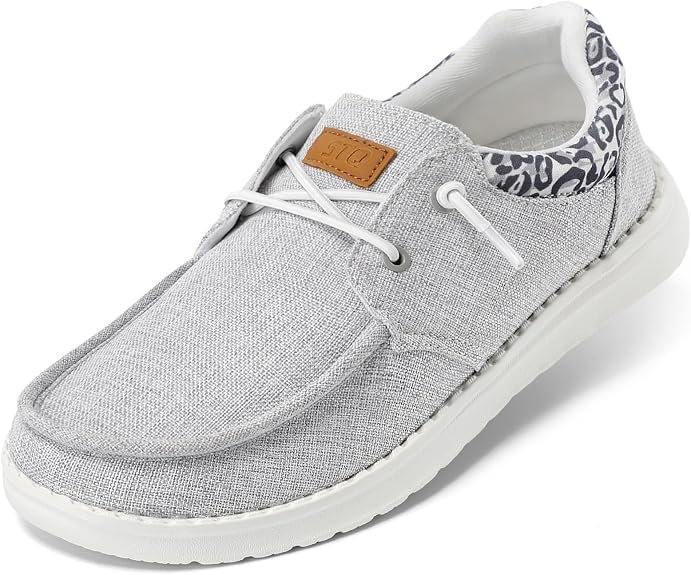
Best for: Women who want casual everyday footwear rather than a traditional running shoe.
The STQ shoe uses a lightweight canvas upper, removable arch-support insoles, and a flexible outsole. The supplied listing shows 4.4/5 from 5,377 reviews and $35.99 with 10% savings.
Its biggest attraction is convenience. Someone who spends the day moving between an office, classroom, stores, and a commute may prefer this style over a bulky athletic shoe.
Pros
Lightweight
Removable arch support
Casual styling
Low price
Designed for standing and walking
Cons
Canvas isn’t ideal for wet weather
Less protective than an athletic shoe
Casual construction may not suit long-distance walking
Skip this if: You need maximum stability for long walks or outdoor exercise.
Best for: Women who want a casual sneaker with cushioning and a slightly more polished appearance.
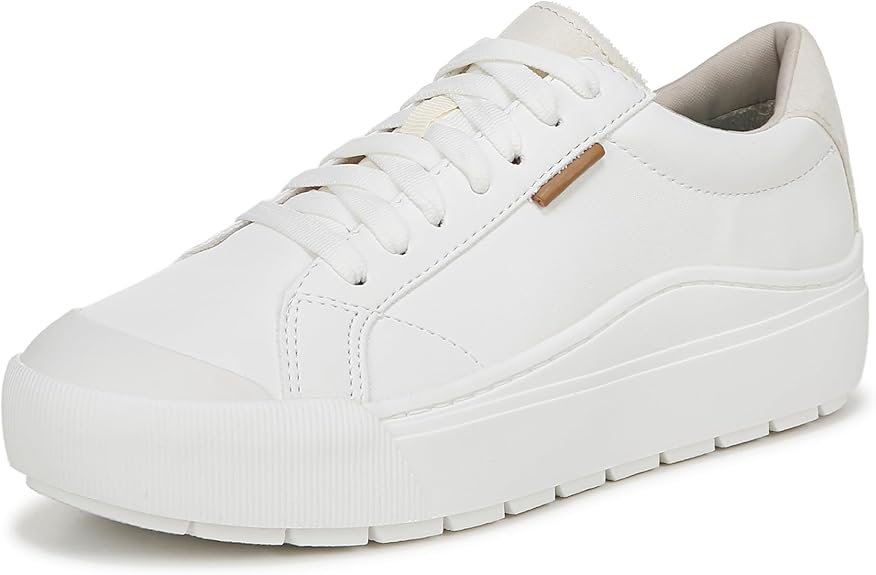
The Time Off uses an anatomical cushioning system, arch support, and a roughly 1-inch platform. It also comes in wide-width sizing according to the supplied listing.
The listing shows 4.1/5 from 10,121 reviews and $75 with 32% savings.
Pros
Casual appearance
Wide-width availability
Arch support
Cushioned platform
Large review base
Cons
Moderate rather than maximum cushioning
Faux-leather construction isn’t as breathable as mesh
Platform geometry won’t appeal to everyone
Skip this if: Your priority is high-mileage running or maximum athletic performance.
What Should You Look for Before Ordering a Trial Pair?
Check the Return or Trial Label First
Before clicking Buy Now, look for the current return information attached to the exact listing and selected size/color.
Don’t assume that because one shoe on Amazon has a trial or return option, every size, seller, color, or variation has identical terms.
For eligible Amazon Try Before You Buy items, the program has used a 7-day trial period. Amazon’s program information also indicates that returned items are subject to applicable Fashion return conditions.
Measure Both Feet
Measure your feet at the end of the day when they’re likely to be at their largest.
Record:
Heel-to-toe length
Widest forefoot measurement
Arch/instep volume
Left-versus-right differences
Use the manufacturer’s sizing chart rather than assuming your normal size will work.
Don’t Judge the Shoe in the First Five Minutes
This is one of the most common mistakes I see.
A shoe can feel excellent while you’re standing still and become irritating after 30 minutes of walking.
Test it indoors on a clean floor so that you can preserve the possibility of a return under the applicable policy.
Is a More Expensive Plantar Fasciitis Shoe Better?
Not necessarily.
The HOKA Bondi 9 is substantially more expensive than the FitVille or NORTIV 8 options in the supplied data, but price alone doesn’t determine whether a shoe will reduce discomfort.
Research on orthoses illustrates the same basic point: prefabricated devices can provide useful short-term benefits, and custom devices aren’t automatically superior in every comparison.
For a buyer, that means fit and mechanical compatibility should come before brand prestige.
Someone in Dallas who spends eight hours on concrete may prioritize cushioning and shock management. A teacher in Chicago may care more about stable walking and a secure heel. A retail employee in Seattle may need a combination of cushioning, fit, and traction.
🛍️ Before You Buy: Make Your Plantar Fasciitis Shoe Trial Count
A shoe can feel comfortable for five minutes in your living room and still cause heel pain after a full day. Use these simple checks during the trial or return window to decide whether the shoe actually works for your feet.
👣
1. Check Heel Comfort
Walk on a firm surface for 10–15 minutes. Look for excessive heel impact, slipping, or pressure around the painful area.
📏
2. Check the Fit
Your toes shouldn’t touch the front. Leave roughly a thumb’s width in front of the longest toe and make sure the heel stays secure.
🦶
3. Test the Arch
The arch support should feel supportive without creating a painful pressure point. This matters especially if you have flat or high arches.
🚶
4. Test Real Walking
Don’t judge a shoe only while standing. Walk, climb stairs, and spend time moving around to see how your heel responds.
🔄
5. Review the Return Policy
Check the retailer’s trial period, return deadline, condition requirements, shipping rules, and refund terms before wearing the shoes outdoors.
⏱️
6. Give Them Time
Start with shorter walks and gradually increase wear. A comfortable first impression matters, but so does how the shoe feels after several hours.
💡 Expert tip:
Keep the original box, tags, packaging, and proof of purchase until you’re confident the shoes work for you. A generous return window is only useful if you can actually meet its conditions.
What About Plantar Fasciitis Shoes Under $50?
If you’re trying to keep the cost low, don’t assume you need to buy the cheapest possible shoe.
Sometimes, but only when the shoe has enough interior volume and the orthotic matches your foot.
Research has found that foot orthoses can provide short-term improvements in function and may reduce pain, although results vary and long-term benefits aren’t guaranteed.
A separate randomized trial found that custom foot orthoses combined with new athletic footwear improved first-step pain more than new footwear alone over 12 weeks.
If you’re considering an orthotic, look for a shoe with:
Men’s vs Women’s Plantar Fasciitis Shoes: What Changes?
The biggest difference isn’t the color or marketing category. It’s last shape, width, volume, and available sizing.
Women’s shoes often use different lasts and proportions than men’s shoes. A woman with a broad forefoot may need a wide-width model even when the length is correct. A man with a narrow foot may find some men’s “comfort” shoes excessively roomy.
That’s why I wouldn’t automatically recommend the same model to a husband and wife simply because they have similar heel pain.
For Men
Prioritize:
Width and instep volume
Secure heel fit
Cushioning appropriate to your activity
Removable insoles when using orthotics
Durable outsole construction
For Women
Pay particular attention to:
Forefoot width
Toe-box shape
Heel slippage
Arch contour
Platform stability
Whether the shoe works with your everyday wardrobe
Step 1: Stand still for two minutes. Check for immediate pressure under the arch, heel, and forefoot.
Step 2: Walk normally for 10 minutes. Don’t exaggerate your stride.
Step 3: Walk stairs. Notice heel security and whether the shoe feels stable.
Step 4: Walk for another 20 to 30 minutes. This is where hot spots and pressure points often appear.
Step 5: Remove the shoes and inspect your feet. Look for redness, rubbing, pressure marks, or irritated areas.
A shoe that fails the test shouldn’t become your “maybe I’ll get used to it” pair.
How Important Is the Heel-to-Toe Drop?
Heel-to-toe drop describes the height difference between the heel and forefoot of the midsole.
It can influence how your foot and ankle move, but there isn’t one universally correct drop for plantar fasciitis.
When trialing a shoe, pay more attention to whether the geometry feels natural and whether it changes your walking pattern. A shoe that feels comfortable under the heel but forces an awkward transition through the forefoot may not be the right long-term choice.
What If You Have Flat Feet or High Arches?
Match the shoe’s support to your foot rather than choosing the highest arch support available.
For flat feet, a stable platform and appropriately positioned support may feel better than a soft, collapsing shoe. For high arches, cushioning and pressure distribution may become more important.
The goal is not to push your arch into an aggressive shape. The goal is to provide a comfortable platform that works with your natural foot position.
What If You Have Wide Feet?
Start with width, not length.
If the shoe is too narrow, many shoppers compensate by buying a longer size. That can create a poor heel fit while still leaving the forefoot uncomfortable.
The FitVille men’s model is particularly relevant here because the supplied product information specifically highlights its extra-wide and high-instep construction.
For women, the Dr. Scholl’s Time Off is notable because the supplied listing identifies wide-width sizing.
Can You Wear Plantar Fasciitis Shoes All Day?
You can, provided the shoe remains comfortable and doesn’t create new pressure points.
A supportive shoe shouldn’t require you to “push through” significant discomfort.
For someone working a long shift at a hospital system in Houston, standing on hard floors for eight to twelve hours can expose weaknesses that aren’t obvious during a short shopping trip.
For that type of use, test the shoes for progressively longer periods rather than immediately wearing a new pair for an entire workday.
Do Plantar Fasciitis Shoes Need a Break-In Period?
A short adjustment period can be normal, but significant pain isn’t something you should force yourself through.
A new shoe can feel different because the foam density, upper tension, heel counter, and arch geometry aren’t identical to your old pair.
If you notice mild unfamiliarity that improves quickly, gradual wear may help. If you develop sharp pain, persistent rubbing, numbness, or worsening heel symptoms, stop testing the shoe.
When Should You Return the Shoes?
Return or exchange the shoes when the problem is clearly related to fit or construction.
Common warning signs include:
Persistent heel slipping
Toes touching the front
Toes pressing against the sides
Strong arch pressure
Blisters
Numbness
Repeated rubbing
Pain that gets worse during wear
Instability while walking
Don’t keep an unsuitable shoe simply because you like its appearance.
Real-World Plantar Fasciitis Shoe Trial Scenarios
Sarah in Chicago
Sarah works near the Loop and spends much of her day walking between public transit, the office, and errands. She likes a sleek casual sneaker but discovers that her first pair creates pressure across the forefoot.
A trial lets her compare a standard-width athletic shoe with a wider model before committing.
Michael in Texas
Michael works long shifts and spends much of his day on concrete floors. His first priority is cushioning, but after testing a highly cushioned shoe he realizes that he prefers a slightly firmer, more stable platform.
That’s a useful trial result. The purpose isn’t to prove that one shoe is universally best. It’s to identify what works for his feet.
Emily in Seattle
Emily regularly walks outdoors in damp weather. Breathable mesh is comfortable indoors, but weather resistance becomes a bigger concern during her commute.
Her trial should therefore include the actual socks she normally wears and realistic walking conditions where the applicable return rules allow it.
Product Comparison Table
Product
Price*
Rating
Key Feature
Width/Volume
Best For
Reviews
Orthofeet Lava Men’s
$84.99
4.3
Anatomical arch support
Wide toe box
Men’s support
4,400
FitVille Men’s Stepease V2
$39.89
4.4
Extra-wide design
Extra wide/high instep
Men’s wide feet
2,652
HOKA Bondi 9 Men’s
$174.00
4.5
Maximum cushioning
Check selected size
Men’s cushioning
3,288
Skechers Go Walk Arch Fit Men’s
$69.99
4.5
Arch Fit insole
Check selected size
Everyday walking
11,882
Brooks Revel 8 Women’s
$68.95
4.3
DNA LOFT v2
Check selected size
Women’s walking/running
2,839
NORTIV 8 Women’s
$59.48
4.2
Thick EVA midsole
Standard fit
Budget walking
4,557
STQ Women’s Loafer
$35.99
4.4
Removable arch support
Check selected size
Casual standing
5,377
Dr. Scholl’s Time Off
$75.00
4.1
Cushioned platform
Wide options available
Casual walking
10,121
*Prices and discounts reflect the supplied Amazon product data and can change. Always verify the current Amazon listing before purchase.
How Do These Shoes Compare at a Glance?
Need
Best Choice
Men’s wide feet
FitVille Stepease V2
Men’s structured support
Orthofeet Lava
Maximum men’s cushioning
HOKA Bondi 9
Men’s everyday walking
Skechers Go Walk Arch Fit
Women’s athletic option
Brooks Revel 8
Women’s budget option
NORTIV 8
Women’s casual comfort
STQ Loafer
Women’s wide casual option
Dr. Scholl’s Time Off
Where Should You Start If You Want the Safest Trial?
Start with fit rather than brand.
If you have wide feet, begin with FitVille or a wide-width option. If you want a structured orthopedic-style shoe, consider Orthofeet. If cushioning is your main concern, the Bondi 9 is the premium choice. For women, the Brooks Revel 8 is the strongest athletic starting point, while NORTIV 8 and STQ provide more budget-friendly alternatives.
Does Amazon offer free plantar fasciitis shoe trials?
Some eligible Amazon fashion items may be available through Try Before You Buy, but not every plantar fasciitis shoe qualifies. Amazon’s program has used a 7-day trial period for eligible products. Check the individual product page and selected size before assuming a trial is available.
What is the difference between a shoe trial and a return policy?
A trial is a specific program designed to let you evaluate an eligible product before completing the purchase, while a return policy governs what happens after you place an order. They aren’t interchangeable. Always read the terms shown for the exact product you’re buying.
Can I walk outside during a plantar fasciitis shoe trial?
Only if the applicable trial or return terms allow it. If you’re evaluating a pair that you may need to return, start indoors on a clean surface. Outdoor wear can affect whether the shoe remains eligible for return depending on the retailer’s conditions.
How long should I test plantar fasciitis shoes?
Give the shoe several short sessions rather than one very long session. Start with 10 to 15 minutes indoors, then increase the time if the shoe feels good. This helps reveal pressure points without immediately committing to an uncomfortable pair.
Are expensive shoes better for plantar fasciitis?
No. Price isn’t a reliable measure of suitability. A $40 wide shoe may work better for a particular foot than a $170 premium running shoe. Fit, width, heel security, cushioning, and the interaction between the shoe and your foot matter more than the price tag.
Should plantar fasciitis shoes have soft or firm cushioning?
Neither is automatically better. Soft cushioning can reduce the sensation of impact, while a firmer platform can feel more stable. During a trial, walk long enough to determine whether the cushioning remains comfortable and stable rather than judging it from the first few minutes.
Are wide shoes better for plantar fasciitis?
Only when your foot actually needs the additional width. A wide shoe can reduce crowding for a broad forefoot, but an overly wide shoe can allow excessive movement. Your toes should have room without your heel sliding around.
Can I use my orthotics in these shoes?
Often, but the shoe needs enough interior volume and preferably a removable factory insole. Test the shoe with the orthotic you actually plan to use. A shoe that feels perfect without an orthotic can become too tight once the insert is installed.
What should I do if the arch support hurts?
Stop and reassess the shoe rather than assuming you need to break it in. The arch contour may be positioned incorrectly for your foot or may simply be too aggressive. Try a different model or a shoe with a different insole geometry.
Should I size up for plantar fasciitis?
Not automatically. Sizing up can create extra length without solving a width problem and may cause heel slippage. If your toes need more room, look for an appropriate width or a different last instead of simply buying a longer shoe.
Which men’s shoe is best for wide feet?
The FitVille Stepease V2 is the clearest wide-foot option in this comparison. Its supplied product information specifically highlights an extra-wide toe area and high-instep construction. It makes the most sense for men whose primary problem is cramped footwear rather than a need for maximum running performance.
Which women’s shoe is best for everyday walking?
The Brooks Revel 8 is the strongest all-around athletic option in this list. It combines cushioning, a breathable upper, and an APMA Seal of Acceptance. For casual walking rather than athletic use, the STQ and Dr. Scholl’s options provide different styling and fit approaches.
Expert Tips Before You Order
1. Keep your normal socks nearby. A shoe that fits with thin dress socks may feel too tight with the socks you actually wear every day.
2. Test both feet. Many people have one foot slightly longer or wider than the other. Fit the larger foot first.
3. Check the toe box while standing. Your foot spreads under load, so don’t judge toe room while sitting.
4. Don’t ignore heel movement. A comfortable forefoot doesn’t compensate for excessive heel slipping.
5. Look at the outsole. If you’re walking on concrete, tile, pavement, or hospital flooring, traction and durability matter alongside cushioning.
6. Consider your climate. A breathable mesh shoe may be comfortable in Phoenix but less useful during a wet Pacific Northwest commute.
7. Replace worn cushioning when the shoe changes character. A shoe that originally felt supportive can become less comfortable as its foam and outsole wear down.
Final Verdict: Which Plantar Fasciitis Shoe Should You Try?
The best approach to a free plantar fasciitis shoe trial is to treat the trial as a fit experiment.
If you have wide men’s feet → choose FitVille Stepease V2.
If you want structured men’s support → choose Orthofeet Lava.
If maximum cushioning is your priority → choose HOKA Bondi 9.
If you want everyday men’s walking comfort → choose Skechers Go Walk Arch Fit.
If you want a versatile women’s athletic shoe → choose Brooks Revel 8.
If you want a lower-priced women’s walking shoe → choose NORTIV 8.
If you want lightweight women’s casual footwear → choose STQ.
If you want a casual women’s shoe with wide-width availability → consider Dr. Scholl’s Time Off.
The most important point is simple: don’t keep a shoe because the marketing sounds right. Keep it because your foot actually feels better in it.
Some links in this guide are affiliate links. If you purchase through one of these links, Urban Style Footwear may earn a commission at no additional cost to you. Product prices, availability, discounts, ratings, and return or trial terms can change, so check the current Amazon listing before purchasing.
I'm Abdul Vahith, founder of Urban Style Footwear. I have over 20 years of experience in the footwear business, working directly with customers and helping them choose footwear based on comfort, fit, durability, intended use, and budget.
My experience comes from being involved in the day-to-day footwear business, from selecting products and understanding different footwear categories to helping customers find options that work for their individual needs.
Over the years, I've seen many of the common problems people face when buying footwear, from incorrect sizing and uncomfortable materials to poor fit and shoes that don't hold up to regular use. Those real-world experiences shape how we evaluate and talk about footwear.
Through Urban Style Footwear, I share practical buying guides, product comparisons, footwear reviews, sizing advice, and educational content to help readers make more informed footwear decisions.
Our recommendations are informed by real-world footwear experience, customer questions and feedback, product research, and the characteristics of the footwear itself. The goal is simple: help people understand their options and choose footwear that genuinely suits their needs.