
Plantar Fasciitis vs Heel Spurs: What’s the Difference?
Expert Verified | 🛒 Live Amazon Prices | 📅 Updated September 2026
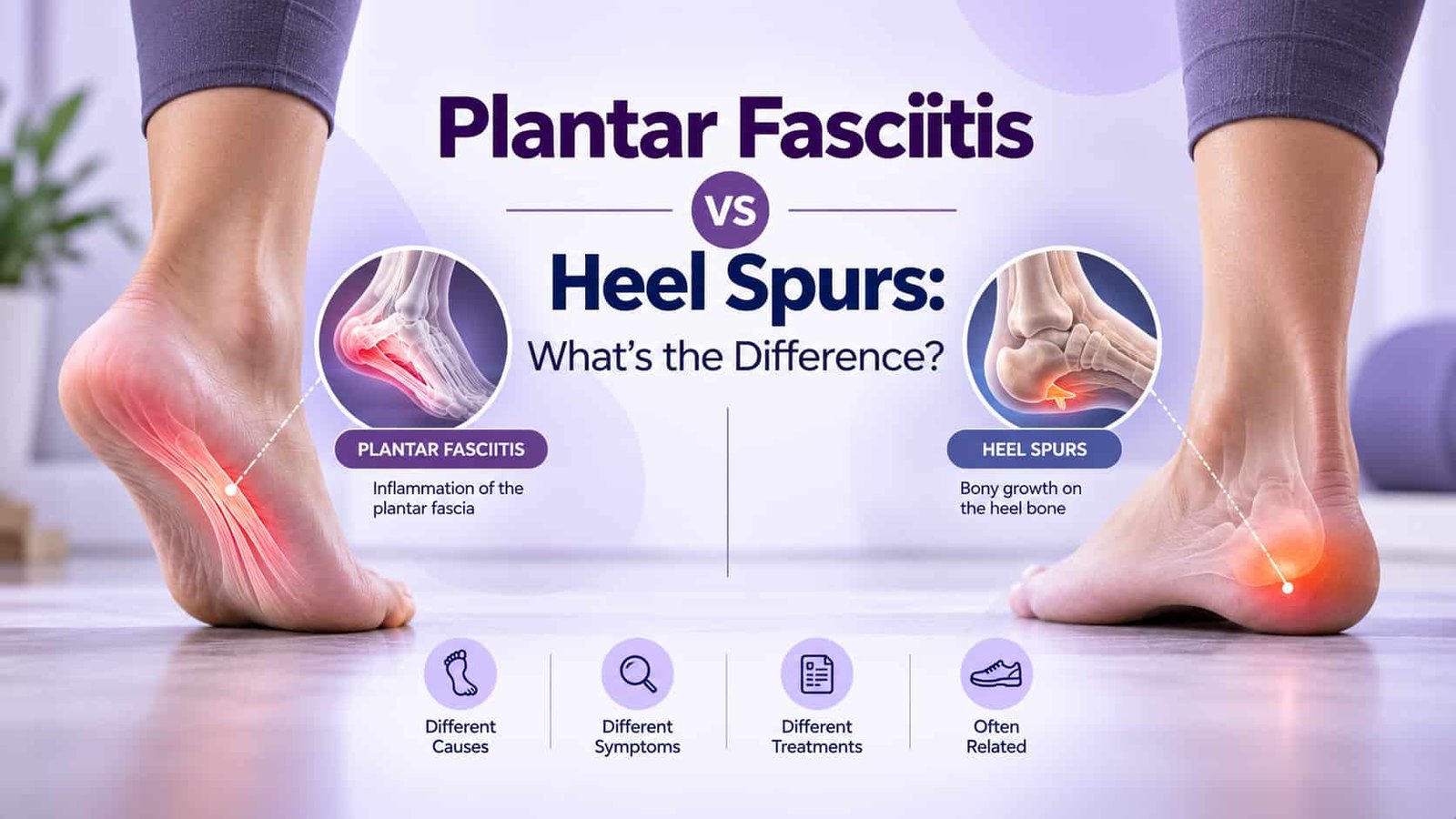
Plantar fasciitis and heel spurs can both cause heel pain, but they are not the same condition. Plantar fasciitis involves irritation and degeneration of the plantar fascia, the strong tissue running along the bottom of the foot. A heel spur is a bony growth on the heel bone that can develop after prolonged stress. A spur may exist without causing pain, while plantar fasciitis can be painful without a spur.
⚡ Top Heel Pain Products for Plantar Fasciitis & Heel Spurs
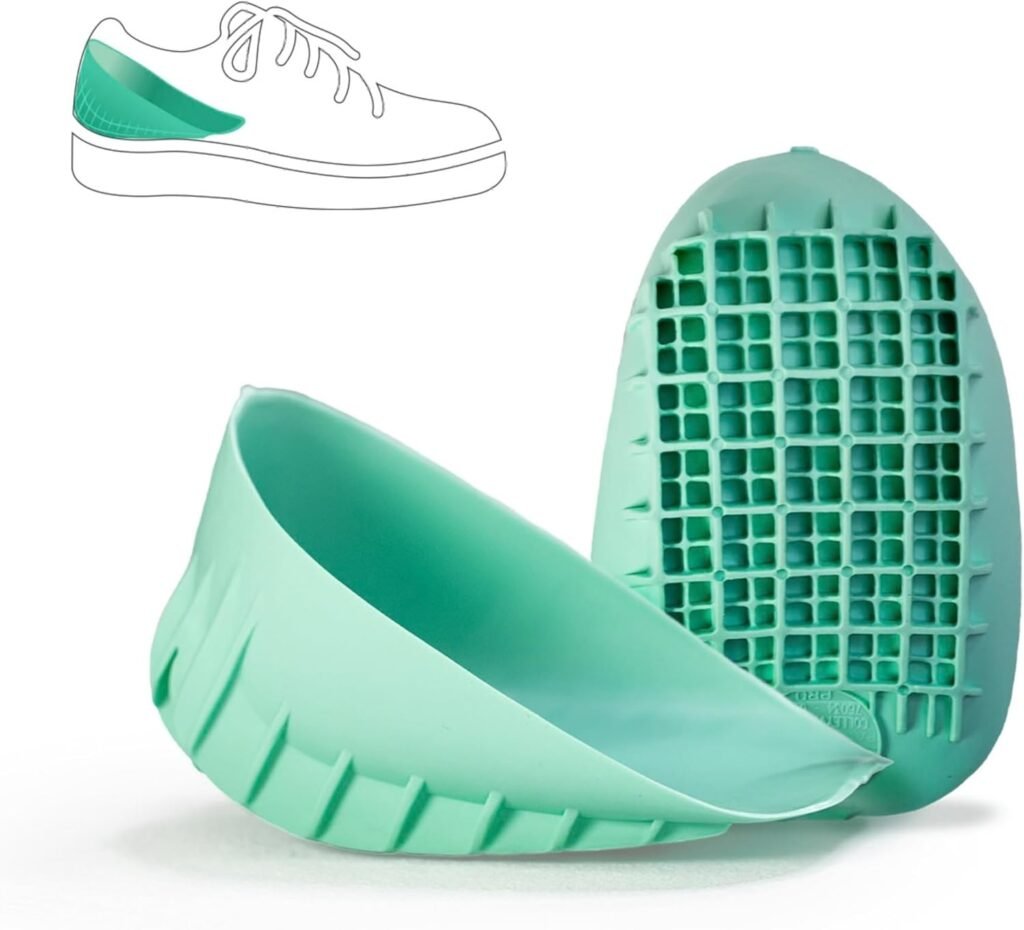
Tuli’s Heavy Duty Heel Cups
Multi-cell silicone heel cups designed to help absorb impact and cushion the heel during everyday walking and standing.
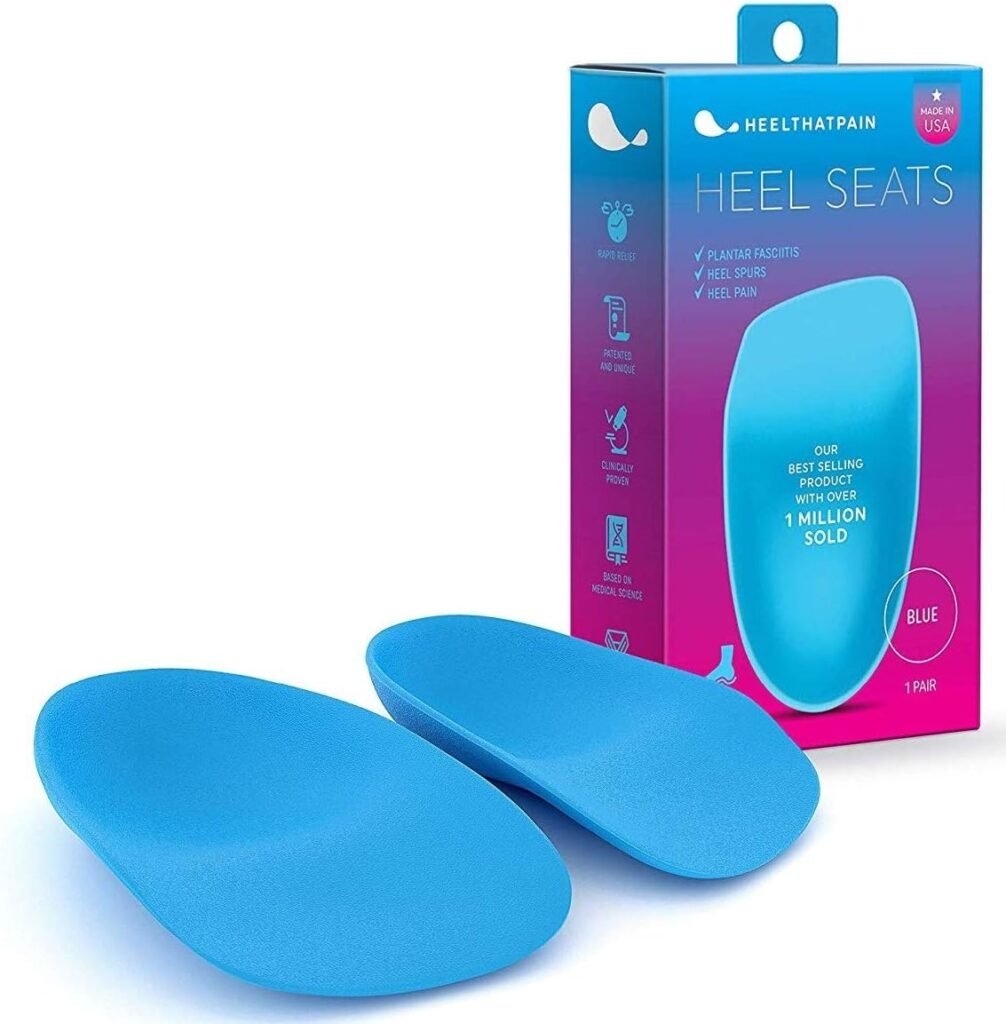
Heel That Pain Heel Seats
A firmer heel-seat design intended to provide targeted support and cushioning for people dealing with heel discomfort.
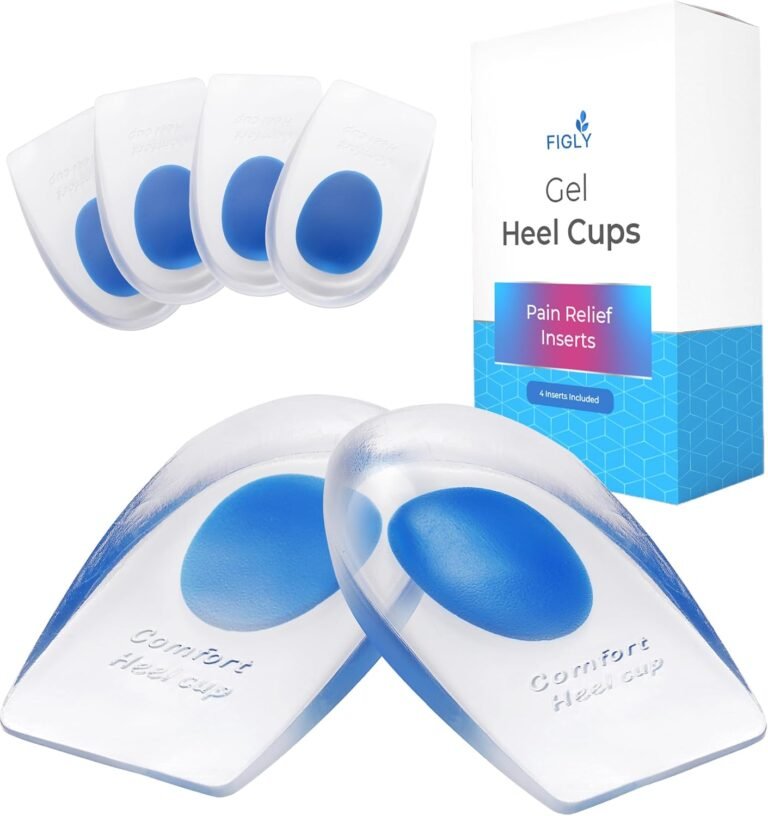
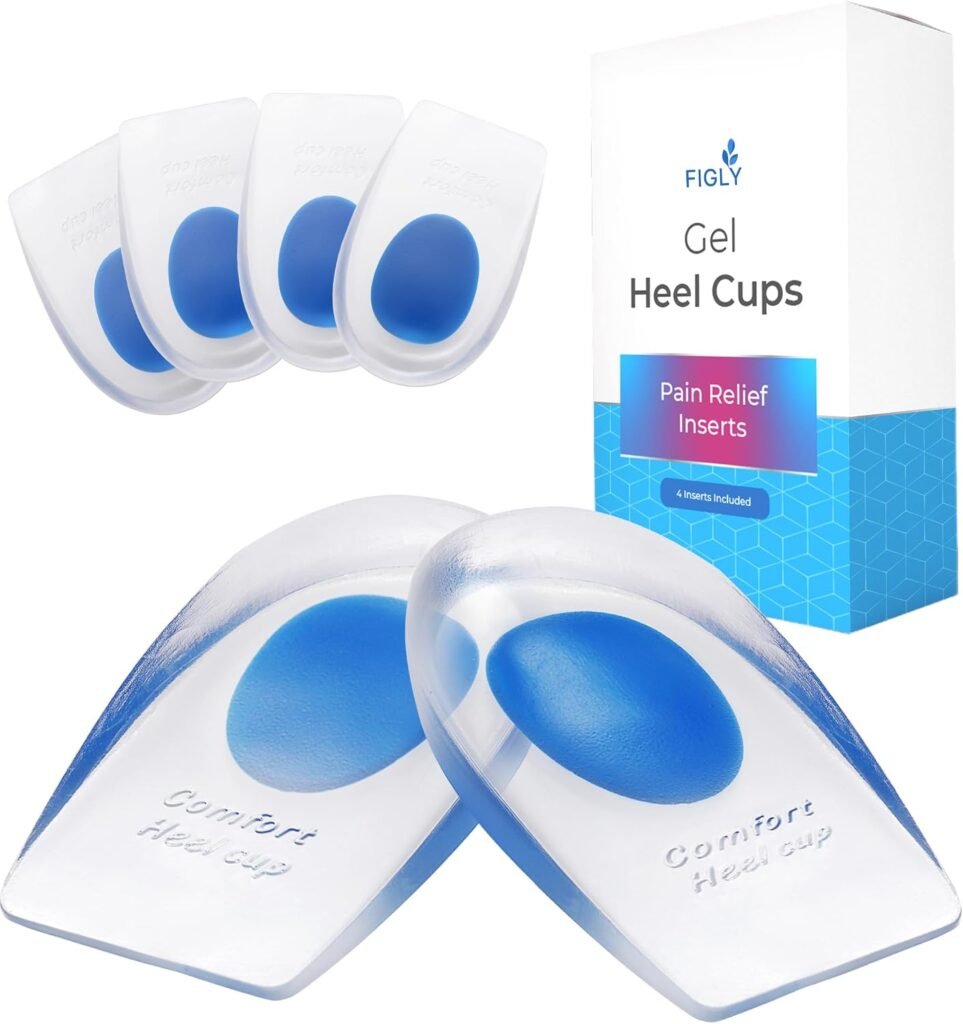
Figly Gel Heel Cups
A simple gel heel-cup option for shoppers who want extra cushioning under the heel without changing their entire shoe.
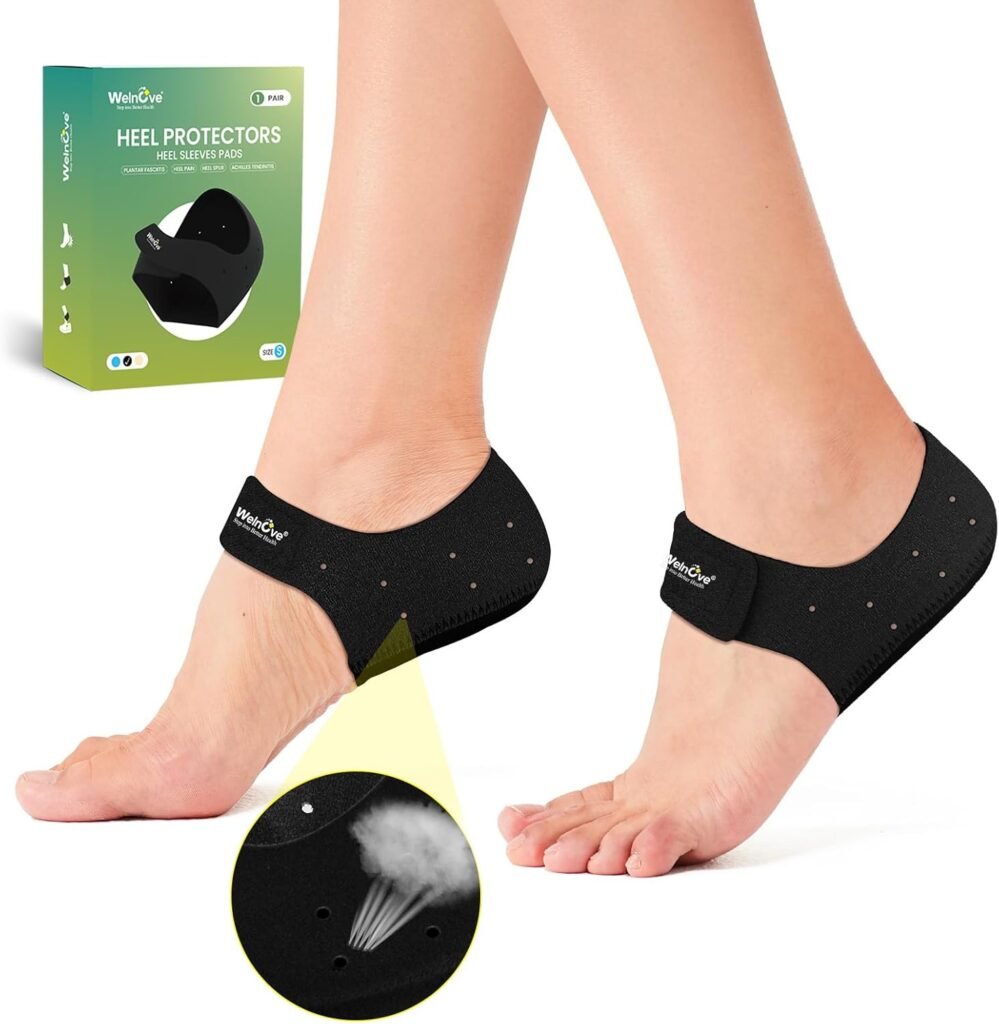
Welnove Gel Heel Protector Cups
Combines a fabric sleeve with gel cushioning, making it useful for shoppers who prefer a wearable heel protector.
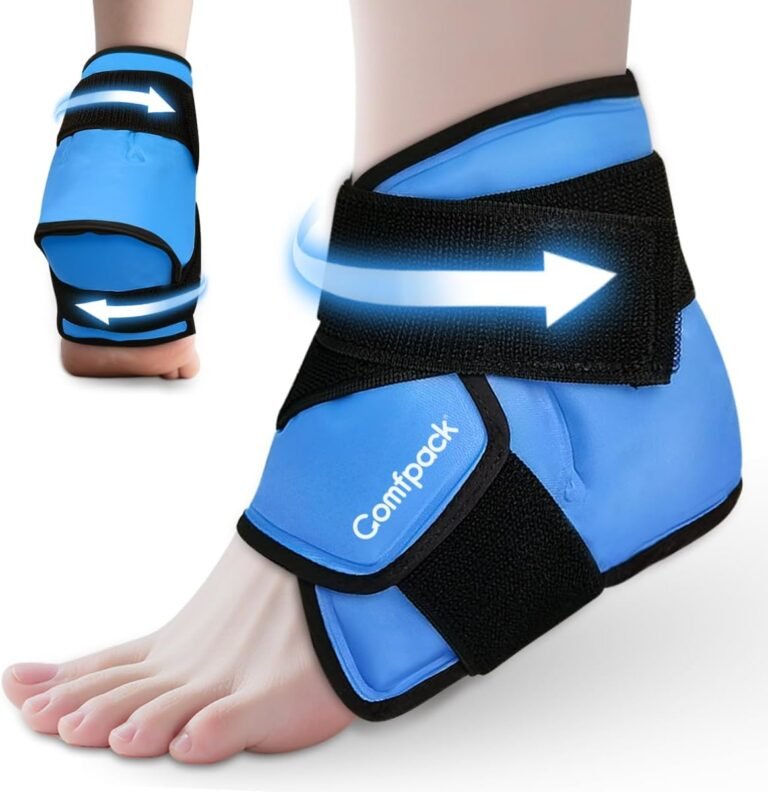
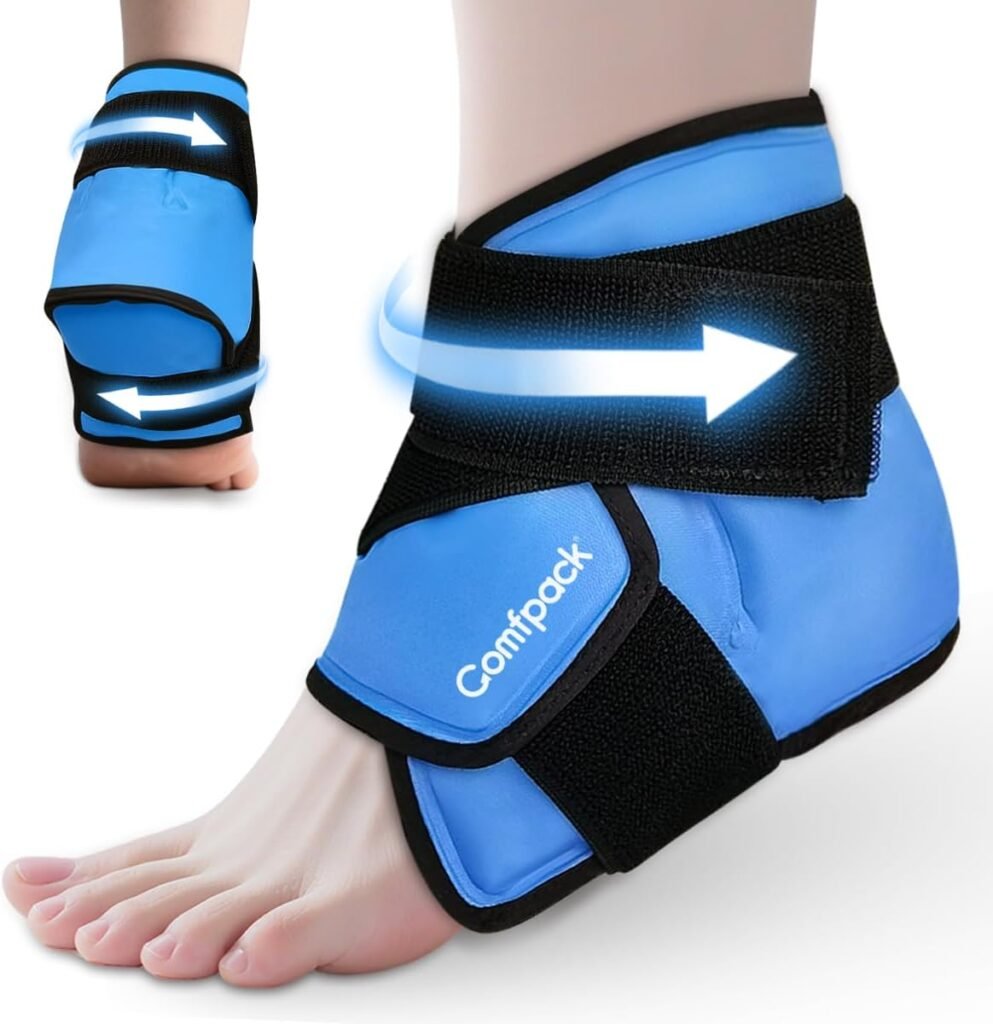
Comfpack Heel Ice Pack Wrap
A reusable cold-therapy wrap for people who want a convenient recovery option after activity or a long day on their feet.
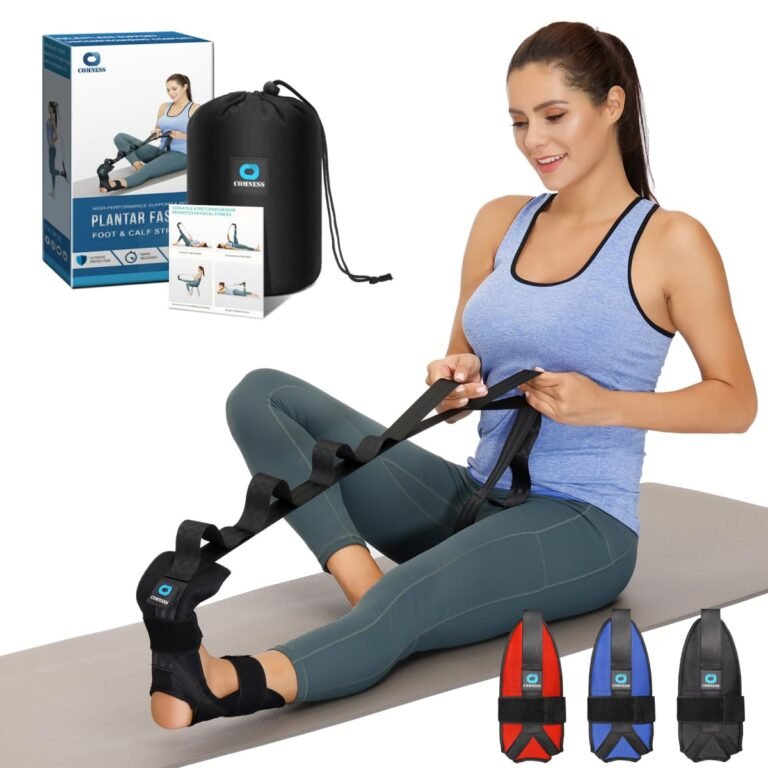
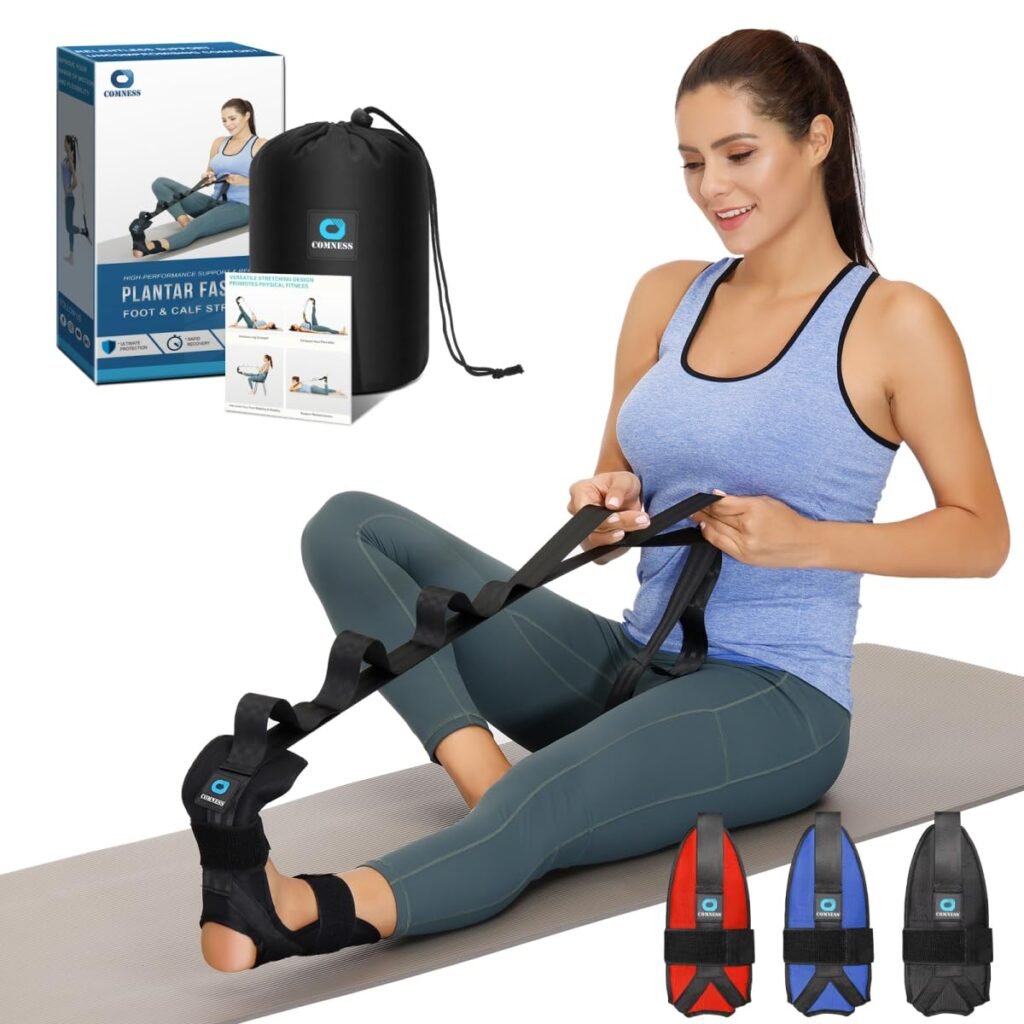
Comness Foot & Calf Stretcher
Designed to help stretch the foot and calf, giving shoppers a simple tool for adding stretching to a plantar fasciitis routine.
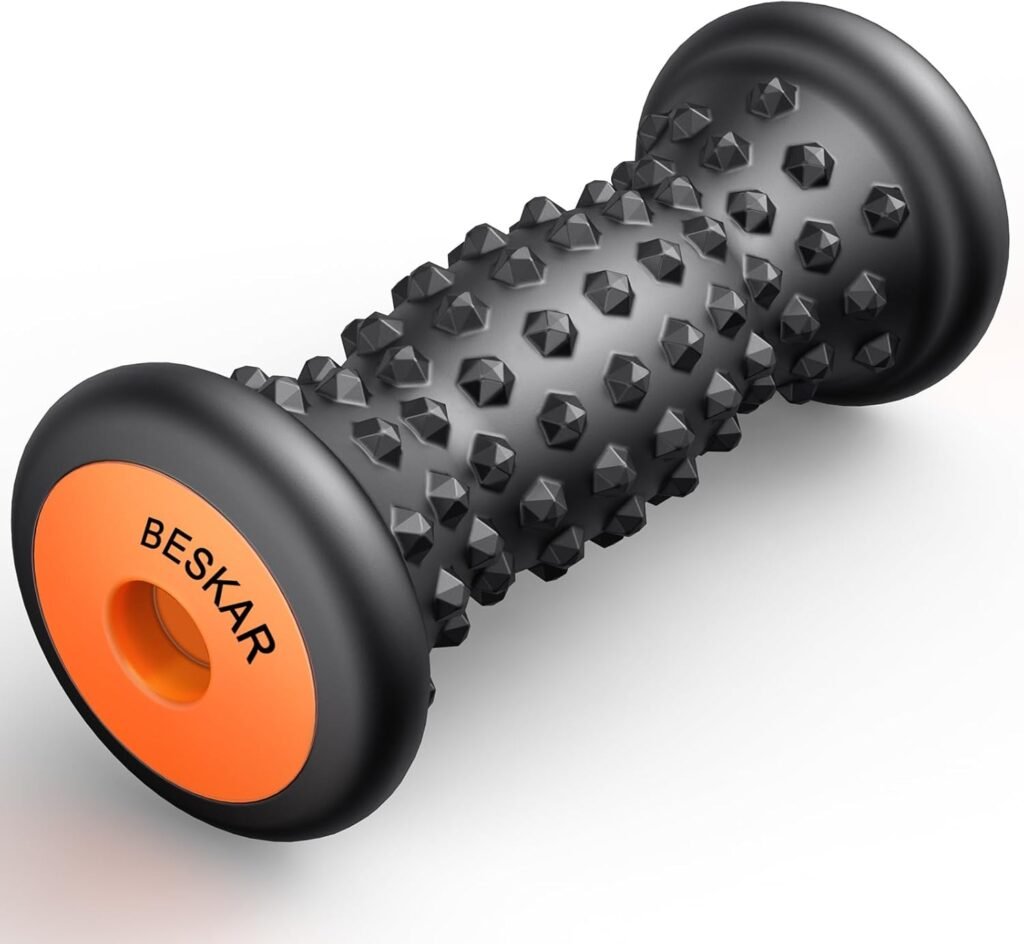
BESKAR Foot Massager Roller
A compact manual roller designed for arch and heel massage after work, walking, exercise, or extended standing.
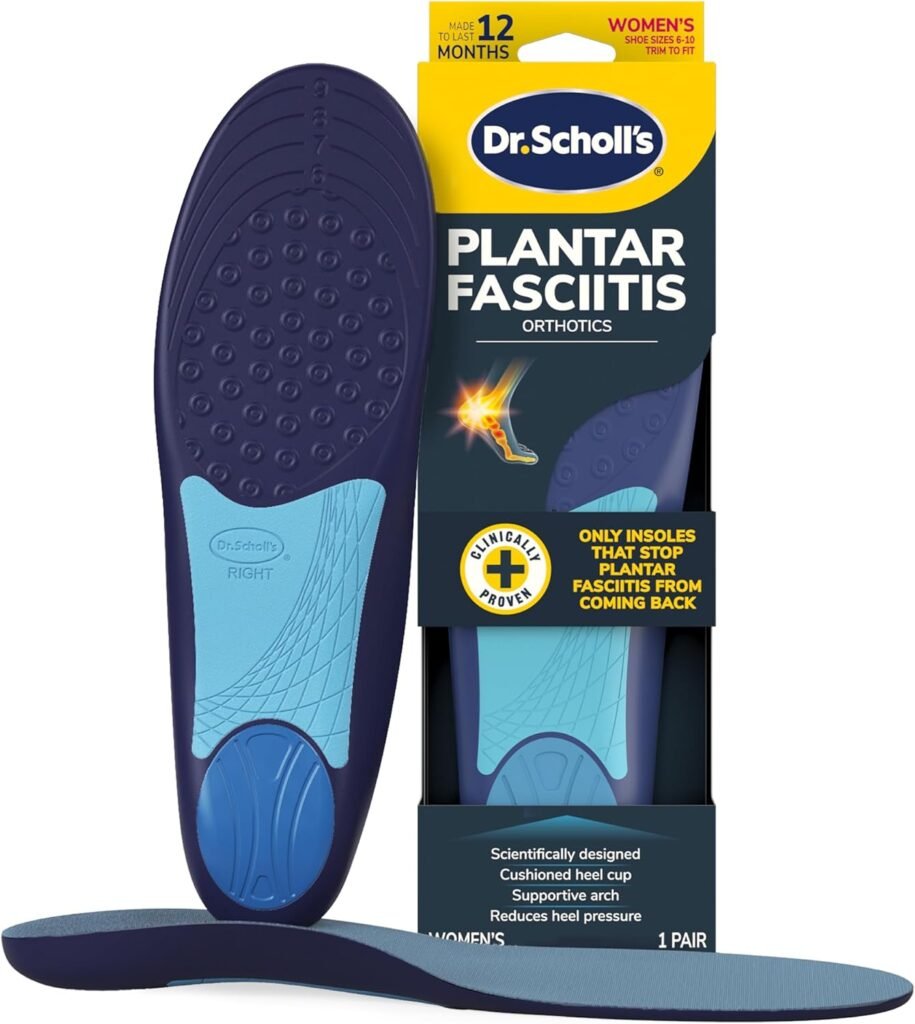
Dr. Scholl’s Plantar Fasciitis Relief Insoles
A full-length insole with a deep heel cup and arch support for shoppers who want to modify the support inside their everyday shoes.
Product prices and availability can change on Amazon. Check the current listing before purchasing.
Introduction: Why the Plantar Fasciitis vs Heel Spurs Difference Matters
Sarah, a teacher in Chicago’s Lincoln Park neighborhood, described a familiar problem: the first few steps out of bed felt sharp, but after walking around her kitchen and getting ready for work, the pain eased. An X-ray later showed a heel spur, so she assumed the spur was the entire problem.
That’s a common misunderstanding.
The phrase plantar fasciitis vs heel spurs sounds like a comparison between two versions of the same injury. They’re not. Plantar fasciitis affects the plantar fascia, the strong band of tissue connecting the heel area with the front of the foot. A heel spur is a bony growth that can develop on the heel bone after prolonged mechanical stress.
The distinction matters because treating the spur as though it were automatically the pain generator can send you in the wrong direction. Cleveland Clinic explains that heel spurs often don’t cause pain themselves, while plantar fasciitis commonly produces heel pain that is worse with the first steps after sleep or rest.
For shoppers, there’s another practical issue: the best footwear strategy isn’t necessarily a special “heel spur shoe.” A well-fitting supportive shoe can reduce repeated impact and help manage symptoms, while heel cups, stretching tools, and cold therapy can provide additional support.
This guide explains the difference between the two conditions, how symptoms compare, what shoe characteristics matter, and which Amazon products in this guide make the most sense for different situations.
If you also want to compare complete footwear options, our guide to Best Shoes for Plantar Fasciitis in 2026 (Top Picks for Pain Relief) covers supportive walking and athletic shoes in greater detail.
What Is Plantar Fasciitis?
Plantar fasciitis is a painful condition involving the plantar fascia, the thick connective tissue running along the bottom of the foot from the heel toward the toes.
The plantar fascia helps support the arch and assists with the mechanics of walking. Repeated loading can irritate the tissue, particularly around its attachment near the heel.
One of the most recognizable patterns is pain with the first steps after sleeping or sitting. Cleveland Clinic describes heel or arch pain that may ease after several minutes of movement and then return after prolonged activity or another period of rest.
The condition is common enough that Cleveland Clinic reports more than 2 million people in the United States are treated for plantar fasciitis each year, with roughly one in 10 people developing it at some point.
That doesn’t mean every episode of heel pain is plantar fasciitis. Heel pain can also come from problems involving the heel fat pad, Achilles tendon, nerves, bones, or other structures.
What Does Plantar Fasciitis Usually Feel Like?
Typical symptoms include:
- Sharp or stabbing pain near the underside or inside of the heel
- Pain during the first steps after getting out of bed
- Pain after standing up following prolonged sitting
- Tenderness near the heel attachment of the plantar fascia
- Aching through the arch in some people
- Increased discomfort after long periods of standing or walking
The classic morning pattern is one reason people often search for heel spur vs plantar fasciitis symptoms after seeing an X-ray report.
What Is a Heel Spur?
A heel spur is a bony growth that develops on the heel bone, usually around an area where soft tissue attaches.
The important point is that a heel spur is a structural finding. It doesn’t automatically tell you why your foot hurts.
Cleveland Clinic notes that heel spurs can develop as a response to repeated stress and that many people don’t experience pain from the spur itself.
That explains why two people can have similar X-rays but very different symptoms.
One person may have a visible heel spur and little or no discomfort. Another may have significant plantar fascia pain without a prominent spur.
Can a Heel Spur Cause Pain?
It can, but the presence of a heel spur doesn’t prove that the spur is causing the pain.
If you have persistent heel pain and an X-ray shows a spur, the more useful question is what structures are actually producing the symptoms.
That distinction is especially important before buying products marketed as “heel spur relief.” A heel cup can cushion impact and improve comfort, but it doesn’t physically dissolve or remove a bone spur.
Plantar Fasciitis vs Heel Spurs: What’s the Difference?
The simplest explanation is this:
Plantar fasciitis is a soft-tissue condition involving the plantar fascia. A heel spur is a bony growth on the heel bone. They can occur together, but one does not automatically mean the other is responsible for your pain.
| Feature | Plantar Fasciitis | Heel Spur |
| What it is | Irritation/degeneration of plantar fascia | Bony growth on heel bone |
| Main tissue | Plantar fascia | Calcaneus/heel bone |
| Common symptom | Heel or arch pain | May cause no symptoms |
| Morning pain | Very common | Not specific |
| Requires X-ray? | Usually diagnosed clinically | X-ray commonly identifies it |
| Related? | Can contribute to spur formation | Can occur alongside plantar fasciitis |
| Shoe goal | Reduce load, improve support, cushion heel | Improve comfort and reduce impact |
| Can shoes remove it? | No | No |
The evidence is clear enough to avoid a common shopping mistake: don’t buy a product simply because the listing says “heel spur.”
Instead, identify the mechanical problem you’re trying to address.
If your heel is sensitive during impact, cushioning may help. If your shoe is worn flat, replacing it may matter more. If your arch collapses excessively, a stability-oriented shoe may be more appropriate. If your symptoms persist, professional assessment becomes more important than adding another insert.
Why Does Plantar Fasciitis Often Hurt More in the Morning?
Morning pain is one of the strongest clues pointing toward plantar fasciitis.
During sleep, the foot remains relatively still. When you suddenly stand up and load the foot, the plantar fascia has to lengthen and handle body weight again.
That first loading can feel sharp.
Emily, who works near Seattle’s South Lake Union area, might notice this particularly after a weekend of hiking followed by several hours at a standing desk. The issue isn’t that the Pacific Northwest climate creates plantar fasciitis. It’s the combination of activity, footwear, surface, recovery, and individual mechanics.
If you regularly experience severe first-step pain, don’t assume an X-ray-confirmed spur explains everything.
Does a Heel Spur Always Hurt?
No. A heel spur can exist without causing pain.
This is one of the most important facts in the plantar fasciitis vs heel spurs discussion.
A spur can appear on imaging while the actual pain comes from the plantar fascia or another structure.
Cleveland Clinic specifically notes that most people don’t feel pain from a heel spur. Treatment therefore focuses on the underlying cause of heel pain rather than simply trying to remove the bony growth.
That also changes how you should shop.
A product with a soft heel cup may make a shoe more comfortable because it changes pressure distribution and absorbs some impact. But it shouldn’t be described as removing a spur or curing plantar fasciitis.
What Should You Look for in Shoes for Plantar Fasciitis and Heel Spurs?
The right shoe is less about a magic material and more about how the entire platform manages load.
If you’re buying shoes for heel pain, focus on four areas.
1. Heel Cushioning
A heel section with adequate cushioning can reduce the harsh feel of repeated heel strikes, particularly on concrete and other hard surfaces.
The goal isn’t maximum softness at any cost.
An extremely soft midsole can feel fantastic for five minutes but may feel unstable if the foam compresses excessively under your body weight.
Expert observation: I pay more attention to the balance between cushioning and structural stability than the marketing phrase “maximum cushion.”
Look for:
- A reasonably thick heel section
- Foam that doesn’t feel completely collapsed
- A stable heel platform
- A removable insole if you plan to use an insert
2. Heel-to-Toe Drop
Heel-to-toe drop is the height difference between the heel and forefoot of the shoe.
A moderate drop can make a shoe feel more natural to someone accustomed to traditional athletic footwear and may reduce the amount of ankle dorsiflexion required during walking.
This doesn’t mean every person with plantar fasciitis needs exactly one drop measurement.
A sudden switch from a traditional 10-12mm shoe to a zero-drop minimalist shoe can substantially change loading patterns.
Expert observation: Don’t make a dramatic change in shoe geometry while your heel is already irritated unless you have a specific reason and understand the transition.
3. Heel Counter and Heel Cup
The heel counter is the structural material surrounding the rear of the shoe.
A good heel counter shouldn’t collapse immediately when you squeeze it.
A secure rearfoot fit helps keep your heel positioned over the midsole rather than allowing excessive movement.
This is particularly useful for people whose shoes feel loose around the heel but tight across the toes.
The solution isn’t necessarily a smaller shoe. It may be a different last shape or width.
4. Width and Toe-Box Shape
A shoe can have excellent cushioning and still be the wrong choice if it squeezes your foot.
Look for enough room for the toes to spread without allowing your heel to slide.
For wide feet, check the actual width options rather than assuming “wide fit” means the same thing across brands.
A person wearing a D-width shoe when they really need 2E may experience pressure points that overwhelm the benefit of good cushioning.
For a deeper breakdown of construction, fit and support, see our What to Look for in Plantar Fasciitis Shoes (Buying Guide).
Do Heel Cups Help Plantar Fasciitis and Heel Spurs?
Heel cups can improve comfort by cushioning the heel and changing how pressure is distributed, but they don’t cure plantar fasciitis or remove a heel spur.
They’re best viewed as a supplement to sensible footwear and activity management.
A heel cup may be particularly useful if your current shoe has plenty of room but lacks heel cushioning.
It’s less useful if the shoe is already too tight. Adding a thick insert to a cramped shoe can reduce internal volume and create new pressure points.
Who Should Consider a Heel Cup?
A heel cup can make sense for:
- People who spend hours standing
- Walkers who experience heel-impact discomfort
- Workers on concrete floors
- People whose shoes have limited heel cushioning
- Shoppers who want inexpensive supplemental cushioning
For someone in a Dallas warehouse, for example, a heel cup may make a difference in comfort during a long shift, but it shouldn’t substitute for a properly fitted work shoe.
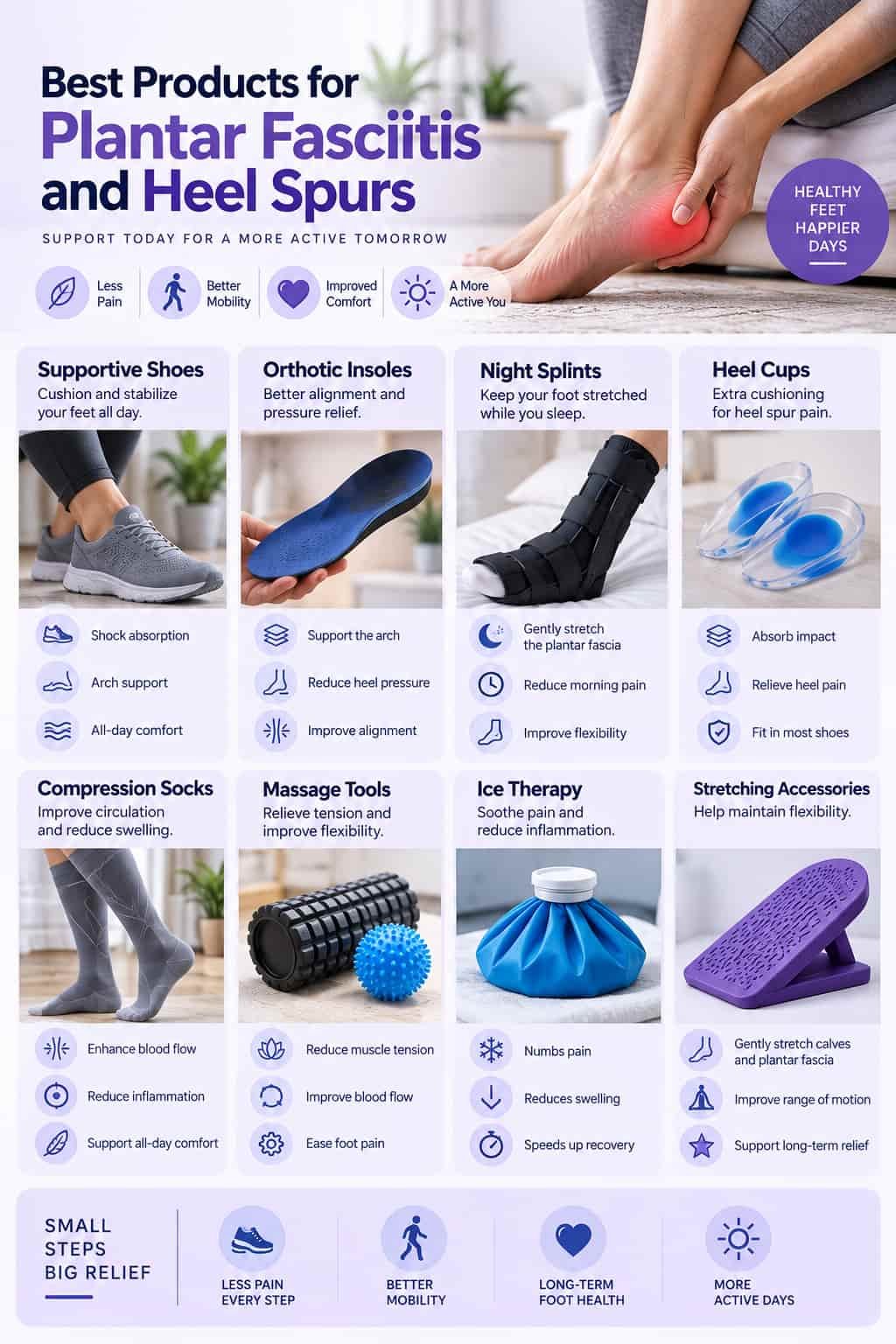
Best Products for Plantar Fasciitis and Heel Spur Comfort
The products below are selected from the Amazon data supplied for this guide. They’re not presented as medical treatments or cures.
Ratings and prices can change on Amazon, so verify the current listing before purchasing.
1. Tuli’s Heavy Duty Heel Cups
Best For: People who spend long hours standing and prefer a structured heel-cup design.
Expert Take
Tuli’s Heavy Duty Heel Cups stand out because they’re designed around a multi-cell, multi-layer silicone structure rather than simply placing a thick slab of soft gel under the heel.
The supplied Amazon listing reports a 4.1/5 rating from 12,332 reviews and describes the product as suitable for heel pain and plantar fasciitis.
There’s also a useful independent trust signal: Tuli’s Heavy Duty Heel Cups appear in the American Podiatric Medical Association’s Seal Program database.
Why It Works
The multi-cell construction is intended to deform under load and then recover, distributing impact rather than concentrating it at one point.
That’s a different approach from a very soft flat gel pad.
Best For
- Long standing
- Heel-impact discomfort
- Athletic shoes
- People who prefer silicone cushioning
- Regular lace-up shoes with enough internal space
Pros
- APMA Seal Program listing
- Multi-cell shock-absorbing design
- Long-standing product with substantial review volume
- Made in the USA according to the supplied listing
Cons
- Can feel bulky in low-volume shoes
- Not suitable for every footwear type
- Not designed for cleats
Verdict
The strongest overall choice in this product group if you want a dedicated heel cup with an established design and APMA listing.
🛒 Check Price on Amazon2. Heel That Pain Heel Seats
Best For: Shoppers who prefer firm rather than plush heel support.
Expert Take
The Heel Seats use a firm rubber construction and a deeper heel cradle. The supplied listing reports a 4.0/5 rating from 8,462 reviews.
The Fascia-Bar design is intended to provide targeted pressure at the heel while the deep cup limits some side-to-side movement.
This is a fundamentally different feel from a soft gel insert.
Why It Works
Firm rubber doesn’t simply compress under your heel. It provides a more structured platform.
That can be useful if you dislike the sinking sensation of soft gel.
Best For
- Firm-support preferences
- People who dislike very soft cushions
- Sneakers with adequate internal volume
- Shoppers wanting a reusable product
Pros
- Firm construction
- Deep heel cup
- Washable and reusable
- Manufacturer lists a 120-day return policy
Cons
- Firm feel isn’t comfortable for everyone
- May feel noticeable during initial wear
- Less appropriate for shoes with limited internal space
Verdict
Choose these if you want structure rather than a soft, plush sensation. Skip them if your heel is extremely sensitive to firm pressure.
🛒 Check Price on Amazon3. Figly Gel Heel Cups
Best For: Budget-conscious shoppers who want basic heel cushioning.
Expert Take
Figly’s silicone heel cups are the most budget-oriented option among the products reviewed here.
The supplied Amazon data shows a 4.2/5 rating from 3,103 reviews and lists both Small/Medium and Large sizing.
The four-piece package also gives shoppers a practical advantage if they want additional pairs.
Why It Works
Silicone gel can compress under the heel and spread pressure over a larger area.
The benefit here is primarily cushioning, not corrective arch control.
Best For
- Budget shoppers
- Basic heel cushioning
- People trying heel cups for the first time
- Multiple pairs for different shoes
Pros
- Low purchase price in the supplied data
- Four-piece package
- Multiple sizes
- Lightweight silicone construction
Cons
- Less structural support than a full orthotic
- Can move if the shoe fit isn’t secure
- The supplied listing’s sizing information should be checked carefully before ordering
Verdict
A sensible low-cost starting point if your main complaint is heel impact rather than a need for stronger mechanical support.
🛒 Check Price on Amazon4. Welnove Gel Heel Protector Cups
Best For: People who want a heel sleeve rather than a loose heel cup.
Expert Take
Welnove takes a different approach by combining gel cushioning with a fabric sleeve and adjustable elastic band.
The supplied listing reports 4.2/5 from 4,915 reviews and says the product is designed for use in roomy shoes.
That last point matters.
Why It Works
The sleeve helps keep the cushioning positioned around the heel rather than relying entirely on friction between an insert and the shoe.
The fabric construction can also provide coverage that a simple silicone cup doesn’t.
Best For
- Roomier shoes
- People who prefer sleeve-style support
- Everyday walking
- Mild heel-impact discomfort
Pros
- Adjustable fit
- Gel cushioning
- Breathable fabric design
- Can be used with multiple footwear styles
Cons
- Takes up more space than a thin heel pad
- The supplied listing specifically recommends roomy shoes
- May feel warm during very hot weather
Verdict
A good option if you want cushioning that stays attached to the heel rather than sitting loosely inside the shoe.
🛒 Check Price on Amazon5. Comfpack Heel Ice Pack Wrap
Best For: Post-activity recovery and temporary cold therapy.
Expert Take
Comfpack isn’t a shoe insert, and it shouldn’t be treated as one.
It’s a reusable cold-pack wrap designed to sit around the heel and ankle. The supplied Amazon data reports a 4.5/5 rating from 3,567 reviews.
This makes it a useful companion product rather than a footwear replacement.
Why It Works
Cold therapy can provide temporary relief from soreness and irritation after activity.
The manufacturer recommends limiting use to about 20 minutes at a time and using a layer such as a sock when the pack is very cold.
Best For
- After long walks
- After standing shifts
- Post-exercise discomfort
- Temporary cooling
- Home recovery
Pros
- Reusable
- Hands-free wrap design
- Flexible when removed from the freezer
- High rating in the supplied Amazon data
Cons
- Doesn’t provide shoe support
- Temporary comfort only
- Must be used carefully to avoid excessive cold exposure
Verdict
A useful recovery accessory, particularly if your heel feels irritated after activity, but it should complement rather than replace proper footwear.
🛒 Check Price on Amazon6. Comness Foot and Calf Stretcher
Best For: People who want a stretching tool to complement their footwear strategy.
Expert Take
The Comness stretcher is different from every other product in this guide because it isn’t designed to cushion the heel.
It’s a stretching strap intended for the foot, calf, hamstring and lower-leg areas. The supplied listing reports a 4.4/5 rating from 7,608 reviews.
For plantar fascia-related discomfort, stretching may be useful as part of a broader management approach, but the product should not be presented as a cure.
Why It Works
The strap allows you to apply controlled tension to the foot and lower leg rather than simply cushioning the heel.
That makes it more appropriate for someone whose problem involves tight calves or limited ankle flexibility alongside heel discomfort.
Best For
- Home stretching
- Calf tightness
- People adding mobility work
- Travel
- Exercise recovery
Pros
- Low-cost accessory
- Portable
- Multiple stretching positions
- High review rating in the supplied data
Cons
- Doesn’t cushion heel impact
- Technique matters
- Stretching too aggressively can aggravate symptoms
Verdict
Worth considering as a complementary tool, especially if tight calves are part of your problem. It shouldn’t replace diagnosis or a properly structured rehabilitation plan.
🛒 Check Price on Amazon7. BESKAR Foot Massager Roller
Best For:
People who want a simple and affordable way to massage their feet after walking or standing.
The BESKAR Foot Massager Roller is a small, manual roller designed for the arch and heel area. The Amazon listing shows a 4.6/5 rating from 6,590 reviews and a listed price of $9.99 at the time of the supplied data.
It doesn’t provide the support of a shoe or insole, but it can be useful for relaxing tired feet after a long day.
Pros
- Affordable
- Small and portable
- Easy to use
- No batteries required
- Good customer rating
Cons
- Doesn’t provide arch support
- Firm pressure may not suit everyone
- Not a replacement for supportive footwear
Verdict:
A good budget accessory for people who enjoy foot massage after daily activity.
🛒 Check Price on Amazon8. Dr. Scholl’s Plantar Fasciitis Relief Orthotic Insoles
Best For:
Women who want an affordable insole for plantar fasciitis-related heel discomfort.
Dr. Scholl’s Plantar Fasciitis Relief Orthotic Insoles are full-length insoles designed with cushioning, a deep heel cup, and arch support. The supplied Amazon listing shows a 4.3/5 rating from 30,671 reviews and a listed price of $13.62 with 9% savings at the time of the supplied data.
The insole can be trimmed to fit, making it an option for shoppers who want to add support to an existing pair of shoes. Make sure your shoes have enough room because an additional insole can make a snug shoe feel tighter.
Pros
- Affordable
- Full-length design
- Heel cushioning
- Arch support
- Trim-to-fit design
- Large number of customer reviews
Cons
- Medium arch won’t suit everyone
- Can make tight shoes feel tighter
- Designed as a women’s one-size option
Verdict:
A practical budget option if you want to try an insole before spending more on specialized footwear.
🛒 Check Price on AmazonPlantar Fasciitis vs Heel Spurs: Which Product Should You Buy?
Don’t choose solely from the words printed on the package.
Use the symptom and footwear situation instead.
| Your situation | Better starting point |
| Heel impact during walking | Heel cup |
| Long standing on concrete | Tuli’s Heavy Duty |
| Prefer firm support | Heel That Pain |
| Want the cheapest cushioning option | Figly |
| Want a sleeve-style protector | Welnove |
| Heel feels irritated after activity | Comfpack |
| Tight calves plus heel discomfort | Comness stretcher |
| Shoe itself is worn out | Replace the shoe |
The most important point is that none of these products replaces a properly fitted shoe.
If your existing shoe has compressed foam, a tilted heel, a collapsed heel counter or inadequate width, putting a new gel cup inside it may only mask the problem temporarily.
How Do You Know Whether You Have Plantar Fasciitis or a Heel Spur?
Symptoms alone can’t reliably confirm a heel spur. Imaging may identify a spur, while plantar fasciitis is commonly diagnosed from the history and physical examination.
A useful symptom pattern is morning or first-step pain around the underside of the heel, particularly when it improves after a few minutes of walking.
A spur, on the other hand, is a structural finding that is commonly identified with an X-ray.
If your doctor tells you that you have a heel spur, ask an important follow-up question:
“Do you think the spur itself is causing my pain, or is another structure responsible?”
That question can prevent unnecessary focus on the X-ray finding.
What Are the Most Common Plantar Fasciitis Mistakes?
Mistake 1: Assuming the X-ray explains the pain
A visible spur doesn’t automatically identify the pain generator.
Mistake 2: Buying the softest possible shoe
Maximum softness isn’t always maximum comfort over a full workday.
A shoe needs enough structure to remain stable under your weight.
Mistake 3: Ignoring width
If the forefoot is compressed, the best heel cushioning in the world won’t make the shoe fit correctly.
Mistake 4: Adding too many inserts
Stacking a thick heel cup on top of a thick aftermarket insole can reduce internal shoe volume.
Your heel may then lift inside the shoe, creating a new fitting problem.
Mistake 5: Walking barefoot on hard floors
Cleveland Clinic recommends supportive footwear and avoiding barefoot walking on hard surfaces for people managing plantar fasciitis symptoms.
That can matter in homes with tile, hardwood or concrete floors.
Do Compression Socks Help Plantar Fasciitis?
Compression socks may make some people feel more comfortable, particularly when their feet feel tired after long periods of standing, but they shouldn’t be confused with a plantar-fascia-specific treatment.
Compression mainly changes pressure around the lower leg and foot. It doesn’t provide the same mechanical function as a supportive shoe, heel cup or orthotic.
If you want to explore the topic further, see our guide on whether compression socks help plantar fasciitis.
For people working 8-12 hour shifts, compression socks may be worth considering as part of a broader comfort strategy rather than as the main solution.
Can Shoes Cause Plantar Fasciitis?
Shoes aren’t usually the sole cause, but poorly fitted or worn footwear can contribute to mechanical stress on the foot.
A shoe with inadequate cushioning, poor fit, excessive instability or a geometry change your feet aren’t accustomed to can increase discomfort.
The opposite is also true: a supportive shoe may make walking more comfortable while your foot recovers.
If you frequently alternate between minimalist shoes, dress shoes and heavily cushioned trainers, pay attention to how your symptoms respond to each change.
Our guide on whether shoes can cause plantar fasciitis goes deeper into footwear-related risk factors.
How Long Does Plantar Fasciitis Take to Heal With Proper Shoes?
Recovery time varies considerably, and changing shoes alone doesn’t guarantee a specific healing timeline.
Some people improve relatively quickly after reducing aggravating activity and improving footwear. Others develop persistent symptoms that require a more structured treatment plan.
A supportive shoe can reduce daily mechanical irritation, but it doesn’t repair tissue overnight.
If you’re making footwear changes, judge the shoe by how your symptoms respond over repeated days rather than by how comfortable it feels for five minutes in your living room.
You can read more about recovery timelines in our guide to how long plantar fasciitis takes to heal with proper shoes.
What Are the Best Shoes for Plantar Fasciitis and Heel Spurs?
There isn’t one universally best shoe.
For most people shopping for heel-pain footwear, I would start with:
- A stable heel platform
- Adequate heel cushioning
- A secure heel counter
- Enough toe-box width
- A removable insole when customization is useful
- A moderate heel-to-toe drop if that’s consistent with your existing footwear
For a dedicated shoe comparison, our Best Shoes for Plantar Fasciitis and Heel Spurs guide is the better next step.
Expert FAQ: Plantar Fasciitis vs Heel Spurs
1. Is plantar fasciitis the same as a heel spur?
No. Plantar fasciitis involves the plantar fascia, while a heel spur is a bony growth on the heel bone. They can occur together, but a heel spur isn’t automatically the cause of pain. Many people have heel spurs without symptoms.
2. Which hurts more, plantar fasciitis or a heel spur?
You can’t determine pain severity from the diagnosis alone. Plantar fasciitis commonly causes significant heel pain, especially with first steps after rest. A heel spur may cause no pain at all. If both are present, the plantar fascia may still be the main source of symptoms.
3. Can you have plantar fasciitis without a heel spur?
Yes. A heel spur isn’t required for plantar fasciitis. The two conditions are related but distinct. You can experience classic plantar fascia symptoms even when imaging doesn’t show a bony spur.
4. Can a heel spur go away naturally?
The bony growth generally doesn’t simply disappear. Treatment usually focuses on managing the underlying mechanical problem and reducing pain rather than trying to remove the spur. Surgery is rarely necessary solely because a spur is present.
5. Do heel cups help heel spurs?
They can improve comfort but don’t remove the spur. A heel cup may cushion the heel and alter pressure distribution during walking. If the main source of pain is plantar fascia irritation, reducing impact can be useful as part of a larger management strategy.
6. Should I buy a special shoe for a heel spur?
Not necessarily. Look for a well-fitting shoe with adequate cushioning, stable construction and appropriate width. The label “heel spur shoe” is less useful than evaluating the actual geometry and fit of the footwear.
7. Why does plantar fasciitis hurt when I first get out of bed?
The plantar fascia is loaded after a period of relative rest. The first steps stretch and load the tissue, which can produce the characteristic sharp pain. The discomfort may decrease after several minutes of walking.
8. Can walking barefoot make plantar fasciitis worse?
It can, particularly on hard surfaces. Barefoot walking removes the cushioning and structural support provided by footwear. If your home has tile, hardwood or concrete floors, supportive indoor footwear may be more comfortable during a flare.
9. Should I use a heel cup in every shoe?
No. A heel cup needs enough internal room to fit without pushing your heel upward or making the shoe too tight. If a shoe is already low-volume, adding an insert can create new pressure points.
10. Are expensive heel products better?
Not automatically. A $10-$15 gel cup may be enough for someone who simply wants additional cushioning. A more expensive product may be worthwhile if you prefer firmer construction, a specific fit or a more established design.
11. When should heel pain be checked by a doctor?
Persistent or worsening heel pain deserves professional assessment. Cleveland Clinic advises seeking care when heel or foot pain doesn’t improve on its own and when symptoms continue despite initial treatment. Other conditions can mimic plantar fasciitis, so don’t assume every heel problem is a spur.
12. Can shoes cure plantar fasciitis?
No. Shoes can reduce mechanical irritation and make walking more comfortable, but footwear shouldn’t be described as a cure. Persistent symptoms may require activity modification, stretching, physical therapy, medication or other treatment depending on the diagnosis.
Expert Tips: Getting More From Your Shoes
Give New Shoes a Gradual Break-In
Even a comfortable shoe can feel different during a full eight-hour shift.
Start with shorter periods when possible.
Pay attention to:
- Heel slipping
- Arch pressure
- Toe numbness
- Hot spots
- Achilles irritation
- Forefoot pressure
If a shoe creates pain that wasn’t present before, don’t assume you need to “break through” it.
Measure Both Feet
Feet aren’t always identical.
Measure both feet near the end of the day when they’re likely to be slightly larger than in the morning.
Choose based on the larger foot.
For wide feet, don’t compensate for insufficient width by simply buying a longer shoe.
Extra length can cause heel slippage while failing to solve forefoot pressure.
Check the Heel Counter
Before buying, press the rear of the shoe.
A structured heel counter should resist collapse.
Then put the shoe on and walk.
Your heel should remain relatively secure without the collar digging into the Achilles tendon.
Don’t Ignore Midsole Compression
A shoe can look perfectly clean while the midsole is already worn out.
Look for:
- Uneven outsole wear
- A visible tilt
- Foam that stays compressed
- Reduced shock absorption
- New heel pain after months of comfortable use
Cleveland Clinic recommends replacing sneakers after roughly six to nine months or after approximately 250-500 miles, depending on use.
Actual replacement timing varies by body weight, gait, surface, shoe construction and mileage.
Be Careful With Extremely Soft Foam
Soft isn’t automatically supportive.
Think of the midsole as a balance between impact attenuation and stability.
If your heel sinks deeply into the foam and the shoe feels unstable side-to-side, more cushioning may not solve the problem.
Don’t Stack Inserts Without Checking Fit
If you’re already using a thick orthotic, adding another heel cup can make the shoe too shallow.
That can lift your heel and create friction around the collar.
When adding an insert, remove the factory insole if the shoe is designed for it and check whether the resulting fit is actually better.
When Should You Replace Your Shoes?
Replace shoes when their performance has materially changed, not just because a calendar says it’s time.
Consider replacement if:
- The heel foam feels flattened.
- The outsole is heavily worn.
- The shoe tilts to one side.
- The heel counter has collapsed.
- Your feet begin hurting after previously comfortable walks.
- The midsole feels dramatically firmer or less responsive.
- Your usual heel cup no longer fits correctly because the shoe structure has changed.
For someone commuting around Manhattan and walking several miles a day, replacement may come much sooner than for someone who wears the same shoe twice a month.
When Should You Stop Self-Treating Heel Pain?
Don’t keep buying inserts indefinitely if your symptoms aren’t improving.
Seek professional evaluation if:
- Pain persists or keeps worsening
- You cannot walk normally
- Pain occurs at rest or during the night
- You develop significant swelling
- You have numbness or tingling
- You experienced a significant injury
- You suspect a stress fracture
- Home treatment isn’t improving symptoms
Heel pain has multiple possible causes.
A heel spur seen on an X-ray should not automatically end the diagnostic process.
Final Verdict: Plantar Fasciitis vs Heel Spurs
The biggest takeaway is simple:
Plantar fasciitis is a plantar-fascia problem. A heel spur is a bony growth. They can occur together, but they are not interchangeable diagnoses.
If your main symptom is sharp first-step pain in the morning, plantar fascia involvement deserves attention.
If an X-ray shows a heel spur, don’t automatically assume the spur is the pain source.
For footwear, focus on fit, cushioning, heel stability, width and overall shoe geometry.
For supplemental products:
- Choose Tuli’s Heavy Duty Heel Cups if you want established heel-cup construction and stronger support credentials.
- Choose Heel That Pain Heel Seats if you prefer a firmer rubber feel.
- Choose Figly Gel Heel Cups if price and basic cushioning are the priorities.
- Choose Welnove if you prefer a sleeve-style heel protector.
- Choose Comfpack for post-activity cold therapy.
- Choose Comness if stretching is an important part of your routine.
And if you need the actual footwear first, don’t start with the accessory. Start with the shoe.
A good heel cup inside a poorly fitting shoe is still a poorly fitting shoe.
For readers ready to compare footwear, our Best Shoes for Plantar Fasciitis in 2026 (Top Picks for Pain Relief) is the natural next step.
🦶 Shop for the Problem, Not Just the Diagnosis
Don’t shop for the label “heel spur” alone. Shop for the mechanical problem you’re actually trying to manage: impact, poor fit, insufficient support, excessive movement, or post-activity irritation.
Affiliate Disclosure
Urban Style Footwear may earn a commission when you purchase through some of the Amazon links on this page, at no additional cost to you. Product selection is based on the information available to us, footwear experience, product specifications and usefulness for the stated situation. Amazon prices, availability, ratings and product details can change, so check the current listing before purchasing.
Medical disclaimer: This guide is for general educational purposes and isn’t a diagnosis or substitute for medical care. Persistent, severe or unexplained heel pain should be evaluated by a qualified healthcare professional.