
7 Best Shoes for Plantar Fasciitis in 2026
Want a second opinion? Ask an AI assistant to compare the shoes on this page based on your walking, running, work and fit needs.
If every step starts with heel pain, the right shoe can make walking more manageable. But there is no single shoe that works for everyone with plantar fasciitis.
The better approach is to match the shoe to how you use it, how much cushioning you prefer, how much stability you need, your foot width, and whether you use orthotics.
For this 2026 update, we have narrowed the list to shoes that are worth considering for different needs, including daily walking, running, stability, wide feet, and maximum cushioning.
Quick answer: If you want maximum cushioning, start with the HOKA Bondi 9. If you want structured support for overpronation, look at the Brooks Adrenaline GTS 25 or ASICS Gel-Kayano 32. For a more traditional neutral daily trainer, the Brooks Ghost 17 and Saucony Ride 19 are worth comparing. For a lifestyle shoe with strong stability and width options, the New Balance 990v6 is another option to consider.
Important: These shoes do not cure plantar fasciitis. Footwear is one part of managing symptoms, along with activity modification, stretching, strengthening, orthotics when appropriate, and professional assessment when pain persists.
Our Top Picks
7 shoes worth considering for plantar fasciitis
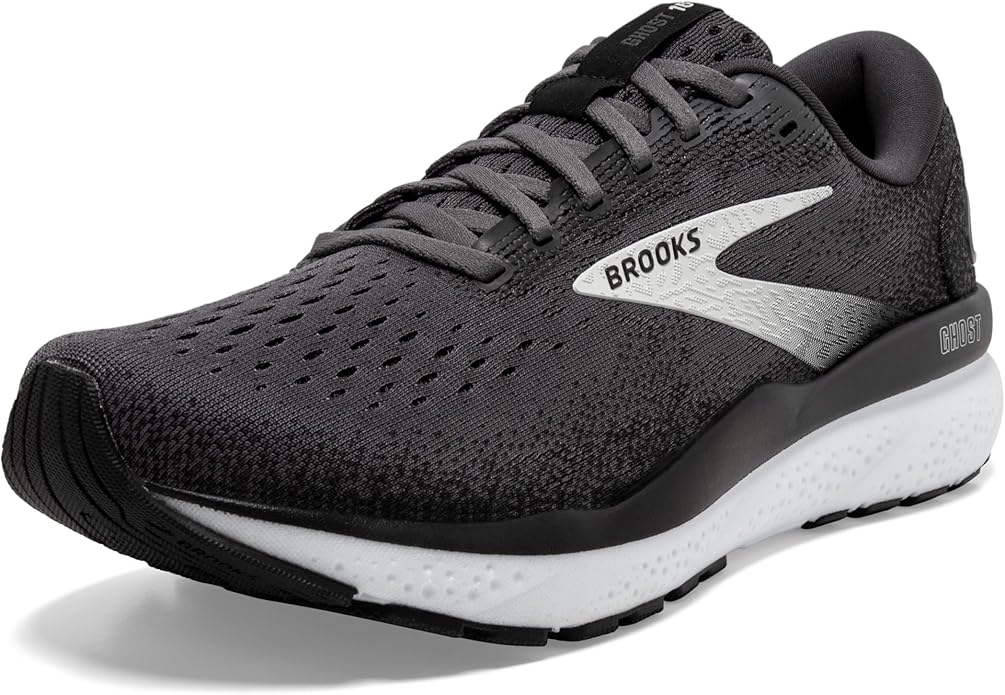
Brooks Ghost 17
Best for: Neutral daily walking and running
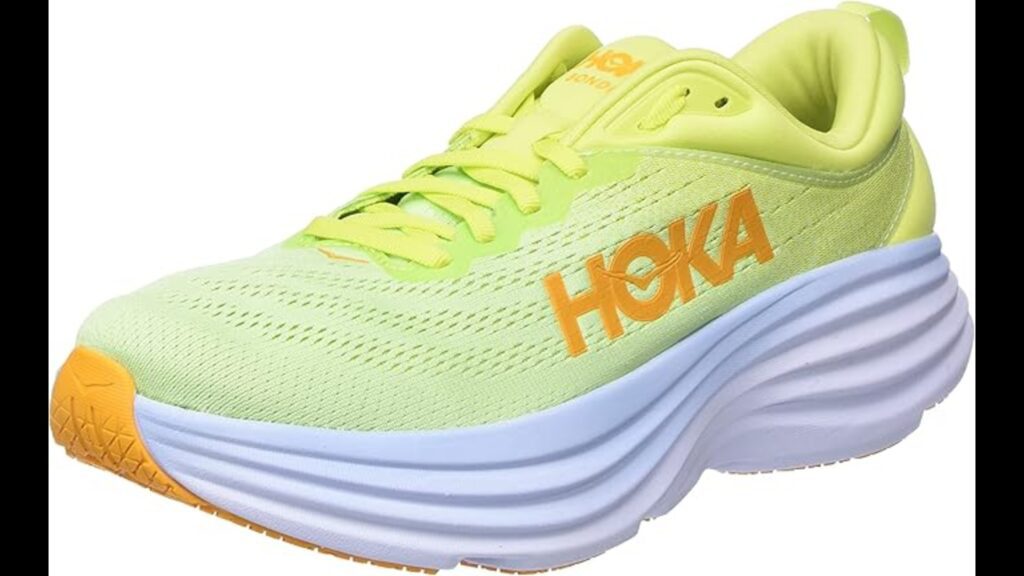
HOKA Bondi 9
Best for: Maximum cushioning and long walks
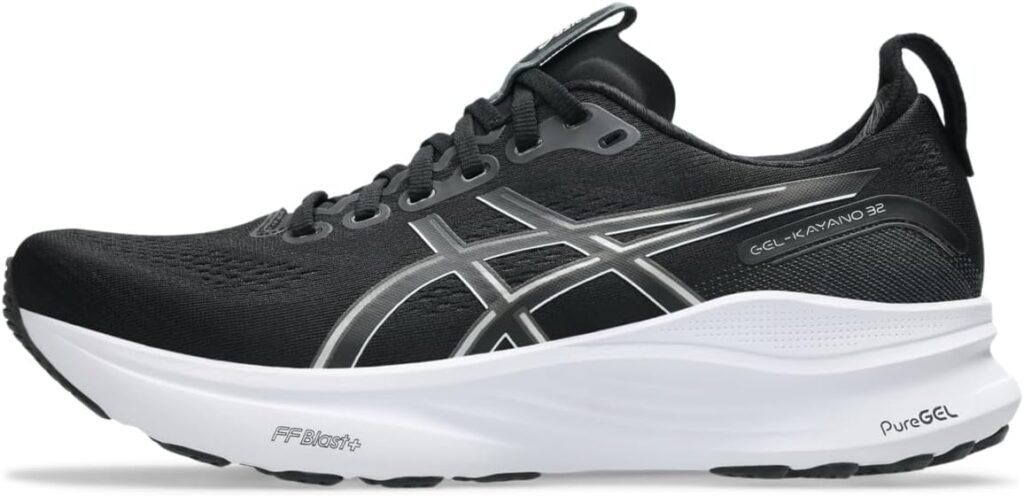
ASICS Gel-Kayano 32
Best for: Stability and structured support
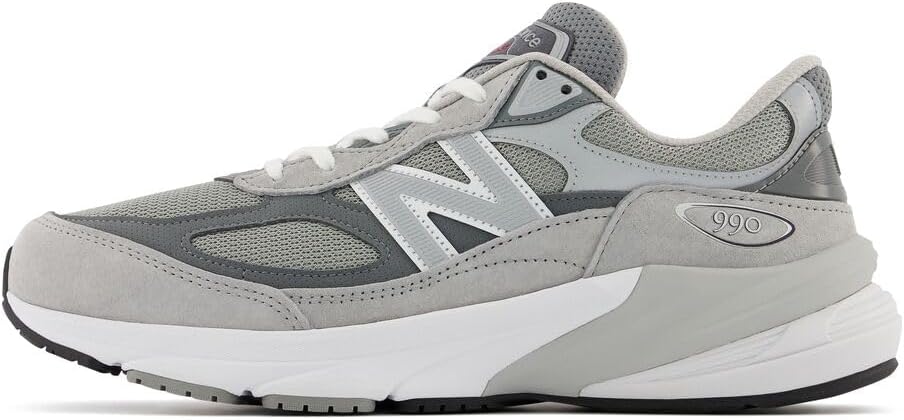
New Balance 990v6
Best for: Wide feet and everyday wear
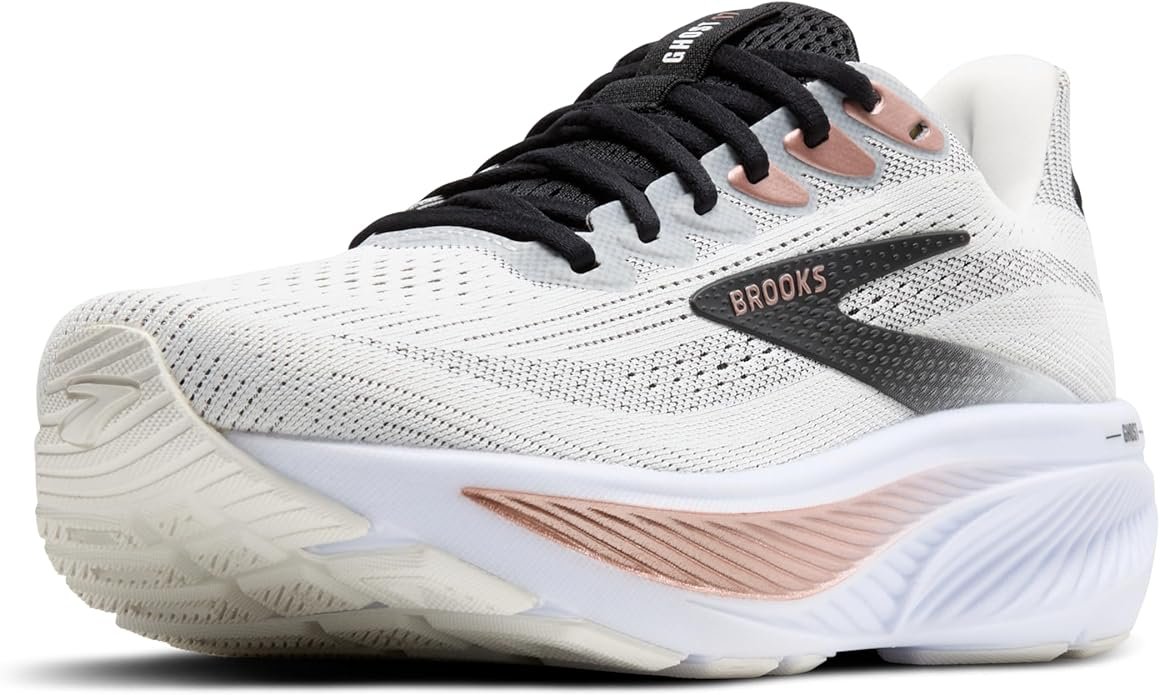
Brooks Adrenaline GTS 25
Best for: Stability while walking
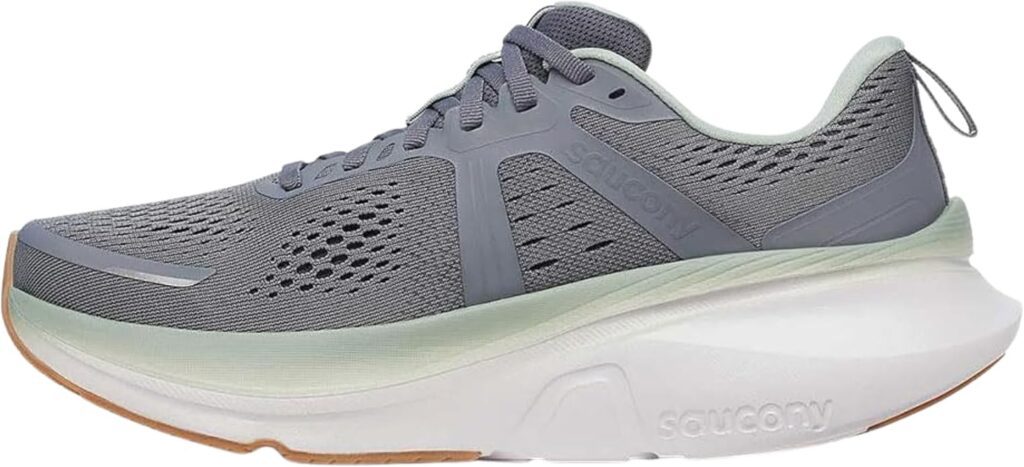
Saucony Guide 17
Best for: Mild stability and daily walking
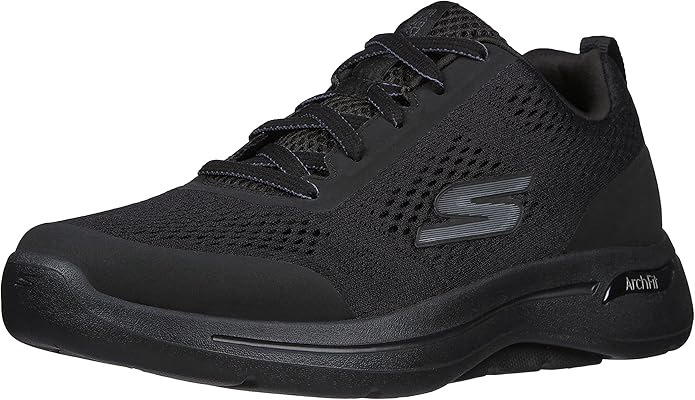
Skechers GO WALK Arch Fit
Best for: Budget-friendly everyday walking
What Makes a Shoe Good for Plantar Fasciitis?
The best plantar fasciitis shoe is not simply the softest shoe on the shelf.
A useful pair should give you a combination of:
- Comfortable heel cushioning
- A stable platform
- Enough midfoot support for your foot
- A secure heel fit
- Adequate toe room
- A suitable heel-to-toe geometry
- Enough flexibility for your activity
- Appropriate width
- A removable insole if you use orthotics
The American College of Foot and Ankle Surgeons recommends supportive footwear with good arch support and a slightly raised heel as part of nonsurgical plantar-fasciitis care. It also recommends stretching and avoiding prolonged barefoot walking when symptoms are active.
The important point is that support does not mean maximum stiffness and cushioning does not mean maximum softness. Your foot still needs a shoe that feels stable and comfortable during the activity you actually do.
1. HOKA Bondi 9
Best for: Maximum cushioning, walking and long periods on hard surfaces
The HOKA Bondi 9 is one of the most obvious choices if your first priority is reducing the feeling of impact under your feet.
Independent 2026 testing from RunRepeat found the Bondi 9 particularly strong for shock absorption and walking. Their testing also highlighted its broad platform, rocker-style geometry and resistance to twisting. The trade-off is weight and a bulky feel compared with lighter daily trainers.
Why consider it:
- High level of underfoot cushioning
- Broad, stable platform
- Rocker geometry encourages a smoother transition
- Suitable for walking as well as running
- Strong option for people who dislike firm shoes
Possible drawbacks:
- Heavier than many daily trainers
- Bulky feel may not suit everyone
- Fit should be checked carefully if you need substantial width
Good match for: People who spend long periods walking or standing and prefer a highly cushioned shoe.
See our guide to the best walking shoes for plantar fasciitis →2. Brooks Adrenaline GTS 25
Best for: Stability, overpronation and daily walking
If you need more guidance than a neutral running shoe provides, the Brooks Adrenaline GTS 25 deserves a place on your shortlist.
Brooks describes the Adrenaline GTS 25 as a structured-support shoe for road running and walking. It uses GuideRails technology to help control excessive movement and has a 10 mm listed heel-to-toe drop.
The shoe also carries the APMA Seal of Acceptance according to Brooks’ current product information.
Why consider it:
- Structured support
- Useful for walking and running
- 10 mm listed drop
- Balanced cushioning
- Available in multiple widths in the Brooks range
Possible drawbacks:
- Stability shoes are not automatically better for every foot
- May feel more structured than a neutral shoe
- Fit can vary substantially between widths
Good match for: People who notice inward rolling or prefer a more guided feeling underfoot.
Compare more Brooks shoes for plantar fasciitis →3. ASICS Gel-Kayano 32
Best for: Stability and runners or walkers who prefer a structured platform
The Gel-Kayano 32 remains a strong option for people who want a stability-oriented running shoe rather than a neutral trainer.
Independent testing from RunRepeat rated the Kayano 32 highly for stability and noted its substantial cushioning, durable outsole and stable ride. That makes it particularly relevant when plantar fasciitis is combined with a preference for a more supportive shoe.
Why consider it:
- Strong stability platform
- High cushioning
- Designed for daily running
- Good option for people who prefer structured shoes
- Available in multiple versions and widths depending on market
Possible drawbacks:
- Heavier than some neutral trainers
- Firmer ride may not suit people looking for a very soft shoe
- Stability features should match your actual needs
Good match for: Walkers and runners who prefer a stable, structured ride.
See more ASICS options for plantar fasciitis →4. Saucony Ride 19
Best for: Neutral daily walking and running
The Saucony Ride 19 is a useful alternative if you want substantial cushioning without moving into a dedicated stability shoe.
RunRepeat’s 2026 testing selected the Ride 19 as its top pick in its plantar-fasciitis running-shoe guide. Its testing highlighted high shock absorption, a wide and stable platform, strong durability and a neutral support profile.
That makes it particularly interesting for people who want a cushioned neutral shoe rather than a structured stability model.
Why consider it:
- Neutral design
- High cushioning
- Stable platform
- Strong everyday versatility
- Suitable for road running and walking
Possible drawbacks:
- Heavier than the previous generation
- The ride is firmer and more substantial than some highly cushioned shoes
- Neutral support may not be enough for everyone
Good match for: People who want a cushioned everyday shoe without pronounced stability features.
5. Brooks Ghost 17
Best for: Everyday walking, casual use and neutral runners
The Ghost 17 is a more conventional option than the Bondi 9 or Kayano 32.
Independent testing describes it as a comfortable and dependable daily trainer with a stable feel for a neutral shoe. Its outsole durability and everyday versatility are among its strengths.
It is worth considering if you want one shoe that can handle regular walking, casual wear and occasional running without feeling as specialized as a maximal-cushion shoe.
Why consider it:
- Neutral daily trainer
- Comfortable upper
- Stable for a neutral shoe
- Versatile for walking and running
- Durable outsole
Possible drawbacks:
- Not a dedicated stability shoe
- Less protective underfoot than highly cushioned alternatives
- May not be the right fit if you need substantial motion guidance
Good match for: Neutral-footed users who want an everyday shoe rather than a highly specialized plantar-fasciitis shoe.
See our Brooks plantar-fasciitis guide →6. New Balance 990v6
Best for: Wide feet, everyday wear and a stable lifestyle shoe
The New Balance 990v6 is different from the running shoes above. It is a lifestyle-oriented shoe, but its broad platform and extensive width availability make it worth considering for people who struggle with narrow footwear.
Independent testing has also found the 990v6 unusually stable for a casual sneaker.
The biggest reason to consider it for plantar fasciitis is not a claim that the shoe treats the condition. It is the combination of a supportive-feeling platform, everyday usability and the ability to choose different widths.
Why consider it:
- Strong everyday stability
- Multiple width options
- Works with casual clothing
- Useful for walking and daily wear
- More traditional sneaker appearance
Possible drawbacks:
- Expensive
- Heavier than many performance running shoes
- Suede and mesh construction requires more care
Good match for: People with wide feet who want a supportive everyday sneaker rather than a performance running shoe.
Explore more New Balance options →7. Skechers Arch Fit
Best for: Budget-conscious everyday walking
If you do not want to spend premium running-shoe money, the Skechers Arch Fit range is worth comparing.
The important distinction is that “Arch Fit” is a product range rather than a guarantee that every person with plantar fasciitis will benefit from it. Your foot shape and tolerance still matter.
It can make sense for everyday walking, travel and casual use when you want a lighter shoe with an insole designed around arch support.
Why consider it:
- Generally lighter than many max-cushion shoes
- Casual appearance
- Arch-focused footbed
- Useful for everyday walking
- Often positioned below premium running-shoe prices
Possible drawbacks:
- Different Arch Fit models can feel very different
- Durability varies by model
- Not intended to replace a stability running shoe when you specifically need motion guidance
Good match for: Budget shoppers looking for an everyday walking shoe with more footbed structure than a basic flat sneaker.
Best Shoes for Plantar Fasciitis: Quick Comparison
The table below is designed to help you narrow the list before checking individual sizes and current prices.
| Shoe | Best For | Support | Cushioning | Check Price |
|---|---|---|---|---|
| HOKA Bondi 9 | Maximum cushioning & walking | Moderate | High | Amazon |
| Brooks Adrenaline GTS 25 | Stability & overpronation | Structured | Moderate-High | Amazon |
| ASICS Gel-Kayano 32 | Structured support | Structured | High | Amazon |
| Saucony Ride 19 | Neutral daily use | Neutral | High | Amazon |
| Brooks Ghost 17 | Daily walking & running | Neutral | Moderate-High | Amazon |
| New Balance 990v6 | Wide feet & casual wear | Stable platform | Moderate | Amazon |
| Skechers Arch Fit | Budget walking | Arch-focused | Moderate | Amazon |
Prices, sizes and availability can change. Check the current Amazon listing before purchasing.
How to Choose the Right Shoe for Plantar Fasciitis
Instead of asking only “Which shoe is best?”, start with your actual problem.
If your main problem is heel impact
Look for a well-cushioned shoe with a stable platform.
The HOKA Bondi 9 is a logical shoe to try because independent lab testing found high shock absorption and a broad platform.
If your feet roll inward
A stability shoe may be worth trying.
The Brooks Adrenaline GTS 25 and ASICS Gel-Kayano 32 are both structured-support options.
Do not assume that everyone with plantar fasciitis needs stability. If your current neutral shoe feels comfortable and stable, there may be no reason to move into a more structured model.
If you have wide feet
Width is often more important than adding another layer of foam.
A shoe that squeezes your forefoot can be uncomfortable even when its midsole is excellent.
Look for brands and models with genuine width choices rather than simply buying a longer size.
The New Balance 990v6 is one model worth considering because the 990 line is available in multiple widths.
If you use orthotics
Check the shoe’s internal volume and whether the insole can be removed.
A supportive shoe and an orthotic can work together, but putting an orthotic into a shoe with insufficient depth can create pressure elsewhere.
If you already have prescription orthotics, take them with you when trying new shoes.
If you stand all day
Prioritize:
- Comfortable heel cushioning
- Stable platform
- Secure heel fit
- Appropriate width
- Outsole grip
- A shoe that still feels comfortable after several hours
Do not choose a shoe simply because it feels extremely soft for the first five minutes.
Do You Need a High Heel-to-Toe Drop?
There is no single heel-to-toe drop that is universally best for plantar fasciitis.
The original version of this article recommended an 8-12 mm drop as though it were a requirement. That is too absolute.
A higher drop can feel comfortable for some people, particularly if they prefer more heel cushioning or have limited calf flexibility. A lower-drop shoe may feel better for someone else.
The better approach is to compare shoes gradually rather than treating one number as a medical prescription.
If you are switching from a high-drop shoe to a much lower-drop shoe, give your body time to adapt.
Is More Cushioning Always Better?
No.
This is one of the biggest mistakes people make when shopping for plantar fasciitis.
A very soft shoe may feel fantastic when you first put it on. Another person may prefer a firmer, more stable platform.
Current independent testing illustrates this difference. RunRepeat found strong shock absorption and stability in the HOKA Bondi 9, while its Ride 19 testing highlighted a stable, cushioned neutral platform. These are different approaches to comfort, not proof that one type is universally superior.
The same point appears repeatedly in plantar-fasciitis discussions on Reddit. Some users report substantial improvement in HOKA shoes, while others say highly cushioned shoes made their symptoms worse. Those reports are personal experiences rather than clinical evidence, but they reinforce an important buying lesson: comfort is individual.
HOKA vs. Brooks for Plantar Fasciitis
This is one of the most common questions shoppers ask.
The short answer is that the brands take different approaches.
HOKA Bondi 9
- Very cushioned
- Broad platform
- Rocker-style geometry
- Strong option for walking
- Heavier and more substantial
Brooks Adrenaline GTS 25
- Structured support
- GuideRails technology
- 10 mm drop
- More conventional running-shoe feel
- Useful for walking and running
If you prefer a highly cushioned, substantial shoe, try the Bondi 9.
If you prefer a more traditional trainer with structured support, try the Adrenaline GTS 25.
If possible, try both rather than choosing solely from brand reputation.
Brooks Ghost vs. Brooks Adrenaline for Plantar Fasciitis
These two Brooks models should not be treated as interchangeable.
The Ghost 17 is a neutral daily trainer. The Adrenaline GTS 25 is designed around structured support.
That distinction matters.
If your neutral shoes already feel stable and comfortable, the Ghost 17 may be enough.
If you specifically want more guidance and prefer a structured shoe, the Adrenaline GTS 25 is the more relevant comparison.
Can Shoes Cure Plantar Fasciitis?
No.
Shoes can change how your foot feels while walking and can be part of a broader treatment plan, but they should not be marketed as a cure.
The American College of Foot and Ankle Surgeons lists stretching, activity modification, supportive footwear, orthotics when appropriate and other nonsurgical treatments as parts of plantar-fasciitis management.
If your pain continues despite reasonable self-care, or if the diagnosis is uncertain, a podiatrist or other qualified healthcare professional can assess the cause of the heel pain.
Read the American College of Foot and Ankle Surgeons guidance on plantar fasciitis →What About Heel Spurs?
Plantar fasciitis and heel spurs are often mentioned together, but they are not the same thing.
A heel spur can appear on imaging in people who have plantar fasciitis, but the spur itself is not necessarily the source of the pain.
Foot Health Facts notes that heel spurs are frequently found alongside plantar fasciitis but are rarely the actual source of pain.
That is why buying a shoe specifically because it claims to “remove heel spurs” is not a sensible way to choose footwear.
The goal should be a comfortable, supportive shoe that suits your foot and activity.
Read our plantar fasciitis and heel spurs guide →What Reddit Users Say About HOKA, Brooks and Other Shoes
Reddit is useful for understanding the questions real people have, but individual experiences should not be treated as medical evidence.
Recent discussions in r/PlantarFasciitis show a very mixed picture.
Some users report that HOKA Bondi 9 or Clifton models helped them. Others say HOKA shoes made their symptoms worse. Some prefer Brooks, while others prefer New Balance or different insoles.
One 2026 discussion specifically described a user preferring Bondi 9 for walking and Clifton 10 for running. Another thread involved a person with wide feet and long-term plantar fasciitis who found that fit, orthotics and professional shoe fitting were major considerations.
The useful takeaway is not “Reddit says HOKA is best.”
It is this:
Different feet respond differently to the same shoe.
Use community discussions to create a shortlist, then judge the shoe by your own fit, comfort and symptoms.
Questions People Commonly Ask About Plantar Fasciitis Shoes
Are HOKA shoes good for plantar fasciitis?
They can be a good option for some people, particularly those who prefer substantial cushioning and a rocker-style platform. The HOKA Bondi 9 performs strongly in independent testing for shock absorption and walking.
However, HOKA shoes are not automatically suitable for everyone with plantar fasciitis.
Are Brooks shoes good for plantar fasciitis?
Several Brooks models are worth considering.
The Ghost 17 is a neutral daily trainer, while the Adrenaline GTS 25 provides structured support. Choose according to your preferred ride and whether you actually need stability.
Are stability shoes better for plantar fasciitis?
Not necessarily.
Stability shoes can be useful for people who prefer or need additional motion guidance, but plantar fasciitis alone does not mean that everyone needs a stability shoe.
Are soft shoes better for heel pain?
Not always.
Cushioning can make walking more comfortable, but the overall fit, stability and feel of the shoe matter too.
Should I walk barefoot with plantar fasciitis?
If barefoot walking aggravates your symptoms, reducing it can be sensible while you recover.
The American College of Foot and Ankle Surgeons specifically recommends avoiding barefoot walking as part of conservative plantar-fasciitis care.
Should I use insoles with plantar fasciitis shoes?
Sometimes.
If the shoe has a removable insole and enough depth, an aftermarket or prescribed orthotic may be appropriate. If you already have custom orthotics, make sure the shoe accommodates them correctly.
What shoes are best for plantar fasciitis and flat feet?
If flat feet are accompanied by a preference for stability, compare structured models such as the Brooks Adrenaline GTS 25 or ASICS Gel-Kayano 32.
Do not choose solely because a shoe is labelled “stability.” The fit and your response to the shoe matter.
What are the best shoes for plantar fasciitis when standing all day?
Start with shoes that provide comfortable cushioning, a stable platform, secure heel fit and appropriate width.
The HOKA Bondi 9, Brooks Adrenaline GTS 25 and ASICS Gel-Kayano 32 are three different styles worth comparing.
Can I run with plantar fasciitis?
That depends on the severity of your symptoms and the advice of your healthcare professional.
If running aggravates your pain, reducing impact while you address the underlying problem may be more appropriate than simply buying a more cushioned shoe.
How do I know if my plantar fasciitis shoes fit correctly?
You should have enough space for your toes to move without your foot sliding excessively inside the shoe.
Try shoes later in the day when your feet may be larger, wear the socks you normally use, and walk around before deciding.
If you use orthotics, test the shoes with them installed.
A Simple 5-Minute Shoe Test
Which Plantar Fasciitis Shoe Fits Your Needs?
Choose the situation that sounds most like you.
Before committing to a new pair, try this:
Step 1: Check the toe room
Your toes should not feel compressed.
Step 2: Check the heel
Your heel should stay reasonably secure without excessive slipping.
Step 3: Walk on a firm surface
Do not judge the shoe only while standing on a soft carpet.
Step 4: Check the arch
The shoe should feel supportive rather than creating a painful pressure point.
Step 5: Walk for several minutes
Pay attention to your heel, arch, toes and overall stability.
A shoe that feels good for 30 seconds but creates pressure after several minutes is not a good fit.
Don’t Ignore Your Morning Heel Pain
Morning heel pain is one of the symptoms commonly associated with plantar fasciitis.
If your first few steps after getting out of bed are especially painful, pay attention to how much time you spend barefoot on hard floors.
A supportive house shoe or slipper may be more comfortable than walking barefoot, particularly when symptoms are active.
If morning pain continues or worsens, footwear alone should not be your entire treatment plan.
What We Would Compare First
Rather than declaring one universal winner, use this shortlist:
Want maximum cushioning?
Start with HOKA Bondi 9.
Want structured stability?
Compare Brooks Adrenaline GTS 25 and ASICS Gel-Kayano 32.
Want a neutral daily trainer?
Compare Saucony Ride 19 and Brooks Ghost 17.
Need a lifestyle shoe and wider sizing options?
Look at New Balance 990v6.
Want a more budget-friendly walking option?
Compare Skechers Arch Fit models.
The right choice depends on your foot shape, activity, existing symptoms and how the shoe actually feels on your feet.
More Plantar Fasciitis Shoe Guides
If you already know the type of shoe you need, use these more specific guides:
Find the Right Plantar Fasciitis Shoes
Looking for a specific type of shoe, activity, or brand? Explore our detailed plantar fasciitis shoe guides below.
Final Takeaway
There is no universally “best” shoe for plantar fasciitis.
If you want maximum cushioning, compare the HOKA Bondi 9.
If you want structured support, compare the Brooks Adrenaline GTS 25 and ASICS Gel-Kayano 32.
If you prefer a neutral daily trainer, the Saucony Ride 19 and Brooks Ghost 17 are strong options to put on your shortlist.
If you need wide sizing and everyday versatility, look at the New Balance 990v6.
If you want a more affordable walking shoe, consider the Skechers Arch Fit range.
Most importantly, do not buy a shoe because a review says it will “cure” plantar fasciitis. Look at the complete package: fit, cushioning, stability, width, activity and how your feet respond.
Persistent or severe heel pain deserves a proper assessment rather than another shoe purchase.
See plantar fasciitis treatment guidance from the American College of Foot and Ankle Surgeons →Check Latest Deals on Amazon.comAffiliate disclosure: Some links on this page are affiliate links. If you purchase through one of these links, UrbanStyleFootwear may earn a commission at no additional cost to you. Prices, sizes, availability and product specifications can change, so verify the current Amazon listing before purchasing.