
Best Nike Shoes for Plantar Fasciitis 2026: 8 Picks Ranked for Comfort & Support
Plantar fasciitis can turn an ordinary walk into a painful first step, especially when your shoes provide too little cushioning or let your heel move around too much. After looking at the current Nike models in this roundup, I would not choose a shoe simply because it has a soft midsole or a famous logo. The better question is whether the shoe gives your foot the combination of heel cushioning, stable support, comfortable flexibility and enough room for your natural foot shape.
For this guide to the best Nike shoes for plantar fasciitis, I compared Nike walking, running, training and everyday models available through Amazon US. I looked at cushioning, heel-to-toe drop, stability, weight, flexibility, outsole traction and the type of use each shoe makes sense for.
My top choice is the Nike Promina for walking because its tall foam stack, rocker-style outsole geometry and moderate stability make it particularly well suited to people who want a softer, smoother walking platform. For a lighter everyday option, the Nike Run Defy is worth considering. If you need a more stable training platform, the Air Max Alpha Trainer 6 takes a different approach with a wide, flat base.
One important caveat: plantar fasciitis is a medical condition, and shoes do not cure it. The right footwear can make walking more comfortable, but persistent or severe heel pain deserves evaluation by a qualified healthcare professional.
Best Nike Shoes for Plantar Fasciitis
A quick look at our top Nike picks for cushioning, walking, running, training, stability, and everyday comfort.
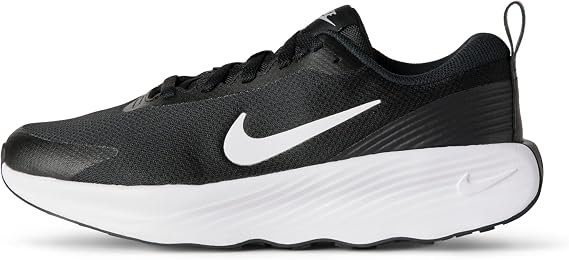
Nike Promina Walking Shoes
Our best overall pick for everyday walking and shoppers looking for a comfortable Nike option with cushioning and support.
Check Price on Amazon →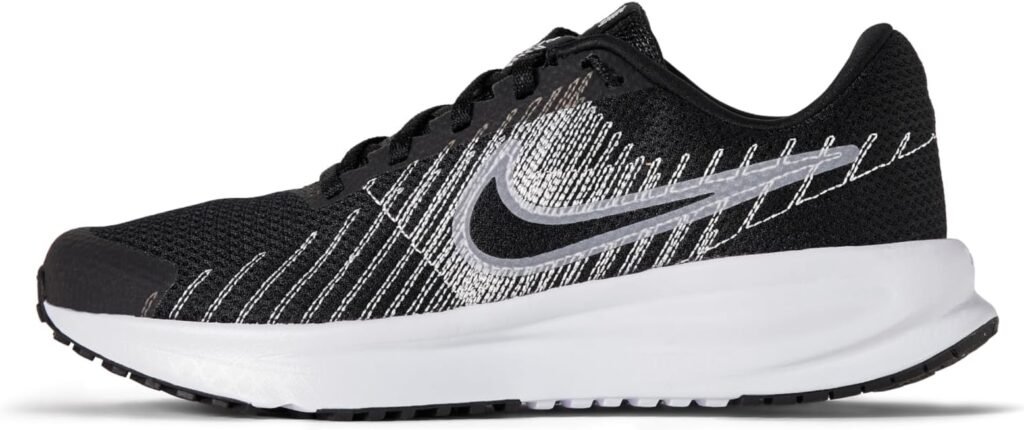
Nike Run Defy Road Running Shoes
A lightweight budget-friendly option for walking, everyday movement, and casual running.
Check Price on Amazon →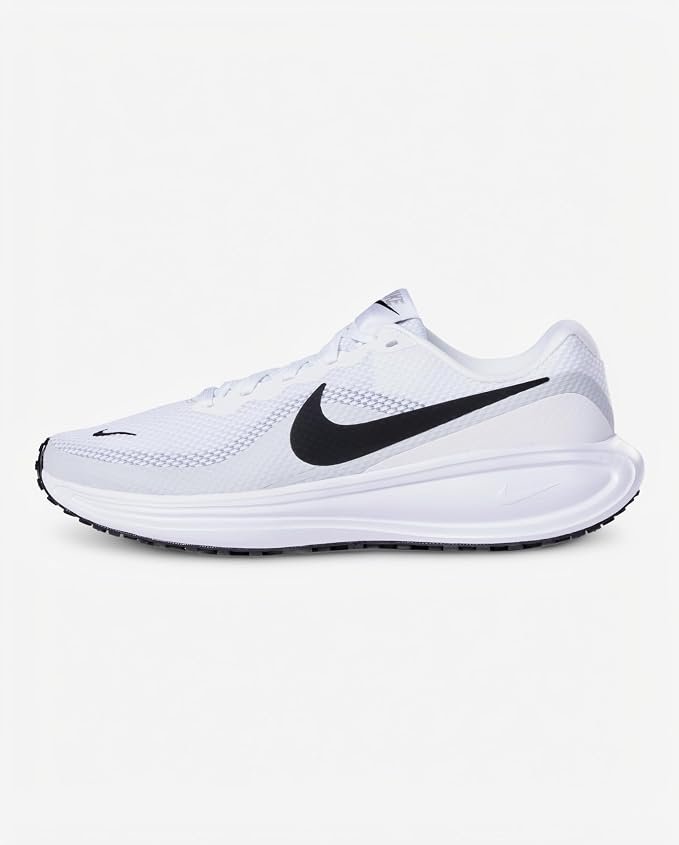
Nike Revolution 8 Road Running Shoes
A cushioning-focused option for people who prioritize a softer, comfortable feel during everyday activity.
Check Price on Amazon →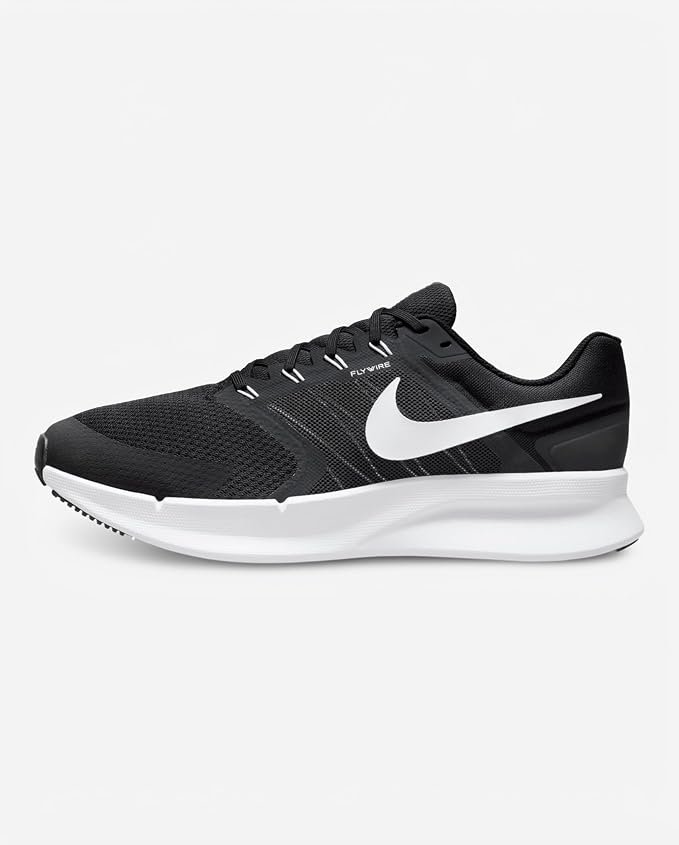
Nike Run Swift 3 Road Running Shoes
A versatile choice for people who want a Nike shoe suitable for both regular walking and running.
Check Price on Amazon →Nike Air Max Alpha Trainer 6
Nike Air Monarch IV
Nike Air Max Nuaxis
Nike Court Legacy Next Nature
The Best Nike Shoes for Plantar Fasciitis at a Glance
| Rank | Nike Shoe | Best For | Cushioning | Stability | Weight | Supplied Price |
| 1 | Nike Promina | Walking & heel comfort | High | Moderate | 0.65 lb | $86.14 |
| 2 | Nike Run Defy | Lightweight everyday use | All-day | Moderate | 233 g | $65 |
| 3 | Nike Revolution 8 | Maximum cushioning | Maximum | Moderate | 226.5 g | $75 |
| 4 | Nike Run Swift 3 | Running & walking | Supportive/plush | Moderate | 306 g | $66.97 |
| 5 | Nike Air Max Alpha Trainer 6 | Training stability | High | High | 1 lb | $100 |
| 6 | Nike Air Monarch IV | Training & everyday wear | Lightweight | Moderate | 7 oz | $74.97 |
| 7 | Nike Air Max Nuaxis | Casual everyday wear | Cushioned | Moderate | 11.2 oz | $89.96 |
| 8 | Nike Court Legacy Next Nature | Casual use | Cushioned | Low-Moderate | 800 g* | $60 |
What Should You Look for in Nike Shoes for Plantar Fasciitis?
Plantar fasciitis pain is often felt around the heel and bottom of the foot. When choosing shoes, I pay particular attention to the characteristics that affect how the foot loads and transitions through each step.
1. Heel Cushioning
A cushioned heel can make hard floors and pavement feel less punishing.
However, don’t confuse cushioning with support. A shoe can be extremely soft but still feel unstable.
For plantar fasciitis, I generally prefer a shoe where the heel feels protected while the platform remains stable enough that you aren’t constantly fighting the shoe.
2. A Comfortable Heel-to-Toe Drop
Heel-to-toe drop describes the difference in height between the heel and forefoot.
A higher drop does not automatically mean a shoe is better for plantar fasciitis, but some people find a moderate-to-higher drop comfortable because it reduces the amount of ankle dorsiflexion required during walking.
Several Nike shoes in this roundup use a 10mm drop, including the Run Defy and Run Swift 3.
If you’re switching from a very low-drop shoe, don’t make a dramatic change overnight. Give your feet time to adapt.
3. Arch Support
This is where many shoppers make a mistake.
You don’t necessarily need the highest arch support available. You need support that matches your foot.
A shoe that aggressively pushes into your arch can become uncomfortable, particularly if your arch shape does not match the insole.
If the shoe feels good everywhere except under the middle of your foot, don’t assume you simply need to “break it in.”
4. Cushioning vs. Stability
This is one of the biggest tradeoffs in modern footwear.
A very soft foam platform can reduce the harsh sensation of each step, but too much softness can make the shoe feel less controlled.
The Air Max Alpha Trainer 6 demonstrates the opposite philosophy. Its wide, flat base is designed to provide a stable training platform, while the heel Max Air unit supplies cushioning.
That makes it interesting for gym users but less appealing as a dedicated long-distance walking shoe.
5. Flexibility
Your shoe should flex where your foot naturally moves.
Running and walking shoes typically use grooves in the outsole or forefoot to encourage controlled flex.
The Nike Revolution 8, for example, combines a foam midsole with forefoot flex grooves and rocker-style geometry.
For plantar fasciitis, I prefer controlled flexibility rather than a shoe that feels either completely rigid or excessively floppy.
6. Weight
Weight becomes noticeable over thousands of steps.
The Nike Run Defy weighs approximately 233 grams in the supplied listing, while the Run Swift 3 is listed at 306 grams.
If you walk several miles a day, the lighter shoe may feel less tiring.
But don’t sacrifice stability simply to save a few ounces.
1. Nike Promina Walking Shoes – Best Overall for Plantar Fasciitis
⭐ 4.4/5 · 1,162 Amazon reviews
💲 Supplied Amazon price: $86.14
Expert Take
The Promina is my first choice in this roundup for people whose main activity is walking.
Nike gives it a tall foam stack, high cushioning, moderate stability and moderate flexibility. The grooved rocker outsole helps the foot transition forward without requiring as much aggressive bending through the forefoot.
The combination matters for plantar fasciitis because you don’t want to focus only on how soft the heel feels. You also want the shoe to move predictably through the walking cycle.
The supplied Amazon listing also shows multiple widths, including X-Wide options for the women’s model. That is useful because a comfortable shoe that is too narrow can create an entirely different set of foot problems.
Best For
- Daily walking
- Heel-sensitive walkers
- People who prefer substantial cushioning
- Long walks on pavement
- Wider feet
- People who prefer moderate stability
Why It Works
- Tall foam stack: Gives the heel and forefoot a softer landing.
- Rocker-style outsole: Helps create a smoother heel-to-toe transition.
- Moderate stability: Keeps the platform from feeling excessively soft.
- Walking-specific design: Better suited to walking than Nike’s lifestyle models.
- Roomier forefoot: Useful for people who dislike cramped toe boxes.
Pros
- Excellent cushioning
- Walking-specific geometry
- Smooth transition through the stride
- Moderate stability
- Available in wider sizing in the supplied listing
- Good option for hard surfaces
Cons
- Taller platform can feel bulky
- Not the best choice for gym training
- Moderate stability may not be enough for someone needing strong motion control
Verdict
If your plantar fasciitis is aggravated primarily by walking, this is the Nike model I’d try first.
The Promina offers the most sensible combination of cushioning and walking geometry in this particular group. It is not a medical shoe, but its design makes more sense for heel-sensitive walking than Nike’s flatter lifestyle models.
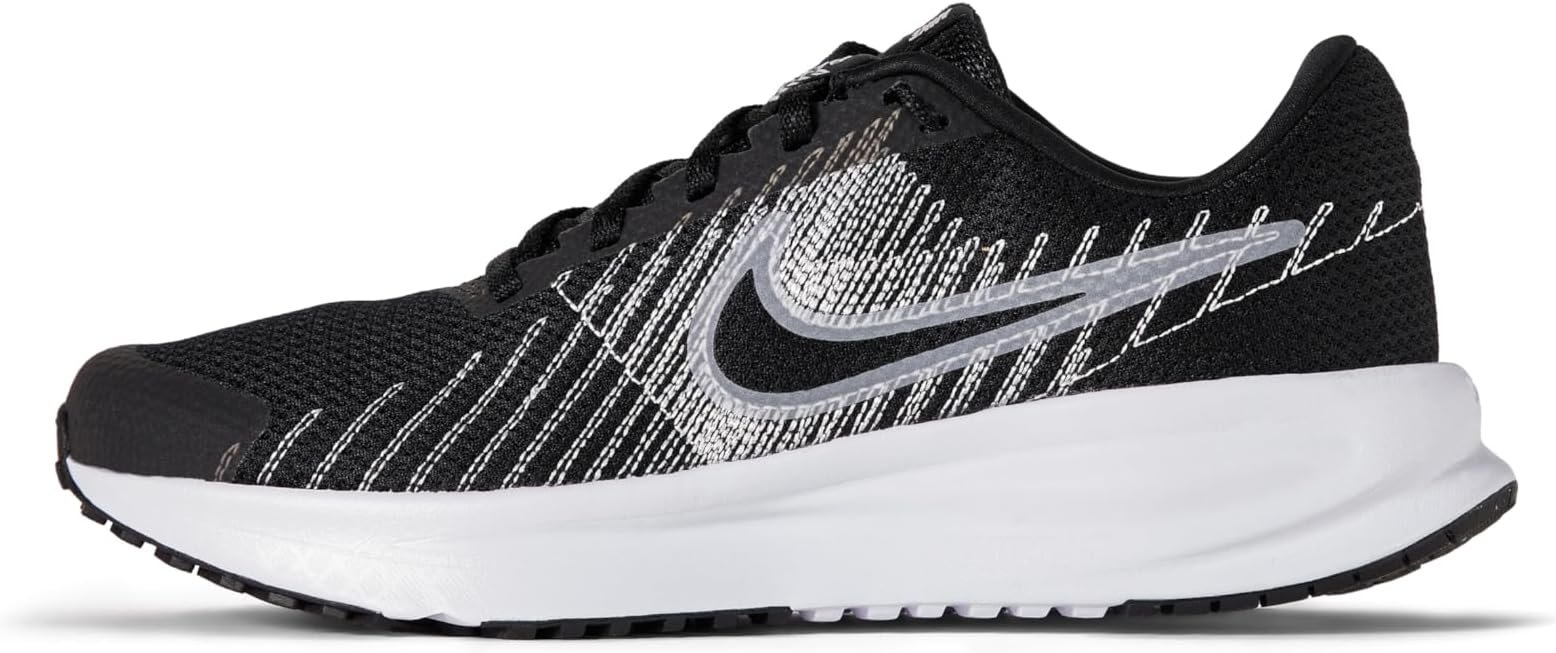
🛒 Check Price on Amazon.com2. Nike Women’s Run Defy Road Running Shoes – Best Lightweight Budget Pick
⭐ 4.4/5 · 1,359 Amazon reviews
💲 Supplied Amazon price: $65
Expert Take
The Run Defy is one of the more interesting budget choices because it combines a relatively light 233-gram listed weight with a 10mm heel-to-toe drop and soft foam cushioning.
For someone who wants a daily sneaker that doesn’t feel heavy, this is appealing.
The breathable mesh upper is useful for everyday wear, while the waffle-style outsole provides traction. The shoe is more flexible and less substantial underfoot than the Promina, though, so I would not automatically choose it for someone who wants maximum heel protection.
Best For
- Lightweight everyday walking
- Budget-conscious buyers
- Short-to-moderate walks
- People who dislike bulky shoes
- Casual running
Why It Works
- 10mm drop: Provides a conventional heel-to-forefoot transition.
- Soft foam: Takes some harshness out of each step.
- 233g listed weight: Keeps the shoe relatively light.
- Flex grooves: Allow natural movement.
- Breathable mesh: Helps reduce heat during longer wear.
Pros
- Lightweight
- Affordable
- Breathable
- 10mm heel-to-toe drop
- Good everyday versatility
- Available in a broad size range in the supplied listing
Cons
- Less substantial cushioning than the Promina
- Not a dedicated stability shoe
- May not provide enough structure for severe overpronation
Verdict
The Run Defy makes sense when you want an inexpensive, lightweight Nike that can handle daily walking without feeling cumbersome.
If your primary complaint is intense heel impact, I’d spend more on the Promina instead.
🛒 Check Price on Amazon.com3. Nike Women’s Revolution 8 Road Running Shoes – Best Maximum-Cushioning Option
⭐ 4.3/5 · 3,296 Amazon reviews
💲 Supplied Amazon price: $75
Expert Take
The Revolution 8 is a straightforward cushioned running shoe with a 10mm heel-to-toe drop and a relatively light listed weight of 226.5 grams.
The standout feature here is cushioning. Nike describes the shoe as having maximum cushioning, with foam through the midsole and flex grooves in the forefoot.
For plantar fasciitis sufferers who like a soft, flexible running shoe, this can be attractive. The downside is that maximum cushioning does not automatically mean maximum stability or arch support.
Best For
- Cushioned daily walking
- Easy running
- People who like soft midsoles
- Lightweight footwear
- Budget buyers
Why It Works
- Maximum cushioning: Reduces the harsh feel of repeated impacts.
- 10mm drop: Creates a familiar heel-raised geometry.
- Flex grooves: Help the forefoot bend naturally.
- 226.5g listed weight: Keeps the shoe relatively light.
- Breathable mesh: Better suited to extended wear.
Pros
- Soft cushioning
- Lightweight
- 10mm drop
- Breathable upper
- Flexible forefoot
- Good value
Cons
- Arch support is not its strongest feature
- Soft platform may not suit people seeking strong stability
- Not a substitute for a structured orthopedic shoe
Verdict
Choose the Revolution 8 if cushioning and light weight are more important to you than aggressive stability.
For severe overpronation or significant balance concerns, I’d look for a more structured shoe rather than assuming maximum cushioning solves everything.
🛒 Check Price on Amazon.com4. Nike Run Swift 3 Road Running Shoes – Best for Running & Walking
⭐ 4.5/5 · 1,683 Amazon reviews
💲 Supplied Amazon price: $66.97
Expert Take
The Run Swift 3 sits in a useful middle ground between a basic walking sneaker and a performance-oriented running shoe.
The supplied listing gives it a 306-gram weight and 10mm heel-to-toe drop. Its foam midsole provides a plush underfoot sensation, while Flywire cables help secure the foot when the laces are tightened.
That secure upper is something I appreciate. If your heel moves around inside the shoe, even good cushioning can become less useful.
The downside is that this isn’t specifically a plantar-fasciitis shoe. Its support comes primarily from the overall construction and secure fit rather than a dedicated medical-style arch or motion-control system.
Best For
- Walking and running
- People wanting a secure fit
- Neutral-foot walkers
- Everyday exercise
- Moderate cushioning needs
Why It Works
- 10mm drop: Offers a conventional heel-to-toe transition.
- Plush foam: Softens repeated impacts.
- Flywire cables: Help secure the midfoot.
- Heel overlay: Adds additional heel security.
- Rubber outsole: Provides everyday traction.
Pros
- Supportive upper
- Plush foam
- 10mm drop
- Versatile for walking and running
- Strong customer rating in the supplied listing
Cons
- Heavier than the Run Defy and Revolution 8
- Not a dedicated stability shoe
- May not provide enough arch structure for everyone
Verdict
The Run Swift 3 is a good option if you want one Nike shoe for both walking and light running.
I would choose it over the Revolution 8 if your biggest concern is a secure, locked-in fit rather than the lightest possible shoe.
🛒 Check Price on Amazon.com5. Nike Air Max Alpha Trainer 6 – Best for Stability & Gym Training
⭐ 4.5/5 · 2,721 Amazon reviews
💲 Supplied Amazon price: $100
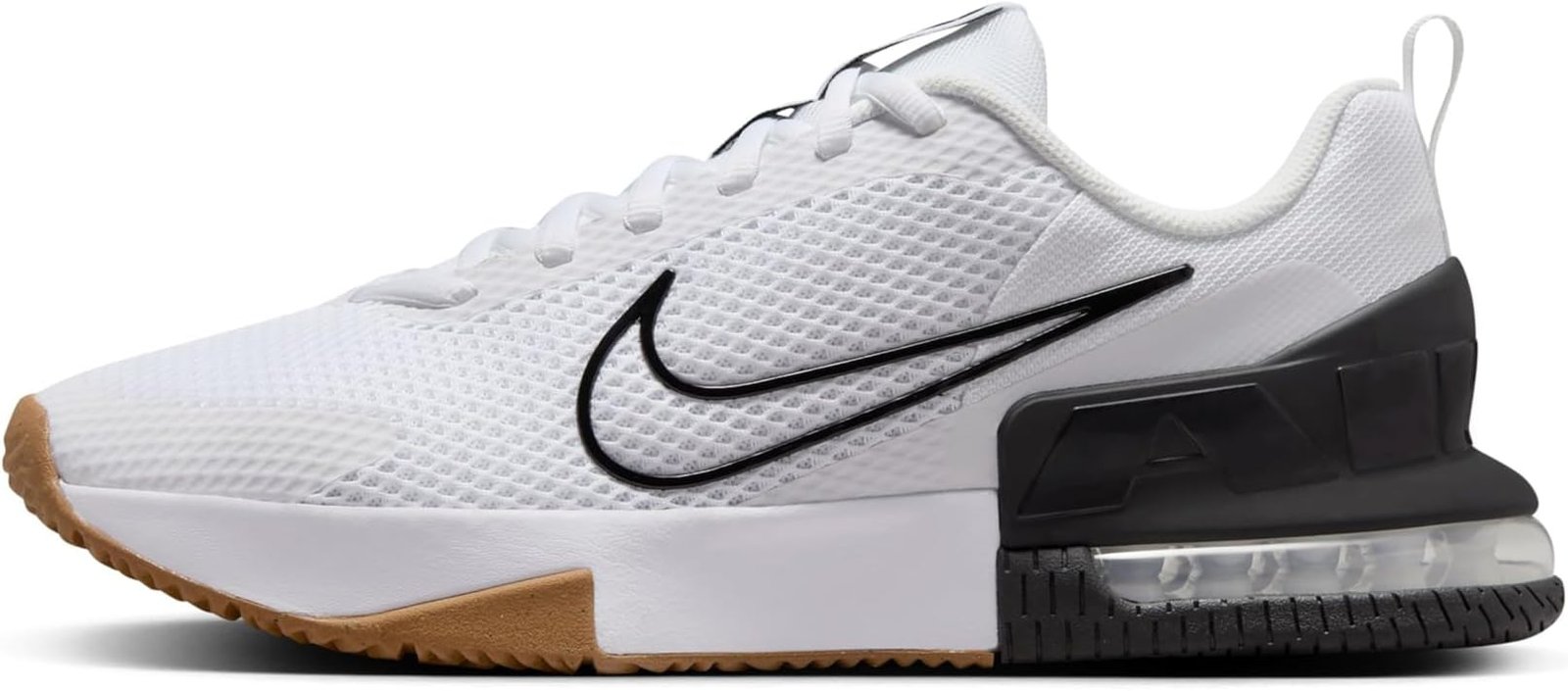
Expert Take
The Alpha Trainer 6 is very different from the running shoes above.
Nike gives it a flat, wide base intended to provide a stable stance during training. The heel Max Air unit adds cushioning, while the outsole is designed for grip during lateral movements.
That stability is useful if you spend time lifting weights or doing gym exercises, but I wouldn’t choose this as my first shoe for someone whose main goal is walking several miles.
The platform is substantially sturdier and heavier, with the supplied listing reporting approximately one pound.
Best For
- Gym training
- Weight training
- People who prioritize stability
- Lateral movements
- Short walking sessions
Why It Works
- Wide flat base: Reduces the feeling of sinking into soft foam.
- Heel Max Air: Adds impact cushioning.
- Rubber traction: Helps with gym-floor grip.
- Moderate flexibility: Allows controlled movement.
- Stable heel: Useful during strength exercises.
Pros
- Excellent training stability
- Wide base
- Good heel cushioning
- Strong traction
- Secure platform
Cons
- Heavy compared with running shoes
- Flat geometry isn’t ideal for everyone with heel pain
- Not my first choice for long-distance walking
Verdict
If you have plantar fasciitis but spend more time training in a gym than walking outdoors, the Alpha Trainer 6 makes more sense than a soft running shoe.
For daily walking, however, I’d choose the Promina.
🛒 Check Price on Amazon.com6. Nike Air Monarch IV – Best Traditional Training Shoe
⭐ 4.4/5 · 31,514 Amazon reviews
💲 Supplied Amazon price: $74.97
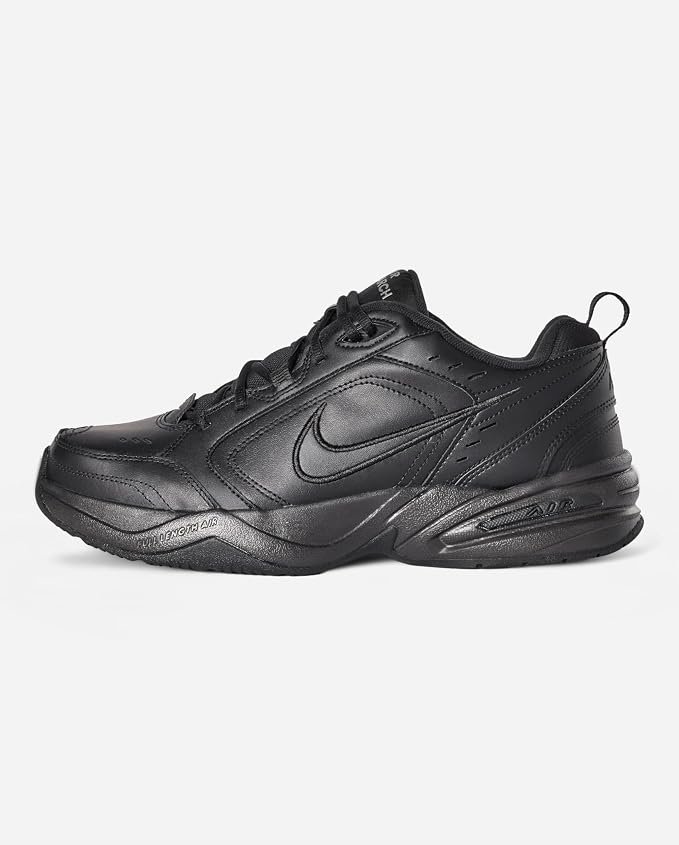
Expert Take
The Air Monarch IV is the old-school option in this group.
It uses leather and synthetic leather rather than the lightweight mesh construction found on Nike’s newer running shoes. The full-length Air-Sole unit supplies cushioning, while the rubber outsole provides traction.
The big advantage is durability and a substantial feel. The downside is obvious: this is not the shoe I’d pick if your priority is a lightweight, flexible walking experience.
Best For
- Traditional sneaker fans
- Gym training
- Everyday casual wear
- People who like substantial shoes
- Durability-focused buyers
Why It Works
- Full-length Air-Sole unit: Provides cushioning along the foot.
- Leather upper: Gives a more substantial feel.
- Rubber outsole: Adds traction and durability.
- Structured construction: Feels more supportive than a minimal sneaker.
Pros
- Substantial construction
- Good cushioning
- Durable outsole
- Traditional appearance
- Huge number of customer reviews
Cons
- Bulky
- Less breathable than mesh running shoes
- Not designed specifically for plantar fasciitis
- Less appealing for long walks
Verdict
The Air Monarch IV is worth considering if you want a traditional Nike trainer with plenty of structure.
For plantar fasciitis-related walking, though, I prefer the softer, more walking-oriented Promina.
🛒 Check Price on Amazon.com7. Nike Air Max Nuaxis – Best Casual Nike Option
⭐ 4.5/5 · 1,052 Amazon reviews
💲 Supplied Amazon price: $89.96
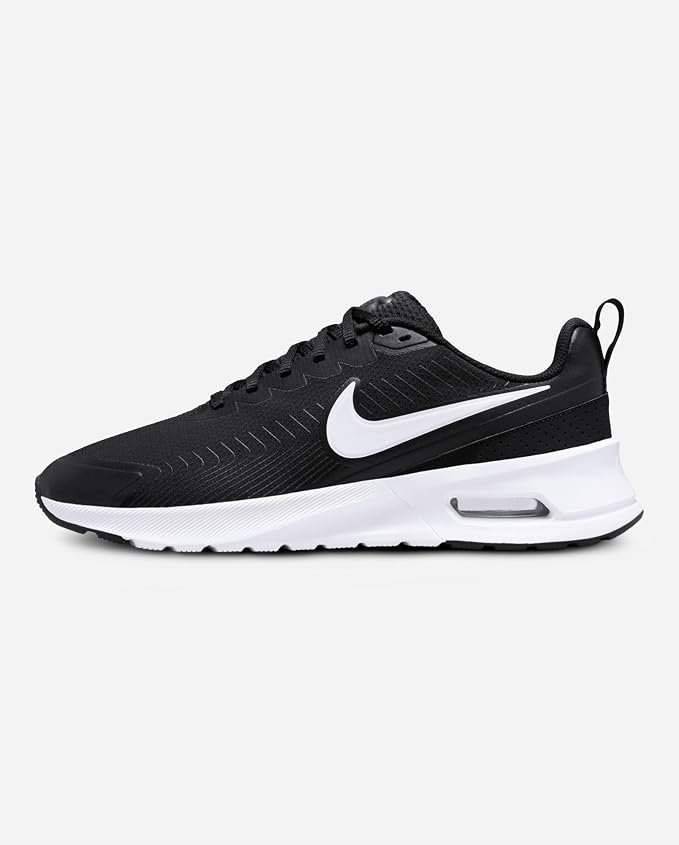
Expert Take
The Air Max Nuaxis is primarily an everyday casual sneaker, but its Max Air cushioning makes it more interesting for plantar fasciitis than a completely flat lifestyle shoe.
The mesh upper is breathable and the rubber outsole provides traction. The Max Air unit adds cushioning without making the shoe a dedicated running model.
I’d use it for errands, commuting and ordinary daily wear. I would not rank it above the Promina for someone buying specifically for long walks.
Best For
- Casual everyday wear
- Errands
- Short walks
- People wanting Nike Air cushioning
- Lifestyle use
Why It Works
- Max Air unit: Provides heel cushioning.
- Mesh upper: Helps with breathability.
- Rubber outsole: Provides traction.
- Lifestyle construction: Works well with everyday clothing.
Pros
- Comfortable casual design
- Air cushioning
- Breathable upper
- Good traction
- Versatile appearance
Cons
- Not a dedicated walking shoe
- Limited plantar-fasciitis-specific support
- Less suitable for long-distance walking
Verdict
This is the Nike I’d choose when you want a casual shoe that offers more cushioning than a basic fashion sneaker.
For serious walking, spend your money on a purpose-built walking model instead.
🛒 Check Price on Amazon.com8. Nike Court Legacy Next Nature – Best Casual Style
⭐ 4.3/5 · 3,218 Amazon reviews
💲 Supplied Amazon price: $60
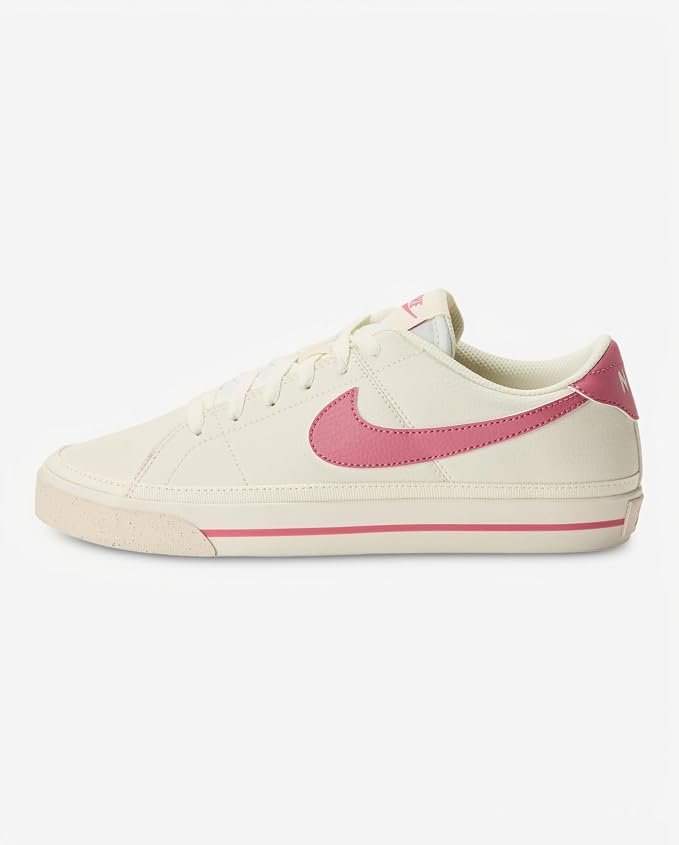
Expert Take
The Court Legacy Next Nature is primarily a casual lifestyle shoe with a tennis-inspired shape.
It has a full-length rubber outsole and synthetic leather construction, which gives it a durable, traditional feel. It also has some cushioning, but it does not have the specialized foam stack, rocker geometry or running-shoe construction I’d prioritize for plantar fasciitis.
This is a style-first choice rather than a pain-management footwear choice.
Best For
- Casual wear
- Short periods of standing
- Fashion-focused buyers
- Light walking
Why It Works
- Full-length rubber outsole: Gives dependable traction.
- Synthetic leather: Adds structure.
- Cushioned construction: More comfortable than a completely flat casual shoe.
- Herringbone traction: Helps across multiple surfaces.
Pros
- Affordable
- Attractive casual design
- Durable outsole
- Good everyday versatility
Cons
- Limited cushioning compared with the top picks
- Not designed for long walking
- Less flexible than running shoes
- Not my recommendation for severe plantar fasciitis
Verdict
Buy this one because you like the look, not because you expect it to be the best plantar fasciitis shoe.
If heel comfort is the priority, move up the list.
🛒 Check Price on Amazon.comWhich Nike Shoe Is Best for Your Type of Plantar Fasciitis Pain?
🟢 Buying Advice
Start with the Promina because its walking geometry and high cushioning are the strongest match here.
The Run Defy and Revolution 8 are easier choices when low weight matters.
The Alpha Trainer 6 has the strongest stability-focused design in this group.
The Run Swift 3 is the most balanced choice if you alternate between walking and running.
Common Mistakes When Buying Nike Shoes for Plantar Fasciitis
Buying the Softest Shoe Available
Softness feels impressive in a store.
After several miles, however, the shoe may feel completely different.
A good plantar fasciitis shoe should provide cushioning without making you feel like your foot is sinking into unstable foam.
Ignoring Width
Length is only half of shoe fit.
If the shoe is too narrow, your toes can become compressed and the sides of your foot may experience unnecessary pressure.
If your foot is wide, look for Nike models and variants that offer wider sizing rather than simply buying a longer shoe.
Choosing a Running Shoe for Every Activity
Running shoes are excellent for running.
That doesn’t mean every running shoe is ideal for standing all day, weight training or walking several miles.
The Alpha Trainer 6 is a good example. Its stable, wide platform makes sense for training, but I’d choose the Promina for dedicated walking.
Wearing the Same Pair Until the Foam Is Dead
This is one of the complaints I hear most often from people who wait too long to replace walking shoes.
The upper can still look perfectly fine while the cushioning and support have lost some of their original feel.
If your shoes suddenly feel harder, flatter or less stable than they did several months ago, don’t judge them solely by how good the outside still looks.
How Should Nike Shoes Fit If You Have Plantar Fasciitis?
Use the following fitting process:
- Try shoes later in the day. Feet can swell after hours of activity.
- Wear your normal walking socks.
- Leave some space in front of the longest toe.
- Check both feet. One foot is often slightly larger.
- Walk for several minutes.
- Check the heel. It should feel secure without excessive slipping.
- Check the arch. Support should feel comfortable rather than sharply intrusive.
- Check the widest part of the foot. There should not be squeezing or pressure.
- Don’t assume pain means the shoe needs breaking in.
- Inspect your feet after wearing them, especially if you have reduced sensation.
If you are unsure about your size, measure both feet and use the larger measurement when choosing your size.
Are Nike Shoes Good for Plantar Fasciitis?
Yes, some Nike shoes can be comfortable choices for people with plantar fasciitis, particularly models with substantial cushioning, a secure heel and appropriate geometry.
But I wouldn’t call every Nike shoe a plantar fasciitis shoe.
The Court Legacy, for example, is primarily a casual sneaker. The Alpha Trainer is primarily a training shoe. The Promina is a much more logical choice when walking comfort is your main goal.
The key is matching the shoe to the activity and your foot rather than buying based solely on the Nike name.
Do You Need Arch Support for Plantar Fasciitis?
Not everyone needs the same amount of arch support.
Some people feel better with additional support under the medial arch, while others find aggressive arch structures uncomfortable.
Your foot type matters.
If you have flat feet and tend toward overpronation, a more stable shoe may be useful. If you have a high arch or tend toward supination, excessive rigidity can create pressure in other areas.
This is why I don’t rank shoes solely by how much “arch support” they claim to have.
The better question is whether the entire shoe keeps your foot comfortable and controlled.
What About APMA Approval?
You may see the term APMA Seal of Acceptance when shopping for footwear.
The American Podiatric Medical Association reviews products for qualities that promote foot health, but not every good walking shoe carries an APMA seal.
Don’t assume a shoe is unsuitable simply because you don’t see the designation.
Likewise, don’t treat an approval label as proof that the shoe will solve your individual plantar fasciitis problem.
Fit still matters.
Nike Plantar Fasciitis Shoes: Comparison Table
| Product | Weight | Heel-to-Toe Drop | Arch Support | Cushioning | Stability | Best For | Price |
| Nike Promina | 0.65 lb | Not supplied | Moderate | High | Moderate | Walking | $86.14 |
| Nike Run Defy | 233 g | 10 mm | Moderate | All-day | Moderate | Everyday walking | $65 |
| Nike Revolution 8 | 226.5 g | 10 mm | Moderate | Maximum | Moderate | Cushioned walking/running | $75 |
| Nike Run Swift 3 | 306 g | 10 mm | Moderate | Plush | Moderate | Walking + running | $66.97 |
| Nike Alpha Trainer 6 | 1 lb | Not supplied | Structured | High | High | Training | $100 |
| Nike Air Monarch IV | 7 oz | Not supplied | Structured | Lightweight | Moderate | Training/casual | $74.97 |
| Nike Air Max Nuaxis | 11.2 oz | Not supplied | Moderate | Cushioned | Moderate | Casual | $89.96 |
| Nike Court Legacy | 800 g* | Not supplied | Limited | Cushioned | Low-Moderate | Casual | $60 |
Frequently Asked Questions
Are Nike shoes good for plantar fasciitis?
Some Nike shoes are good comfort choices for plantar fasciitis, but the brand itself does not guarantee support. Models with substantial cushioning, secure heel construction and comfortable geometry are generally more interesting than flat lifestyle sneakers. In this roundup, the Promina is my preferred option for walking.
Which Nike shoe is best for plantar fasciitis?
For walking, I would choose the Nike Promina from this particular group. It combines high cushioning with moderate stability and a walking-oriented rocker geometry. If you need a lighter shoe, the Revolution 8 or Run Defy may suit you better, depending on your preferred level of cushioning and support.
Are cushioned Nike shoes good for heel pain?
They can be. Cushioning can make hard walking surfaces feel less harsh, but extremely soft foam is not automatically better. A stable platform, comfortable heel fit and appropriate flexibility are also important. If a cushioned shoe makes you feel unstable, it may not be the right choice for you.
Is a 10mm heel-to-toe drop good for plantar fasciitis?
A 10mm drop can be comfortable for some people with plantar fasciitis because it creates a relatively traditional heel-raised geometry. However, there is no universal heel-drop number that works for everyone. Your current footwear, calf flexibility, foot mechanics and comfort should all be considered.
Are Nike running shoes good for walking with plantar fasciitis?
Many running shoes can work well for walking because they provide cushioning and lightweight construction. The important thing is choosing the right model. A running shoe with excessive softness or inadequate stability may not work as well for you as a walking-specific design such as the Promina.
Do Nike shoes have good arch support?
Nike’s level of arch support varies considerably by model. Some shoes provide a more structured platform, while others rely primarily on foam cushioning and the shape of the footbed. If you specifically need strong arch support, don’t assume every Nike running shoe will provide it.
Are Nike shoes good for standing all day with plantar fasciitis?
Some are better suited than others. For prolonged standing, I would prioritize cushioning, a stable base, secure heel fit and enough room for your feet to swell. The Promina is more suitable for this purpose than a flat casual shoe such as the Court Legacy.
How long do Nike walking shoes last?
There is no exact replacement date because durability depends on body weight, walking frequency, surfaces, mileage and construction. As a practical rule, pay attention to changes in cushioning, outsole wear and stability rather than relying solely on how the upper looks.
Should plantar fasciitis shoes be soft or firm?
A balance usually works better than either extreme. Too firm can make hard surfaces uncomfortable, while excessively soft foam can feel unstable. I prefer cushioning that absorbs impact while retaining enough structure to keep the foot controlled.
Can I run in Nike shoes if I have plantar fasciitis?
You can, but running places substantially more repetitive load on the foot than ordinary walking. If running consistently causes heel pain, changing shoes alone may not solve the problem. Reduce aggravating activity and consider professional evaluation if symptoms persist.
Are wide Nike shoes better for plantar fasciitis?
A wider shoe can be beneficial if your current footwear squeezes your forefoot. But wide does not automatically mean better. Your heel should remain secure and your foot should not slide excessively inside the shoe. Choose the width that matches your actual foot rather than sizing up unnecessarily.
Can shoes cure plantar fasciitis?
No. Shoes can improve comfort and reduce aggravating factors, but they should not be considered a cure. Persistent heel pain can have several causes, so ongoing or severe symptoms should be assessed by a qualified healthcare professional.
Related Reading
📚 More Footwear Guides
Final Verdict: Which Nike Shoe Should You Buy?
If you want one clear answer, the Nike Promina is my top choice for walking with plantar fasciitis from the models reviewed here. Its high cushioning, moderate stability and walking-specific geometry give it the strongest overall case.
If price and weight matter more, look at the Nike Run Defy.
If you want maximum cushioning in a lighter running shoe, the Revolution 8 is worth considering.
If your priority is gym stability, choose the Air Max Alpha Trainer 6 instead.
And if you want one shoe that can handle both walking and running, the Run Swift 3 is the more versatile pick.
The biggest mistake is buying based on the Nike name alone. Your heel pain, foot shape, walking habits and preferred level of stability should determine the choice.
🛒 Ready to Compare Prices?
Check the current Amazon price, available sizes and width options before ordering. Prices and availability can change.
🛒 Check Nike Promina Price on AmazonAffiliate Disclosure
We may earn a small commission at no extra cost to you when you purchase through links on this page. Our rankings are based on footwear characteristics, intended use, fit considerations and practical comfort factors rather than the commission earned from any particular product.