

Knit Shoes Material Explained: How Knit Uppers Work and Wear
Get AI Quick Summary
Open an AI assistant and submit the request to ask for a summary. The assistant may need access to the article or its text to summarize it accurately.
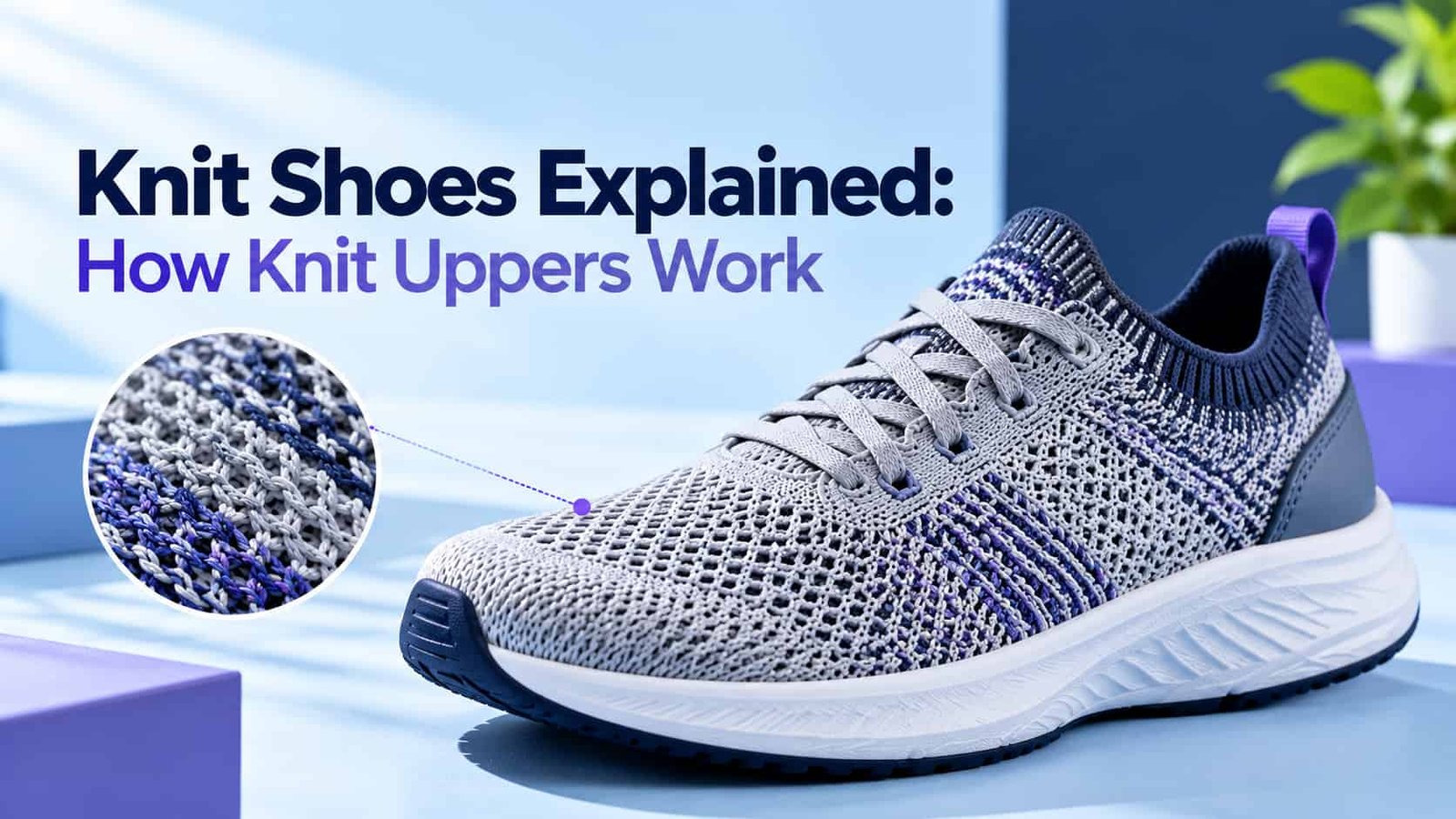
Knit shoes material refers to a knitted textile used to form all or part of a shoe’s upper. Instead of relying only on separate pieces of woven fabric, a knit upper is created by forming yarn into interconnected loops. Depending on the yarn and knitting pattern, the result can be flexible, lightweight, breathable, or more structured. Durability and support still depend on the complete shoe design.
Quick answer: Are knit shoes good?
Knit shoes can be a good choice for everyday wear, travel, walking, and some types of running because the upper can flex around the foot and reduce bulky seams. However, not all knit fabrics are equally breathable or durable. The yarn, stitch density, reinforcements, fit, lining, sole, and intended activity determine whether a particular pair is suitable.
Key takeaways
- Knit describes construction: the upper is formed from knitted yarn, but the yarn may be synthetic, natural, recycled, or blended.
- Comfort depends on fit: a flexible upper can feel comfortable, but it cannot correct a narrow toe box or an unsuitable shoe shape.
- Durability varies: yarn quality, knit density, abrasion protection, seams, and use all affect how long the upper lasts.
- Knit is not automatically waterproof: water resistance depends on the textile, coatings, lining, and full shoe construction.
- Cleaning needs care: gentle cleaning is often suitable, but follow the manufacturer’s instructions for the specific shoe.
- Compare the whole shoe: cushioning, outsole grip, heel hold, and support matter as much as the upper material.
Table of Contents
What Is Knit Material in Shoes?
Knit material is a textile made by forming yarn into a series of connected loops. In footwear, this construction is used to create an upper that wraps around the foot. The resulting fabric can be soft and flexible, tightly structured, or engineered with different properties in different zones.
Traditional cut-and-sew footwear often uses separate pieces of material that are cut to shape and then stitched together. Some knitted uppers can be formed closer to their final shape, potentially reducing the need for cutting and the amount of material discarded during production. The exact manufacturing process varies by shoe and knitting technology.
Knit shoes are often associated with a sock-like appearance, but that description does not mean every knit upper is soft or highly stretchy. Some designs use dense stitches, reinforcing yarns, films, overlays, or internal structures to create a more secure fit.
Where is knit material used?
Knit construction is commonly used in:
- Casual knit sneakers.
- Lightweight walking shoes.
- Some road-running shoes.
- Lifestyle and travel footwear.
- Selected sports and training shoes.
- Some wool or natural-fibre footwear.
- Fashion sneakers with textured or patterned uppers.
Knit material is primarily an upper construction. The sole may use rubber, EVA foam, polyurethane, or other compounds. The lining, insole, midsole, outsole, heel counter, and reinforcement panels all affect the shoe’s performance.
For a broader look at how these materials fit together, read our Shoe Materials Explained guide.
How Are Knit Shoe Uppers Made?
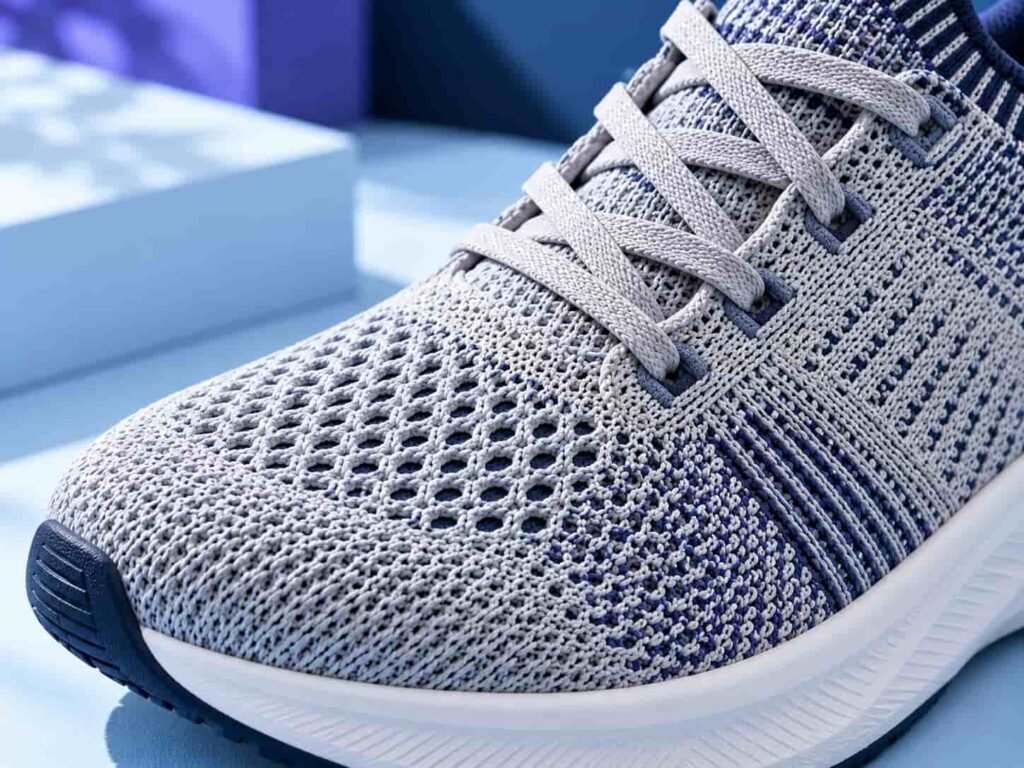
Knitted shoe uppers are created by interlocking yarn loops using knitting machinery or other textile processes. The manufacturer chooses a yarn and knitting structure to produce the required shape, flexibility, texture, and performance characteristics.
A simplified process may include the following stages.
1. Selecting the yarn
The yarn may be made from polyester, nylon, wool, or a blend of fibres. Some designs incorporate recycled fibres or specialised yarns. Each choice affects factors such as texture, moisture handling, stretch, weight, and resistance to wear.
The fibre alone does not determine quality. Two uppers made from the same type of polyester can perform differently if their yarn thickness, knitting pattern, density, or reinforcement differs.
2. Creating the knit structure
The yarn is formed into connected loops. The machine settings and stitch structure influence the finished textile’s thickness, flexibility, texture, and shape.
3. Shaping the upper
Some uppers are knitted close to their final three-dimensional shape. Others are produced as flat or tubular textile sections and then cut and stitched into a shoe upper. The choice depends on the design and manufacturing method.
4. Adding support and reinforcement
Manufacturers may add denser knitted zones, films, overlays, a lining, or reinforcement around high-wear areas. These features can help the upper maintain its shape and hold the foot securely.
5. Attaching the sole
The upper is assembled with the rest of the shoe. Bonding, stitching, and other construction methods vary by product.
Coats describes knitted footwear yarns and solutions developed for sports, performance, and lifestyle shoes, including different finishes and functional yarn options. This illustrates why knit shoes should be judged by the complete construction rather than the word “knit” alone. Read Coats’ official knitted footwear information.
Types of Knit Materials Used in Shoes
Not all knitted uppers use the same fibre or structure. Understanding the differences can help you assess a product description more critically.
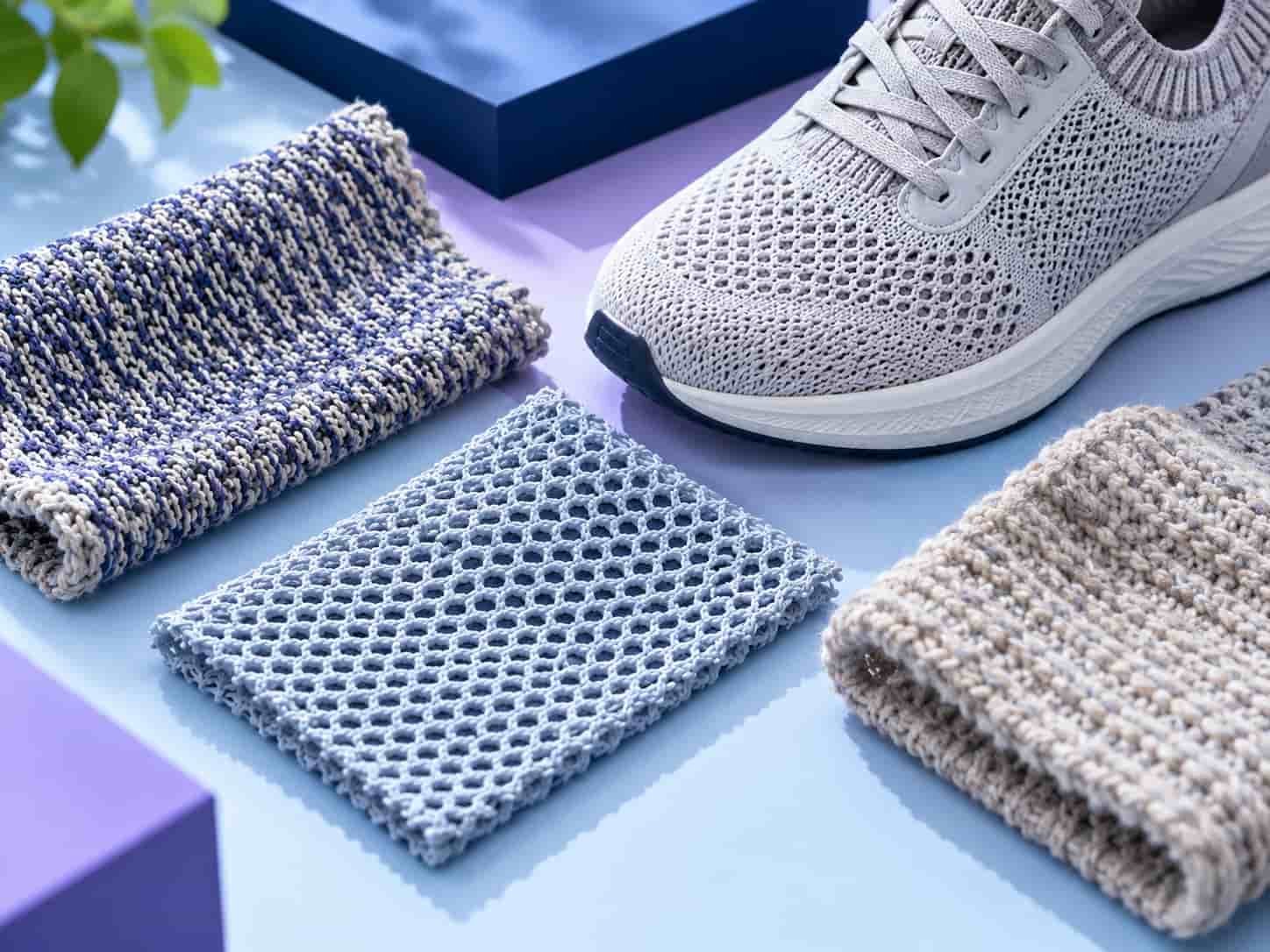
| Knit material or construction | Typical characteristics | What to check |
| Polyester knit | Can be lightweight and engineered into different patterns | Knit density, lining, abrasion protection, and fit |
| Nylon knit | Can be used where strength and flexibility are important | Yarn specification, reinforcement, and actual shoe design |
| Wool or merino wool knit | Can offer a soft feel and moisture-vapour handling associated with wool | Care instructions, warmth, drying, and abrasion resistance |
| Blended-fibre knit | Combines fibres to balance different material characteristics | The actual blend and the role of each fibre |
| Engineered or zoned knit | Different sections may use different densities, textures, or structures | Whether the upper feels secure and comfortable in the areas that matter |
| Recycled-yarn knit | Incorporates recycled fibre content when specified by the manufacturer | Verified content claims and the complete product specification |
What about wool-knit shoes?
Wool is an example of how fibre choice can change the experience of a knitted upper. Woolmark describes footwear applications using merino wool, including layered knitted constructions designed to combine next-to-skin comfort with shape stability and outer-layer abrasion resistance.
That does not mean every wool-knit shoe has the same properties or is automatically machine washable. The finished blend, construction, and care instructions matter. Explore Woolmark’s wool footwear and knitted-upper information.
Benefits of Knit Shoes
Knit uppers can be useful because they allow manufacturers to shape textile around the foot and vary the construction across different areas. The benefits depend on the specific shoe.
1. Flexible feel
Knitted loops can allow the upper to bend and move with the foot. This may make a shoe feel less rigid than one with a thick, heavily structured upper.
Flexibility is not always an advantage, though. Some activities require more lateral support or a firmer hold. The right amount of flexibility depends on the intended use.
2. Potentially lightweight construction
Some knit uppers use relatively little material and can be made with fewer separate panels. This may reduce upper weight, although the sole, padding, overlays, and reinforcements also contribute to the final shoe weight.
Do not assume every knit sneaker is lighter than every mesh or leather shoe. Compare the actual product specifications when weight matters.
3. A close, adaptive fit
Knit fabrics can be designed to follow the shape of the foot. Some feel similar to a sock, while others are denser and more structured.
A close-fitting upper should not squeeze the toes, create pressure over the instep, or allow the heel to slip excessively. A sock-like feel is not a substitute for the correct size and width.
4. Different textures and designs
Knitting makes it possible to create patterns, textures, colour variations, and different densities within the same upper. This is one reason knit shoes appear in both athletic and casual footwear.
5. Potentially fewer cut-and-sew offcuts
Some fully fashioned or near-net-shape knitted uppers can reduce the need for cutting separate textile panels. Woolmark describes this as one benefit of fully fashioned knitting technology in wool footwear.
However, reduced cutting waste does not automatically mean the whole shoe has a lower environmental impact. Fibre production, dyeing, energy, adhesives, sole materials, shipping, durability, and end-of-life disposal also matter.
Knit Sneakers: Pros and Cons
Knit sneakers can be comfortable and versatile, but they have trade-offs. The following table is a practical buying guide, not a laboratory rating of every knit shoe.
| Potential advantages | Potential drawbacks |
| Flexible upper construction | Some designs may lack enough structure for particular activities |
| Often designed to reduce bulky seams or panels | Thin textile may snag or abrade |
| Can feel lightweight | The full shoe may still be heavy due to its sole and reinforcements |
| Can provide airflow when the knit and lining permit it | Dense knits and linings may feel warm |
| Many styles have a casual, modern appearance | Fabric may collect dirt or develop fuzzing |
| Some designs use yarn zones for targeted structure | Support and durability vary by product |
| Some knitted uppers can be cleaned gently | Machine washing is not safe for every shoe |
Who may prefer knit sneakers?
Knit sneakers may suit people who want a flexible upper for casual walking, travel, commuting, or everyday wear. They may also suit runners when the specific model provides the fit, support, cushioning, and outsole grip appropriate to the runner’s needs.
A more structured shoe may be preferable when the activity involves substantial side-to-side movement, repeated abrasion, exposure to debris, or a need for stronger upper protection.
Are Knit Shoes Breathable?
Knit uppers can be breathable, but breathability is not guaranteed by the construction name alone. The amount of airflow depends on the openness of the knit, fibre properties, fabric thickness, lining, coatings, and reinforcements.
A dense knit may trap more heat than an open knit. A shoe with a breathable outer textile may also feel warm if it has a thick lining or substantial padding.
Other factors influence comfort too:
- Sock choice: Thick socks may feel warmer than lightweight moisture-managing socks.
- Fit: A very tight upper may compress against the foot.
- Weather: Heat and humidity affect how warm a shoe feels.
- Activity: Long walks and workouts generate more heat than short trips.
- Drying: A damp knit shoe may remain uncomfortable until its upper and lining dry.
Woolmark’s knitted wool footwear information describes how fibre choice and layered knitting can be used to influence comfort and moisture-vapour handling. Those properties apply to the described wool constructions and should not be assumed for every synthetic knit upper.
If breathability is your priority, examine the fabric and lining, read the product’s material description, and try the shoe on if possible. Do not rely only on labels such as “sock-like,” “knit,” or “performance.”
Are Knit Shoes Durable?
Knit shoes can last well when the upper is appropriately designed for its use, but knit construction alone is not a durability rating.
The factors that matter most include:
- Yarn quality: Fibre strength and yarn construction affect resistance to wear.
- Knit density: A tighter structure may behave differently from an open, lightweight knit.
- Reinforcement: Toe, side, and heel zones may need extra protection.
- Fit: Repeated friction from a poor fit can wear through fabric.
- Construction quality: Stitching, bonding, and the attachment between upper and sole matter.
- Care: Dirt, harsh cleaning, high heat, and repeated soaking can affect the materials.
- Usage: Daily commuting, gym training, running, and rough outdoor use create different stresses.
Where can knit uppers wear out?
The toe area can experience repeated pressure and friction, particularly if the shoe is too short or the toes push against the textile. The inner heel lining can wear when the heel repeatedly slips or rubs. Side panels can also be affected by repeated abrasion.
These are potential wear areas, not proof that all knit shoes fail in the same places. Shoe design and individual fit can make a substantial difference.
In practice, knit most often fails through stretching, snagging and holes over the toes. A knit can also loosen with wear and hold the foot less firmly over time. A snug fit and lacing that locks the heel slow this down.
How can you extend the life of knit shoes?
- Choose a fit that does not stretch the upper excessively.
- Avoid dragging the shoe against rough surfaces.
- Remove dry dirt gently instead of scrubbing aggressively.
- Allow damp shoes to dry naturally.
- Follow the manufacturer’s cleaning instructions.
- Stop using shoes for activities when the upper or sole no longer provides suitable fit and function.
A hole in the upper is not the only sign of wear. Check the sole, heel hold, cushioning, seams, and bonding too.
Flyknit and Primeknit: What Is the Difference?
Flyknit and Primeknit are brand names, not materials. Flyknit is Nike’s name for its engineered knit uppers, and Primeknit is adidas’s. Both brands introduced them in 2012, and both are built on the same idea: a knit upper made on a specialised machine, shaped close to the final form of the shoe, with tighter zones for support and looser zones for airflow.
| Nike Flyknit | adidas Primeknit | |
| Brand | Nike | adidas |
| Introduced | 2012 | 2012 |
| First shoe | Flyknit Racer, a lightweight running shoe made for the London Olympics | adiZero Primeknit, shown at the London 2012 Games |
| Made on | Specialised knitting machines, little or no cut-and-sew | Specialised knitting machines using thermoplastic yarns |
| Popular in | Running and lifestyle sneakers | Running and lifestyle sneakers, including the UltraBOOST (2015) and NMD |
Brands say knitting yarn to the needed amount creates less offcut waste than cutting panels from rolls of fabric, and adidas describes a no-waste knitting process. Treat that as a production claim rather than a promise about the whole shoe, because the sole, adhesives and shipping also count.
On durability, even the brands are cautious. A footwear trade report on knit uppers quotes one maker calling durability a main pain point, because a broken thread can unravel, and another saying knit trades some durability and support for lower weight and better breathability. So a Flyknit or Primeknit label is a good sign of a well-engineered upper, but it is not a durability rating. Check fit, reinforcement at the toe and heel, and the care label, just as you would for any knit shoe.
Knit vs Mesh Shoes: What Is the Difference?
Knit and mesh are related textile terms, but they are not identical. Knit describes a textile made from connected yarn loops. Mesh describes a network-like structure with openings; mesh fabrics may be knitted or woven, depending on the construction.
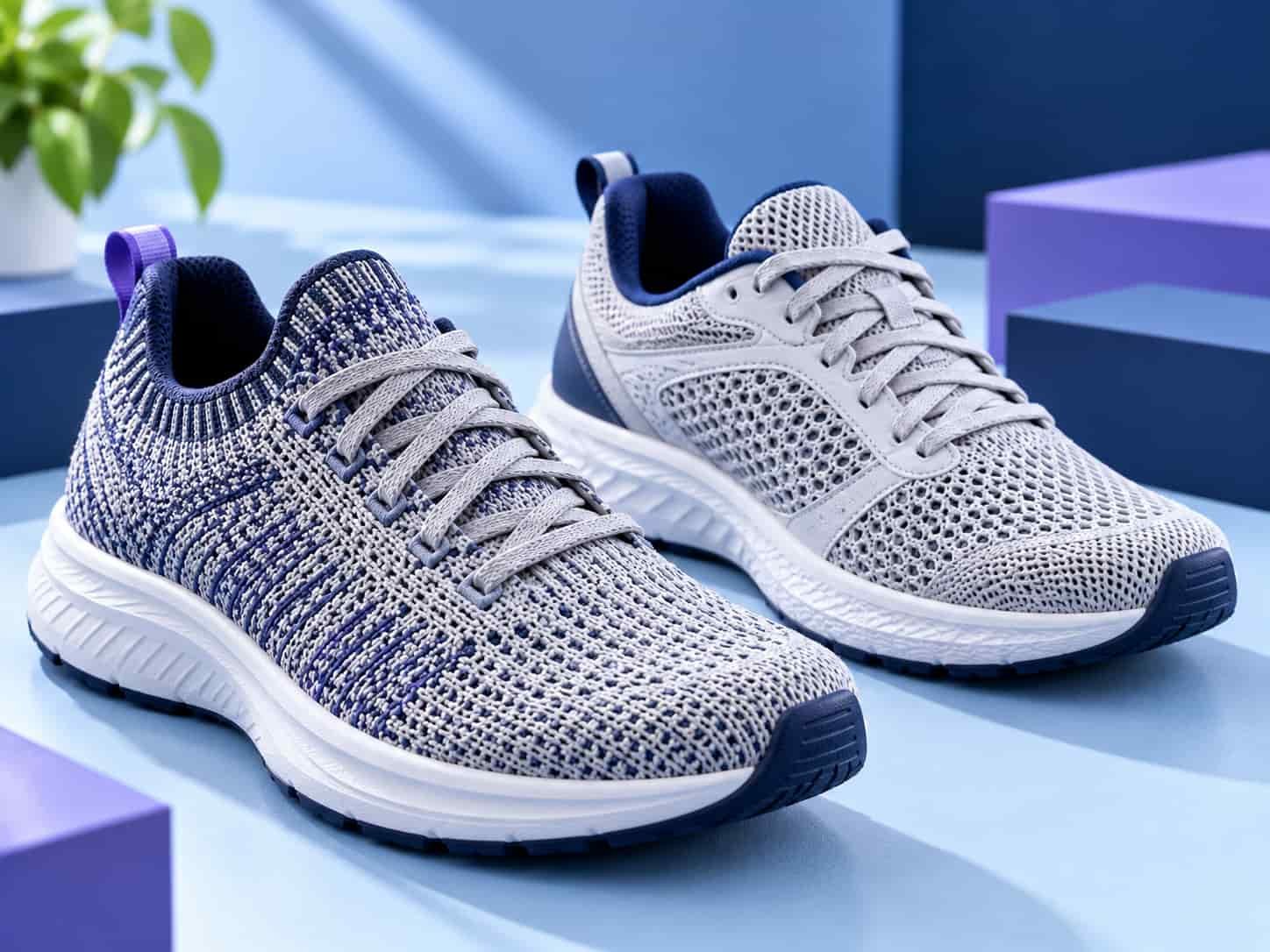
In shoe shopping, “mesh upper” commonly refers to a breathable textile with visible openings, while “knit upper” often describes a knitted textile shaped around the foot. The labels can overlap, so the actual construction matters more than the marketing term.
| Feature | Knit upper | Mesh upper |
| Basic construction | Interconnected yarn loops | Network-like structure; may be knitted or woven |
| Feel | Can be flexible, soft, or tightly structured | Can range from open and flexible to dense and reinforced |
| Airflow | Depends on stitch structure, yarn, and lining | Depends on openings, yarn, overlays, and lining |
| Fit | Some designs offer a sock-like or adaptive feel | Depends on the mesh and supporting elements |
| Durability | Depends on yarn, knit density, reinforcement, and use | Depends on mesh type, yarn, reinforcement, and use |
| Cleaning | Gentle cleaning is often appropriate | Gentle cleaning is often appropriate |
| Rain protection | Not automatically waterproof | Not automatically waterproof |
| Best choice | When the specific fit and knit structure suit the activity | When the specific mesh construction suits the activity |
Which is better: knit or mesh?
Neither is universally better. A dense engineered knit can be more structured than an open mesh, while some mesh uppers include substantial reinforcements and may hold the foot more securely than a loose knit.
Choose by fit, activity, ventilation, support, durability requirements, and care. See our Shoe Materials Explained guide for the wider comparison among footwear materials.
For the full guides to the other upper types, see mesh shoes material and canvas shoes material.
Are Knit Shoes Good for Walking and Running?
Knit shoes can be suitable for walking and running if the full shoe is designed for the activity. The upper is only one component of footwear performance.
For everyday walking
Consider a knit upper if you prefer flexibility and a casual look. Check that the toe area has enough room, the heel feels secure, and the shoe does not stretch or rub uncomfortably while walking.
For long days on your feet, assess the midsole, outsole, and overall fit too. A soft upper alone does not guarantee cushioning or long-term comfort.
For running
Running shoes require a suitable combination of fit, cushioning, outsole grip, and upper security. A knit upper can work well when it holds the foot in place without excessive pressure and suits the runner’s environment.
For road running, check the shoe’s cushioning and outsole for the intended surfaces. For trails, consider abrasion protection, debris exposure, traction, and the possibility of wet conditions.
For gym training
The appropriate shoe depends on the workout. A flexible knit upper may be comfortable for some general gym activities, but exercises involving lateral movement or heavy lifting may require a more secure and stable construction.
Do not select a training shoe solely because the upper is flexible. Check the complete design against the activity.
UrbanStyleFootwear has a shoe-testing methodology page describing the site’s approach to footwear evaluation. This article does not claim that a specific knit model has been independently tested.
Do Knit Shoes Stretch or Lose Their Shape?
Knit shoes may stretch or change shape, but the amount depends on the fibre, stitch structure, reinforcement, and construction. Some knits are designed to stretch comfortably; others use dense or stabilised zones to limit unwanted movement.
A shoe that feels tight in the store should not be purchased on the assumption that it will stretch enough to fit. Excessive pressure may remain uncomfortable, while a shoe that starts too loose may not hold the foot securely after the upper relaxes.
Signs the fit may be wrong
- Toes are pressed against the front of the shoe.
- The upper creates persistent pressure over the top or sides of the foot.
- The heel slips significantly during walking.
- The textile forms pronounced tension lines where the foot pushes against it.
- The shoe feels unstable during the intended activity.
Try shoes with the socks you normally wear and assess them while standing and walking. Fit should be comfortable before the upper has been worn in.
Knit density varies widely between brands, so one knit shoe can feel nothing like another. Soft, stretchy knit often suits wide feet because it adapts instead of pressing. If you have a narrow heel, check the heel hold closely before buying.
Are Knit Shoes Waterproof?
Ordinary knit fabric is not automatically waterproof. Water may pass through the spaces in the knit or soak into the fibres. Some footwear uses coatings, membranes, or other protective construction, but the performance depends on the exact shoe.
A tightly knitted or treated upper may resist light splashes differently from an open, lightweight knit. Do not assume that a shoe is waterproof unless the manufacturer clearly identifies it as such and explains the intended use.
What should you wear in wet weather?
- Occasional light drizzle: Consider the manufacturer’s water-resistance description and accept that textile shoes may still become damp.
- Frequent rain: Look for footwear with a stated waterproof construction.
- Outdoor trails: Consider waterproofing, grip, debris protection, and drying needs together.
- Warm or humid conditions: Remember that additional protective layers may affect airflow and heat retention.
If water protection is essential, compare the entire shoe’s construction rather than choosing based on knit material alone.
How to Clean Knit Shoes
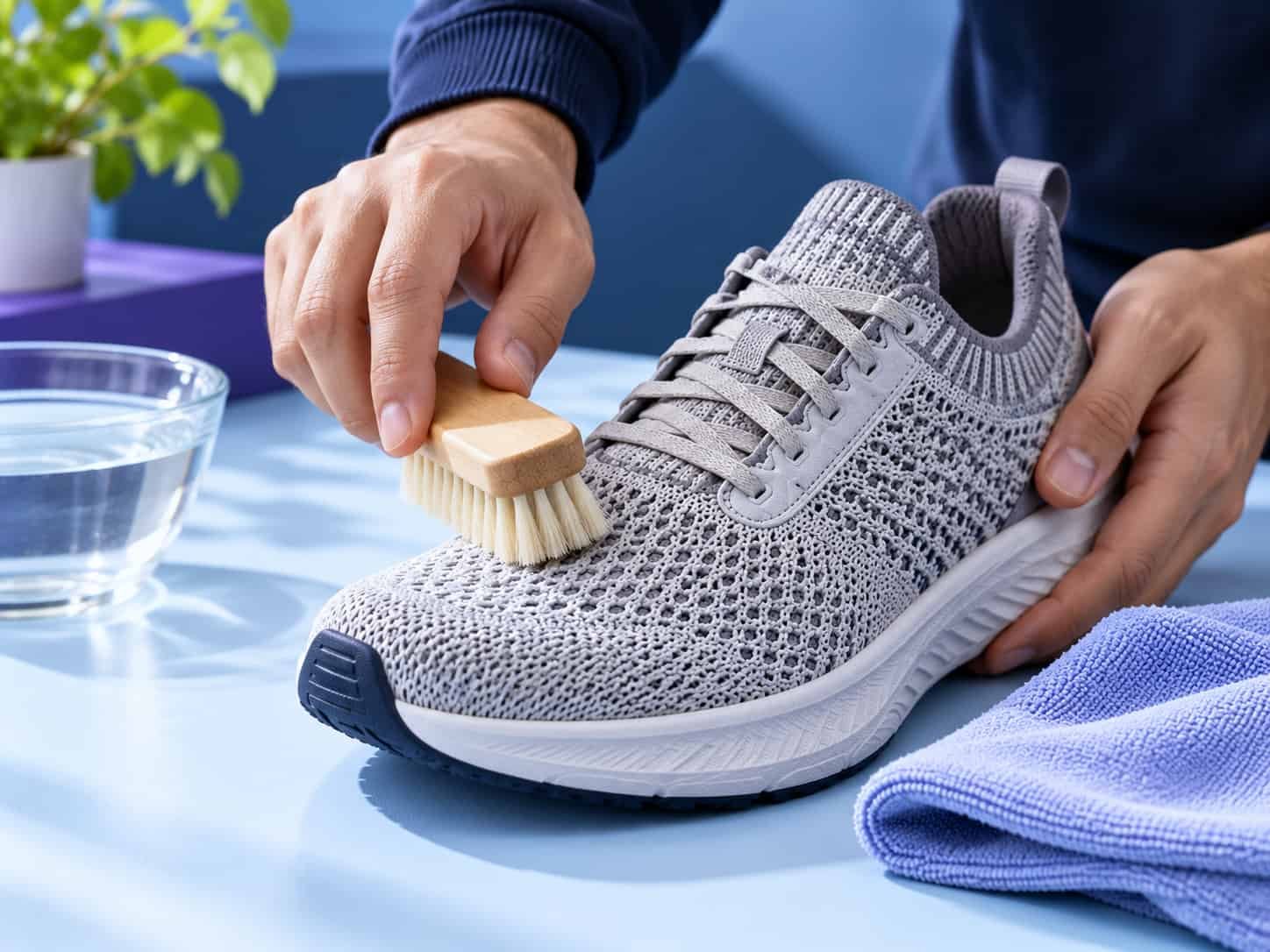
Knit shoes can collect dust and stains in their loops, so gentle cleaning is important. Always read the care instructions first, especially for shoes with wool, coatings, bonded overlays, or special finishes.
Step 1: Remove loose dirt
Let wet mud dry enough to brush off without spreading it. Use a soft brush to remove loose dirt and dust.
Step 2: Remove laces and insoles if permitted
Take out removable laces and insoles when the manufacturer allows it. Clean them separately according to their instructions.
Step 3: Prepare a mild solution
Use cool water and a small amount of mild detergent appropriate for the material. Avoid bleach, harsh solvents, and strong chemicals unless specifically approved.
Step 4: Clean gently
Dampen a soft cloth or soft-bristled brush. Work carefully across the knit without pulling loops, snagging yarn, or scrubbing hard enough to create fuzz.
Step 5: Remove soap residue
Use a clean, slightly damp cloth to wipe away remaining detergent. Avoid saturating the entire shoe, particularly if the construction contains bonded components.
Step 6: Air-dry naturally
Let the shoe dry in a ventilated area away from direct heat. Avoid placing it on a radiator or using high heat, which may affect adhesives, shape, or certain fibres.
Step 7: Check before wearing
Make sure the upper, lining, and removable components are dry before wearing the shoes again. Trapped moisture can create an uncomfortable environment.
Can knit shoes go in a washing machine?
Some knitted shoes, including certain wool-knit designs, are specifically described by their manufacturers as machine washable. That does not mean every knit shoe can be washed in a machine.
Follow the care label for the exact model. If machine washing is not expressly permitted or the instructions are unclear, gentle hand cleaning is the safer default.
For further shoe-care advice, use our shoe cleaning and maintenance guide.
How to Choose Knit Shoes
Use this practical checklist when comparing knit sneakers.
| Your priority | What to check | What to avoid |
| Everyday comfort | Toe room, heel hold, and a comfortable upper | Buying a tight shoe because you expect it to stretch |
| Breathability | Knit density, lining, overlays, and product specifications | Assuming every knit upper is equally airy |
| Durability | Reinforcement, yarn structure, seams, bonding, and fit | Thin material that is already under excessive tension |
| Walking | Fit, underfoot comfort, outsole grip, and intended use | Choosing by upper material alone |
| Running | Secure fit, cushioning, outsole, and terrain suitability | Treating a sock-like fit as proof of performance |
| Gym training | Stability and lateral support for the activity | An upper that allows excessive foot movement |
| Wet weather | Manufacturer’s waterproof or water-resistant claims | Assuming knit itself blocks water |
| Easy maintenance | Clear care instructions and suitable cleaning methods | Assuming machine washing is safe |
| Style | Colour, texture, pattern, and intended wardrobe use | Ignoring comfort to achieve a particular look |
Short verdict: knit is a strong choice for everyday wear, travel and light running when the fit is right, and it is easy on wide feet. It is a poor first choice for rain, rough ground or heavy side-to-side movement, where a more structured upper protects better.
A simple decision guide
- Choose knit sneakers when you like a flexible textile upper and the shoe fits securely.
- Consider mesh shoes when a particular mesh construction better suits your preferred airflow and support.
- Choose a more structured upper when you need additional protection or a firmer hold for your activity.
- Choose purpose-built waterproof footwear when keeping feet dry is a priority.
- Check the complete shoe before making the final decision, including sole, cushioning, fit, and care requirements.
Common Knit Shoe Myths
Myth 1: All knit shoes are breathable
Breathability depends on the yarn, knit density, lining, and reinforcements. A dense or heavily lined knit may feel warmer than expected.
Myth 2: Knit shoes are always more comfortable
Comfort depends on foot shape, shoe sizing, pressure points, cushioning, and support. A flexible upper cannot make an unsuitable fit comfortable for everyone.
Myth 3: Knit shoes are not durable
Some knit uppers are designed with dense structures and reinforced zones. Others prioritise low weight and flexibility. Durability depends on the construction and how the shoe is used.
Myth 4: Knit shoes are waterproof
Knit material alone does not guarantee waterproofing. Look for a specific product claim and suitable protective construction.
Myth 5: All knit shoes can be machine-washed
Care instructions vary. Machine washing may damage some textiles, adhesives, or shoe components. Follow the manufacturer’s instructions.
Myth 6: The upper determines the shoe’s entire performance
The sole, cushioning, outsole grip, fit, and reinforcement also matter. The best upper is one that works with the rest of the shoe for the intended activity.
Frequently Asked Questions About Knit Shoes
1. What is knit material in shoes?
Knit material is a textile made by forming yarn into interconnected loops. In footwear, it is used to create an upper that may be flexible, lightweight, or shaped around the foot. Its properties depend on the yarn, knit structure, lining, and reinforcements.
2. Are knit shoes durable?
They can be, but durability varies by design. Yarn quality, stitch density, reinforcement, fit, construction, and care all influence how well a knit upper withstands wear.
3. Are knit sneakers good for everyday use?
They can be a good everyday option when they fit comfortably and provide suitable support for your routine. Check the toe room, heel hold, outsole, and ease of cleaning.
4. Which is better, knit or mesh shoes?
Neither is always better. Knit describes a looped textile construction, while mesh refers to a network-like structure that may be knitted or woven. Compare the actual upper, fit, airflow, durability, and intended use.
5. Do knit shoes stretch?
Some knit uppers stretch more than others. The amount depends on the fibre, stitch structure, and reinforcements. Choose a comfortable fit from the start rather than relying on substantial stretching.
6. Can knit shoes get wet?
Yes. Ordinary knit uppers may absorb moisture or allow water to pass through. Some shoes have protective coatings or waterproof membranes, so check the manufacturer’s specifications.
7. Can you wash knit shoes in a washing machine?
Only when the manufacturer explicitly permits it for that model. Otherwise, clean gently with a soft brush or cloth and a suitable mild solution, then air-dry naturally.
8. Are knit shoes good for running?
Some are suitable for running when the shoe offers the correct fit, upper security, cushioning, and outsole for the runner and terrain. The knit upper alone does not determine running performance.
9. What is the difference between Flyknit and Primeknit?
Flyknit is Nike’s brand name for its knit uppers and Primeknit is adidas’s. Both launched in 2012 and use specialised machines to knit a shoe-shaped upper with zones of different density. They are brand names, not durability ratings, so judge each shoe on fit, reinforcement and care.
10. Why do knit shoes get holes at the toe?
Thin knit with no reinforcement over the toes is often the first part to wear through. The usual causes are a shoe that is slightly too short, long toenails and a big toe that lifts and rubs the same spot. Check toe room, keep nails trimmed, and look for a toe cap or overlay.
Conclusion: Are Knit Shoes the Right Choice?
Knit shoes offer a useful combination of textile flexibility, varied textures, and adaptable upper construction. They can work well for everyday wear, walking, travel, and selected sports when the particular shoe fits properly and is designed for the activity.
Their performance is not guaranteed by the word “knit.” Yarn, stitch density, reinforcement, lining, sole construction, fit, and care all affect the result. Before buying, consider where you will wear the shoes, how much protection you need, and whether the cleaning instructions fit your routine.
Sources and Further Reading
- Coats – Knitted Shoes – footwear yarns, knitting options, finishes, and functional material design.
- Footwear Insight, Knit It Up – brand views on knit uppers, durability and production waste.
- Woolmark – Wool Footwear: Knitted Upper – examples of wool-knit shoe construction, layered knitting, and manufacturing approaches.
- UrbanStyleFootwear – Shoe Materials Explained – internal overview of footwear material families and their uses.
- UrbanStyleFootwear – How We Test Shoes – the site’s published footwear evaluation approach.
- UrbanStyleFootwear – Shoe Cleaning and Maintenance – related shoe-care resources.


