
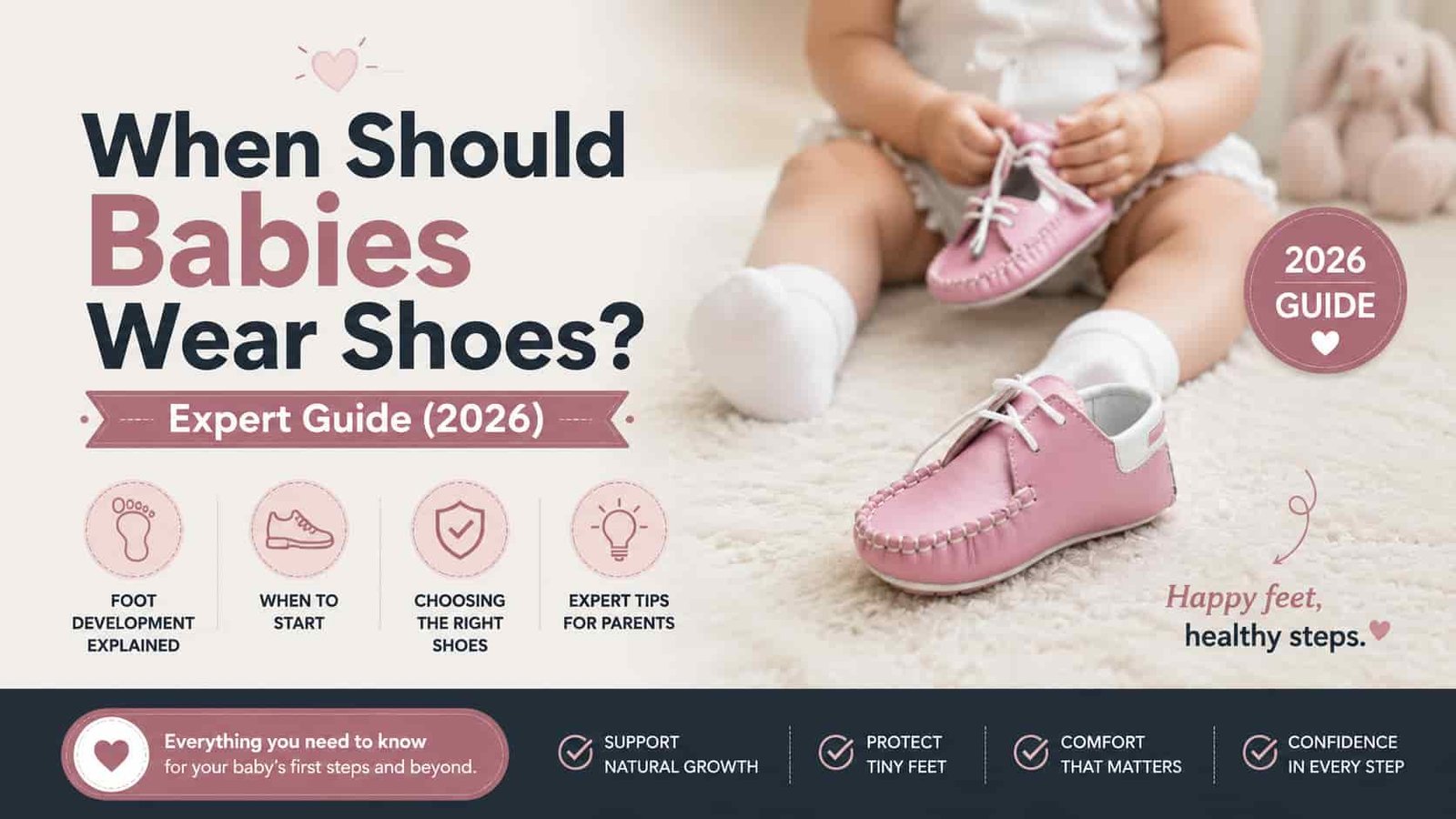
When Should Babies Wear Shoes? Expert Guide (2026)
⚡ Quick Answer
- Most babies don’t need shoes until they start walking independently.
- For babies who are crawling or cruising, soft socks or booties are best.
- First walking shoes should be flexible, lightweight, and have a flat sole.
- Measure your toddler’s feet before buying their first pair of shoes.
- Start with shoes around 12-18 months, when walking becomes steady.
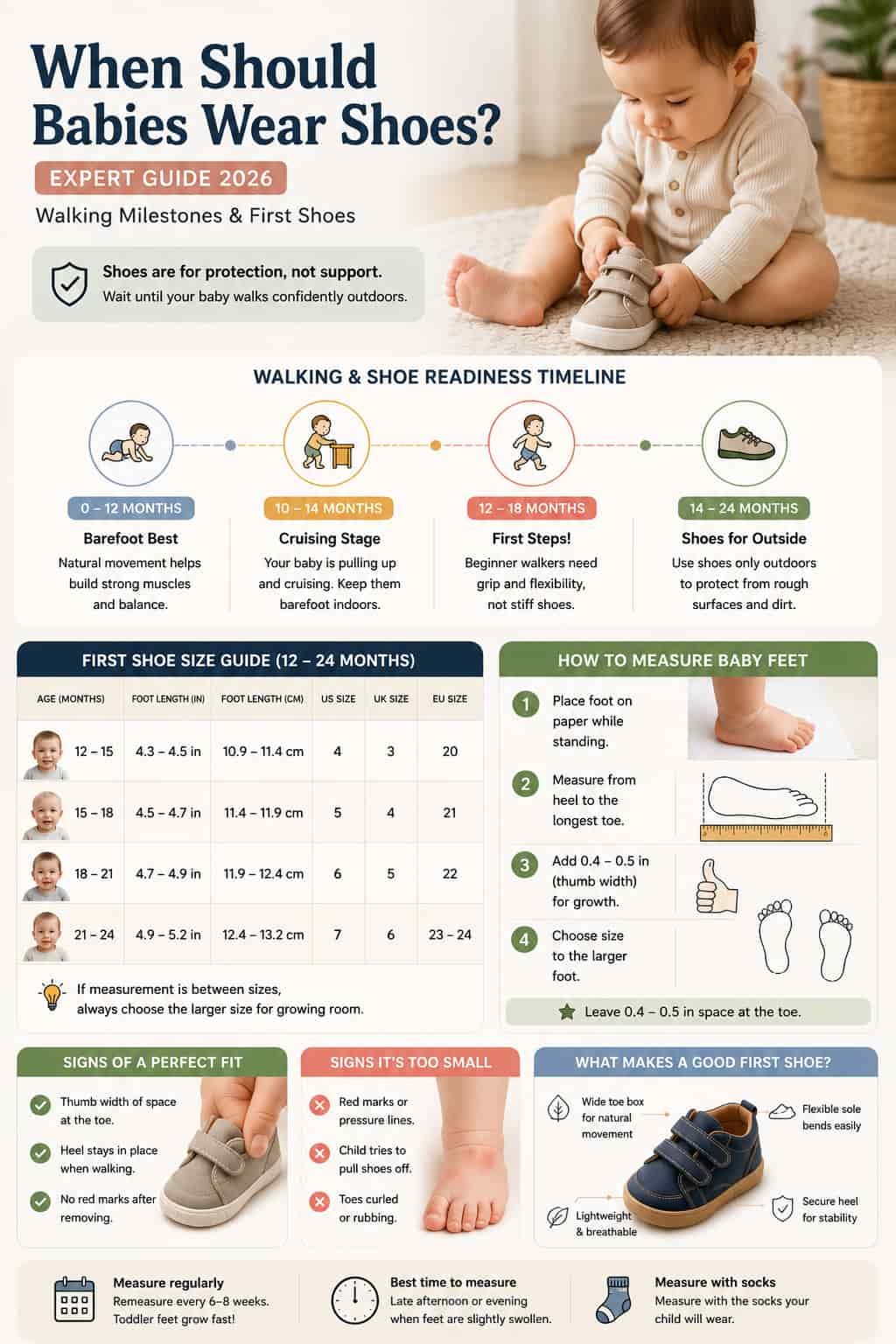
When should babies wear shoes? The simple answer is: not until they are walking confidently on their own. For most babies, that happens between 12 and 18 months. Before that, bare feet or soft socks are actually better for foot development. Shoes are primarily for protection, not support, during those early months.
In our experience fitting thousands of children’s shoes, we have seen many parents rush to buy shoes before their baby is ready. The truth is, babies learn to balance and coordinate their foot muscles best when they can feel the ground. Shoes can get in the way of that natural development. Wait until your baby is walking steadily outdoors before buying their first pair.
When Do Babies Start Walking?
👶 Did You Know?
Every baby develops at their own pace. While some babies take their first steps at 9 months, others don’t walk until 18 months. Both are completely normal. Your baby’s walking timeline doesn’t predict their future athletic ability or development.
Most babies take their first independent steps between 12 and 15 months. But there is a wide range of normal. Some babies walk as early as 9 months, while others wait until 18 months or even later.
Here is a general timeline of walking milestones:
| Milestone | Typical Age Range |
| Pulling to stand | 9-12 months |
| Cruising (walking while holding furniture) | 10-14 months |
| First independent steps | 12-18 months |
| Walking confidently | 14-20 months |
The key thing to remember is that every baby is different. There is no “right” age to start walking. What matters is that your baby is progressing at their own pace.
💡 Expert Tip
Instead of focusing on when your baby should walk, focus on creating opportunities for movement. Tummy time, crawling, and cruising all help build the strength and coordination needed for walking. Let your baby explore safely without shoes as much as possible.
Do Babies Need Shoes Before Walking?
No, babies do not need shoes before they start walking. In fact, going barefoot is better for foot development in the early months.
Here is why bare feet are best for babies who are not yet walking:
Better balance and coordination. Bare feet allow babies to feel the ground beneath them. This sensory feedback helps them develop balance and coordination. When a baby can feel the texture of the floor, their brain gets important information about where their body is in space.
Stronger foot muscles. Walking barefoot strengthens the small muscles in the feet. These muscles are essential for balance and for developing a healthy walking gait. Shoes can restrict this natural muscle development.
Natural foot shape. Baby feet are soft and pliable. Tight shoes can squeeze the foot into an unnatural shape. Bare feet allow the foot to grow and develop naturally.
✅ Parent Checklist
- Let your baby go barefoot indoors as much as possible.
- Use soft socks or footed pajamas for warmth.
- Choose booties or soft-soled shoes only for outdoor protection.
- Wait until your baby is walking steadily before buying proper shoes.
- Avoid hard-soled shoes for babies who are not yet walking.
When to Buy Baby’s First Shoes
The right time to buy your baby’s first pair of shoes is when they are walking confidently outdoors. For most babies, this happens between 14 and 18 months.
Here is how to know your baby is ready for their first shoes:
They are walking independently. Your baby should be able to walk on their own without holding onto furniture or your hands. They should have a steady gait and be able to stop and start without falling.
They are walking outdoors. If your baby is starting to walk on pavement, grass, or other outdoor surfaces, they need shoes for protection. Sharp objects, hot pavement, and uneven surfaces can all hurt tender feet.
They are walking for longer distances. If your baby is walking more than just a few steps at a time, shoes can help protect their feet and provide a little stability.
📏 Size Snapshot
First Shoe Age: 14-18 Months
Typical US Size: 4 to 6
Foot Length: 4.3 to 4.9 inches
Growing Room: 0.4 to 0.5 inches
What to Look for in First Walking Shoes
When you are ready to buy your baby’s first shoes, look for these features. In our experience fitting thousands of children, these are the most important qualities for first walkers.
Flexible, thin soles. The sole should bend easily at the ball of the foot. This allows your baby’s foot to move naturally and helps them feel the ground. A stiff sole can make walking more difficult and less stable.
Lightweight construction. Heavy shoes can tire out small legs quickly. Look for lightweight materials that let your toddler move freely.
Breathable materials. Cotton, mesh, and soft leather help keep feet comfortable and prevent sweating. Breathable materials also help prevent blisters and skin irritation.
Adjustable closures. Velcro straps, elastic openings, or laces give you a bit of flexibility if your measurement falls right between two sizes. Velcro is especially helpful for toddlers who do not want to sit still.
Flat heel. First walking shoes should have a flat, level sole. Avoid shoes with a raised heel, which can affect balance and alter your child’s natural walking pattern.
Secure fit. The shoe should stay on your baby’s foot without being too tight. Look for shoes that have a snug heel and enough room for toes to move.
⚠ Common Mistake
One of the biggest mistakes parents make is buying shoes that are too stiff. Many parents assume that “supportive” shoes are better for first walkers. But the opposite is true. First walkers need flexible shoes that allow their feet to move naturally. Stiff shoes can actually make walking harder and slow down development.
Baby Shoe Size Guide for First Walkers
Once your baby is walking, it is time to get the right size. This chart shows typical US sizes for first walkers aged 12 to 24 months.
| Age (Months) | Foot Length (inches) | US Size | UK Size | EU Size |
| 12-15 months | 4.3 – 4.5 | 4 | 3 | 20 |
| 15-18 months | 4.5 – 4.7 | 5 | 4 | 21 |
| 18-21 months | 4.7 – 4.9 | 6 | 5 | 22 |
| 21-24 months | 4.9 – 5.2 | 7 | 6 | 23-24 |
Tip: Always measure your child’s feet before buying. Age is a starting point only. Some 15-month-olds wear a size 4, others a size 6.
✅ Quick Fit Check
When your child is standing, press your thumb gently on the front of the shoe just above the toes. You should feel a small gap of about a thumb’s width. If your thumb sinks in easily, the shoe is too big. If you cannot feel any space at all, the shoe is too small.
For a full breakdown across every size, including UK, EU, and centimeter equivalents side by side, our Shoe Size Conversion Calculator covers the complete range in one place.
Signs Your Baby Is Ready for Shoes
Here are the signs to look for that tell you your baby is ready for their first pair of shoes.
Your baby is walking independently: They can take several steps on their own without holding onto furniture or your hands. They are not just cruising or taking a step or two.
Your baby is walking outside: If your baby is exploring the backyard, the park, or the sidewalk, they need shoes for protection. Bare feet are great indoors, but outdoors requires protection.
Your baby is walking for longer periods: If your baby is walking more than just a few steps at a time, shoes can help protect their feet and provide a little stability.
Your baby is walking on different surfaces: Walking on grass, pavement, and uneven ground requires shoes for protection and grip.
Your baby is showing interest in shoes: Some babies will point to shoes or try to put them on. This is a sign they are ready for the transition.
Common Mistakes Parents Make
We see the same mistakes come up again and again, even from careful parents.
Buying shoes too early. Many parents buy shoes before their baby is walking. This can actually slow down foot development and make walking harder. Wait until your baby is walking confidently.
Buying shoes that are too stiff. Stiff soles can make walking harder for first walkers. Look for flexible soles that bend easily at the ball of the foot.
Buying shoes that are too big. Many parents think buying a larger size will save money. But shoes that are too big can cause tripping and affect balance. Always get the right size.
Skipping the measurement. Buying by age is a common mistake. Always measure your toddler’s feet before buying shoes.
Forgetting to measure both feet. One foot is often larger than the other. Always measure both feet and size to the larger one.
👶 Did You Know?
Babies who go barefoot often learn to walk earlier and with more confidence. The sensory feedback from bare feet helps babies develop balance and coordination faster than babies who wear shoes all the time.
Expert Tips for First Shoes
After 25 years in children’s footwear, here are our top tips for buying your baby’s first shoes.
Start with soft soles. For babies who are just starting to walk, soft, flexible soles are best. Save the thicker soles for when your toddler is running confidently.
Buy shoes with a wide toe box. A wide toe box lets toes move and spread naturally. This is especially important for babies who are still developing their walking gait.
Choose shoes with adjustable closures. Velcro or laces let you adjust the fit as your baby’s feet grow. They also make it easier to get the shoes on and off.
Look for shoes with removable insoles. This lets you check the fit by tracing your baby’s foot on the insole. It is a great way to be sure before you wear the shoes.
Buy from a store that measures feet. If you can, buy your baby’s first shoes from a store that measures feet. A professional fitting can help you get the right size and style.
💡 Expert Tip
When trying on shoes, have your baby wear the socks they will normally wear with the shoes. This ensures a more accurate fit. And always measure in the afternoon when feet are slightly larger from the day’s activity.
Frequently Asked Questions
When should babies start wearing shoes?
Babies should start wearing shoes when they are walking confidently outdoors, typically between 14 and 18 months. Before that, bare feet or soft socks are best for foot development.
Do babies need shoes before they walk?
No, babies do not need shoes before they walk. Bare feet are better for balance, coordination, and foot muscle development. Shoes are only needed for protection when walking outdoors.
What age do babies first wear shoes?
Most babies wear their first shoes between 14 and 18 months, when they are walking independently. Some babies may need shoes earlier if they are walking outdoors, but most do not need shoes before 12 months.
What size shoe does a 12 month old wear?
Most 12 month old babies wear a US size 4, but actual foot length is more important than age. Some 12 month olds wear a size 3, others a size 5. Always measure before buying.
What size shoe does a 15 month old wear?
A 15 month old typically wears a US size 4 or 5, depending on their foot length. At this age, growth can vary widely. Always measure before buying rather than relying on age alone.
What size shoe does an 18 month old wear?
Most 18 month old toddlers wear a US size 5 or 6. However, foot growth varies from child to child. A measurement taken at home will give you the most accurate size.
Should babies wear shoes with hard or soft soles?
First walkers should wear shoes with soft, flexible soles. Hard soles can make walking harder and affect balance. Save hard soles for when your toddler is running confidently.
How many pairs of shoes does a baby need?
Babies typically need one or two pairs of shoes at a time. One pair for daily wear and one backup pair. Because feet grow fast, you will need to replace shoes every 6 to 8 weeks.
Can babies wear hand-me-down shoes?
It is generally not recommended. Hand-me-down shoes have already been shaped to another child’s foot. This can affect how your baby’s feet develop. It is better to buy new shoes for each child.
How do I know if my baby’s shoes fit correctly?
There should be a thumb’s width of space between your baby’s longest toe and the front of the shoe. The heel should stay in place when walking. There should be no red marks after removing the shoes.
What happens if a baby wears shoes that are too small?
Shoes that are too small can cause blisters, calluses, and ingrown toenails. They can also affect foot development and make walking uncomfortable. If you see red marks or your baby is pulling at their shoes, it is time to measure again.
What happens if a baby wears shoes that are too big?
Shoes that are too big can cause tripping and affect balance. Your baby may also develop blisters from the friction of their foot sliding around in the shoe. Always get the right size.
Should babies wear shoes indoors?
No, babies do not need shoes indoors. Bare feet or socks are best indoors. Shoes are for outdoor protection only. Letting babies go barefoot indoors helps with balance and foot development.
How often should I check my baby’s shoe size?
Measure your baby’s feet every 6 to 8 weeks. Toddler feet grow fast, sometimes half a shoe size every two to three months. A measurement from three months ago is often no longer accurate.
Do babies need different shoes for winter and summer?
Yes, seasonal shoes are helpful. In winter, babies need shoes that keep their feet warm and protect from cold weather. In summer, breathable shoes that let feet stay cool are best. Always measure with the socks your baby will wear in each season.
What type of shoes are best for a baby learning to walk?
The best shoes for a baby learning to walk are flexible, lightweight, and flat. Look for shoes with soft soles that bend easily at the ball of the foot. Avoid shoes with thick soles or raised heels.
Related Articles
- Newborn Shoe Size Guide: First Shoes & Sizing (2026)
- Shoe Size Conversion Calculator, US, UK, EU & CM (2026)
- Baby Shoe Width Guide: Wide, Narrow & Standard Sizes
- UK 8 to US Shoe Size Guide
Conclusion
When should babies wear shoes? The answer is simple: not until they are walking confidently on their own. For most babies, that happens between 14 and 18 months. Before that, bare feet or soft socks are best for foot development.
When your baby is ready for their first shoes, choose flexible, lightweight shoes with flat soles. Avoid stiff shoes or shoes that are too big. Measure your baby’s feet before every purchase and remember every 6 to 8 weeks.
The best first shoes are the ones that protect your baby’s feet without getting in the way of natural movement. Now that you know what to look for, you can choose the right first shoes with confidence.
Ready to find the right size? Visit our Newborn Shoe Size Guide for a complete size chart and measuring instructions. Or check our Baby Shoe Width Guide if you are wondering about wide or narrow feet.