
Best Slip-On Shoes for Plantar Fasciitis: 10 Supportive Picks
Updated October 2026 | Product prices and availability can change
Not sure which slip-on fits your foot?
Use an AI assistant to compare the shoes on this page based on your width, cushioning preference, arch-support needs and daily use.
If you have plantar fasciitis, putting on shoes should not feel like another chore.
The problem is that many easy-on shoes prioritize convenience over structure. Very soft slip-ons can feel comfortable for a few minutes but may not provide the secure heel, cushioning, or support you want for long walks and standing.
The better approach is to look for a slip-on that combines secure heel fit, comfortable cushioning, appropriate arch support, enough toe room, and a stable outsole.
That does not mean every person with plantar fasciitis needs the same shoe. Some people want maximum cushioning. Others need a wide toe box, removable insoles for orthotics, or a slip-resistant outsole for work.
We compared those needs across 10 popular slip-on and easy-entry options in this guide.
Quick answer: A good slip-on for plantar fasciitis should feel secure without squeezing your foot, provide useful cushioning, avoid an excessively flat or flimsy construction, and give you enough room in the toe box. Hands-free entry is a convenience feature, not a substitute for support.
Affiliate disclosure: UrbanStyleFootwear may earn a commission when you purchase through qualifying Amazon links. This does not increase your purchase price.
Slip-On Shoes for Plantar Fasciitis
Compare these 10 options by fit, cushioning, support features, easy entry, and width availability.
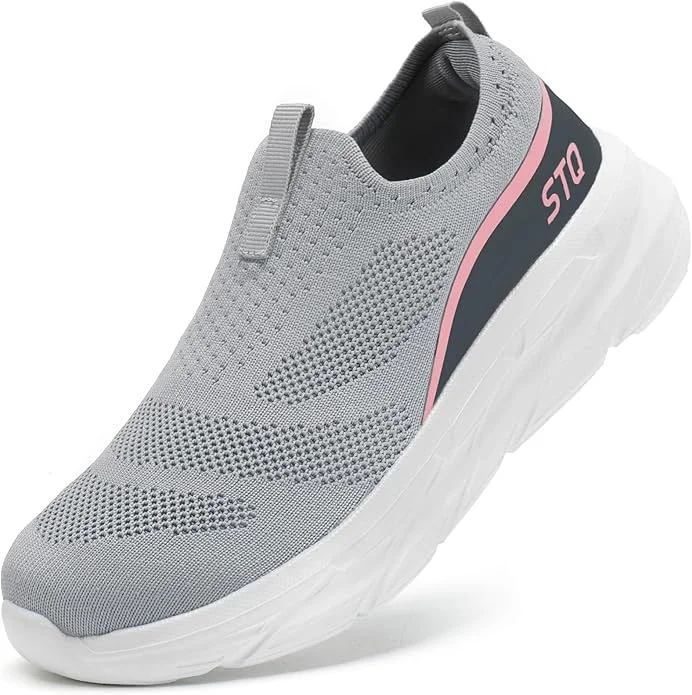
STQ Women’s Slip-On Walking Sneakers
Slip-on entry • Walking design • Supportive insole
Check Price on Amazon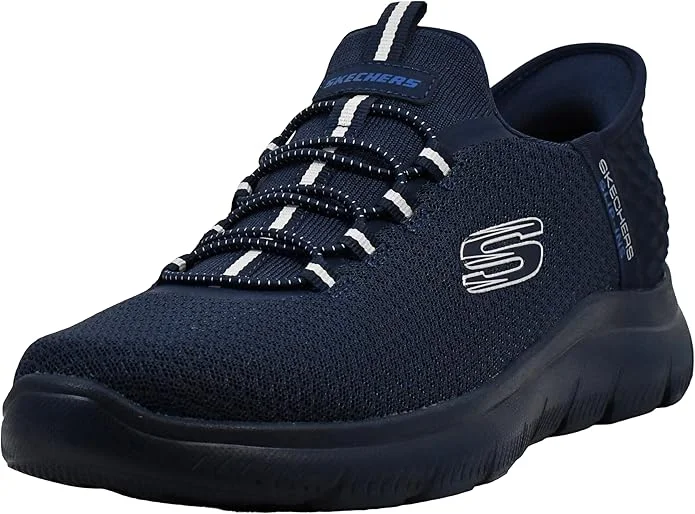
Skechers Men’s Summits Hands Free
Hands-free entry • Men’s option • Walking use
Check Price on Amazon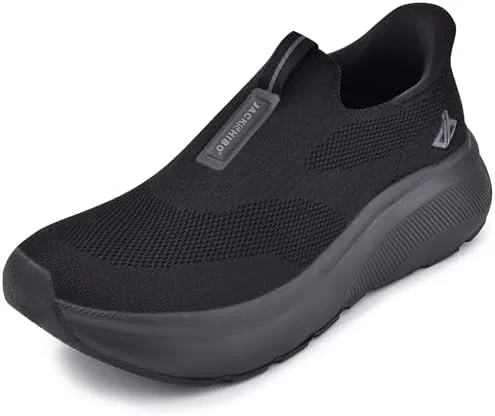
JACKSHIBO Men’s Slip-In Shoes
Hands-free entry • Wide-fit design • Cushioned construction
Check Price on AmazonMore Slip-On Options
Affiliate disclosure: Some links are affiliate links. UrbanStyleFootwear may earn a commission if you purchase through them, at no additional cost to you. Prices, ratings, availability, and product specifications may change.
Are Slip-On Shoes Good for Plantar Fasciitis?
They can be, but the slip-on design itself does not make a shoe supportive.
This is an important distinction.
Plantar fasciitis is a common cause of heel pain. Symptoms often include pain around the bottom of the heel, particularly during the first steps after waking or after sitting for a while. Foot shape, activity, footwear and prolonged standing can all influence symptoms.
The Mayo Clinic’s current plantar fasciitis guidance recommends supportive footwear, cushioning, arch supports when appropriate, stretching and other conservative measures as part of management.
A slip-on can therefore work well if its construction gives you the support and fit you need.
The problem is that many casual slip-ons are built mainly around convenience.
A useful way to think about it
Bad combination:
Flat + loose heel + little cushioning + poor fit
Better combination:
Secure heel + comfortable cushioning + supportive footbed + adequate toe room
Potentially better for orthotic users:
Secure shoe + removable insole + enough internal volume for the insert
The right choice depends on your foot shape and how you use the shoe.
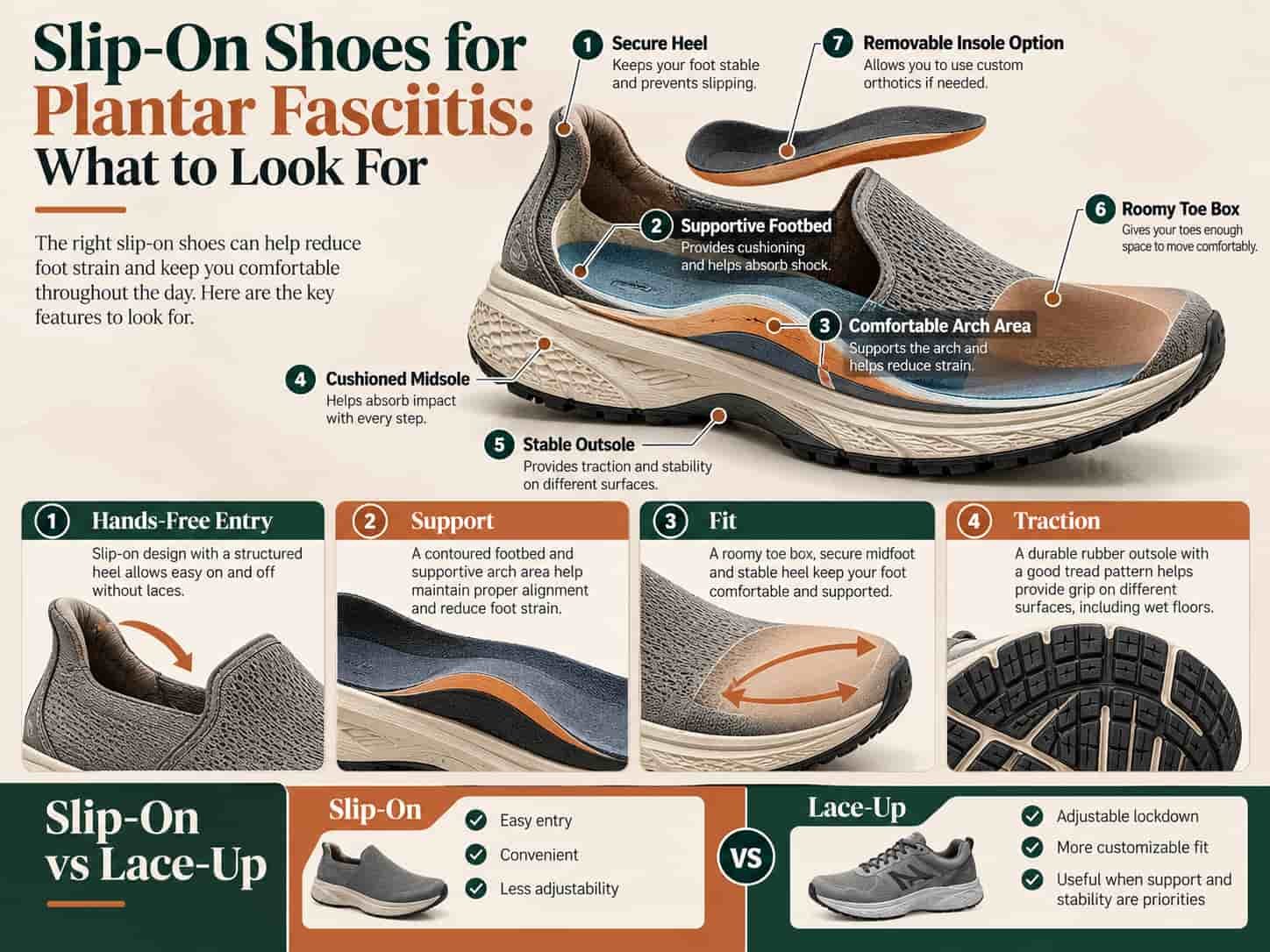
What Should You Look for in a Slip-On for Plantar Fasciitis?
You do not need a shoe with every marketing feature imaginable. Start with these six.
1. A secure heel
A slip-on should stay on your foot without you having to grip the shoe with your toes.
If the heel constantly lifts, you may compensate with your walking pattern or experience friction and instability.
Hands-free heel structures can be useful here, but the shoe still needs to fit correctly.
2. Comfortable cushioning
Plantar heel pain can make hard surfaces especially unpleasant.
A cushioned midsole can make walking and standing more comfortable, but more cushioning is not automatically better.
Some people prefer a softer ride. Others feel more stable on a moderately cushioned platform.
Your goal is comfort without excessive sinking or instability.
3. Useful arch support
Arch support is highly individual.
A shoe should not create a painful pressure point underneath your arch simply because the manufacturer calls it “orthopedic.”
Look for a footbed that supports your foot comfortably and, if necessary, allows the original insole to be removed.
The Mayo Clinic notes that store-bought or custom orthotics may help distribute pressure across the foot.
4. Enough toe room
Your toes should not be compressed.
A wide toe box can be especially useful if your feet swell during the day, you have bunions, or standard shoes feel restrictive.
Do not automatically buy a larger shoe to create width. A longer shoe can leave too much room at the heel.
Look for the correct length and the appropriate width.
5. A stable outsole
Your shoe should feel predictable when you walk.
For people working in kitchens, healthcare facilities, retail environments or other areas where floors can become wet, outsole traction deserves extra attention.
6. Removable insoles if you use orthotics
If you already use a prescribed or preferred insert, check whether the shoe has enough internal space.
A removable footbed can make fitting easier.
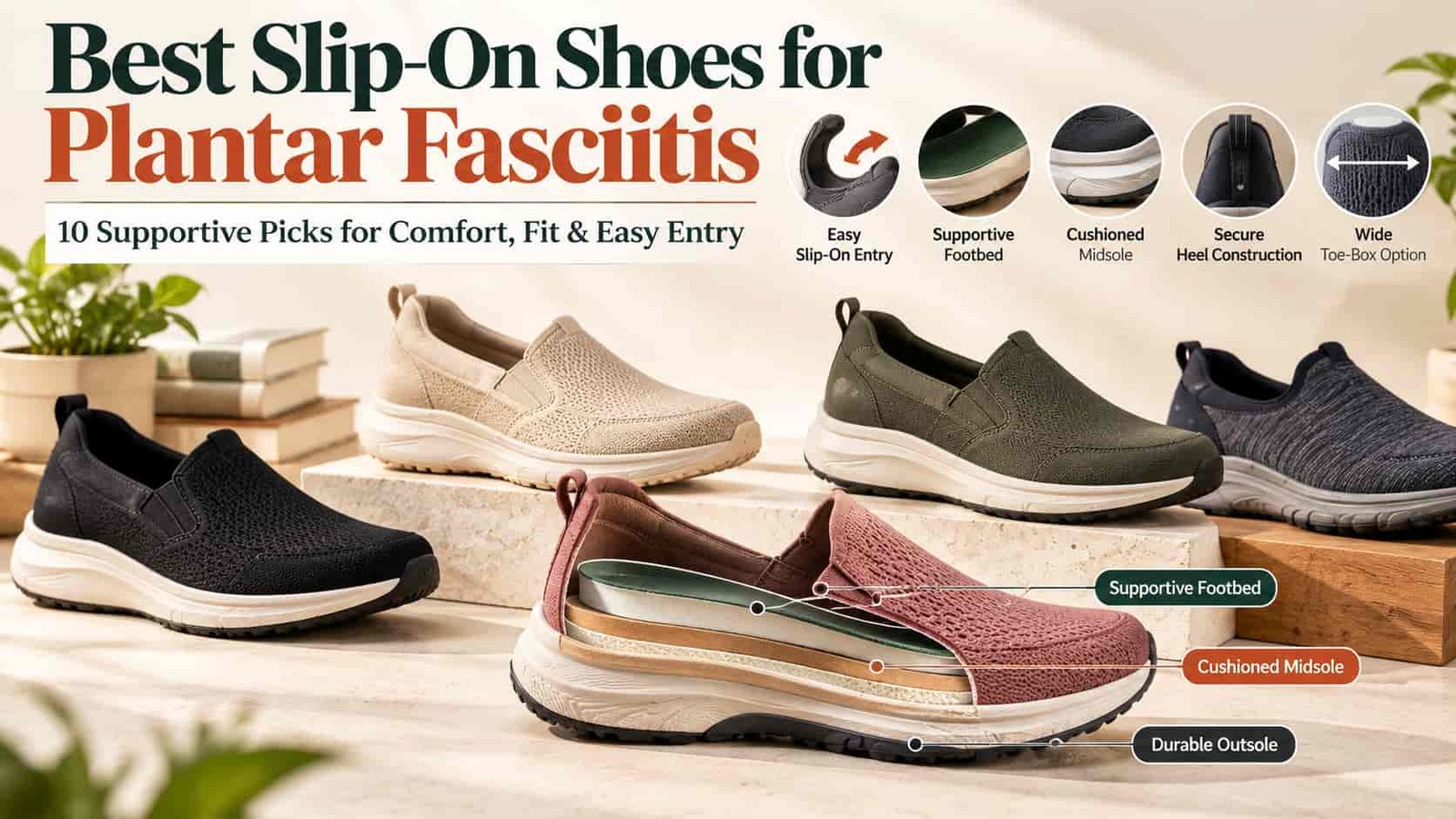
The 10 Slip-On Shoes for Plantar Fasciitis to Compare
1. Skechers Women’s Hands Free Slip-ins BOBS Squad Chaos
Best suited to: Women wanting easy everyday entry
Amazon price snapshot: $52.99
Amazon rating supplied: 4.7/5
Reviews supplied: 9,069
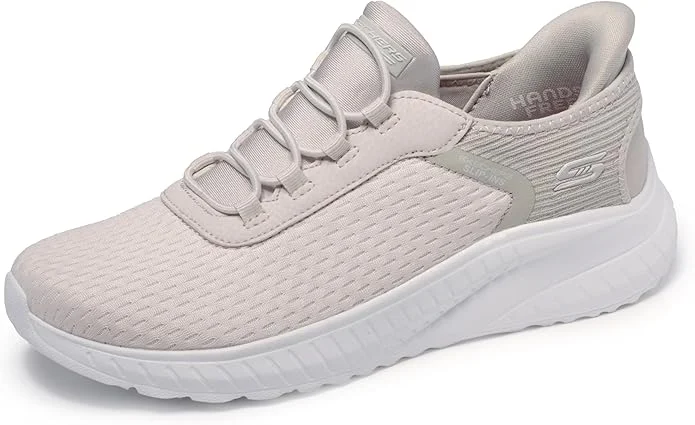
The BOBS Squad Chaos is worth considering if the main reason you want a slip-on is convenience.
Its hands-free construction is designed to make getting into the shoe easier, while the cushioned footbed provides a softer everyday feel than a completely flat casual shoe.
It is more appropriate for casual walking and daily errands than for someone looking for a highly structured orthopedic shoe.
Why consider it
- Hands-free entry
- Cushioned footbed
- Lightweight everyday construction
- Casual styling
- Easy option for people who dislike bending down to tie shoes
Potential limitations
- Cushioning and convenience do not automatically equal strong arch support
- Knit construction is less appropriate for consistently wet conditions
- Fit should be checked carefully if you have a wide midfoot
Best match: Everyday errands, travel and casual walking when easy entry is a major priority.
🛒 Check Price on Amazon.com2. STQ Women’s Lace-up Loafers
Best suited to: Budget-conscious buyers who want an insole they can modify
Amazon price snapshot: $41.99
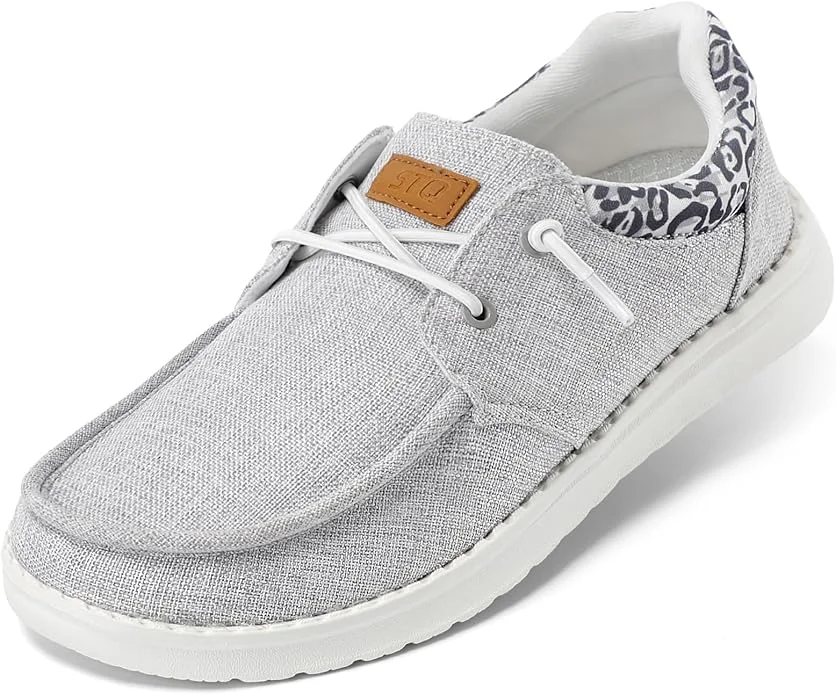
Despite the “slip-on” search intent, this model uses a lace-up-inspired design rather than being a completely hands-free shoe.
That distinction matters.
If you prioritize a more adjustable fit over instant entry, this type of construction can be useful. The removable insole also gives you more flexibility if you prefer a different footbed.
Why consider it
- Budget-friendly
- Removable insole
- Casual loafer appearance
- Adjustable fit
- Lightweight construction
Potential limitations
- Not a true hands-free slip-on
- Not the first choice for someone who needs maximum cushioning
- Canvas-style materials need more care in wet conditions
Best match: Casual wear when price and adjustable fit matter more than completely hands-free entry.
🛒 Check Price on Amazon.com3. STQ Women’s Slip-On Walking Sneakers
Best suited to: Lightweight casual walking
Amazon price snapshot: $44.89
Amazon rating supplied: 4.3/5
Reviews supplied: 1,652
This model targets shoppers who want a casual sneaker rather than a traditional orthopedic-looking shoe.
The slip-on construction makes it convenient for everyday use, while the wide-toe-box design can be useful if standard footwear feels restrictive.
Why consider it
- True slip-on construction
- Lightweight feel
- Breathable upper
- Wide toe area
- Built-in footbed support
- Casual styling
Potential limitations
- Not the strongest choice if you need highly structured support
- Fabric construction is not ideal for wet environments
- Personal fit matters more than the “arch support” label
Best match: Mild foot discomfort and everyday casual walking.
🛒 Check Price on Amazon.com4. Skechers Men’s Summits Hands Free Slip-ins
Best suited to: Men who want easy entry for daily wear
Amazon price snapshot: $69.99
Amazon rating supplied: 4.6/5
Reviews supplied: 24,978
The Summits Hands Free is a practical option for men who want a walking-style shoe without traditional tying.
The main attraction is the combination of easy entry, cushioning and everyday styling.
The large number of Amazon reviews can provide useful information about fit and user experience, but review volume should not be treated as proof that a shoe will relieve plantar fasciitis for every wearer.
Why consider it
- Hands-free entry
- Cushioned feel
- Breathable upper
- Everyday walking design
- Multiple width options may be available depending on the specific listing
Potential limitations
- Not a substitute for a prescribed orthotic
- Some feet may need more structured support
- Verify the exact width and size before ordering
Best match: Men who prioritize convenience and everyday walking comfort.
🛒 Check Price on Amazon.com5. JACKSHIBO Men’s Slip-In Free-Up-Hands Shoes
Best suited to: Budget buyers wanting a wide, easy-entry design
Amazon price snapshot: $39.99
Amazon rating supplied: 4.2/5
Reviews supplied: 2,566
This is one of the lower-priced options in the list.
It is designed around easy entry and a roomy shape. That can be useful if your main issue is finding an inexpensive casual shoe that does not feel restrictive.
The important caveat is the zero-drop construction described in the listing. Do not assume zero-drop is automatically better for plantar fasciitis.
If you are transitioning from conventional shoes, a major change in heel-to-toe geometry may feel different.
Why consider it
- Low price
- Easy-entry design
- Roomier toe area
- Built-in footbed features
- Casual walking use
Potential limitations
- Zero-drop geometry will not suit everyone
- Moderate rather than highly structured support
- Less appropriate for someone looking for a conventional supportive walking shoe
Best match: Experienced zero-drop users who already know that this geometry feels comfortable to them.
🛒 Check Price on Amazon.com6. Skechers Men’s Parson-Ralven Slip-In
Best suited to: Smart-casual everyday wear
Amazon price snapshot: $63.80
Amazon rating supplied: 4.6/5
Reviews supplied: 3,664
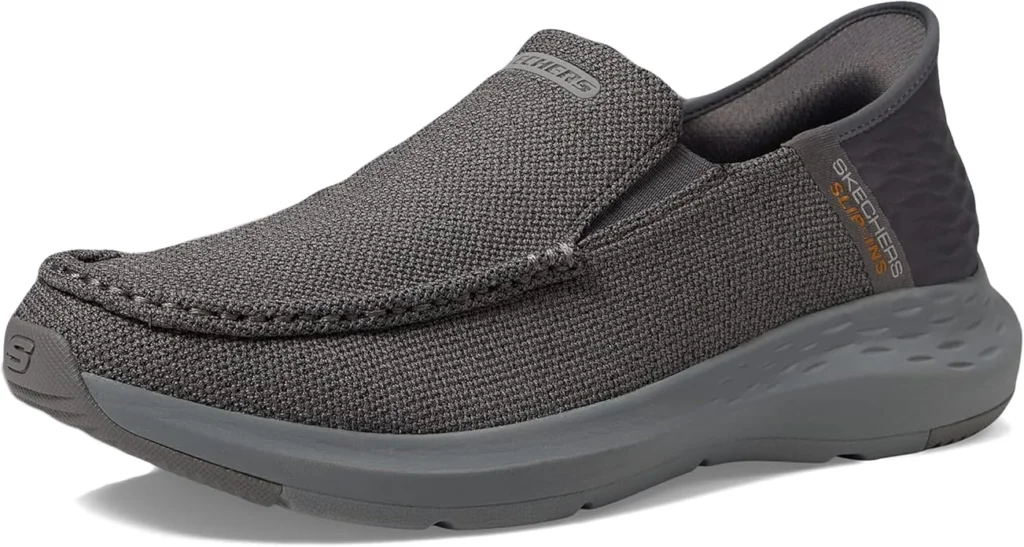
If you want a slip-on that looks less like a traditional athletic sneaker, the Parson-Ralven deserves a look.
Its loafer-inspired styling makes it easier to pair with casual work clothing while retaining the convenience of a slip-on.
Why consider it
- Smart-casual appearance
- Slip-on construction
- Cushioned footbed
- Comfortable everyday design
- Useful option for office-casual environments
Potential limitations
- Not intended as a medical treatment
- A relaxed fit can feel too loose on some feet
- Verify the exact insole and width before ordering
Best match: Office-casual environments where you want a less athletic appearance.
🛒 Check Price on Amazon.com7. OrthoComfoot Men’s Orthopedic Slip-On
Best suited to: Shoppers who want a more structured insole
Amazon price snapshot: $69.89
Amazon rating supplied: 4.2/5
Reviews supplied: 11,509
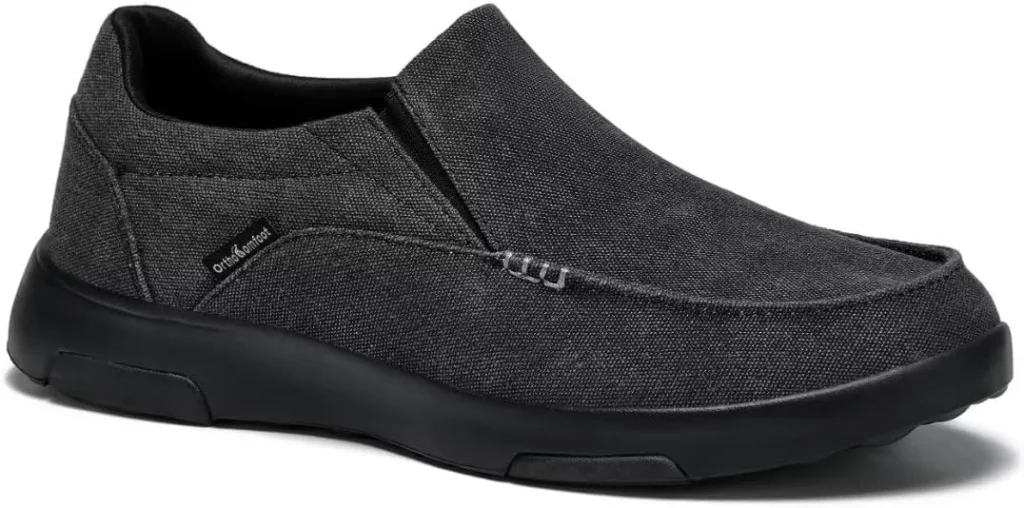
This option is more support-oriented than the casual slip-ons above.
The listing highlights an orthopedic-style insole, TPU support elements and multiple insole options. That makes it particularly interesting for shoppers who are trying to find a stronger underfoot structure rather than simply a soft shoe.
Why consider it
- More structured insole
- TPU support components
- Multiple insole options
- Wide-fit options
- Slip-on convenience
Potential limitations
- Firm support is not automatically comfortable
- Some people may need an adjustment period
- Heavier feel than minimalist casual slip-ons
Best match: Someone who prefers noticeable underfoot structure and wants to experiment with different insole options.
🛒 Check Price on Amazon.com8. ITAZERO Men’s Extra Wide 4E-5E
Best suited to: Very wide feet and swelling
Amazon price snapshot: $49.99
Amazon rating supplied: 4.3/5
Reviews supplied: 4,932
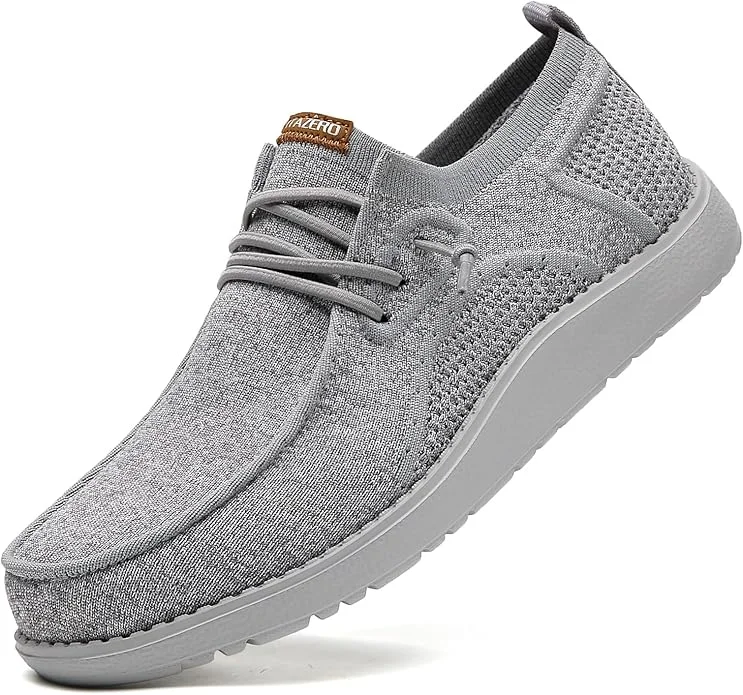
Width can matter just as much as cushioning.
If your foot feels compressed across the forefoot, buying a heavily cushioned standard-width shoe may not solve the problem.
This ITAZERO model is aimed at people looking for significantly more width, including 4E and 5E options depending on size and listing availability.
Why consider it
- Extra-wide sizing
- Roomy toe area
- Stretch construction
- Easy-entry design
- Useful for feet that swell during the day
Potential limitations
- Bulkier appearance
- Moderate rather than highly structured arch support
- Check the actual size chart before ordering
Best match: People whose primary problem is lack of width.
🛒 Check Price on Amazon.com9. ITAZERO Men’s Wide Width Slip-On
Best suited to: Budget shoppers who need additional width
Amazon price snapshot: $42.49
Amazon rating supplied: 4.4/5
Reviews supplied: 1,913
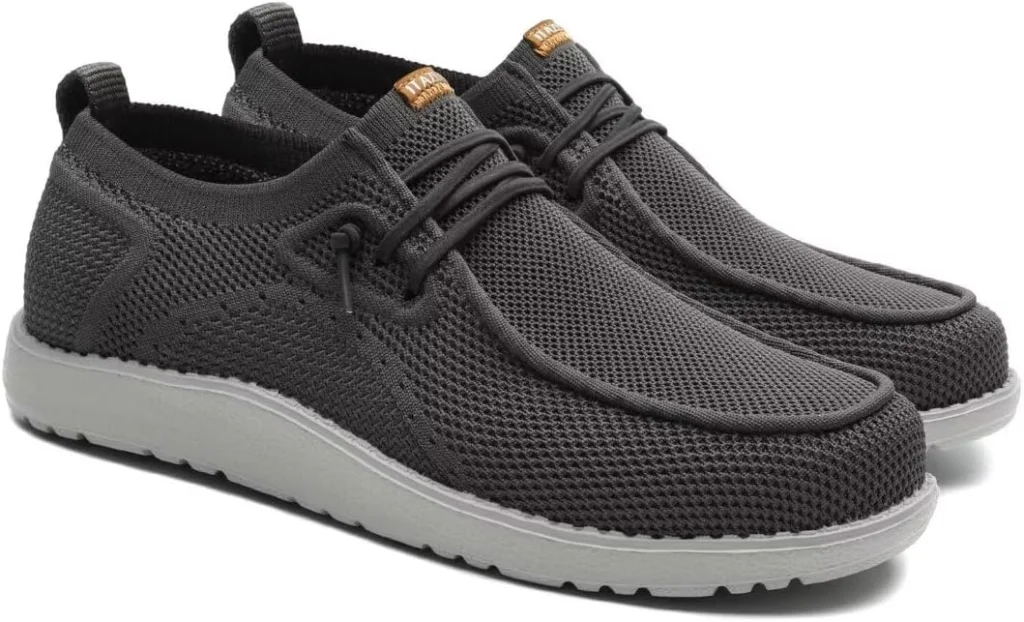
This model provides another lower-cost route for people who find conventional slip-ons too narrow.
The stretch upper makes the shoe easier to put on and can accommodate some variation in foot volume during the day.
Why consider it
- Affordable
- Wide sizing
- Stretch upper
- Removable footbed
- Easy everyday use
Potential limitations
- Moderate support
- Fabric construction is less suitable for consistently wet environments
- Check whether the available width matches your actual measurement
Best match: Budget-conscious buyers who need additional room.
🛒 Check Price on Amazon.com10. FitVille Plantar Fasciitis Shoes for Men Extra Wide
Best suited to: Maximum-cushioning preference and wide feet
Amazon price snapshot: $49.89
Amazon rating supplied: 4.1/5
Reviews supplied: 2,543
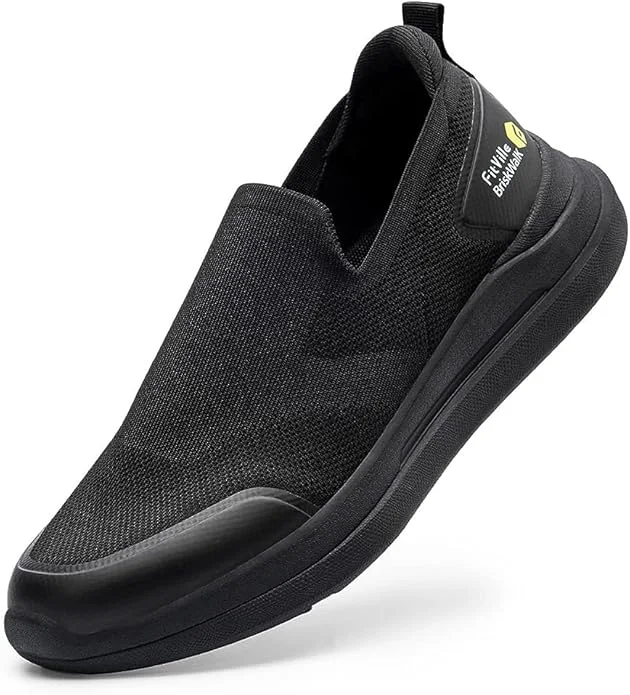
FitVille’s model is specifically marketed toward plantar fasciitis and wider feet.
The attraction here is its combination of cushioning, removable insoles and a roomier design. It may appeal to people who spend many hours walking or standing and prefer a softer underfoot feel.
Why consider it
- Maximum-cushioning design
- Wide and extra-wide options
- Removable insole
- Stretchable upper
- Roomy toe area
Potential limitations
- More cushioning can feel less stable to some people
- Heavier than lightweight walking shoes
- The appearance is more athletic/orthopedic
Best match: People who prioritize cushioning and width over a lightweight appearance.
🛒 Check Price on Amazon.comComparison Table: Which Slip-On Matches Your Needs?
| Model | Entry | Support approach | Cushioning feel | Width focus | Price snapshot |
| Skechers BOBS | Hands-free | Cushioned footbed | Medium | Standard | $52.99 |
| STQ Loafer | Lace-up style | Removable insole | Moderate | Standard | $41.99 |
| STQ Slip-On | Slip-on | Footbed support | Moderate | Roomier toe box | $44.89 |
| Skechers Summits | Hands-free | Cushioned construction | Moderate | Width options | $69.99 |
| JACKSHIBO | Hands-free | Built-in support | Moderate | Roomier | $39.99 |
| Parson-Ralven | Slip-on | Cushioned footbed | Moderate | Roomier fit | $63.80 |
| OrthoComfoot | Slip-on | Structured insole | Moderate | Wide options | $69.89 |
| ITAZERO 4E-5E | Easy-entry | Built-in support | Moderate | Extra wide | $49.99 |
| ITAZERO Wide | Slip-on | Removable footbed | Moderate | Wide | $42.49 |
| FitVille | Slip-on | Supportive/removable insole | High | Wide/Extra Wide | $49.89 |
Price note: Amazon prices are snapshots supplied for this article and can change.
Find Your Starting Point
Choose your main requirement:
Which Slip-On Should You Choose?
Instead of choosing purely by star rating, match the shoe to the problem you are trying to solve.
If easy hands-free entry is your priority
Consider:
- Skechers BOBS Squad Chaos
- Skechers Summits
- JACKSHIBO
If you need a wider shoe
Consider:
- ITAZERO 4E-5E
- ITAZERO Wide
- FitVille Extra Wide
If you prefer stronger underfoot structure
Consider:
- OrthoComfoot
- FitVille
- Models with removable insoles that allow you to add your own insert
If you want something more office-friendly
Consider:
- Skechers Parson-Ralven
- STQ Loafers
If price is the main concern
The lower-priced options in this comparison include:
- JACKSHIBO
- STQ Loafers
- STQ Slip-On
- ITAZERO Wide
Slip-On Shoes vs Lace-Up Shoes for Plantar Fasciitis
This is one area where the original article was too absolute.
A slip-on is not automatically worse than a lace-up.
But lace-up shoes have one major advantage: adjustability.
You can loosen the shoe when your feet swell, tighten the midfoot for better lockdown, and adjust the fit around different foot shapes.
Current independent testing of slip-on walking shoes also highlights a potential trade-off: slip-ons can offer convenience but may provide less lockdown and lateral support than adjustable footwear. RunRepeat’s 2026 slip-on walking shoe guide discusses this issue and notes that people with conditions including plantar fasciitis may benefit from more supportive construction.
So the practical rule is:
Choose a slip-on when convenience and comfortable fit are important. Choose a lace-up when you need more adjustability and lockdown.
If your plantar fasciitis is severe and your foot moves around inside a slip-on, a well-fitting lace-up may be the better footwear format for you.
What People Actually Ask About Slip-On Shoes for Plantar Fasciitis
Search results are not the only source of useful questions.
Community discussions repeatedly bring up practical issues that product pages often ignore, including whether slip-ons have enough arch support, whether insoles can be replaced, whether very soft shoes feel unstable, and whether people can wear them all day.
For example, Reddit discussions include people looking specifically for hands-free shoes with arch support, while others report that very soft recovery footwear can feel unstable or create too much pressure around the arch.
You can see these recurring concerns in discussions on r/PlantarFasciitis about step-in shoes, r/Shoes about slip-ons and arch support, and r/PlantarFasciitis about recovery slippers.
These are personal experiences, not clinical evidence, but they highlight an important buying lesson: support is personal.
Can Soft Shoes Be Too Soft for Plantar Fasciitis?
Yes, for some people.
Maximum cushioning sounds attractive, but a very soft shoe can sometimes feel unstable.
That does not mean firm shoes are automatically better.
Think about three things:
Softness: How much does the shoe compress?
Stability: Does your foot feel controlled while walking?
Support: Does the footbed provide comfortable structure?
A shoe can be very cushioned without being unstable, but you should pay attention to how your foot actually feels inside it.
This is one reason not to select a plantar fasciitis shoe based only on the word “cushioning.”
Do You Need Arch Support for Plantar Fasciitis?
Not everyone needs the same amount of arch support.
A supportive shoe should not produce sharp pressure under the arch.
If you use an orthotic, look for a removable insole and enough shoe volume to accommodate it.
The goal is not to find the hardest arch support available. The goal is to find a setup that distributes pressure comfortably and allows you to walk without constantly adjusting your foot.
The Mayo Clinic’s current treatment guidance lists arch supports and orthotics among conservative treatment options, alongside stretching, physical therapy and supportive footwear.
Are Wide Slip-On Shoes Better for Plantar Fasciitis?
Only if you actually need more width.
A shoe that is too narrow can compress the forefoot and create pressure points.
A shoe that is too wide can allow your foot to move excessively inside the shoe.
The ideal fit is:
Roomy at the toes + secure through the midfoot + stable at the heel.
If you routinely buy 2E, 4E or 5E footwear, start with models designed around those widths instead of simply sizing up in a standard-width shoe.
What About Slip-Resistant Shoes for Plantar Fasciitis?
This is particularly relevant if you work in:
- Healthcare
- Restaurants
- Kitchens
- Retail
- Warehouses
- Cleaning
- Hospitality
For these environments, plantar fasciitis support is only one part of the decision.
You also need outsole traction.
Look for manufacturer language such as:
- Slip resistant
- Non-slip
- Wet-floor traction
- Rubber traction outsole
Do not assume that a shoe is slip-resistant simply because its outsole is made from rubber.
If your workplace has specific safety requirements, check the manufacturer’s certification or your employer’s footwear requirements.
For additional work-shoe options, see our guide to the best work shoes for plantar fasciitis.
How Should a Slip-On Fit if You Have Plantar Fasciitis?
Use this five-point check when trying them on.
1. Heel
Your heel should remain reasonably secure when walking.
2. Toes
Your toes should be able to move without being squeezed.
3. Midfoot
The shoe should hold your foot without creating pressure points.
4. Arch
You should feel comfortable support rather than a painful lump underneath your arch.
5. Walking test
Walk for several minutes.
Pay attention to whether you:
- Grip with your toes
- Feel your heel slipping
- Feel pressure under the arch
- Feel your foot sliding sideways
- Feel more comfortable than in your current shoes
A shoe that hurts immediately should not be dismissed as something that simply needs weeks of “breaking in.”
How Long Should You Wear a New Slip-On at First?
Do not make the first test an eight-hour work shift.
Start with a shorter period.
Day 1: 30–60 minutes
Day 2–3: 1–2 hours
After that: Increase gradually if comfortable
This is not a medical protocol. It is simply a practical way to discover whether the fit creates pressure, rubbing or instability before committing to a full day.
If pain increases significantly rather than settling, stop using the shoe and reassess the fit.
Can Slip-On Shoes Cure Plantar Fasciitis?
No shoe should be marketed as a cure for plantar fasciitis.
A supportive shoe may make walking more comfortable and may reduce stress on the foot, but plantar fasciitis management can involve several components.
Current clinical guidance emphasizes approaches such as:
- Plantar fascia stretching
- Calf stretching
- Strengthening
- Activity modification
- Supportive footwear
- Orthotics or arch supports when appropriate
- Other treatments when symptoms persist
A Simple 60-Second Shoe Selection Test
Use this before ordering your next pair.
👟 Your Slip-On Fit Check
Choose the statement that best describes your priority.
The important part: this tool is for choosing features, not diagnosing plantar fasciitis.
A Better Way to Compare the 10 Shoes
Use this decision path:
Need hands-free entry?
→ Start with Skechers BOBS or Skechers Summits.
Need maximum width?
→ Start with ITAZERO 4E-5E or FitVille.
Want stronger insole structure?
→ Look at OrthoComfoot.
Want an office-casual appearance?
→ Look at Parson-Ralven or STQ Loafers.
Need the lowest price?
→ Compare JACKSHIBO, STQ and ITAZERO.
Want maximum cushioning?
→ Compare FitVille with the more moderately cushioned alternatives.
UrbanStyleFootwear Product Evaluation Method
At UrbanStyleFootwear, our product evaluations combine manufacturer specifications, verified retailer and Amazon listing data, customer feedback, review patterns, and footwear-specific research. We assess shoes across factors such as comfort, fit, cushioning, support, materials, durability, traction, design, and overall value, using multiple sources to provide balanced, practical, and buyer-focused recommendations.
For this guide, we also considered the actual search intent visible in Google Search Console, including queries around:
- Slip-on shoes for plantar fasciitis
- Most comfortable slip-ons
- Women’s slip-ons
- Men’s slip-ons
- Wide feet
- Flat feet
- Slip resistance
- Arch support
- Easy-entry footwear
We also reviewed current independent footwear testing and community discussions to identify practical questions that conventional keyword research can miss.
What Reddit Users Commonly Ask
Community discussions reveal several recurring questions:
“Can I get a hands-free shoe with real arch support?”
Yes, but you should evaluate the actual footbed and fit rather than relying on the hands-free label.
A Reddit discussion specifically about step-in shoes for plantar fasciitis includes users discussing Skechers, Kizik and Hoka options, with different experiences around arch support and insoles.
“Can a very soft shoe actually feel worse?”
It can.
Some users report that extremely soft recovery footwear feels unstable or puts too much pressure around their arch.
That does not mean soft cushioning is bad. It means cushioning and stability need to work together.
“Can I add my own orthotic?”
Sometimes.
Check for a removable insole and sufficient internal volume before purchasing.
These community experiences are useful for generating questions, but they are personal reports rather than clinical evidence.
Women’s Slip-On Shoes for Plantar Fasciitis
Women shopping for plantar fasciitis footwear should not simply choose a smaller men’s model.
Look at:
- Width
- Heel security
- Toe-box shape
- Arch placement
- Insole design
- Overall volume
- Sock thickness
The Skechers BOBS, STQ Women’s Slip-On, and STQ Loafer options above give different approaches to this problem.
For a more athletic shoe, you can also compare the options in our best sneakers for plantar fasciitis guide.
Men’s Slip-On Shoes for Plantar Fasciitis
Men with plantar fasciitis often have different fit priorities, particularly when wider sizing is needed.
The options in this guide cover several approaches:
Everyday convenience: Skechers Summits
Smart-casual: Skechers Parson-Ralven
Stronger insole structure: OrthoComfoot
Wide feet: ITAZERO
Maximum cushioning: FitVille
Your foot width should determine the size and width you choose, not simply your usual shoe number.
Slip-On Shoes for Flat Feet and Plantar Fasciitis
Flat feet do not automatically mean you need the hardest arch support available.
The more useful question is:
Does the shoe provide comfortable support while keeping your foot stable?
If you already use orthotics, prioritize removable insoles.
If you do not use orthotics, start with a shoe that feels supportive but does not create painful pressure under the arch.
Our guide on what to look for in plantar fasciitis shoes covers the broader footwear features in more detail.
Common Mistakes to Avoid
1. Choosing purely by star rating
A 4.7-star shoe can still be wrong for your foot.
2. Buying a bigger size because the shoe feels narrow
Try a wider width before going longer.
3. Assuming maximum cushioning is always better
Some people prefer a more stable platform.
4. Ignoring heel movement
A slip-on that moves around your heel is not doing you any favors.
5. Adding an orthotic without checking shoe volume
The combination may become too tight.
6. Wearing a brand-new shoe for an entire shift
Test it gradually first.
7. Treating footwear as the entire treatment
Plantar fasciitis management can involve exercise, stretching, activity changes and professional care.
When Should You See a Healthcare Professional?
Shoes can help with comfort, but not every case of heel pain is plantar fasciitis.
Consider professional evaluation if:
- Pain continues for several weeks
- Pain is getting worse
- You have significant swelling
- Pain occurs even when you are not standing or walking
- You cannot walk normally
- Pain began after a significant injury
- You have numbness or tingling
- Your symptoms do not improve with basic self-care
The Mayo Clinic’s heel-pain guidance lists several other possible causes of heel pain, so persistent symptoms should not automatically be attributed to plantar fasciitis.
Frequently Asked Questions
Are slip-on shoes good for plantar fasciitis?
They can be if they fit securely and provide appropriate cushioning and support. A slip-on design alone does not make a shoe suitable for plantar fasciitis.
What is the most important feature in a plantar fasciitis slip-on?
Fit comes first. After that, consider cushioning, comfortable arch support, heel security, toe-box space and outsole traction.
Are Skechers slip-ins good for plantar fasciitis?
Some Skechers slip-in models may be comfortable for people with plantar fasciitis because of their cushioning and easy-entry construction. However, individual foot shape and support needs determine whether a particular model works well.
Are slip-ons better than lace-up shoes for plantar fasciitis?
Not necessarily. Slip-ons are more convenient, while lace-up shoes generally offer greater adjustability and lockdown.
Can I wear slip-on shoes all day with plantar fasciitis?
You can if the shoe remains comfortable and secure throughout the day. Start with shorter wear periods rather than immediately using a new pair for a full shift.
Do plantar fasciitis shoes need arch support?
Arch support can be useful, but the amount needed varies. The support should feel comfortable rather than create a painful pressure point.
Are wide shoes better for plantar fasciitis?
Wide shoes can help if your current footwear is squeezing your forefoot. They are not automatically better if your feet do not require additional width.
Can I put orthotics in slip-on shoes?
Some can accommodate orthotics, especially models with removable insoles. Always check the available space before inserting a thicker custom or aftermarket orthotic.
Are zero-drop shoes good for plantar fasciitis?
There is no single heel-to-toe drop that works for everyone. If you are not already accustomed to zero-drop footwear, changing geometry during a painful episode may not be the simplest option. Choose the setup that feels comfortable and appropriate for your individual needs.
Can plantar fasciitis go away?
Many people improve with conservative care, but recovery can take time. Supportive footwear may help with comfort, but stretching, strengthening, activity modification and other treatments may also be part of management.
The Conclusion
The best slip-on shoes for plantar fasciitis are not necessarily the softest, most expensive or most highly reviewed.
The better question is:
Which shoe gives your foot the combination of fit, support, cushioning, stability and convenience that you actually need?
For hands-free everyday wear, start by comparing the Skechers options.
For wider feet, look closely at ITAZERO and FitVille.
For stronger insole structure, compare OrthoComfoot.
For a more casual-smart appearance, consider Parson-Ralven or the STQ loafer.
And if a slip-on feels loose, unstable or painful, do not force yourself to wear it simply because it has good reviews.
A supportive lace-up may be a better choice.
If you want to compare prices and availability, use the Check Price on Amazon links above because prices, sizes and stock can change.
For broader footwear options, continue to our best shoes for plantar fasciitis guide.
Disclosure
UrbanStyleFootwear may earn a commission from qualifying Amazon purchases at no additional cost to you.
Product prices, ratings, sizes, availability and specifications can change. Verify the current Amazon listing before purchasing.
This article provides general footwear information and is not a diagnosis or substitute for professional medical advice.
📖 Related Reading on Plantar Fasciitis Shoes
Explore our comprehensive guides to find the perfect shoe for your foot health and lifestyle.
Best Sneakers for Plantar Fasciitis
Discover athletic sneakers that combine style with the support your feet need for all-day comfort.
What to Look For in Plantar Fasciitis Shoes
Expert guide to the key features, support systems, and materials that actually make a difference.
Best Work Shoes for Plantar Fasciitis
Professional-grade shoes for people who stand or walk 8+ hours daily while managing foot pain.
Best Shoes for Plantar Fasciitis (Complete Guide)
Our most comprehensive guide covering all shoe types, price ranges, and specific foot conditions.