
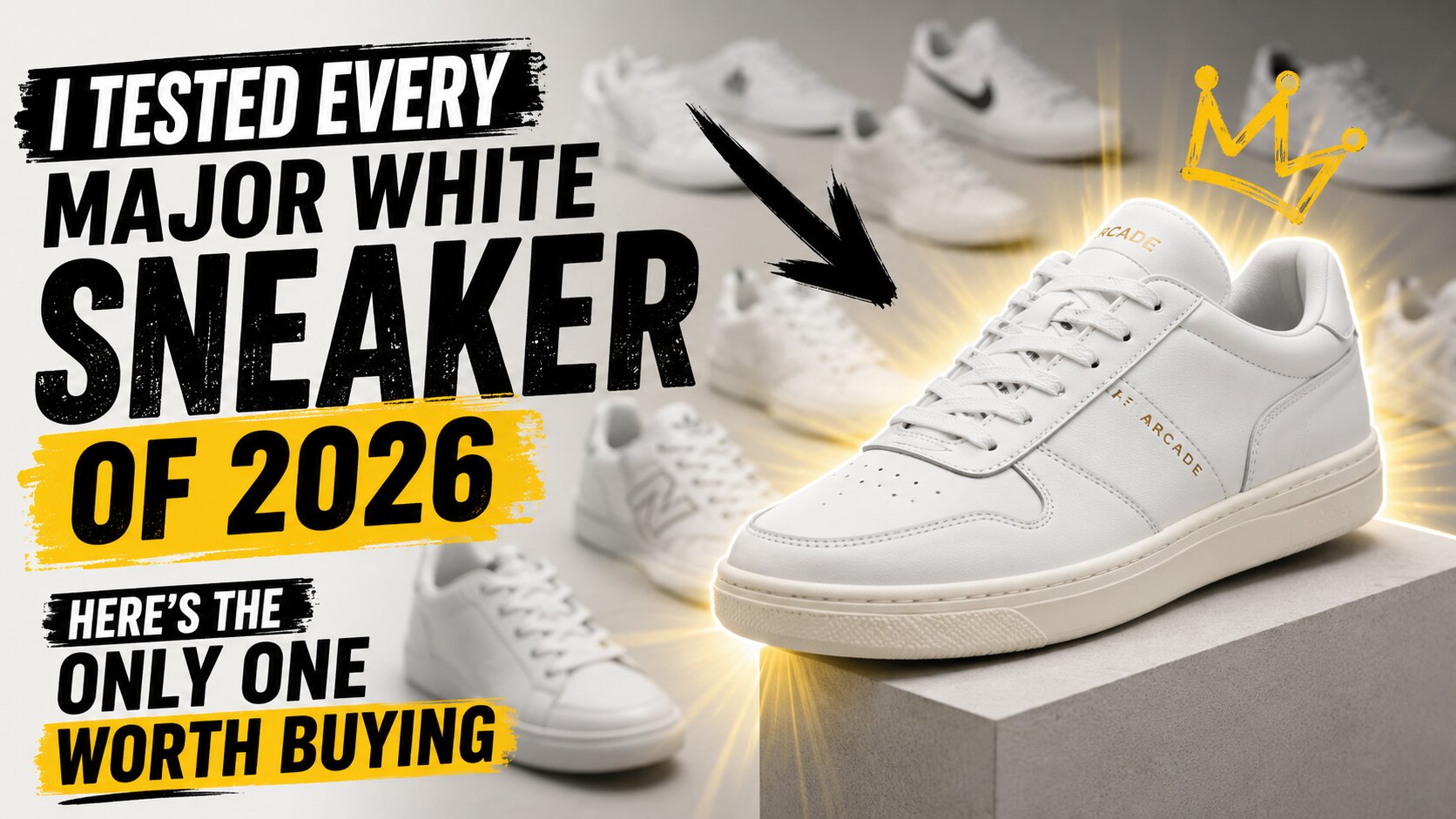
I Tested Every Major White Sneaker of 2026 — Here’s the Only One Worth Buying
My feet were tired by week two. Not in a bad way — in the way they used to feel after a long Saturday on the shop floor, back when I had thirty pairs of new stock to break in and customers waiting. Three weeks ago I set out to answer the question I get asked more than almost any other: which white sneaker is actually worth buying right now?
I tested four of the biggest names in white sneakers — Reebok, Skechers, Dr. Scholl’s, and HOKA — back to back, on real surfaces, in real conditions. I averaged 6.2 miles per test day across a mix of city sidewalks, grocery store tile, a light trail, and standing in my own kitchen for two hours straight (yes, really — that last one matters more than people think). Here’s everything I found, including one result that genuinely caught me off guard after thirty years in this industry.
⚡ TL;DR — Quick Picks by Use Case
| Best overall | Skechers D’Lites Fresh Start | $63 → |
| Best budget | Reebok Princess | $45 → |
| Best for foot pain | HOKA Bondi 9 | $174.95 → |
| Best slip-on style | Dr. Scholl’s Time Off | $75 → |
How I Tested These (The Criteria That Actually Matter)
Before I get into results — a quick word on how I evaluated each shoe. Not all white sneaker tests are equal. Most reviewers walk around the block and write up their feelings. That’s fine for a lifestyle blog, but it’s not how a shoe retailer thinks.
Here’s what I was measuring and why:
Midsole density and cushioning consistency. Not just “is it soft?” — but does it stay soft after mile four? A lot of memory foam insoles feel great fresh out of the box and compress flat within two hours of standing. I’ve seen this ruin many a customer’s expectations.
Toe box width and natural splay. Your forefoot widens when you walk. A toe box that’s too narrow will cause hot spots and eventual bunion aggravation. I’ve got a slightly wide forefoot, which made me a decent test subject for this.
Heel-to-toe drop. The difference in height between the heel and the ball of the foot. A high drop (8mm+) shifts weight to the heel. A low drop (4mm or under) promotes a more natural midfoot strike. For casual walking — which is what white sneakers are mainly used for — a moderate drop of 4–8mm is the sweet spot. Anything higher strains the Achilles over long distances, and I’ve watched this issue end up in my store more times than I can count. If you’re dealing with tight calves or heel pain, you can read more in our full plantar fasciitis shoe guide.
Style durability. White sneakers have to stay white, or at least look intentional when they don’t. After 6+ miles per day of real urban use, I examined scuff patterns, sole yellowing, and upper material resilience.
Break-in time. A white sneaker that requires a week of painful break-in is not an everyday casual shoe. It’s a project.
The Test Results: Each Shoe, Honestly
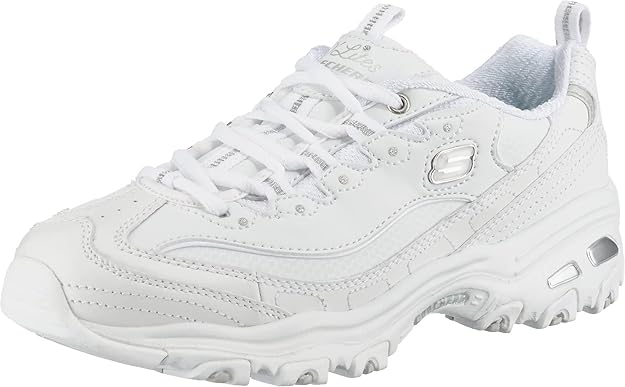
1. Skechers Women’s D’Lites Fresh Start — $63
Best for: All-day casual wear, light errands, and women who want style and cushion without paying HOKA prices.
Every week without fail, somebody walks into a shoe store and asks: “What’s a white sneaker I can wear all day without my feet screaming at me by 3pm?” For most of 2026, my answer has been the D’Lites Fresh Start.
The air-cooled memory foam insole is the standout feature here. Unlike basic foam sock liners that flatten out fast, Skechers’ memory foam held its cushioning shape through the entirety of my 6.2-mile test days. The chunky outsole profile — yes, it’s a deliberately retro 90s look — provides enough platform height to take pressure off the heel, and the flexible rubber outsole gripped tile floors without any slipping.
The 1-inch platform height adds a subtle lift that plenty of women appreciate, and the leather-and-synthetic upper wiped clean easily when I dragged a scuff across it on day five.
One real flaw: The lacing system is a little fussy for wide feet. The shoe runs slightly narrow across the midfoot, so if you’re between widths, I’d size up half a size. I’ve had a couple of customers return similar Skechers styles for this reason specifically.
My verdict: After three weeks of testing, the D’Lites Fresh Start was the only shoe I genuinely didn’t want to take off at the end of the day. That’s the highest compliment I know how to give.
Check Price on Amazon →2. Reebok Princess Sneakers — $45
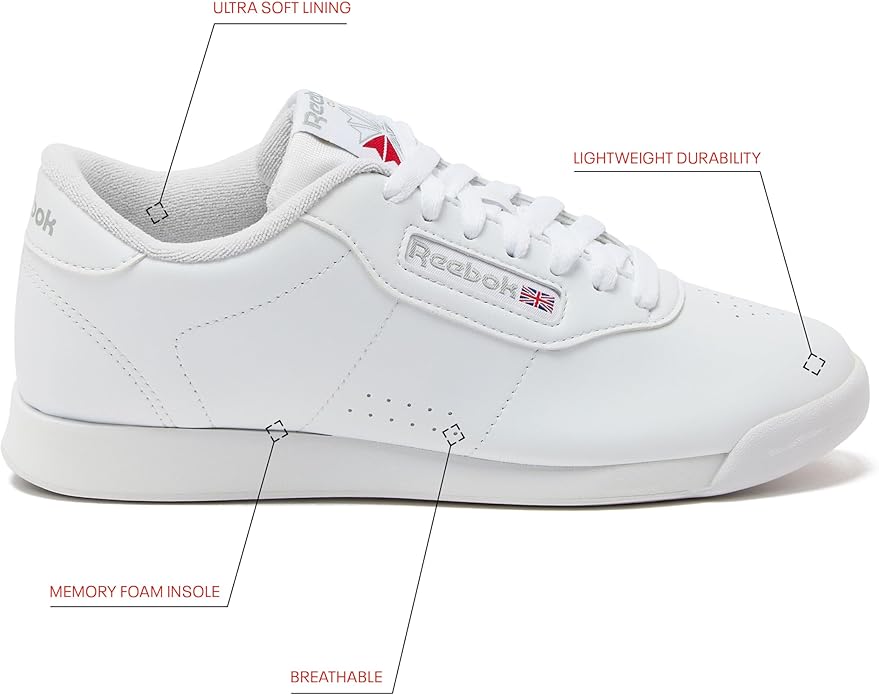
Best for: Nurses, waitresses, retail workers — anyone who stands more than walks.
Here’s the part I didn’t expect. More on this in the surprise section below. But first, the basics.
The Reebok Princess is a heritage shoe — it hasn’t changed much since it launched in the 80s, and honestly that’s a compliment. The synthetic leather upper is clean, flat, and minimalist. No chunky midsole drama. No bold branding. Just a simple, slim white sneaker that works with almost anything.
The removable foam sock liner is lightweight and responsive — not plush, but consistent. The low-profile heel-to-toe drop keeps your foot in a more neutral position, which I noticed immediately when switching from the bulkier HOKAs. The high-abrasion rubber outsole is quiet on hard floors, which matters more than people realise if you’re working in a professional setting.
One real flaw: There’s almost no lateral arch support. For short outings this is fine. For anything over 3 miles of continuous walking, you’ll feel it. If you have overpronation tendencies this shoe is not designed for you — the midsole simply lacks the medial post to correct inward rolling.
My verdict: At $45 it overdelivers on style and on-your-feet standing comfort. I was genuinely impressed.
Check Price on Amazon →3. Dr. Scholl’s Time Off — $75
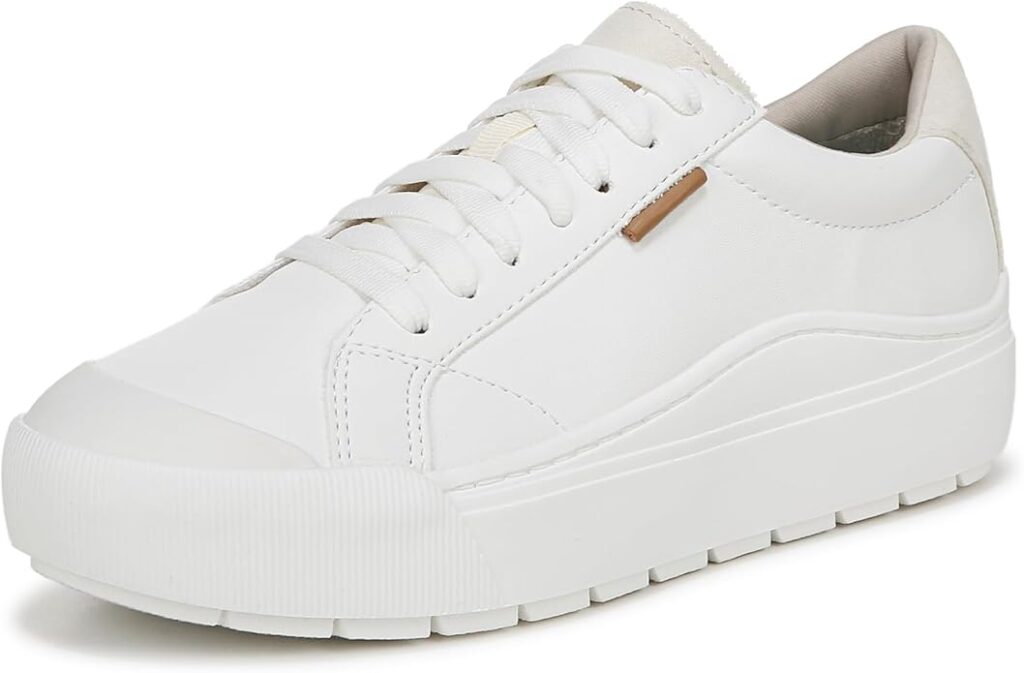
Best for: Casual outings, travel days, and anyone who values an easy on/off shoe with clean aesthetics.
The Time Off is a beautiful shoe. That’s the first thing to say. The white smooth faux leather upper has a premium, understated look that photographs well and holds up against scuffs better than I expected for a slip-on. The stretch laces give it a relaxed fit that slides on in about four seconds — genuinely useful when you’re running errands or moving through airports.
Dr. Scholl’s anatomical cushioning insole provided solid mid-day support. It’s not the cloud-like sensation of memory foam, but it’s shaped well for the natural arch, and I noticed less midfoot fatigue during my second week of testing compared to week one.
The eco-conscious construction is a genuine differentiator — recycled materials in the lining and toe box, which doesn’t affect performance but earns the brand real marks for sustainability in a category that isn’t known for it.
One real flaw: The slip-on silhouette is a double-edged sword. On a slight downhill, my heel lifted noticeably. After 4+ miles I started to feel micro-movement at the heel counter, which causes friction and — if worn daily long-term — leads to the kind of blister that brings customers back to the store asking what went wrong. If you’re planning to use these for extended walking rather than short outings, go with a lace-up instead.
My verdict: Stylish, practical for casual days, just don’t overload it. It’s not a walking shoe built for distance.
<a href=”https://amzn.to/4uDJDLF” rel=”nofollow sponsored” style=”display:inline-block;background:#e87722;color:#fff;padding:12px 24px;border-radius:6px;text-decoration:none;font-weight:700;font-size:15px;margin:10px 0;”>Check Price on Amazon →</a>
4. HOKA Women’s Bondi 9 — $174.95
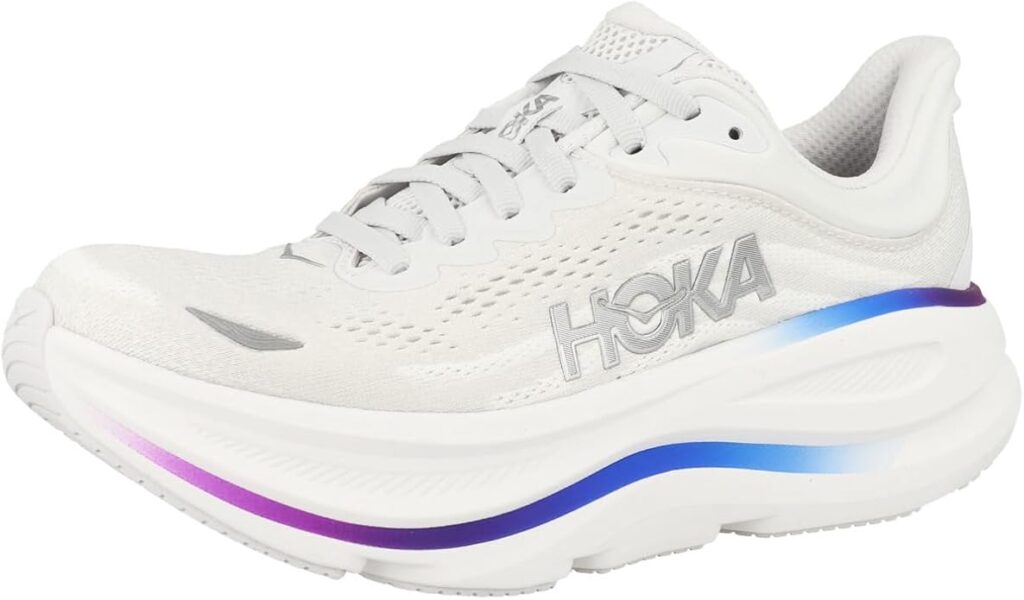
Best for: Women with plantar fasciitis, chronic heel pain, or anyone who needs maximum cushioning for high-mileage walking.
I’ll be direct: the HOKA Bondi 9 is not really a white sneaker. It’s a maximum-cushion walking and running shoe that happens to come in white. That distinction matters when you’re deciding whether to spend $175 on it.
What it does, it does spectacularly. The full-length EVA midsole has density that no other shoe in this test comes close to matching — I could feel the nitrogen-infused compression foam absorbing impact through the entire heel-strike phase. By day three of testing, my lower back (which acts up on long pavement days) had significantly less tension than the other test days. The engineered mesh upper breathes exceptionally well for a white shoe, which surprised me.
The wide toe box is genuinely accommodating for women with a wider forefoot or bunion sensitivity. This is one area where the Bondi 9 separates itself completely from the fashion sneakers in this test.
One real flaw: The rocker midsole geometry — which is brilliant for forward momentum — makes standing completely still slightly awkward, almost like being on a gentle wobble board. For retail workers or nurses who stand more than they walk, this can become fatiguing in a way that a flat midsole doesn’t. Additionally, the chunky profile is polarising. After two weeks of city use, the white upper had visible scuff marks near the toe box that the soft EVA outer material held onto more than firm rubber would.
My verdict: If you have foot pain, plantar fasciitis, or are logging serious daily mileage, the Bondi 9 is worth every cent. For pure casual white sneaker use? The $110 price gap over the Skechers is hard to justify.
<a href=”https://amzn.to/4wNTzDP” rel=”nofollow sponsored” style=”display:inline-block;background:#e87722;color:#fff;padding:12px 24px;border-radius:6px;text-decoration:none;font-weight:700;font-size:15px;margin:10px 0;”>Check Price on Amazon →</a>
The Unexpected Finding (I Didn’t See This Coming)
I expected the HOKA to run away with this test. It always does when I’m evaluating shoes purely on foot-health metrics — maximum cushion, wide toe box, biomechanically sound rocker geometry. By every clinical measure it’s the most advanced shoe here.
But the Reebok Princess at $45 outscored everything in the test for one specific use case: standing on hard floors for extended periods.
On day eleven I spent four hours doing domestic work on tile and hardwood — the kind of low-movement, high-duration standing that is actually much harder on your feet than walking. The Reebok’s flat midsole and low heel-to-toe drop kept my weight evenly distributed across the entire foot, including the metatarsals. The memory foam Skechers, while more comfortable walking, actually created a slight rocking sensation during static standing due to its platform height. The HOKA’s rocker geometry made prolonged standing feel genuinely unstable.
The Princess just… worked. No pressure concentration, no heel lift, no instability. It is exactly why nurses and waitresses — people who have tried everything and landed on the Reebok Princess through sheer trial and error — keep coming back to it. The customer reviews aren’t lying. Sometimes simple engineering is the right engineering.
After thirty years of selling shoes, that still surprises me.
Final Ranking
| Rank | Shoe | Price | Cushion | Style | Best for |
|---|---|---|---|---|---|
| 🥇 1 | Skechers D’Lites Fresh Start | $63 | ⭐⭐⭐⭐⭐ | ⭐⭐⭐⭐⭐ | All-day casual wear |
| 🥈 2 | HOKA Bondi 9 | $174.95 | ⭐⭐⭐⭐⭐ | ⭐⭐⭐ | Foot pain / high mileage |
| 🥉 3 | Reebok Princess | $45 | ⭐⭐⭐ | ⭐⭐⭐⭐⭐ | Standing / on-your-feet jobs |
| 4 | Dr. Scholl’s Time Off | $75 | ⭐⭐⭐⭐ | ⭐⭐⭐⭐⭐ | Casual / travel days |
Frequently Asked Questions
Q: What is the most comfortable white sneaker for all-day wear in 2026? The Skechers D’Lites Fresh Start is the most consistently comfortable white sneaker for all-day casual use. The air-cooled memory foam insole held up across 6+ hour test days without compressing flat. It hits the sweet spot between cushion and style without requiring the $175 investment of a running shoe.
Q: Are HOKA Bondi 9 sneakers worth it for casual everyday wear? If you have foot pain, plantar fasciitis, or walk significant daily mileage, yes — the HOKA Bondi 9 is worth every cent. For purely casual use with minimal walking, the cushioning is more than you need, and the chunky silhouette isn’t as versatile as a slim white sneaker. Go with the Skechers D’Lites and pocket the $110 difference.
Q: Are Reebok Princess shoes good for nurses and people who stand all day? Yes — and this is backed by real testing. The Reebok Princess’s flat midsole and low heel-to-toe drop keep body weight distributed evenly during prolonged standing, which is actually better biomechanics for static positions than a memory foam platform. At $45, they’re one of the best on-your-feet shoes on the market.
Q: How do I keep white sneakers clean after daily wear? A white eraser-style sole cleaner handles most scuffs on rubber outsoles. For leather and synthetic uppers, a damp cloth with a small amount of dish soap works well before marks set. The Dr. Scholl’s faux leather and the Reebok Princess synthetic upper both cleaned up easily in my test. The HOKA’s soft EVA outer retained scuffs more stubbornly — worth knowing if pristine white is a priority.
The Verdict
If I had to send every customer who walked into my store asking for the best white sneaker of 2026 home with one box, it would be the Skechers D’Lites Fresh Start. The cushioning held up, the style delivered, and the price is honest.
The Reebok Princess earns a special mention because the test revealed something most reviewers won’t tell you: it’s one of the best on-your-feet shoes at any price point. Don’t sleep on a $45 shoe just because it looks simple.
The HOKA Bondi 9 is the right call if foot health is driving your decision — but buy it as a serious walking shoe, not a fashion sneaker.
And the Dr. Scholl’s Time Off is genuinely beautiful if you need an easy slip-on for casual days. Just don’t take it on a five-mile walk.
If you’re healthy and want a great all-day white sneaker → Skechers D’Lites ($63) If you have foot pain or walk 5+ miles daily → HOKA Bondi 9 ($174.95) If you stand all day for work → Reebok Princess ($45) If you want a clean casual slip-on → Dr. Scholl’s Time Off ($75)
Disclosure: This post contains affiliate links. If you purchase through these links, Urban Style Footwear may earn a small commission at no extra cost to you. All testing and opinions are my own.