

What Is a Toe Box? Wide vs Narrow Toe Boxes Explained
Footwear Fit Guide | Updated November 2026
Summarize this toe box guide with AI
Open an assistant and submit the prefilled request. The assistant reads the page only after you submit it.
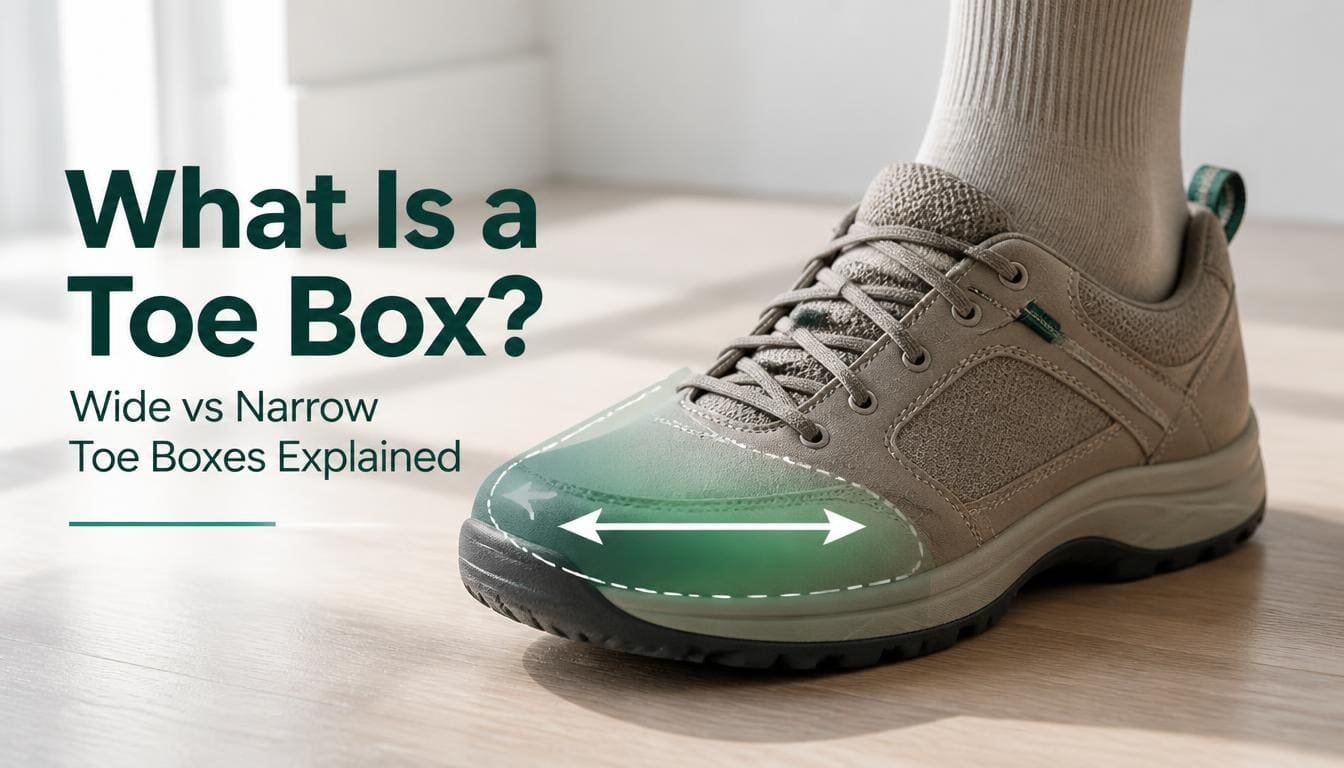
A toe box is the front section of a closed shoe that surrounds your toes. A wide toe box gives the toes side-to-side and vertical room to spread and move, while a narrow or tapered toe box squeezes the forefoot into a point. Enough room helps the toes lie flat and the foot move naturally, while too little space can contribute to rubbing, pressure, and toe problems over time.
Key takeaways
- The toe box is the part of the shoe that houses the toes. Its width, depth, and length all affect comfort.
- A toe box should leave room for the toes to spread while walking and running, because the foot widens and lengthens under load.
- Narrow toe boxes are linked in research and clinical guidance to forefoot pressure and bunion development, though the evidence is observational and not every study finds the same link.
- A small 2024 lab study found that a raised toe box reduced impact on the big toe in marathon runners, but the study was limited and did not cover all toes equally.
- Toe box width and shoe width are not the same measurement, so check the front of the shoe rather than only the labeled width.
Why this word matters when you shop
If you have ever tried on a pair of shoes that felt fine in the heel and arch but pinched across the front, you have already met the toe box. It is one of the least discussed parts of a shoe, yet it controls how much space your toes get every time you take a step. Many shoppers look at the size number, then assume the rest of the fit is automatic.
Consider a hospital nurse who stands for long shifts on hard floors. By the end of a twelve-hour day, her feet have swelled, and a shoe that felt roomy at 9 a.m. can feel tight across the toes by late afternoon. This is a hypothetical example, but it reflects a common experience. The toe box is the part of the shoe that has to accommodate that change.
This guide explains what the toe box is, how wide and narrow designs differ, what the evidence says about toe box shape and foot health, and how to check fit with simple tests. If you are new to shoe construction, our anatomy of a shoe guide places the toe box alongside the other parts of the upper and sole. For the sole layers, see our explainer on insole vs midsole vs outsole.
What a toe box is
The toe box is the section of footwear that surrounds the toes on a closed-toe shoe. It runs from the front of the shoe’s upper back toward the midfoot, and it includes the space above, below, and beside the toes. In many shoes, the toe box is shaped by the last, which is the mold the shoe is built around, and by structural materials inside the front of the upper.
Toe boxes can be structured or unstructured. A structured toe box has a three-dimensional shape, often created with a stiffening layer, which mostly affects the depth of the front of the shoe. An unstructured toe box is more flexible and can follow the foot’s shape more loosely. Neither approach is automatically better. A structured box can hold its form, while an unstructured one may allow more natural toe movement. The right choice depends on the shoe’s purpose and how your foot moves.
The toe box also includes vertical space. Toes need height as well as width, especially at the top of the toe and the knuckle joints. A shoe can look roomy from the side but feel crowded if the upper presses down on the toes. This is why fit should always be checked in three directions: length, width, and depth.
Toe box shapes explained
Toe box shapes describe the outline of the front of the shoe when seen from above. The shape affects how the toes sit, how the foot moves, and how the shoe looks.
Round toe boxes have a curved outline that gives the toes more room side to side. They are common in walking shoes, work shoes, and many comfort-focused designs.
Square toe boxes have a flatter front and often more room across the front of the foot. They are commonly used in some casual and athletic shoes, and they can suit wider forefeet well.
Tapered or pointed toe boxes narrow toward the tip. They are common in fashion shoes and some dress shoes. They can look sleek but often compress the toes, especially the big toe.
Split or multi-pocket toe boxes divide the front into separate sections for each toe, similar to a glove. The Wikipedia entry on toe boxes notes that five-pocket designs can be difficult to fit because each pocket must suit a different toe length and width. Split designs are a specialized category rather than an everyday standard.
Toe box shape and foot shape do not always match. Wikipedia’s toe box entry notes that most toe boxes are widest at the ball of the foot and taper toward the toes, while feet do not taper symmetrically from both sides. A round or square outline can therefore feel more natural than a pointed one for many people, even if the shoe’s overall width is standard.
Wide vs narrow toe boxes: what actually differs
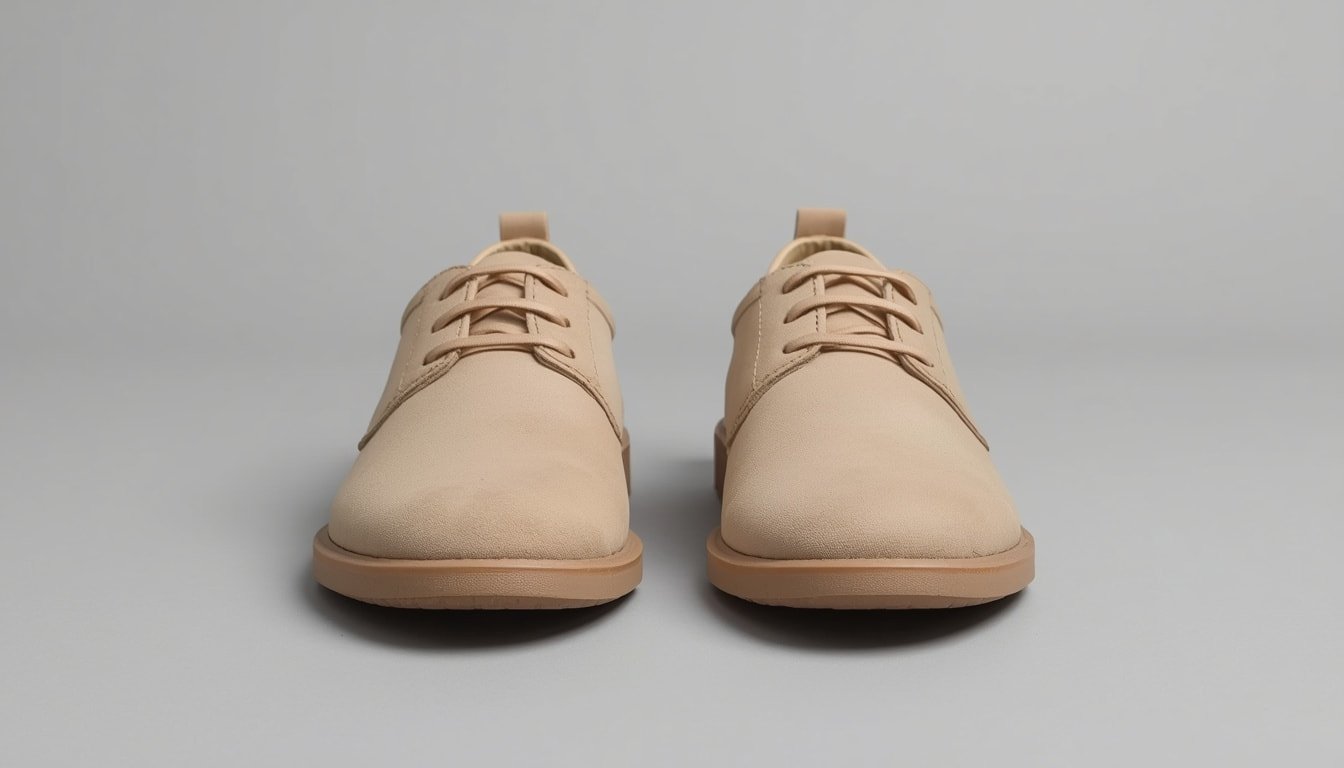
People often describe a shoe as “wide” or “narrow,” but toe box width is only one part of the fit. The table below compares the features that matter most when you are choosing between a wide and narrow toe box.
| Feature | Wide toe box | Narrow toe box |
|---|---|---|
| Space across toes | More side-to-side room | Less room, toes can press together |
| Front shape | Usually round or square | Usually pointed or tapered |
| Height over toes | Often deeper | Often shallower |
| Main risk if too roomy | Heel slippage if the heel is loose | Not applicable |
| Main risk if too tight | Not applicable | Rubbing, pressure, toe and forefoot strain |
A wide toe box is not a universal solution. If a shoe is wide at the front but loose at the heel, the foot can slide forward during each step. Some sources describe this as a common problem with pairs that have generous toe room but insufficient heel security. Good fit depends on the whole foot, not one measurement.
Why toe box room matters during movement
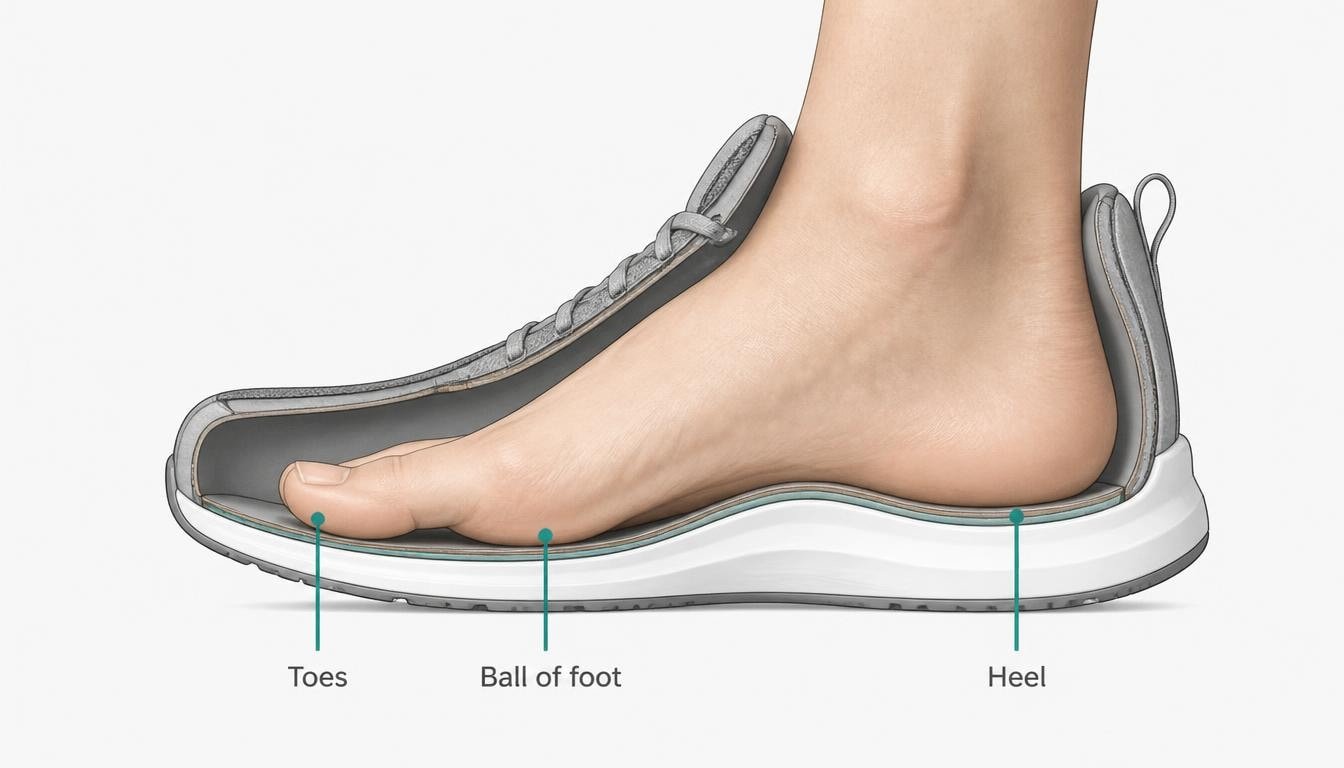
The foot is not static inside a shoe. Wikipedia’s toe box entry summarizes research describing how each step causes the foot to flex, the toes to spread, and the arch to flatten and then rebound. The foot can also lengthen and widen when it takes weight. According to the same overview, weight-bearing can widen the foot across the ball by up to 0.5 inches (1.3 cm). A foot with a higher arch may lengthen more in use, which can mean more room is needed in front of the toes.
Running adds another layer of demand. When you run, weight shifts onto the ball of the foot and the toes, and the heel touches the ground more lightly than in walking. For that reason, a narrow toe box can be more limiting during running than during walking. A shoe that feels acceptable on a short store walk may feel tight after several kilometers.
This movement explains why the standard advice to buy shoes that fit while standing is common in footwear guidance. A shoe tried on while seated may not reflect the space your foot needs when it is loaded.
What research says about narrow toe boxes and bunions
Bunions, medically called hallux valgus, involve the big toe drifting toward the other toes and a bump forming at the side of the joint. Footwear is one of the most discussed factors, though it is not the only one. Genetics, foot structure, and other mechanical factors also matter.
A 2024 research paper in the open-access literature from the journal Bioengineering reviewed toe box concerns in runners, and related research has reported that narrow fitting footwear is a modifiable risk factor for hallux valgus development. The strongest statement from the research base is that narrow footwear is associated with the condition and can be changed, rather than a claim that narrow shoes cause bunions in every person. Keele University’s repository describes footwear with a narrow toe box as a possible predisposing factor for hallux valgus, because it can place pressure on the medial side of the big toe joints.
Not every study agrees. A peer-reviewed study in the Journal of Foot and Ankle Research (ISSN 1757-1146) looked at women with painful hallux valgus and found that toe box shape and fit of the shoes they usually wore were not significantly associated with increased medial forefoot pressure in that sample. The study’s authors suggested that changing toe box width alone may not necessarily reduce medial forefoot pressure where footwear does not appear to play a major role. That finding does not mean toe box shape is irrelevant. It means the relationship is more complex than a simple cause-and-effect rule, and a wide toe box may help some people more than others.
The AARP’s guidance on healthy feet also makes a practical point about toe boxes. Podiatrist Alex Kor, quoted in an AARP article, notes that a wider toe box refers to the side-to-side room around the toe area, while the shoe’s width is measured at the ball of the foot. The same article highlights that pointed pumps and wing tips can cramp toes and may contribute to bunions and hammertoe, while extra-depth shoes can create more room for sensitive areas. These points are consistent with the broader medical view that the toe box is about room, not only size.
For readers who already have bunions, the most accurate summary is that a wider toe box may reduce pressure and rubbing, but it does not reverse an existing deformity. A podiatrist can assess whether a specific shoe, insert, or treatment plan suits your foot.
Evidence on toe box design and running toe injuries
Running creates its own toe-related risks. A 2024 randomized crossover study published in Bioengineering (MDPI) examined whether a raised toe box could help prevent toe injuries from distance running. The researchers, led by Yaodong Gu and colleagues, tested 25 male marathon runners wearing both a raised toe box shoe and a regular shoe. The raised version extended the toe box by 8 mm along the vertical axis and 3 mm along the sagittal axis, with the modification focused on the big toe area.
The study reported that the raised toe box significantly reduced the distance change between the big toe distal phalanx and the first metatarsal head, which the authors used as an indicator of impact severity on the big toe. Relative displacement changes also differed across the foot, and the researchers found that impact on the small toes did not significantly decrease. The authors describe their conclusion as preliminary and note limitations, including the lack of direct measurement of hallux impact force and the absence of design iterations to identify optimal dimensions.
What does this mean for shoppers? It suggests that toe box geometry may influence toe impact during running, but it does not prove that a particular commercial shoe will prevent injuries. The sample included only male runners who met specific performance criteria, and the modification was a research prototype rather than a retail product. Readers should treat the study as one piece of evidence rather than a final answer.
A related point is that toe injuries in distance running often involve friction and impact against the front of the shoe. The study’s introduction describes subungual hematoma, or a bruised toenail, as a common running injury commonly attributed to repeated friction between the toe and the toe box. Other factors, such as lacing, heel fit, and sock choice, can affect how much the toes move forward. A wider toe box is one tool among several.
When a wide toe box may help
A wider toe box is most likely to be useful in a few common situations. People who have noticed rubbing or pressure across the top or sides of the toes may find that more room reduces discomfort. People who stand for long hours may benefit from space that allows the forefoot to swell slightly without pinching. Runners who develop bruised toenails or friction on the front of the toes may want to look at toe box depth and length as well as width. People with a wide forefoot, or those who have been told their feet are broad at the ball, may also find that standard shoes feel cramped.
Wide toe boxes can also be helpful for people with bunions, hammertoes, or other forefoot concerns, but this is where a professional opinion matters most. A podiatrist can help decide whether toe box width, depth, a stiffer sole, or an insert is the best next step.
When a wide toe box may not be the right answer
A wider toe box is not automatically better for every foot. If the toe box is very roomy but the heel is loose, the foot can slide forward and jam the toes into the front of the shoe. Wikipedia’s toe box entry notes that if the foot can slide far enough to hit the front of the toe box, it can cause black toenails and other injuries. The fix is usually better lacing, a more secure heel, or a different shape, not simply more space at the front.
A wide toe box may also be less useful if the problem is elsewhere. If your pain is in the heel or arch, the toe box may not be the main issue. Shoe support, sole stiffness, and insole fit may matter more in that case.
How to check toe box fit at home or in a store
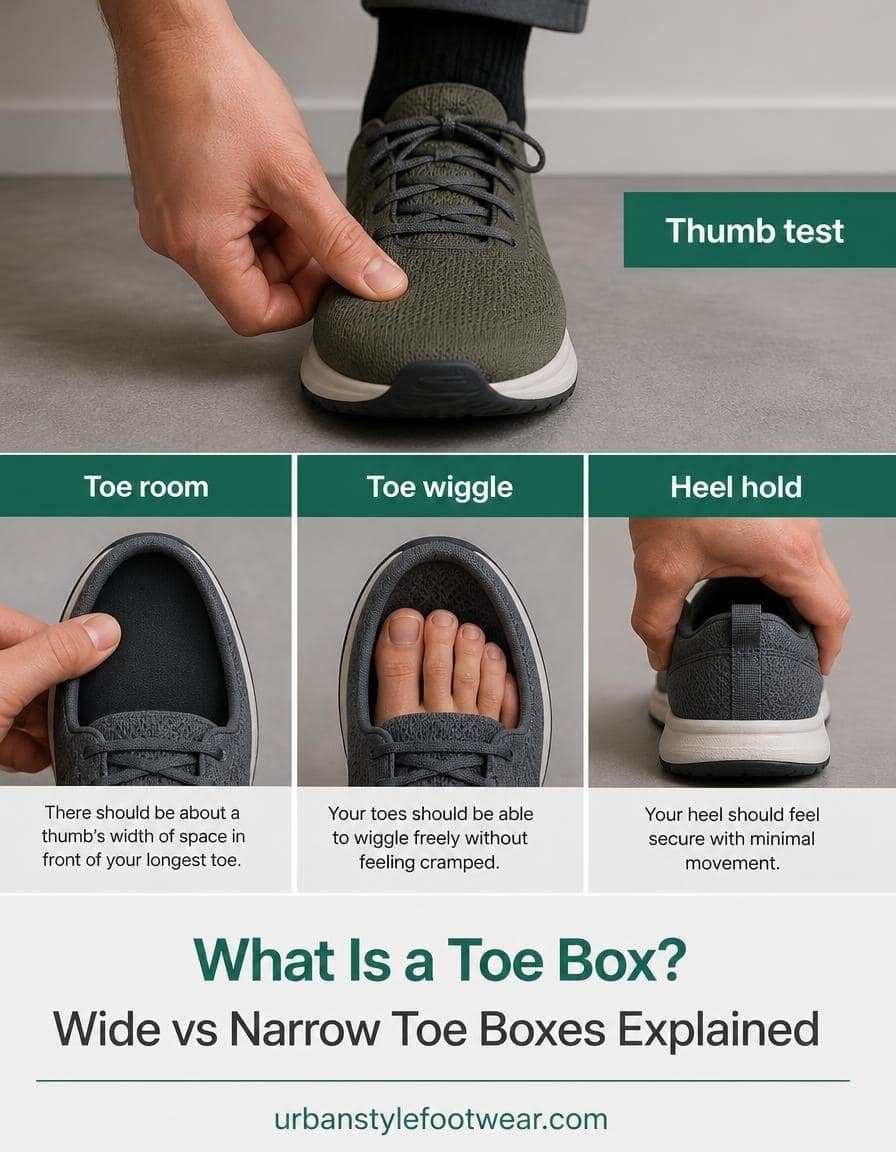
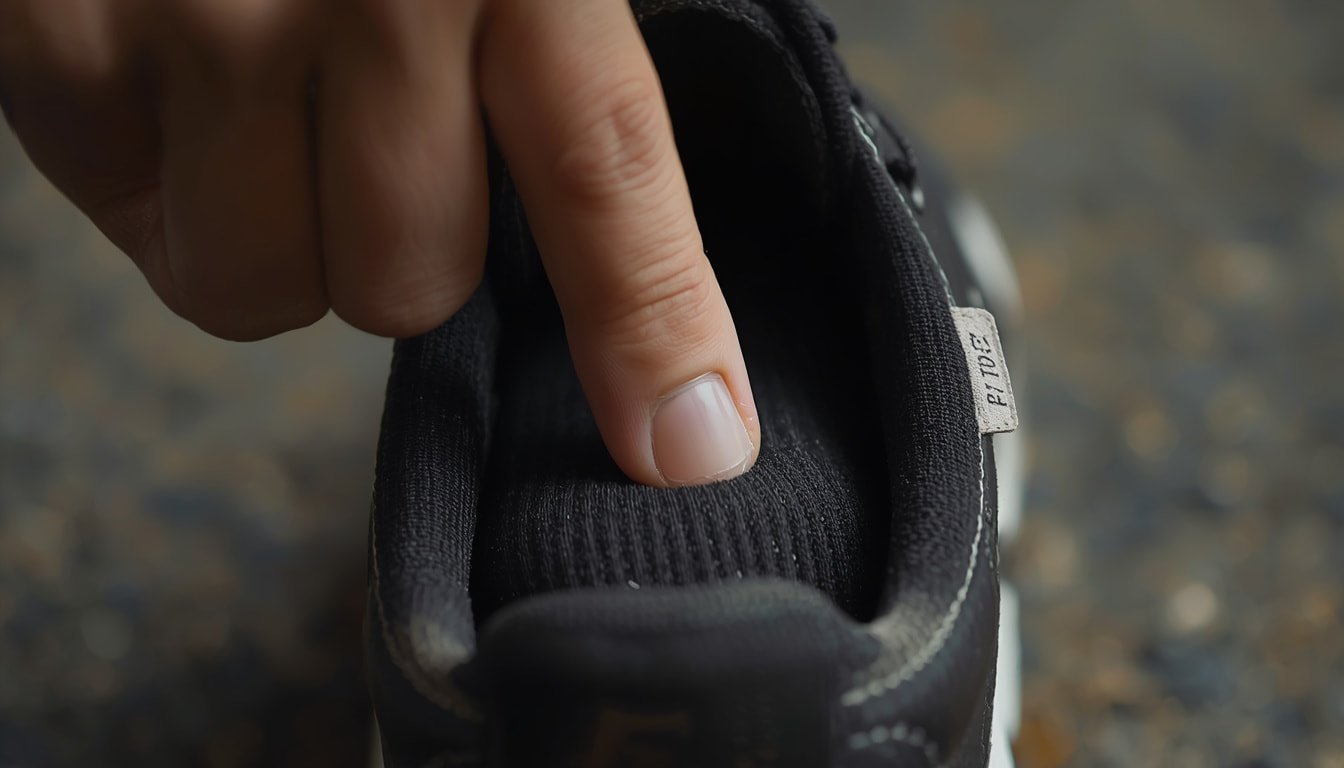
Start with the thumb test. Many footwear guides, including a WebMD article quoting a podiatrist, recommend about a thumb’s width of space between the longest toe and the front of the shoe. The idea is simple: when you stand, the front of the shoe should not touch the toes.
Next, check whether your toes can move. You should be able to wiggle them without rubbing against the upper. If the toes press against the sides or top, the toe box may be too narrow or too shallow.
Then check the heel. The foot should stay anchored as you walk or stand. If your heel lifts or slides, the shoe may be too loose in the heel even if the front feels comfortable.
Wikipedia’s toe box entry describes a simple test for shoes that may be too tight: remove the insole, stand on it, and see whether the toes overhang the insole. If they do, the toe box may be too small for your foot. This test is a useful check in a store, but it is not a formal measurement.
Shop at the time of day when your feet are at their largest, usually later in the day, and wear the socks you plan to use. Fit should be checked standing and walking, not only sitting. If possible, have your feet measured while standing, and measure both feet, because most people have one foot that is slightly larger.
Common mistakes and myths about toe boxes
One myth is that a wide toe box will reverse bunions. A podiatrist’s practice page notes that a wide toe box can slow progression of an existing bunion but does not reverse the deformity. That distinction matters, because it sets realistic expectations.
Another myth is that buying a larger size will solve a narrow toe box. Sizing up can add length, but it may also make the heel loose, which can cause the foot to slide. The better question is whether the shoe has the right shape for your forefoot and whether the heel holds your foot.
A third myth is that toe box width is the same as shoe width. The AARP article quotes podiatrist Alex Kor explaining that the toe box is the side-to-side room around the toes, while shoe width is typically measured at the ball of the foot. The two measurements overlap but are not the same.
A fourth myth is that pointed shoes are only a problem for people with existing foot problems. Wikipedia’s toe box entry notes that toe boxes that put pressure on the foot can produce permanent deformities over time, and that narrow toe boxes are linked to several forefoot and toe conditions. That does not mean every pointed shoe causes harm, but frequent use of very narrow shoes deserves attention.
Practical decision guide
If you need a shoe for long shifts on hard floors, look for a round or square toe box with enough depth to avoid pressure on the toe tops, combined with a supportive heel and insole. Check the shoe at the end of the day.
If you run and have had bruised toenails or front-of-toe friction, prioritize toe room and a secure heel. Lacing and sock choice can also make a difference. Consider whether a running shoe offers extra toe room and whether the toe box is deep enough for your foot.
If you have a bunion, hammertoe, or other forefoot concern, talk with a podiatrist before making a major change. A wide toe box may help with comfort, but the right shoe depends on the condition.
If you wear dress shoes, keep them for shorter periods and look for a rounder toe shape. If the front of the shoe is pointed, consider whether your foot can comfortably fit without bending or rubbing.
If your toes are cramped in a shoe that otherwise fits well, a shoe stretcher or professional stretch may help. Our guide on how to stretch tight shoes explains the options, along with the risks of stretching the wrong materials.
Shoe width and toe box width: how they relate
Shoe width is usually measured across the ball of the foot, while toe box width refers to the space around the toes. Many brands offer width letters or numbers, but the meaning of those labels varies between brands. A product labeled wide may have a generous forefoot in one brand and a moderate forefoot in another. Check the brand’s size chart, and compare measurements with your own foot.
If you are comparing sizes, our shoe width guide walks through how width labels usually work and how to measure your foot. The guide can help you decide whether the toe box or the overall width is causing your fit issue.
Warning signs that toe box fit may be causing a problem
Pay attention if you notice persistent blisters on the toes, corns or calluses that return, black toenails after running, numbness or tingling in the toes, pain that continues after a shoe change, or a toe that stays bent when you are not wearing shoes. These signs do not diagnose a condition, but they are worth discussing with a healthcare professional, especially if they continue.
Wikipedia’s toe box entry lists several conditions linked to tight or narrow toe boxes, including hammertoes, bunions, metatarsalgia, and Morton’s neuroma, among others. Some of these conditions have other causes too. A professional assessment can help sort out what is happening in your foot and what footwear changes are useful.
Keeping toe box shape in good condition
Toe box shape can also change over time. In leather shoes, creasing across the toe box is common, especially in stiff multipiece uppers. Wikipedia notes that creasing is mostly a cosmetic concern and does not necessarily impair function, while shoe trees and shoehorns can reduce creasing. For practical care steps across materials, read our guide on how to clean shoes and maintain them.
If you wear running shoes, the toe box can lose shape as the upper breaks down. Replacing worn shoes on a regular schedule helps maintain fit. The APMA’s guidance for athletic shoes, which is covered in our article on how long running shoes last, can help you decide when it is time to replace them.
Common mistakes and myths about toe boxes
What is a toe box in shoes?
A toe box is the front part of a closed shoe that surrounds the toes. It includes the space to the sides, above, and in front of the toes. A good toe box allows the toes to move and spread without rubbing or pressing against the shoe.
What is a wide toe box?
A wide toe box is a front section that gives more side-to-side room around the toes. It is often rounded or square and may also be deeper in the vertical direction. A wide toe box is about toe room, not necessarily the overall width of the shoe.
How much toe room is in a shoe?
Many footwear guides recommend about a thumb’s width between the longest toe and the front of the shoe, measured while standing. Some people need more, and some need less, so use the feel of the shoe as the final check. Your toes should be able to wiggle without the shoe sliding around.
Is it better to buy a shoe slightly larger or tight?
A shoe should not be tight at the toes. Going slightly larger can help if the toe box is cramped, but the shoe should still hold the heel and midfoot securely. A shoe that is too long can cause slipping, while a shoe that is too tight can cause pressure and friction.
What shoes have the roomiest toe box?
The answer depends on the brand, model, and your foot shape. Some brands offer wide sizes, such as 2E or 4E, but width labels vary. Look for shoes with a rounded or square front, check the brand’s size chart, and try shoes on at the end of the day if possible.
Can a wide toe box help toe pain?
A wide toe box may reduce rubbing and pressure for some people, but it is not a treatment for a diagnosed condition. If toe pain persists, see a doctor or podiatrist for an assessment. They can help determine whether footwear, an insert, or another approach is appropriate.
Why do podiatrists often warn against pointed shoes?
Podiatrists often caution about pointed shoes because they can compress the toes, especially the big toe. Over time, repeated pressure may contribute to foot problems, particularly in people who already have a predisposition. Occasional use is less of a concern than daily wear in very narrow styles.
Conclusion
A toe box is more than the front of a shoe. It is the space that lets your toes spread, the foot flex, and the forefoot move as you walk, stand, or run. Wide and narrow toe boxes differ in their room, shape, and effect on comfort, and the research on their health effects is useful but not final. A wide toe box may help some people, especially those with rubbing, pressure, or running-related toe friction, but a shoe’s heel, sole, and overall fit still matter.
Your next step is simple. Check the thumb test, wiggle your toes, and make sure the heel stays secure. If your forefoot is painful, or if a bunion, hammertoe, or other condition is involved, talk with a podiatrist before changing your shoes. For more background on the shoe’s structure, return to our anatomy of a shoe guide, and explore the shoe materials hub for how upper materials affect stretch and shape.
Sources
- Wikipedia, “Toe box”: https://en.wikipedia.org/wiki/Toe_box (reviewed for definitions, fit tests, and foot-movement description; the entry cites primary sources including Jellema et al. 2019 in Maturitas and the 1993 AOFAS Women’s Shoe Survey as described there)
- Zhu, C., Song, Y., Xu, Y., Zhu, A., Baker, J. S., Liu, W., and Gu, Y. (2024). “Toe Box Shape of Running Shoes Affects In-Shoe Foot Displacement and Deformation: A Randomized Crossover Study.” Bioengineering, 11(5), 457. https://pmc.ncbi.nlm.nih.gov/articles/PMC11118738/
- Keele University Repository, study on footwear and foot orthoses for hallux valgus: https://keele-repository.worktribe.com/OutputFile/798266
- AARP, “How to Shop for the Shoes That Fit Properly”: https://www.aarp.org/health/conditions-treatments/shoes-for-healthy-feet/
- WebMD, “Shoe Shopping Tips”: https://www.webmd.com/pain-management/features/cm/shoe-shopping-tips
- Journal of Foot and Ankle Research, “Footwear Toe-Box Shape and Medial Forefoot Pressures in Women With Hallux Valgus” (ISSN 1757-1146). Direct link to be confirmed before publication.
- Michigan Foot Doctors, “Wide Toe Box vs Standard Fit Shoes” (podiatric practice guidance on bunion progression): https://www.michiganfootdoctors.com/wide-toe-box-vs-standard-fit-shoes/


