

What Is a Crepe Sole? Pros, Cons, and Care
Editorial Guide | Footwear Materials |
Summarise this crepe sole guide with AI
Open an assistant and submit the prefilled request. The assistant reads the page only after you submit it.
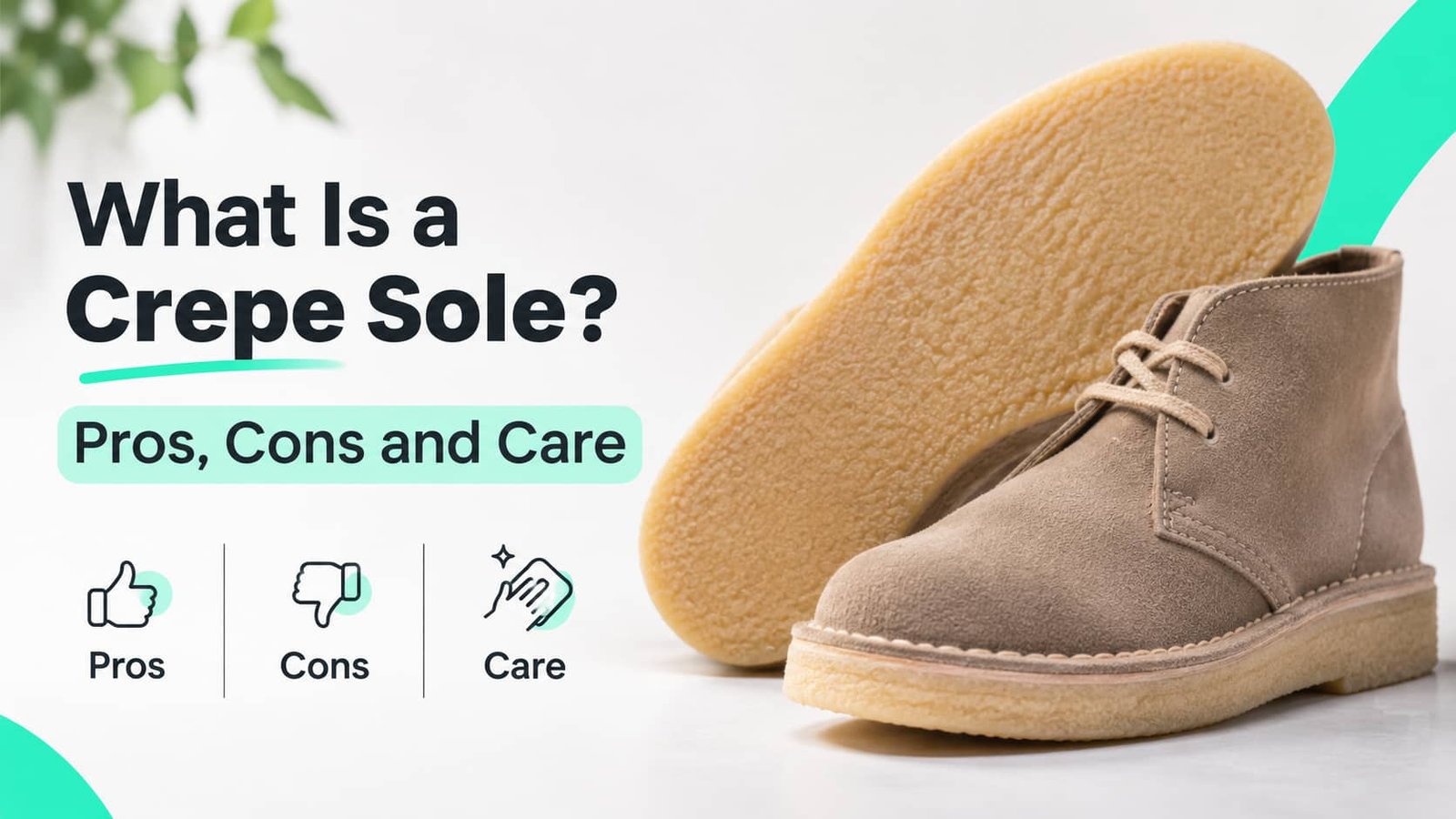
A crepe sole is a soft, lightweight rubber sole made from crepe rubber, usually natural rubber rolled into sheets with a wrinkled texture. It is cushioned, flexible and comfortable for everyday wear. It is less suited to wet, slick floors and high heat than denser rubber, and it needs gentle care.
Key takeaways
- A crepe sole is made from crepe rubber, a natural-rubber sheet with a crinkled surface. Its soft, light feel comes from how it is processed and how much air it traps.
- Crepe is comfortable and flexible for dry, everyday walking, which is why it appears on casual and desert-style shoes.
- Its main weaknesses are wet or smooth floors, heat, and oil. Check the tread and the use case before buying.
- Lifespan depends on use, surfaces and storage. Crepe can often be resoled, but results depend on the shoe’s construction.
- Gentle, dry-to-clean care, with no harsh solvents or direct heat, keeps crepe soles in good condition for longer.
Crepe soles are one of the most recognisable sole types in casual footwear. They are the pale, bumpy-looking soles on classic desert boots, many lace-up casual shoes and a range of slippers and sandals. Shoppers often see the words “crepe sole” in product titles without a clear explanation of what the term means, or whether it is a good thing.
This guide explains what a crepe sole actually is, where the material comes from, and how it compares with other soles. It then looks at the benefits and downsides in plain terms, how long crepe soles tend to last, whether they can be resoled, and how to clean them without damaging them.
What Is a Crepe Sole?
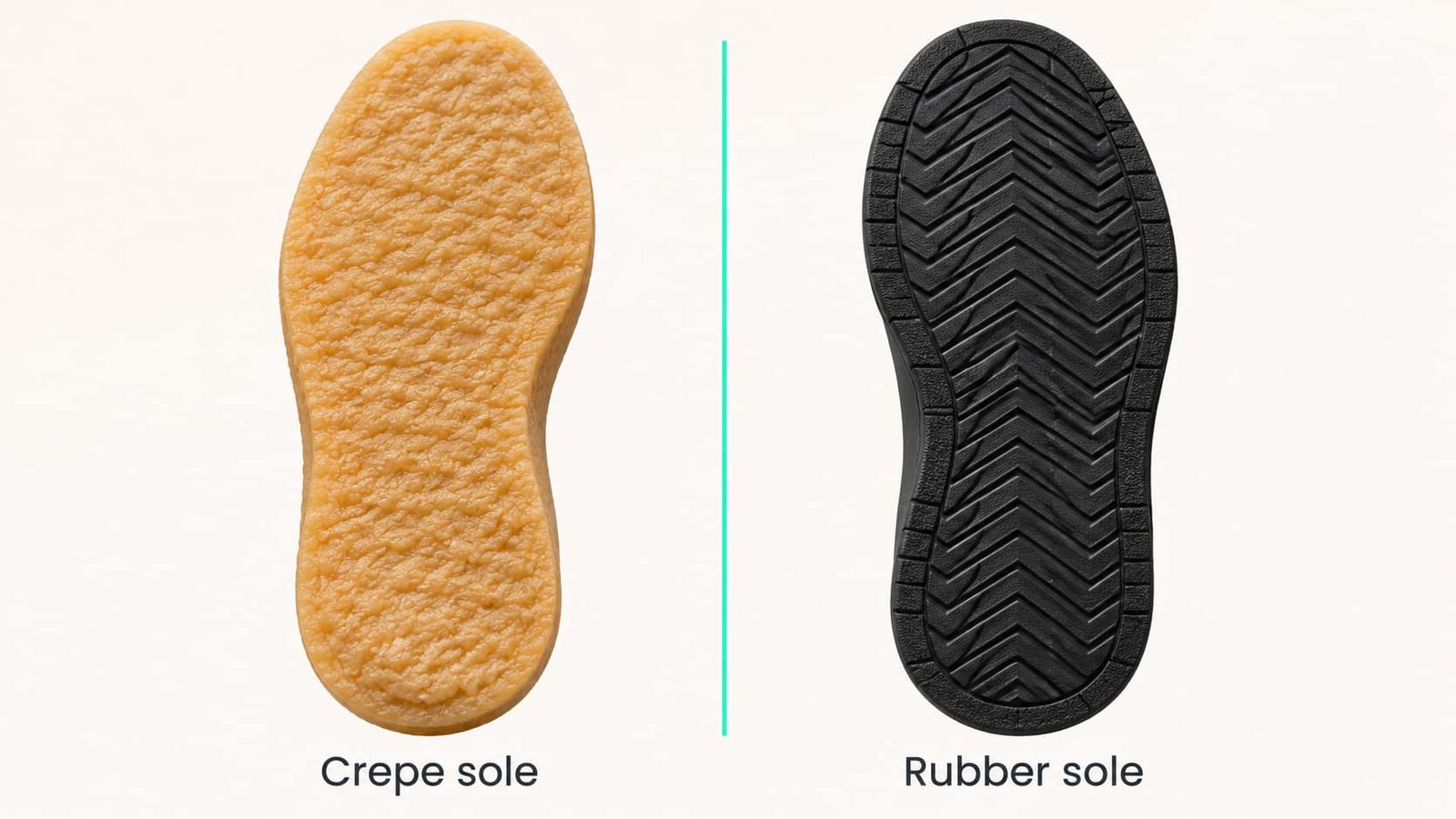
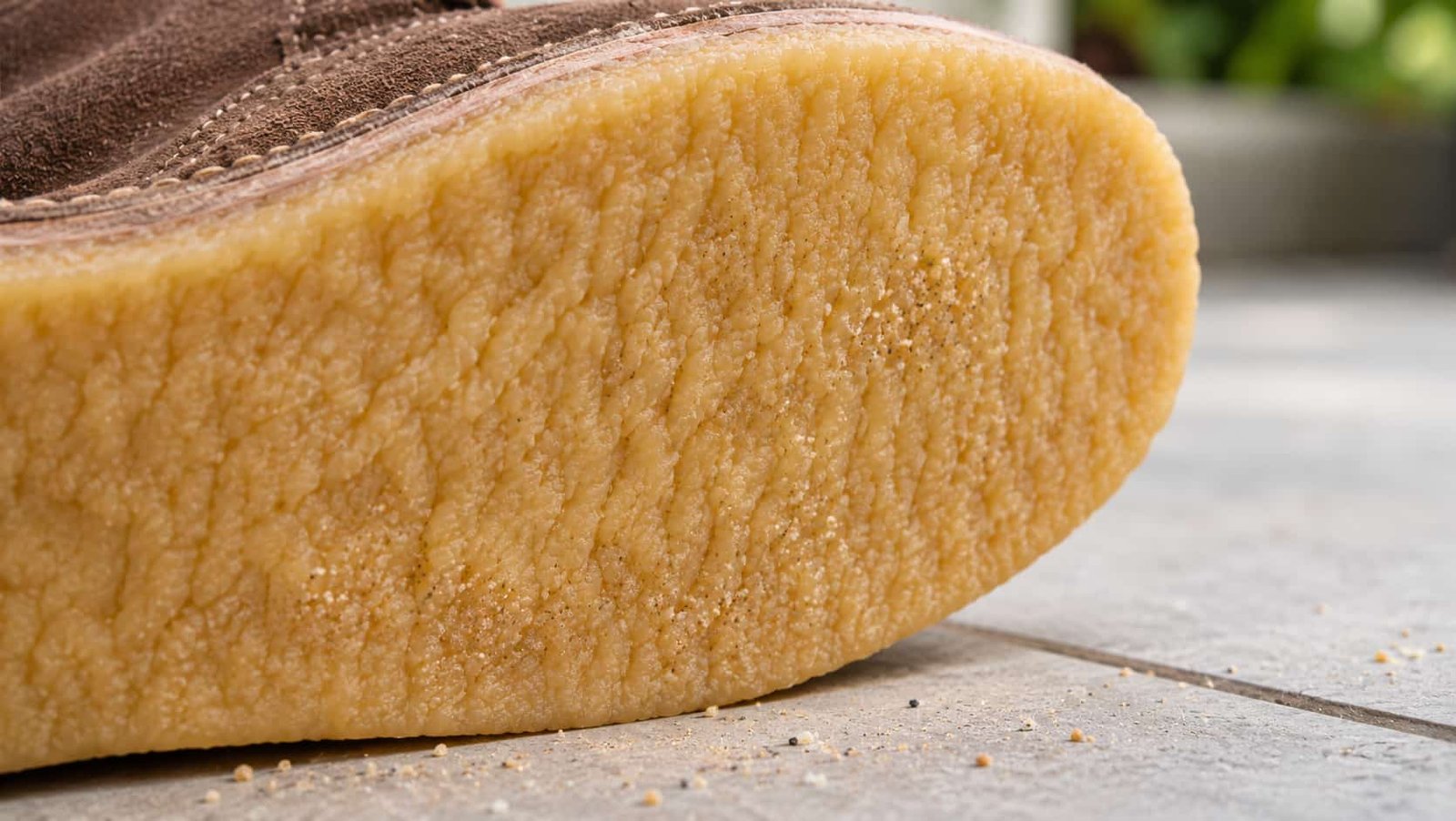
A crepe sole is a sole made from crepe rubber. The name refers to the texture. Crepe rubber is produced by passing natural rubber through rollers, which leaves a wrinkled, crinkled surface, similar to the look of crepe paper. That texture is the first thing most people notice, and it is also part of why the material behaves the way it does.
Crepe is usually made from natural rubber, which comes from latex harvested from rubber trees. The rubber tree, Hevea brasiliensis, is the main commercial source. Natural rubber is mainly polyisoprene, a polymer with a soft, elastic structure. Crepe soles are generally made with lightly processed rubber, which keeps much of that softness.
It helps to be precise about terms. “Crepe” describes the processed sheet and the sole made from it. It is not a separate class of rubber for every product. Some listings use “crepe sole” loosely, and a sole sold as crepe may be a blend or a different rubber compound. The safest approach is to check the product’s material details and expect a soft, light sole with a crinkled look.
Crepe soles are not the same as gum rubber, though the two are often mentioned together. Gum rubber refers to a lighter-coloured natural rubber. Crepe is a processing style that gives the sole its surface texture. Our rubber shoe soles guide explains the broader family of rubber outsoles, and our rubber vs leather soles comparison puts the wider choice in context.
Where the Material Comes From and How It Behaves
Understanding how crepe is made explains most of its behaviour. Natural rubber latex is collected, coagulated, washed and pressed into thin sheets. The sheets are then passed through rollers that create the crinkled finish. Because crepe is often less heavily processed than a fully cured rubber, it stays soft and flexible.
Softness has trade-offs. A softer material compresses under load, which gives cushioning and a comfortable feel. It also wears more readily on abrasive surfaces, and it can soften in heat. Dense, heavily cured rubber resists these effects better but feels firmer and heavier.
Crepe’s surface texture matters too. The wrinkled finish gives the sole a visibly larger surface area and a slightly tacky, grippy feel on dry, clean floors. That is why people sometimes describe crepe as “sticky.” This is a real feel, but it does not guarantee traction on wet or contaminated surfaces. Treat stickiness as a property of dry grip, not as a safety rating.
Crepe vs Rubber vs Synthetic Soles
Crepe is often compared with dense rubber and synthetic soles, and the comparison is useful because the three behave differently.
| Feature | Crepe sole | Dense rubber sole | Synthetic sole (EVA or PU) |
|---|---|---|---|
| Feel underfoot | Soft, light, slightly springy | Firm, stable, heavier | Light, cushioned, often springier |
| Grip on dry, clean floors | Good, with a slightly tacky feel | Good, depending on tread | Varies with texture |
| Grip on wet, smooth floors | Often weaker, especially without tread | Generally stronger, especially with tread | Often weaker on smooth surfaces |
| Heat tolerance | Lower; can soften | Higher | Varies by material |
| Wear on rough ground | Wears faster | Wears more slowly | Varies by material |
| Resoling | Often possible | Often possible | Depends on construction |
| Typical use | Casual, desert-style, everyday walking | Work, outdoor, wet conditions | Running, lightweight casual shoes |
The table shows general tendencies, not guarantees for any product. For a closer look at the two most common comparisons, our EVA foam guide explains the synthetic foam side, and our insole, midsole and outsole guide explains where each material usually sits in a shoe.
Benefits of Crepe Soles
Comfort on dry ground. Crepe’s softness and flexibility make it comfortable for everyday walking. The sole bends easily with the foot, which many wearers find helpful in casual shoes that are worn for long periods.
Light, easy feel. Crepe is usually lighter than dense rubber, so shoes with crepe soles tend to feel less heavy. That matters most in warm weather and for people who walk a lot.
Natural-rubber origin. Crepe is commonly made from natural rubber, which is plant-derived, though the final product may still include other materials. Those details depend on the manufacturer, so read the product description rather than assuming.
Classic look. The crinkled texture is a recognisable design choice. It appears on desert boots and many casual lace-ups, and it suits relaxed, everyday styling.
Resoling potential. Crepe soles can often be replaced by a cobbler, which can extend a good pair of shoes. The result depends on the shoe’s construction, which we cover below.
Downsides and Limitations
Crepe’s strengths come with real limitations, and it is worth being direct about them.
Wet and smooth floors. This is the biggest concern. Crepe on smooth, wet tile, polished stone or oily floors can slide more readily than tread-heavy rubber. A crepe sole is not the right choice for kitchens, wet work or any setting where slipping is a serious risk.
Heat. Because crepe is softer, it can soften or deform in high heat. A pair left in a hot car or near a heater may feel different afterwards. Keep crepe shoes away from direct heat sources.
Oils and chemicals. Oil, grease and some solvents can soften rubber or leave stains. Wipe spills promptly and avoid placing crepe soles near oily surfaces.
Ozone and ageing. Rubber can crack over time, especially when stored for long periods in warm, dry conditions or exposed to ozone. The process is described in the ozone cracking overview. Storing shoes in a cool, dry place and not leaving them in direct sun helps.
Faster wear on rough ground. Crepe’s softness means it wears more quickly on concrete, gravel and kerbs. Abrasion is the general term for this kind of surface wear. Crepe soles often suit smoother, drier routes better.
Less slip-resistant than some alternatives. Because grip depends on tread, compound and surface, crepe is not a substitute for a slip-rated work shoe. We explain how to judge this in the wet-weather section below.
How Long Crepe Soles Last
No reliable lifespan figure applies to every crepe sole, and any number you see online should be treated as an estimate. Lifespan depends on how much you walk, how heavy you are, the surfaces you use, how the shoe is stored, and how often it is exposed to heat or water.
Several signs show when a crepe sole is wearing out. The tread pattern becomes flat or smooth. The sole thins noticeably at the heel or forefoot. The rubber may crack along flex lines. The shoe may feel unstable or lose grip on floors that it previously handled well.
Looking at general footwear lifespan can help set expectations. Our guide on how long running shoes last explains the factors that shape wear, and the same logic applies to casual shoes. Rotating two pairs of shoes can help, because each pair then has time to recover between wears.
Can Crepe Soles Be Resoled?
In many cases, yes. A cobbler can usually remove a worn crepe sole and attach a new one, provided the upper and midsole are in good condition. Resoling is generally most practical for well-made shoes with sound uppers and stitched or cemented construction that a cobbler can work with.
Resoling costs vary a great deal by region, shop and shoe type, so it is hard to give a useful general figure. Get a quote from a local cobbler, and ask whether they can match the original sole’s feel. Some cobblers will advise against resoling if the upper has deteriorated.
Crepe sole sheets are sold as material for DIY repairs. Adhesion and fit are difficult to get right, and a poor repair can damage the upper or make the shoe less stable. For valuable shoes, a professional repair is usually the safer route. For inexpensive shoes, a repair may cost more than the shoe is worth.
Caring for Crepe Soles
Crepe responds well to gentle, dry-to-clean care. The main rule is to avoid anything that softens or dissolves the rubber.
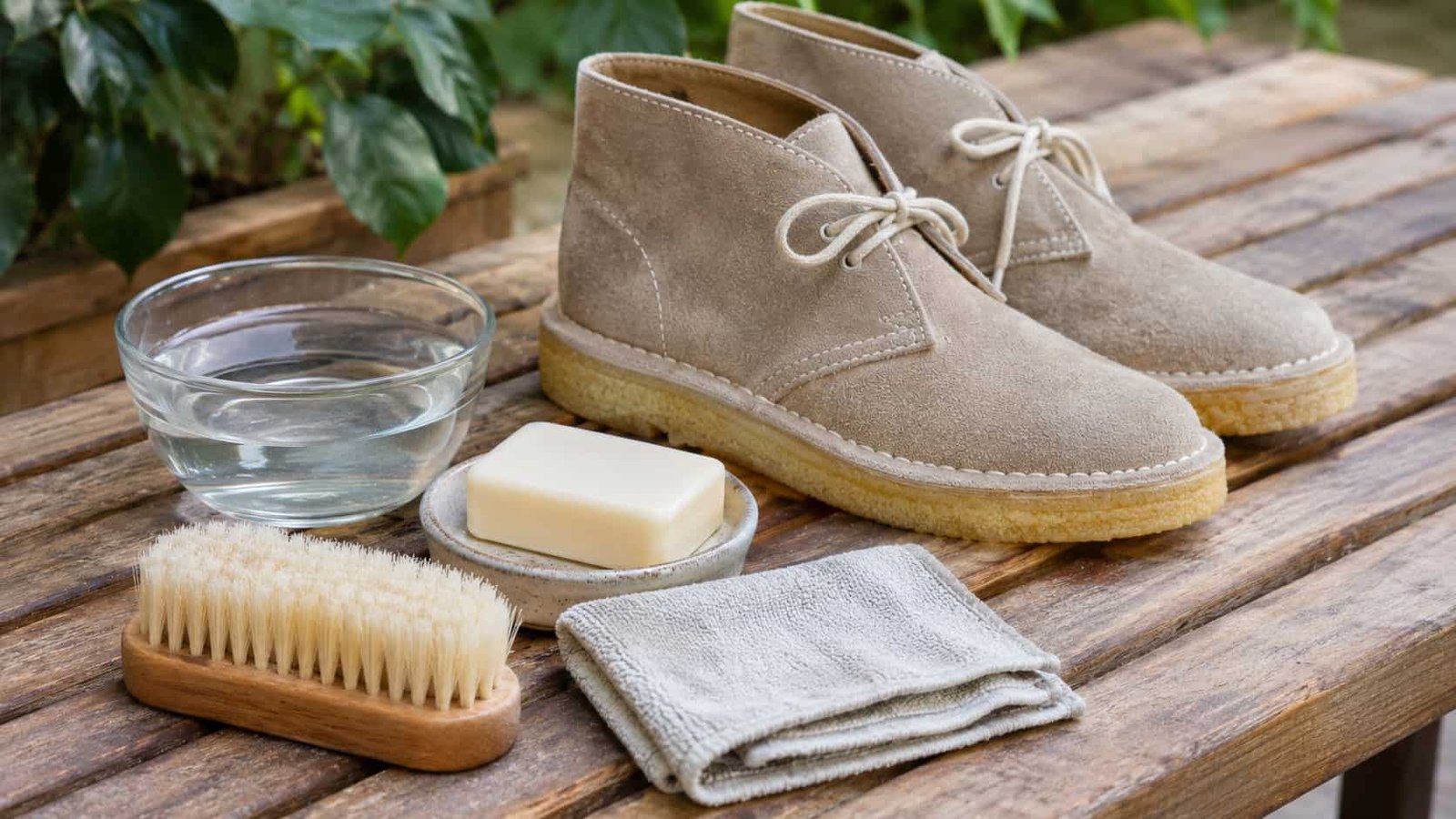
Start with dry cleaning. Brush off loose dirt and grit with a soft brush before any water touches the sole. This prevents scratches and grinding dirt into the texture.
Use mild soap and lukewarm water. Mix a small amount of mild soap with lukewarm water. Work the solution gently into the sole with a soft brush or cloth, focusing on the grooves where dirt collects. Rinse with a damp cloth.
Avoid harsh chemicals. Do not use petrol, paint thinner, strong bleach, acetone or other solvents on crepe. They can soften the rubber, leave residue or discolour the surface. Avoid abrasive pads, which can roughen the texture unevenly.
Dry naturally. Let the shoes air-dry at room temperature, away from radiators, hairdryers, heaters and direct sunlight. Stuff them with paper to hold their shape. Never put crepe soles in a dryer.
Deal with stains quickly. Oil or grease stains are hard to remove once set. Blot fresh spills with a dry cloth, then clean as above. For a deeper guide to sole cleaning, see our article on how to clean shoe soles. For uppers and general maintenance, read how to clean shoes and maintain them.
Store well. Keep shoes in a cool, dry place out of direct light. Avoid leaving them compressed in tight spaces for long periods, which can distort the sole.
Wet Weather and Slip Resistance
Crepe is the question most people ask after the comfort question: can you wear crepe soles in the rain? The honest answer is that they are usually a poor choice for wet, smooth surfaces, though light rain on dry-textured pavement is less of a concern.
Slip risk is a safety question, and the Health and Safety Executive’s guidance on slips and trips is a useful general reference for how slip hazards are assessed. A few practical checks help when you are judging a shoe:
- Look at the tread. Deeper, well-channelled patterns generally handle water better than a flat, smooth sole.
- Consider the surface you walk on most. A sole that works on dry pavement may not work on wet tiles.
- Ask the manufacturer whether the sole has been tested for slip resistance, and on which surface. Do not assume a result applies everywhere.
- Be cautious with glossy or polished floors even when the sole feels grippy at first.
Our guide to shoe traction explains how traction works and why the surface matters so much.
Who Should Choose Crepe Soles
The right choice depends on where and how you will wear the shoe.
Good fit: everyday casual wear on dry ground, desert-style boots for dry climates, relaxed indoor-outdoor slippers in dry homes, and light summer footwear for walking in mild, dry weather. Crepe suits people who value comfort and a relaxed look over maximum grip.
Poor fit: wet or slippery work, commercial kitchens, shower areas, wet-weather walking, hot environments where the shoe will sit in the sun, and any situation where slipping is a serious risk.
Mixed fit: heavy daily walking. Crepe is comfortable for many people, but the wear rate on rough pavement is a factor. A rotation with a more durable shoe can help.
Budget and value: a crepe-soled shoe can be good value if it is comfortable and well made, and if it can be resoled later. A low price alone says little about quality, so check the upper and construction as well as the sole.
Myths Worth Dropping
“Crepe soles are always non-slip.” Crepe can feel grippy on dry, clean floors, but it is not reliably non-slip, especially on wet or smooth surfaces.
“Crepe soles are waterproof.” Water can penetrate the shoe through the upper and seams, not only through the sole. Waterproofing depends on the whole construction. See our guide to how waterproof shoes work.
“Crepe lasts forever.” Crepe is comfortable and resoleable, but it still wears, cracks and softens. Lifespan depends on use and care.
“Any stickiness means better grip.” Stickiness is a dry-surface feel. It is not a guarantee of traction on wet or oily floors.
“You can use any solvent to clean crepe.” Solvents can soften or stain crepe. Stick with mild soap and lukewarm water.
“Crepe and rubber are the same thing.” Crepe is a rubber sole in a particular processed form, but the term describes texture and processing. Dense rubber soles can feel and perform very differently.
Frequently Asked Questions
Are crepe soles good for everyday wear?
For dry, everyday walking, many people find crepe soles comfortable, light and flexible. They suit casual, relaxed shoes well. They are less suitable for wet floors, heat or rough ground, so the answer depends on where you walk.
Do crepe soles last?
Crepe can last a long time with careful use, but it wears faster than dense rubber on rough surfaces and can soften in heat. There is no reliable single figure, because lifespan depends on use, body weight, surfaces, storage and care.
Can crepe soles be resoled?
Often, yes. A cobbler can usually replace a worn crepe sole if the upper and midsole are in good condition. Costs vary by region and shoe type, so get a local quote before deciding whether a repair is worth it.
Are crepe soles slippery?
They can be, particularly on wet, smooth or oily floors. On dry, clean surfaces they often feel grippy. Tread design and the floor surface matter more than the crepe texture alone.
Are crepe soles good in the rain?
Crepe is usually not the best choice for heavy rain or wet, smooth pavement. Light rain on textured surfaces is a lower-risk situation, but for wet conditions a deeper tread on a denser rubber sole is generally safer.
What is the difference between crepe and rubber soles?
Crepe is a processed natural-rubber form with a crinkled texture, and it is generally softer and lighter. Dense rubber is firmer, heavier and usually more resistant to heat and abrasion, and it often has a more deliberate tread design.
How do I clean crepe soles without damaging them?
Brush off loose dirt first, then clean with mild soap and lukewarm water using a soft brush. Rinse with a damp cloth and air-dry at room temperature, away from heat. Avoid solvents, bleach, abrasive pads and dryers.
Are crepe sole slippers and sandals a good choice?
For indoor use in dry homes, crepe slippers are comfortable and light. For sandals, the same rule applies: suitable for dry, mild conditions, less suitable for wet or hot surfaces. Check the tread and the surface you will walk on before buying.
Final Thoughts
A crepe sole is a comfortable, light and flexible sole made from crepe rubber, and it suits relaxed, everyday wear on dry ground. Its weaknesses are just as real: wet or smooth floors, heat, oil and faster wear on rough surfaces. Knowing those limits makes it easier to choose the right shoe.
If you already own crepe-soled shoes, the most useful steps are simple. Clean gently, keep them away from heat, store them cool and dry, and consider resoling a well-made pair rather than replacing it. If you are shopping, check the tread, the intended surface and the upper’s construction, not only the word “crepe” in the title. Our shoe finder can help you narrow options by use, and the shoe materials guide explains the other materials you are likely to see.
Sources and further reading
- Crepe rubber (processing and texture of crepe sheets)
- Hevea brasiliensis (the rubber tree that supplies natural latex)
- Polyisoprene (the main polymer in natural rubber)
- Ozone cracking (how rubber can crack with age and exposure)
- Abrasion (mechanical) (surface wear from rubbing)
- Desert boot (a classic crepe-soled shoe design)
- Footwear (general overview of shoe types and construction)
- Health and Safety Executive: Slips and trips (UK government guidance on slip hazards)


