
PVC in Shoes: Where It Is Used and Is It Safe?
Editorial Guide | Footwear Materials |
Summarise this PVC shoes guide with AI
Open an assistant and submit the prefilled request. The assistant reads the page only after you submit it.
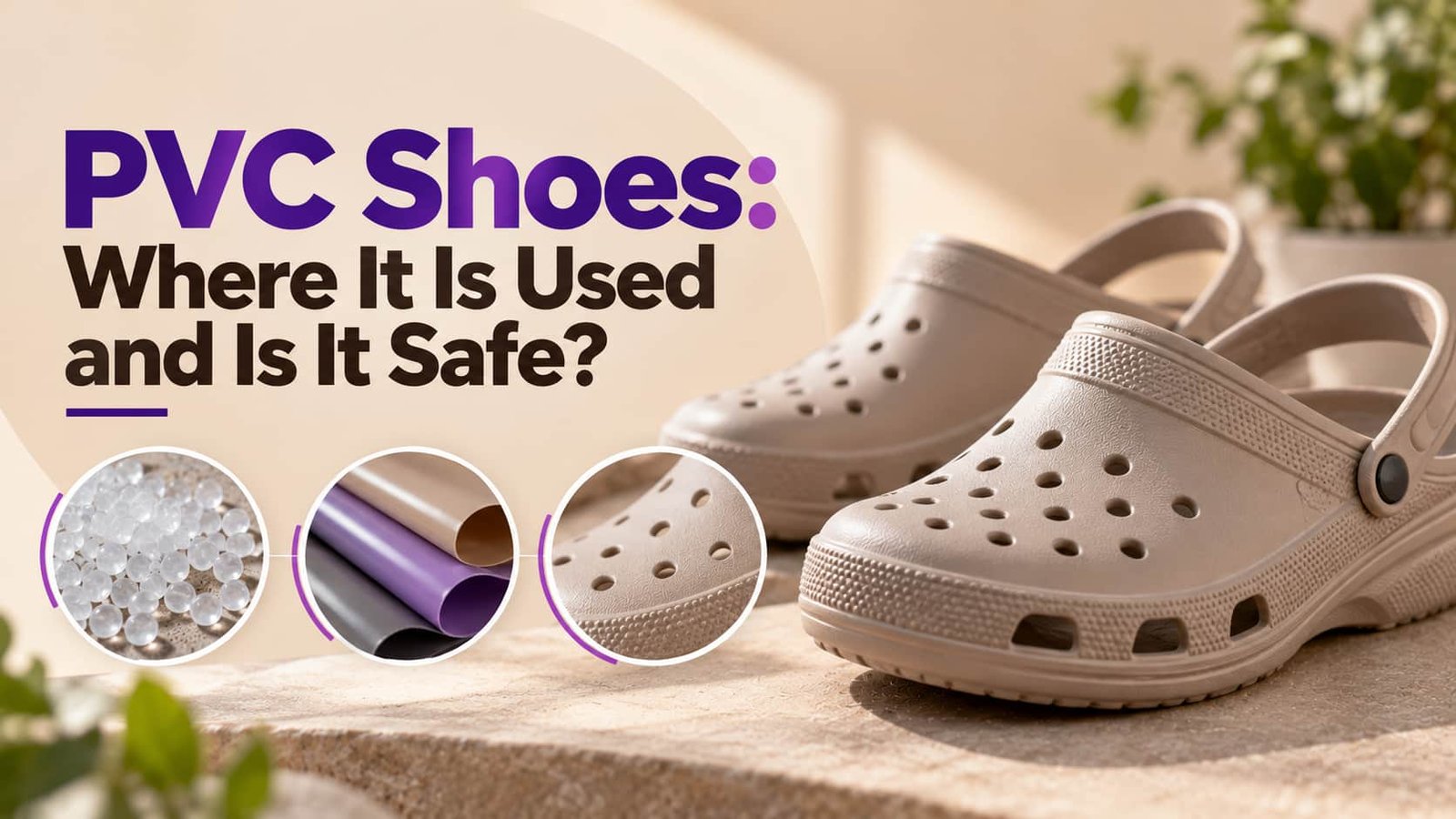
PVC, or polyvinyl chloride, is a plastic used in shoes mainly for waterproof soles, rain boots and jelly-style shoes. It is durable and easy to clean, and it resists water well. Its main limits are stiffness, poor breathability and sensitivity to heat and age. PVC is widely used in footwear, and whether it is safe depends on the product’s formulation and how it is made.
Key Takeaways
- PVC is a plastic, not a leather or a foam. It is used in soles, rain boots and jelly shoes because it is tough and water-resistant.
- It keeps water out well. That makes it useful for wet conditions, but it also traps heat and sweat.
- It is stiff and breathes poorly. Comfort on long walks is usually lower than with EVA or leather.
- Safety depends on the product. Reputable makers state their materials, and buyers can check labels and certifications.
- Compare it with EVA and PU. Each suits different needs, so choose by use rather than by material name alone.
PVC in Shoes at a Glance
| Feature | PVC |
|---|---|
| What it is | Polyvinyl chloride, a thermoplastic |
| Common uses | Rain boots, jelly shoes, some soles and trims |
| Water | Excellent resistance to water |
| Breathability | Poor, traps heat and moisture |
| Flexibility | Varies; can be stiff |
| Durability | Tough, but can crack or harden with age and heat |
| Cost | Usually low |
| Care | Wipe or rinse clean, dry away from heat |
| Typical use | Rain and wet-weather footwear, budget and fashion shoes |
These are general tendencies. PVC products vary in formulation and thickness, so check the material information on each shoe.
What PVC Is
PVC stands for polyvinyl chloride. It is one of the most widely produced plastics, and it is made by polymerising vinyl chloride. In footwear, PVC is moulded or formed into soles, uppers and trims. It can be made rigid or flexible, depending on the additives used.
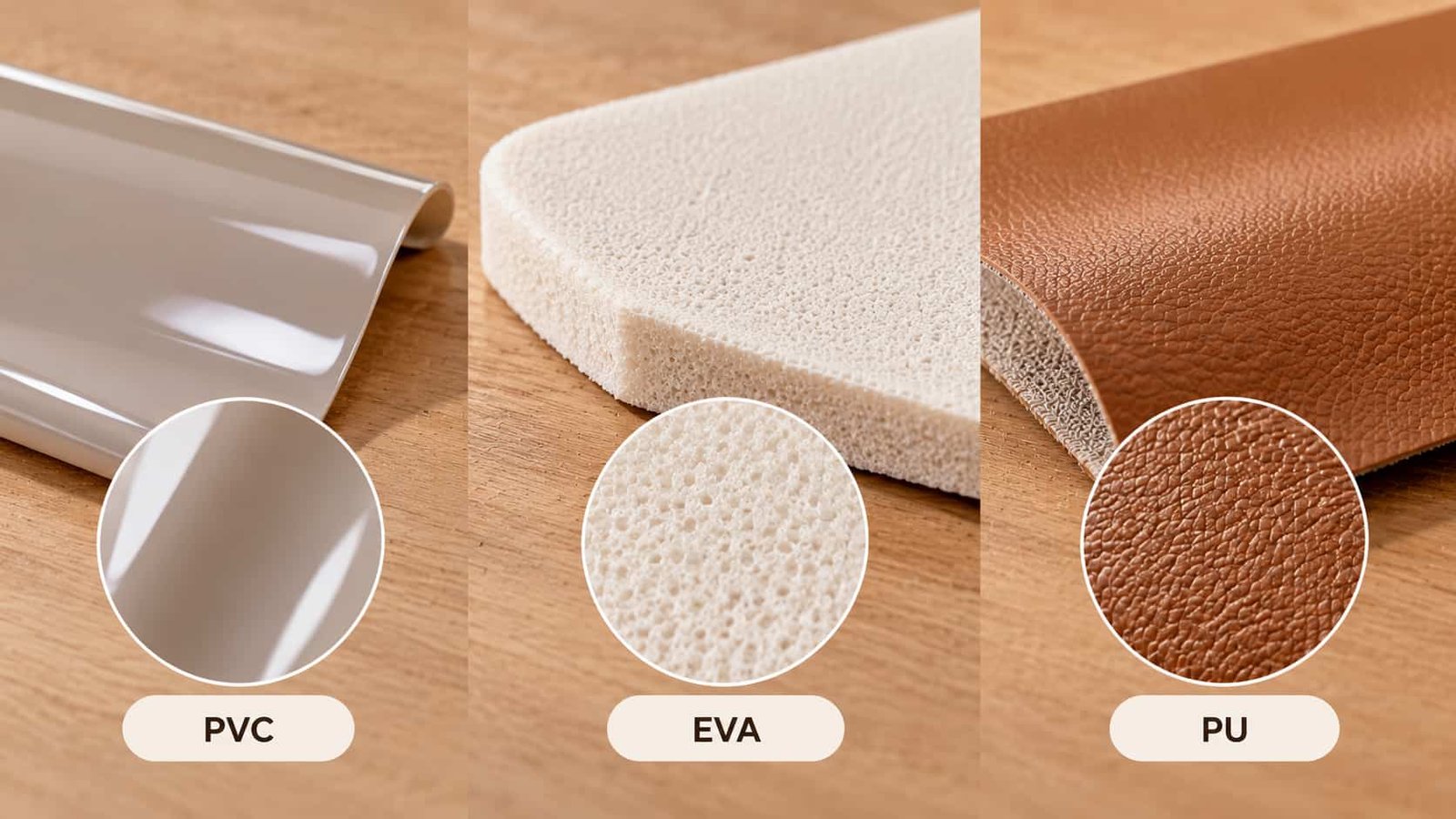
It is important to separate PVC from the other materials people often confuse with it. PVC is not leather, and it is not the same as PU, which is a polyurethane coating on a fabric base. It is also different from EVA, a foam used in midsoles. These materials look similar in some products, but they behave differently.
For a wider view of how shoe materials compare, the shoe materials guide covers leather, textiles, synthetics and soles.
Where PVC Is Used in Shoes
PVC shows up in a few places:
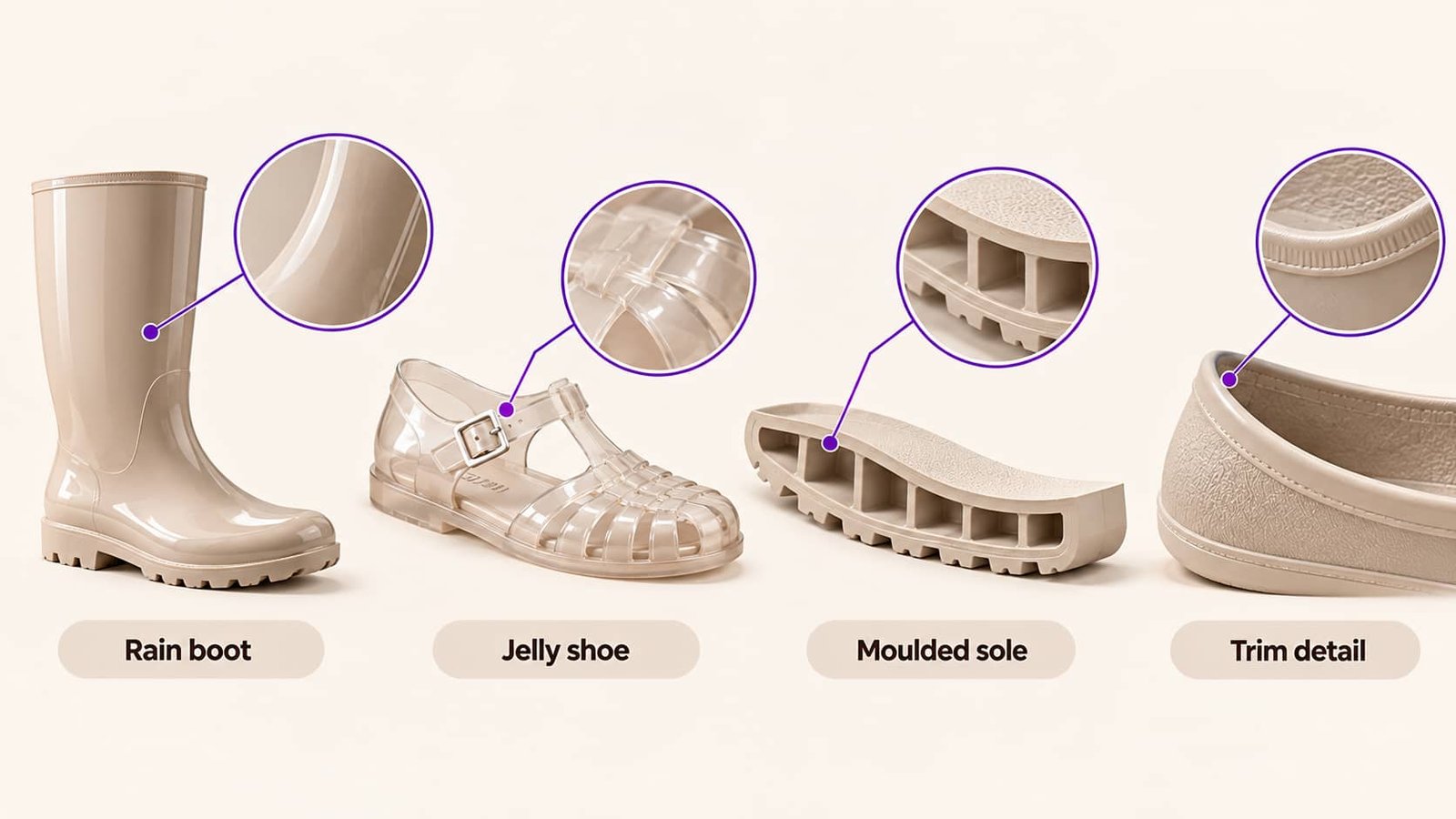
- Rain boots and wellingtons. PVC is common because it keeps water out and cleans easily.
- Jelly shoes. Clear or coloured PVC slip-ons are popular for summer and water use.
- Some soles and trims. PVC can appear in outsoles, heel pieces and decorative parts.
- Safety and work footwear. Some budget work shoes use PVC uppers or soles for wet and industrial settings.
PVC is less common in running shoes and daily walking shoes, where EVA, rubber and TPU are more usual. Check the sole material before you assume PVC is present or absent.
How PVC Is Made into Shoe Parts
PVC is made by polymerising vinyl chloride, then combining the resin with plasticisers and stabilisers. The mix can be moulded, injected or calendered into sheets, depending on the part. For a boot or jelly shoe, the whole upper or sole is often moulded in one piece.
The additives matter. Plasticisers make PVC soft and flexible, and stabilisers help it resist heat and light. Different formulations behave very differently, which is why two PVC shoes can feel quite different in hand and in wear.
PVC Compared with EVA, PU and Rubber
| Feature | PVC | EVA foam | PU coating | Rubber |
|---|---|---|---|---|
| What it is | Plastic | Foam | Polyurethane coating | Natural or synthetic rubber |
| Water | Excellent | Absorbs less, but not waterproof | Resists light wet | Excellent |
| Breathability | Poor | Not an upper material | Lower | Not an upper material |
| Cushioning | Low | High | Low | Moderate |
| Durability | Tough, can harden | Compresses over time | Can crack or peel | Strong, good grip |
| Typical use | Rain boots, jelly shoes | Midsoles, slides | Synthetic leather uppers | Outsoles |
The comparison shows why PVC suits some jobs and not others. For cushioned running, EVA is usually the better sole. For wet-weather simplicity, PVC is a strong choice. For a leather-like upper, PU is more usual than PVC.
For the EVA side, see what is EVA foam. For the PU side, read what is synthetic leather.
Comfort and Breathability
PVC is not a comfortable material for long periods on its own. Because it does not breathe, sweat and heat build up inside the shoe. Feet can feel damp and warm, particularly in hot weather or during long walks.
Flexibility varies. Some PVC is soft and pliable, while thicker PVC can feel stiff. A good fit, a soft insole and a breathable sock help, but none of these changes the fact that a PVC shoe holds heat. For longer walking, EVA-cushioned soles and open uppers usually feel better.
This is an editorial judgment based on how sealed plastics behave. It is not a standardised test result.
Water and Weather
PVC is one of the most water-resistant materials used in footwear. Rain and puddles run off, and the material is easy to wipe clean. That is why PVC is a common choice for rain boots and wet-weather shoes.
Water resistance is not the same as breathability. The material that keeps water out also keeps sweat in, so PVC shoes can feel clammy in warm rain. Check how the shoe closes at the top and where any seams are, since water can enter at openings.
For a broader view of how waterproofing works, read how waterproof shoes work and waterproof vs water resistant shoes.
How Long PVC Lasts
There is no reliable fixed lifespan for PVC shoes. Durability depends on the formulation, the thickness, the way the parts are joined, and how the shoe is used and stored.
PVC is generally tough, but it can harden, crack or become brittle with heat, long sun exposure and age. Plasticisers can migrate out over time, which makes the material stiffer. Storing PVC shoes away from heat and direct sun helps keep them flexible for longer.
Outdoor use is harder on PVC than indoor use. UV light and temperature changes speed up ageing, so a pair left in the sun is likely to deteriorate sooner than one kept in a cool, dry place.
Is PVC Safe in Shoes?
This is the question most readers arrive with, and the answer needs care.
PVC is a widely used material, and it is common in consumer products. Whether a particular PVC shoe is safe depends on its formulation, including any additives such as plasticisers and stabilisers, and on how the material is made. Reputable manufacturers should be able to tell you what their materials contain and whether they meet relevant standards.
Some points readers should know:
- Additives vary. Some plasticisers have raised health and environmental concerns, so ask whether a product uses low-concern or restricted additives.
- Certifications help, but check them. A certification refers to specific tests and scope, so read what it covers.
- Ventilation and wear matter. Sealed shoes can trap heat and sweat, which can lead to discomfort or odour. This is a comfort issue more than a toxicity issue.
- Children and sensitive skin. If a child or someone with sensitive skin wears PVC shoes, check the materials and ask a doctor or pharmacist if you have specific concerns.
This article does not diagnose health problems. If you have a specific concern about a material or an allergy, speak to a qualified medical professional. For the regulatory side in the UK and EU, the official text of the relevant labelling rules is the right reference, and the EUR-Lex record of Directive 94/11/EC is a starting point.
Pros and Cons
What PVC does well
- Excellent water resistance for rain and wet ground
- Easy to clean and wipe down
- Low cost in many products
- Tough and hard-wearing in simple designs
- Available in clear, coloured and fashion styles
Where PVC struggles
- Poor breathability, so feet can feel hot and damp
- Stiffness in some formulations
- Can harden, crack or become brittle with age and heat
- Not suited to long walks or running without good cushioning
- Additive content varies, so check the material details
How to Tell If a Shoe Is PVC
Check these points before you buy. None is conclusive alone.
- Read the material breakdown. Look for “PVC,” “polyvinyl chloride” or “plastic” on the label or product page.
- Check the feel. PVC is smooth, slightly rubbery and often shiny. It does not have the fibrous texture of leather or textile.
- Look at the sole. Many PVC shoes have a one-piece moulded sole with no visible stitching.
- Note the smell. New PVC often has a mild plastic smell. Strong chemical odour is a reason to ask the seller about materials.
- Ask the seller. A reputable brand should be able to say what the shoe is made of and whether it meets relevant standards.
Caring for PVC Shoes
PVC is easy to clean, but harsh treatment and heat can damage it.
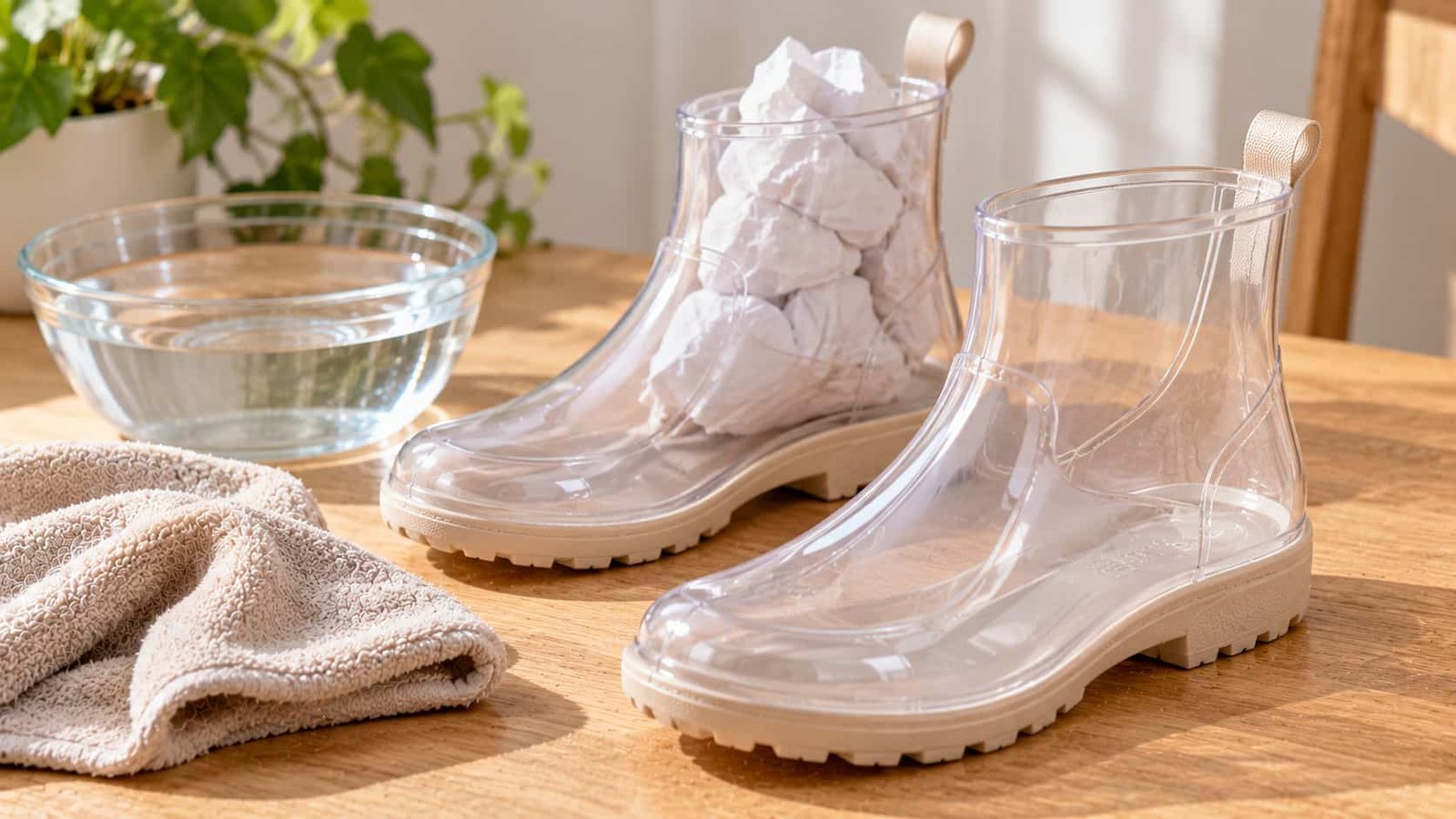
- Rinse off dirt. Use cool water and a soft cloth to remove mud and dust.
- Clean gently. Use a little mild soap and water. Avoid harsh solvents.
- Dry at room temperature. Keep PVC shoes away from radiators, hair dryers and direct sun.
- Store carefully. Keep them cool and out of direct sun, ideally in a dry space with some airflow.
- Rotate when possible. Resting a pair reduces stress on the material and helps it keep its shape.
Avoid petrol, paint thinners, acetone and strong solvents. They can soften, stain or damage PVC. For a broader cleaning routine, see how to clean shoes and maintain them. For rain footwear specifically, see how to clean rain boots.
Who Should Choose PVC Shoes
| Your situation | PVC may suit you if | Consider another material if |
|---|---|---|
| Weather | You often face rain, puddles or wet ground | You want breathable shoes for hot weather |
| Use | You need rain boots, jelly shoes or wet-day shoes | You walk or run for long periods |
| Comfort | You are fine with a stiffer, sealed feel | You need cushioning and flexibility |
| Budget | You want a low-cost waterproof option | You want a long-lasting, repairable shoe |
| Care | You want a quick wipe-clean finish | You want to condition and polish |
| Health concerns | You are comfortable with the stated materials | You have specific concerns about additives |
For help narrowing choices by use and style, the shoe finder can help.
Myths Worth Dropping
- “PVC is the same as PU.” PVC is a plastic, while PU is a polyurethane coating on a fabric base. They are different materials.
- “PVC is always unsafe.” Safety depends on the formulation and how it is made. Check the product’s materials and standards.
- “PVC shoes are waterproof, so they keep feet dry.” They keep water out, but they also trap sweat, so feet can still get damp.
- “PVC never wears out.” It can harden, crack or become brittle with heat, sun and age.
- “All plastic shoes are PVC.” Many are made from EVA, TPU or other plastics, so check the label.
Frequently Asked Questions
What is PVC in shoes?
PVC, or polyvinyl chloride, is a plastic used in shoes such as rain boots, jelly shoes and some soles. It is waterproof, tough and easy to clean, but it is stiff and does not breathe well.
Is PVC safe in shoes?
It depends on the product. PVC is widely used, and safety depends on the formulation, additives and manufacturing. Check the material information and any standards the brand states, and speak to a medical professional if you have specific health concerns.
Is PVC waterproof?
PVC is very water-resistant, and it keeps rain and puddles out well. Water can still enter at seams and openings, so check the construction on wet-weather shoes.
Is PVC better than EVA?
Neither is better in every case. PVC is tough, waterproof and cheap, but it is stiff and does not cushion well. EVA is lighter and much more cushioned, which suits walking and running.
What is the difference between PVC and PU?
PVC is a solid plastic used in soles and rain shoes. PU is a polyurethane coating on a fabric base, used to imitate leather in uppers. They look different in wear, and PU usually breathes slightly better.
How long do PVC shoes last?
There is no reliable fixed lifespan. PVC can harden or crack with heat, sun and age, and outdoor use is harder on it than indoor use. Store them cool, dry and out of direct sun.
How do I clean PVC shoes?
Rinse off dirt with cool water and a soft cloth, clean gently with a little mild soap, and dry at room temperature. Avoid solvents, petrol and paint thinners.
What are PVC rain boots made of?
Most PVC rain boots are made from polyvinyl chloride, moulded into a one-piece boot. Their sole and upper are usually the same material, which makes them waterproof and easy to clean.
Final Thoughts
PVC is a tough, waterproof plastic used in rain boots, jelly shoes and some soles. It keeps water out well, but it does not breathe and can feel stiff or hot. Whether a PVC shoe is safe depends on its formulation and how it is made, so check the material details and any standards the brand states.
Before you buy, match the material to your use, check the construction and labels, and look after the shoes so they stay flexible. For the wider picture, start with the shoe materials guide, then compare synthetic leather (PU) if you are also looking at uppers.
External References
- Wikipedia, “Polyvinyl chloride” (the polymer, its uses and additives): en.wikipedia.org/wiki/Polyvinyl_chloride
- EUR-Lex, Directive 94/11/EC on labelling of footwear materials: eur-lex.europa.eu/eli/dir/1994/11/oj
- Wikipedia, “Ethylene-vinyl acetate” (the EVA foam used in midsoles, for comparison): en.wikipedia.org/wiki/Ethylene-vinyl_acetate