

What Is Shearling? Real Sheepskin vs. Faux Shearling
Check AI Summary
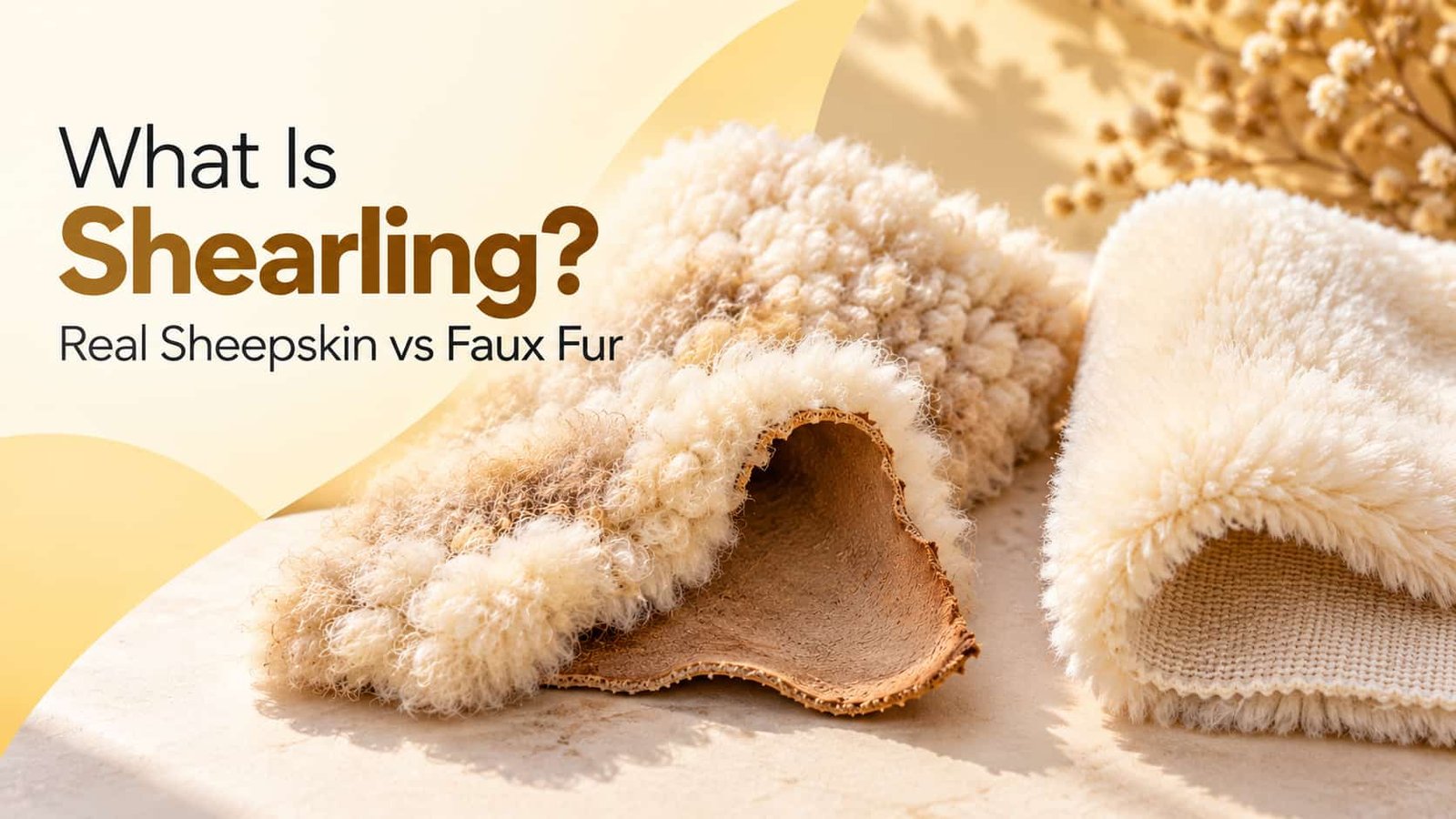
Shearling is a tanned sheep or lamb skin that retains its original wool, cut to an approximately even length. It has a leather side and a wool side, which makes it different from ordinary wool fabric and synthetic fleece. Genuine shearling is used in coats, jackets, boots and slippers, while faux shearling imitates its fluffy appearance with manufactured materials.
Quick answer: What should you know about shearling?
Shearling in a nutshell
- Real shearling: A tanned sheep or lamb skin that retains natural wool.
- Faux shearling: A manufactured textile designed to imitate the woolly surface of genuine shearling.
- Sherpa: A fleece-like textile, often synthetic, rather than wool attached to an animal hide.
- Warmth: Depends on the wool or pile, lining, fit, construction and conditions.
- Care: Genuine shearling may need specialist cleaning; always follow the product’s care instructions.
Key takeaways
- Shearling combines leather and wool in one hide. That construction is the main way it differs from wool fabric and synthetic fleece.
- Sheepskin and shearling are closely related terms, and sellers sometimes use them inconsistently. Check the product’s construction instead of relying on the name.
- Faux shearling and sherpa can provide a similar look without genuine wool-on-hide construction.
- A high price or a fluffy appearance does not prove that a product is genuine, high quality or ethically sourced.
- Shearling is not automatically waterproof. Footwear suitability depends on the upper, seams, sole and the manufacturer’s weather guidance.
- Buyers should check the material label, fit, construction, cleaning instructions and return policy before purchasing.
What Is Shearling?
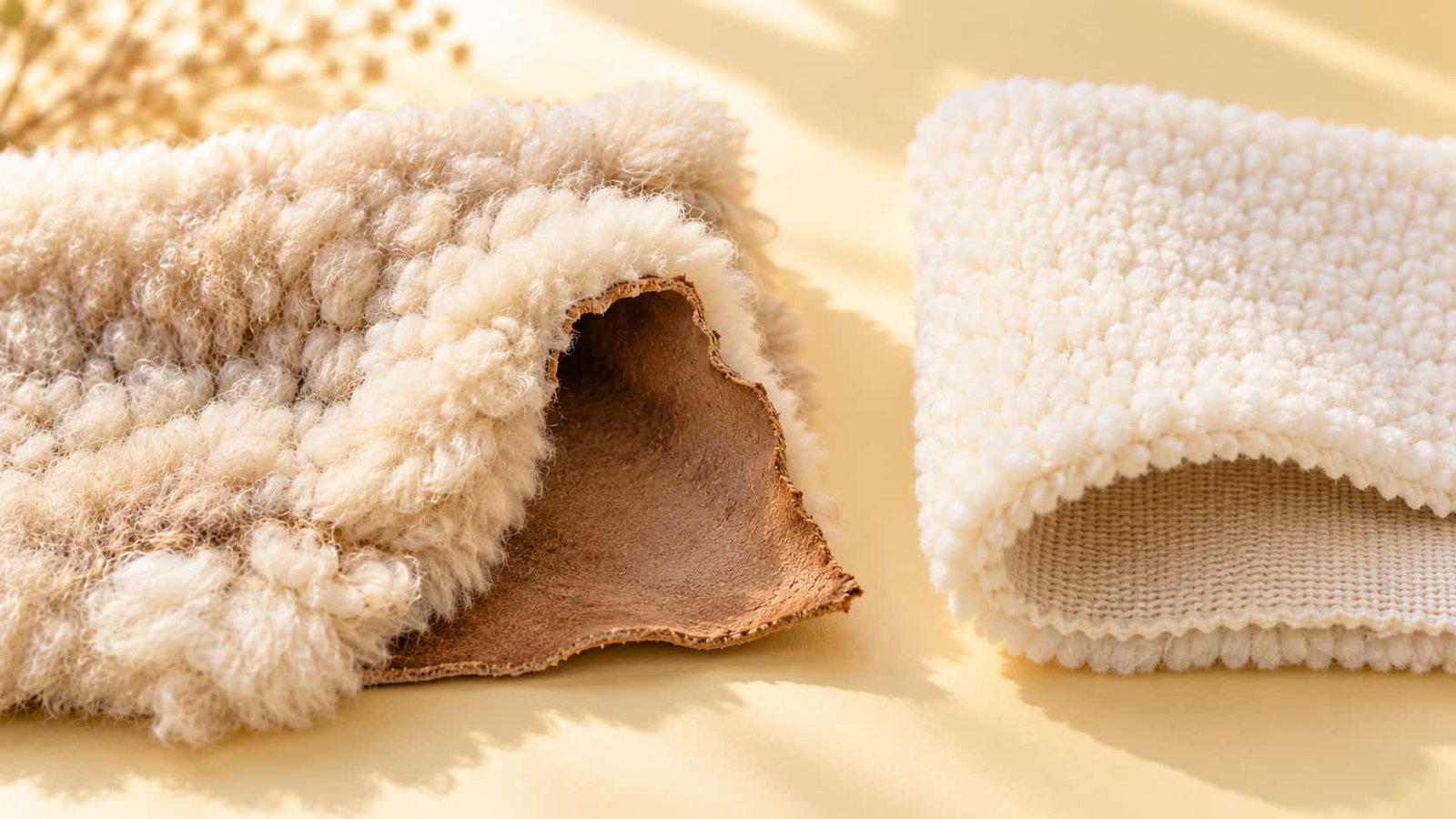
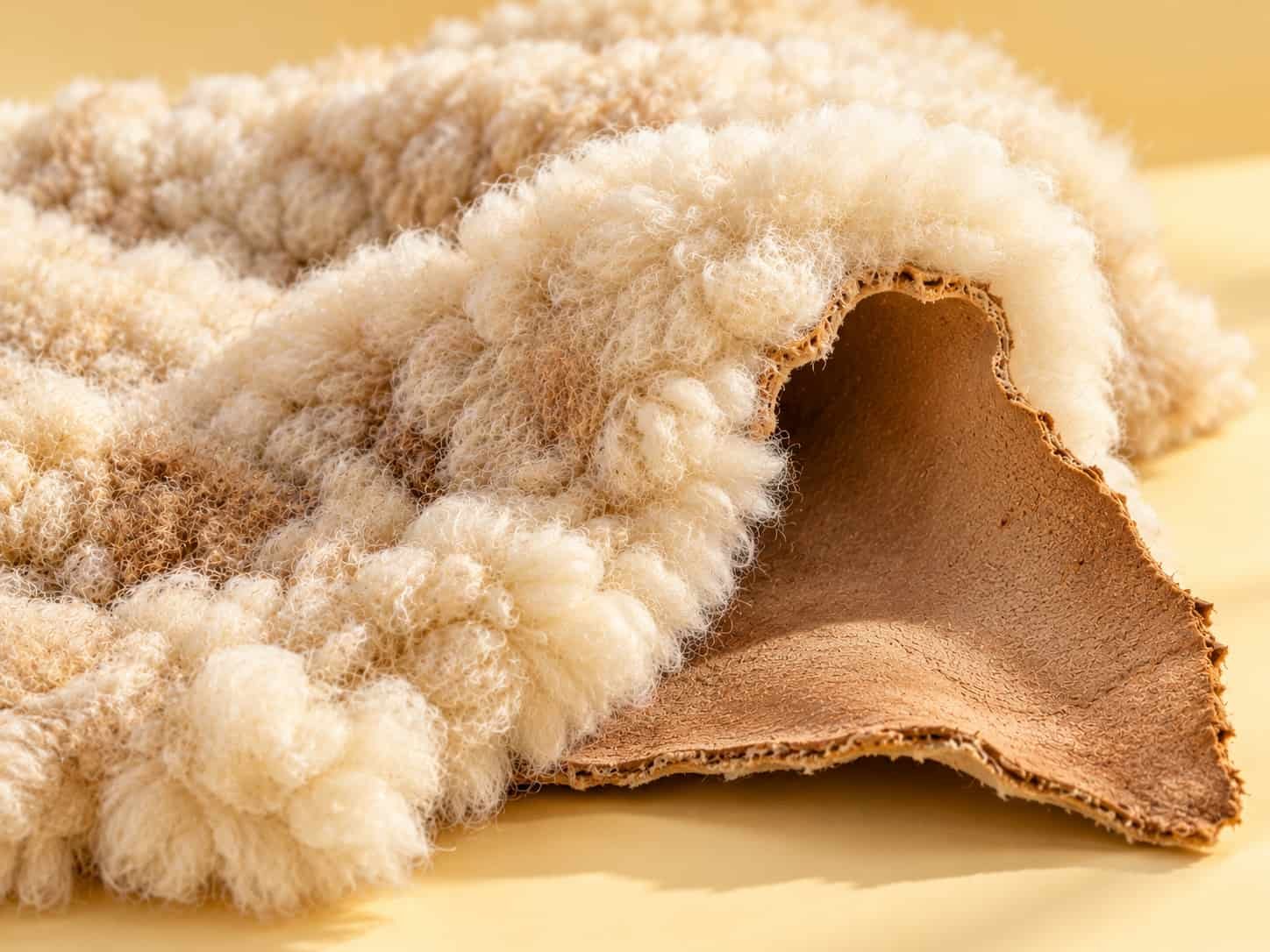
Shearling is a material made from sheep or lamb skin that has been tanned and retains its original wool. The wool remains attached to the hide, so the finished material has two distinct sides: the wool side and the leather side.
The wool may be trimmed to a more even length, while the leather side may be finished with a suede-like surface. Depending on the design, the wool can be worn on the inside with leather on the outside, or the garment may be made reversible.
The term has a specific meaning in leather terminology. The International Organization for Standardization’s ISO 15115:2019 leather vocabulary defines shearling as a dressed sheep skin that retains its original wool, cut to an approximately even length. The standard was reviewed and confirmed in 2025.
In everyday shopping, however, the word is also used in product names and style descriptions. A “shearling-style jacket” may imitate the look of genuine shearling without using a natural hide. That is why it is important to read the material composition, not just the headline or product title.
Shearling is commonly used for:
- Winter coats and jackets.
- Boots and slippers.
- Gloves, hats and collars.
- Warm accessories and selected home products.
The actual performance of each item depends on its material, construction, fit and intended use. A shearling collar does not mean the entire jacket is made from shearling, and a shearling-look lining does not necessarily contain genuine wool.
For a wider introduction to leather, suede, textiles and other footwear components, read Shoe Materials Explained.
How Is Shearling Made?
Genuine shearling begins with a sheep or lamb skin that retains its wool. The skin is processed and tanned so it can be used as a material, while the wool remains attached. The resulting hide is finished and prepared for the intended garment or accessory.
The precise process differs by supplier and product. In general, the key stages include preparation, tanning, finishing and garment construction.
1. Preparing the skin
The skin is prepared for processing, with unwanted residues removed and the material readied for tanning. The condition of the skin and wool influences the final result, although the raw material alone does not determine the finished product’s quality.
2. Tanning and finishing
Tanning converts a perishable skin into leather suitable for use. Shearling retains its wool through this process. The leather side can be finished to produce different textures and appearances, while the wool side is prepared to suit the intended style.
3. Trimming the wool
The wool may be cut to an approximately even length. This helps create a more consistent surface and is part of the technical definition of shearling in ISO leather vocabulary. The wool’s length, density and appearance can vary between products.
4. Cutting and assembling
The finished material is cut and assembled into a coat, jacket, boot, slipper or accessory. The pattern, seams, closures and other materials all affect the final product.
Why does the manufacturing process matter? Two products described as shearling can differ in thickness, wool density, leather finish and construction. The word alone does not establish how warm, durable, comfortable or easy to maintain a particular item will be.
Shearling vs Sheepskin: What Is the Difference?
Shearling and sheepskin are closely related terms, and retail usage is not always consistent.
Sheepskin is a broad term for a sheep’s skin used as a material. Shearling more specifically describes a tanned and dressed sheep skin that retains its original wool, prepared to an approximately even length.
Some sellers use “sheepskin” for wool-on-hide products that would also be described as shearling. Others use “shearling” to emphasize a particular finish or product style. As a result, the terms can overlap.
| Feature | Shearling | Sheepskin |
| Meaning | Tanned sheep skin retaining wool, cut to an approximately even length | Broad term for skin from a sheep |
| Wool attached | Yes, in genuine shearling | Depends on the product being described |
| Leather side | Part of the same hide | May be present with or without wool retained |
| Typical uses | Jackets, coats, boots and slippers | Rugs, footwear, clothing and other products |
| What to verify | Wool-on-hide construction and finish | Whether the wool remains attached and how the material is processed |
The practical takeaway is simple: do not assume that two product listings describe different materials just because one says “shearling” and the other says “sheepskin.” Check the actual construction and material declaration.
Real Shearling vs Faux Shearling
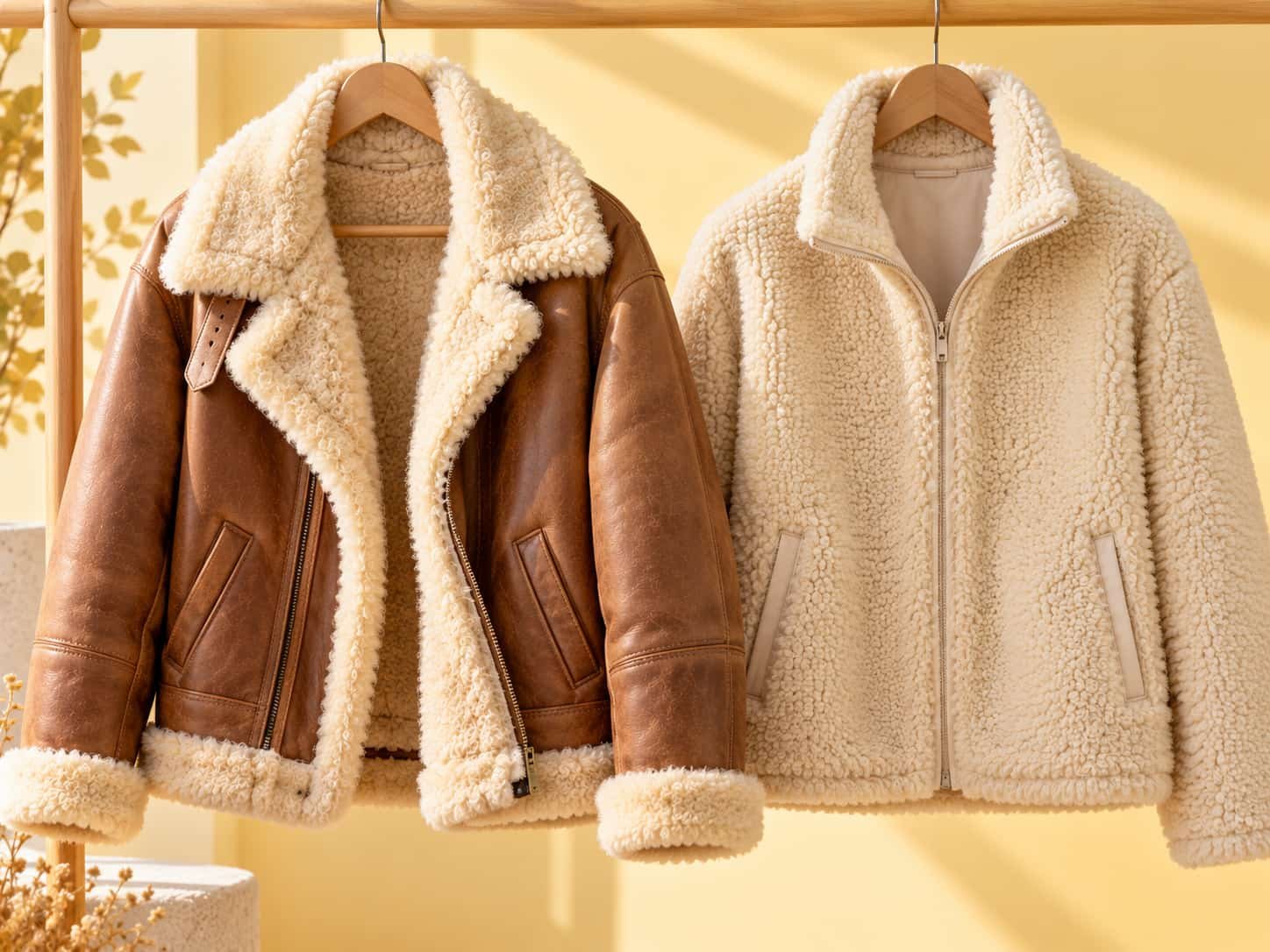
The biggest distinction is the material itself. Genuine shearling is a tanned animal skin with natural wool attached. Faux shearling is manufactured to imitate the look and feel of that material.
Faux versions often use synthetic fibers such as polyester or acrylic, but the exact composition varies. Some products combine multiple fibers or use a pile fabric attached to another textile. Read the label rather than assuming every faux item uses the same material.
Genuine shearling
Natural wool remains attached to a tanned hide. The wool and leather sides form one material, and the finish can vary by product.
Faux shearling
A manufactured textile that mimics a woolly surface. The backing and fibers are textile materials rather than a natural hide with wool attached.
| Buying consideration | Genuine shearling | Faux shearling |
| Composition | Tanned sheep or lamb skin with wool attached | Manufactured fibers and a textile backing |
| Appearance | Natural wool and leather surfaces | Designed to imitate wool or fleece |
| Texture | Varies with the wool, hide and finish | Varies with pile, density and fiber type |
| Warmth | Depends on material thickness, construction and fit | Depends on pile, lining, construction and fit |
| Water response | Moisture can affect the wool and leather | Depends on the fibers, backing and any treatments |
| Care | May require specialist cleaning | Depends on the textile composition and care label |
| Animal-derived material | Yes | Designed to avoid genuine wool-on-hide construction; check all components |
| Cost | Can be expensive, depending on material and construction | Available across a wide range of prices |
Neither type is automatically better for every buyer. Genuine shearling offers natural wool-on-hide construction, while faux shearling may suit shoppers looking for a synthetic alternative or a different price point.
Do not assume faux shearling is always more durable, more sustainable or easier to clean. Synthetic pile can flatten, pill, shed or separate from its backing, while genuine shearling can also be damaged by unsuitable cleaning and storage. Compare the exact product and its care requirements.
Shearling vs Sherpa vs Wool
Shearling, sherpa and wool can look similar in winter garments, but they refer to different material constructions.
Sherpa usually refers to a fleece-like textile with a fluffy surface. It is often made from polyester or a synthetic blend and used in jackets, hoodies, blankets and linings. The term commonly describes the fabric’s appearance and texture, not a wool-on-hide material.
Wool is a natural animal fiber, commonly sourced from sheep. It can be spun into yarn and made into knitted or woven fabrics, felt and other textile products. Ordinary wool fabric does not have the animal skin attached.
| Feature | Shearling | Sherpa | Wool fabric |
| What it is | Tanned sheep skin with wool retained | Fleece-like textile | Textile made from wool fibers |
| Animal hide attached | Yes, in genuine shearling | No, in ordinary sherpa textile | No |
| Common composition | Leather and natural wool | Often polyester or a synthetic blend | Wool or a wool blend |
| Typical uses | Coats, jackets, boots and slippers | Jacket linings, hoodies, blankets | Sweaters, coats, socks and blankets |
| What to check | Hide-and-wool construction | Fiber content and backing | Wool percentage and care label |
A garment can use sherpa to imitate the appearance of shearling without containing genuine sheepskin. Likewise, wool fabric can provide warmth without being shearling. The label is the best starting point when the material matters to your purchase.
Why Is Shearling So Expensive?
Shearling can be warm because the wool fibers create a textured layer that traps air. Air held within and around fibers slows heat transfer, helping a garment retain warmth. The leather side adds structure and may help block wind depending on the design and how the garment fits.
But the material name alone does not tell you how warm an item will be. Consider these factors:
- Wool density and length: A denser or longer pile may trap more air than a sparse, short pile, but other construction details still matter.
- Fit: A jacket or boot must fit appropriately for the intended layers and use.
- Coverage: A longer coat may cover more of the body than a short jacket, but length alone does not prove warmth.
- Closures and seams: Gaps around cuffs, collars and openings can affect heat retention.
- Weather and activity: Wind, rain, snow, temperature and activity level change how warm a garment feels.
Shearling should not be treated as automatically waterproof or suitable for severe wet weather. If you are choosing winter footwear, check the upper, seams, outsole and the manufacturer’s weather guidance.
For more context, see How Waterproof Shoes Work and Waterproof vs Water-Resistant Shoes.
Shearling Coats, Jackets and Boots
Shearling is used in several product types, but a material can be incorporated in different ways. Look at the construction rather than assuming the product name tells you which parts are genuine shearling.
What is a shearling coat?
A shearling coat is outerwear made wholly or partly from genuine shearling or a shearling-style alternative. Genuine shearling versions typically have a leather exterior and wool interior, although some designs are reversible or use different finishes.
When comparing coats, check the material composition, thickness, wool consistency, seam quality, closures, fit over layers and cleaning instructions. A longer coat may offer more coverage, but warmth also depends on the material and construction.
What is a shearling jacket?
A shearling jacket is generally shorter than a coat and may use an aviator, bomber or casual outerwear design. Some jackets have wool at the collar and cuffs; others use shearling more extensively across the body.
Check whether the listing describes a genuine shearling garment, a jacket with a shearling collar, or a synthetic shearling-style lining. These are not interchangeable descriptions.
What are shearling boots?
Shearling boots may use genuine shearling as part of the upper or lining, or they may use synthetic fleece designed to resemble it. The exact construction varies by manufacturer.
Before buying, check:
- Whether the lining is genuine wool-on-hide, wool textile or synthetic fleece.
- Whether the upper is leather, suede, textile or a synthetic material.
- Whether the lining affects the room available for socks.
- Whether the outsole provides traction for your intended surfaces.
- Whether the maker specifies dry-weather, water-resistant or waterproof use.
- Whether the boot’s care instructions are practical for your routine.
A warm lining does not make a boot waterproof, and a soft lining does not guarantee a good fit. Check the full construction and intended use.
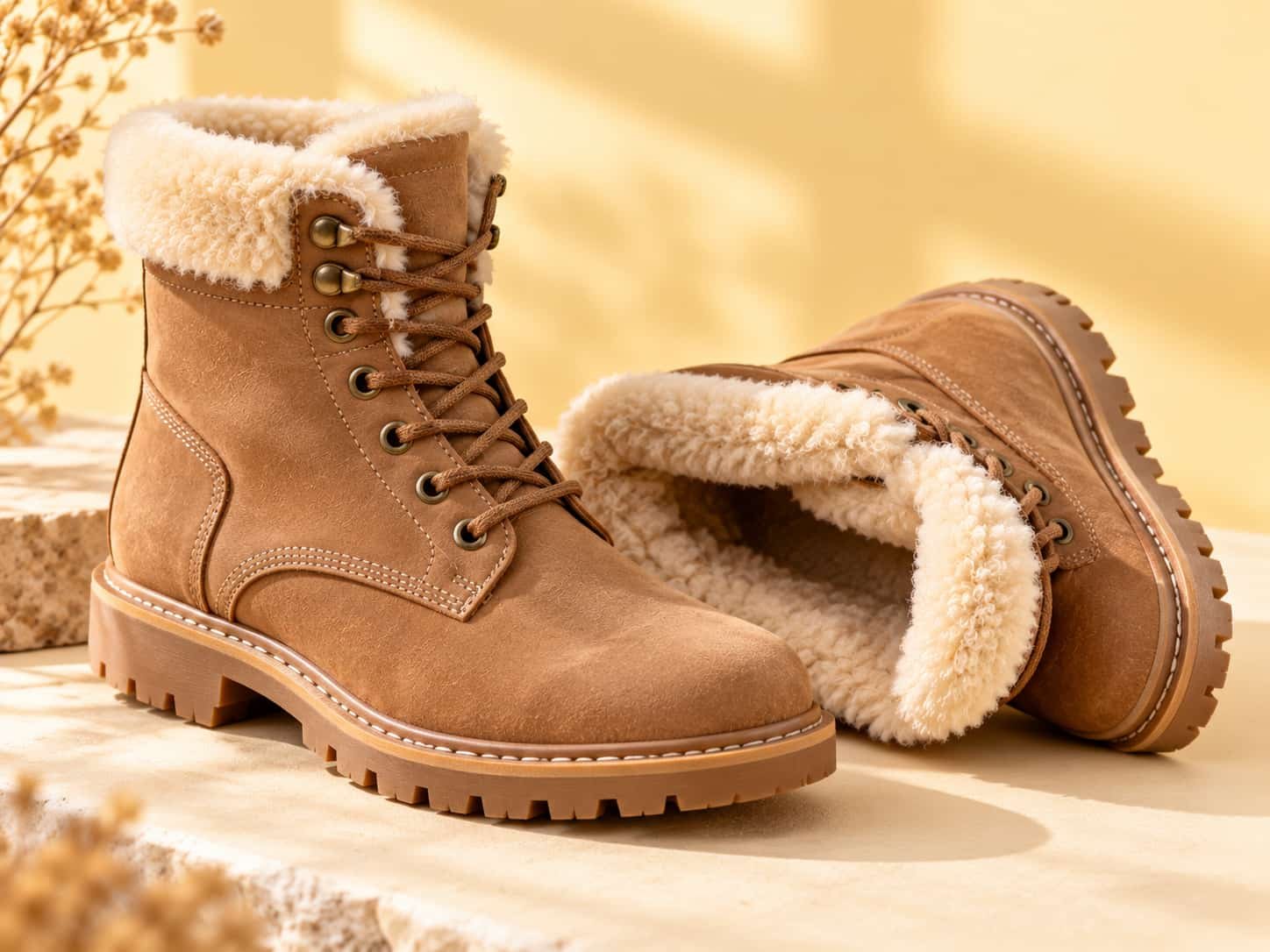
Other products made with shearling
Shearling can also be used in slippers, gloves, hats, collars and accessories. Some items use a small amount of genuine shearling as trim, while other products use a larger wool-on-hide panel. A product may also combine genuine and synthetic components.
That is why “shearling” in a product title should be followed by a clear composition statement.
Why Is Shearling So Expensive?
Some genuine shearling garments cost more than fleece-lined alternatives because the material involves hide selection, tanning, finishing, cutting and garment construction. However, price varies by product, seller and design, so there is no single price that defines genuine shearling.
- Material selection: Hides differ in size, condition, thickness, wool density and appearance. Products with a consistent finish may require more careful selection.
- Processing and finishing: Tanning the hide while retaining the wool, preparing the leather side and finishing the wool all contribute to production.
- Cutting and construction: Garment patterns must account for the material’s two sides. Complex panels, reversible designs and careful seam finishing can require additional work.
- Design and brand positioning: Brand, distribution, design, retail margins and availability also influence the final price. These factors do not independently prove material quality.
- Care requirements: Some genuine shearling garments may need specialist cleaning and suitable storage. Buyers should consider these costs as part of ownership.
A high price is not proof of authenticity. A lower price is not proof that an item is fake. Compare the material declaration, construction, seller information, return policy and care instructions before making a decision.
How to Identify Genuine Shearling
Photographs can make genuine shearling and synthetic fleece look similar. The most useful approach is to combine label checks, construction details and seller information rather than relying on one visual clue.
1. Read the material label
Look for a clear description of the materials used in the upper, lining, trim and other components. Genuine shearling should be described in a way that makes clear that the wool remains attached to a tanned sheep or lamb skin. Faux shearling should identify the relevant textile fibers.
In the United States, the Federal Trade Commission’s guidance on the Fur Products Labeling Act explains disclosure requirements for covered fur products. Specific obligations depend on the product and applicable rules.
2. Examine the backing and edge
Where the construction is visible without damaging the item, genuine shearling should have wool attached to a hide. A synthetic imitation commonly has a textile backing beneath the pile.
Do not cut, pull or damage the product to test it. If the backing is not visible, ask the seller for a close-up or a detailed material specification.
3. Look closely at the fibers
Natural wool may show variation in fiber shape, density and texture. Synthetic pile can appear more uniform, but quality imitation materials can be convincing. Dyeing, trimming, brushing and finishing can also change the appearance of either material.
Visual inspection can provide clues, but it cannot conclusively establish authenticity.
4. Ask the seller specific questions
If a listing uses phrases such as “shearling look,” “shearling style” or “plush lining,” ask whether the product contains genuine wool-on-hide material. Ask which parts of the item are natural and which are synthetic.
Clear material details are more useful than vague descriptions. If the seller cannot explain the composition, consider choosing a product with more complete documentation.
5. Avoid destructive home tests
Do not burn fibers, use solvents, cut the lining or apply harsh chemicals to identify shearling. These tests can damage the product and may create a safety risk. Use the label, product documentation and seller’s answers instead.
How to Care for Shearling
Genuine shearling combines wool and leather, so a cleaning method suitable for one side may not be suitable for the other. Start with the manufacturer’s care label. For valuable, heavily soiled or stained items, specialist cleaning is generally the safer option.
The American Fur Council’s shearling care guidance advises against machine washing and tumble drying and recommends professional care for genuine shearling garments. It also warns against direct heat and unsuitable home-cleaning methods.
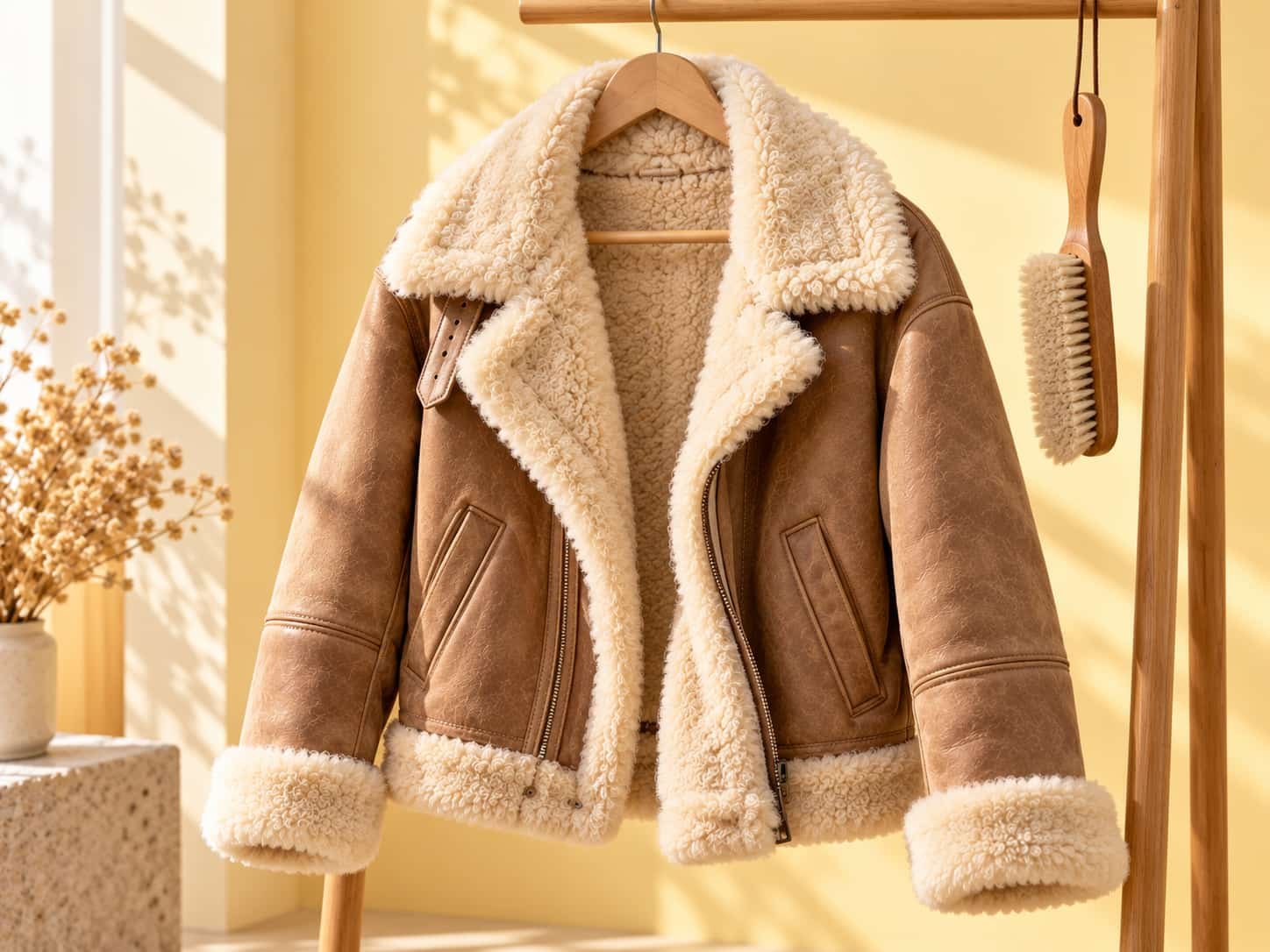
After wearing
Allow the item to air in a well-ventilated space. Keep it away from radiators, heaters and prolonged direct sunlight. For coats and jackets, use a broad hanger that supports the shoulders and avoid compressing the wool in a crowded closet.
If it gets wet
Remove loose moisture gently and let the item dry naturally away from direct heat. Do not use a hairdryer, tumble dryer or radiator. If the leather becomes saturated, the garment changes shape or the surface becomes uneven, consult a qualified leather or shearling specialist.
For stains and spills
Do not aggressively rub a stain or apply household cleaners without checking compatibility. Treatment depends on whether the mark is on the wool or leather side and on the finish of the material. For oil, dye transfer, salt stains or persistent marks, seek specialist advice.
For storage
Store shearling in a cool, dry place away from heat and direct sunlight. Follow the garment maker’s storage guidance and avoid compressing the wool for long periods. If professional seasonal cleaning is recommended, arrange it before storage.
For shearling boots and slippers
Follow the footwear maker’s instructions. Do not assume that a lining can be washed because it resembles fleece. Let footwear air between wears, avoid excessive moisture and use only cleaning products approved for the materials.
For broader shoe maintenance, see How to Clean Shoes and Maintain Them.
Is Shearling Ethical? Animal Origins and Alternatives
Genuine shearling is animal-derived: it uses sheep or lamb skin with wool retained. That makes it unsuitable for shoppers who avoid animal materials for ethical, religious, environmental or personal reasons.
Ethical judgments can depend on a person’s values and on information about animal welfare, sourcing, traceability, farming, transport and slaughter practices. The term “shearling” alone does not tell buyers how an animal was raised or why it was slaughtered.
If animal welfare is important to your decision, ask the brand about the origin of its material and whether it can provide specific sourcing or welfare documentation. Do not assume that all products come from identical supply chains, and do not treat a general “responsibly sourced” claim as proof without supporting information.
What are the alternatives?
- Faux shearling: A synthetic material designed to imitate the look of wool-on-hide shearling.
- Sherpa fleece: A fleece-like textile, commonly made from synthetic fibers.
- Wool fabric: A natural fiber textile without the animal skin attached.
- Other insulated textiles: Synthetic insulation or quilted linings can provide warmth without a wool-on-hide material.
Each option has trade-offs. Synthetic textiles can have environmental impacts related to manufacturing, fiber shedding and disposal, while natural materials also involve resource use and supply-chain considerations. Choose based on your priorities and the specific product’s material disclosure.
What to Check Before Buying Shearling
Use this checklist to compare products before making a purchase.
Shearling buyer checklist
- Read the full material composition, not just the product title.
- Confirm whether the product uses genuine shearling or faux shearling.
- Check which components are natural and which are synthetic.
- Inspect available close-up images of the wool, backing, seams and edges.
- Review the care instructions and expected maintenance.
- Check fit, lining coverage, outsole traction and weather suitability for footwear.
- Read the return policy and seller information before paying.
- Ask about sourcing and traceability if these matter to your decision.
Which should you choose?
- For natural hide-and-wool construction: Consider genuine shearling if you are comfortable with animal-derived materials and its care requirements.
- For an animal-free option: Look for faux shearling or sherpa with a clearly stated synthetic composition.
- For winter boots: Prioritize fit, traction, weather suitability and lining coverage.
- For easier maintenance: Compare the care labels of the actual products. Do not assume a material category guarantees easy cleaning.
- For a premium purchase: Evaluate composition, construction, seller transparency, care and return terms rather than relying on price or marketing language.
Frequently Asked Questions About Shearling
What is shearling made of?
Genuine shearling is a tanned sheep or lamb skin that retains its original wool, cut to an approximately even length. The wool and leather sides are part of the same hide. Faux shearling uses manufactured materials to imitate its surface.
Is shearling real fur?
Shearling is a natural animal-derived material with wool attached to a tanned skin. The exact legal terminology and labeling requirements depend on the product and jurisdiction. For US products, consult the FTC’s Fur Products Labeling Act guidance.
What is the difference between shearling and sheepskin?
Sheepskin is a broad term for sheep skin. Shearling more specifically refers to a tanned sheep skin retaining its original wool, cut to an approximately even length. Retailers may use the terms inconsistently, so check the actual material construction.
What is the difference between shearling and sherpa?
Genuine shearling combines wool and a tanned hide. Sherpa is a fleece-like textile, often made from polyester or a blend. It can imitate shearling’s fluffy appearance without using a wool-on-hide construction.
What does faux shearling mean?
Faux shearling is a manufactured textile designed to resemble genuine shearling. It often uses synthetic fibers attached to a textile backing. The precise composition varies, so read the product’s fiber label.
Why is shearling so expensive?
Genuine shearling can cost more because of hide selection, tanning, finishing, cutting and garment construction. Brand positioning and retail margins also affect price. A high price alone does not prove authenticity or quality.
How can you tell if shearling is real?
Check the material label and product specification first. Look for confirmation that wool remains attached to a leather hide, examine available construction details and ask the seller questions if the description is unclear. Appearance alone cannot prove authenticity.
Is shearling warmer than faux shearling?
Not in every product. Warmth depends on pile density, thickness, lining, fit, construction and conditions. Compare the actual product specifications instead of assuming one material always provides more insulation.
Can shearling get wet?
Shearling can be affected by moisture, especially if the leather side becomes saturated. Follow the manufacturer’s guidance, allow it to dry naturally away from direct heat, and consult a specialist if the hide becomes heavily wet or changes shape.
Can you machine wash shearling?
Do not assume genuine shearling can be machine washed. Washing and tumble drying may damage the hide, shape or finish. Follow the product’s care label and consult a specialist. Faux shearling care depends on its textile composition and construction.
Is shearling ethical?
That depends on the buyer’s values and the specific product’s supply chain. Genuine shearling uses animal skin with wool attached, but the name alone does not disclose the animal’s living conditions or sourcing practices. Ask for traceability and welfare information if these factors matter to you.
What does “100% shearling” mean?
The phrase is intended to identify the material, but it should not be treated as proof that every component of a finished product is shearling. Zippers, stitching, soles, trim and other components may be made from different materials. Read the full composition and ask the seller to clarify any ambiguity.
Conclusion: Is Shearling Right for You?
Shearling is distinctive because it combines a tanned sheep or lamb skin with its original wool. That construction makes it different from ordinary wool fabric, sherpa fleece and faux shearling, even when the materials look similar.
If you are considering a shearling coat, jacket or pair of boots, check the material declaration, construction, fit, weather suitability and care instructions. If you prefer to avoid animal-derived materials, faux shearling and sherpa provide alternatives, but their composition and performance vary by product.
For more material comparisons, continue to Shoe Materials Explained. For a closer look at footwear components, read Anatomy of a Shoe.
Sources and Further Reading
These references provide further information about shearling terminology, material care and applicable product-labeling guidance.
-
International Organization for Standardization (ISO):
ISO 15115:2019 — Leather VocabularyTechnical terminology for leather and shearling materials.
-
American Fur Council:
Shearling Care GuideCare recommendations for genuine shearling garments, including cleaning and storage.
-
Federal Trade Commission (FTC):
How to Comply with the Fur Products Labeling ActUS guidance on disclosure requirements for covered fur products.
-
Federal Trade Commission (FTC):
Rules and Regulations Under the Fur Products Labeling ActRegulatory reference for applicable fur-product labeling requirements.


