

Suede vs Nubuck: Differences, Durability and Care
Editorial Guide | Footwear Materials |
Summarise this suede vs nubuck guide with AI
Open an assistant and submit the prefilled request. The assistant reads the page only after you submit it.
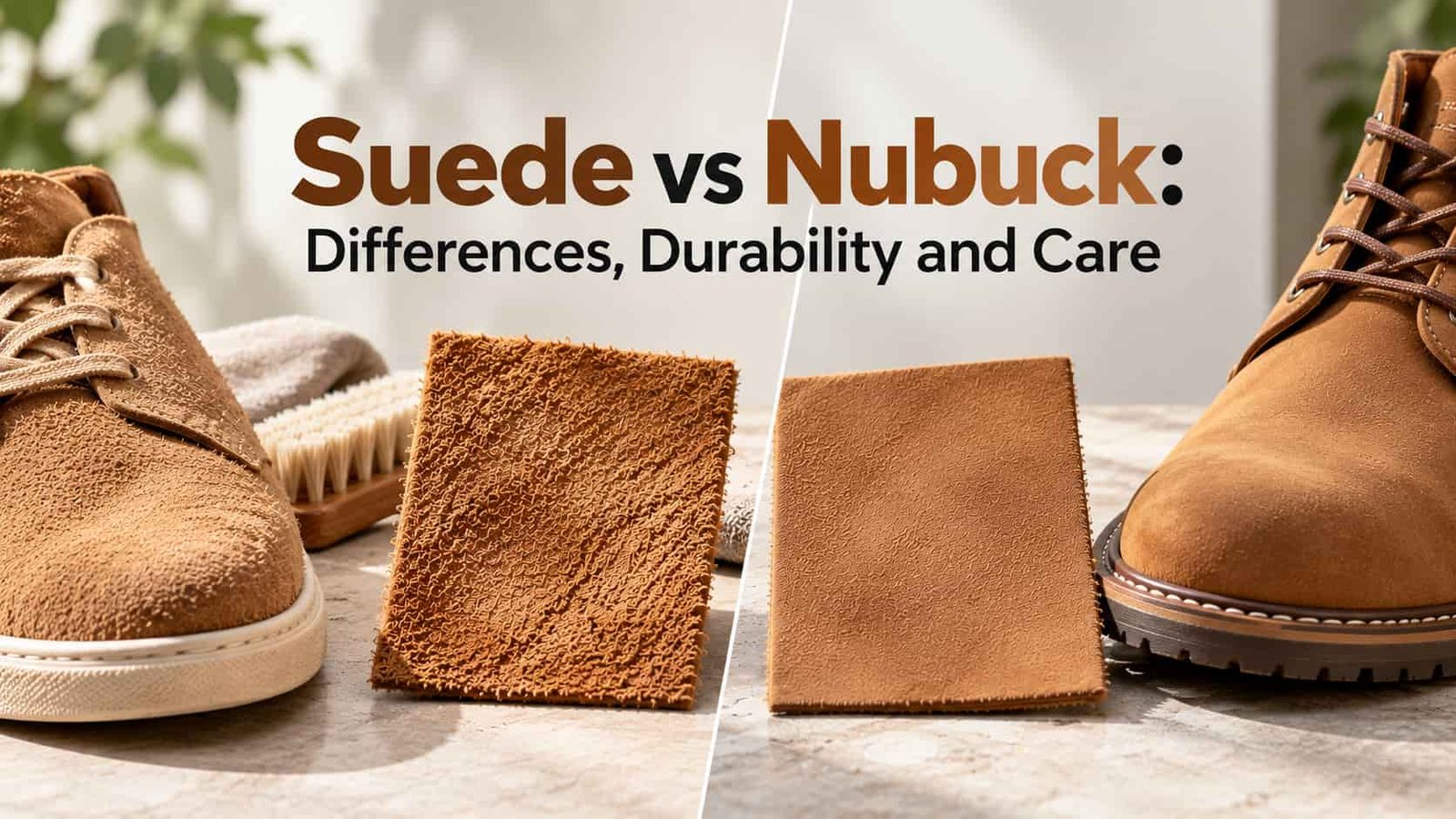
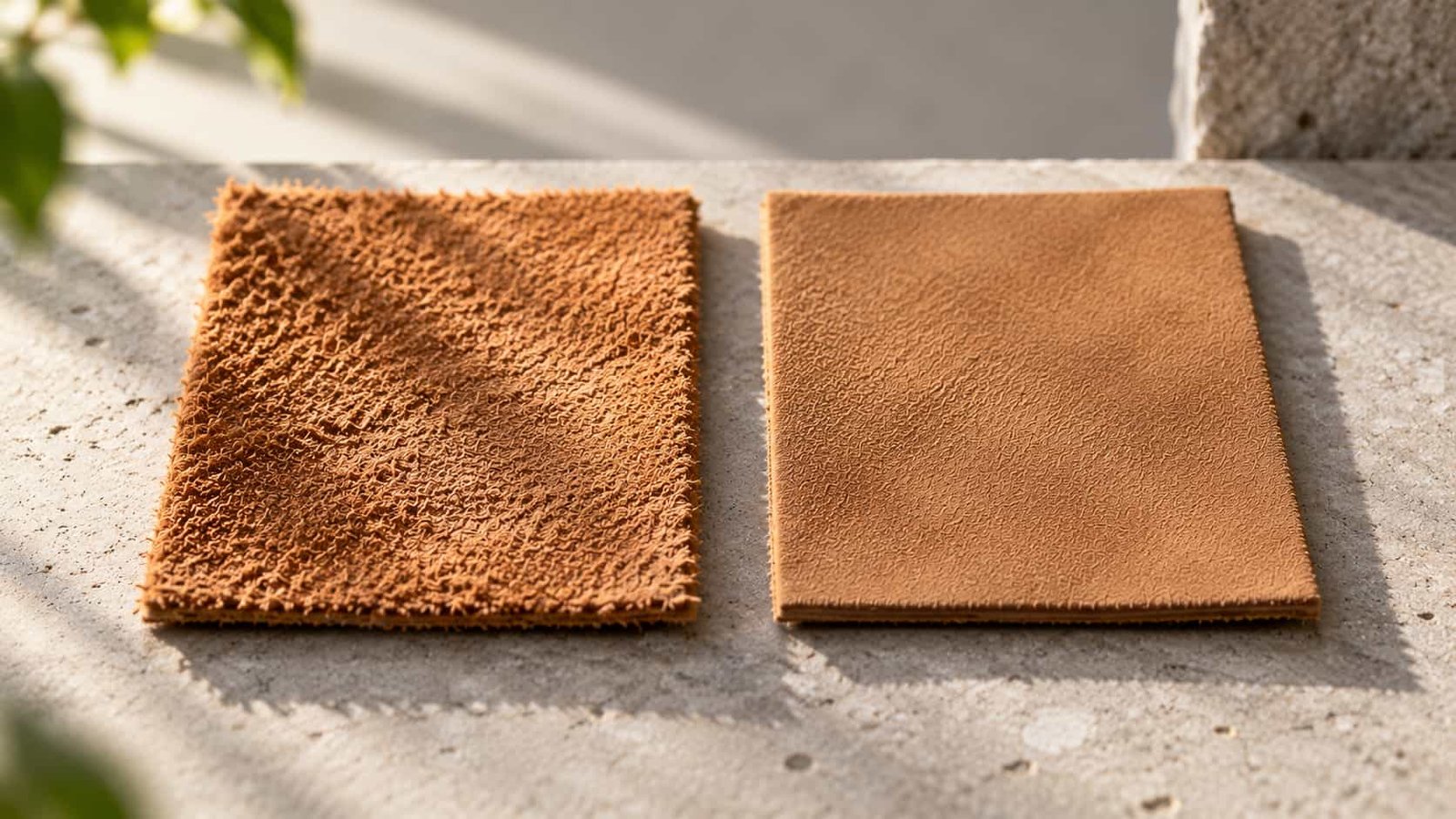
Suede vs nubuck comes down to which side of the hide is brushed. Suede is made from the softer underside or a split layer and has a looser, more velvety nap. Nubuck is sanded on the outer grain side, so its nap is finer and its surface is tighter and usually more durable. Both are real leather, and neither is waterproof untreated.
Key Takeaways
- The difference is the side of the hide. Suede comes from the underside or a split. Nubuck is sanded from the grain side.
- Nubuck is usually the tougher surface. Its tighter fibres tend to resist scuffs and marks a little better than suede.
- Suede is usually softer and more velvety. That is its main appeal, and its main weakness.
- Neither is waterproof by default. Both absorb water unless treated, and treatments wear off.
- Care is dry care for both. A brush and an eraser handle most marks on either one.
- Choose by use. Nubuck suits boots and outdoor shoes. Suede suits casual and dressier shoes in dry weather.
Suede vs Nubuck at a Glance
If you only want the quick answer, this table covers the main differences. Details follow below.
| Feature | Suede | Nubuck | Smooth leather |
| Surface source | Underside or split layer, buffed | Grain side, sanded | Grain side, not sanded |
| Nap | Longer, softer, more open | Shorter, finer, closer | None; grain visible |
| Feel | Velvety, drapes easily | Soft but slightly firmer | Smooth, can be firm |
| Mark resistance | Marks more easily | Better than suede | Most forgiving |
| Typical durability | Good in dry use | Often better on the surface | Depends on finish |
| Water handling | Absorbs water readily | Absorbs water; treatment helps | Usually more resistant |
| Care effort | High, dry methods | High, dry methods | Medium |
| Typical use | Casual and occasion shoes | Boots and outdoor shoes | Dress and everyday shoes |
These are typical relationships, not fixed rules. A well-made suede can outlast a poorly made nubuck, and finishes vary between makers.
Where Each Comes From in the Hide
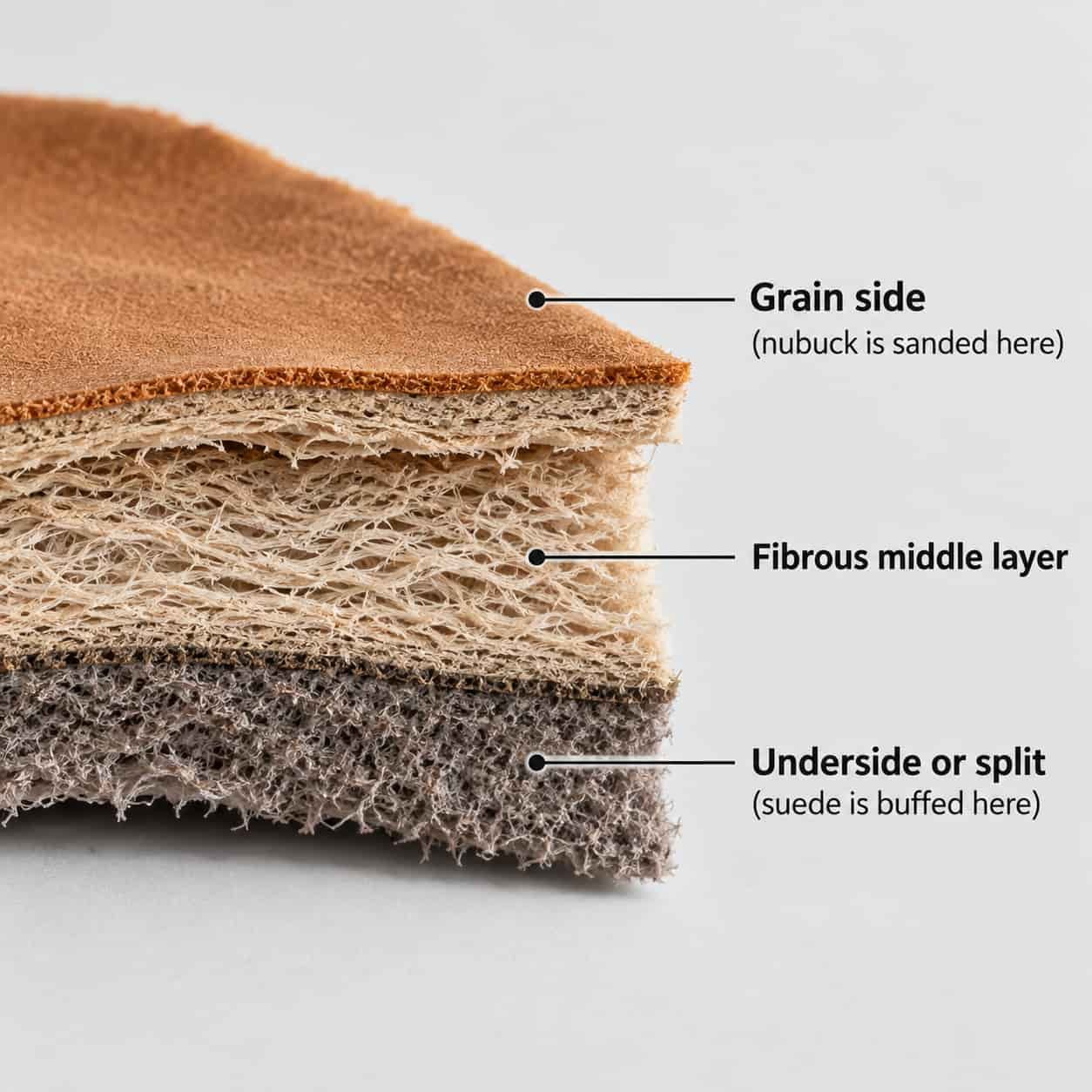
A hide has layers. The outer grain carries the natural pores and is the strongest, most refined part. Beneath it sits a thick fibrous layer, and below that is the underside, which is looser and less refined.
Nubuck uses the outer grain side. Makers sand it lightly to raise a short, dense nap. Because the grain is the strongest part of the hide, nubuck keeps much of that strength under its soft surface. That is why nubuck is often described as the more robust of the two.
Suede uses the underside of the hide or a split layer separated from the grain. This side has looser fibres, so buffing raises a longer, softer nap. The result feels more velvety, but the surface is less compact.
For the full definitions, read what is nubuck and what is suede. For the wider context of leather in footwear, see the shoe materials guide.
How Each Is Made
Methods vary between tanneries, so treat these steps as a general outline rather than a standard.
Nubuck
- The hide is tanned so its fibres are stable.
- A hide with a good grain is selected, since sanding removes part of the surface.
- The grain side is sanded with fine abrasives to raise a short, tight nap.
- The surface is dyed, and some makers add a protective treatment.
- The leather is dried and conditioned to stay flexible.
Suede
- The hide is tanned so its fibres are stable.
- The hide is split, and the underside or a lower split layer is kept for suede.
- That side is buffed to raise a longer, softer nap.
- The surface is dyed, and some suedes get a water-repellent finish.
- The leather is dried and conditioned, with care taken to avoid heat.
The key point is the starting material. Nubuck starts from the strongest part of the hide. Suede starts from a more open part. Quality still depends on the maker, and the name alone does not guarantee quality.
How They Look and Feel
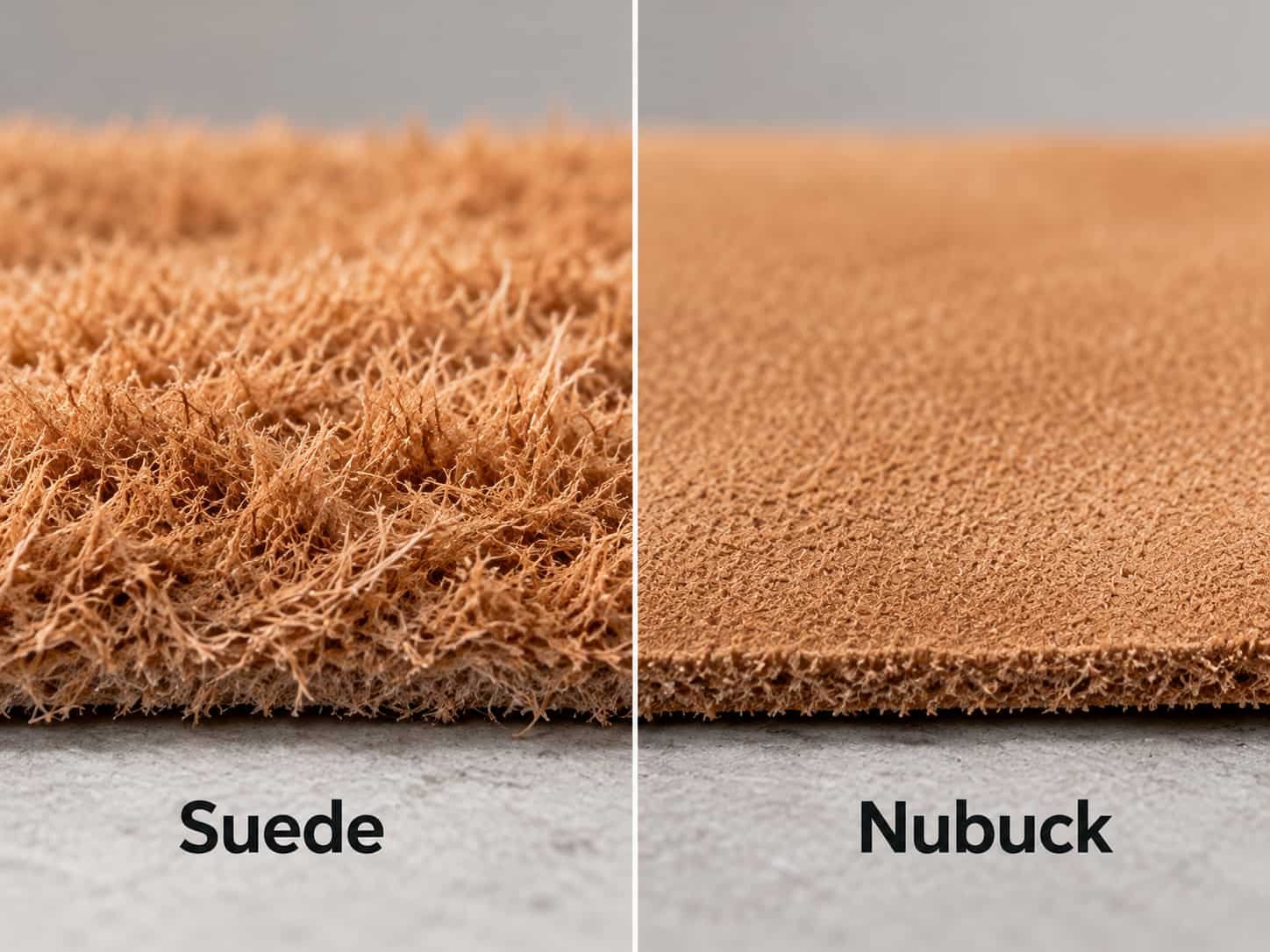
Suede feels soft and velvety, with a nap you can see and move with your hand. Brushing it in one direction changes the shade, which gives suede its characteristic depth of colour. It drapes and flexes easily from the first wear.
Nubuck feels soft but slightly firmer. The nap is shorter and tighter, so the surface looks smoother and more even, and the colour often looks a little more uniform. It still shows shading when brushed, though the effect is subtler.
If you want the most velvety, relaxed look, suede is usually the better match. If you want a slightly cleaner, more structured matte look, nubuck is usually the better match.
Both materials change appearance with the light and with wear. View a pair in daylight before you buy, and look at product photos from more than one angle.
Durability and Wear
Readers often ask whether nubuck lasts as long as smooth leather, or which of suede and nubuck is better. The honest answer is that no reliable fixed lifespan applies to either, and durability depends on more than the name.
What helps nubuck on the surface:
- Grain-side strength. The tighter, more compact surface tends to resist scuffs and marks a little better than suede. This is an editorial judgment based on how the materials are built, not a standardised test result.
- Boot use. Nubuck is common on work and outdoor boots because it handles knocks reasonably well.
What matters more for both:
- Leather quality and thickness. Thicker, well-made leather holds up better.
- Sole construction. A stitched or welted sole can usually be repaired, which extends the life of the upper. A glued sole often cannot be resoled.
- Use and care. Daily wear on rough ground wears the nap faster than occasional wear in dry conditions. Regular brushing helps both.
- Rotation. Resting pairs lets the nap recover.
Compared with smooth leather, both suede and nubuck are usually more vulnerable to marks, stains and water, because the open nap holds dirt and moisture. A well-finished smooth leather can outlast either with less effort. Brushed leathers trade that robustness for texture and feel.
For a related question about grain and finish, see full grain vs top grain.
Weather and Water Resistance
This is where many buyers get caught out.
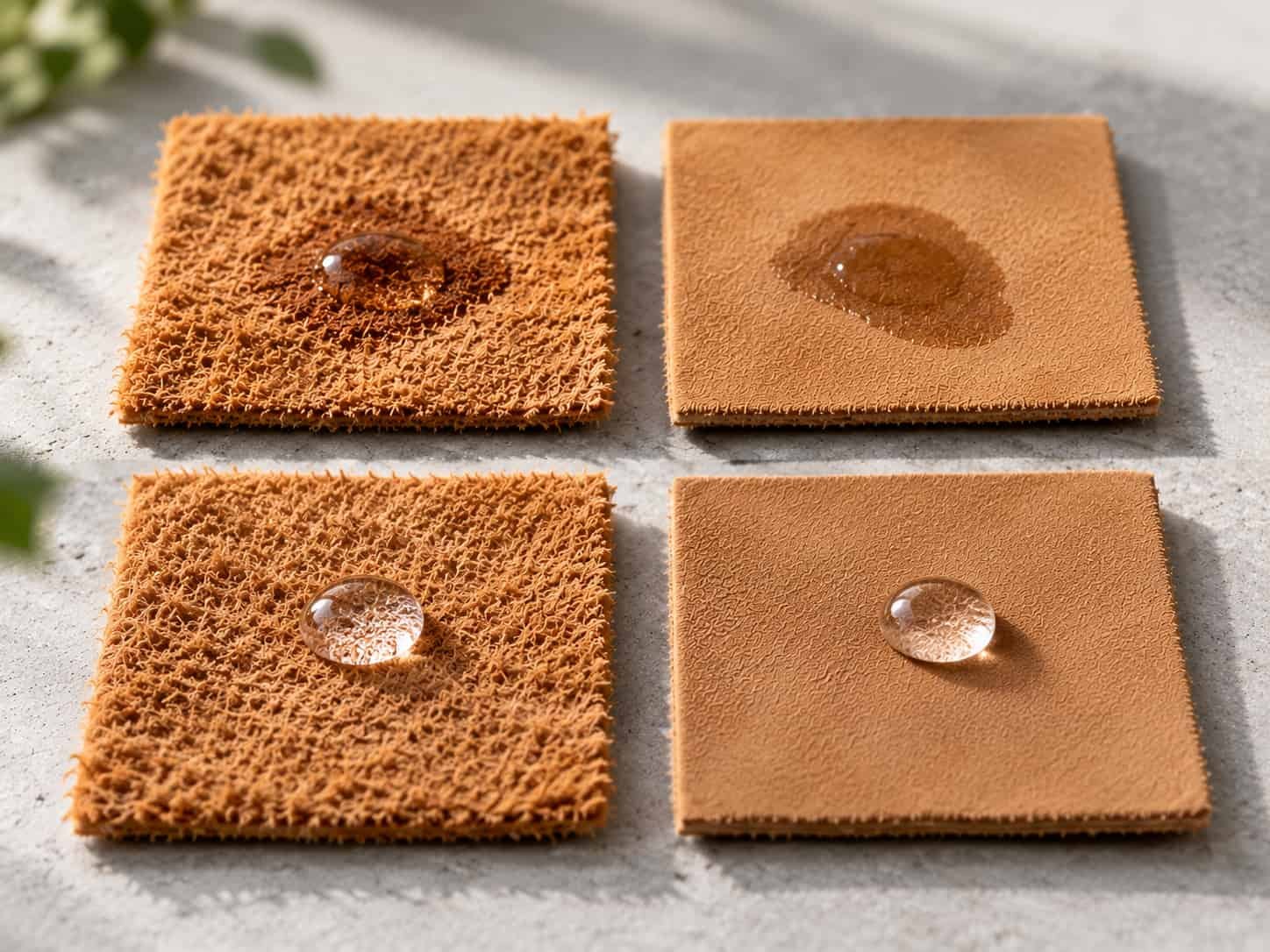
Is nubuck waterproof? No. Nubuck absorbs water unless it has been treated, and treatments reduce absorption but do not make it waterproof. They also wear off with use and cleaning.
Can you wear nubuck in the rain? Light rain is manageable if the shoes are treated and you dry them properly afterwards. Heavy rain, standing water and mud are a poor match. Repeated soaking can stain, stiffen and dry out the leather.
Is suede worse in rain? Generally yes. Suede’s looser, longer nap absorbs water quickly and shows water marks more readily. Nubuck usually copes slightly better, but not by much.
What about Timberland nubuck? Some boots made from nubuck are sold with waterproof membranes or treatments, which is a feature of the specific product rather than of nubuck itself. Check the product description, and see how to clean Timberlands for care.
How to waterproof nubuck or suede. A protective spray made for brushed leather can slow water absorption. Test it on a hidden area first, let it dry fully and reapply as the label directs. No spray makes either material waterproof. For the wider distinction, see waterproof vs water resistant shoes.
If either material gets wet:
- Press off surface water with a dry cloth. Do not rub.
- Stuff the shoes with paper to hold their shape.
- Dry at room temperature, away from radiators, hair dryers and direct sun.
- Brush the nap gently once fully dry.
Never use heat to dry wet suede or nubuck. It can harden the leather, set stains and flatten the nap.
Stains and Care Differences
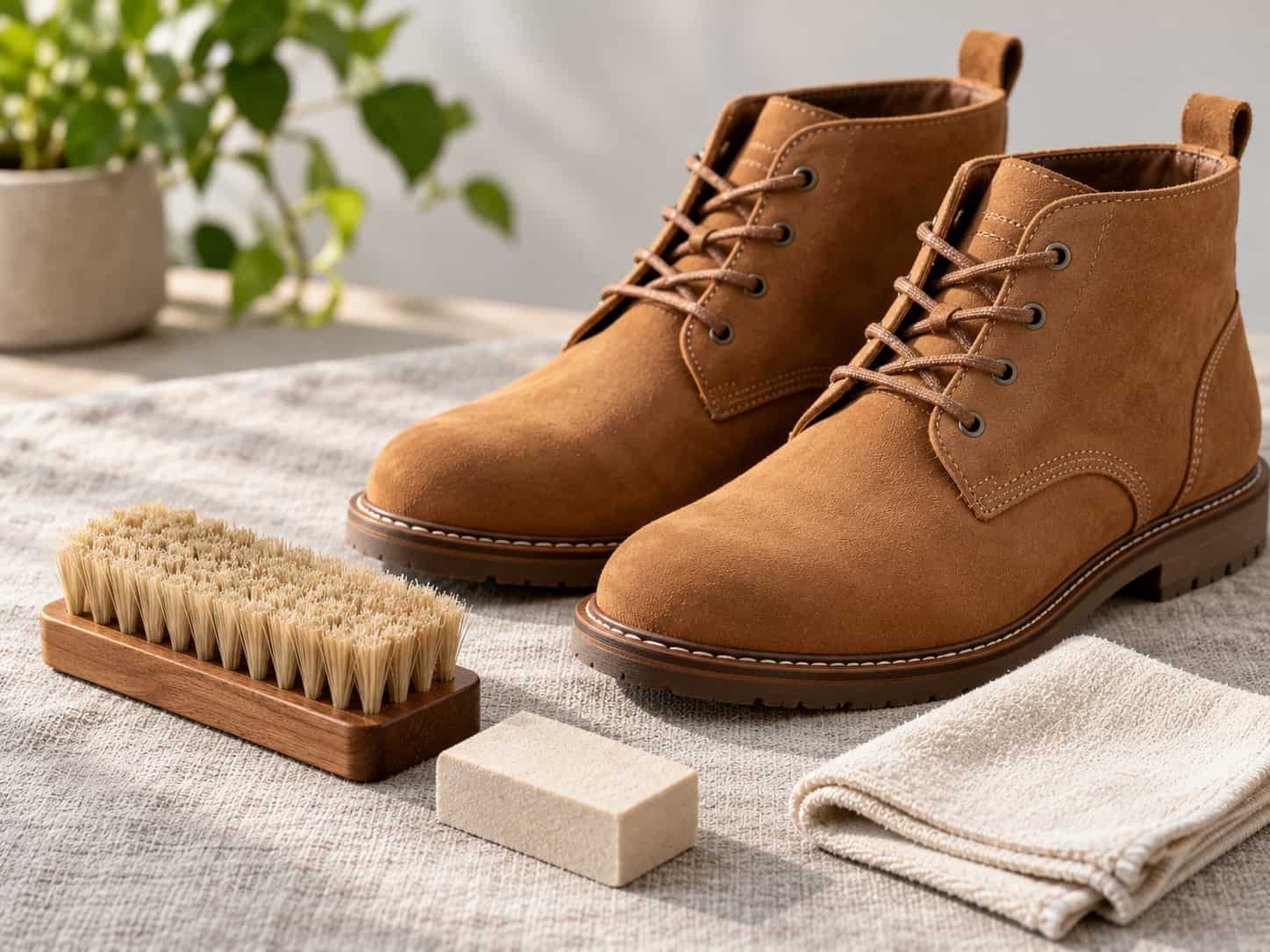
Care for both is dry care, and the routine is very similar. The differences are in how forgiving each one is.
| Care task | Suede | Nubuck |
| Brushing | After each wear, soft brass or nylon brush | After each wear, soft brush, lighter touch |
| Dry marks | Suede eraser, then brush | Nubuck or suede eraser, gently |
| Mud | Let dry fully, then brush off | Let dry fully, then brush off |
| Oil stains | Absorbent powder, then specialist cleaner | Absorbent powder, then specialist cleaner |
| Restoring flattened nap | Brush, steam lightly if the product allows | Brush gently; avoid over-brushing |
| Risk of over-treatment | Colour can darken, nap can mat | Over-sanding or hard brushing can polish the surface |
Practical points:
- Use a gentle touch on nubuck. Its finer nap can burnish or go shiny if you brush too hard.
- Test every product on a hidden area. Colour change is the most common problem.
- Avoid soaking, household detergents, oils and polishes. These stiffen the leather and leave lasting marks on both.
For step-by-step guides, see how to clean suede shoes, how to restore suede shoes, how to clean nubuck and best suede cleaner. For care across all materials, read how to clean shoes and maintain them.
Roughout, Split Leather and Faux Alternatives
Several related terms cause confusion in product listings.
Roughout. Roughout is leather with the rough underside facing outward, common on work boots. It has a coarser, more textured look than suede or nubuck and is generally associated with rugged use. Product descriptions vary, so read them carefully.
Split leather. Split leather is a layer separated from the hide below the grain. Suede is often made from split leather, but not all split leather is suede, because some splits are coated or embossed to look like grain leather. So suede and split leather overlap but are not the same thing. Split leather is still real leather.
Faux suede and Alcantara. Faux suede is a synthetic fabric, often polyester or microfibre, made to look like suede. Alcantara is a branded synthetic material used in car interiors and some products. Neither is leather. Synthetics are often easier to wipe clean but breathe and age differently, and they cannot be resoled in the same way.
PU “nubuck” or “suede” looks. Some shoes use polyurethane coatings with a brushed look. Check the material information on the label or listing to see whether it says leather.
To check whether a shoe is real leather, see how to tell if shoes are real leather.
Same Shoe, Different Material
Some brands sell the same style in several finishes, including suede, nubuck and oiled or smooth leather. Birkenstock, for example, offers some models in different leathers, so check the product page for the exact material.
When you are choosing between versions of the same shoe:
- Suede suits you if you want the softest, most relaxed look and will keep the shoes dry.
- Nubuck suits you if you want a slightly tougher brushed surface for regular wear.
- Oiled or smooth leather suits you if you want the lowest-maintenance option and expect wet or messy conditions.
Prices and availability change, so check current details on the brand’s own product page rather than relying on any general statement here.
How to Choose
| Your situation | Suede may suit you | Nubuck may suit you | Consider smooth leather |
| Style | You want the softest, most velvety look | You want a cleaner matte look | You want a polished, formal finish |
| Weather | Mostly dry, mild climate | Mostly dry, with the occasional shower | Frequent rain, mud or snow |
| Use | Casual and occasion shoes | Boots and outdoor shoes | Daily commuting in any weather |
| Care | You will brush and store them | You will brush gently and treat them | You want minimal upkeep |
| Budget | Prices vary by maker | Prices vary by maker | Prices vary by maker |
If you are still narrowing options, the shoe finder can help you filter by use and style.
How to Tell Which You Have
- Check the product description or label. Look for “suede,” “nubuck” or “roughout.” If it only says “leather,” ask the brand.
- Look at the nap. A longer, softer, more open nap suggests suede. A shorter, finer, tighter nap suggests nubuck.
- Run your hand across it. Suede usually feels more velvety. Nubuck feels slightly firmer and smoother.
- Compare the shade change. Both show shading, and suede usually shows it more strongly.
- Check the interior. The underside of leather is often visible inside the shoe or on cut edges, and it may help you judge the material.
No single check is conclusive, so combine several. If the details matter to you, the brand’s product page or customer service is the most reliable source.
Myths Worth Dropping
- “Suede and nubuck are the same thing.” Both are brushed leathers, but they come from different sides of the hide.
- “Nubuck is waterproof.” It absorbs water unless treated, and treatments wear off.
- “Suede is a cheap leather.” Suede can be well made or poorly made. Quality depends on the maker and the hide.
- “Nubuck always lasts longer.” Its surface is often tougher, but construction, care and use matter more.
- “You cannot clean either one.” Dry methods work well. Soaking and harsh products do more damage than most marks.
Frequently Asked Questions
What is the main difference between suede and nubuck?
Suede is made from the underside or a split layer of the hide and has a longer, softer nap. Nubuck is sanded from the outer grain side and has a finer, tighter nap. Both are real leather and both need dry care.
Which is better, suede or nubuck?
Neither is better in every case. Suede is softer and more velvety, while nubuck is usually a slightly tougher surface. Choose suede for softness in dry conditions, and nubuck if you want a brushed finish that handles wear a little better.
Does nubuck last as long as smooth leather?
Not reliably. Nubuck’s grain-side strength helps it, but a well-finished smooth leather is usually more forgiving of water, stains and scuffs. Lifespan depends on leather quality, sole construction, use and care.
Is nubuck waterproof?
No. Nubuck absorbs water unless treated, and treatments reduce absorption but do not make it waterproof. They wear off over time and need reapplying.
Can I wear nubuck in the rain?
Light rain is manageable if the shoes are treated and dried properly afterwards. Heavy rain, standing water and mud are risky. Repeated soaking can stain and stiffen the leather.
Is suede real leather?
Yes. Suede is made from animal hide, usually the underside or a split layer, and is classed as leather. Faux suede is a different, synthetic material.
Is split leather the same as suede?
Not exactly. Suede is often made from split leather, but not all split leather is suede, because some splits are coated or embossed to look like grain leather.
How do I protect suede or nubuck from water?
Use a protective spray made for brushed leather. Test it on a hidden area, let it dry fully and reapply as the label directs. No spray makes either material fully waterproof.
Are suede and nubuck cleaned the same way?
The methods are very similar: a soft brush, a suitable eraser and a specialist cleaner for stains. Use a lighter touch on nubuck, because its finer nap can polish if brushed too hard.
Should I buy nubuck or suede boots?
For boots that see regular use outdoors, nubuck is often the more practical brushed choice. For a softer, more fashion-led look in dry conditions, suede is the usual pick. Check whether the specific boots have a waterproof treatment or membrane.
Final Thoughts
Suede and nubuck look alike at a glance, but the difference in where they come from shapes how they feel, wear and handle weather. Suede is softer and more velvety, and nubuck is usually the slightly tougher, tighter surface. Neither is waterproof, and both reward a brush and a little care.
Before you buy, check the material information, think about the weather you will face and decide how much care you will give the shoes. For the wider picture, start with the shoe materials guide, then read the individual guides to nubuck and suede.
External References
- Nubuck overview: https://en.wikipedia.org/wiki/Nubuck
- Suede overview: https://en.wikipedia.org/wiki/Suede
- Leather, hide structure and tanning: https://www.britannica.com/technology/leather


