
Nursing Shoe Rotation Strategy: How Many Pairs and When to Replace
✅ Expert Footwear Analysis | 🛒 Amazon Options | 📅 Updated October 2026
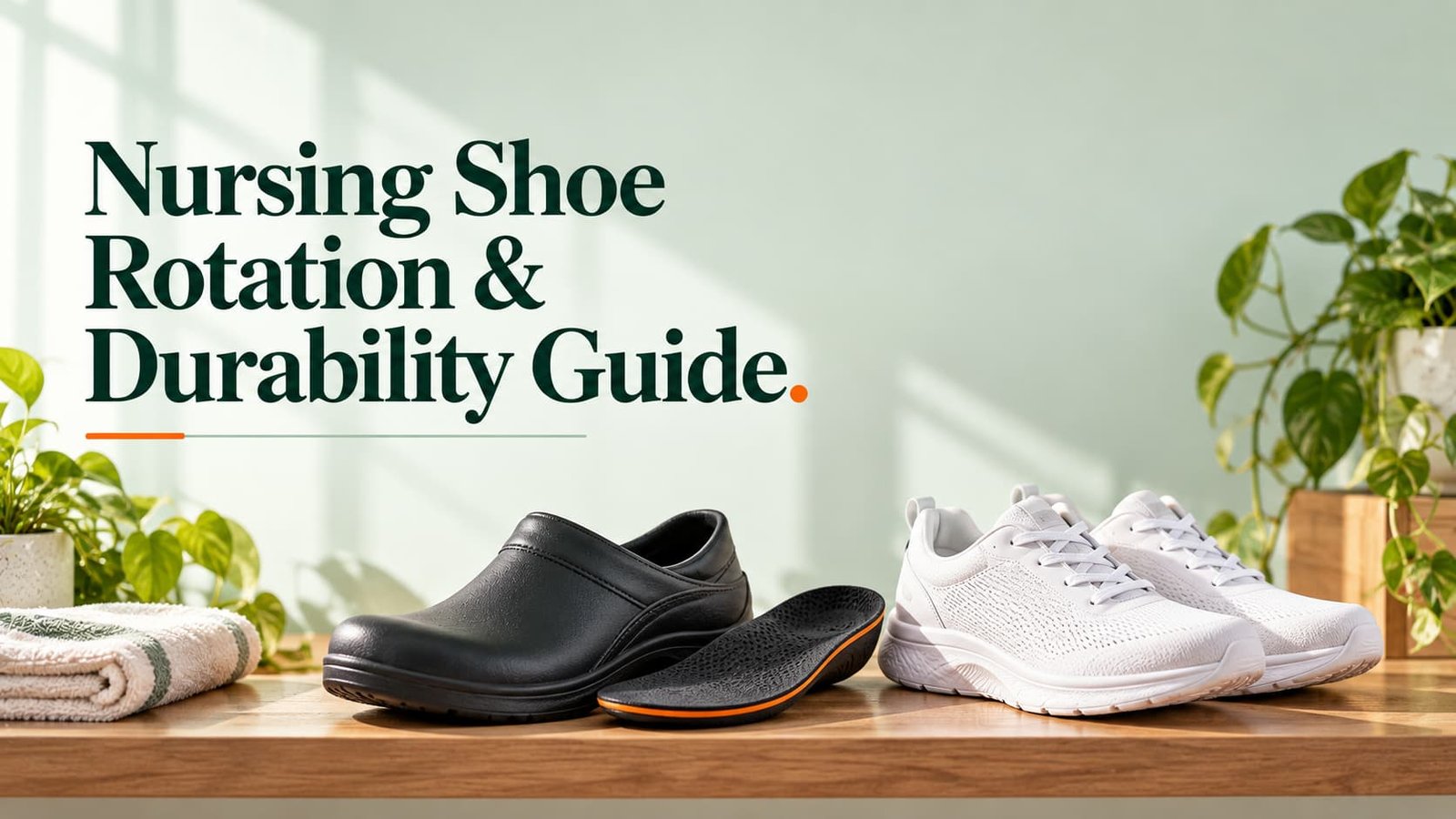
A good nursing shoe rotation strategy means alternating at least two pairs on back-to-back shifts so foam and footbeds can dry and recover. Replace shoes when the outsole is smooth, cushioning feels flat, the heel collapses or new aches appear. There is no fixed lifespan, so watch for wear signs rather than a date.
Top Picks: Nursing Shoes to Consider for Rotation
These are practical examples, each listed with the main tradeoff. Pairing a clog with a sneaker is one easy way to build a rotation.
Ratings come from Amazon US listings and may change. Check each listing for current details.
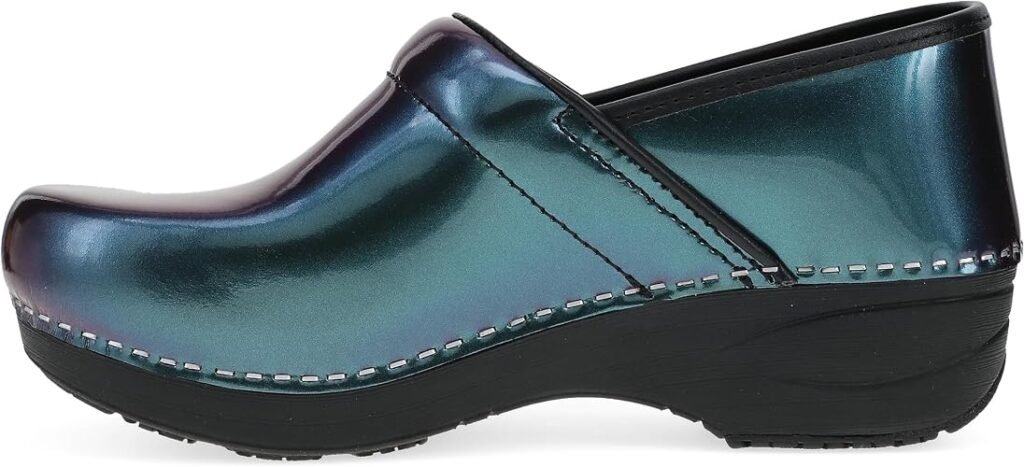 🏆 BEST OVERALL
Structured clog whose footbed can be pulled out to dry. Premium price.
🛒 Check Price on Amazon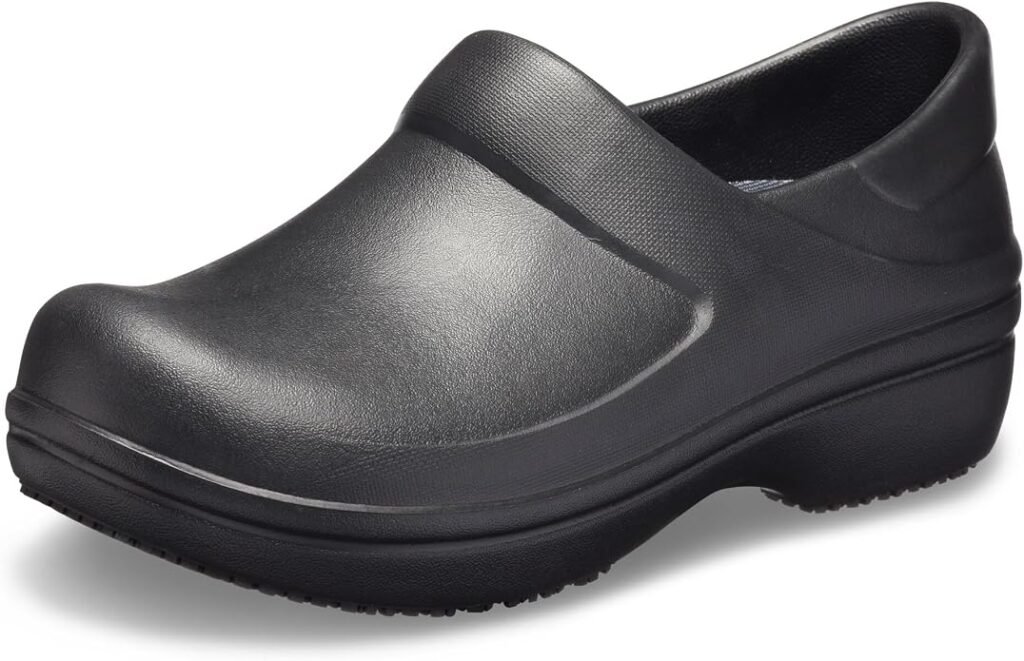 💧 BEST FOR SPILLS
Dries quickly after a wipe-down. Runs large, so most people size down.
🛒 Check Price on Amazon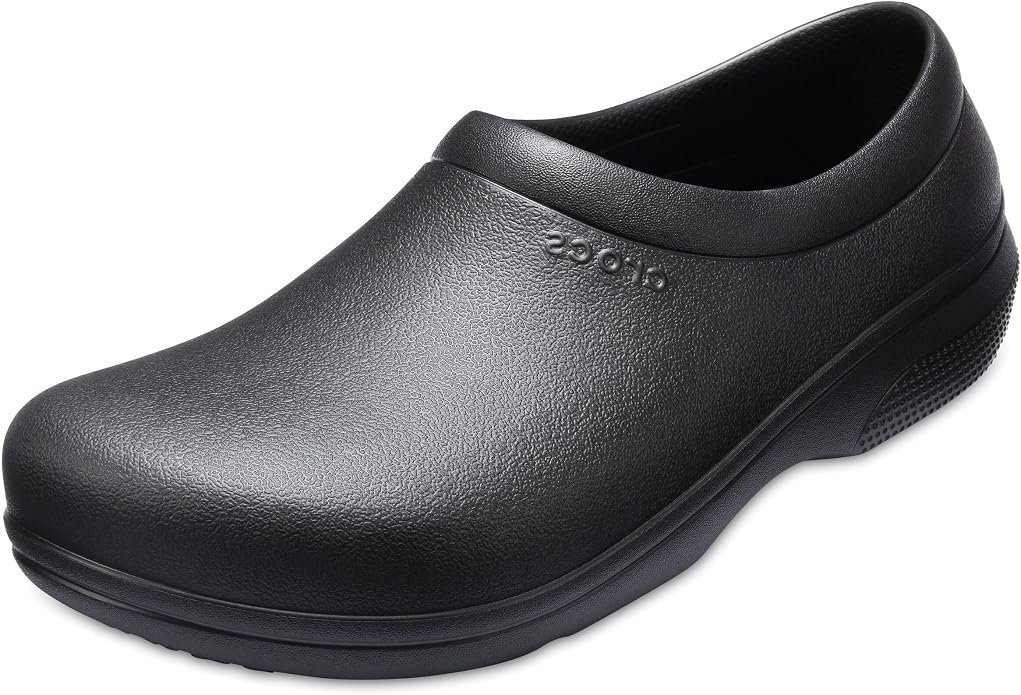 ⏱️ LONG-SHIFT PICK
A good second pair next to a sneaker. Cushioning is moderate.
🛒 Check Price on Amazon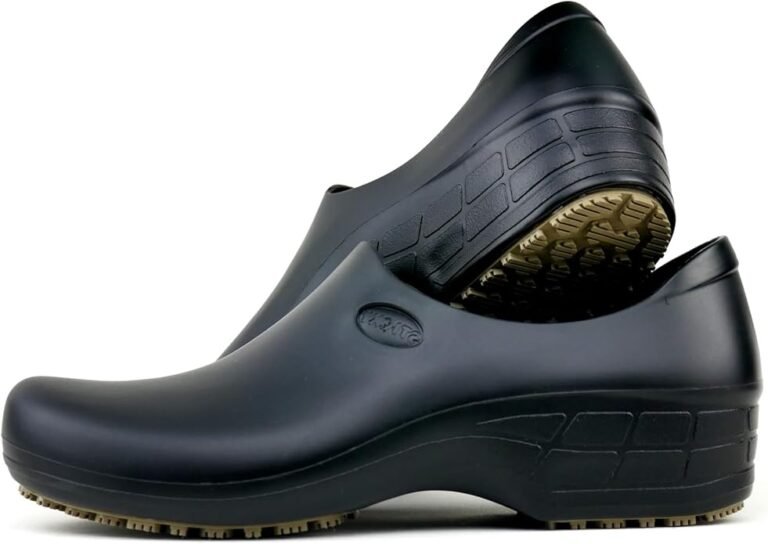 🧼 EASY-CLEAN PICK
Easy to wipe and dry. Basic cushioning, so it suits shorter stretches.
🛒 Check Price on Amazon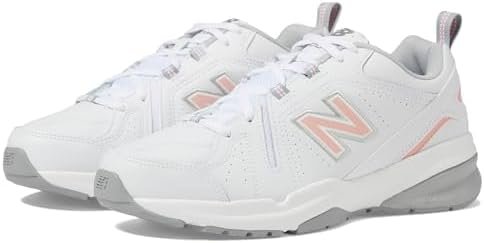 💰 BEST VALUE
Affordable lace-up. Suede needs more care and is not water resistant.
🛒 Check Price on Amazon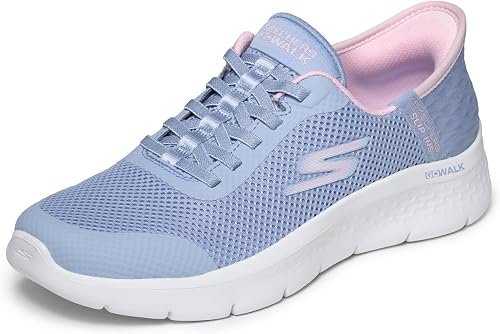 👟 BEST SLIP-ON
Washable, air-dry mesh sneaker. Not water resistant.
🛒 Check Price on Amazon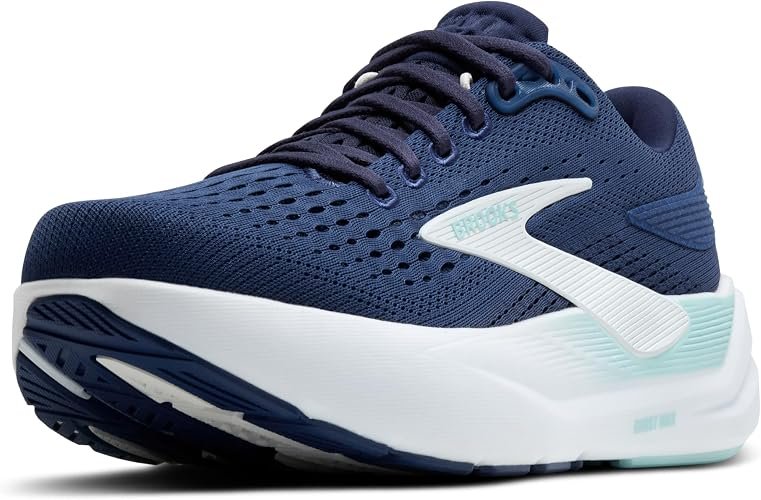 ☁️ MAX CUSHION
High-stack foam that benefits from rest days. Running-shoe design.
🛒 Check Price on Amazon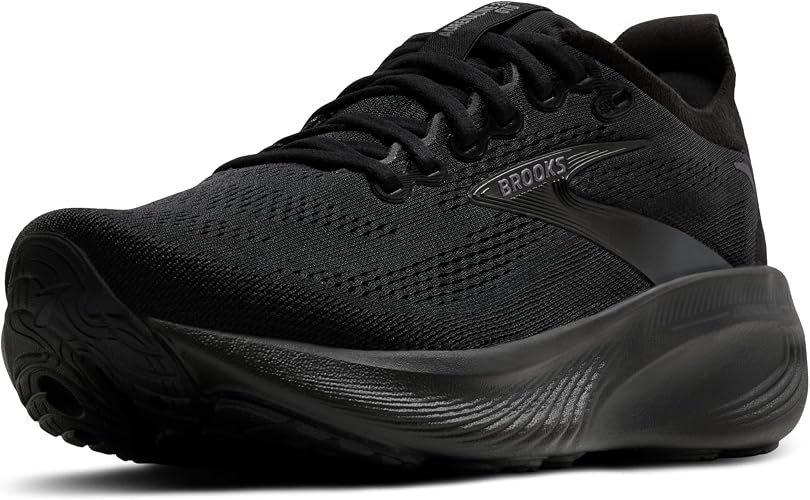 🛡️ STABILITY PICK
Men’s stability shoe. Running design, not water resistant.
🛒 Check Price on Amazon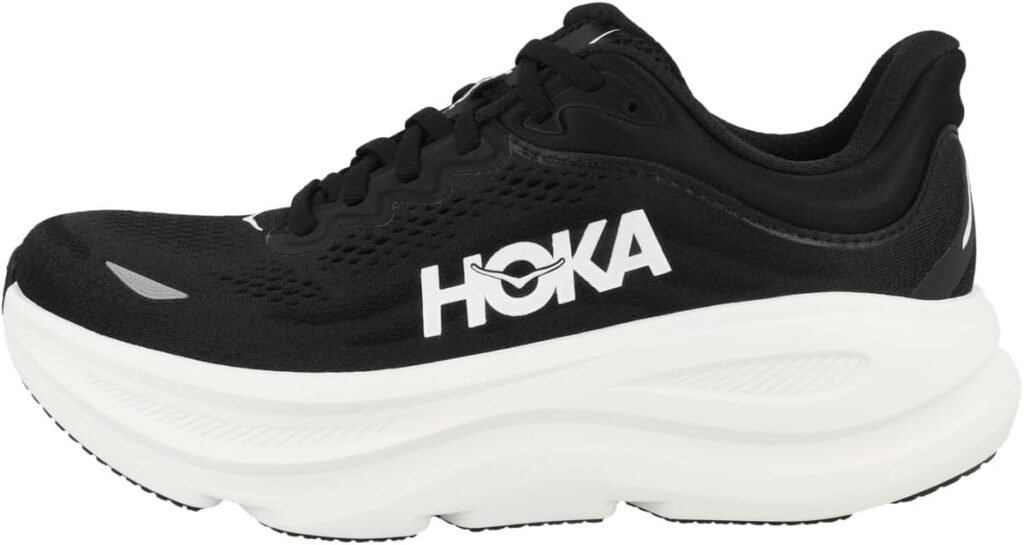 ⭐ PREMIUM CUSHION
Plush ride for dry floors. Premium price, not water resistant.
🛒 Check Price on AmazonWhy One Pair Is Rarely Enough
Picture a nurse on her third 12-hour shift in a row at a Phoenix hospital. The shoes she wore Monday are still faintly damp inside, the heel foam feels flatter than it did last month, and she cannot say whether the ache in her arch comes from the floor or the shoe. She has one pair, and no day off from it.
Shoes work hard on a nursing schedule. They take sweat, spills, cleaning sprays and long hours of load, then often go straight back on the next morning. That leaves little time for moisture to leave the lining or for foam to settle.
This guide covers what rotation does, how nursing shoes actually wear out, which signs mean replacement, how many pairs make sense for different schedules and how to care for them. It also shows nine shoes as examples. If you are choosing from scratch, start with our how to choose nursing shoes guide, then use this page to plan how many pairs to own.
What Is a Nursing Shoe Rotation Strategy?
A rotation strategy means owning more than one pair of work shoes and alternating them, so each pair gets a rest between wears. A simple version is two pairs on a three-shift week. A fuller version mixes shoe types, such as a clog for wet days and a cushioned sneaker for dry corridors.
Rotation helps in a few practical ways:
- Drying time. Sweat and splashes need hours to leave the lining and footbed.
- Foam recovery. Cushioning foam compresses under load and needs time to rebound, though how much it recovers varies by material.
- Spread of wear. Each pair sees fewer hours, so the outsole and upper wear more slowly.
- Changing pressure points. A different shoe loads the foot a little differently.
Running research has linked using more than one pair of shoes with fewer running-related injuries (Malisoux and colleagues, 2015). That study involved runners, not nurses, so treat it as supporting context rather than proof for hospital work.
How Nursing Shoes Wear Out
Different parts fail for different reasons. Knowing which part is failing tells you what to do about it.
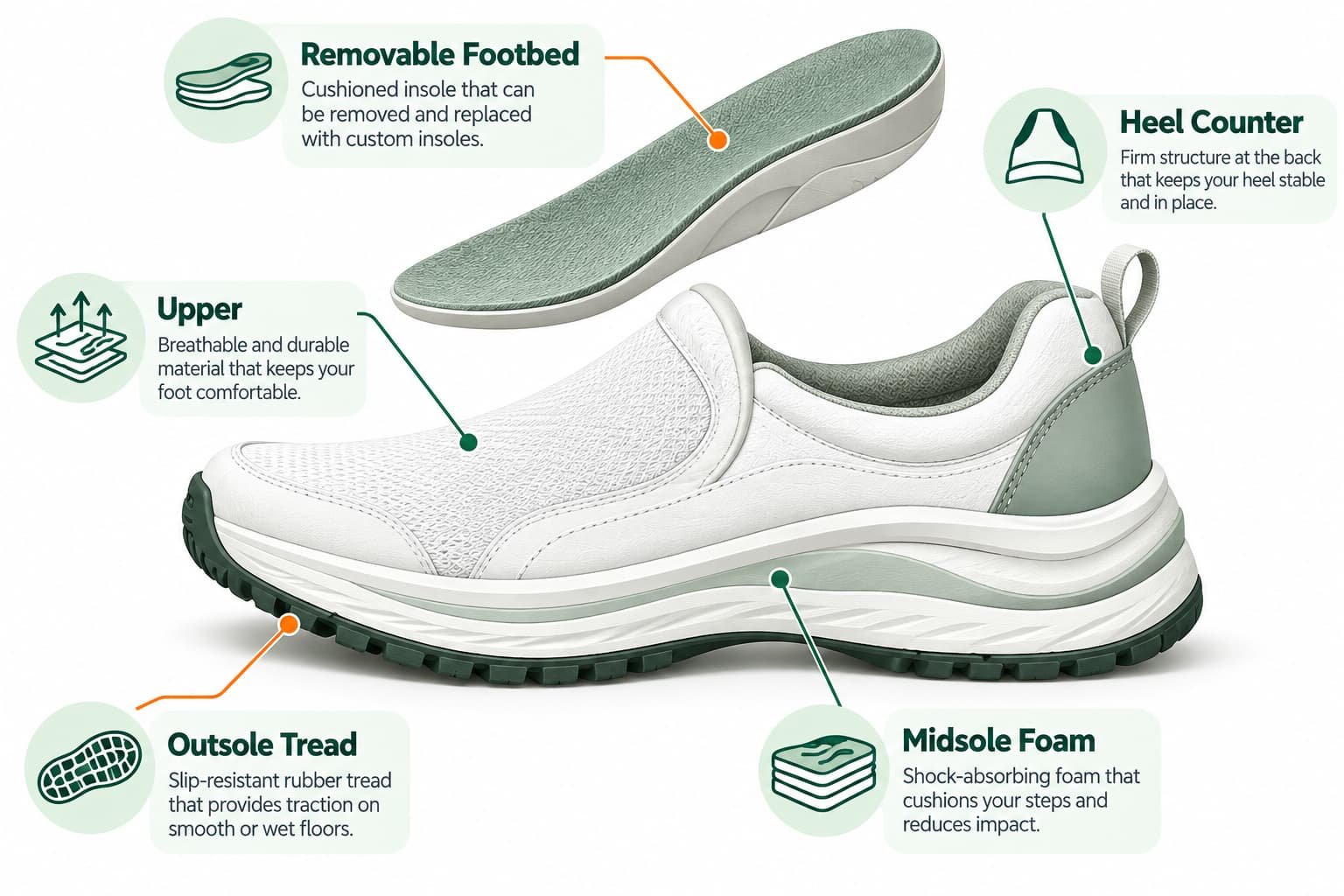
Outsole. The outsole is the bottom layer that touches the floor. Its tread pattern and rubber compound give grip, and both wear down with miles. A smooth outsole can lose grip on wet tile. The Occupational Safety and Health Administration publishes guidance on slips, trips and falls, which is a useful reminder that worn soles are one factor among floor conditions and cleanup.
Midsole. The midsole is the foam layer between the outsole and your foot. EVA, the lightweight foam used in many work shoes, compresses with use. Once it stays flat, it absorbs less impact.
Footbed or insole. This is the removable or fixed layer under your foot. It often flattens before the rest of the shoe does, which is why a fresh insole can change how a tired shoe feels. See our best insoles for nursing shoes guide for options.
Upper. The upper covers the top of the foot. Leather can crack, mesh can fray and suede can stain or scuff.
Heel counter. The heel counter is the stiff cup at the back of the shoe. When it collapses, the heel loses support and can slide.
Signs It’s Time to Replace Your Nursing Shoes
No calendar date fits every nurse. Body weight, hours per week, floor type and cleaning habits all change how fast a shoe wears. Use these signs instead.
Check both shoes, not just one.
1. The tread looks smooth or shiny
Less pattern means less grip on wet floors. Consider replacing the shoe, especially if your unit has frequent spills.
2. Cushioning feels flat by mid-shift
Press your thumb into the midsole. If it feels dead or creased, the foam has likely compressed. A new insole may help a little, but a flat midsole needs replacing.
3. One side wears faster than the other
Set the shoes on a flat table and look from behind. A heel that leans inward or outward suggests the structure has shifted.
4. The upper is cracked, split or peeling
Cracks can let moisture in and make the shoe harder to clean properly.
5. The heel counter squeezes flat
Pinch the back of the shoe. If it collapses easily, the heel may slide, which can cause blisters and toe pressure.
6. New aches that were not there before
A change in how your feet feel is a useful clue, not a diagnosis. If pain lasts, see a podiatrist rather than only swapping shoes.
If two or more of these apply, it is usually time to shop. Our best nursing shoes under $50 and best nursing shoes at $75 to $120 guides cover replacements at different budgets.

How Many Pairs Do Nurses Need?
There is no fixed answer, so treat these as starting points rather than rules.
| Your schedule | Practical starting point | Why |
|---|---|---|
| 1 to 2 shifts a week | One good pair, dried after each shift | Plenty of rest between wears already |
| 3 shifts a week, mixed days | Two pairs | Each pair gets a day or more to dry |
| 4 or more shifts, or back-to-back 12s | Two pairs, ideally a clog and a sneaker | Spreads wear and varies pressure |
| Wet, fluid-heavy unit | Two easy-clean pairs | Waterproof shoes dry faster and wipe clean |
| Pregnancy or swelling | Two pairs with different closures | Fit may change over the day or week |
For pregnancy-specific fit, see our best nursing shoes for pregnant nurses guide.
Sample Rotation Schedules
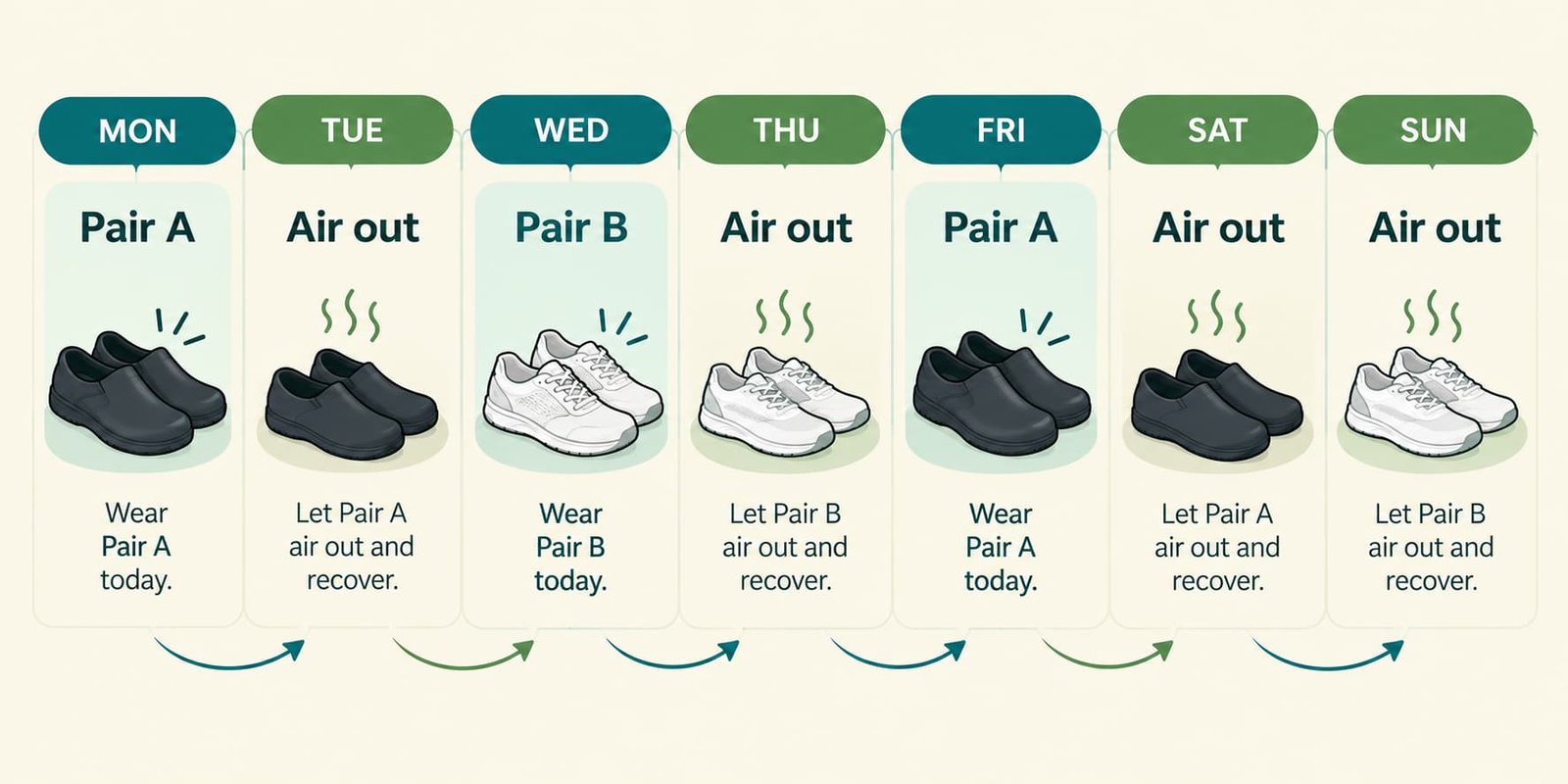
Three 12-hour shifts, one pair of each type. Wear Pair A on shift one, Pair B on shift two, Pair A on shift three. Between shifts, pull the footbed out and let the shoes air-dry.
Four shifts with a clog and a sneaker. Use the clog in procedure-heavy or wet areas and the sneaker on dry corridors, then swap on the next shift.
Long stretches of back-to-back shifts. Keep a second pair in the car or locker. If the first pair is damp, change into the dry pair after your shift rather than before the next one.
Break-In Time: What to Expect
There is no universal break-in period. Leather and suede may soften over several wears. Foam clogs and knit or mesh sneakers often feel ready quickly, though a new heel cup or rocker shape can feel different at first.
A safe approach: wear new shoes for a short stretch of a shift, then a full shift, and keep your old pair on hand. Do not push through shoes that rub or pinch, because blisters and pressure points do not usually settle on their own.
Cleaning and Drying by Material
Care depends on what the shoe is made of. Check the manufacturer’s care notes for your exact pair.
- Molded EVA or Croslite clogs. Wipe with a damp cloth or mild soap and water, then dry before the next wear. Waterproof surfaces shed fluid easily but still need to dry inside.
- Leather uppers. Wipe clean, dry away from direct heat and condition occasionally to limit cracking.
- Suede. Brush gently and avoid soaking. Suede stains and darkens with fluids, so it suits dry units better.
- Mesh and knit sneakers. Some are machine washable and air-dry. Skip the dryer, since high heat can affect foam and glue.
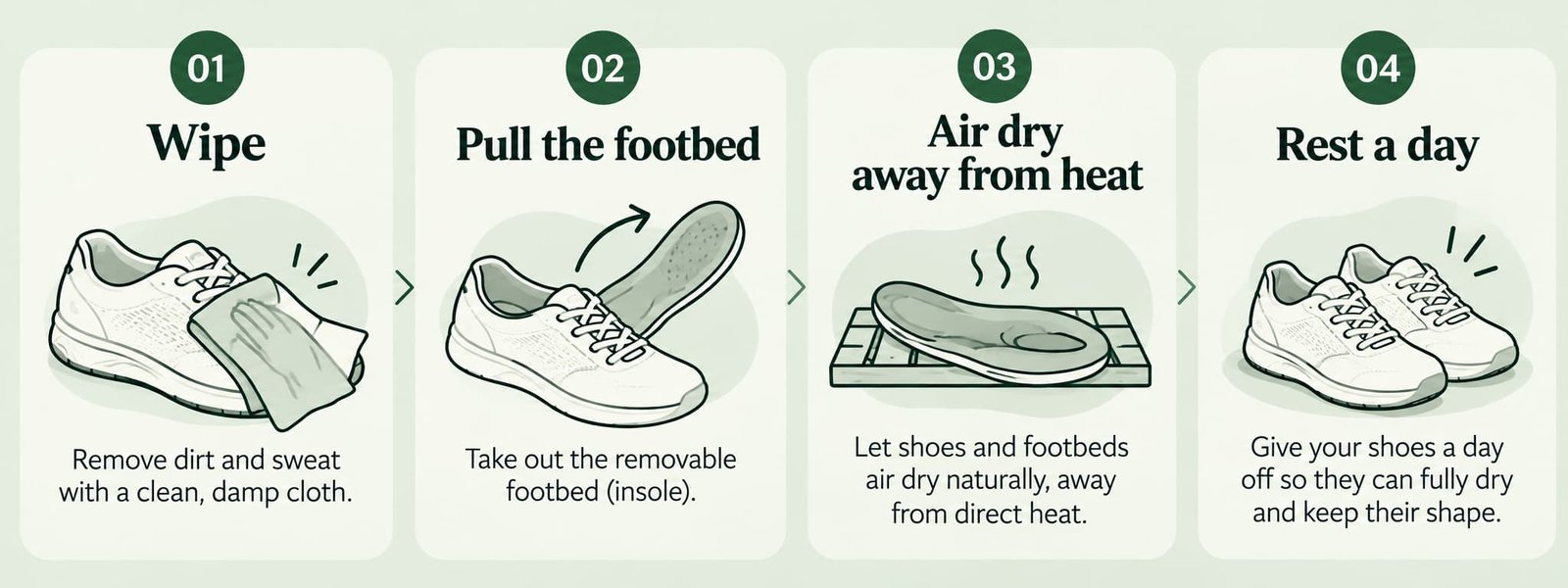
- Removable footbeds. Pull them out after every shift so the shoe and insole can both dry.
Do not use heaters or hot cars to dry shoes. Heat can warp foam and harden glue.
What to Check Before You Buy for Durability
Looking at construction before you buy can help you pick shoes that suit your schedule. No spec guarantees a long life, but these checks are useful.
- Outsole. Look for a rubber outsole with a visible tread pattern, and check whether the pattern covers the whole sole.
- Midsole foam. Dense foam holds shape differently than very soft foam, which feels plush but may flatten faster.
- Upper material. Leather, molded EVA and synthetic uppers wipe clean. Mesh breathes but absorbs more fluid.
- Removable footbed. It dries faster and lets you replace the part that flattens first.
- Heel counter. A firm heel cup keeps the foot stable and slows heel collapse.
- Cleaning needs. Match the material to how much fluid exposure you have.
- Slip resistance. A listing’s claim is a starting point. The ASTM F2913 test method, published by ASTM International, is one standard some manufacturers cite, so ask your employer which one it requires.
For the broader shopping checklist, see our how to choose nursing shoes guide.
Durability Notes on the Nine Shoes
These notes describe construction, not lifespan. None of the listings states how long a pair lasts.
- Dansko XP 2.0. Leather upper, rubber outsole, EVA midsole and a removable footbed. The footbed can be pulled out to dry or replaced. Tradeoff: premium price and a platform heel.
- Crocs Neria Pro II. Waterproof Croslite foam that wipes clean. Tradeoff: runs large, so size down.
- Crocs On The Clock. Enclosed toe and a waterproof EVA body. Tradeoff: moderate cushioning.
- Sticky Nursing Shoes. Waterproof upper, rubber outsole and a moisture-wicking insole. The listing mentions a 90-day manufacturer warranty. Tradeoff: basic cushioning.
- New Balance 608 V5. Suede upper, rubber sole, IMEVA midsole and an ABZORB heel pad. Tradeoff: suede needs more care and is not water resistant.
- Skechers Go Walk Flex Grand Entry. Mesh upper that can be machine washed and air-dried. Tradeoff: not water resistant.
- Brooks Women’s Ghost Max 3. High-stack DNA Loft v3 foam and a rubber outsole. Tradeoff: running-shoe design, and soft, tall foam is a good candidate for rest days.
- Brooks Men’s Adrenaline GTS 25. GuideRails support and a rubber outsole. Tradeoff: running design and a men’s fit.
- Hoka Women’s Bondi 9. EVA foam and an engineered mesh upper. Tradeoff: premium price and not water resistant.
Comparison Table
| Shoe | Type | Rating | Reviews | Upper | Easy to dry | Main Tradeoff |
|---|---|---|---|---|---|---|
| Dansko XP 2.0 | Clog | 4.4 | 14,757 | Leather | Removable footbed | Premium price |
| Crocs Neria Pro II | Clog | 4.0 | 24,614 | Croslite | Yes, wipes clean | Runs large |
| Crocs On The Clock | Clog | 4.3 | 35,891 | EVA | Yes, wipes clean | Moderate cushioning |
| Sticky Nursing Shoes | Clog | 4.1 | 17,056 | Waterproof synthetic | Yes, wipes clean | Basic cushioning |
| New Balance 608 V5 | Sneaker | 4.4 | 45,045 | Suede | Slower | Suede care |
| Skechers Go Walk Flex | Sneaker | 4.4 | 18,135 | Mesh | Machine washable | Not water resistant |
| Brooks Ghost Max 3 (W) | Sneaker | 4.3 | 3,222 | Mesh | Slower | Running design |
| Brooks Adrenaline GTS 25 (M) | Sneaker | 4.5 | 2,428 | Mesh | Slower | Men’s, running design |
| Hoka Bondi 9 (W) | Sneaker | 4.5 | 3,141 | Engineered mesh | Slower | Premium price |
Nursing Workplace Considerations
Footwear rules vary by employer and unit. Some require closed-toe and closed-heel shoes, some limit colors or materials, and some require slip-resistant soles in specific areas. Check your policy before you buy a second pair, so both pairs are allowed on your unit. For long standing shifts, see our best shoes for nurses who stand all day.
Plan Your Rotation
Tap the one closest to your schedule.
Three 12-hour shifts, mixed days
Two pairs. Alternate them, pull the footbeds after each shift and let both dry fully.
Back-to-back shifts, wet unit
Two wipe-clean clogs such as the Crocs Neria Pro II and On The Clock, so one is always dry.
Lots of walking, dry floors
Pair a cushioned sneaker with a structured clog, and rest the soft-foam pair between shifts.
I only want to buy one pair for now
Choose one with a removable footbed and a wipeable upper, and dry it fully after every shift.
Decision Matrix
| Need | Pick | Why |
|---|---|---|
| Structured, dryable clog | Dansko XP 2.0 | Removable footbed, leather upper |
| Wet or spill-heavy unit | Crocs Neria Pro II | Waterproof, wipe-clean |
| Easy second pair | Crocs On The Clock | Waterproof, lightweight |
| Lowest-effort cleaning | Sticky Nursing Shoes | Waterproof upper, wicking insole |
| Affordable lace-up | New Balance 608 V5 | Adjustable fit |
| Washable sneaker | Skechers Go Walk Flex | Machine washable, air dry |
| Soft cushioning | Brooks Ghost Max 3 or Hoka Bondi 9 | High-stack foam |
FAQ
How many pairs of shoes do nurses need?
Two pairs suit most nurses working three or more shifts a week, because each pair gets time to dry and recover. One pair can work for one or two shifts a week if you dry it fully after each shift.
How often should nurses replace their shoes?
There is no set schedule. Replace shoes when the tread is smooth, cushioning feels flat, the heel collapses or new aches appear. Hours worked and floor type change how fast a pair wears.
How long does a nursing shoe last?
Listings rarely state a lifespan, and wear depends on your hours, weight and cleaning habits. Judge by the wear signs in this guide rather than a date.
How long is the break-in time for nursing shoes?
It varies by material. Leather and suede may need several wears, while foam clogs and mesh sneakers often feel ready sooner. Build up wear time gradually, and stop if a shoe rubs.
Does rotating shoes really help?
It helps shoes dry and spreads wear. Some running research links multiple pairs with fewer injuries, but it involved runners, so treat it as supporting context.
Can I wash my nursing shoes in the washing machine?
Only if the manufacturer says so. Some mesh sneakers are machine washable and air-dry. Avoid heat, and wipe leather and molded clogs by hand.
How do I dry nursing shoes between shifts?
Pull out the footbed, open the shoe and let it air-dry away from heaters. Wipe the outside first if it is soiled.
Do insoles extend the life of nursing shoes?
They can restore comfort when a footbed flattens, but they do not fix a worn outsole or collapsed midsole. See our best insoles for nursing shoes guide.
Is it worth paying more for a durable shoe?
Not always. Match the shoe to your floor and schedule, and compare tradeoffs rather than price alone.
What causes uneven shoe wear?
Walking pattern, floor type and fit all play a part. Persistent uneven wear or pain is worth discussing with a podiatrist. The AAOS OrthoInfo site has patient information on common foot problems.
Expert Tips
- Mark your first wear date inside the tongue or footbed to track how long a pair has been in use.
- Pull footbeds after every shift, even when the shoe looks dry.
- Rotate by condition, not just by day. Use the wipe-clean pair on messy shifts.
- Check the outsole monthly by turning the shoe over under good light.
- Replace the insole first if only the cushioning feels flat.
- Keep a dry spare in your locker or car.
Final Verdict
- For a structured clog that dries easily, choose the Dansko XP 2.0.
- For wet or spill-heavy units, choose the Crocs Neria Pro II or On The Clock.
- For an easy-clean budget pair, choose Sticky Nursing Shoes.
- For a washable sneaker, choose the Skechers Go Walk Flex Grand Entry.
- For soft cushioning on dry floors, choose the Brooks Ghost Max 3 or Hoka Bondi 9.
The best durability strategy is two pairs, dried well, replaced when wear signs appear. For a complete overview of your options, read our best shoes for nurses pillar guide.
How We Evaluate Shoes
At UrbanStyleFootwear, our product evaluations combine manufacturer specifications, verified retailer and Amazon listing data, customer feedback, review patterns, and footwear-specific research. We assess shoes across factors such as comfort, fit, cushioning, support, materials, durability, traction, design, and overall value, using multiple sources to provide balanced, practical, and buyer-focused recommendations.
Affiliate Disclosure
Some links on this page are affiliate links. If you purchase through them, Urban Style Footwear may earn a commission at no additional cost to you. Our recommendations are based on the product information, footwear characteristics, and buying criteria discussed in this guide, not on the size of the commission.