
Best Shoes for Nurses with Flat Feet (2026 Arch Support Guide)
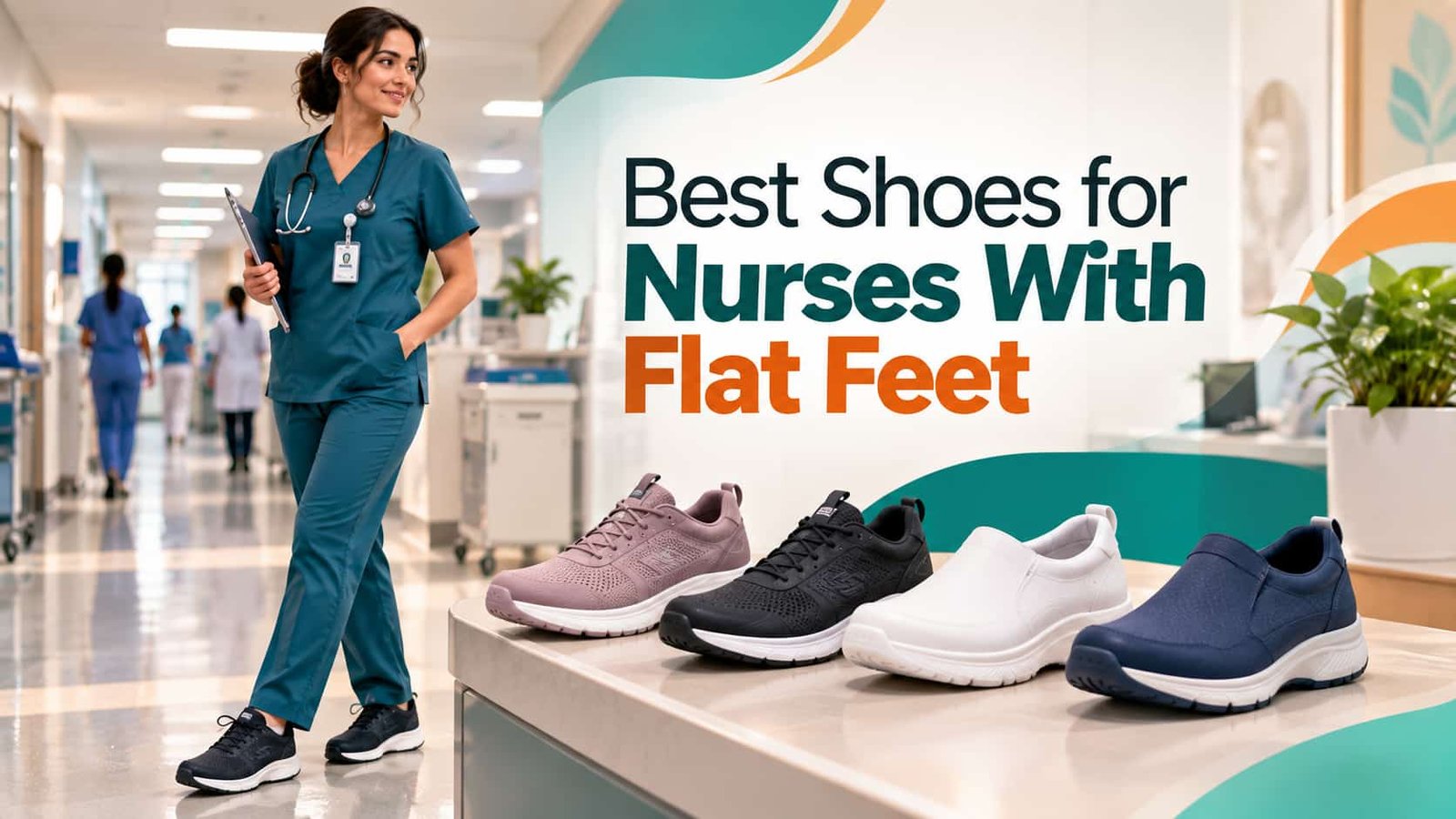
The best shoes for nurses with flat feet combine structured arch support, a firm heel counter, and a stable midsole that resists collapsing inward during long shifts on hard flooring. Options like the Skechers Arch Fit Arcada Arcata and the OrthoComfoot Orthopedic Loafers build support directly into the insole, while zero-drop or barefoot-style shoes are generally a poor match for flat feet needing structural correction.
A telemetry nurse in Denver working a 12-hour rotation might feel her arches ache by the third hour, not because her shoes are worn out, but because they were never built to control overpronation in the first place. Flat feet, sometimes called pes planus, means the arch flattens under load, and according to MedlinePlus, the arch may never fully form in some adults even though most people develop one in childhood.
Regular sneakers built for a neutral arch do very little for a foot that rolls inward with every step. Nurses with flat feet need a shoe with a firm heel counter, a supportive midsole, and either built-in arch support or enough depth to accept a custom orthotic. This guide reviews nine women’s options with verified Amazon data, explains which construction features actually matter for overpronation, and is honest about which shoes on this list are not a good fit despite decent reviews. For a broader look at nursing footwear overall, our main guide to the best shoes for nurses covers every category, and if you already use custom orthotic inserts, our guide to custom orthotics for nursing shoes explains which shoe depths and removable insoles accommodate them best.
Top 5 Picks for Nurses With Flat Feet
Practical options based on arch support, cushioning, fit and nursing-friendly features.
More Options to Consider
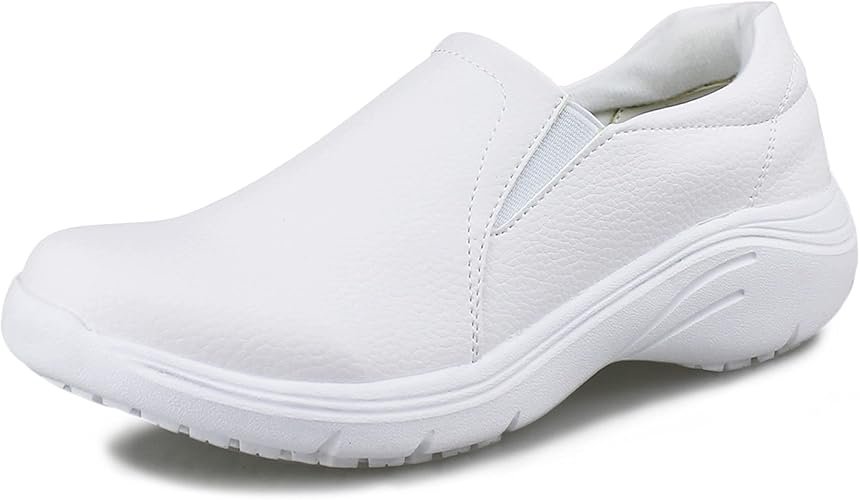
Hawkwell Slip-On Nursing Shoe
A pull-on nursing shoe with soft foam padding, slip-resistant construction and an easy-clean synthetic upper.
Check Price on Amazon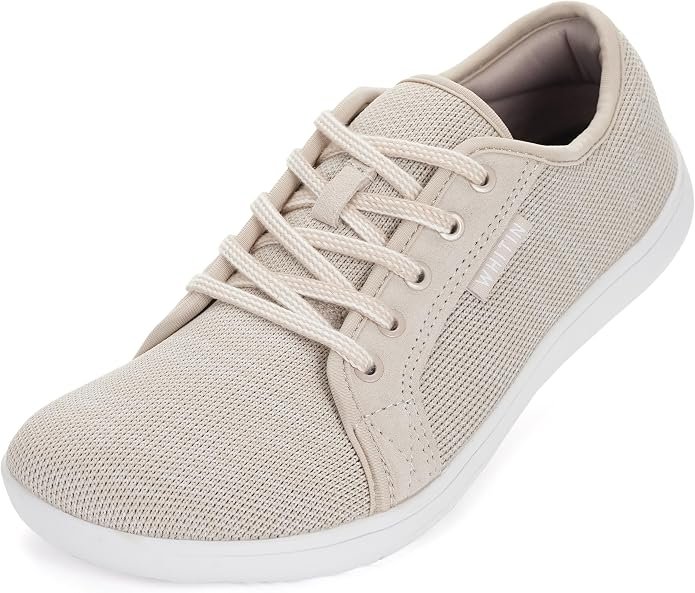
WHITIN Barefoot Zero Drop Sneakers
A minimalist shoe with a wide toe box, zero-drop platform and flexible low-to-ground construction.
Check Price on Amazon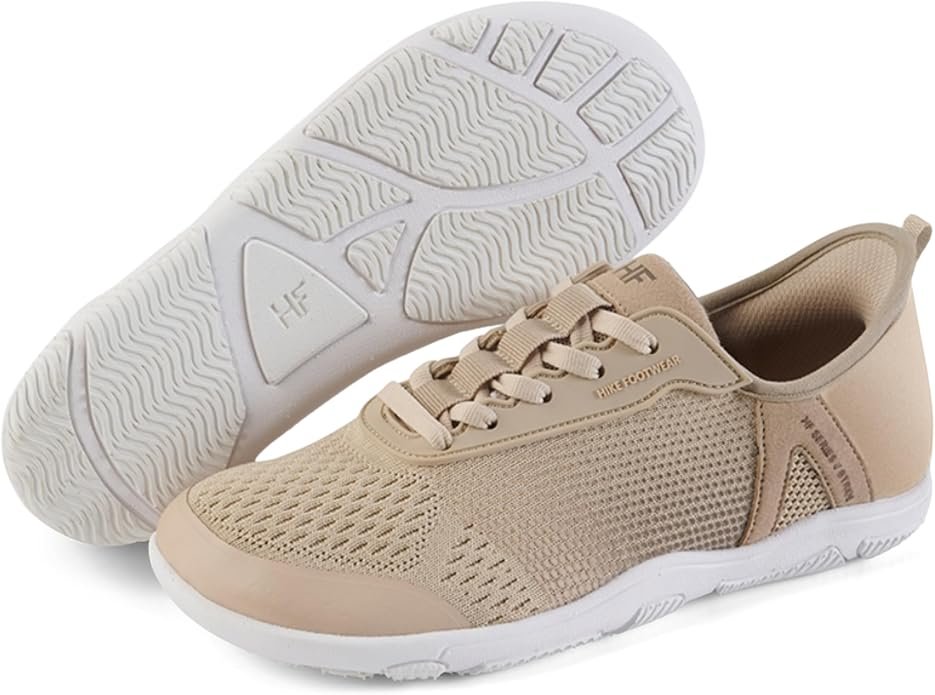
Hike Footwear HF Stride
A lightweight zero-drop option with a wide toe box, breathable construction and moisture-resistant design.
Check Price on Amazon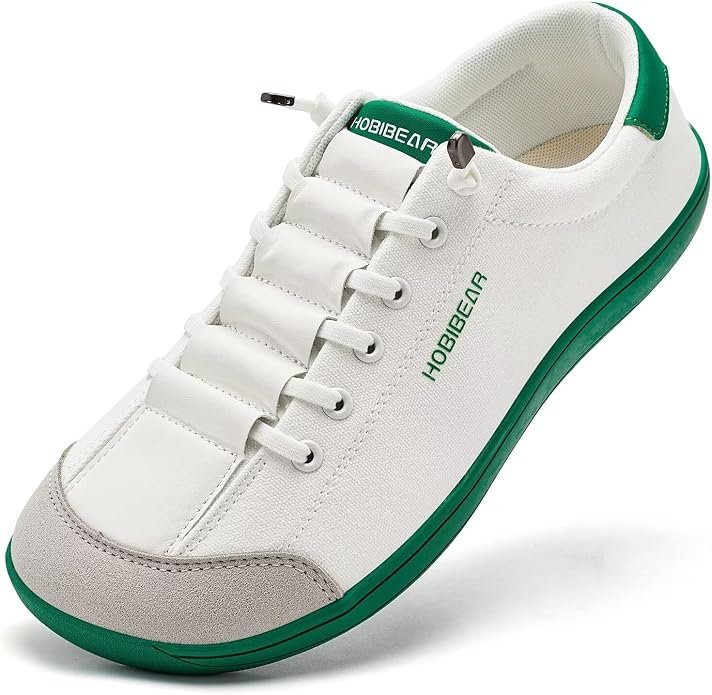
HOBIBEAR Barefoot Minimalist Shoes
A lightweight minimalist option with a flexible non-slip rubber sole and laceless pull-on design.
Check Price on AmazonWhat Makes a Shoe Work for Flat Feet?
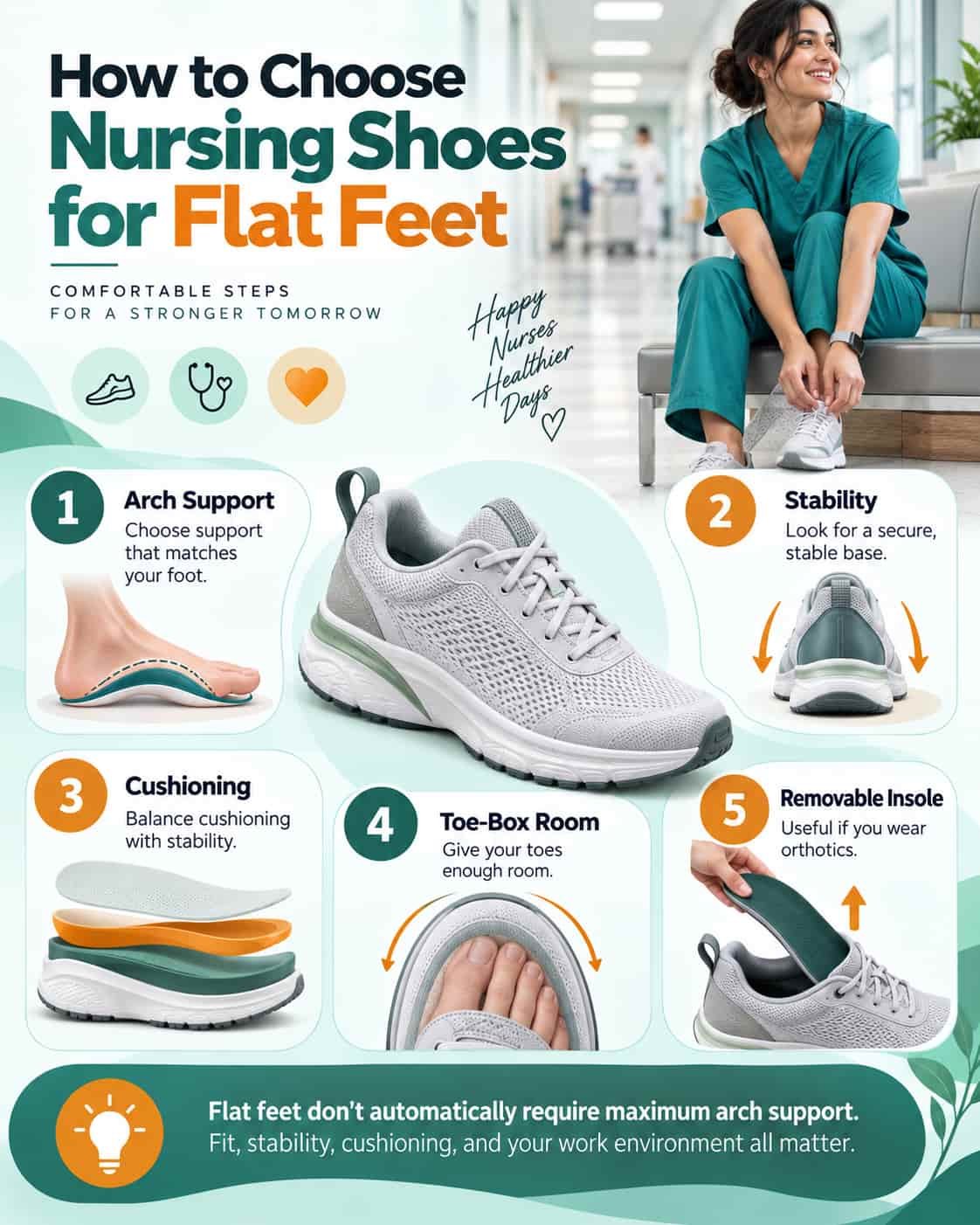
A flat-feet-friendly nursing shoe is built to control the inward roll of the foot, called overpronation, rather than letting the arch collapse further with each step. That control comes from a firm heel counter, the structured cup around the back of the shoe that keeps the heel bone aligned, combined with a midsole dense enough to resist compressing unevenly under the arch.
This is different from ordinary comfort footwear, which is usually built around a neutral arch profile. A shoe with a removable insole and enough internal depth to fit a custom or over-the-counter orthotic gives you the option to correct for flat feet directly, which matters more for this group of nurses than raw cushioning volume alone.
Why Does Arch Support Matter for Nurses with Flat Feet?
Nurses with flat feet who spend 8 to 12 hours walking hospital corridors and standing at bedsides put repeated stress through an arch that has little natural shock absorption left to give. Without structural support, that stress transfers upward into the ankles, knees, and lower back over the course of a shift.
Nurses who spend most of a shift standing in one place experience this differently from nurses who log high step counts, since standing static load and walking load stress the arch in different ways. Our guide to the best shoes for nurses who stand all day covers the standing-specific side of this in more depth.
Hospital flooring, typically hard vinyl tile over concrete, offers no give to compensate for a collapsed arch, and wet or oily patches from spills add slip risk on top of the fatigue. A shoe built with genuine arch support reduces how much that impact travels upward, which is a meaningfully different job than a shoe that is simply well cushioned.
💡 Expert Tip
From 20-plus years fitting work footwear, the mistake we see most often with flat feet is buying based on cushioning level alone. A shoe can feel plush in the store and still let the arch collapse by hour six, because soft foam and structural arch support are two different things entirely.
What Should Nurses with Flat Feet Look For?
Arch Support Construction
Arch support comes from a firm insert, often built from TPU or a dense EVA compound, shaped to fill the space under the arch and prevent it from flattening further. Skechers’ Arch Fit system, used in the Arch Fit Arcada Arcata below, is one of the more data-backed examples, built from a large set of podiatrist-reviewed foot scans according to the product listing.
Who needs it most: Nurses with moderate to significant flat feet or diagnosed overpronation. Tradeoff: Firmer arch support can feel rigid at first compared with a soft, unstructured shoe.
Stability and Motion Control
Stability construction refers to features like a wider base, raised sidewalls, or a firmer medial midsole that resist the inward roll of the foot during the walking gait cycle. This is distinct from cushioning level, which only measures how soft the shoe feels underfoot.
Who needs it most: Nurses whose flat feet cause visible inward ankle roll or knee discomfort. Tradeoff: Stability-focused shoes are usually heavier than a minimal, flexible shoe.
Orthotic Compatibility
A removable factory insole and enough internal shoe depth let you swap in a custom orthotic without the shoe feeling cramped. Nurses managing more advanced or diagnosed flat foot conditions may want a fitted device rather than an over-the-counter insert, and our guide to custom orthotics for nursing shoes walks through that decision in more detail. If you are shopping for a standalone insert instead of a full shoe, see our roundup of the best insoles for nursing shoes.
Who needs it most: Nurses with a podiatrist-prescribed custom orthotic. Tradeoff: Shoes deep enough for orthotics sometimes run larger or bulkier in appearance.
Fit and Width
Flat feet often come with a wider forefoot spread under load, so a shoe with a generous toe box avoids pinching that compounds arch fatigue with pressure pain. Nurses with wide feet specifically may want to cross-reference our guide to the best shoes for nurses with wide feet, and those managing bunions alongside flat feet should see our guide to the best nursing shoes for bunions.
Who needs it most: Nurses whose flat feet cause visible forefoot widening by end of shift. Tradeoff: A wider fit can reduce the locked-in feel some nurses prefer.
⚠ Common Mistake
A common issue we notice is nurses with flat feet reaching for zero-drop or barefoot-style shoes because they are marketed as good for foot health generally. These shoes are built to minimize structure, which works against a foot that needs more support, not less. Some podiatric perspectives support minimalist footwear as part of a gradual foot-strengthening program under professional guidance, but it is not a substitute for structured arch support during long working shifts.
Nursing Workplace Considerations
Dress codes and flooring vary by employer, and some units require closed-heel, closed-toe footwear for infection control, which rules out backless clogs regardless of their arch support quality. Always verify your specific unit’s footwear policy before ordering.
- ICU and ER: Fast pivots and long walking distances put extra load on a collapsing arch, making stability construction especially important.
- OR: Long static standing periods stress the arch differently than walking, favoring a firm, well-cushioned midsole.
- Outpatient clinics: Lower fluid exposure allows more flexibility in choosing a structured athletic sneaker.
- Long-term care: High step counts across large facilities make orthotic-compatible shoes worth the investment.
🦶 Which Pick Fits Your Shift?
Select your top priority and we’ll point you to the best match from this list.
Product Reviews
Skechers Arch Fit Arcada Arcata
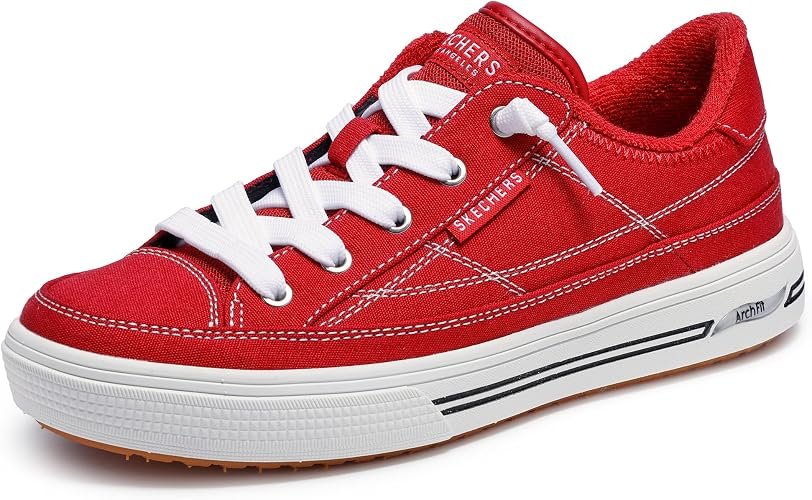
Best For: Nurses who want built-in arch support without adding a separate insert.
Why It Works: The Arch Fit insole system is developed from a large set of podiatrist-reviewed foot scans according to the listing, and the removable insole molds to individual foot shape over time.
Expert Analysis: Based on the supplied specifications, this is the most purpose-built arch support shoe on this list, combining a canvas upper with a lightweight cushioned midsole.
Pros:
- Podiatrist-certified arch support system
- Slip-on convenience with a secured fit
- Vegan-friendly construction
Cons:
- Not water resistant
- Higher price point than several other options here
Main Tradeoff: The price sits above the budget picks on this list, but the dedicated arch support system is hard to match with an aftermarket insert alone.
Who Should Buy: Nurses who want arch support engineered into the shoe from the start.
Who Should Skip: Nurses who already own a preferred custom orthotic and just need a compatible shell.
Verdict: The strongest all-around pick specifically for flat feet on this list.
IIV Orthotic Arch Support Sneaker
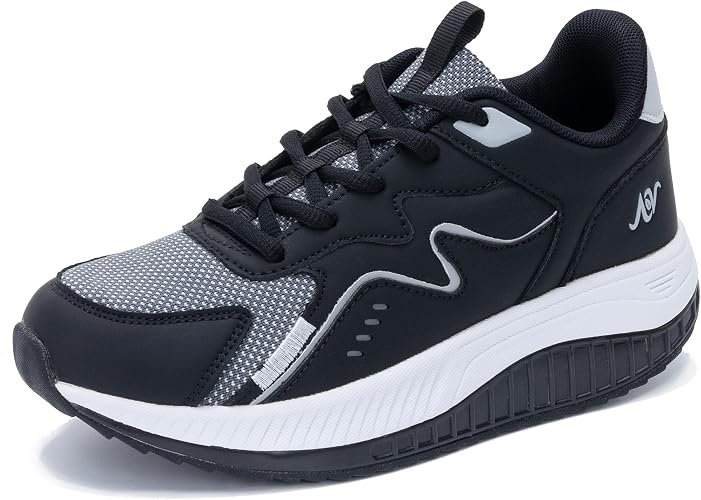
Best For: Nurses who want adjustable, positionable arch support.
Why It Works: The adhesive-backed arch pads let you place extra support exactly where your arch needs it, and the removable insole allows a personal orthotic if the included support is not enough.
Expert Analysis: Based on the supplied data, this model is marketed specifically toward plantar fasciitis, flat feet, and pronation-related problems rather than general comfort.
Pros:
- Adhesive arch pads for customized placement
- Removable insole compatible with personal orthotics
- Anti-slip rubber outsole
Cons:
- Not water resistant
- Lower review count than the other top picks here
Main Tradeoff: The moderate cushioning level means this leans more toward correction than plush comfort, a fair tradeoff for nurses prioritizing arch control.
Who Should Buy: Nurses who want to fine-tune arch pad placement themselves.
Who Should Skip: Nurses who prefer a shoe with support built permanently into the midsole.
Verdict: A practical, adjustable arch support option at a mid-range price.
OrthoComfoot Orthopedic Loafers
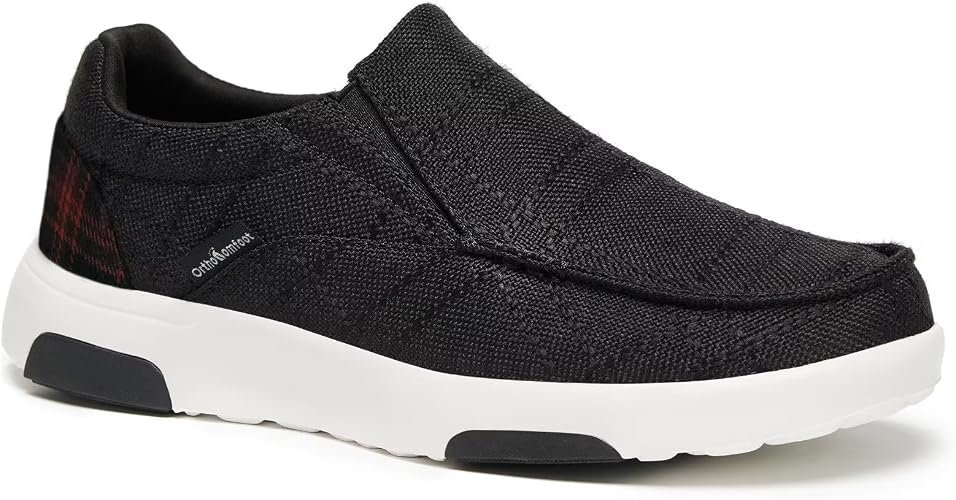
Best For: Nurses who need a firm, medical-style arch support insert.
Why It Works: The hard TPU arch support layer combined with a PU memory foam cushioning layer is built specifically to ease pressure for flat feet and high arches alike, according to the listing.
Expert Analysis: The included second pair of lower-support insoles is a useful detail for nurses who want to adjust support intensity as their feet adapt.
Pros:
- Firm TPU arch support insole
- Metatarsal pad reduces forefoot pressure
- Extra insole pair included for adjustable support
Cons:
- Lowest star rating among the top picks on this list
- Canvas upper is less durable than leather alternatives
Main Tradeoff: The 3.9 rating is the softest spot on this shoe’s profile, though the arch support construction itself is genuinely purpose-built.
Who Should Buy: Nurses who want a firm, structured arch support insert with adjustable intensity.
Who Should Skip: Nurses prioritizing top-tier review consistency above construction specifics.
Verdict: A support-focused loafer worth considering despite the more mixed rating.
Scurtain Wide Width Diabetic Shoes
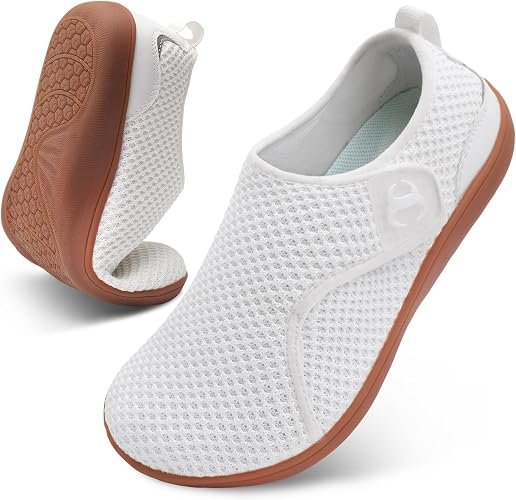
Best For: Nurses managing swelling, edema, or wide feet alongside a mild flat foot.
Why It Works: The adjustable hook and loop straps accommodate foot volume changes through a shift, and the wide toe design gives room for feet that spread under load.
Expert Analysis: This is a zero-drop, non-elevated sole, which means it does not provide structured arch correction the way the Arch Fit or OrthoComfoot models do.
Pros:
- Very low price with a genuine 36 percent discount
- Adjustable straps for changing foot volume
- Wide toe box eases bunion and swelling pressure
Cons:
- Zero-drop sole skips built-in arch correction
- Moderate cushioning only
Main Tradeoff: The price is the lowest on this list by a wide margin, but nurses with more significant flat feet will likely still need a separate arch support insert added.
Who Should Buy: Nurses whose primary concern is swelling and width rather than deep arch correction.
Who Should Skip: Nurses with pronounced overpronation needing structural support.
Verdict: A genuinely useful budget pick for swelling and width, paired with an aftermarket insert if arch support is also needed.
Skechers UNO Stand on Air
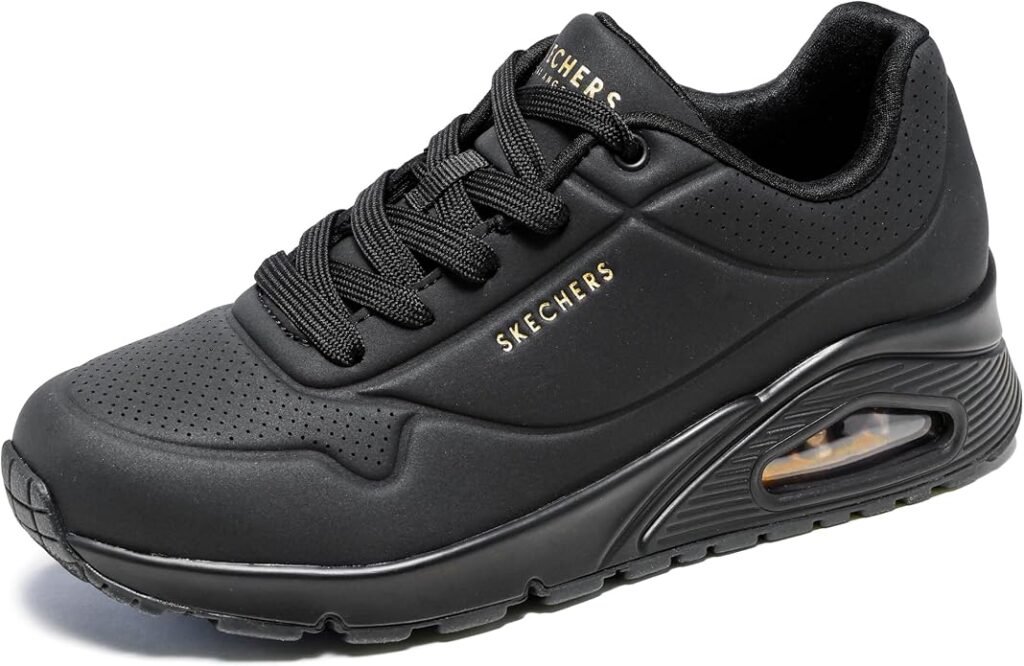
Best For: Nurses who want a casual sneaker and plan to add their own arch insert.
Why It Works: The Air-Cooled Memory Foam insole and visible air-cushioned midsole deliver moderate to maximum cushioning, and the lace-up closure gives an adjustable fit.
Expert Analysis: The listing states a neutral arch design, meaning this shoe is not built specifically for flat feet, though its removable-style comfort insole and roomy fit make it workable with an added orthotic.
Pros:
- Very strong review volume at over 59,000 ratings
- Currently discounted 16 percent off
- Adjustable lace-up fit
Cons:
- Neutral arch design, not built for flat feet specifically
- Not water resistant
Main Tradeoff: The casual styling and popularity come without a purpose-built arch system, so nurses with more than mild flat feet should expect to add their own insert.
Who Should Buy: Nurses who want a well-reviewed everyday sneaker and are comfortable adding an orthotic.
Who Should Skip: Nurses who want arch support built in without extra steps.
Verdict: A solid casual option once paired with a supportive insert.
Hawkwell Slip-On Nursing Shoe
Best For: Nurses who need a fast-cleaning shoe and are pairing it with a separate arch support insert.
Why It Works: The synthetic leather upper wipes clean with soap and water according to the listing, and the pull-on design makes for quick shift changes.
Expert Analysis: The listing notes sizing runs large for most sizes, and the arch design is described as neutral, so this functions better as a cleanable shell than a dedicated arch support shoe.
Pros:
- Easy to wipe clean synthetic leather upper
- Quick pull-on, pull-off design
- Water resistant rating
Cons:
- Neutral arch design, no built-in flat feet support
- Sizing runs large per the listing, order down accordingly
Main Tradeoff: The cleaning convenience is genuinely useful for fluid-heavy shifts, but arch support has to be added separately.
Who Should Buy: Nurses prioritizing quick cleaning who already use their own orthotic insert.
Who Should Skip: Nurses wanting arch support out of the box.
Verdict: A practical, wipeable shell best combined with your own insole.
WHITIN Barefoot Zero Drop Sneakers
Best For: Nurses gradually working on foot strengthening under professional guidance, not for structured flat foot correction.
Why It Works: The wide toe box and knitted upper give the foot room to move naturally, and the zero-drop sole keeps heel and forefoot level.
Expert Analysis: The cushioning level is listed as minimal and the construction is explicitly barefoot-style, which works against the structural support most flat feet need for long shifts.
Pros:
- Currently the lowest price in 30 days per the listing
- Wide toe box
- Lightweight, breathable knit upper
Cons:
- Minimal cushioning, no structured arch support
- Not built for correcting overpronation
Main Tradeoff: This shoe is built around minimal intervention, the opposite of what most flat feet need for a long shift, so we cannot recommend it as a primary nursing shoe for this specific need.
Who Should Buy: Nurses specifically pursuing gradual foot-strengthening under a professional’s guidance.
Who Should Skip: Nurses needing structured arch support during active shifts.
Verdict: Not a top pick for flat feet, better suited to a different use case entirely.
Hike Footwear HF Stride
Best For: Nurses without flat feet seeking a lightweight, hands-off slip-on for casual wear.
Why It Works: The hands-off entry and zero-drop sole are marketed around natural stride and posture rather than corrective support.
Expert Analysis: Cushioning is listed as minimal, and the construction is a unisex barefoot design, which is not suited to nurses who need structured flat foot correction.
Pros:
- Hands-off, laceless entry
- Lightweight and breathable
- Structured heel cup per the listing
Cons:
- Minimal cushioning, no arch correction
- Sizing runs small per the listing, order up accordingly
Main Tradeoff: The barefoot construction prioritizes natural movement over structured support, which is not the right tradeoff for most nurses managing flat feet.
Who Should Buy: Nurses without significant flat feet who want a light, easy on-off shoe.
Who Should Skip: Nurses needing arch correction for active shifts.
Verdict: A reasonable general shoe, not a flat feet recommendation.
HOBIBEAR Barefoot Minimalist Shoes
Best For: Nurses wanting a minimal, low-cost casual shoe outside of shift hours.
Why It Works: The canvas upper and laceless slip-on design are lightweight and simple, per the supplied listing.
Expert Analysis: Cushioning is listed as minimal to none, and there is no arch support or stability construction described in the specifications, making this the least suited shoe on this list for flat feet during a working shift.
Pros:
- Lowest price point among the barefoot-style options here
- Lightweight canvas construction
- Laceless slip-on convenience
Cons:
- No arch support or cushioning structure
- Not built for medical or long-shift use
Main Tradeoff: The minimal build keeps the price low but offers essentially nothing toward correcting or supporting a flat arch.
Who Should Buy: Nurses wanting an off-shift casual shoe only.
Who Should Skip: Any nurse shopping specifically for flat feet support during work hours.
Verdict: Included for completeness, not recommended as a flat feet nursing shoe.
Main Comparison Table
| Product | Price | Rating | Reviews | Best For | Key Feature | Main Tradeoff |
|---|---|---|---|---|---|---|
| Skechers Arch Fit Arcata | $68.85 | 4.4 | 3,552 | Built-in arch support | Podiatrist-certified insole | Higher price |
| IIV Orthotic Sneaker | $52.99 | 4.2 | 1,287 | Adjustable arch support | Positionable arch pads | Lower review count |
| OrthoComfoot Loafers | $59.50 | 3.9 | 4,499 | Firm arch insert | TPU arch support layer | Lower star rating |
| Scurtain Diabetic Shoes | $23.74 | 4.2 | 3,872 | Budget, swelling, width | Adjustable wide straps | No structured arch support |
| Skechers UNO Stand on Air | $58.99 | 4.4 | 59,067 | Casual sneaker | Air-cushioned midsole | Neutral arch design |
| Hawkwell Slip-On | $49.99 | 4.1 | 2,769 | Easy cleaning | Wipeable leather upper | Neutral arch design |
| WHITIN Barefoot Zero Drop | $39.55 | 4.3 | 9,008 | Gradual strengthening only | Wide toe box | No arch support |
| Hike Footwear HF Stride | $69.95 | 4.1 | 2,381 | Light, casual off-shift use | Hands-off entry | No arch support |
| HOBIBEAR Minimalist | $39.99 | 4.3 | 2,320 | Off-shift casual only | Lowest barefoot-style price | No arch support at all |
Decision Matrix
| Nursing Need | Recommended Product | Why |
|---|---|---|
| Maximum built-in arch support | Skechers Arch Fit Arcada Arcata | Podiatrist-certified insole system |
| Adjustable, positionable support | IIV Orthotic Arch Support Sneaker | Movable adhesive arch pads |
| Custom orthotic compatibility | OrthoComfoot Orthopedic Loafers | Removable insole, extra depth |
| Swelling, edema, or wide feet | Scurtain Wide Width Diabetic Shoes | Adjustable straps, wide toe box |
| Casual sneaker with your own insert | Skechers UNO Stand on Air | Roomy, adjustable lace-up fit |
| Fastest cleaning after fluid exposure | Hawkwell Slip-On Nursing Shoe | Wipeable synthetic leather upper |
📌 Quick Reminder
Arch Type listed as neutral on a product page means the shoe was built for a neutral foot, not a flat one. A neutral shoe is not automatically wrong for flat feet, but it usually needs a separate orthotic insert to do the job a purpose-built arch support shoe already does.
How to Choose Shoes for Flat Feet
Start by identifying whether your flat feet are flexible, meaning the arch appears when off the ground but flattens under weight, or rigid, meaning there is no visible arch at all in any position. A podiatrist can confirm which type you have, and that distinction affects how much correction a shoe alone can realistically provide.
- Confirm whether your flat feet are flexible or rigid with a podiatrist if you have not already.
- Decide whether you want arch support built into the shoe or plan to add your own orthotic.
- Check for a firm heel counter and stable midsole, not just soft cushioning.
- Avoid zero-drop or barefoot-style shoes unless specifically pursuing a gradual strengthening program.
- Measure your foot later in the day when swelling is at its peak.
- Confirm your unit’s dress code before ordering a specific style.
Frequently Asked Questions
What are the best shoes for nurses with flat feet?
Shoes with a firm heel counter, structured arch support, and a stable midsole work best for flat feet. The Skechers Arch Fit Arcada Arcata and OrthoComfoot Orthopedic Loafers on this list both build arch support directly into the insole.
Are zero-drop or barefoot shoes bad for flat feet?
For most nurses working active shifts, yes. Zero-drop and barefoot-style shoes are built to minimize structure, which works against a foot that needs more support. Some podiatric guidance allows minimalist shoes as part of a gradual strengthening program, but not as a primary work shoe.
Do I need a custom orthotic if I have flat feet?
Not always. Mild flat feet often respond well to a shoe with built-in arch support or an over-the-counter insert. More pronounced or rigid flat feet, especially with pain, may benefit from a podiatrist-fitted custom orthotic.
Can regular running shoes work for flat feet?
Some can, if they are specifically built with a stability or motion-control construction rather than a neutral one. Check the listed arch type before assuming a running shoe will help with overpronation.
How should shoes for flat feet fit?
The arch support should sit directly under your natural arch without gapping or pressing awkwardly, and there should still be roughly a thumb’s width of room at the longest toe. A shoe that pinches to compensate for support is the wrong size, not the right level of correction.
Do flat feet cause more foot pain during nursing shifts?
They can, since a collapsed arch offers less natural shock absorption during long periods of standing and walking. Symptoms in adults commonly include tired or achy feet after extended time on your feet, according to MedlinePlus.
Should nurses with flat feet buy wide shoes?
Only if the forefoot noticeably widens under load, which is common but not universal with flat feet. Try your usual width first and size up in width only if you notice pinching.
How much arch support is too much?
If a shoe’s arch support creates pressure or discomfort rather than relief, it is likely too aggressive for your specific foot shape. Adjustable arch pads, like the ones on the IIV sneaker, let you dial in the right amount gradually.
Are expensive arch support shoes worth it for nurses?
It depends on how significant your flat feet are. A dedicated system like Skechers Arch Fit is worth the price if you need daily structured support, while a budget option paired with a separate insert can work adequately for milder cases.
How often should nurses with flat feet replace their shoes?
There is no universal schedule, since it depends on shift frequency and flooring conditions. Watch for a compressed or flattened arch support insert and visibly worn tread as signs it is time to replace the pair.
Can flat feet get worse from the wrong shoes?
Unsupportive footwear will not cause flat feet on its own, but it can make existing symptoms like foot, ankle, and lower leg fatigue worse over a long shift. Structured support is about managing symptoms, not reversing the underlying foot shape.
What is overpronation and how does it relate to flat feet?
Overpronation is the excessive inward roll of the foot and ankle during walking, and it commonly occurs alongside flat feet since there is less arch structure to control the motion. Stability-focused shoes are built specifically to reduce this inward roll.
Expert Nursing Shoe Tips
👟 Expert Tips for Flat Feet
- Measure your feet in the evening when arches sit at their most flattened state.
- Break in a new arch support shoe on shorter shifts before a full 12-hour rotation.
- Reposition adjustable arch pads gradually rather than maxing out support on day one.
- Rotate between two supportive pairs if your schedule allows, giving inserts time to recover shape.
- Watch for a flattened or compressed arch support insert as a sign it needs replacing.
- Talk to a podiatrist if pain persists despite a genuinely supportive shoe.
Final Verdict
If your priority is built-in arch support with the most data behind it, choose the Skechers Arch Fit Arcada Arcata. If you want adjustable, positionable support, choose the IIV Orthotic Arch Support Sneaker. If you need room for a custom orthotic, choose the OrthoComfoot Orthopedic Loafers. If your budget is the deciding factor and swelling or width matter more than deep correction, choose the Scurtain Wide Width Diabetic Shoes.
Overall, the Skechers Arch Fit Arcada Arcata is the most balanced choice on this list for nurses with flat feet, combining a data-backed arch support system with strong reviews and a reasonable price, though nurses with more significant or diagnosed flat feet should still consult a podiatrist about a custom orthotic. Skip the zero-drop and barefoot-style shoes reviewed here unless you are specifically working on gradual foot strengthening outside of shift hours. There is no single perfect shoe for every flat foot, so match your choice to how significant your condition is and whether you plan to add your own orthotic insert.
Some links on this page are affiliate links. If you purchase through them, this site may earn a commission at no additional cost to you. Our recommendations are based on the product information, footwear characteristics, and buying criteria discussed in this guide, not on the size of the commission.