
Men’s Shoe Size to CM Chart: Convert Foot Length to Perfect Shoe Size
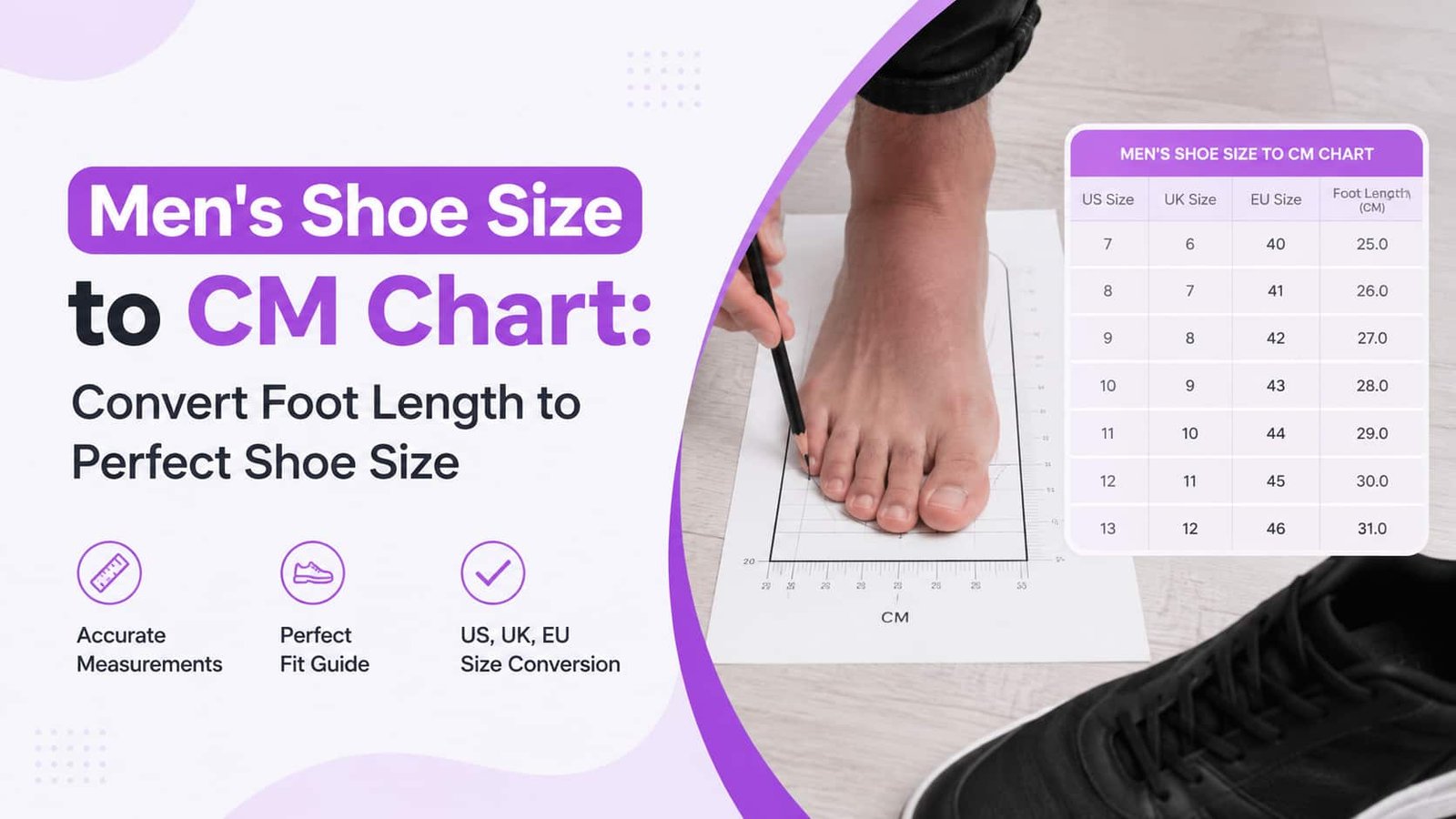
Men’s shoe sizes are determined by foot length measured in centimeters, from heel to the longest toe. A US size 9 corresponds to approximately 26 cm of foot length, size 10 to 27 cm, and size 11 to approximately 27.9 cm. Since shoe sizing varies across brands and regions, measuring foot length in centimeters is the most dependable reference point across US, UK/India, and EU systems. Measuring while standing, rather than seated, produces the most accurate result because body weight causes feet to expand slightly. If your measurement falls between two sizes, always choose the larger size to avoid discomfort and cramping.
⚡ Quick Answer
- US men’s size 9 equals approximately 26 cm foot length.
- Centimeter measurements are more accurate than shoe size labels.
- Measure both feet standing, at the end of the day.
- Between two sizes? Always pick the larger one.
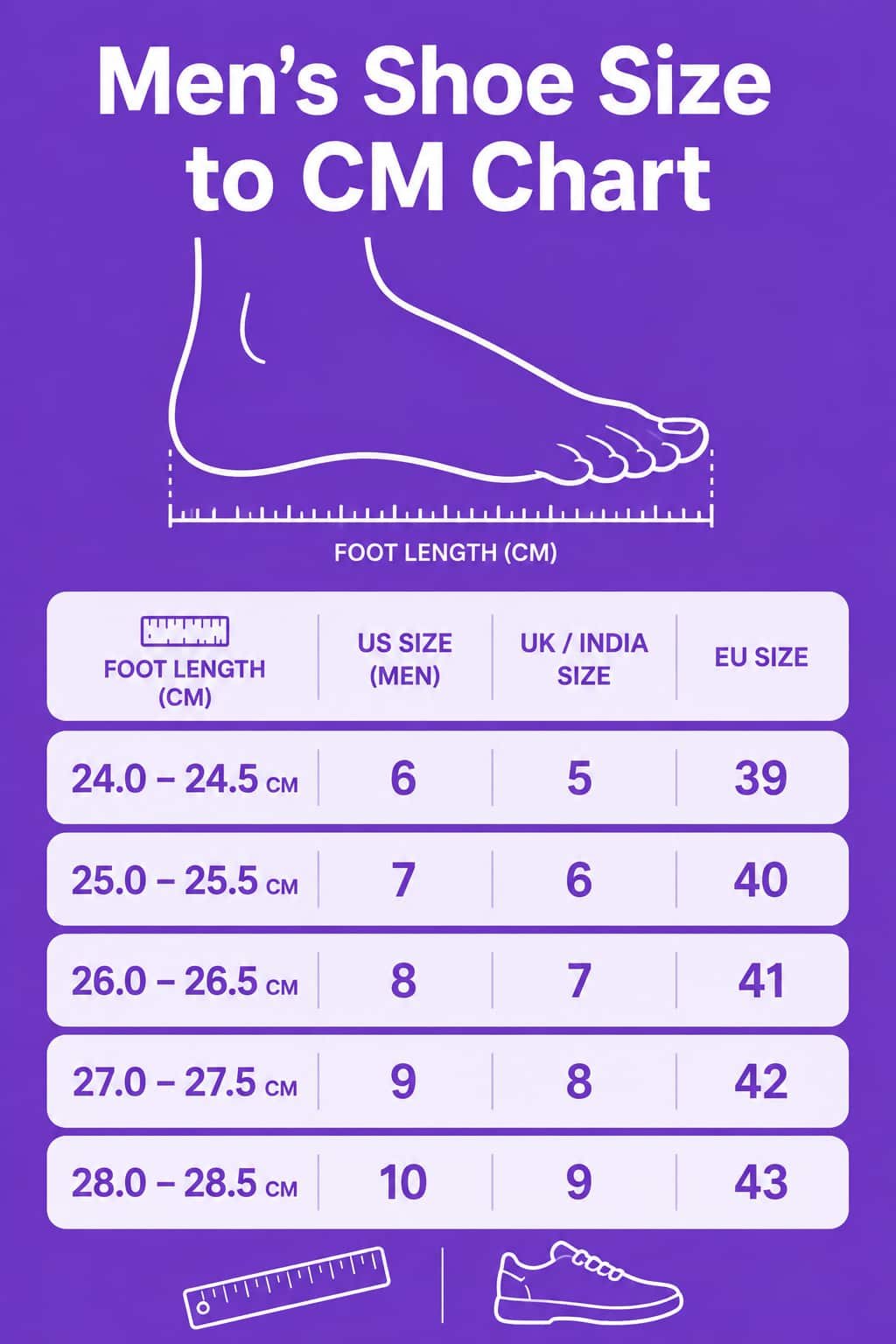
Men’s Shoe Size to CM Chart
Foot length in centimeters is the international standard for determining shoe size. This chart aligns centimeter measurements with US, UK/India, and EU sizes. India follows the UK sizing system, which is why they appear together.
| Foot Length (cm) | Foot Length (in) | US Size | UK/India Size | EU Size |
| 24.1 | 9.5 | 6 | 5.5 | 39 |
| 24.8 | 9.75 | 7 | 6.5 | 40 |
| 25.4 | 10 | 8 | 7.5 | 41 |
| 26 | 10.25 | 9 | 8.5 | 42 |
| 27 | 10.625 | 10 | 9.5 | 43 |
| 27.9 | 11 | 11 | 10.5 | 44 |
| 28.6 | 11.25 | 12 | 11.5 | 45 |
| 29.4 | 11.5 | 13 | 12.5 | 46 |
| 30.2 | 11.875 | 14 | 13.5 | 47 |
These measurements are averages across major footwear brands. Certain brands intentionally run narrow or wide, which can shift your true size by half a size either way. That variation is exactly why centimeter measurements remain the most reliable constant.
👟 Did You Know?
The EU sizing system is actually based directly on centimeter measurements using the Paris point standard. That is why EU sizes seem to jump by larger numbers than US sizes, even for the same foot length.
How to Measure Your Foot Length in Centimeters
Accurate measurement takes less than two minutes. The key is consistency.
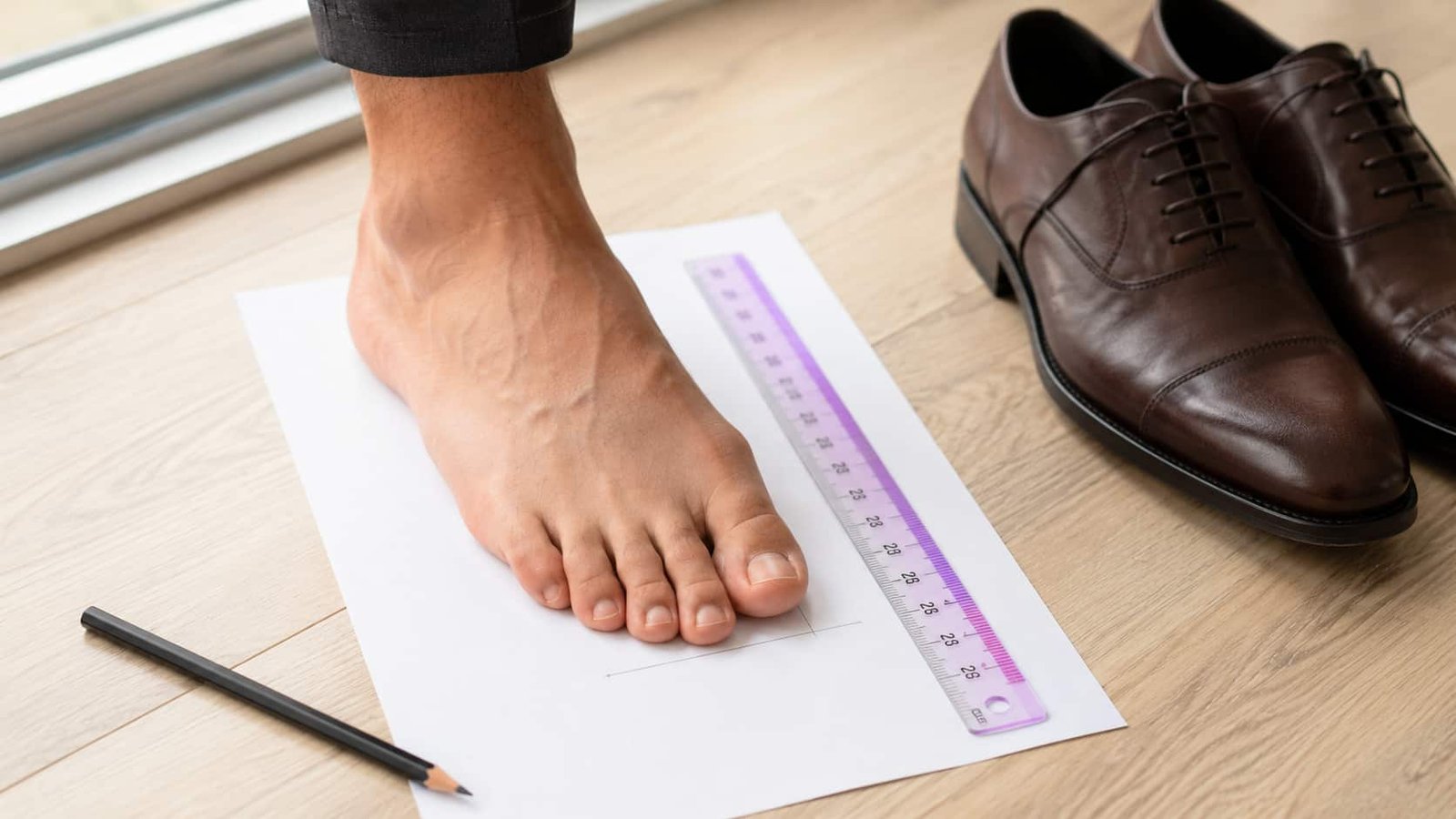
- Place a blank sheet of paper on a hard, flat floor against a wall.
- Stand with your heel touching the wall, placing your full body weight on both feet.
- Mark the exact position of your longest toe with a pencil held straight down, perpendicular to the paper.
- Remove your foot and measure the distance from the wall edge to the pencil mark in centimeters.
- Repeat for the other foot. Most people have one foot slightly longer than the other.
- Use the larger measurement when checking the chart above.
In our experience fitting thousands of customers over two decades, seated measurements are the single biggest source of error. Feet expand under body weight, sometimes by as much as half a centimeter. An evening measurement also captures your feet at their naturally larger size after a full day of walking.
💡 Expert Tip
Measure your feet in the evening after you have been standing or walking for most of the day. This captures your foot at its largest, ensuring the shoe stays comfortable through hours of wear.
Interactive CM to Shoe Size Converter
📏 Centimeter to Shoe Size Converter
Enter your foot length in centimeters to find your US, UK/India, and EU size instantly.
Understanding Centimeter Measurements vs Shoe Sizes
Shoe sizes are not linear. A size 8 is not simply half a size 16. The relationship between centimeters and sizes is standardized, but each brand manufactures shoes using slightly different last shapes, which is the mold the shoe is built around. This is why a UK size 8.5 at one brand can fit differently than a UK 8.5 at another brand, even though both should equal the same centimeter measurement.
⚠ Common Mistake
Assuming that a half size up will "last longer" is the most frequent sizing error we encounter. A shoe that is too large by even half a centimeter causes heel slip, throws off the fit, and creates more blisters than a properly fitted shoe.
Signs Your Shoe Fit Is Correct
✅ Fit Checklist
- About one finger's width of space (roughly 1 cm) between your longest toe and the shoe front.
- No heel lifting or slipping when you walk.
- No pinching or pressure across the ball of the foot.
- Toes can wiggle without touching the top of the shoe.
- Comfort remains consistent after 30 minutes of wear.
When Shoes Are Too Tight
Tight shoes announce themselves through redness on the toes, burning sensations that appear after an hour, or dark toenails from pressure. Many men stay in a size they have worn for years, even after their feet have changed shape due to age, weight gain, or natural changes in arch support. Remeasuring every couple of years catches these shifts before discomfort sets in.
When Shoes Are Too Loose
Heel slip, excess bunching at the arch, and the need for thick socks just to keep the shoe on are the clearest signs a shoe runs large. An oversized shoe also throws off balance, causes friction blisters, and makes walking less stable.
Shopping Tips for Better Fit
- Check the brand's size guide first. Luxury brands often run narrow. Athletic brands frequently run wide. A quick look at customer reviews usually reveals the pattern.
- Material matters. Leather stretches over weeks. Canvas and mesh do not. Factor this into your decision if choosing between similar sizes.
- Insole thickness affects fit. Some shoes run small because the footbed is thick. Others run large because the footbed is minimal. This is why a size 10 in one shoe can feel very different from a size 10 in another.
- Try shoes on later in the day. Feet are at their largest in the evening after activity. Shoes that feel tight in the morning might feel perfect by afternoon.
- Always fit to the larger foot. Most people have asymmetrical feet. One is slightly longer or wider.
Why Measurements Matter More Than Labels
After 20 plus years in footwear retail, the single habit that prevents the most returns is measuring before buying rather than trusting a printed size. A size 9 from Brand A is not the same as a size 9 from Brand B. Centimeter measurements never lie. Labels frequently do.
📝 Checklist Before Purchase
- Measure both feet in centimeters while standing.
- Match your measurement to the chart above.
- Check the specific brand's sizing guide if available.
- Read customer reviews mentioning fit.
- Try shoes on at the end of the day for accuracy.
- Re-measure every 12 to 24 months.
Expert Recommendations
The centimeter system is used globally because it removes guesswork. US, UK, and EU systems all originate from the same centimeter measurements. When you know your foot length in centimeters, you can confidently purchase from any brand in any region. Many online retailers struggle with sizing accuracy because they do not ask for centimeter measurements. Urban Style Footwear always leads with this single number.
FAQs
How do I convert centimeters to shoe size?
Measure your foot length in centimeters from heel to longest toe while standing. Match that number to the closest value on the chart above. A foot of 26 cm typically corresponds to a US size 9.
Is EU shoe size based on centimeters?
Yes. The EU system uses the Paris point method, which directly correlates to centimeter measurements. EU sizes jump by larger numbers than US sizes because they are derived mathematically from centimeter increments.
Why does my foot measure differently each time?
Feet swell and contract throughout the day based on activity, temperature, and hydration. Measure in the evening after standing or walking for several hours to capture your foot at its functional largest size.
What if my foot length is exactly between two sizes?
Choose the larger size. A slightly roomy shoe is far more comfortable than one that is too tight. Tight shoes cause pain, blisters, and long-term foot problems.
Do I need to account for thickness of socks when measuring?
No. Measure your bare foot. If you always wear thick socks, you can add about 0.5 cm to your measurement as a safety margin, but bare foot measurement is the standard.
Does foot size change with age?
Yes. Feet lengthen and widen over time due to weight changes, aging, or hormonal shifts. Remeasuring every one to two years ensures you stay in the correct size.
Can I use an online shoe size calculator instead of measuring?
Online calculators are convenient but less reliable than direct measurement. They often ask for height or age, which are poor predictors of foot length. Always measure yourself for accuracy.
What if one foot is larger than the other?
This is completely normal. Size shoes to the larger foot to ensure both fit comfortably.
Are centimeter measurements the same across all countries?
Yes. Centimeters are universal. A 26 cm foot is 26 cm everywhere. This is why centimeter-based sizing is the global standard.
Should I measure with a tape measure or ruler?
A ruler or straight edge is more accurate than a tape measure, which can curve and give false readings. A flat measuring tool on flat paper produces the most reliable result.
How often do men's feet change size?
Significant changes usually occur after major life events like substantial weight gain or loss. Routine remeasurement every 12 to 24 months catches gradual changes before they affect shoe fit.
Is there a difference between measuring on carpet versus hard flooring?
Yes. Always measure on hard flooring. Carpet compresses under weight and gives inaccurate readings. Hard wood or tile provides the most reliable measurement.
CONCLUSION
Your foot length in centimeters is the most dependable number in shoe sizing. Once you know this measurement, converting to US, UK/India, and EU sizes becomes straightforward, eliminating the confusion that comes from relying on printed size labels alone.
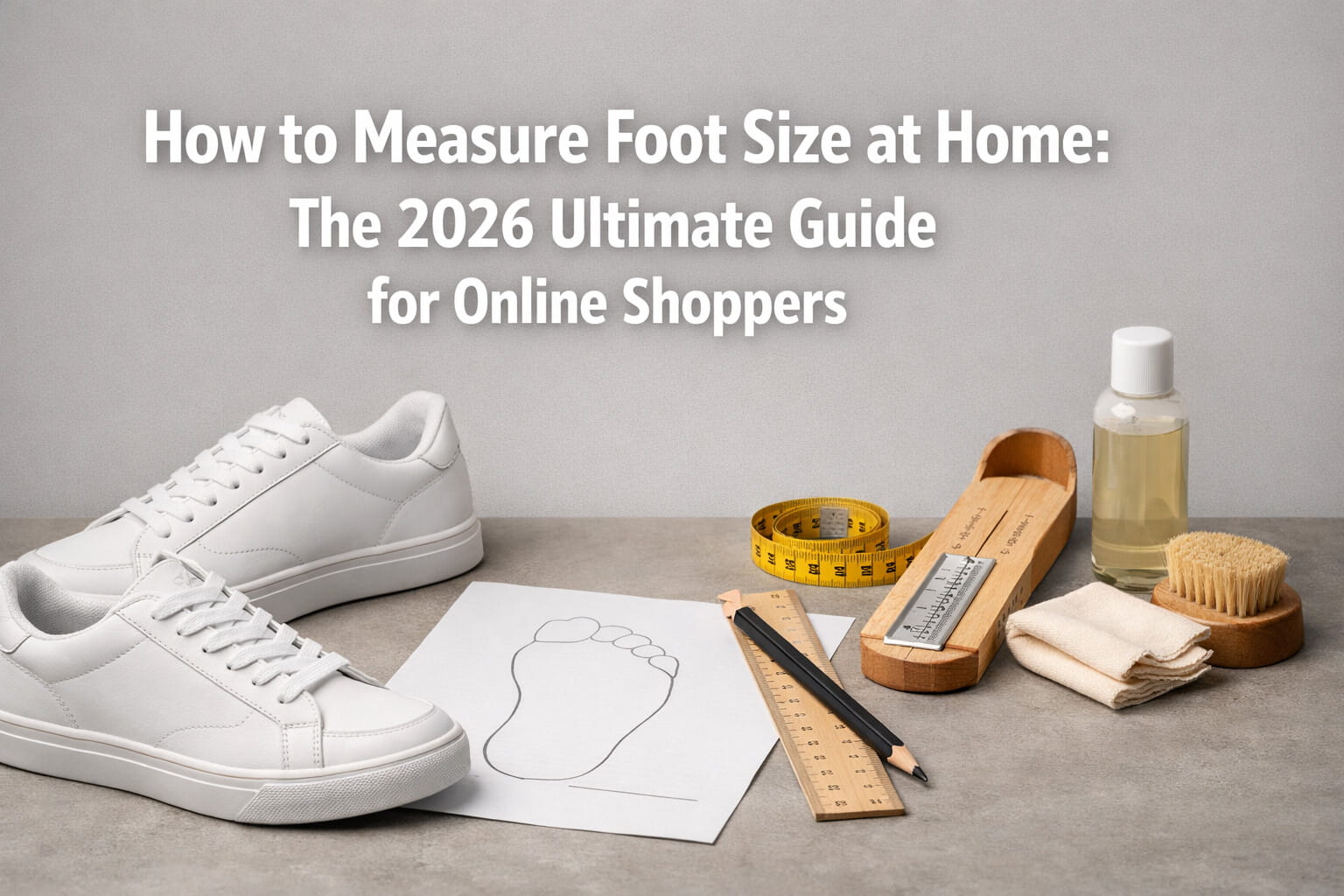
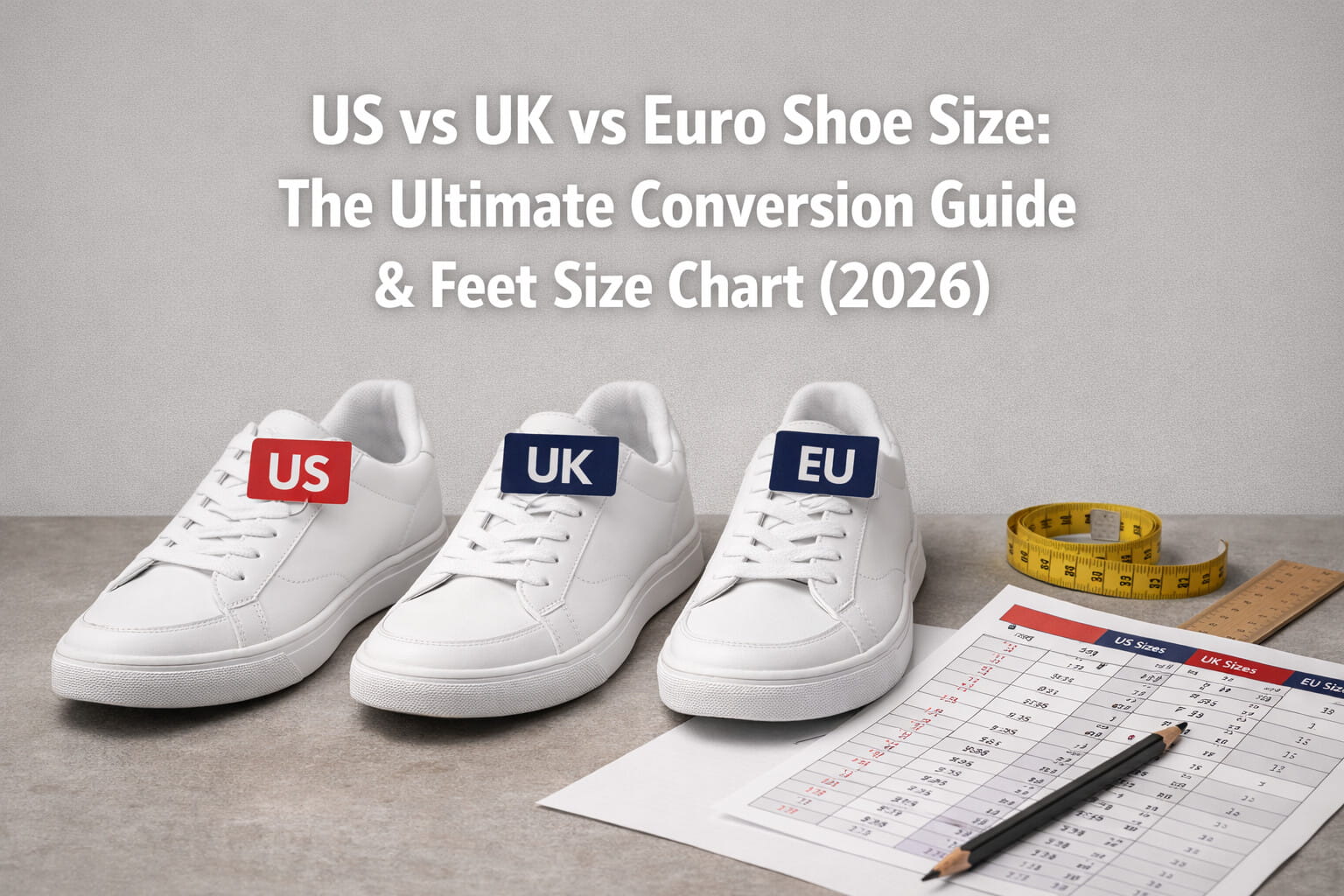
Take five minutes to measure both feet using the steps above, then use the interactive converter tool to find your size across all major sizing systems. For a deeper measurement guide with photos and step-by-step instructions, check out our How to Measure Foot Size at Home article. For comparisons across age ranges and life stages, see our comprehensive men's shoe size chart.