
Breaking In Hiking Boots: A Step-by-Step Plan That Protects Your Feet
Quick answer: REI says to break boots in indoors first, then around town on pavement, then on dirt trails with a daypack, adding weight and mileage gradually. Mammut says to start at least 2 to 3 weeks before a hike, and T3 says to tape likely friction points.
You also get a timeline by boot type, blister tactics, shortcuts to skip and four example boots.
Four Boots From Long to Minimal Break-In
This guide is about the process, not a ranking. These four boots show the range from long to minimal break-in. Tap a photo or the button to see the boot. For ranked lists, see our best hiking boots guide.
| Boot | Best for | Price category | Named by | Buy |
|---|---|---|---|---|
 Zamberlan Vioz GTX (Men’s) | Long break-in | Premium | OutdoorGearLab, REI | Check on Amazon |
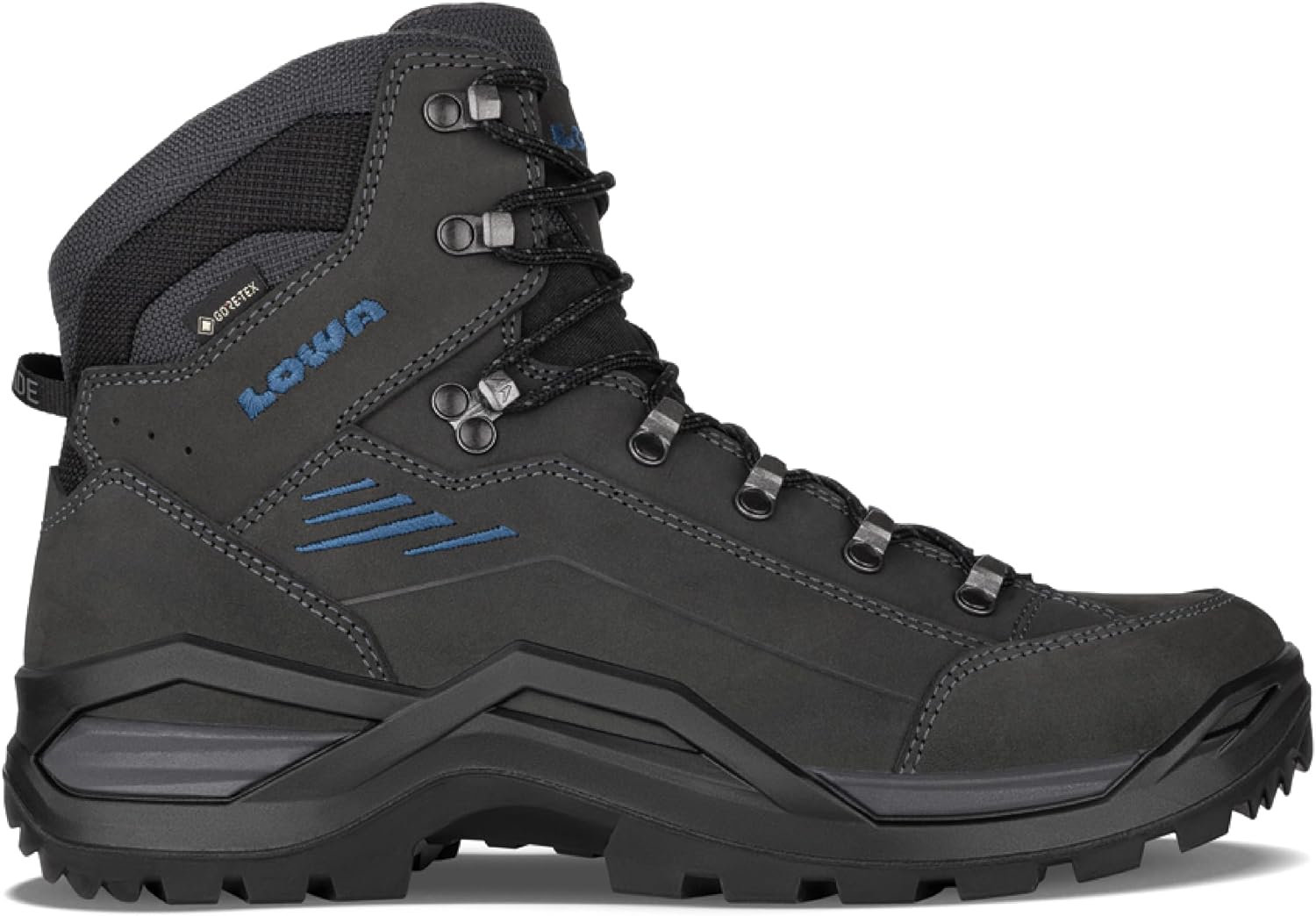 LOWA Renegade EVO GTX Mid (Men’s) | Medium break-in | Premium | CleverHiker, OutdoorGearLab | Check on Amazon |
 Salomon X Ultra 5 Mid GTX (Men’s) | Minimal break-in | Mid-range | CleverHiker | Check on Amazon |
 Merrell Moab 3 (Low, Men’s) | Little break-in | Budget | CleverHiker | Check on Amazon |
Price category reflects current US listings: budget is roughly under $150, mid-range roughly $150 to $200, premium above $200. Prices change, so confirm on the product page.
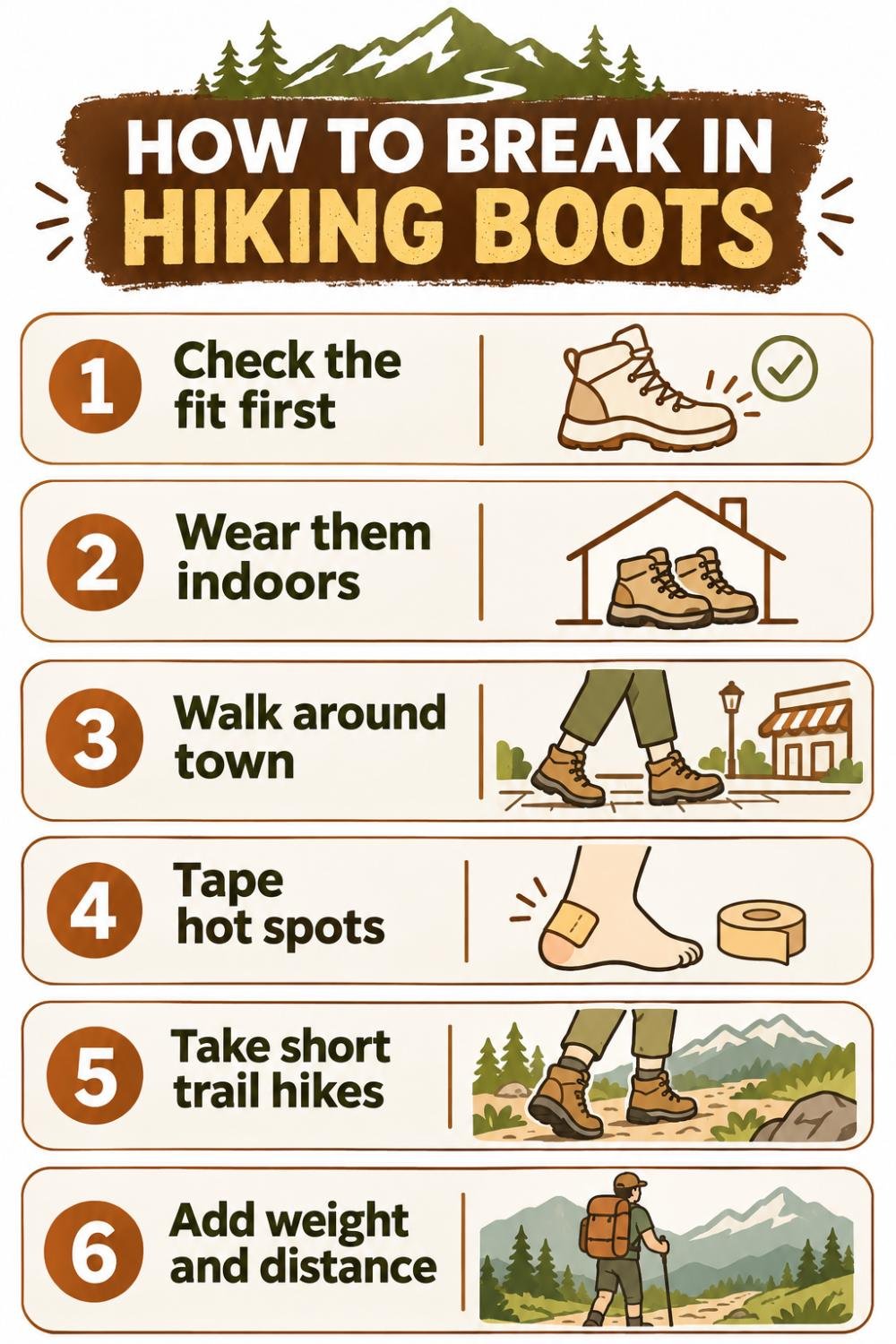
The Break-In Ladder, Step by Step
REI, Mammut and T3 all describe the same ladder, from indoors to short walks to the trail. Here is how each frames it.
| Stage | REI | Mammut | T3 |
|---|---|---|---|
| 1. Indoors | Wear your trail socks and insoles, lace snugly and check the tongue and gussets sit straight. | Wear at home in sessions of no more than 2 to 3 hours. | Wear around the house during chores so heat and movement soften the materials. |
| 2. Short walks | Walk around the block, then around town on pavement. | Take relaxed walks on uneven ground, building duration. | Wear on errands and try lacing combinations. |
| 3. First trail | Add a daypack and head to dirt trails, where most break-in happens. | Start with an easy, short trail and carry a spare pair of shoes. | Tape hotspots, then walk longer, then hills and rough ground. |
Who should skip which shortcut
| Shortcut | Skip it if | Because |
|---|---|---|
| Soaking boots | You want the boots to last | REI says soaking is hard on boots and feet |
| Freezing with water bags | Ever | T3 warns the boots can split |
| Hairdryer heat | Ever | T3 warns the glue can melt |
| DIY heat stretching | You are not a professional | Mammut says to leave heat and pressure stretching to a professional |
| Long first hike | The boots are new | Mammut says not to wear new boots for long stretches right away |
How Long Does Break-In Take?
How long break-in takes depends on the boot. The sources give ranges rather than exact numbers.
| Boot type | What the source says | Source |
|---|---|---|
| Lightweight boots and shoes | Lightweight boots may feel fine right away, and flexible shoes need little break-in. | REI |
| Stiff leather boots | May take weeks to soften. | REI |
| Synthetic boots | More flexible and easier to break in, though robust models still need moderate use. | Mammut |
| Leather boots | Usually need more time than synthetics. Start at least 2 to 3 weeks before a hike. | Mammut |
| Full-grain leather | Slower to soften. | T3 |
Mammut adds that there is no fixed date when boots are fully ready, so patience matters.
Preventing Blisters and Pinching
Mammut and T3 both lean on prevention. Here are the tactics each names.
| Tactic | What the source says | Source |
|---|---|---|
| Tape hotspots | Cover likely friction points such as the heel and the top and outside of the big toe with surgical or sports tape. | T3 |
| Thick wicking socks | Wear padded, moisture-wicking hiking socks. REI says synthetic socks are better than cotton. | Mammut, REI |
| Even lacing | Lace evenly to avoid pressure points. T3 suggests tight lower laces and loose upper laces. | Mammut, T3 |
| Keep nails trimmed | Trimmed nails and moisturized feet reduce rubbing and cracks. | Mammut |
| Use patches or tape | Blister patches or tape give immediate relief. | Mammut |
| Address hot spots early | Treat pinching before it becomes a blister. | REI |
Breaking In Leather Boots
Leather boots are the ones that need a plan. The sources agree on the idea but differ on the tactics.
| Tip | What the source says | Source |
|---|---|---|
| Work the leather | Rub wax into the flex points behind the toes and around the ankle and bend the boot with both hands. | T3 |
| Slightly damp leather | Break-in works best when the boots are slightly damp, such as after light rain or walking across wet grass. | Mammut |
| Shoe stretchers | Use on leather to soften tight spots. | Mammut |
| Conditioning | Apply leather treatment periodically. | OutdoorGearLab |
Example Boots by Break-In Time
Four boots that show how much break-in to expect, with what the outlets say about each.
Zamberlan Vioz GTX (Men’s)
Best for: the long break-in end of the range
Zamberlan Vioz GTX (Men’s)
Price category: Premium
A full-leather GORE-TEX backpacking boot from Zamberlan.
Check it on AmazonOutdoorGearLab says the heavy all-leather upper needs a break-in and scores its support 9.0 at 4.20 lb. REI says full-grain leather boots need a long break-in.
What this means for you: a heavy leather boot is the case where REI says to expect weeks of break-in.
Watch for: OutdoorGearLab says the upper needs a break-in and is heavy.
Skip it if: you dislike long break-in periods.
LOWA Renegade EVO GTX Mid (Men’s)
Best for: a leather boot that needs a planned break-in
LOWA Renegade EVO GTX Mid (Men’s)
Price category: Premium
A leather and GORE-TEX mid boot from LOWA.
Check it on AmazonCleverHiker lists a medium break-in for the Renegade EVO and heat above 75 degrees F, and Switchback Travel calls it overkill for easy hiking. OutdoorGearLab uses it as its classic example of a midweight leather boot.
What this means for you: plan a few weeks of wear before a long trip, in line with the REI timeline below.
Men’s and women’s versions: Separate women’s model. Switchback Travel lists women’s weights at about 2 lb 2.2 oz.
Watch for: CleverHiker lists a medium break-in. Treeline Review lists a narrow toe box.
Skip it if: you hike easy trails in warm weather.
Salomon X Ultra 5 Mid GTX (Men’s)
Best for: the quick break-in end of the range
Salomon X Ultra 5 Mid GTX (Men’s)
Price category: Mid-range
A lightweight GORE-TEX mid hiking boot from Salomon.
Check it on AmazonCleverHiker names it Best Hiking Boots Overall at 1 lb 15 oz, citing minimal break-in, excellent traction and stability.
What this means for you: REI says synthetic uppers need little break-in, and this boot is an example. You still need to check the fit, because REI says break-in cannot fix a poor one.
Fit and sizing: CleverHiker says the forefoot runs narrow and sizing runs a little small. Treeline Review says it fits true to size.
Men’s and women’s versions: Separate women’s version. CleverHiker lists the men’s mid at 1 lb 15 oz, and women’s weights are lower per Switchback Travel.
Watch for: CleverHiker lists less ankle support and a flimsy insert, and says the forefoot runs narrow.
Skip it if: you carry heavy loads.
Merrell Moab 3 (Low, Men’s)
Best for: a low-cut shoe with little break-in
Merrell Moab 3 (Low, Men’s)
Price category: Budget
A leather and mesh low hiking shoe from Merrell.
Check it on AmazonCleverHiker names it Best Budget Hiking Shoes at 1 lb 9 oz, citing value, comfort and little break-in.
What this means for you: a flexible shoe such as this is the kind REI says needs little break-in, though the outlets still say to walk in it before a long trip.
Men’s and women’s versions: A waterproof version is also sold.
Watch for: CleverHiker says it is heavier and less flexible than trail runners, and the standard version is not waterproof.
Skip it if: you want maximum ankle height.
Our Break-In Decision Framework
We turn the sources into five questions to ask before you start.
- Material. Leather, synthetic or a mix?
- Stiffness. How stiff is the sole?
- Time. How many weeks until the trip?
- Fit. Do you feel pinching or heel lift?
- Trip. How long and how rough is the first hike?
| Situation | Suggested plan | Source basis |
|---|---|---|
| Synthetic or lightweight boot | A few walks may be enough | REI |
| Stiff leather boot | Start weeks ahead, indoors then pavement then trail | REI, Mammut |
| Hot spot appears | Tape it and adjust lacing early | REI, T3 |
| Pain does not ease | Recheck the fit or exchange | Mammut, REI |
This table is our reading of what the outlets say. It is general advice, not a medical or fitting recommendation.
Break-In Checklist
- Fit first. REI says break-in cannot fix a poor fit. See how to choose hiking boots.
- Return window. Mammut and T3 both say wearing boots indoors first leaves room to return them if the fit is wrong.
- Start small. Indoors, then around town, then an easy trail.
- Tape early. T3 says to tape likely friction points before longer walks.
- Carry a spare pair on the first hike. Mammut says to bring a spare pair of shoes.
- Compare boots. See best hiking boots for beginners, best hiking boots for wide feet and hiking boots vs hiking shoes.
Where the Expert Advice Differs
Getting leather wet. Mammut says break-in works best when leather is slightly damp, while REI says soaking boots is hard on them and your feet.
Heat. T3 warns against a hairdryer, and Mammut says heat and pressure stretching should only be done by a certified professional.
Lead time. REI says stiff leather may take weeks, while Mammut says to start at least 2 to 3 weeks ahead, so the two broadly agree.
Questions About Breaking In Boots, Answered
“How long does it take to break in hiking boots?”
REI says lightweight boots may feel fine right away and stiff leather boots may take weeks. Mammut says to start at least 2 to 3 weeks before a hike.
“Can I break in boots fast?”
The sources warn against shortcuts such as soaking, freezing or hairdryers. T3 and Mammut instead suggest wearing them around the house and taping hotspots.
“How do I stop blisters in new boots?”
T3 suggests taping likely friction points, and Mammut suggests padded wicking socks and patches. REI says to treat hot spots early.
“What if my boots never break in?”
REI says a significant fit problem may mean the boots are wrong for you, and suggests consulting a footwear specialist. Mammut says to recheck the fit or exchange them.
“Should I wear boots indoors first?”
Yes, per Mammut and T3. It leaves room to return them if the size is wrong.
Mistakes to Avoid
- Taking new boots on a long first hike. Mammut and REI both say not to.
- Soaking, freezing or heating them. REI and T3 say these are hard on boots.
- Ignoring pinching. Mammut says to check the fit early.
- Wearing different socks than you will hike in. REI says to wear your trail socks and insoles.
- Expecting break-in to fix a bad fit. REI says it cannot.
How we checked this
- UrbanStyleFootwear compared five outlets: REI, Mammut, T3, OutdoorGearLab and CleverHiker.
- We built this guide from what each outlet wrote about break-in steps, timing, blister prevention and care. Every claim is attributed to the outlet that published it, and our own reading is labeled general advice. The sources use different timelines.
- Price categories reflect current US listings.
Frequently Asked Questions
How long does it take to break in hiking boots?
REI says stiff leather boots may take weeks, and Mammut says to start at least 2 to 3 weeks ahead.
How do I start?
REI says to wear them indoors with your trail socks and insoles.
How do I prevent blisters?
T3 says to tape likely friction points, and REI says to treat hot spots early.
Can I speed it up with heat?
T3 warns a hairdryer can melt the glue, and Mammut says to leave heat stretching to a professional.
Should I soak the boots?
REI says soaking is hard on boots and feet.
What if they never feel right?
REI says it may be a fit problem and suggests a footwear specialist.
Do all boots need break-in?
REI says flexible shoes need little and burly boots need extended wear.
Where can I see ranked boots?
See our best hiking boots guide.
The Short Version
Wear the boots indoors with your hiking socks, then walk on pavement, then take short trail hikes with a light pack. Tape hot spots early, skip shortcuts like soaking and heat, and exchange boots that never feel right.
Keep Reading
Sources
- REI: How to break in your hiking boots
- T3: How to break in hiking boots
- Mammut: How to break in hiking boots
- OutdoorGearLab: Hiking boot buying advice
- CleverHiker: Best hiking boots for men
- CleverHiker: Best hiking shoes for men
- REI: How to choose hiking boots
- OutdoorGearLab: Best hiking boots for men
- Switchback Travel: Best hiking boots