
Choosing Socks for Hiking Boots: Fabric, Cushion, Height and Fit
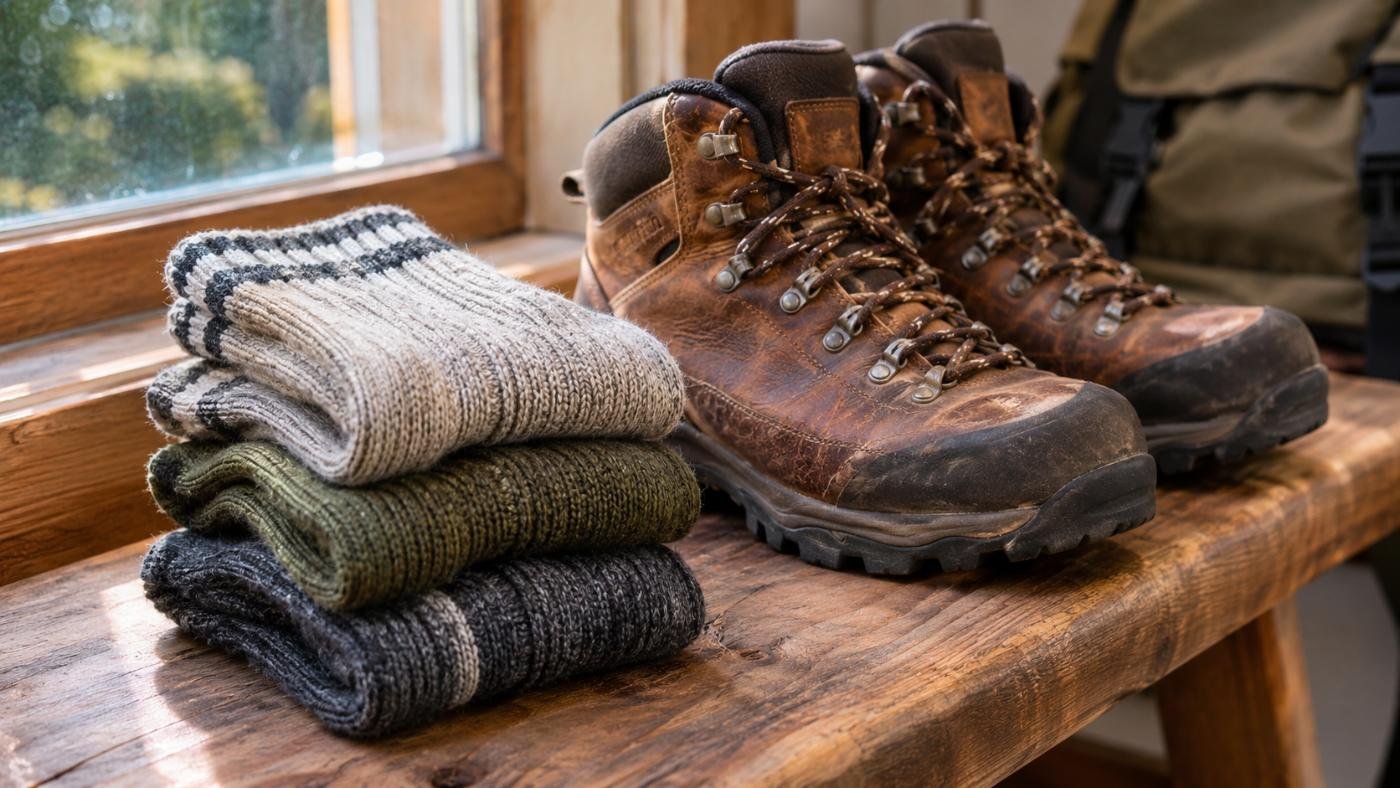
Quick answer: REI recommends merino-blend socks and crew height with boots, and Switchback Travel says light to medium cushion suits most three-season hiking. CleverHiker and Switchback Travel both put a Darn Tough micro crew first. Avoid cotton, which CleverHiker says can cause blisters.
You also get comparison tables for fabric, cushion and fit, and four example socks.
Four Socks at a Glance
This is a buying guide, not a ranking. These four socks show the choices the guide explains: heavy, medium and light cushion, and a toe sock. Tap a photo or the button to see the sock. For boots, see our best hiking boots guide.
| Boot | Best for | Price category | Named by | Buy |
|---|---|---|---|---|
 Darn Tough Hiker Boot Full Cushion (Men’s) | Heavy padding, cold days | Budget | CleverHiker, Switchback Travel | Check on Amazon |
 Darn Tough Hiker Micro Crew Cushion (Men’s) | All-round three-season crew | Budget | Switchback Travel | Check on Amazon |
 Darn Tough Light Hiker Micro Crew (Men’s) | Light cushion, warm weather | Budget | CleverHiker | Check on Amazon |
 Injinji Trail Midweight Mini-Crew (Women’s) | Toe blister prevention | Budget | CleverHiker, Switchback Travel | Check on Amazon |
Price category reflects current US listings: budget is roughly under $150, mid-range roughly $150 to $200, premium above $200. Prices change, so confirm on the product page.
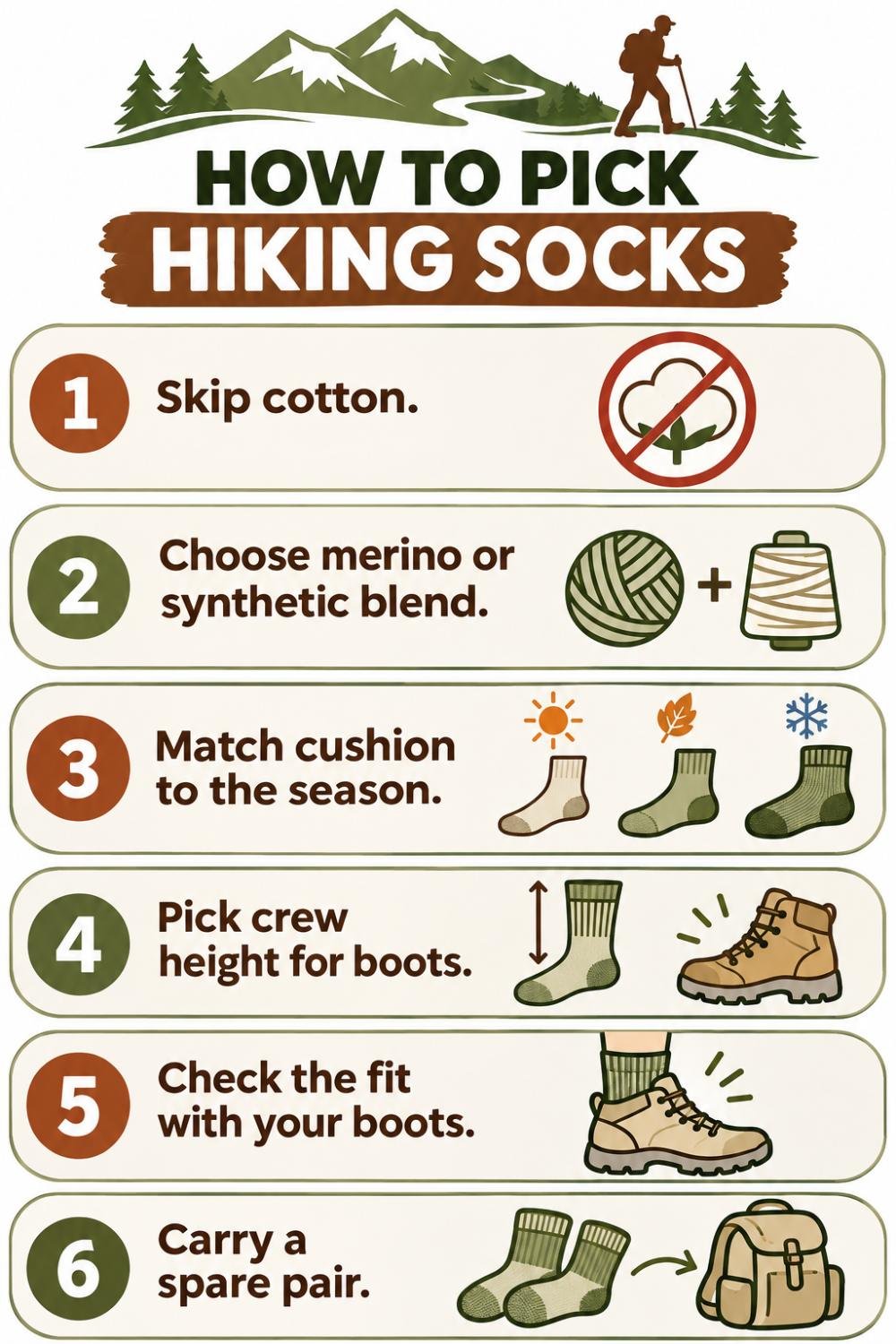
Hiking Sock Basics for Boots
REI, Switchback Travel and CleverHiker agree on most of the basics. Here they are side by side.
| Choice | What the sources say | Source |
|---|---|---|
| Fabric | Most hiking socks are blends. Merino wool is REI’s top recommendation because it regulates temperature, resists odor and is comfortable. Polyester wicks and dries quickly, and nylon adds durability. | REI |
| Cotton | Holds moisture and can cause blisters, so the reviewers advise avoiding it. | CleverHiker |
| Cushion | Ranges from none to light, medium and heavy. Thicker socks are warmer but can make feet sweat. | REI |
| Height with boots | Higher boot cuffs call for crew socks. Crew (about 6 to 8 inches) is the recommended default and gives extra protection from brush and rocks. | REI, Switchback Travel |
| Liners | Many modern hiking socks perform well without one. They still help on long miles, new boots or blister-prone feet. | REI, CleverHiker |
| Fit | Snug without bunching or pressure points. Wrinkles and extra fabric can cause blisters. | REI, Switchback Travel, CleverHiker |
Who should skip each choice
| Choice | Skip it if | Because |
|---|---|---|
| Heavy cushion | You hike in warm weather | Switchback Travel says heavy socks make feet sweat in mild weather |
| Merino-heavy blends | You want maximum durability | Switchback Travel says merino is less durable and pills more |
| Synthetic socks | You care about odor | Switchback Travel and CleverHiker say synthetics hold odor |
| No-show socks | You wear boots | Switchback Travel says no-shows let in debris, and REI says boot cuffs call for crew socks |
| Ski socks | Ever, for hiking | Switchback Travel says they are cushioned for ski boots, not hiking boots |
How Much Cushion Do You Need?
Cushion level depends on the season and the boot. Switchback Travel and REI describe the same ladder.
| Cushion | Best for | Watch for | Source |
|---|---|---|---|
| Ultralight or none | Hot weather and low-top shoes | Less blister protection | Switchback Travel, REI |
| Light to medium | Most three-season hiking and backpacking | Not plush | Switchback Travel |
| Heavy | Cold conditions and mountaineering | Overkill in mild weather | Switchback Travel |
Merino vs Synthetic
The outlets differ on how much merino matters, so here are their notes.
| Fabric | Pros | Cons | Source |
|---|---|---|---|
| Merino blends | Soft, regulates temperature, resists odor, keeps you warm even when damp | Less durable and pills more, especially in low-density weaves | Switchback Travel, CleverHiker |
| Synthetics (nylon, polyester) | More durable, dry faster, cost less | Hold odor and can pill | Switchback Travel, CleverHiker |
Switchback Travel adds that most merino socks are blends with about 30 to 80 percent merino, and knit density matters as much as the merino percentage.
How to Fit Socks With Your Boots
Socks and boots work as a pair, so fit them together.
- Try boots with the socks you will wear. Switchback Travel says to make sure the boots fit with the sock, especially thicker ones. See how to choose hiking boots.
- Size by foot length. REI says to size socks by your actual foot length, not your shoe size, and to go down a size if you are between sizes.
- Try several sizes. CleverHiker says sizing and stretch vary by brand and year.
- Check for wrinkles. REI says excess fabric can cause blisters.
- Check the cuff. Switchback Travel says the boot collar should sit above the sock top edge to avoid rubbing.
Example Socks From the Outlets
One sock from each cushion level plus a toe sock, with what the outlets say about each.
Darn Tough Hiker Boot Full Cushion (Men’s)
Best for: cold or long days in boots when you want heavy padding
Darn Tough Hiker Boot Full Cushion (Men’s)
Price category: Budget
A heavy-cushion merino crew boot sock from Darn Tough.
Check it on AmazonCleverHiker names it Best Full-Cushion, a heavy-cushion crew in 66% merino, 32% nylon and 2% spandex, praising comfort, build, warmth and thick padding that works year-round. Switchback Travel lists it as a heavy-cushion crew that is warm and durable for winter hiking and mountaineering.
What this means for you: two outlets agree it is a warm, heavily padded boot sock, and both say it is too hot for most summer outings.
Fit and sizing: CleverHiker says to try several sizes since sizing varies by brand and year.
Men’s and women’s versions: Separate women’s version. Both outlets list the same materials and cushion level, and Switchback Travel says sizing matters more than whether a sock is labeled men’s, women’s or unisex.
Watch for: CleverHiker lists a high price, bulk, slow drying and too much warmth for hot days. Switchback Travel says it is too hot for most summer outings.
Skip it if: you hike in hot weather.
Darn Tough Hiker Micro Crew Cushion (Men’s)
Best for: an all-round crew sock for three-season boots
Darn Tough Hiker Micro Crew Cushion (Men’s)
Price category: Budget
A light to medium cushion merino crew hiking sock from Darn Tough.
Check it on AmazonSwitchback Travel names the Hiker Micro Crew Cushion its best overall at 61% merino, 36% nylon and 3% spandex, with light to medium cushion, comfort, durability and a lifetime guarantee. CleverHiker names the related Light Hiker Micro Crew its best overall, a light-cushion crew praised for durability, breathability and staying put.
What this means for you: both outlets put a Darn Tough micro crew first, in slightly different cushion weights.
Men’s and women’s versions: Separate women’s version. Switchback Travel says men’s, women’s and unisex socks usually perform the same, so choose by size.
Watch for: Switchback Travel says it is not especially plush and can feel warm on hot days. CleverHiker says the lighter version has less padding than others.
Skip it if: you want plush padding.
Darn Tough Light Hiker Micro Crew (Men’s)
Best for: warm-weather boots and lighter loads
Darn Tough Light Hiker Micro Crew (Men’s)
Price category: Budget
A light-cushion merino blend crew hiking sock from Darn Tough.
Check it on AmazonCleverHiker names it Best Overall and its Editor’s Pick, a light-cushion crew in 54% nylon, 43% merino and 3% spandex, praising durability, breathability, moisture-wicking, odor resistance and staying put.
What this means for you: a thinner option for boots that already feel warm. Only CleverHiker among our sources covers this exact version.
Watch for: CleverHiker lists less padding than others and says it is warmer and less breathable than some.
Skip it if: you want thick padding or hike in the cold.
Injinji Trail Midweight Mini-Crew (Women’s)
Best for: hikers who get toe blisters
Injinji Trail Midweight Mini-Crew (Women’s)
Price category: Budget
A five-toe synthetic mini-crew hiking sock from Injinji.
Check it on AmazonCleverHiker names it Best Toe Socks, a medium-cushion ankle-height sock in 58% nylon, 39% COOLMAX polyester and 3% Lycra, praising its help preventing toe blisters, breathability and durability. Switchback Travel lists a five-toe design that reduces rubbing and blisters.
What this means for you: two outlets agree toe socks can help with toe rubbing. Both say they take getting used to.
Fit and sizing: Check that your boot collar sits above the mini-crew top edge, per the height advice from Switchback Travel.
Men’s and women’s versions: Separate men’s version. Both outlets list the same materials and cushion for the unisex model.
Watch for: CleverHiker says it holds odor, is slower to put on and takes getting used to. Switchback Travel says it takes longer to put on and the look is polarizing.
Skip it if: you dislike toe socks or want a merino sock.
Also named
CleverHiker also names the Smartwool Mountaineer Classic Crew (heavy cushion, very warm, overkill for casual use) and the Farm to Feet Damascus (light-cushion quarter, durable, lifetime warranty, best for long backpacking trips). Switchback Travel also names the REI Co-op Coolmax EcoMade Lightweight Quarter and the Courier HiFi, a snug performance sock suited to breaking in new boots. We have not matched these to current US Amazon listings, so there are no buy buttons.
Our Sock Decision Framework
We turn the sources into five questions to ask before you buy.
- Weather. Hot, mild or cold?
- Boot cuff. Does it sit above the sock?
- Blisters. Are you blister-prone?
- Odor. Does it matter on multi-day trips?
- Fit. Does the sock fit your foot length?
| Situation | Suggested sock | Source basis |
|---|---|---|
| Cold weather or long winter days | Heavy-cushion merino crew | Switchback Travel, CleverHiker |
| Three-season hiking | Light to medium crew | Switchback Travel |
| Hot weather | Light cushion or synthetic | Switchback Travel, REI |
| Toe blisters | Toe socks or a liner | CleverHiker, Switchback Travel |
| Breaking in new boots | A snug, quick-drying sock | Switchback Travel |
This table is our reading of what the outlets say. It is general advice, not a medical recommendation.
How to Choose, Step by Step
- Start with merino-blend crew socks. REI and Switchback Travel both lean toward them.
- Match the cushion to the season. See the cushion table above.
- Test with your boots. See how to choose hiking boots and how to break in hiking boots.
- Carry spares. REI says having a variety of socks helps.
- Compare boots. See best waterproof hiking boots, best hiking boots for wide feet, best hiking boots for plantar fasciitis and best hiking boots for beginners.
Where the Expert Advice Differs
Liners. REI says liners are fine if they work for you, while CleverHiker says its team does not use them since modern footwear rarely causes blisters.
Merino durability. Switchback Travel says merino is less durable and pills more, while CleverHiker’s top picks are merino-nylon blends it praises for durability.
If you are between sizes. REI says go down a size, while CleverHiker says to try several sizes and choose slightly snug over loose.
Questions About Hiking Socks, Answered
“What socks should I wear with hiking boots?”
REI recommends merino-blend crew socks, and Switchback Travel names crew height the default with boots.
“Should I wear cotton socks hiking?”
CleverHiker advises against it because cotton holds moisture and can cause blisters.
“How thick should hiking socks be?”
Switchback Travel says light to medium suits most three-season hiking, with heavy for cold conditions.
“Do I need liner socks?”
REI says many modern hiking socks perform well without one. CleverHiker says they help on long miles, new boots or blister-prone feet.
“Are toe socks worth it?”
CleverHiker and Switchback Travel both say they can reduce toe rubbing, though they take getting used to.
Mistakes to Avoid When Buying
- Wearing cotton. CleverHiker says it can cause blisters.
- Using ski socks. Switchback Travel says they are meant for ski boots.
- Wearing no-shows with boots. They let in debris.
- Trying boots on with thin socks. Switchback Travel says to fit boots with the sock you will wear.
- Too much cushion in warm weather. Switchback Travel says feet sweat in heavier socks.
How we checked this
- UrbanStyleFootwear compared three outlets: REI, Switchback Travel and CleverHiker.
- We built this guide from what each outlet wrote about fabrics, cushion, height, liners and fit. Every claim is attributed to the outlet that published it, and our own reading is labeled general advice. The outlets use different categories and tests.
- Price categories reflect current US listings.
Frequently Asked Questions
What socks are best with hiking boots?
REI recommends merino-blend crew socks.
How thick should they be?
Switchback Travel says light to medium for most three-season hiking.
Should I avoid cotton?
Yes, per CleverHiker, because it holds moisture.
Do I need liners?
REI says many modern socks work without one.
Merino or synthetic?
Switchback Travel says merino is soft and odor resistant, while synthetics are more durable and dry faster.
What height with boots?
Crew, per REI and Switchback Travel.
How should socks fit?
Snug without bunching, per REI.
Where can I compare boots?
See our best hiking boots guide.
The Short Version
Wear merino-blend crew socks with light to medium cushion for most boot hikes, skip cotton, and try your boots on with the exact socks you plan to wear.