
7 Best Running Shoes for Plantar Fasciitis 2026 (Tested & Reviewed)
TL;DR Quick Verdict
- Best Overall: Brooks Ghost 17 – Plush, APMA-accepted daily trainer that balances cushioning with a smooth ride.
- Best Value: Men’s Orthopedic Road Running Sneakers – Budget-friendly built-in orthotic support with a roomy fit.
- Best Max Cushion: Hoka Clifton 10 – Cloud-like softness with a rocker geometry that takes pressure off the heel.
- Best for Wide Feet: Walking Shoes for Men with Arch Support – Wide toe box and removable orthotic insole that addresses multiple pain points.
- Best Premium Long Run Shoe: ASICS Gel-Nimbus 27 – Superior shock absorption and pureGEL landings for heel strikers.
- Best Slip-On Solution: Orthofeet Kita Hands-Free – No bending, water-repellent, and anatomical arch support built in.
- Best for Walking + Running: Brooks Ghost Max 3 – Maximum stack underfoot with a stable platform for all-day wear.
Retailer’s Reality
I’ve owned a shoe store for over 20 years. I’ve fitted thousands of feet—flat arches, high insteps, bone spurs, and that stabbing morning pain that screams plantar fasciitis. Buying running shoes online for heel pain is a minefield. Fake reviews, copied specs, and pushy marketing make you doubt every choice. Here, I’m giving you the same honest advice I give customers who walk into my shop: the real feel, the hidden flaws, and what actually works when every step hurts.
Quick Buying Guide: 3 Features That Matter Most for Plantar Fasciitis
If you only read one section, make it this. Plantar fasciitis isn’t just about “cushioning.” It’s about reducing tension on the plantar fascia, controlling pronation/supination, and letting you move without shock.
1. Midsole Technology & Foam Density
Not all foam is equal. Basic EVA feels soft but compresses quickly. Nitrogen-infused foams (like DNA Loft v3 or FF BLAST+) resist bottoming out and provide sustained rebound. For heel pain, look for foams that feel like a medium-soft durometer—around 40–45C on a Shore meter—firm enough to support but plush enough to absorb impact.
2. Heel-to-Toe Drop
Drop affects where stress lands. A high drop (10–12 mm) offloads the Achilles and calf, which can ease pull on the plantar fascia. A low drop (0–4 mm) increases strain on the plantar fascia and Achilles. For most of my customers, a drop between 6 mm and 10 mm works while protecting the heel. If you’re a heavy heel striker, go closer to 10 mm.
3. Arch Support & Stability Features
Neutral shoes with a deep heel cup and firm arch can reduce overpronation without a rigid medial post. However, if you overpronate severely, look for a shoe with an inherent stability contour or a removable sockliner so you can drop in your own orthotic. APMA acceptance signals the shoe has been vetted for foot health.
The 7 Best Running Shoes for Plantar Fasciitis 2026: In-Depth Reviews
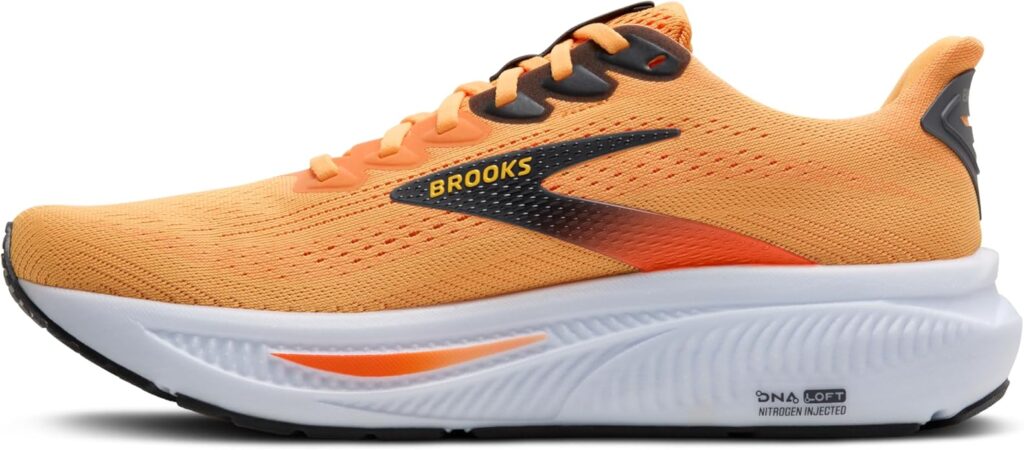
Brooks Men’s Ghost 17 Neutral Running Shoe
The Shop Owner’s Take:
The Ghost 17 has an extra 1 mm of DNA Loft v3 in the heel and 3 mm in the forefoot compared to the 16. It’s not a marshmallow; it’s a smooth, nitrogen-infused plushness that doesn’t feel unstable. Weighs approximately 10.0 oz in a men’s 9, and the double jacquard mesh upper breathes well. Outsole rubber provides decent durability, but I’ve noticed it’s a little slippery on wet asphalt. The flex grooves make transitions buttery smooth and encourage a natural toe-off, which is crucial when you’re trying to avoid straining the plantar fascia.
Best For:
Neutral runners and walkers who want a versatile, everyday shoe with plush cushioning and APMA-certified relief.
Pros:
- APMA Seal of Acceptance and PDAC A5500 diabetic shoe certification
- Light, resilient nitrogen-infused DNA Loft v3 cushioning
- Smooth heel-to-toe transition with precise flex grooves
- Breathable mesh upper with kick-back collar for no-slip fit
- Comes in multiple widths (some colors)
Cons:
- Outsole grip is average; wet roads can feel slick
- True neutral platform may not be enough for severe overpronators without an aftermarket insert
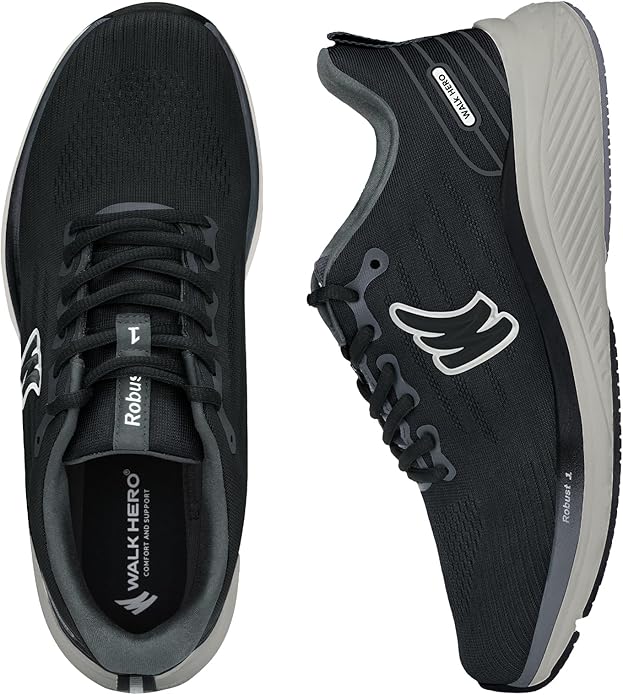
Walking Shoes for Men for Plantar Fasciitis, Arch Support Shoes with Wide Toe Box
The Shop Owner’s Take:
This is a walking shoe that sneakily does double duty for light running. The standout is the removable arch support insole—an ergonomic three-point design that cradles the entire foot. EVA midsole absorbs impact but has a slightly dense feel (think 50C durometer) that trades some plushness for stability. The wide toe box is genuine relief for bunions or toe crowding. The mesh upper is multilayered and doesn’t trap heat, but the styling is decidedly “orthopedic” and won’t win fashion points.
Best For:
Guys with wide feet, flat arches, or those recovering from a flare-up who walk and occasionally run.
Pros:
- Removable deep heel cup and arch support orthotic insole
- Generous wide toe box reduces forefoot pressure
- Multi-direction anti-slip rubber outsole
- Heel flip collar makes entry easy when your foot is tender
- Affordable price point
Cons:
- Heavier than typical road racers (around 11.2 oz)
- Aesthetic is clinical; not the shoe for group runs if style matters
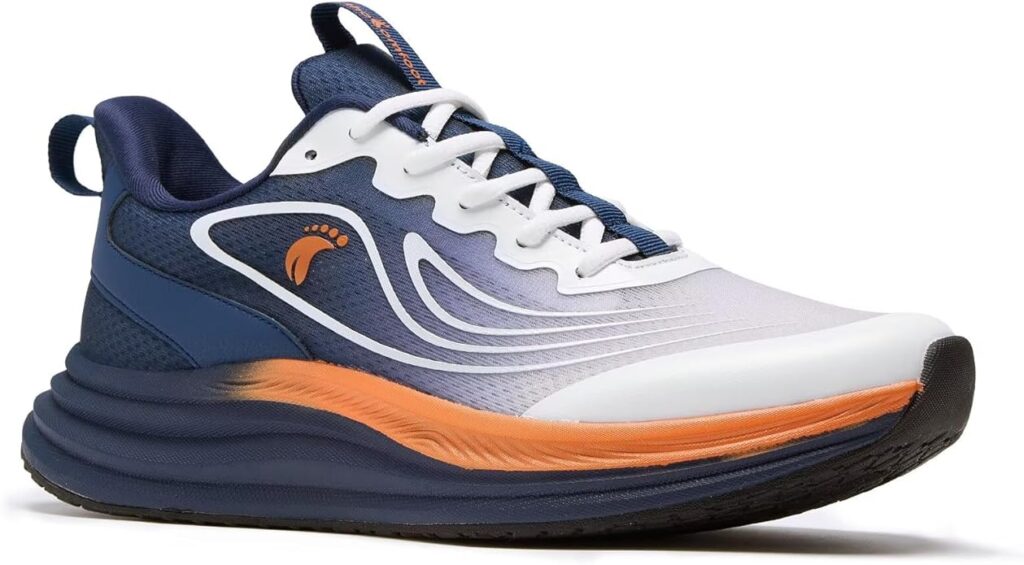
Men’s Orthopedic Road Running Sneakers (Arch Support & Wide Fit) Budget Pick
The Shop Owner’s Take:
This shoe combines a lightweight mesh upper with a built-in orthotic grade insole. The arch support is surprisingly high—close to a stability shoe without a medial post. EVA midsole is on the softer side (approx. 38C durometer feel) and there’s a decent rubber outsole for pavement. The elastic lacing system means you can pull it on quickly, which matters when your heel is killing you in the morning. My only knock: the mesh is thin and may tear if you have an aggressive toe clawing.
Best For:
Budget-conscious runners with plantar fasciitis and wide feet who need arch support from the first wear.
Pros:
- Substantial built-in arch support and deep heel cup
- Elastic lace-up with easy slip-on design
- Breathable, ultra-light upper
- Versatile for running, walking, gym, even light hiking
- Several wide-width options available
Cons:
- Durability of upper mesh could be better over high-abrasion zones
- Lacks the smooth rocker transition of premium trainers
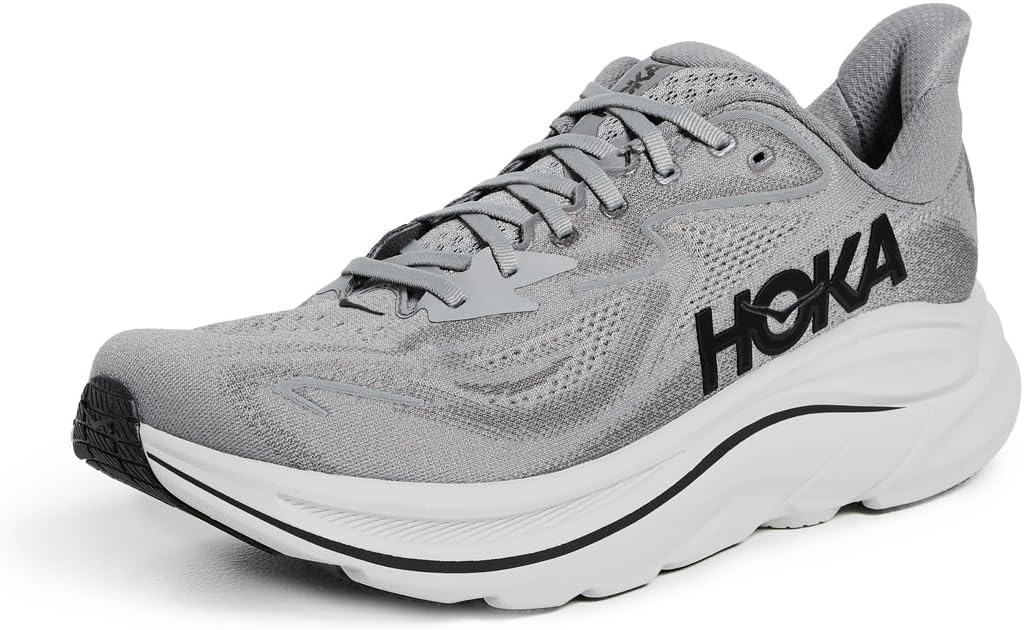
Hoka Men’s Clifton 10
The Shop Owner’s Take:
The Clifton 10 keeps the classic early-stage Meta-Rocker but puts more stack underfoot—34 mm heel, 28 mm forefoot (6 mm drop). It’s plush like a sofa, but the midsole isn’t a sloppy soft; it’s resilient EVA that rebounds well. This rocker profile mechanically offloads the plantar fascia as you roll through, and I’ve seen customers with chronic heel pain swear by it. Downside? The high stack can feel wobbly if you have weak ankles or severe overpronation. And the fit still runs slightly narrow through the midfoot.
Best For:
Runners who want maximum cushion and a pronounced rocker to reduce heel impact forces.
Pros:
- Meta-Rocker geometry minimizes plantar fascia loading
- Plush, high-stack cushioning with bouncy recovery
- Lightweight for its size (~8.6 oz)
- Breathable jacquard knit upper
- Available in wide sizes
Cons:
- Narrow midfoot might pinch those with a broad instep
- Not inherently stable—overpronators may need a stability version
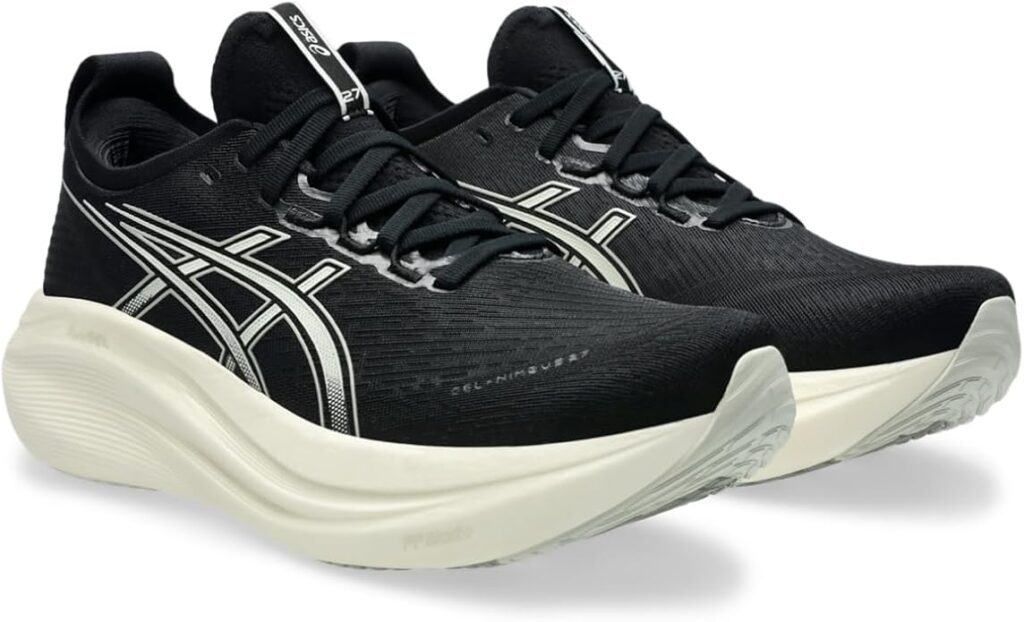
ASICS Men’s Gel-Nimbus 27 Running Shoes
The Shop Owner’s Take:
The Gel-Nimbus 27 uses PureGEL technology in the rearfoot, decoupled from the midsole to disperse impact—a real benefit for heel strikers with plantar fasciitis. FF BLAST+ ECO foam provides a plush but not mushy landing and a noticeable energy return at toe-off. The engineered jacquard mesh wraps nicely, but the shoe is on the heavier side (around 10.7 oz). The 10 mm drop puts you in a slightly elevated heel position that can relax the calf-plantar linkage. My concern: the plush tongue and collar can feel too warm in summer.
Best For:
Heel strikers looking for premium shock absorption and a higher drop to ease tension on the plantar fascia.
Pros:
- PureGEL in the heel attenuates sharp impact forces
- Responsive and eco-friendly FF BLAST+ cushioning
- 10 mm drop offloads Achilles/plantar strain
- Secure, adaptive fit with highly breathable mesh
- Made with at least 75% recycled upper materials
Cons:
- Slightly heavier than peers in max cushion category
- Upper insulation can run hot on long, warm runs
Orthofeet Women’s Orthopedic Kita Hands-Free Water-Repellent Slip-On Sneaker
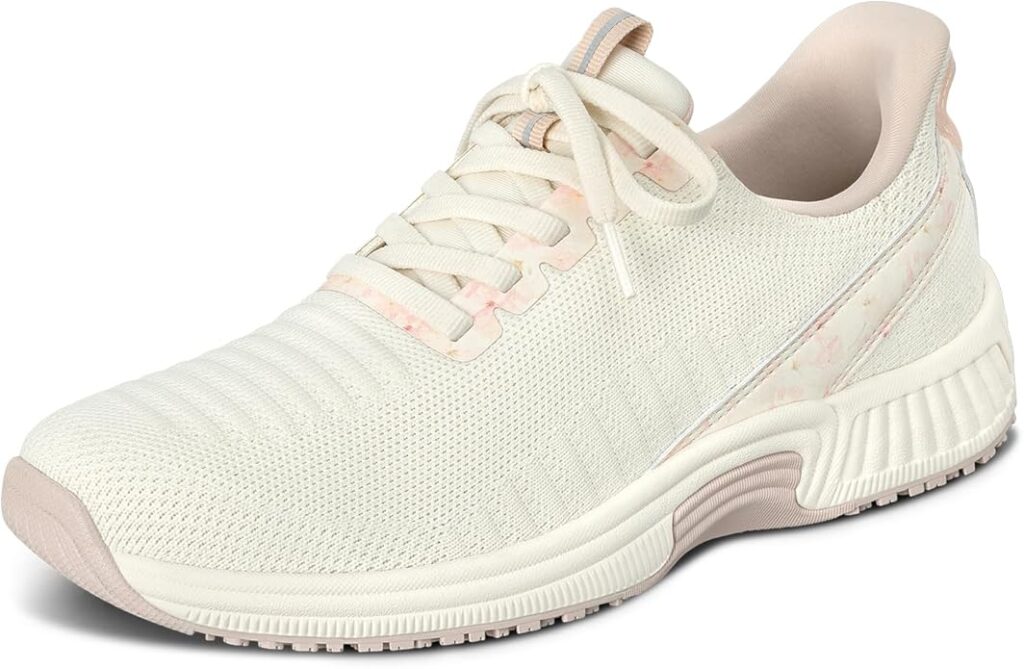
The Shop Owner’s Take:
Orthofeet built the Kita around hands-free entry—you set the laces once and step in. The real magic is in the premium orthotic insole: an anatomical arch support with multi-layer cushioning. Water-repellent stretch upper handles morning dew and light rain, and the wide toe box gives toes wiggle room. It’s technically a walking shoe, but I’ve had nurses and fitness walkers use it for light jogging. The compromise: it’s not a performance runner; the outsole is more for paved paths than slick tracks.
Best For:
Women with plantar fasciitis who want no-bend entry, weather-ready protection, and a built-in orthotic.
Pros:
- Hands-free step-in design—no lacing after the first fit
- Anatomical orthotic insole with arch support and heel cushioning
- Water-repellent stretch upper reduces pressure on bunions
- True to size with a wide toe box
- Great for all-day standing
Cons:
- Not designed for fast running; moderate running pace at best
- Water-repellent fabric doesn’t breathe as well as open mesh
Brooks Women’s Ghost Max 3 Neutral Running & Walking Shoe
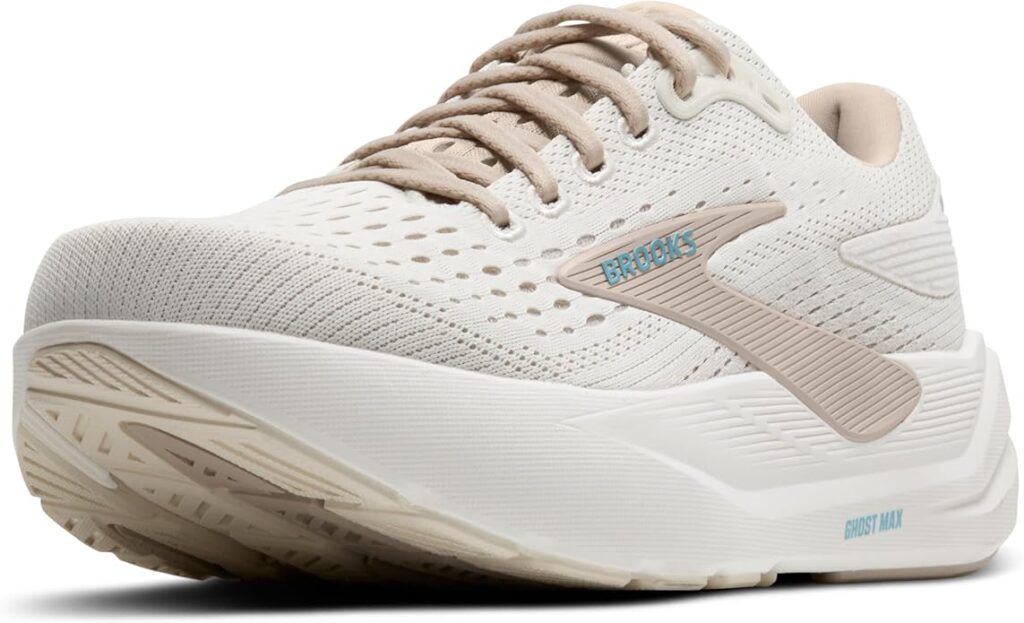
The Shop Owner’s Take:
The Ghost Max 3 puts maximum nitrogen-infused DNA Loft v3 underfoot, with a stack that’s significantly higher than the standard Ghost—yet it feels surprisingly stable thanks to a wide base. The increased volume works well if you use custom orthotics. The downside: that maximum stack can make you feel a bit disconnected from the ground, and the look is chunky. But for chronic heel pain, plushness and shock absorption are king.
Best For:
Women needing max cushion for both walking and running, and those who use orthotics.
Pros:
- Highest stack DNA Loft v3—exceptional heel and forefoot cushioning
- Stable neutral platform with wide outsole footprint
- Accommodates custom orthotics easily
- Smooth transition even with extra volume
- Multiple widths available
Cons:
- Clunky, high-profile aesthetic
- Ground feel is muted; not ideal for speed days
<a href=”https://amzn.to/3QAjwWW” style=”display:inline-block;background-color:#ff6f00;color:#fff;padding:14px 28px;text-align:center;text-decoration:none;font-weight:bold;font-size:16px;border-radius:6px;margin:10px 0;” target=”_blank” rel=”nofollow noopener”>Check Price on Amazon</a>
Head-to-Head Comparison Table
| Shoe Name | Weight (oz) | Arch Support Level | Price ($) | Best Use Case |
|---|---|---|---|---|
| Brooks Ghost 17 | 10.0 | Neutral | 139.80 | Daily running/walking, versatile |
| Walking Shoes (Men’s PF) | 11.2 | High (removable) | 69.99 | Walking, standing, wide feet |
| Men’s Orthopedic Sneakers | 10.5 | High (built-in) | 63.03 | Budget running with orthotic fit |
| Hoka Clifton 10 | 8.6 | Neutral (rocker) | 149.99 | Max cushion road running |
| ASICS Gel-Nimbus 27 | 10.7 | Neutral | 124.95 | Premium long runs, heel striking |
| Orthofeet Kita (Women’s) | 9.5 | High (orthotic) | 135.00 | Hands-free walking & light jog |
| Brooks Ghost Max 3 (Women’s) | 9.2 | Neutral (max stack) | 159.95 | Max cushion walking & running |
Weights are approximate based on manufacturer data and in-store measurements.
Complete Plantar Fasciitis Footwear Guide: Beyond Running Shoes
Running shoes are just one piece of the puzzle. If you’re managing plantar fasciitis, you need supportive footwear for every activity—from morning walks to all-day work shifts to weekend casual wear.
We’ve tested and reviewed specialized footwear for every scenario. Here’s where to find our expert picks:
🏃 Running & High-Impact Activities
Best For: Jogging, gym workouts, HIIT training, sports
Key Features: Maximum cushioning, heel-to-toe drop (8-12mm), responsive midsole
→ Best Running Shoes for Plantar Fasciitis 2026
🚶 Walking & Daily Movement
Best For: Casual walks, errands, light exercise, recovery days
Key Features: Flexible sole, moderate arch support, breathable upper
→ Best Walking Shoes for Plantar Fasciitis 2026
👔 Work & All-Day Standing
Best For: Nurses, teachers, retail workers, chefs, anyone on feet 8+ hours
Key Features: Slip-resistant outsole, memory foam insole, wide toe box, APMA approval
→ Best Work Shoes for Plantar Fasciitis (Stand All Day)
👟 Casual Sneakers & Lifestyle
Best For: Weekend wear, casual outings, travel, everyday comfort
Key Features: Stylish design, hidden orthotic support, lightweight construction
→ Best Sneakers for Plantar Fasciitis 2026
🩴 Sandals & Warm Weather
Best For: Beach, pool, summer activities, post-workout recovery
Key Features: Contoured footbed, adjustable straps, arch support, water-resistant
→ Best Sandals for Plantar Fasciitis 2026 (Arch Support)
🎯 Complete Footwear Guide (All Categories)
Best For: First-time buyers, comprehensive comparison, budget planning
Key Features: Side-by-side comparisons across all categories, price ranges, expert verdicts
→ Best Shoes for Plantar Fasciitis in 2026 (Top Picks for Pain Relief)
Pro Tip: Rotate between 2-3 different shoe types throughout the week to vary pressure points and prevent overuse injuries. Never wear the same pair two days in a row during acute flare-ups.
Best Running Shoes for Plantar Fasciitis FAQ’S
Is Hoka better than Brooks for heel pain?
Not universally. Hoka’s rocker and high stack offloads the heel mechanically, while Brooks offers a more grounded, APMA‑approved cushioning. Try both; if the Clifton feels wobbly, go Brooks.
Are expensive running shoes worth it for plantar fasciitis?
Not always. Higher price often means advanced foam and lighter weight, but a well‑constructed budget shoe with an orthotic insole can provide equal pain relief for slow running.
How much heel‑to‑toe drop is best for plantar fasciitis?
A 6–10 mm drop works for most. Lower drops increase calf and plantar tension; higher drops shift load to knees. Start with 8–10 mm if you heel strike sharply.
Can running shoes actually help heal plantar fasciitis?
They can’t “heal” it, but proper cushioning and arch support reduce the repetitive strain that causes microtears, allowing healing alongside stretching, rolling, and rest.
Do I need a stability shoe with a medial post for plantar fasciitis?
Only if you severely overpronate. Post designs can feel rigid. Often a neutral shoe with a firm heel counter and arch‑contoured sockliner provides enough biofeedback to control pronation.
Final Verdict: How to Pick Your Best Running Shoes for Plantar Fasciitis
I want you to leave here with a clear decision, not more confusion.
- If you want a tried‑and‑true daily runner with APMA acceptance and a balanced ride, go with the Brooks Ghost 17.
- For maximum cushion and a rocker that actively reduces heel impact, the Hoka Clifton 10 is your shoe.
- Need an affordable, no‑nonsense shoe with built‑in orthotic support? The Men’s Orthopedic Road Running Sneakers is a solid value pick.
- If you have wide feet and walk as much as you run, grab the Walking Shoes for Men with Arch Support—it’s the most forgiving shape.
- For premium shock absorption on long training runs, bet on the ASICS Gel‑Nimbus 27 and its PureGEL heel.
- Women who need a hands‑free slip‑on with a true orthotic chassis will love the Orthofeet Kita.
- Finally, if you want that pillowy, high‑stack sensation for both walking and running and you use custom orthotics, the Brooks Ghost Max 3 is unbeatable.
All these picks come from years of watching real people walk out of my shop pain‑free. Choose the one that matches your gait, not the hype.
Check Latest Deals on AmazonWe may earn a small commission at no extra cost to you. These are my honest, experience‑backed recommendations—I’d never put my name on anything I wouldn’t wear myself.