
What Is Shoe Bite? Causes, Symptoms, and How to Treat It Effectively (2026 Guide)
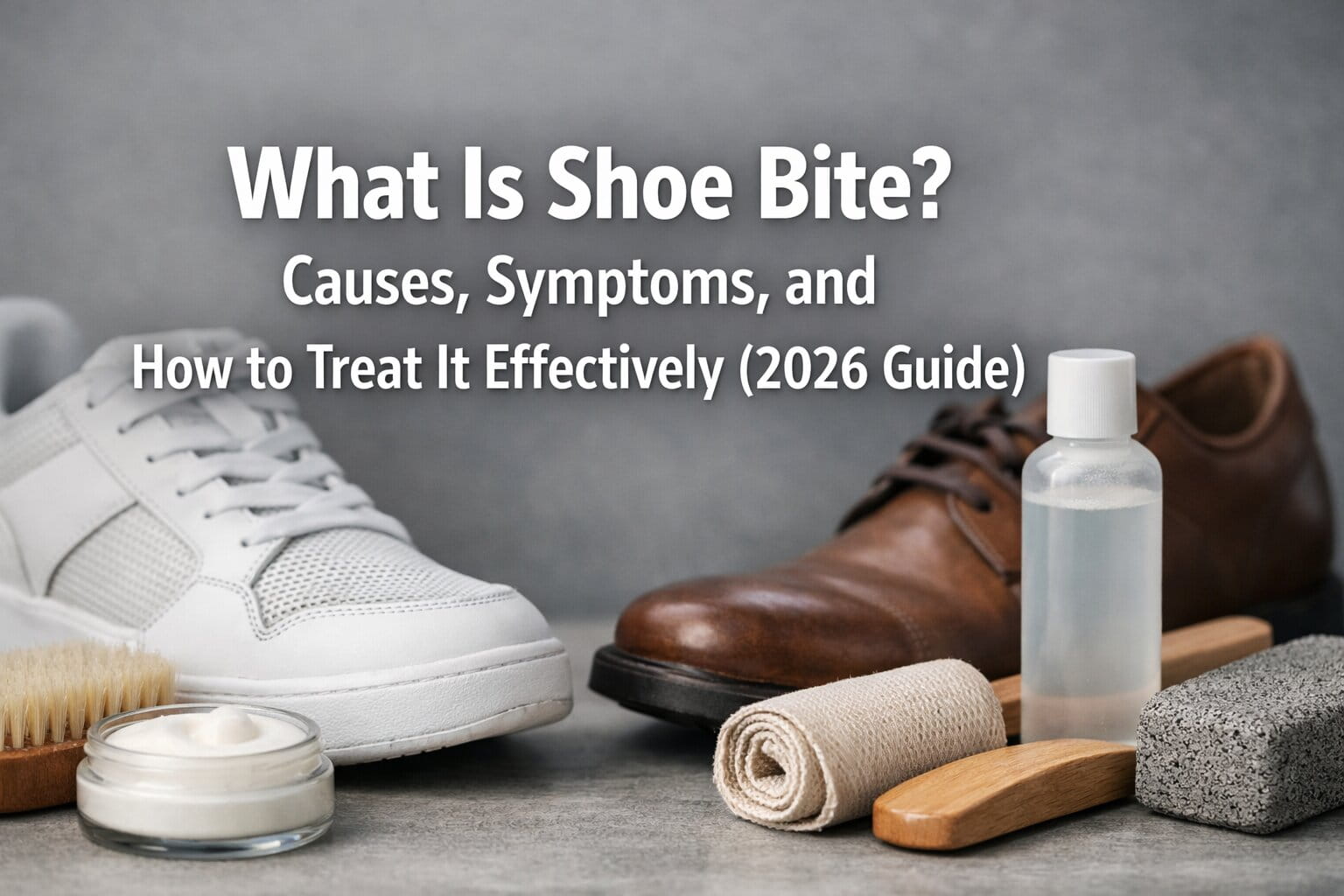
Shoe bite is a common term for painful rubbing, irritation, raw skin, or a blister caused by friction between your foot and footwear. It most often affects the heel, ankle, toes, or sides of the foot.
If you are searching for shoe bite meaning, shoe bite treatment, shoe bite remedies, or how to prevent shoe bite from new shoes, this guide explains what causes it, what you can do at home, how to prevent it, and when a blister needs medical attention.
Quick Answer: What Is Shoe Bite?
Shoe bite usually refers to skin irritation or a friction blister caused by repeated rubbing between your footwear and skin.
It can begin as a hot, red, or tender spot and develop into a fluid-filled blister if the rubbing continues.
The basic approach is:
- Stop or reduce the friction.
- Clean the affected area gently.
- Protect the skin with an appropriate dressing.
- Avoid the footwear that caused the problem while the area heals.
- Fix the underlying fit problem before wearing the shoes for long periods again.
The American Academy of Dermatology recommends properly fitting shoes, moisture-wicking socks, protective coverings such as moleskin, and stopping activity when pain, discomfort, or redness begins.
Recommended Products for Shoe Bite
These products can help reduce rubbing and cushioning around areas commonly affected by shoe bites.
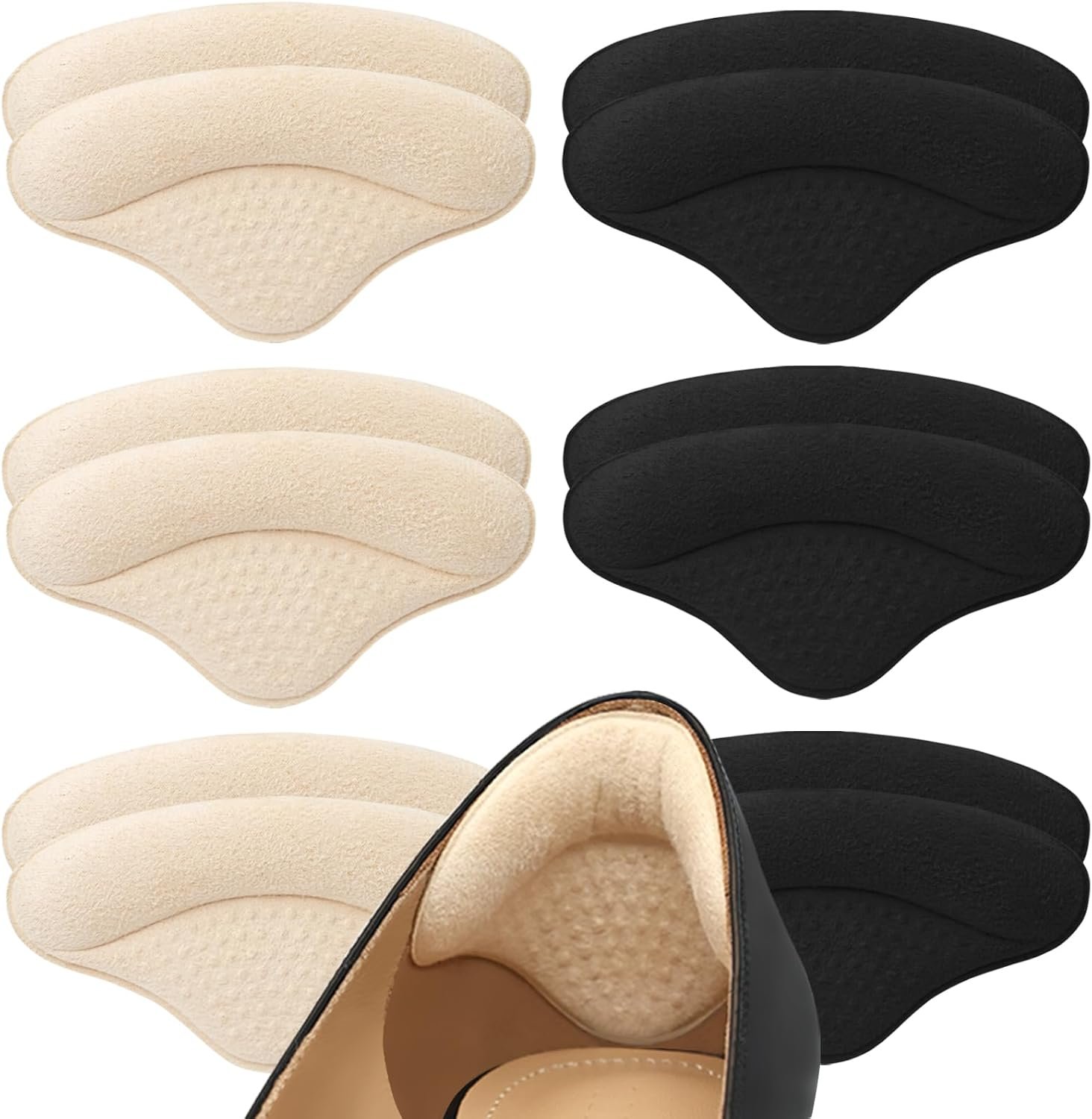
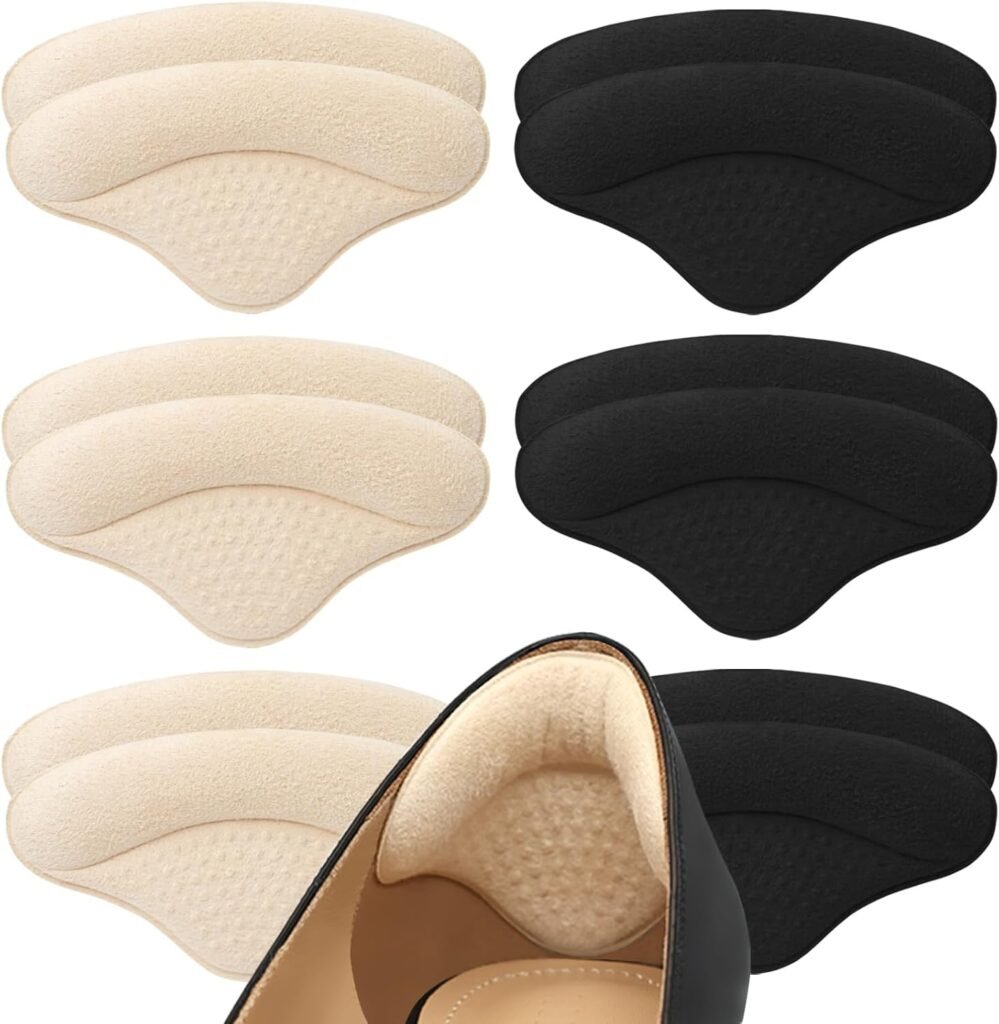
MUKIFINE Heel Pads and Heel Grips
Designed to cushion the heel and reduce rubbing caused by movement inside footwear. A useful option when shoe bite occurs around the heel area.
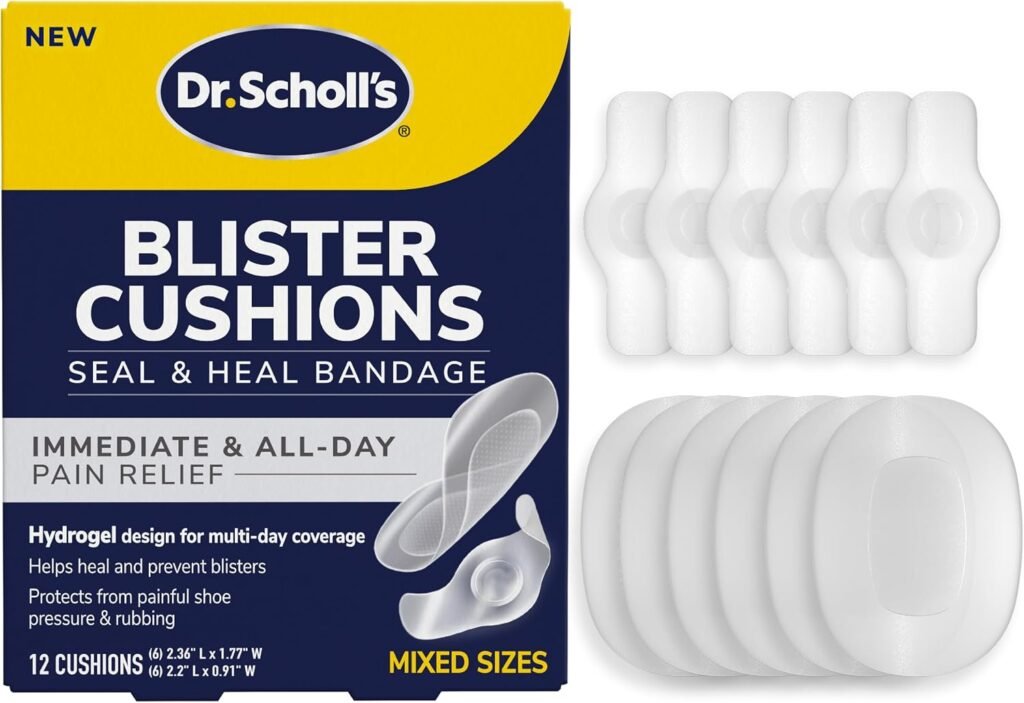
Dr. Scholl’s Blister Cushions Seal & Heal
Blister cushioning designed to protect sensitive areas from continued friction. Suitable for spots that have already become sore or blister-prone.
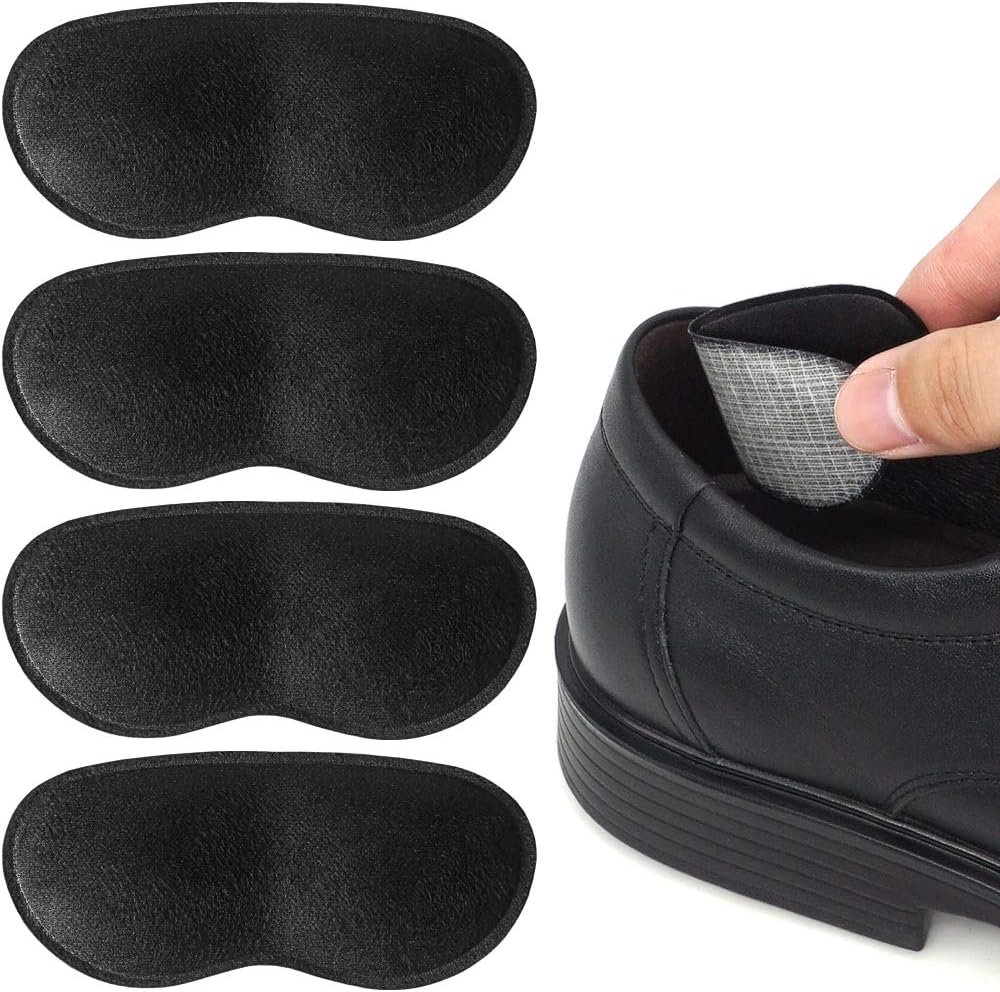
Dr.Foot Heel Grips
Self-adhesive heel grips that add cushioning at the back of the shoe and can help reduce heel movement and rubbing.
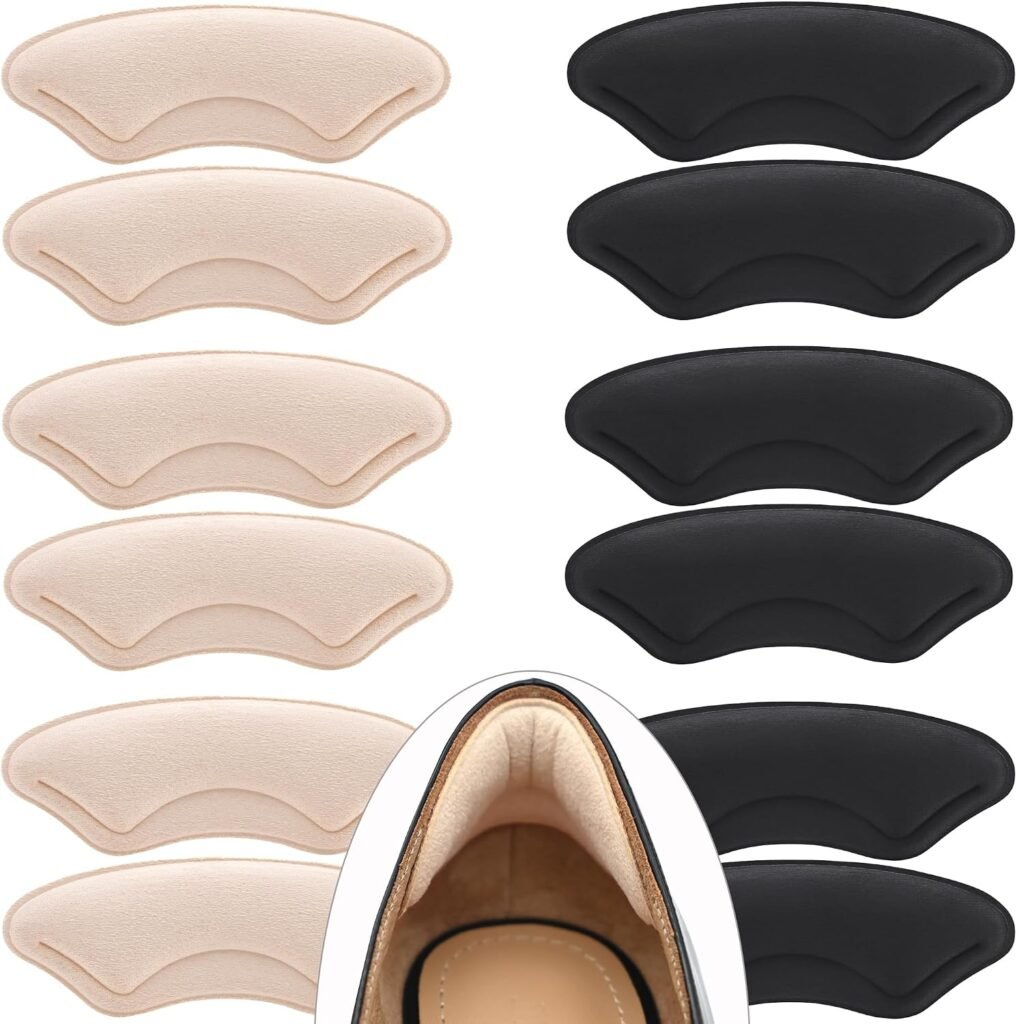
Comfowner Heel Cushion Pads
Heel cushion pads designed to add a layer of cushioning between the shoe and heel, helping reduce rubbing from footwear movement.
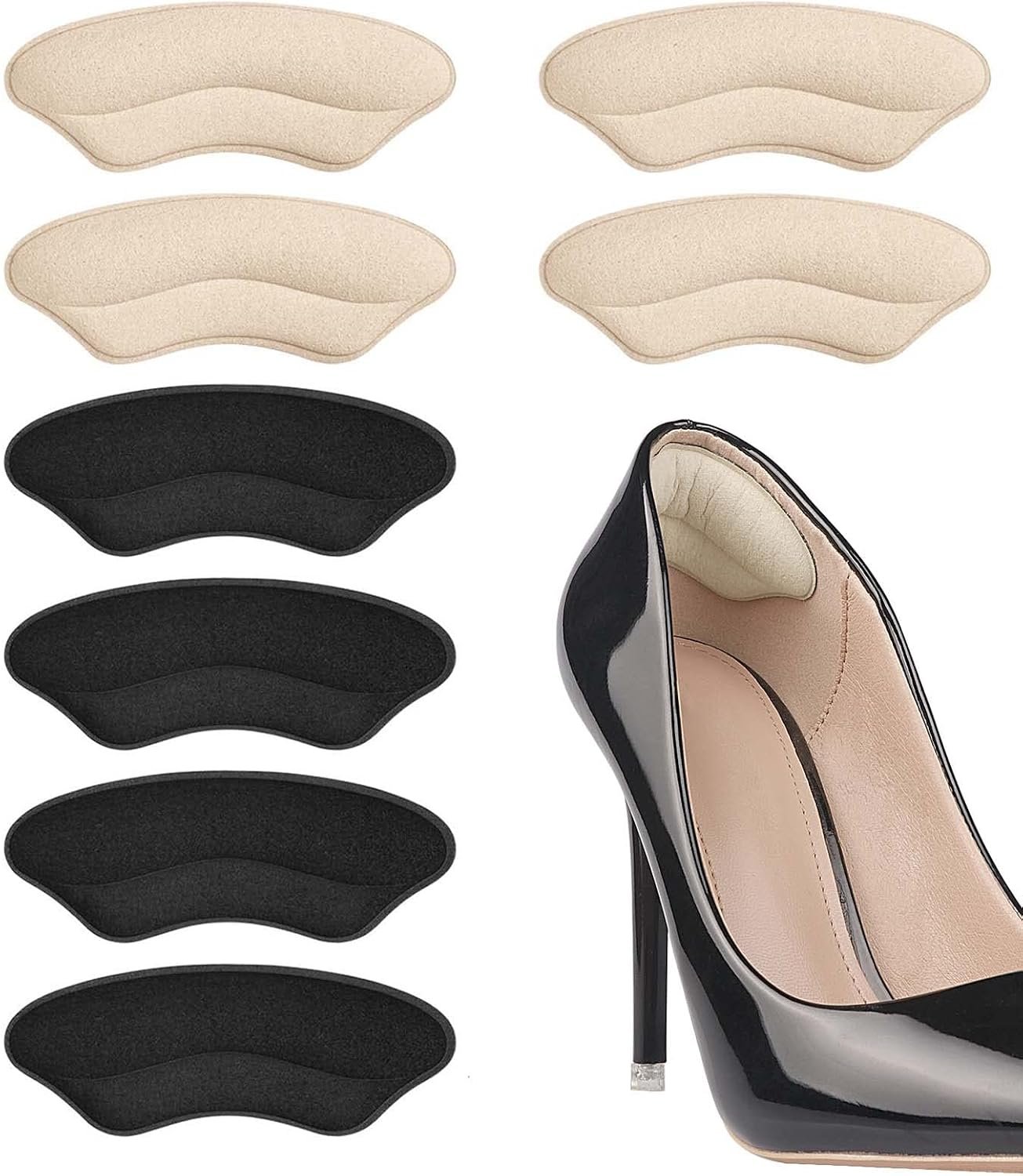
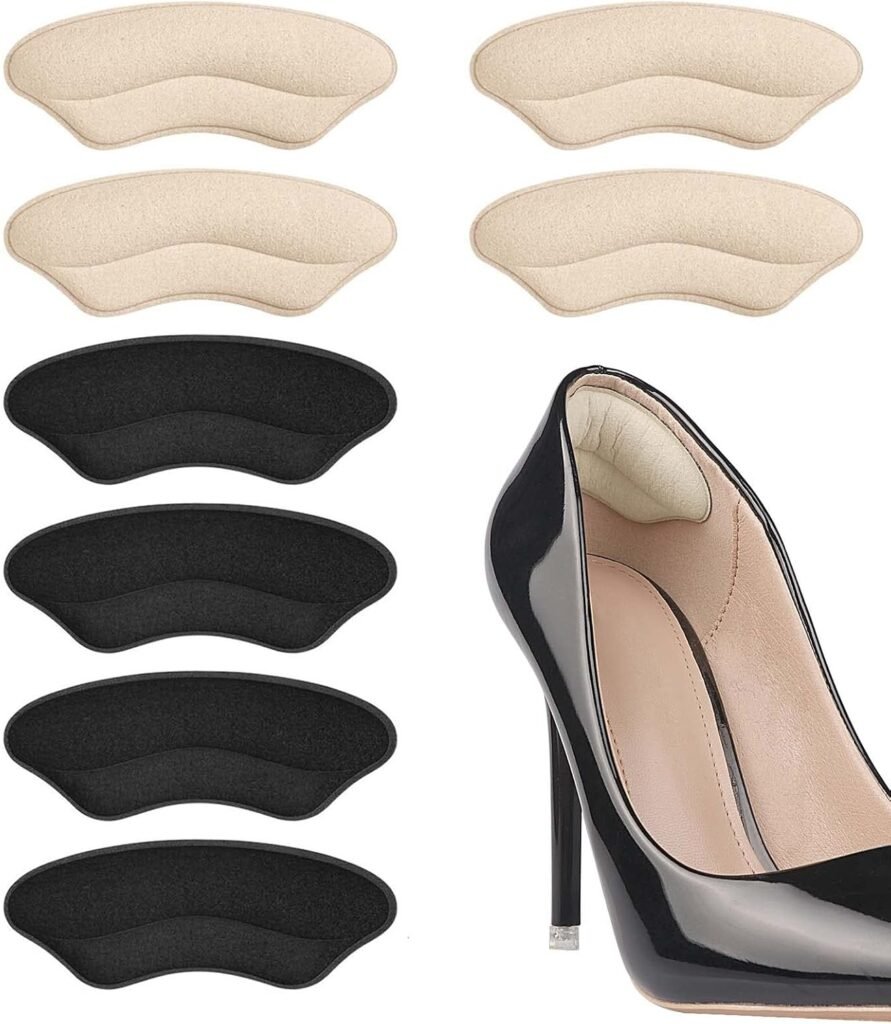
Riootlnm Heel Pads
Heel pads that provide cushioning between the shoe and heel to help reduce friction and movement that may contribute to shoe bites.
Shoe Bite Meaning: What Does “Shoe Bite” Mean?
“Shoe bite” is an everyday footwear term rather than a specific medical diagnosis.
In practical use, it generally describes skin irritation, abrasion or a friction blister caused by footwear rubbing against the foot.
A shoe bite can appear as:
- Redness
- Burning or stinging
- Tenderness
- A hot spot
- Raw skin
- A clear fluid-filled blister
- A blood blister after stronger pressure or pinching
A friction blister develops when repeated rubbing damages the upper layers of skin and fluid collects beneath the surface. Cleveland Clinic identifies poorly fitting or overly tight footwear and repeated friction as common causes of friction blisters.
What Causes Shoe Bite?
Shoe bite is usually caused by friction, but the reason for that friction can vary.
1. Poor Shoe Fit
A shoe can cause rubbing when it is:
- Too tight
- Too loose
- Too narrow
- Too short
- Too wide around the heel
- The wrong shape for your foot
A shoe does not have to be obviously too small to cause a blister.
You can have the correct length but still experience rubbing because the heel shape, toe-box width, upper construction or internal volume does not match your foot.
2. Heel Movement
If your heel repeatedly lifts and drops inside the shoe, the skin can rub against the heel counter or collar.
This is one reason a larger shoe is not always the answer to a tight-feeling shoe.
If your shoes are slipping at the back, a properly fitted heel grip may help in some situations. However, if the shoe is fundamentally the wrong size or shape, changing the shoe is a better solution.
3. Stiff New Materials
New footwear may have:
- Firm leather
- Stiff synthetic uppers
- Rigid heel counters
- Hard collars
- Rough seams
- Stiff straps
Some footwear becomes more comfortable with gradual use, but significant pain or repeated blistering should not simply be treated as something you have to tolerate.
If your problem is specifically caused by a new leather pair, see our guide on how to break in new leather shoes quickly.
4. Moisture and Sweaty Feet
Sweat can increase the conditions that contribute to friction and chafing.
The AAD recommends nylon or moisture-wicking socks for people who are prone to foot blisters.
If your feet become sweaty during long walks, change damp socks when necessary and allow footwear to dry between uses.
5. Long Walking or Standing
A shoe that feels fine for 20 minutes may become uncomfortable after several hours.
Long periods of:
- Walking
- Standing
- Commuting
- Shopping
- Travel
- Hiking
- Running
- Working
can expose a small fit problem that might not be noticeable during a short try-on.
Where Does Shoe Bite Usually Happen?
The location of the irritation can give you a useful clue about the problem.
| Location | Possible reason |
| Back of heel | Heel movement or rigid heel counter |
| Achilles area | High or stiff rear collar |
| Toes | Narrow or shallow toe box |
| Little toe | Insufficient width |
| Side of foot | Shoe width or shape mismatch |
| Ankle | Collar or strap friction |
| Top of foot | Tight lacing or restrictive upper |
If the same location becomes irritated every time you wear a particular shoe, don’t simply keep treating the skin.
Look at the footwear itself.
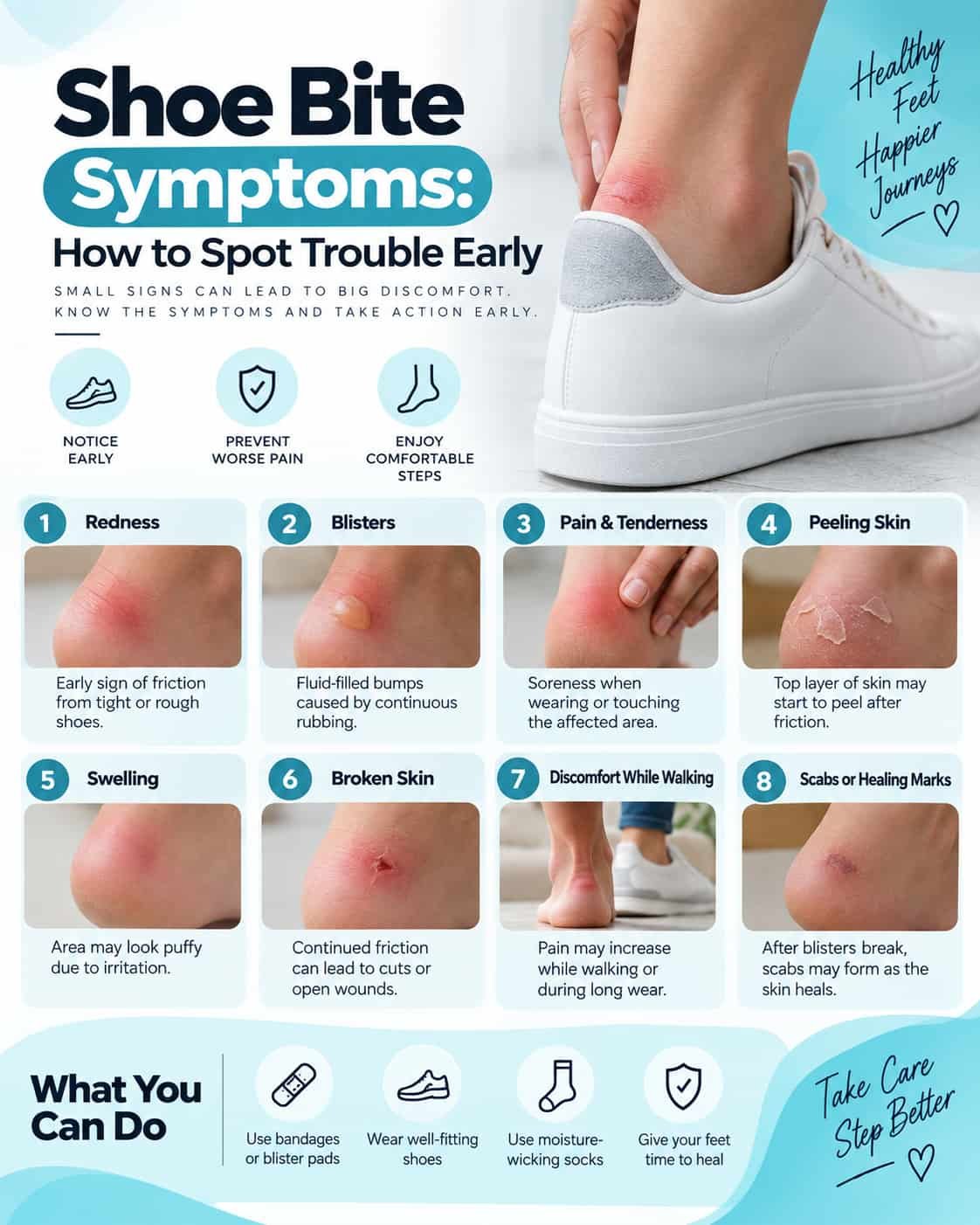
Shoe Bite Symptoms: How to Spot It Early
The first sign is often a hot spot.
You may notice:
- Burning
- Stinging
- Redness
- Warmth
- Tenderness
- Localized pain
- Skin irritation
If the rubbing continues, a blister may form.
What Should You Do When You Feel a Hot Spot?
Stop before it becomes a full blister.
Remove the shoe, inspect the area and protect the problem spot.
The AAD recommends stopping the activity when you experience pain or discomfort or when the skin becomes red.
If you regularly struggle with blisters, our detailed guide on how to handle blisters, including prevention and remedies provides additional information on protecting irritated skin.
How to Treat Shoe Bite at Home
If you already have a shoe bite, the priority is to remove the friction and protect the damaged skin.
Step 1: Stop Wearing the Shoes That Caused It
This is one of the most important steps.
Continuing to rub the same area can delay healing and make a small blister more painful.
The NHS advises avoiding the shoes or equipment that caused the blister until it heals.
Step 2: Clean the Area Gently
If the skin is irritated or the blister has opened:
- Wash your hands before touching it.
- Gently wash the affected area.
- Pat it dry.
- Avoid rubbing the skin.
- Cover it with an appropriate dressing.
The NHS recommends gently washing blisters and keeping them covered with a soft plaster or padded dressing.
Step 3: Protect the Blister
A protective dressing can reduce further contact with footwear.
For pressure areas, padded protection can help keep the shoe away from the damaged skin.
Hydrocolloid blister dressings are another option. The NHS notes that hydrocolloid dressings can protect a blister and may help reduce pain and speed healing.
Step 4: Should You Pop a Shoe Bite Blister?
Usually, no.
An intact blister provides a natural layer of protection over the skin underneath.
The AAD recommends avoiding popping or draining most blisters. The NHS also advises not to burst a blister yourself.
If a blister breaks naturally, don’t peel away the remaining skin. Keep the area clean and covered.
A very large or painful blister may sometimes need drainage, but if you are unsure, particularly if you have a condition that affects healing or sensation, seek medical advice.
How Long Does a Shoe Bite Take to Heal?
There is no single healing time for every shoe bite.
A small friction blister may settle relatively quickly, while a larger or repeatedly irritated blister can take longer.
The NHS says many blisters heal within about a week, while the AAD notes that most blisters heal within one to two weeks.
The most important factor is removing the source of friction.
If you continue wearing the shoe that caused the blister, healing can take longer.
How Long Do Shoe Bites Take to Heal?
For a straightforward friction blister, expect improvement over several days, with many healing within roughly one to two weeks.
If it is getting worse rather than better, or if you notice signs of infection, get medical advice.
How to Prevent Shoe Bite From New Shoes
Prevention starts with the shoe fit, not with a miracle cream or home remedy.
1. Choose the Right Fit
Check:
- Length
- Width
- Toe-box space
- Heel security
- Upper pressure
- Internal seams
- Overall comfort
A shoe should hold your foot securely without creating painful pressure points.
2. Break In New Shoes Gradually
Don’t make the first wear of a new pair an eight-hour day.
Start with short periods and increase wearing time gradually.
The NHS specifically recommends wearing new shoes for short periods until they become comfortable.
For leather footwear, you can also read our guide on how to break in new leather shoes quickly.
3. Wear Suitable Socks
Moisture-wicking socks can help manage sweat and reduce friction.
The AAD recommends moisture-wicking socks for people prone to blisters.
Avoid adding thick socks if the shoe is already tight, because the extra material can increase pressure.
4. Protect Known Hot Spots
If the same area always develops a blister, protect it before starting a long walk.
Options include:
- Moleskin
- Blister dressings
- Soft adhesive padding
- Heel grips
- Anti-friction products
The AAD specifically recommends soft bandages such as moleskin for areas prone to friction.
5. Reduce Heel Movement
If the shoe is slightly loose around the heel, a suitable heel grip may reduce movement.
But don’t use a thick heel pad to force an incorrectly sized shoe to work.
If the shoe is too short or too narrow, choose a different shoe.
6. Keep Feet Dry
If your feet sweat heavily:
- Change damp socks.
- Allow footwear to dry.
- Choose breathable socks.
- Consider appropriate foot-drying products.
Moisture management can be especially useful during long walks and exercise.
What Should You Apply on New Shoes to Avoid Shoe Bite?
This is one of the most common practical questions around new footwear.
There is no single product that prevents every shoe bite.
The right option depends on why the shoe is rubbing.
Moleskin
Useful for protecting a known friction area.
Petroleum Jelly
Petroleum jelly can reduce friction in some situations. The AAD includes petroleum jelly as one option for areas prone to friction.
Anti-Friction Products
These can create a barrier between the skin and footwear.
Heel Grips
Useful when the primary issue is heel movement in a slightly loose shoe.
Blister Dressings
Useful when a hot spot has already become irritated or blistered.
Don’t apply random oils or creams to open skin simply because they are popular online. For an active blister, cleaning, protection and friction reduction are more important.
Can Vaseline Help With Shoe Bite?
Yes, petroleum jelly can help reduce friction in some situations.
The AAD specifically lists petroleum jelly as an option for reducing friction in problem areas.
However, Vaseline cannot fix:
- A shoe that is too small
- A shoe that is too narrow
- Excessive heel slipping
- A rough internal seam
- A badly shaped shoe
If the same spot keeps getting injured, fix the footwear problem rather than repeatedly applying a friction barrier.
Can Coconut Oil Cure Shoe Bite?
Coconut oil is frequently mentioned in online discussions about shoe bite, particularly as a home remedy.
However, it should not be presented as a proven treatment for friction blisters.
For an active shoe bite, focus on:
cleaning + protection + reducing friction + allowing the skin to heal.
If you are dealing with an open blister, avoid experimenting with household products that have not been recommended for the wound.
What Do Reddit Users Ask About Shoe Bite?
Search discussions reveal several practical questions that aren’t always answered well by basic shoe-bite articles.
Common questions include:
- Why do my shoes bite even though they are the correct size?
- Should I size up or choose a wider shoe?
- Do heel grips actually work?
- Are thick socks useful?
- Does moleskin help?
- How do I break in new shoes?
- Why does the same heel keep blistering?
These are useful questions because shoe bite is not always simply a size problem.
Heel shape, shoe construction, foot shape and movement can all contribute to friction.
Community discussions can be useful for identifying these real-world problems, but Reddit experiences should be treated as personal experiences rather than medical evidence.
Why Do My Shoes Bite My Heels Even When They Fit?
This is a particularly common problem.
A shoe can have the correct length while still having the wrong heel shape or internal construction for your foot.
Possible causes include:
- Heel movement
- Stiff heel counter
- Rigid collar
- Seam placement
- Incorrect shoe volume
- Foot shape mismatch
If the same heel keeps blistering, try changing the shoe’s construction rather than simply changing size.
Do Heel Grips Prevent Shoe Bite?
They can help when heel movement is the main problem.
Heel grips add cushioning and can reduce the amount of movement between the heel and shoe.
But they are not a universal solution.
If the shoe is already tight, adding a thick heel grip can make the fit worse.
Use heel grips when they address a specific fit issue rather than as a substitute for correct sizing.
What Are the Best Shoe-Bite Protection Products?
If your main problem is heel rubbing or loose footwear, these products may be useful.
Product prices below are the prices from the product information supplied for this update. Amazon prices and availability can change.
1. MUKIFINE Heel Pads and Heel Grips
Best for: Heel slipping, loose shoes and friction protection
Product: 6 Pairs Heel Pads Heel Grips Liner for Loose Shoes
Supplied price snapshot: $9.99
Supplied rating snapshot: 4.2/5 from 2,725 reviews
These adhesive heel pads are designed to add cushioning at the back of the shoe and help reduce heel movement.
They make the most sense when your shoe is slightly loose around the heel, rather than when the entire shoe is too small.
🛒 Check Price on Amazon2. Dr. Scholl’s Blister Cushions Seal & Heal
Best for: Protecting blister-prone areas
Product: Dr. Scholl’s Blister Cushions Seal & Heal, 12 ct
Supplied price snapshot: $7.99
Supplied rating snapshot: 4.4/5 from 2,455 reviews
This product is specifically positioned around blister protection and can be useful when you need a protective layer between irritated skin and footwear.
It is more directly suited to blister care and prevention than a standard heel grip.
🛒 Check Price on Amazon3. Dr.Foot Heel Grips
Best for: Heel slipping and shoe fit adjustment
Product: Dr.Foot Heel Grips for Men and Women
Supplied price snapshot: $6.99
Supplied rating snapshot: 4.1/5 from 6,383 reviews
These self-adhesive heel grips are designed to add cushioning and reduce slipping.
They can be useful when a shoe fits reasonably well overall but has too much movement around the heel.
🛒 Check Price on Amazon4. Comfowner Heel Cushion Pads
Best for: Loose shoes and heel cushioning
Product: 6 Pairs Comfowner Heel Cushion Pads
Supplied price snapshot: $7.99
Supplied rating snapshot: 4.3/5 from 4,849 reviews
These pads are intended to add cushioning and help fill excess space around the heel.
They may be useful when the back of a shoe feels loose and creates repeated friction.
🛒 Check Price on Amazon5. Riootlnm Heel Pads
Best for: Loose shoes and heel protection
Product: Heel Pads for Shoes That Are Too Big, 4 Pairs
Supplied price snapshot: $8.99
Supplied rating snapshot: 4.4/5 from 2,834 reviews
These adhesive heel pads are designed to add cushioning and reduce excess space around the heel.
As with other heel grips, they work best when heel movement is the problem, not when the shoe is fundamentally the wrong size.
🛒 Check Price on AmazonShoe-Bite Protection: Which Option Should You Choose?
| Problem | Option to consider |
| Heel slipping | Heel grip |
| Existing blister | Blister cushion or protective dressing |
| Known hot spot | Moleskin or protective padding |
| Sweaty feet | Moisture-wicking socks |
| Mild friction | Petroleum jelly or anti-friction product |
| Tight toe area | Different shoe width or toe-box shape |
| Stiff new leather | Gradual break-in |
| Repeated rubbing from same shoe | Reassess the shoe fit |
The key is to match the product to the cause of the friction.
Common Shoe-Bite Mistakes
Wearing new shoes all day on the first try
Start with short periods.
Assuming a larger size will solve everything
A larger shoe can increase heel movement.
Ignoring repeated hot spots
A hot spot is an early warning sign.
Continuing to wear shoes over an open blister
More friction can delay healing.
Popping every blister
Most uncomplicated friction blisters should be protected rather than routinely popped.
Using household remedies without considering the wound
Not every popular remedy is appropriate for broken skin.
Adding thick padding to an already-tight shoe
More material can create more pressure.
When Should You See a Doctor for a Shoe Bite?
Most simple friction blisters can be managed at home.
However, get medical advice if you notice:
- Increasing redness
- Increasing swelling
- Worsening pain
- Pus
- Green or yellow drainage
- Skin that becomes hot
- Redness spreading around the area
- Fever
- A blister that repeatedly returns
- A blister that does not improve
The NHS advises seeking medical attention for painful or recurrent blisters and for signs of infection such as heat, redness or green/yellow pus.
The AAD also recommends medical evaluation when a blister develops redness, pus, increased pain or swelling.
If you have diabetes, reduced sensation, circulation problems or another condition that affects wound healing, seek professional advice sooner rather than relying only on home treatment.
How to Choose Shoes That Are Less Likely to Cause Shoe Bite
Before buying your next pair, check these five areas.
1. Heel Fit
Your heel should feel secure without excessive movement or painful pressure.
2. Toe-Box Space
Your toes should not be compressed against the front or sides.
3. Internal Construction
Look for rough seams, hard edges or uncomfortable stitching.
4. Upper Material
Consider whether the material and construction create pressure at your usual problem areas.
5. Intended Use
Choose footwear appropriate for the activity.
A shoe for a short commute may not be suitable for an entire day of walking.
If you spend long hours walking or standing, see our guide to best walking shoes for women all day.
If your footwear is primarily for work, see best walking shoes for women at work.
If you regularly walk on hard surfaces, you may also want to compare best walking shoes for women on concrete.
A Simple 5-Minute Shoe-Bite Check
Before taking a new pair outside, try this:
Step 1: Put on the socks you normally use.
Step 2: Wear both shoes.
Step 3: Walk around indoors.
Step 4: Pay attention to your heels, toes, ankles and the top of your foot.
Step 5: Remove the shoes and check for redness or irritation.
If the shoe is already causing painful rubbing indoors, don’t wait for a long walk to confirm the problem.
Frequently Asked Questions
What is shoe bite?
Shoe bite is a common term for skin irritation, abrasion or a friction blister caused by repeated rubbing between footwear and the foot.
What causes shoe bite?
Common causes include poor fit, heel movement, stiff materials, rough seams, moisture and prolonged walking or standing.
What is the medical term for shoe bite?
There is no single medical diagnosis called “shoe bite.” When footwear rubbing produces a fluid-filled blister, it is generally described as a friction blister.
How do I treat shoe bite?
Stop the friction, gently clean the area, protect it with a suitable dressing and avoid the footwear that caused the problem while it heals.
How long do shoe bites take to heal?
Many uncomplicated blisters improve within several days and heal within roughly one to two weeks, although healing time varies.
What is the fastest way to heal a shoe bite?
The most useful approach is to remove the source of friction, protect the affected area and keep it clean while it heals.
Is Vaseline good for shoe bite?
Petroleum jelly can help reduce friction in some situations, but it will not correct a badly fitting shoe.
Can I wear shoes with a shoe bite?
It is better to avoid the shoes that caused the blister until the area heals. Continuing to rub the same spot can delay recovery.
What should I apply on new shoes to avoid shoe bite?
For a known friction area, consider moleskin, protective padding, heel grips or an appropriate anti-friction product. Proper shoe fit remains the most important factor.
Can coconut oil cure shoe bite?
Coconut oil is commonly mentioned as a home remedy, but it should not be treated as a proven cure for friction blisters. Focus on cleaning, protection and reducing friction.
Should I pop a shoe-bite blister?
Usually, no. Most uncomplicated friction blisters should be protected and left intact.
Do heel grips prevent shoe bite?
Heel grips can help when heel movement causes the rubbing. They are not a substitute for the correct shoe size and shape.
Why do my shoes bite even though they fit?
Correct length does not guarantee correct overall fit. Width, heel shape, shoe volume, internal seams and foot shape can all affect friction.
Does wearing two socks prevent blisters?
Two sock layers can help some people reduce friction, but they should not make the shoe too tight. The AAD lists two pairs of socks as one possible prevention strategy when one pair does not provide enough protection.
When should I see a doctor for a shoe bite?
Seek medical advice if the area becomes increasingly red, hot, swollen or painful, develops pus, or the blister keeps returning or does not improve.
Final Takeaway
Shoe bite is usually a friction problem that can often be prevented by improving the fit and reducing repeated rubbing.
The most useful approach is:
Better fit → less movement → appropriate socks → protect hot spots → gradual break-in → proper blister care.
If you already have a blister, don’t keep wearing the shoes that caused it. Protect the area, keep it clean and give the skin time to heal.
If the same location keeps getting injured, don’t simply keep buying blister products. Find out why the shoe is rubbing.
That could mean changing the size, width, heel shape, shoe construction or the type of footwear you use.
For new leather footwear, see our leather shoe break-in guide. For existing blisters, see how to handle blisters, including prevention and remedies.
Affiliate disclosure: Urban Style Footwear may earn a commission from qualifying purchases made through affiliate links, at no additional cost to you. Prices, ratings, availability and product information can change.