
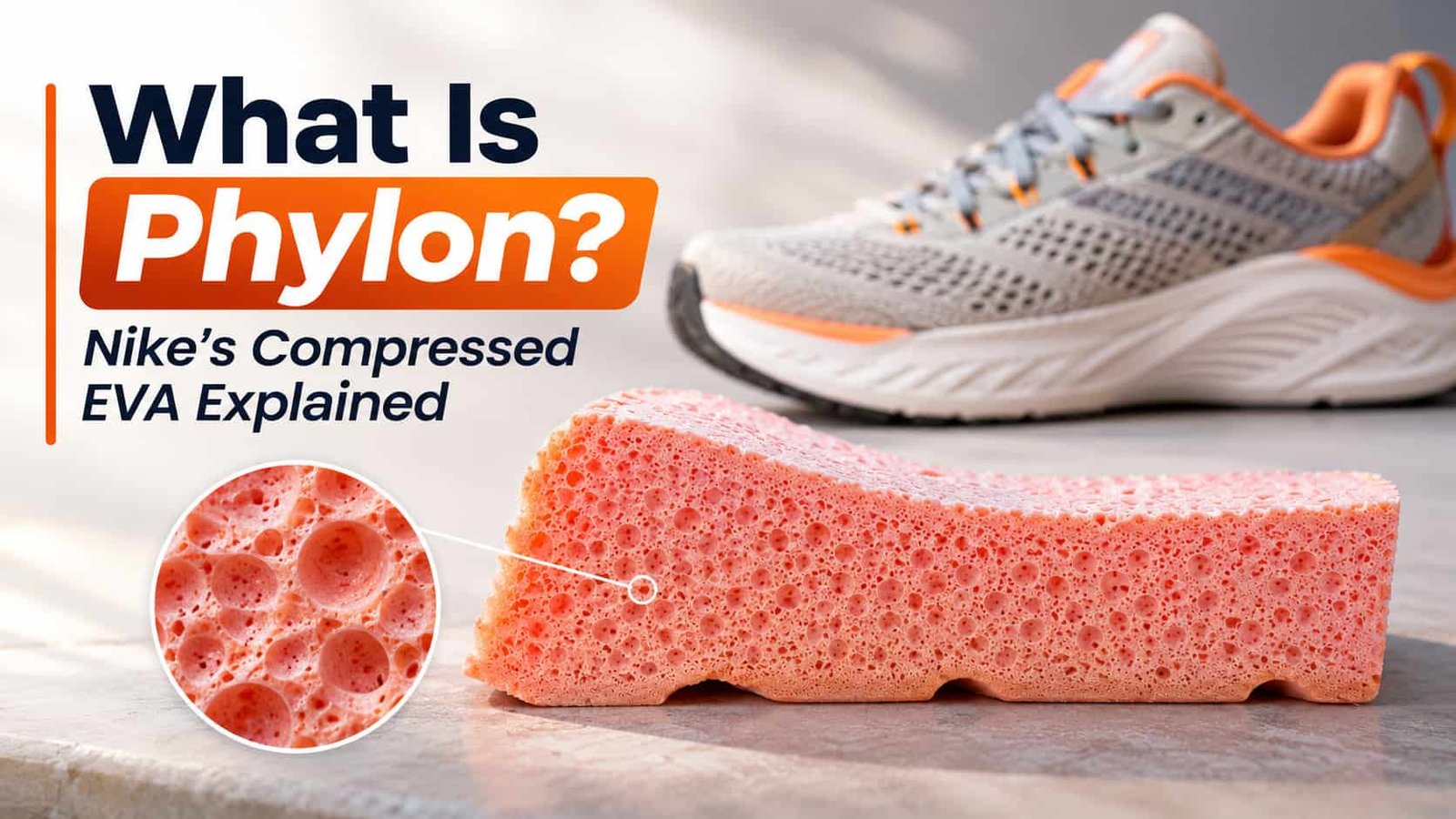
What Is Phylon? Nike’s Compressed EVA Explained
Summarise this Phylon guide with AI
Open an assistant and submit the prefilled request. The assistant reads the page only after you submit it.
Quick answer: Phylon is a midsole foam made by compressing and heat-treating EVA, usually with a blowing process that creates a denser, more resilient cell structure. It is widely used in athletic and lifestyle footwear, and Nike popularised it across many of its models. It is generally firmer and more durable than standard EVA, but it is also typically heavier. In shoe materials, “Phylon” refers to this process and material, not the dictionary meaning of the word.
Key takeaways
- Phylon is a compressed or moulded form of EVA foam, made to be denser and more resilient than standard EVA.
- Its main strengths are resilience and durability, and its main trade-off is weight.
- Phylon sits between basic EVA and advanced foams such as PEBA in cost and responsiveness.
- The word “phylon” has an unrelated dictionary meaning, so searches for the word alone often return the wrong results.
- Phylon is a good fit for everyday and lifestyle footwear, while runners seeking maximum responsiveness usually look for other foams.
- Care is simple: keep shoes dry, cool and out of direct sun, and clean gently.
What the Word Means, and What It Means in Shoes
Searchers often type “phylon” into a dictionary, and the results can be confusing. Merriam-Webster, Collins and other dictionaries list “Phylon” as a term with academic or journal associations, including a long-running journal of the Atlanta University Center. That meaning has nothing to do with footwear.
In shoes, Phylon is a midsole material. It is a foam, and the name refers to the way the material is made and what it is built from. The rest of this article uses the footwear sense, and the dictionary definition is mentioned only to help readers avoid the wrong results.
Phylon belongs to the foam family covered in the running shoe foam guide, which explains how midsole foams differ across brands and materials. For a broader view of where midsole foam sits in a shoe, the insole, midsole and outsole guide and the shoe anatomy overview explain the layers.
How Phylon Is Made
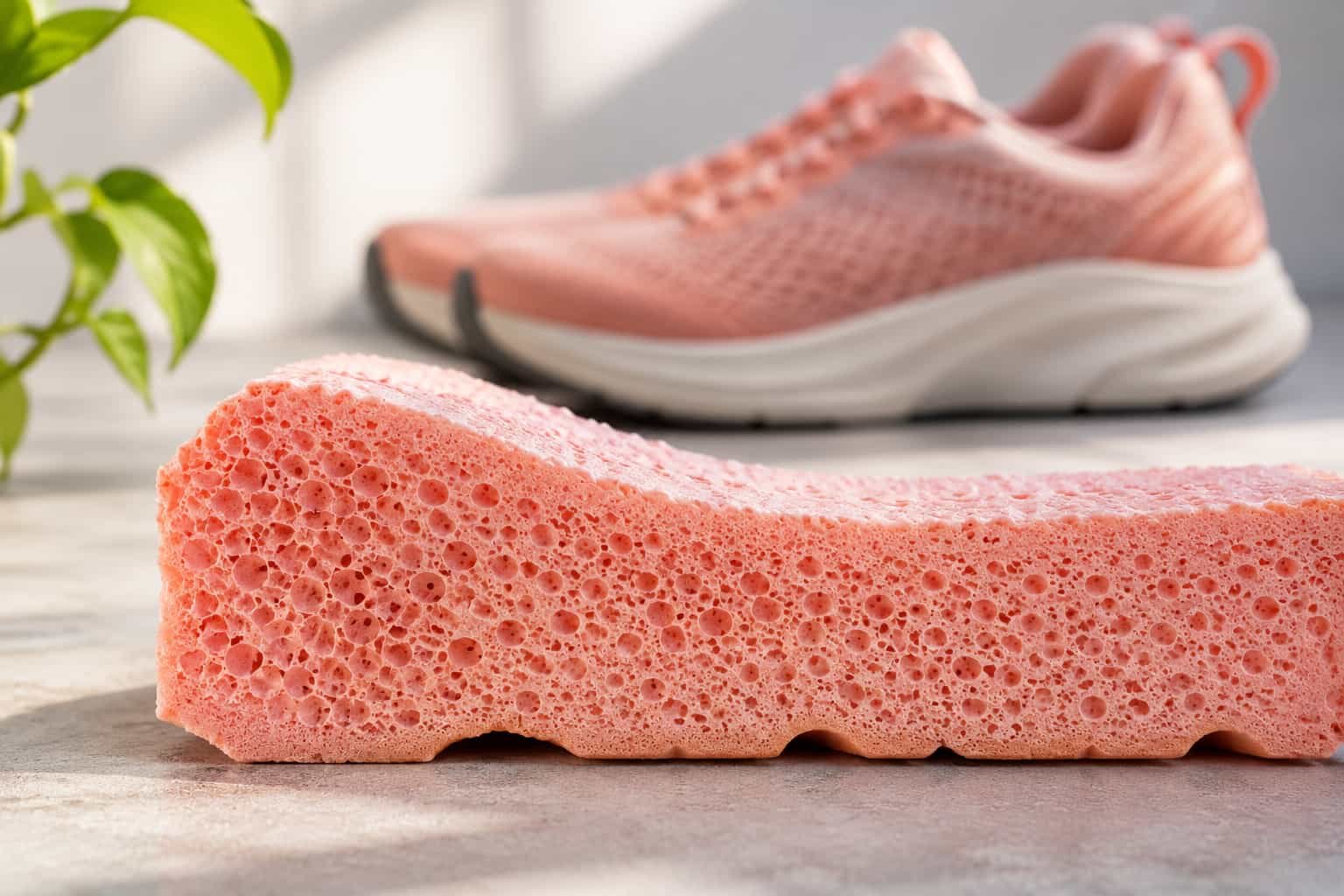
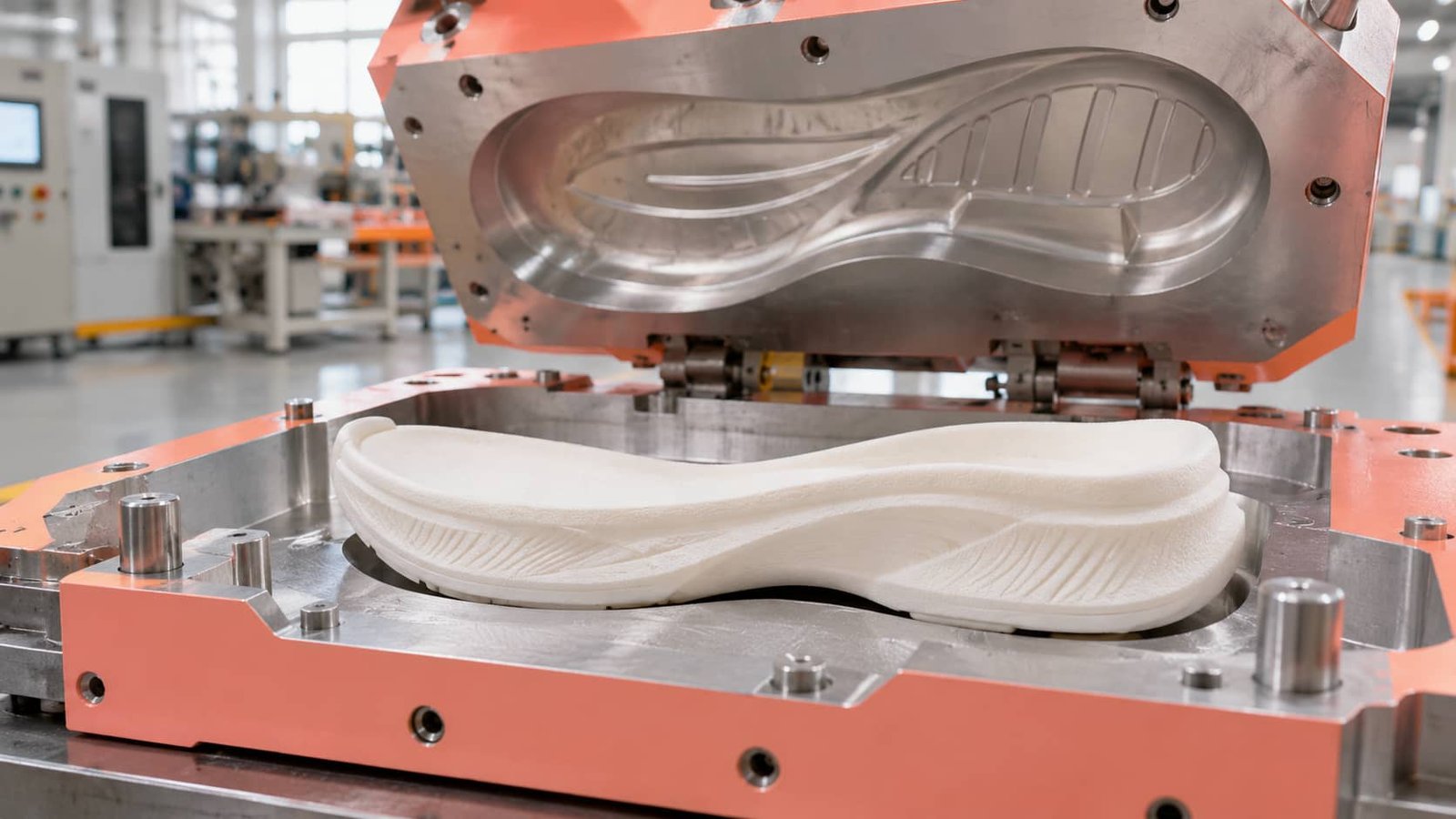
Phylon begins with EVA, ethylene-vinyl acetate, the same base material used in many lightweight midsoles. EVA is mixed with additives and a blowing agent, then placed in a mould and heated. As the material expands and is compressed under heat and pressure, its cell structure changes. The result is a foam with denser, more uniform cells than standard expanded EVA.
Manufacturers describe this in several ways, including compression moulding and injection moulding. Injection-moulded Phylon is a common approach in production, and some suppliers publish process descriptions online. Those descriptions are useful for understanding the general method, but they are supplier claims. Exact temperatures, pressures and mix ratios vary by manufacturer and are not standardised, so this article does not state specific process figures.
The practical result is that Phylon can be produced in consistent shapes and densities at scale. That is one reason it has been widely used in mass-market footwear.
Phylon Versus Standard EVA
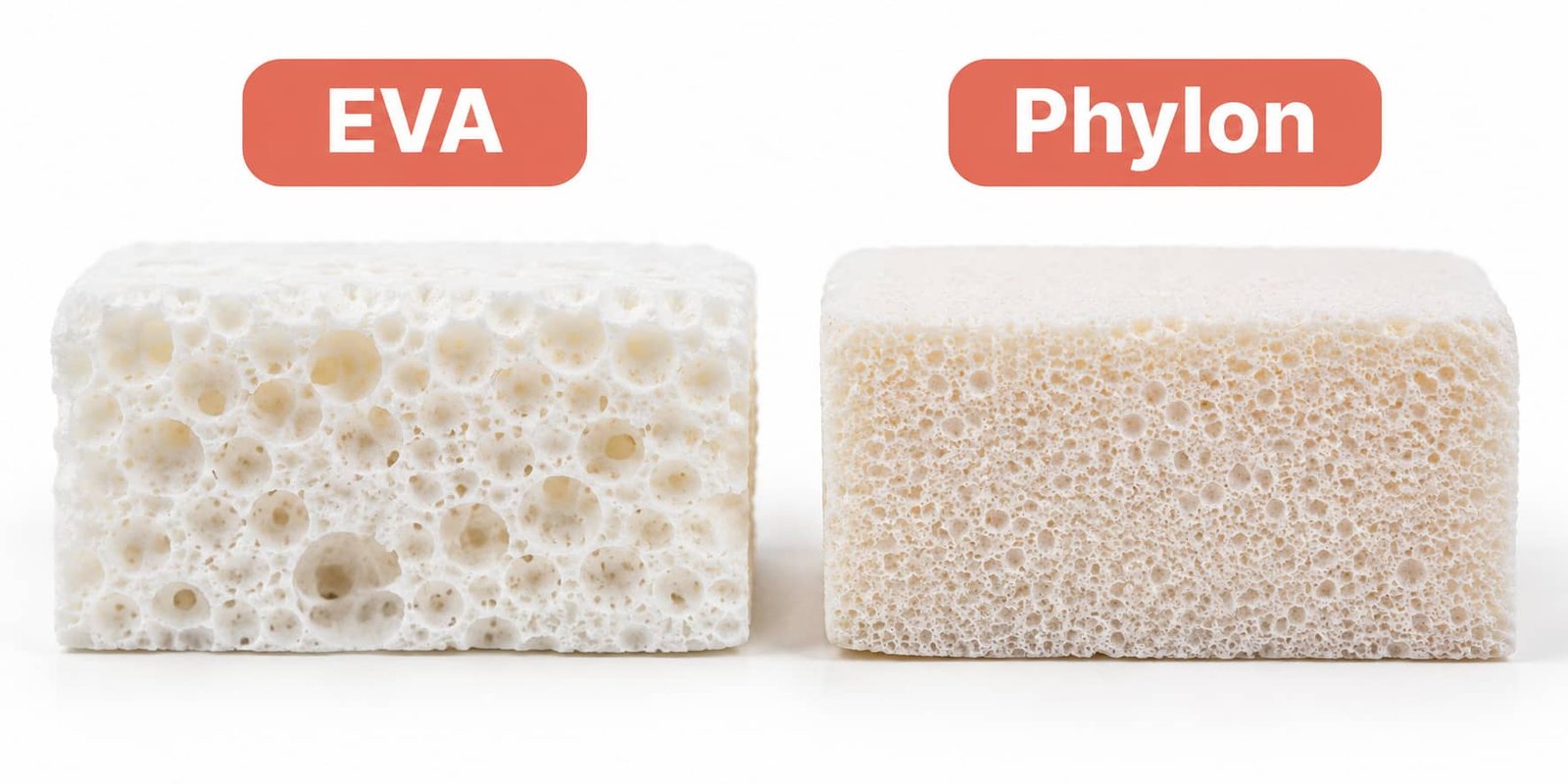
Phylon and EVA are related, and this is the source of most confusion. Phylon is made from EVA, but the compression process gives it different properties. The table compares the two in general terms.
| Factor | Standard EVA | Phylon |
|---|---|---|
| Base material | Ethylene-vinyl acetate foam | EVA, compressed and heat-treated into a denser form |
| Cell structure | Expanded, softer cells | Denser, more compressed cells |
| Feel | Soft and light | Firmer and more resilient |
| Weight | Typically lighter | Typically heavier |
| Durability | Good for many uses | Generally more resistant to compression over time |
| Cost | Usually lower | Usually higher than standard EVA |
These are general tendencies, not measurements. A specific Phylon midsole can be softer or firmer than a specific EVA midsole, depending on density, thickness and design. Treat the table as a guide to the typical difference rather than a promise about any single shoe.
For a full head-to-head comparison, including how each foam is used across shoe categories, see the EVA versus Phylon comparison. For the base material on its own, the EVA foam guide covers its properties in depth.
Where Phylon Appears in Shoes
Phylon is most often used in the midsole, the cushioning layer beneath the foot. It appears in running shoes, training shoes, lifestyle sneakers and sandals. Its strengths suit designs where a firmer, more durable base is useful, and where cost matters.
Some shoes use Phylon as a full midsole. Others use it as one layer in a multi-material midsole, combined with other foams or with rubber elements. Check the materials section of any product before assuming the whole midsole is Phylon.
Phylon also appears in casual and lifestyle footwear, where a stable, resilient base and a lower price point matter more than maximum rebound. That is why it is common in everyday sneakers and sandals.
Phylon and Nike
Nike is the brand most closely associated with Phylon in consumer searches, and many of its lifestyle and athletic models have used it over the years. Several search queries in this cluster refer to Nike Phylon cushioning, which reflects that association.
Nike describes its own foam technologies on its product and technology pages, and those pages are the primary source for brand-specific claims. This article does not state specific performance figures for any Nike model, because we have not verified them against Nike’s documentation in this session. Readers who want to understand Nike’s cushioning systems in more depth can read the Nike ZoomX foam guide and the Nike React foam guide, which cover two of the brand’s other systems. The how Nike Air works guide explains a different cushioning approach, which helps place Phylon within Nike’s wider range.
Brand names do not tell you the material. Check the materials section of the individual shoe, and if it says Phylon, you know the base family.
How Phylon Feels and Performs
Phylon feels firmer and more stable than many standard EVA midsoles. Runners and walkers often describe a firmer ride as more supportive, while others find it less plush. The feel depends on density, thickness and shoe construction, so the material alone does not determine the ride.
Phylon’s compressed structure tends to resist flattening under repeated load. That resilience is the main reason it is valued for everyday wear. It is less responsive than PEBA or advanced supercritical foams, and most users will not experience the same energy return from it.
Weight is the main trade-off. The denser structure is typically heavier than an expanded EVA of similar size, which can matter on long runs and in lightweight designs.
The running shoe foam guide places Phylon alongside other families so readers can match the feel to their use. For comfort and fit guidance, the shoe finder tool can help narrow choices by activity.
Strengths and Limitations
Phylon’s advantages come from its denser structure. Its disadvantages come from the same source.
Strengths:
- Resilience. The compressed structure helps the midsole hold its shape under repeated loading.
- Durability. Phylon is generally more resistant to compression than standard EVA, though no source gives a fixed lifespan.
- Cost. It is usually less expensive than advanced foams, which makes it common in mid-priced footwear.
- Consistency. Moulded production supports uniform shapes and densities.
Limitations:
- Weight. Denser foam is typically heavier, which matters in performance shoes.
- Responsiveness. Phylon returns less energy than PEBA or many advanced foams, so it suits comfort and daily wear more than racing.
- Feel. Some wearers find it firm, especially after breaking in a different foam.
- Variability. Two Phylon midsoles can differ, because density, thickness and design all change the ride.
Who should be cautious: Anyone who needs very soft cushioning, or who wants maximum energy return for fast running, should compare Phylon against other foams before buying. This is editorial judgement based on the material’s properties, not a clinical recommendation.
Does Phylon Last?
Phylon is generally regarded as durable for everyday use, but that is an editorial judgement, not a measured lifespan. We have not found an independently verified figure for how long a Phylon midsole lasts, so any number you see online should be treated as an estimate.
Foam wear depends on several factors: load, mileage, surface, storage and how the shoe is cleaned. Heavier wearers and high-mileage use put more stress on any midsole. The running shoe lifespan guide covers the wider picture of when to replace running shoes.
Signs the midsole may be worn:
- The shoe feels flatter or harder underfoot than when new.
- Creasing or compression lines appear across the midsole.
- The heel or forefoot feels unevenly cushioned.
- New discomfort appears after familiar walks or runs.
These signs are prompts to assess the shoe, not diagnoses. Persistent pain should be assessed by a qualified clinician or podiatrist. The American Podiatric Medical Association publishes general foot health and footwear guidance.
Is Phylon a Good Material for You?
The question “is Phylon good?” has no single answer. Phylon suits some uses well and others poorly.
Phylon tends to suit:
- Everyday walking and standing jobs where durability and stability matter
- Casual and lifestyle sneakers and sandals
- Budget-conscious buyers who want more resilience than basic EVA
- Shoes where a firmer base is preferred to a soft, plush feel
Phylon tends to suit less well:
- Fast running where maximum responsiveness is the priority
- Lightweight performance shoes where every gram counts
- Buyers who want very soft, plush cushioning for long standing
For the rubber outsole that sits under the midsole, see the rubber shoe soles guide. It explains how the outsole works with the midsole to protect the foot.
Caring for Phylon Midsoles
Phylon is durable, but it still responds to heat, moisture and harsh chemicals. Gentle care protects both the midsole and the upper.
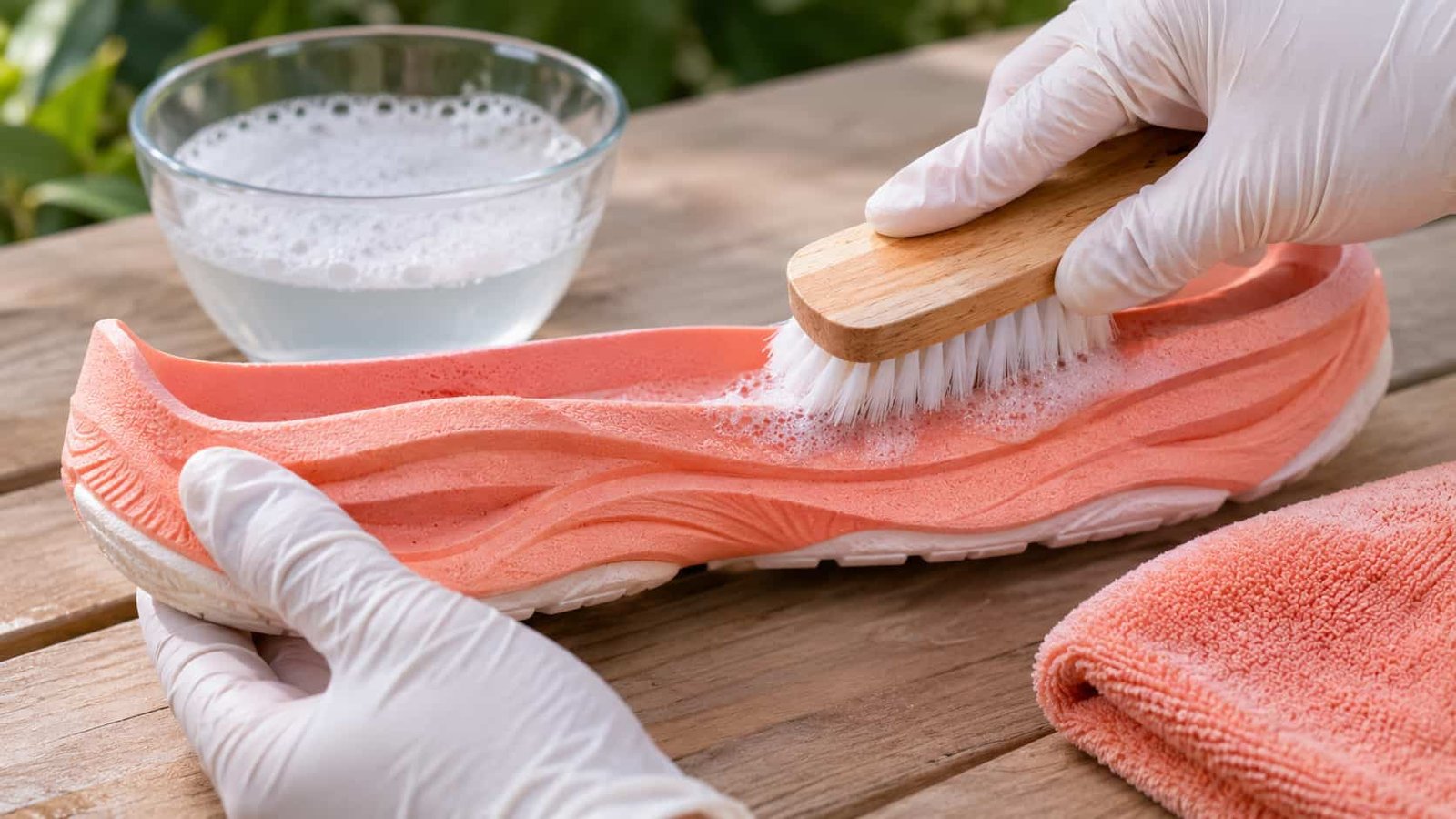
Step-by-step method:
- Remove the insoles and laces.
- Brush off dry dirt with a soft brush.
- Mix a small amount of mild soap with lukewarm water.
- Dab the midsole and upper with a cloth. Do not soak the shoe.
- Wipe away soap residue with a damp cloth.
- Stuff the shoe with paper to hold its shape and air-dry at room temperature.
Warnings:
- Never machine-wash or tumble-dry shoes with Phylon midsoles.
- Keep shoes away from radiators, heaters and hairdryers.
- Avoid strong solvents, and test any product on a hidden area first.
The shoe cleaning and maintenance guide gives steps for other materials, and the shoe materials pillar covers the wider family of footwear materials.
Caring for Phylon Midsoles
Myth: Phylon is a different material from EVA. Phylon is made from EVA, but compression changes its structure and behaviour.
Myth: Phylon is always the most durable option. It is generally more resilient than standard EVA, but durability depends on design, load and care.
Myth: The word “phylon” describes the shoe material. The dictionary meaning is unrelated. Shoe Phylon is a material name that has been adopted in footwear.
Myth: Phylon is always heavy. It is usually heavier than expanded EVA, but the weight of a full shoe depends on the whole construction.
Myth: Phylon and PVC are the same. They are different materials. PVC is a plastic used in some soles and footwear, and Phylon is an EVA-based foam. Do not assume they behave alike.
Frequently Asked Questions
What is Phylon in shoes?
Phylon is a midsole foam made by compressing and heat-treating EVA. It is denser and firmer than standard EVA and is widely used in athletic and lifestyle footwear.
What is the difference between EVA and Phylon?
Phylon is made from EVA, but compression changes its cell structure. Phylon is generally firmer, more resilient and heavier than standard expanded EVA, and usually costs more.
Which is better, EVA or Phylon?
Neither is better in every case. Standard EVA is lighter and softer and suits casual wear. Phylon is firmer and more resilient, which suits everyday durability. The better choice depends on how you use the shoe.
Is Phylon a good material?
It is a good material for everyday and lifestyle footwear where resilience and cost matter. It is less suited to fast running or lightweight performance shoes, where other foams usually perform better.
Does Phylon wear out?
Yes, all midsole foam wears over time. No independently verified lifespan figure applies to every Phylon shoe, so judge the midsole by how it feels, how it looks and how your body responds.
How do I clean a Phylon midsole?
Use a soft brush, mild soap and lukewarm water, dab rather than soak, and air-dry at room temperature. Never machine-wash or tumble-dry.
Is Phylon the same as PVC or polyethylene foam?
No. Phylon is an EVA-based foam. PVC is a plastic, and polyethylene is a different foam family. They have different properties.
Why do Nike shoes use Phylon?
Nike has used Phylon in many lifestyle and athletic models because it offers a resilient, cost-effective midsole. Check each shoe’s materials section and Nike’s own technology information for the specific design.
Verdict
Phylon is a compressed, heat-treated form of EVA foam. It is firmer, denser and more resilient than standard EVA, and it is heavier and generally more expensive. It suits everyday and lifestyle footwear, where durability and stability matter more than maximum responsiveness.
Before you buy, check the midsole material in the product description, compare Phylon with the other foams that matter for your use, and try the shoe on. For a head-to-head breakdown, read the EVA versus Phylon comparison. For the broader family of materials, begin with the shoe materials.
Sources
- American Podiatric Medical Association. Foot health and footwear guidance. https://www.apma.org/
- Merriam-Webster. “Phylon” entry, for the dictionary meaning referenced in this article. https://www.merriam-webster.com/dictionary/phylon
- Nike. Product and technology pages for specific Phylon-based models.