

How to Tell If Shoes Are Real Leather: 7 Simple Checks
Quick Summary: Real Leather Shoe Checks
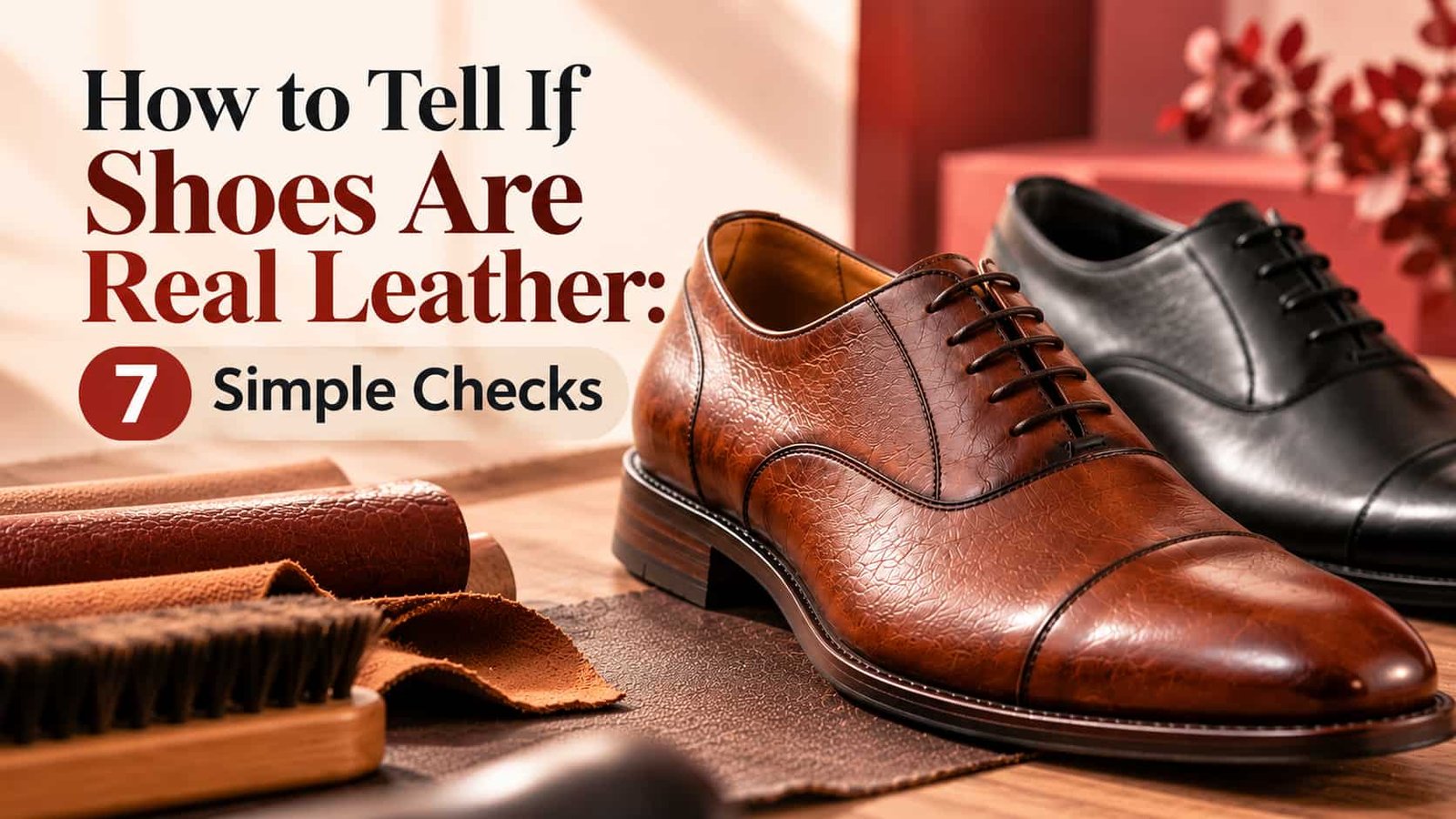
The easiest way to tell if shoes are real leather is to start with the material label or product description, then inspect the surface grain, exposed edges, natural creases and construction. Real leather often has irregular grain and a fibrous structure, while synthetic leather may look unusually uniform or reveal a fabric backing. No single visual or touch test is conclusive, so combine several checks before deciding.
Quick answer: How can you identify genuine leather shoes?
Start with these seven checks:
- Read the material label: Look for a clear description of the upper, lining and other shoe components.
- Inspect the grain: Look for natural variation rather than relying on a perfectly uniform or embossed pattern.
- Examine exposed edges: Where an edge is visible, check whether the material appears fibrous, layered or fabric-backed.
- Feel the surface: Notice the texture and flexibility, but remember that both real and synthetic leather can feel soft.
- Observe natural creases: Gently flex the shoe if it is appropriate to do so and look at how the material folds.
- Check the construction: Look at seams, cut edges, lining and material transitions.
- Verify the product details: Compare the seller’s claims with the manufacturer’s official material description.
These checks can help you make a more informed judgment. If the material is heavily coated, embossed or difficult to access, visual inspection may not provide a definite answer.
What Real Leather Means
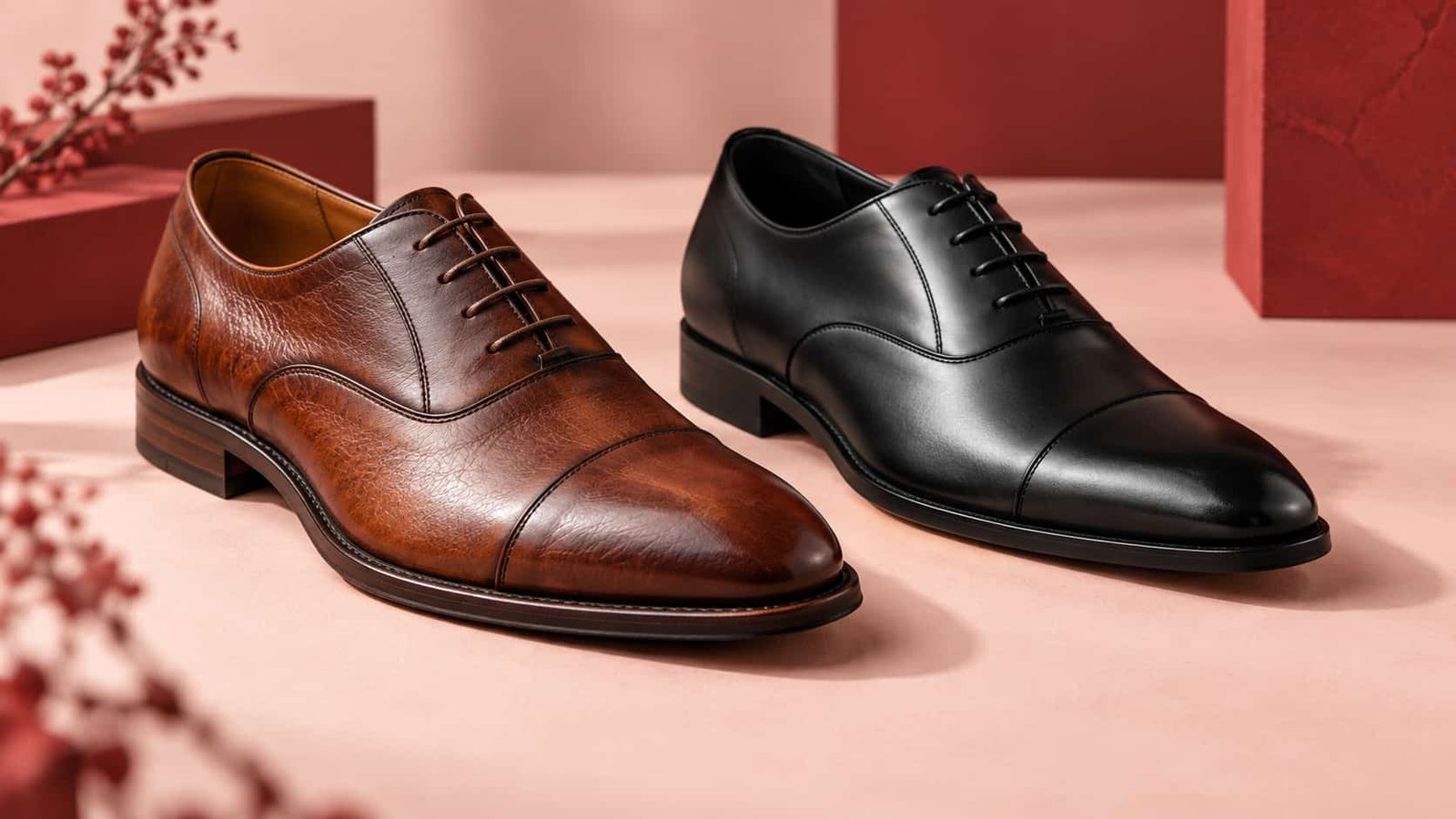
Real leather is material made from animal hide or skin that has undergone tanning and other processing to make it suitable for products such as shoes, bags and belts. The final surface can vary considerably depending on the hide, leather grade, tanning method, finishing process and intended use.
This matters because real leather does not always look rough, uneven or obviously natural. Some leather is sanded, coated, embossed or finished to create a smooth, consistent appearance. Conversely, modern synthetic materials can imitate natural grain convincingly.
The phrase “fake leather” commonly refers to materials designed to resemble leather without being animal leather. Common examples include polyurethane (PU), polyvinyl chloride (PVC) and synthetic microfiber materials. Product descriptions may call them synthetic leather, imitation leather, faux leather or vegan leather, although the exact material varies.
Leather shoes can also combine several materials. A shoe might have a leather upper, a textile lining, a synthetic insole and a rubber outsole. Therefore, discovering that one part is leather does not prove that the entire shoe is made from leather.
For a broader introduction to footwear materials, see the Shoe Materials Explained guide.
Check 1: Read the Shoe Label
The label is usually the best place to begin because it provides information about the material used rather than requiring you to guess from appearance.
Look inside the shoe, beneath the tongue, on the insole, on an attached tag or in the manufacturer’s online product specifications. Search for terms such as:
- Leather: Indicates leather, but check which shoe component the description covers.
- Full-grain leather: Leather that retains its original grain surface, although finishing can still affect its appearance.
- Top-grain leather: Leather from the grain side that may have been sanded or otherwise finished.
- Split leather: Leather made from a lower layer of a hide after splitting.
- Suede: Leather with a napped surface.
- Synthetic leather, PU or PVC: Terms that identify or suggest non-animal alternatives, depending on the exact product description.
- Leather and textile: Indicates a combination rather than an entirely leather shoe.
Check the Upper, Lining and Outsole Separately
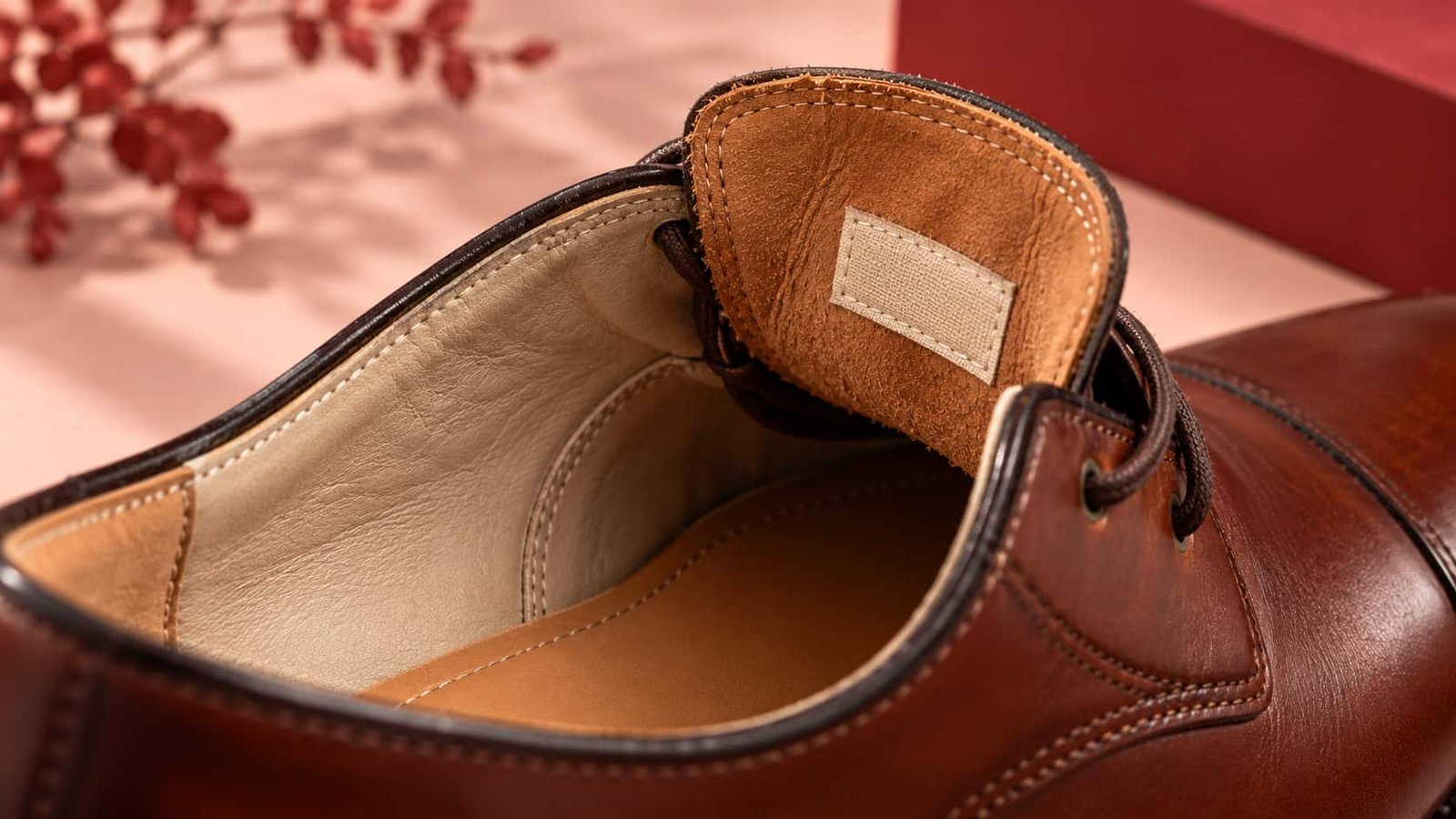
The upper is the main exterior portion that covers the foot. The lining is the material inside the shoe, and the outsole is the bottom surface that contacts the ground.
A product advertised as having a leather upper may still have synthetic lining and a rubber outsole. This is normal and does not automatically make the product misleading.
For footwear sold in the European Union, official guidance explains how labels identify the materials used in the upper, lining and sock, and outer sole. See the European Commission’s footwear labelling guidance.
In the United States, the Federal Trade Commission’s Leather Guides address misleading descriptions of leather and imitation-leather products, including footwear.
What this check tells you: A clear, consistent material declaration is more useful than a visual guess. However, a label is still a claim that can be inaccurate, so compare it with other available evidence.
Check 2: Inspect the Leather Grain
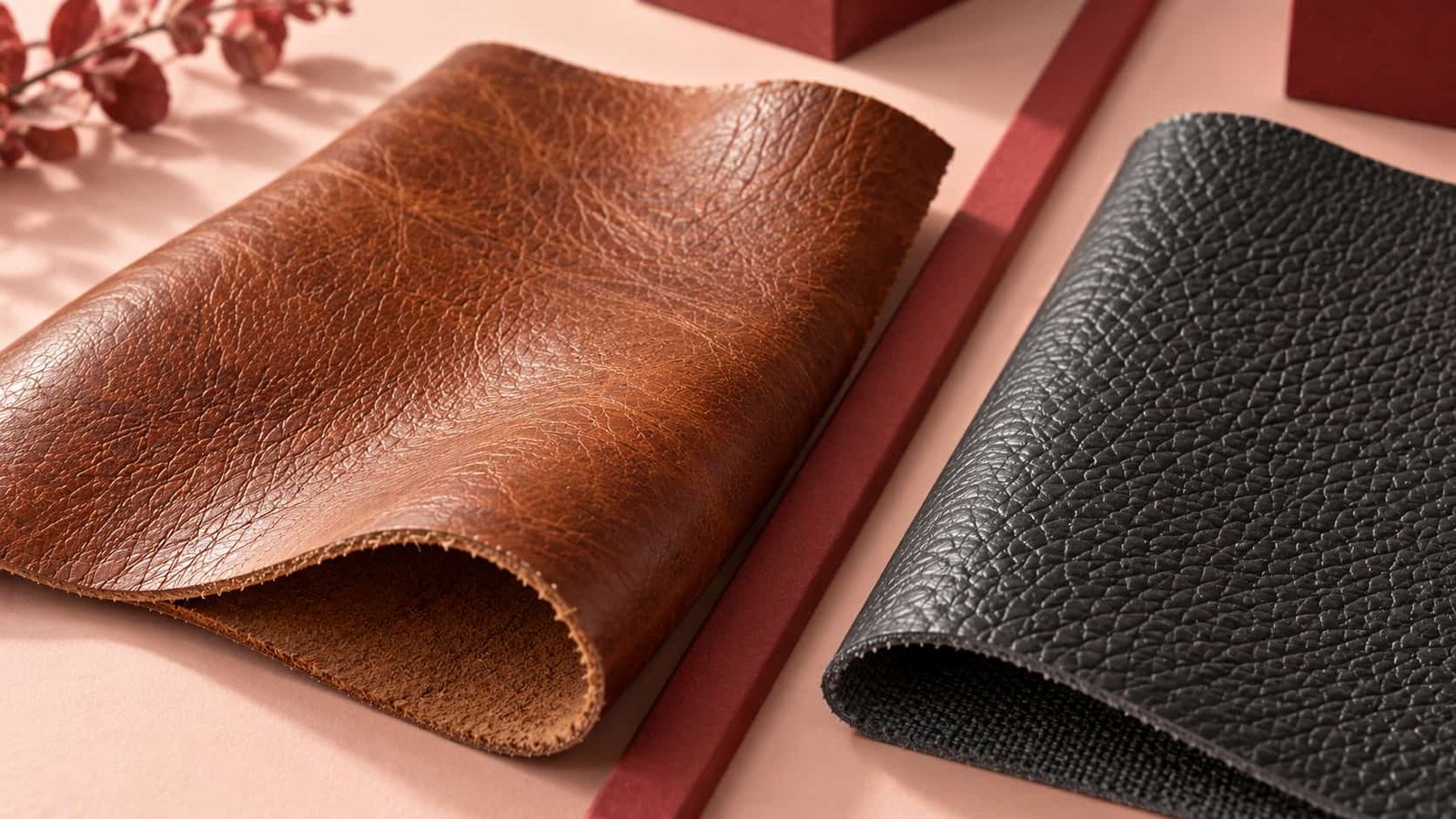
Natural leather often shows variation in its grain, including small pores, irregularities, subtle marks and changes in texture. Under good lighting, these differences may be visible across the toe, side panels and heel.
Synthetic materials can have highly repeated, embossed grain patterns. If every section appears identical, that may be a reason to investigate the material description more closely.
However, this is only a clue.
Corrected-grain leather can be sanded, embossed and finished to look remarkably uniform. Synthetic leather can also reproduce convincing grain patterns. Neither a smooth surface nor a visible pattern proves the material’s identity.
What to Look For
- Examine different parts of the same shoe rather than judging one small patch.
- Look for natural variation in the surface texture.
- Check whether the grain pattern appears repeated in exactly the same way across large areas.
- Use bright, diffuse lighting so that the finish is easy to see.
- Compare the surface with the manufacturer’s material photographs if available.
Do not assume that every mark is a sign of authenticity. Scratches, glue marks, poor finishing and manufacturing defects can occur on both leather and synthetic shoes.
Also, do not assume that all real leather has visible pores. Pigmentation, protective coatings and other finishes can hide much of the underlying surface.
Best use: Grain inspection is a supporting check, not a standalone authenticity test.
Check 3: Examine Exposed Edges
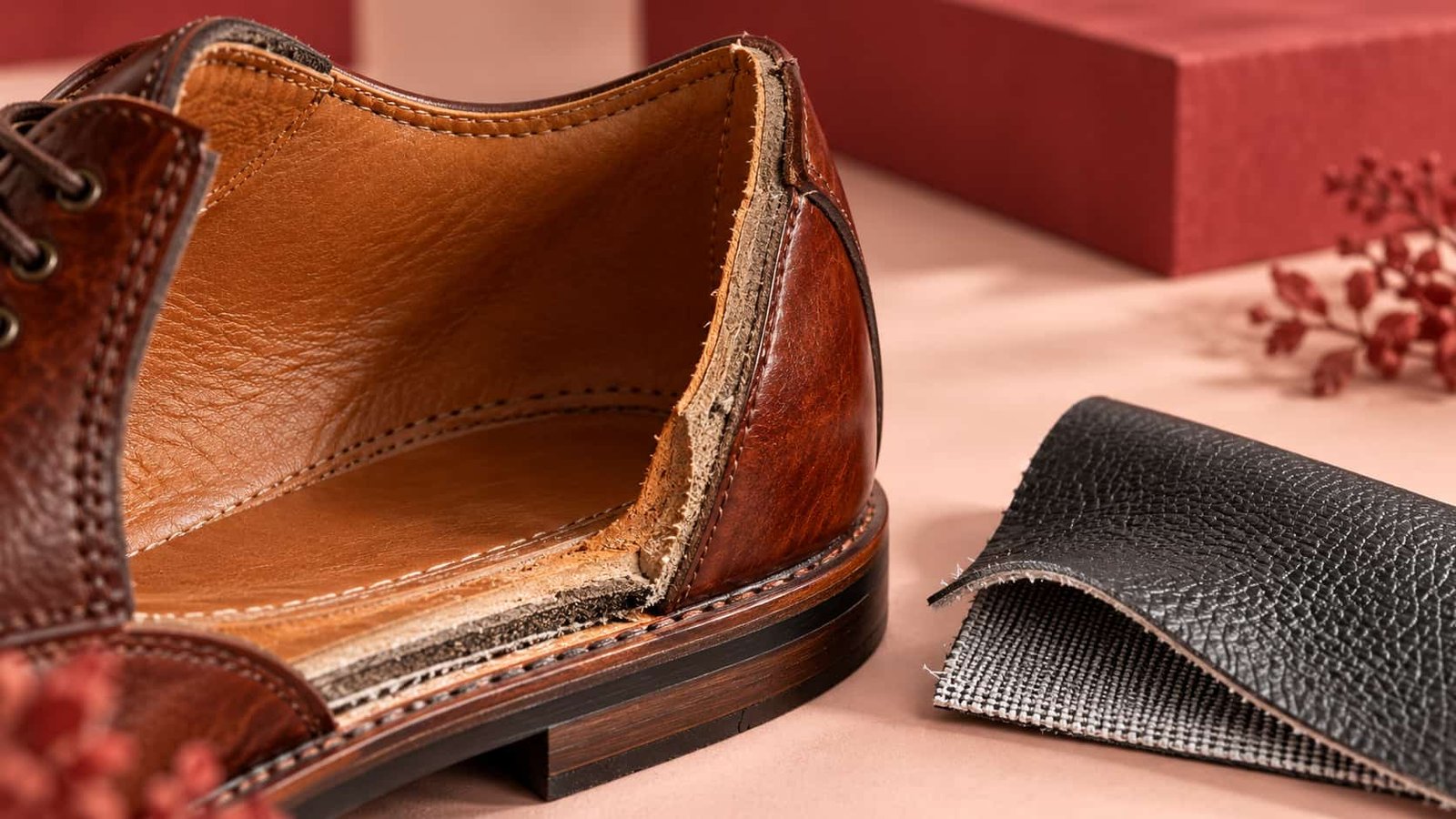
The edge of a material can sometimes reveal more than its finished surface. Look only at areas that are already exposed, such as a raw edge inside a shoe, a cut edge visible beneath a tongue or a material transition around an existing seam.
Do not cut the shoe, peel back the lining or damage a product to perform this check.
Signs worth noticing
Real leather may show a dense, irregular or fibrous structure along an exposed cut edge. Some synthetic materials may reveal a textile backing, a layered coating or a more uniform manufactured structure.
But there is an important limitation: shoe edges are frequently painted, sealed, folded, bonded or covered. Leather can also be laminated or combined with other materials. Synthetic materials may have edges finished to resemble leather.
A visible fabric backing is a useful reason to investigate whether a material is synthetic, but it is not enough to identify every component of the shoe. Similarly, a fibrous edge alone cannot prove that the material is genuine leather.
Where to Inspect
- Look around the inside edge of the tongue, if accessible.
- Examine an already visible edge near a seam.
- Look at the transition between the upper and lining.
- Compare the visible construction with the manufacturer’s product description.
Avoid pulling apart a glued seam or bending the shoe aggressively. You should not need to damage footwear to make a preliminary assessment.
Check 4: Feel the Surface
Touch can help you understand a shoe’s finish, but it cannot reliably distinguish all real leather from synthetic alternatives.
Leather can feel smooth, pebbled, waxy, soft, stiff or textured depending on the animal hide, tanning process and finishing treatment. Synthetic materials can reproduce many of these characteristics.
Instead of asking whether the shoe feels “like leather,” examine how the material behaves and whether that behavior agrees with its description.
Texture and Flexibility
Gently run your fingers across the upper. Notice whether the finish feels coated, unusually plasticky, soft, textured or relatively firm. These observations can help you compare different shoes, but none is conclusive by itself.
If appropriate for the shoe’s design, gently press a flexible area with your thumb. Some leather may show subtle changes in texture or fine creases under pressure. A heavily finished leather upper may show very little, while synthetic leather may crease readily.
Formal shoes with stiff construction should not be forcefully bent just to test their material.
What about the smell?
Real leather often has a characteristic smell, but smell is not a dependable identification method. Dyes, adhesives, protective finishes, storage conditions and other materials can change a shoe’s scent. Some synthetic products also have little or no noticeable smell.
Avoid treating a strong smell as proof of real leather, and do not inhale chemicals closely to identify a material.
Practical takeaway: Use touch and smell only as secondary observations. Labels, construction and consistent product information are more useful.
Check 5: Observe Natural Creases
Leather and synthetic materials can both develop folds and creases, so the shape of a crease should never be treated as a definitive test. Still, observing an existing crease can provide another useful clue.
Look at the forefoot area of a shoe that has already been worn, or gently flex an appropriate area on a new shoe without forcing the construction.
Natural leather may develop fine, irregular creases as the upper moves. Some synthetic finishes may form sharper folds, show a surface coating that separates, or display repeated patterns under flexing. These differences depend heavily on the material and finish.
How to Inspect Creases Safely
- Use an existing crease if the shoe has been worn.
- Look at the material under normal lighting.
- Notice whether the surface remains intact when the shoe flexes naturally.
- Check whether the crease pattern is consistent with the product’s description.
- Avoid aggressive folding, scraping or repeated bending.
A stiff real-leather dress shoe may barely flex when new. A soft synthetic sneaker may crease immediately. Neither result establishes the material’s identity.
Peeling or cracking can indicate a failing surface finish, but it does not independently identify the underlying material. Coatings on leather can deteriorate too, while synthetic materials vary in quality and construction.
For a deeper comparison of leather grades and finishes, read Full-Grain vs Top-Grain Leather.
Check 6: Check the Shoe’s Construction
Material identification becomes easier when you examine the whole shoe rather than concentrating on the upper’s surface.
Inspect the stitching, lining, visible edges, panel transitions and finishing. Look for signs that the shoe uses different materials in different areas, and compare those observations with its product specifications.
Inspect These Areas
The toe and side panels: Look for differences in grain, texture or finish between sections. Different appearances can result from separate leather pieces, synthetic overlays or variations in the finish.
The tongue and collar: These areas may have labels or exposed edges that help you identify the upper or lining material.
The inside lining: The lining may be textile, leather or synthetic material, even when the outside is leather.
The sole connection: Look at the visible junction between the upper and outsole. This can reveal construction details, but the attachment method does not prove whether the upper is real leather.
The stitching and seams: Neat stitching is a sign of careful construction, not proof of leather. Both genuine leather and synthetic shoes can be made well or poorly.
Remember: Leather Quality and Leather Authenticity Are Different
A shoe can use real leather and still have weak stitching, poor finishing, uncomfortable construction or a short service life. Conversely, a well-made synthetic shoe can offer good comfort and durability for its intended use.
The goal is to identify the material and then assess whether the shoe is well made for your needs.
Check 7: Verify the Product Description
When buying shoes online, you cannot inspect every surface in person. That makes product documentation and seller reliability especially important.
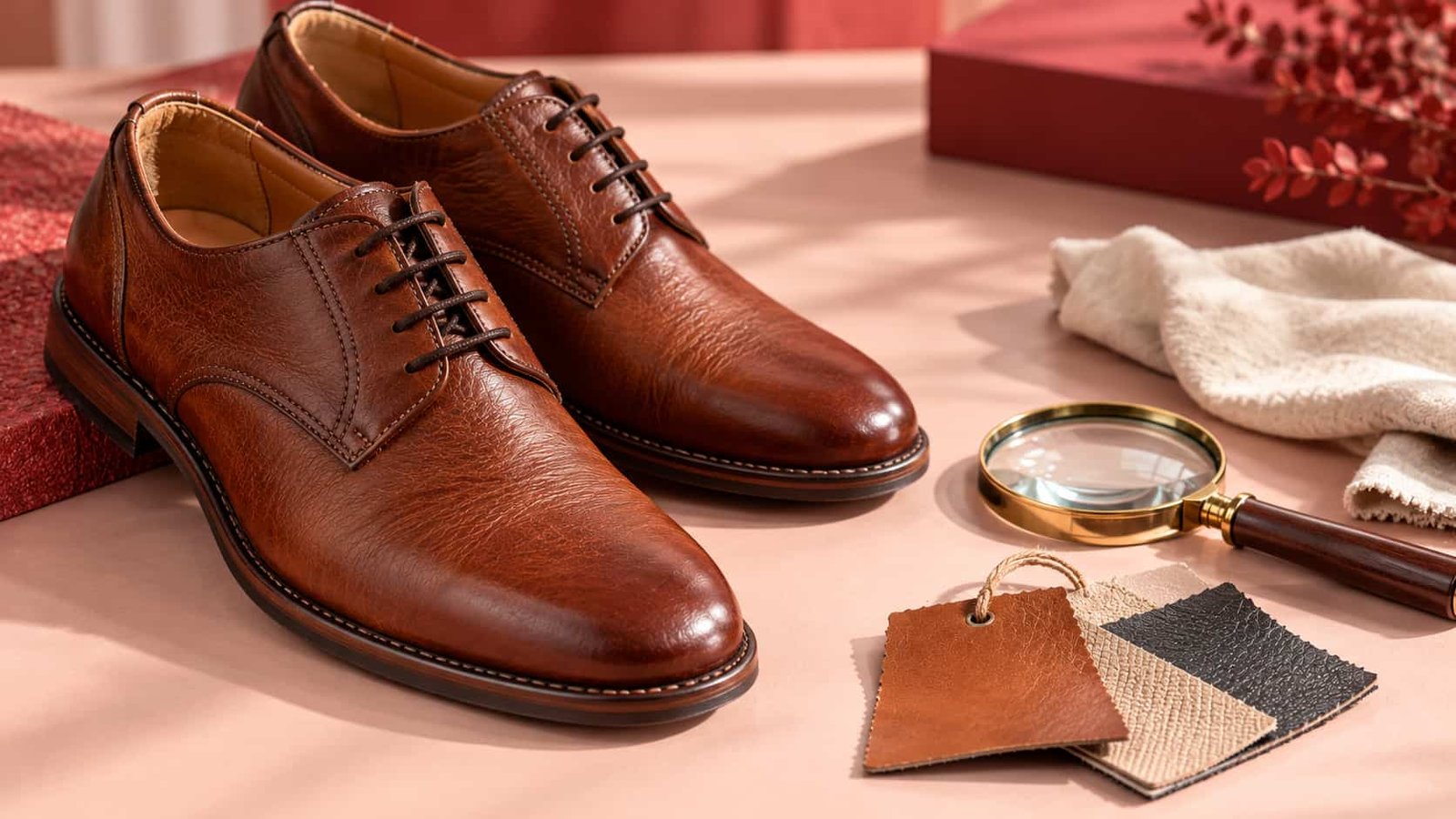
Start with the manufacturer’s official product page. Read the material specifications, check the description of the upper and lining, and compare those details with the photographs and packaging.
Use This Verification Checklist
- Read the exact material wording. Does the page say leather, full-grain leather, suede, synthetic leather or a combination?
- Check the component. Is the leather used in the upper, lining, insole or another part?
- Compare the box and shoe labels. Look for consistent model names, style codes and material descriptions where available.
- Check the seller. Prefer the brand’s official store or a retailer with clear contact details, returns information and a credible sales history.
- Review the return policy. Make sure you can return the shoes if their material does not match the description.
- Ask for clarification. If a seller says only “leather finish” or “leather look,” ask what the underlying material actually is.
Be Careful with Vague Marketing Terms
Words such as “premium,” “luxury,” “leather-like” and “leather finish” do not independently prove that a shoe uses real leather. The word “genuine” is also not a guarantee of a premium leather grade.
For branded footwear, material verification is different from brand authentication. A genuine brand shoe may use synthetic leather, and a shoe that uses real leather may still be counterfeit. If you are checking branded footwear, use the manufacturer’s official authentication guidance where available. Our Nike authenticity guide covers a separate set of checks for Nike products.
Real Leather vs Fake Leather: Comparison Table
| Feature | Real leather | Synthetic or faux leather |
| Material origin | Processed animal hide or skin | Manufactured material designed to resemble leather |
| Surface appearance | May show natural grain variation | May have a repeated or embossed grain pattern |
| Texture | Can range from soft to firm, depending on finish | Can also range from soft to firm |
| Exposed edge | May show a fibrous structure | May show a coating, layers or textile backing |
| Creasing | Varies by leather type and finish | Varies by synthetic material and finish |
| Smell | May have a characteristic leather smell | May have little smell or a material-related smell |
| Water response | Depends on tanning, finish and treatment | Depends on the coating and construction |
| Label information | May be declared as leather or a specific leather type | May be described as PU, PVC, synthetic, imitation or faux leather |
| Durability | Varies with hide quality, construction, care and use | Varies with material quality, construction, care and use |
| Best identification method | Combine material declaration and physical inspection | Combine material declaration and physical inspection |
This comparison is a guide, not a laboratory identification chart. There is substantial variation within both categories, and surface finishes can make the materials difficult to distinguish.
What Do Leather Symbols Mean?
Some shoes include material pictograms on a tag or label. In markets that require footwear material labelling, these symbols can identify the materials used in different shoe components.
For example, the label may distinguish the upper from the lining and sock, and the outer sole. Depending on the market and labelling system, a pictogram or written description may indicate leather, coated leather, textile or other materials.
Do not assume that every shoe worldwide uses the same symbols or that a small leather-related icon guarantees the whole shoe is made from leather. Check the legend on the label or the applicable official guidance.
The European Union’s footwear labelling guidance explains how material labelling works in that market.
In the United States, the FTC Leather Guides address descriptions and claims about leather and imitation-leather products. These rules are relevant to how products are represented, not a guarantee that every individual label is accurate.
If a label is unclear, ask the seller to identify the upper, lining and outsole materials in writing.
What Does 100% Genuine Leather Mean?
The phrase “genuine leather” can be confusing because many shoppers interpret it as a high-grade leather certification. It is not, by itself, a universal grade or a guarantee of premium quality.
The term generally communicates that a product or specified component is made from leather, but its exact meaning and legal implications depend on the wording and the market. It does not automatically mean full-grain leather, top-grain leather or that every part of the shoe is leather.
Understand the Main Leather Terms
Full-grain leather: Retains the original grain surface rather than having that surface sanded away to remove imperfections. The final appearance still depends on its finish.
Top-grain leather: Uses the grain side of the hide, with the surface potentially sanded, buffed or otherwise finished.
Split leather: Made from a lower layer of a hide after it has been split into layers. It may be finished or used to make suede.
Suede: Leather finished to create a soft, napped surface. It can be produced from different hide layers, depending on the product.
Bonded leather: A material made using leather fibres or fragments combined with binding agents. Its composition and properties vary, so the label should be read carefully.
Faux leather: A broad consumer term for a non-animal material designed to look like leather. It can include PU, PVC and other alternatives.
These terms are not interchangeable. If you want to compare full-grain and top-grain construction in more detail, see the leather grade guide.
Common Leather Identification Myths
A number of popular home tests are repeated online as if they provide a definite answer. In reality, many are unreliable, potentially damaging or both.
Myth 1: Real leather always has an uneven grain
Natural grain variation can be a useful clue, but real leather may be sanded, coated or embossed. Synthetic leather can also imitate irregular grain. A uniform surface is not proof that a shoe is fake.
Myth 2: The smell test always works
Leather may have a distinctive smell, but finishes, adhesives, storage and other shoe materials can affect it. Synthetic materials can also have little or no noticeable odour.
Myth 3: A water-drop test proves authenticity
It does not. Untreated leather may absorb water, while coated leather can resist it. Synthetic materials may also absorb, repel or hold water depending on their construction. Water behaviour is not a reliable way to identify leather, and applying water can stain or damage a shoe.
Myth 4: Burning a sample is the best test
Never burn, heat or apply a flame to a shoe to check its material. This can damage the product and create a fire or fume hazard. A home flame test is not an appropriate consumer identification method.
Myth 5: Real leather is always more durable
Durability depends on the leather type, thickness, finishing, stitching, sole construction, care and how the shoe is used. A real-leather shoe can fail prematurely, and a well-made synthetic shoe may perform well for its intended purpose.
Myth 6: A high price proves the shoe is real leather
Price is not proof of material composition. Brand positioning, design, construction, distribution and marketing all influence price. Verify the material separately.
Myth 7: “Genuine leather” means the highest grade
It does not. The term alone does not establish that a shoe is full-grain or top-grain leather. Ask for the specific material and grade if that information matters to your purchase.
How to Check Leather Shoes When Shopping Online
Online shopping makes it harder to inspect texture, exposed edges and flexibility. You can still reduce uncertainty by checking the information available before ordering.
Before buying
- Read the complete material description rather than relying on the product title.
- Check whether the upper, lining and outsole are described separately.
- Look for close-up photographs of the grain, tongue label and interior.
- Compare the manufacturer’s specifications with the retailer’s listing.
- Review the seller’s return policy and material-disclosure terms.
- Contact customer support if the material description is vague.
When the shoes arrive
- Check the box label and any attached material tag.
- Compare the delivered model and colour with the listing.
- Inspect the upper, lining and visible edges under good lighting.
- Look for any discrepancy between the stated material and the product.
- Keep the packaging and avoid wearing the shoes outdoors until you are satisfied with the purchase.
If the product is materially different from its description, document the discrepancy with clear photographs and contact the seller. Follow the seller’s return procedure and the consumer protections applicable in your location.
Should you choose leather or synthetic shoes?
That depends on your priorities. Real leather may appeal to buyers who value natural material characteristics, traditional leather finishing and the way certain leather uppers age. Synthetic alternatives may appeal to people seeking particular price points, easier surface cleaning or non-animal materials.
Neither label guarantees comfort or durability. Consider fit, construction, intended use, maintenance and your material preferences together. If you are looking for non-animal footwear, our vegan shoes guide may be a useful next step if that page is available on the site.
Frequently Asked Questions
1. How can I tell if shoes are real leather at home?
Start by checking the material label and manufacturer’s description. Then inspect the grain, exposed edges, natural creases and construction. Use several clues together, because no single home test can reliably identify every leather and synthetic material.
2. What is the symbol for real leather?
There is no single universal symbol used on every shoe worldwide. Some markets use standardised footwear material pictograms, while others may use written descriptions. Check the label’s legend and the relevant local guidance rather than assuming that one icon applies everywhere.
3. What is 100% genuine leather?
The phrase generally indicates leather, but it does not automatically mean full-grain leather, premium quality or that every shoe component is made from leather. Read the complete material description to understand which parts are covered.
4. What are fake leather shoes called?
They may be described as faux leather, synthetic leather, imitation leather, PU leather or PVC leather, depending on the material and seller. “Vegan leather” is another marketing term used for some non-animal alternatives, but it does not identify one specific material.
5. Can real leather shoes get wet?
Yes, but their response depends on the leather, surface finish, treatment and construction. Water can stain or alter some leather. Follow the manufacturer’s care instructions, and do not use water as an authenticity test.
6. Is genuine leather better than faux leather?
Neither is automatically better for every buyer. Real leather and synthetic alternatives differ in origin, texture, care requirements, price and performance. The quality of the specific material and shoe construction matters more than a broad label alone.
7. Is full-grain leather always real leather?
Full-grain leather refers to a type of leather that retains the original grain surface. However, a product description can still be inaccurate, so check the seller and material information. The term describes the claimed material type, not independent authentication of an individual shoe.
8. Can a cobbler identify real leather?
An experienced cobbler may be able to make a more informed assessment by examining the material and construction. However, heavily finished or composite materials can be difficult to identify by sight alone. For a definitive material assessment, specialist testing may be needed.
The International Organization for Standardization describes a microscopy-based method for identifying leather and distinguishing it from other materials in ISO 17131:2020. This is a technical identification method, not a simple at-home test.
Conclusion: Combine the Clues, Not Just One Test
The most reliable consumer approach to identifying real leather shoes is to combine the product’s material declaration with a careful inspection of the grain, exposed edges, creases and construction. Treat smell, price, flexibility and water behaviour as inconclusive clues rather than proof.
Pay particular attention to which shoe component is described as leather. A leather upper does not mean that the lining, insole and outsole are also leather, and the phrase “genuine leather” does not guarantee a premium grade.
Before buying, compare the product description with the manufacturer’s information and check the return policy. When the material remains uncertain, ask the seller for a specific written description rather than risking damage with an improvised test.
For more footwear material guidance, continue with the Shoe Materials Explained guide or explore the Full-Grain vs Top-Grain Leather guide.
Sources and Further Reading
- Federal Trade Commission: Leather Guides, 16 CFR Part 24. Official guidance on representations about leather and imitation-leather products.
- European Union: Footwear Labelling Requirements. Official explanation of footwear material labelling in the EU.
- International Organization for Standardization: ISO 17131:2020: Leather, Identification of Leather with Microscopy. Technical method for distinguishing leather from other materials.
- UrbanStyleFootwear: Shoe Materials Explained. Related guide to footwear materials and components.
- UrbanStyleFootwear: Full-Grain vs Top-Grain Leather. Related guide to leather grades and finishes.


