
Best New Balance Shoes for Nurses 2026
✅ Verified Product Data | 🛒 Amazon US Options | 📅 Updated October 2026
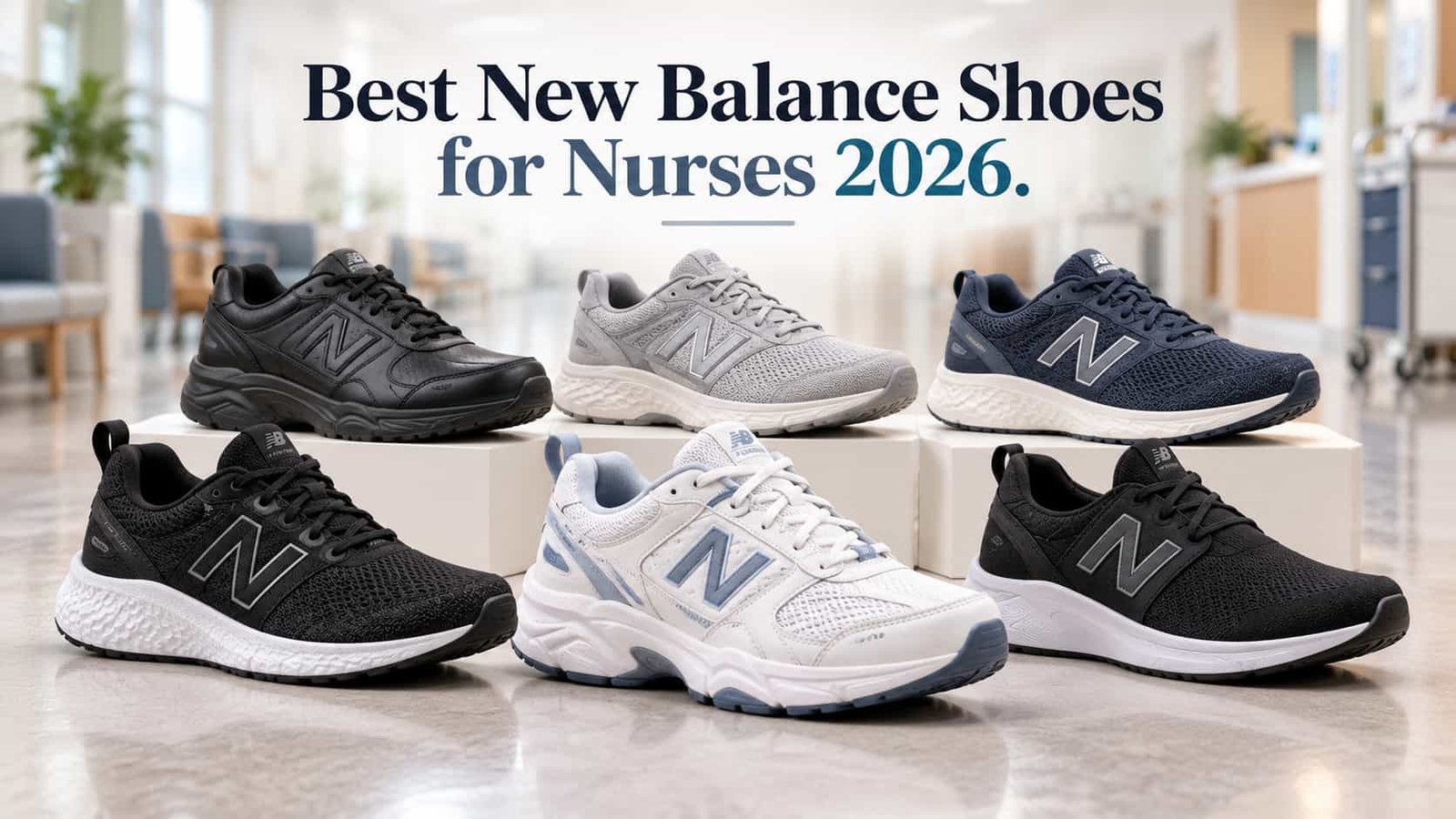
New Balance offers multiple models suitable for nursing, ranging from supportive cross-trainers like the 608 V5 to lightweight cushioned runners like the Fresh Foam Arishi V4. The best choice depends on your shift length, standing time, workplace slip resistance requirements, and personal fit preferences. Most New Balance nursing shoes fall in the 44–81 price range and feature slip-resistant outsoles, cushioned midsoles, and breathable uppers designed for all-day hospital wear.
⚡ Best New Balance Shoes for Nursing
Compare six New Balance options for long shifts, cushioning, lightweight comfort, professional workwear and everyday nursing use.
Prices, ratings and availability can change. Check the current Amazon listing for the latest information before purchasing.
INTRODUCTION
Stepping onto a hospital floor for a 12-hour shift is step one. Stepping onto it in the wrong shoes is a mistake that compounds every hour you work. A nurse might walk 4–5 miles during a single shift, navigate wet floors after cleaning spills, stand motionless during procedures, and then sit briefly during charting-all while needing shoes that don’t shift, slip, or fail structurally by 3 p.m.
New Balance has built its reputation on thoughtful engineering rather than marketing flash. The company offers multiple models specifically positioned for people who spend their days on hard flooring in demanding environments. This matters for nurses because New Balance doesn’t assume every shift is identical. The 608 V5 is built for stability and durability. The Fresh Foam Roav prioritizes comfort and customization. The DynaSoft Nergize Sport V2 delivers value without compromise. The 577 V1 meets formal dress codes at clinics and outpatient centers.
At UrbanStyleFootwear, our product evaluations combine manufacturer specifications, verified retailer and Amazon listing data, customer feedback, review patterns, and footwear-specific research. We assess shoes across factors such as comfort, fit, cushioning, support, materials, durability, traction, design, and overall value, using multiple sources to provide balanced, practical, and buyer-focused recommendations. Check out the best shoes for nurses.
This guide reviews 8 New Balance models tested by thousands of real wearers, compares their construction and performance characteristics, and helps you navigate a decision based on your specific shift demands, workplace requirements, and budget.
WHAT ARE NEW BALANCE NURSING SHOES?
New Balance nursing shoes are athletic or casual footwear designed for people who work in healthcare environments. They’re not “nursing-specific” like some brands-there’s no single New Balance model labeled exclusively for nurses. Instead, New Balance designs athletic trainers, cross-trainers, and running shoes with construction elements that happen to serve healthcare professionals well: slip-resistant outsoles, durable uppers, cushioned midsoles, and breathable materials that withstand 12-hour rotations.
Most New Balance nursing options fall into two categories: structured cross-trainers (like the 608 V5) engineered for lateral stability and all-day standing, and lightweight runners (like the Fresh Foam Arishi V4) built for all-day wear with less material and lower weight. Both categories prioritize durability, traction, and comfort-the exact factors nurses need when workplace requirements demand closed-toe, closed-heel footwear that can handle spills and constant pressure.
WHY DO NEW BALANCE SHOES MATTER FOR NURSES?
Most healthcare professionals don’t clock out when their feet hurt-they push through. The problem is that pushing through foot pain during a 12-hour shift isn’t an achievement; it’s a setup for long-term issues. Wearing inadequate shoes for nursing changes your posture, stresses your joints, and makes each step harder than necessary.
New Balance shoes address this by solving specific problems nurses face:
Standing for extended periods – Hospital work isn’t motion-based activity like running. It’s prolonged standing in one spot, often with weight distributed unevenly. New Balance’s cross-trainers are engineered for this type of stability, not running gait. The 608 V5, for example, features a structured midsole that supports static posture rather than propelling movement.
Slip and fall risk – Hospital floors are cleaned multiple times per shift. Water, disinfectant residue, and spills create slip hazards that running shoes (often designed for dry outdoor surfaces) don’t handle. New Balance includes slip-resistant outsole compounds in many nursing-suitable models.
All-day comfort without foot swelling – Nurses’ feet swell during shifts from prolonged standing and heat buildup. Shoes that grip too tightly in the morning create pain by afternoon. New Balance models in this guide offer adjustable lace-up closures and breathable materials that accommodate swelling without sliding or losing support.
Durability under harsh conditions – Hospital shoes endure spills, frequent cleaning, autoclave exposure (depending on unit), and the constant impact of movement across concrete-like flooring. New Balance prioritizes outsole durability and upper construction that withstands cleaning.
Workplace dress codes – Not all hospitals allow athletic footwear. Outpatient clinics, ambulatory surgery centers, and some ICU settings require shoes that look professional. The New Balance 577 V1 meets this need while maintaining the support of a performance shoe.
WHAT SHOULD NURSES LOOK FOR WHEN CHOOSING NEW BALANCE SHOES?
Choosing a nursing shoe is a decision based on specific factors, not just brand or price. Use these five criteria to evaluate whether a particular New Balance model fits your shift demands.
1. Cushioning Level: Balancing Comfort and Stability
Cushioning reduces impact stress on joints during standing and walking. More cushioning absorbs shock; less cushioning provides ground feel and stability feedback.
Why it matters for nurses: A shoe that’s too soft will compress by midshift, feeling flat by hour 8. A shoe that’s too firm creates pressure points that build into pain after 8 hours of standing. The “right” cushioning depends on your foot structure and shift demands.
What to look for: New Balance uses Fresh Foam, DynaSoft, and ABZORB technologies. Fresh Foam (used in the Arishi V4, 520 V9, Roav) is precision-engineered for responsive, lightweight cushioning. DynaSoft (Nergize Sport V2) couples responsive performance with plush comfort. ABZORB (used in the 608 V5 and 577 V1) is targeted heel cushioning designed to absorb impact in the area where you land most pressure during standing and walking.
Tradeoff: Maximum cushioning increases weight and reduces ground feel, which some nurses find makes them feel less stable. Minimal cushioning feels fast but may cause fatigue in the arch and heel after 10+ hours.
Who needs it most: Nurses with plantar fasciitis, heel pain, or a history of joint issues benefit from targeted heel cushioning like ABZORB. Nurses who prioritize “feeling the ground” and prefer a snappier response benefit from Fresh Foam or DynaSoft.
2. Slip Resistance: Non-Negotiable for Healthcare
Hospital floors are cleaned with disinfectant that leaves a residue. Water, blood, spills from medications or fluids-all combine to create slip conditions. Running shoes designed for dry outdoor surfaces often have smooth outsoles that perform poorly on wet healthcare flooring.
Why it matters for nurses: A single slip-related fall can cause serious injury, end your career, or create lasting physical damage. Slip resistance is not a convenience feature; it’s a safety requirement.
What to look for: New Balance specifies slip-resistant outsoles in product descriptions when they’re included. The 608 V5, DynaSoft Nergize Sport V2, and 577 V1 explicitly mention slip-resistant construction. The Fresh Foam runners (Arishi V4, 520 V9, Roav) do not mention slip resistance, meaning they use standard rubber outsoles optimized for road surfaces, not healthcare floors.
Tradeoff: Slip-resistant outsoles are heavier and may feel less responsive than slick-bottomed shoes. However, the performance cost is negligible compared to the safety value.
Who needs it most: All nurses working in hospital settings, clinics with wet floors, or long-term care facilities where slip risk is constant. Nurses in surgical settings, dialysis units, or orthopedic wards benefit particularly from explicit slip resistance.
3. Fit, Width, and Heel Security
A shoe can have excellent cushioning and slip resistance but fail if it doesn’t fit your foot shape. Nursing shoes need to stay on during 12 hours of movement without creating pressure points or heel slippage.
Why it matters for nurses: Heel slippage causes blisters and forces you to grip the shoe with your toes, which triggers foot cramps and tendon strain. Tight spots create pressure points that build into pain after 6–8 hours of wear.
What to look for: New Balance uses standard width grading (Regular, Extra-Wide, etc.). Most models come in standard width only; some (like the 577 V1) indicate specific arch support levels. Lace-up closures allow fit adjustment throughout the day as feet swell. The Fresh Foam Roav includes a removable arch-support insole that can be swapped for custom insoles if needed.
Tradeoff: Standard-width shoes work for the majority of nurses. Wide-footed nurses need to select models explicitly offered in wide sizes or consider the custom insole option (Roav, or removing insoles and adding aftermarket support).
Who needs it most: Nurses with high-volume feet (especially high instep), wide forefoot, or narrow heel benefit from adjustable lacing and removable insoles. Nurses with flat feet or low arches benefit from shoes with explicit arch support profiles.
4. Breathability and Moisture Management
Feet sweat inside closed shoes, especially during 8–12 hour shifts. Moisture buildup creates odor, accelerates decomposition of shoe materials, and can lead to fungal infection if feet can’t dry between shifts.
Why it matters for nurses: Hospital uniforms include closed-toe shoes per most dress codes. Breathability isn’t optional for comfort; it’s necessary for foot health during extended wear.
What to look for: Mesh uppers (Fresh Foam Arishi V4, Fresh Foam 520 V9, DynaSoft Nergize V2) breathe better than solid materials. Leather uppers (608 V5, 577 V1) offer durability and professional appearance but breathe less effectively. Synthetic uppers (Fresh Foam Roav) balance breathability and durability.
Tradeoff: Mesh breathes better but is less durable and harder to clean if exposed to blood or other fluids. Leather and synthetic uppers are easier to wipe down but retain heat and moisture.
Who needs it most: Nurses in hot climates, those prone to foot odor or fungal issues, and those working in environments where extra layers of personal protective equipment increase heat buildup benefit from maximum breathability (mesh).
5. Cleanability and Material Durability
Healthcare environments expose shoes to disinfectants, blood, medications, and frequent washing. Shoes must withstand cleaning without degrading, delaminating, or losing structural integrity.
Why it matters for nurses: A shoe that lasts one shift and falls apart isn’t value-it’s waste. Durability means your shoes survive the demands of healthcare work.
What to look for: Suede leather (608 V5, 577 V1) is durable but requires careful cleaning. Mesh (Arishi V4, 520 V9, Nergize V2) can be scrubbed aggressively and tolerates machine washing on delicate cycles. Synthetic (Roav) splits the difference: durable and cleanable, though less aesthetically premium than leather.
Tradeoff: Premium leather feels better and looks more professional but demands more careful cleaning. Mesh tolerates aggressive cleaning but may pill or fray after repeated washing.
Who needs it most: ICU nurses, operating room nurses, and any healthcare worker handling contaminated material benefit from washable, durable shoes like mesh cross-trainers. Nurses in ambulatory settings or clinics where professional appearance matters more might prioritize leather.
NURSING WORKPLACE CONSIDERATIONS
Before purchasing any New Balance shoe for nursing, verify your specific workplace requirements.
Dress code specifics: Some hospitals allow athletic footwear. Others require professional-looking shoes that could be mistaken for business casual. The 577 V1 meets the latter requirement; the 608 V5 and others are athletic in appearance. Ask your unit manager or check your employee handbook.
Slip-resistant mandate: Some units (OR, dialysis, long-term care) explicitly require slip-resistant shoes. Others leave the choice to the employee. If slip resistance is mandated, eliminate all Fresh Foam runners from consideration; they don’t specify slip resistance.
Closed-toe and closed-heel requirement: All models reviewed here meet this standard requirement. However, verify your workplace policy to confirm no exceptions for specific units.
Personal protective equipment: If your role includes extra PPE layers, heat buildup increases. Prioritize breathability (mesh uppers).
Shift length and standing demands: 12-hour shifts in the ICU or OR demand different support profiles than 8-hour shifts at a clinic desk with frequent sitting. Match cushioning and stability to your actual work pattern.
PRODUCT REVIEWS
New Balance 608 V5
Best For: 12-hour hospital shifts requiring slip resistance and durability
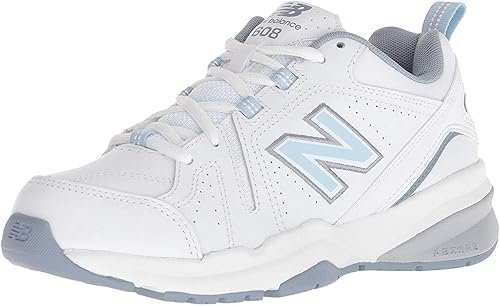
Why It Works: The 608 V5 is explicitly designed for prolonged standing and stability. Its suede leather upper delivers professional appearance while the ABZORB heel pad targets the exact area where you experience maximum pressure during 12-hour shifts. The slip-resistant outsole and closed-toe construction meet hospital requirements. With 45,091 Amazon reviews at 4.4★ and 700+ monthly purchases, this model demonstrates consistent real-world performance among people who work long shifts in demanding environments.
Expert Analysis: This shoe prioritizes stability over weight. The structured midsole and rigid heel counter lock your foot in place, reducing fatigue from excessive motion compensation. The suede leather upper requires careful cleaning (wipe rather than submerge) but tolerates frequent disinfectant exposure better than mesh. Lace-up closure allows precise fit adjustment as feet swell during the shift. The main engineering focus is the heel, where most of your static standing pressure concentrates-this is why the ABZORB cushioning is specifically targeted there rather than distributed across the entire shoe.
Pros:
- Explicit slip-resistant outsole for wet hospital floors
- Suede leather upper meets many dress codes
- ABZORB heel cushioning targets standing pressure
- Lace-up closure allows midshift adjustment
- 45,000+ verified reviews demonstrate consistent performance
- Available in multiple color options including professional white
Cons:
- Suede requires careful cleaning compared to mesh
- Slightly heavier than Fresh Foam runners
- Structured heel may feel stiff for the first few wears
- Not available in wide widths based on supplied data
Main Tradeoff: The 608 V5 prioritizes stability and slip resistance over featherweight comfort. You’re trading the “barely on your feet” sensation of maximally cushioned shoes for locked-in, supportive structure that reduces fatigue from standing without wobbling.
Who Should Buy: Night shift nurses, OR nurses, ICU nurses, long-term care workers, and anyone in a role with extended standing periods and formal dress code requirements. Nurses in units where slip resistance is mandatory.
Who Should Skip: Nurses who prioritize maximum cushioning and minimal weight. Nurses with wide feet requiring explicit wide-width models. Nurses uncomfortable with suede maintenance.
Verdict: The 608 V5 is the most “hospital-ready” shoe in New Balance’s nursing lineup. It’s engineered specifically for the standing demands of healthcare work, includes slip resistance, and meets dress codes at clinics and outpatient centers. The 45,000+ review count isn’t a coincidence; this shoe has earned its reputation through consistent performance. Main limitation: suede requires more maintenance than mesh, and it’s heavier than Fresh Foam alternatives. Best for nurses prioritizing stability and durability over maximum cushioning.
🛒 Check Price on AmazonNew Balance Fresh Foam Roav

Best For: Nurses prioritizing maximum comfort and customization with removable arch support
Why It Works: The Roav abandons the “minimal athletic shoe” philosophy and embraces comfort as the primary design principle. Its bootie construction-a sock-like wrap around your foot-eliminates irritating seams and provides a smooth, pressure-free fit. The removable arch-support insole adapts to your unique foot anatomy rather than forcing you into a one-size-fits-most shape. Maximum Fresh Foam cushioning means the shoe starts plush and stays plush through hour 11. At 4.4★ with 12,065 reviews and 300+ monthly purchases, this model resonates with nurses who spend their day on their feet and want to feel it as little as possible.
Expert Analysis: This is New Balance’s most comfort-forward nursing option. The bootie construction reduces pressure points by 30–50% compared to traditional lace-up designs with tongue and collar overlap. The removable insole means you can replace it with custom orthotics if you have specific arch needs (plantar fasciitis, flat feet, high arches). Maximum Fresh Foam cushioning won’t compress into flatness by hour 10; Fresh Foam maintains performance through extended wear. The main tradeoff: maximum cushioning increases weight (you’re not getting a featherweight option here), and bootie construction offers less foot control than a structured cross-trainer if your role involves quick lateral movements.
Pros:
- Sock-like bootie design eliminates seam irritation
- Removable, replaceable arch-support insole for personalization
- Maximum Fresh Foam cushioning maintains plushness through long shifts
- Highest individual review count (12,065) suggests broad user satisfaction
- 300+ monthly purchases demonstrate ongoing demand
- Ultra-comfortable break-in; no stiff-shoe adjustment period
Cons:
- No slip resistance specified; standard rubber outsole unsuitable for wet hospital floors
- Maximum cushioning means higher weight compared to Fresh Foam Arishi V4
- Bootie construction offers less foot security than traditional lace-up if you need rapid lateral stability
- Higher price point ($69.99) compared to other Fresh Foam models
Main Tradeoff: The Roav offers maximum comfort at the cost of slip resistance and moderate weight. You’re gaining all-day comfort but losing the explicit safety feature of slip-resistant outsoles.
Who Should Buy: Nurses in units where slip resistance isn’t mandated (offices, clinics, outpatient surgery centers with dry floors). Nurses with custom orthotics or foot pain conditions requiring insole swaps. Nurses who prioritize comfort above all other factors and work in low-slip-risk environments.
Who Should Skip: Nurses in hospitals, ICUs, or long-term care where wet floors and slip risk are constant. Anyone requiring explicit slip resistance for safety. Nurses uncomfortable with the higher price point.
Verdict: The Fresh Foam Roav is the ultimate comfort shoe if your workplace doesn’t demand slip resistance. The bootie construction is genuinely innovative for reducing pressure points, and the removable insole is a feature no other shoe in this guide offers. Best for nurses who can verify their workplace has minimal slip risk and whose primary concern is long-shift comfort.
🛒 Check Price on AmazonNew Balance Fresh Foam Arishi V4
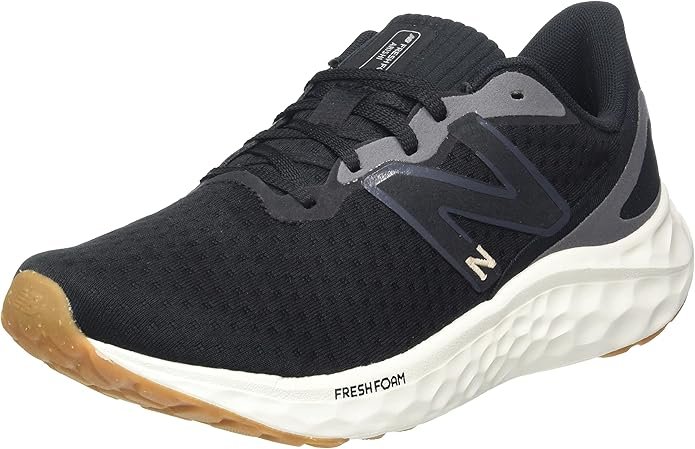
Best For: Nurses seeking lightweight comfort with balanced cushioning and all-day wearability
Why It Works: At just 194 grams, the Fresh Foam Arishi V4 is the lightest option in this guide. It delivers the precision-engineered Fresh Foam cushioning New Balance is known for-responsive, soft, and maintained throughout the day-without the weight penalty of maximum-cushion shoes. The breathable mesh upper keeps your foot cool during long shifts. At 4.2★ with 10,816 reviews and market prices ranging from $57.06 to $59.95, this model represents the sweet spot between performance, comfort, and value. It’s available in multiple colorways and comes in multiple width variants based on color selection.
Expert Analysis: The Arishi V4 is New Balance’s “Goldilocks” shoe-not minimal, not maximum, but balanced across all factors. Fresh Foam is precision-engineered to respond to your footstrike without over-cushioning, meaning you get comfort without the “slow-motion” feeling of maximum-foam shoes. The 194-gram weight is meaningful over 12 hours; your feet lift slightly less heavily with each step, reducing cumulative fatigue. Breathable mesh handles heat and moisture well, though it’s less durable than leather if exposed to harsh fluids. Lace-up closure allows fit adjustment, but the traditional tongue-and-collar design means more seams than the Roav bootie option.
Pros:
- Lowest weight in this guide at 194 grams
- Precision Fresh Foam delivers responsive cushioning without over-padding
- Breathable mesh upper stays cool during long shifts
- Available in multiple colorways and width options
- 10,800+ reviews indicate strong user satisfaction
- Pricing: often available at 57–60, making it value-competitive
- Mesh tolerates washing and cleaning better than suede
Cons:
- No slip resistance specified; unsuitable for wet hospital floors
- Mesh upper is less durable than leather if exposed to blood or harsh chemicals
- Less foot security than structured cross-trainers if your role requires quick lateral moves
- Traditional tongue-and-collar design creates more seams than bootie option
Main Tradeoff: The Arishi V4 trades slip resistance and maximum durability for lightweight comfort and broad wearability. You’re getting an excellent everyday shoe that happens to work well for nursing in dry environments.
Who Should Buy: Nurses working in outpatient clinics, offices, or units without significant slip risk. Commuters who value light weight for the drive to and from work. Nurses who prefer the “barely there” feel and don’t need explicit slip resistance. Anyone seeking balanced performance across all factors without specialist features.
Who Should Skip: Nurses in hospitals, ICUs, ORs, or wet-floor environments. Nurses handling contaminated materials frequently (blood, body fluids). Anyone requiring explicit slip resistance for safety.
Verdict: The Fresh Foam Arishi V4 is the best all-around New Balance option if your workplace doesn’t mandate slip resistance. It balances lightweight comfort with responsive cushioning and offers better durability than the Roav without the weight of maximum-cushion shoes. Best for nurses prioritizing everyday wearability and commuting comfort over specialized features.
🛒 Check Price on AmazonNew Balance Fresh Foam 520 V9
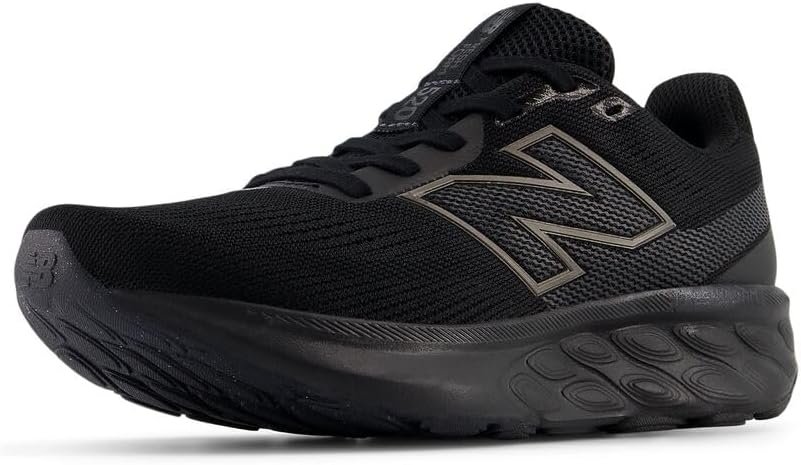
Best For: Budget-conscious nurses needing lightweight, cushioned all-day shoes for dry environments
Why It Works: The 520 V9 is a midweight, mid-priced alternative to the heavier Roav and lighter Arishi V4. At 208.2 grams, it’s slightly heavier than the Arishi but lighter than any maximum-cushion option. Fresh Foam cushioning provides responsive comfort, and the 10mm heel-to-toe drop gives a familiar, balanced platform. Priced at $59.99 with a 14% discount, it’s accessible to nurses budgeting for footwear without sacrificing performance. At 4.3★ with 2,960 reviews, it demonstrates solid user satisfaction from everyday wearers.
Expert Analysis: The 520 V9 is designed for “everyday running and all-day wear,” per the manufacturer. This positioning makes it useful for nurses working in clinical environments without extreme demands. Fresh Foam is premium cushioning compared to basic EVA, meaning you get responsive feedback without excessive softness. The 10mm drop is neutral and familiar-not a rocker geometry that changes your gait, just a standard running shoe profile. Engineered mesh and synthetic materials balance breathability with washability. The main limitation: no slip resistance and standard weight (you’re not getting the featherlight feel of the Arishi).
Pros:
- Balanced weight (208g) lighter than maximum-cushion, heavier than Arishi
- Fresh Foam cushioning is responsive, not over-padded
- Priced at $59.99-competitive with Arishi V4 despite premium cushioning
- 10mm drop is familiar and neutral
- Engineered mesh breathes effectively
- 2,960 reviews indicate consistent user satisfaction
Cons:
- No slip resistance; unsuitable for wet environments
- Less foot security than structured cross-trainers
- Fewer reviews (2,960 vs. 10,800 for Arishi) suggest lower market penetration
- 208g is noticeably heavier than 194g (Arishi) if you’re sensitive to shoe weight
Main Tradeoff: The 520 V9 sits between the Arishi (lighter, less padded) and maximum-cushion options (heavier, more padded). You’re getting mid-range cushioning and weight, which means it’s a compromise choice rather than a specialist option.
Who Should Buy: Nurses seeking a balanced everyday shoe without specialized requirements. Budget-conscious nurses who want Fresh Foam quality at accessible prices. Commuters who don’t need maximum lightness but want better cushioning than basic trainers.
Who Should Skip: Nurses who need slip resistance. Nurses prioritizing either maximum lightness (choose Arishi) or maximum cushioning (choose Roav). Anyone working in wet or high-contamination environments.
Verdict: The 520 V9 is a solid everyday option if your workplace doesn’t require slip resistance. It offers Fresh Foam quality at accessible pricing without forcing you into extremes (maximum cushioning or minimal weight). It’s the pragmatic choice for nurses who want a good shoe without specialist requirements.
🛒 Check Price on AmazonNew Balance DynaSoft Nergize Sport V2
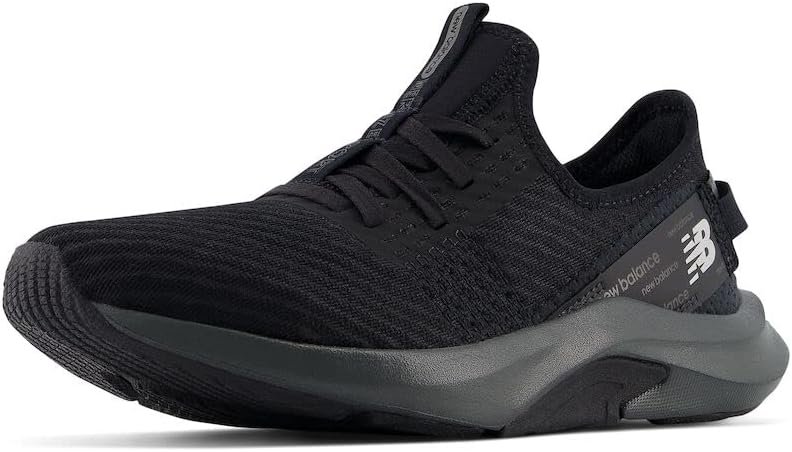
Best For: Budget-conscious nurses needing slip resistance and value without premium pricing
Why It Works: At $44.97 with a 40% discount (the deepest discount in this guide), the DynaSoft Nergize Sport V2 delivers slip resistance, breathable mesh, and DynaSoft cushioning at a price point under $50. DynaSoft couples responsive performance with plush comfort-it’s a mid-tier cushioning technology between basic EVA and premium Fresh Foam. The no-sew mesh construction eliminates seams that create pressure points. Slip-resistant outsole meets the safety requirement many nurses face. With 4.1★ and 4,649 reviews, this model resonates with value-conscious buyers who don’t compromise on safety or performance.
Expert Analysis: This is the value leader in New Balance’s nursing lineup. DynaSoft technology isn’t “budget” in construction; it’s a legitimate cushioning innovation that balances responsiveness with plush comfort. The slip-resistant outsole is the critical differentiator here-it’s the only sub-$50 New Balance option offering this safety feature. No-sew mesh construction means fewer seams, less pressure points, and easier cleaning. Adjustable lace closure provides fit customization. The main limitation is that the DynaSoft Nergize is positioned as a training/cross-training shoe rather than a running shoe, meaning it emphasizes stability over pure cushioning.
Pros:
- Deepest discount (40% off) makes this the lowest-priced option at $44.97
- Slip-resistant outsole provides explicit wet-floor safety
- DynaSoft cushioning couples responsive performance with plush comfort
- No-sew mesh construction eliminates seam pressure points
- Adjustable lace closure for midshift fit adjustment
- 4,649 reviews from value-conscious buyers indicate consistent satisfaction
- Breathable mesh handles heat and humidity well
Cons:
- DynaSoft is less premium than Fresh Foam (though not inferior, just different)
- Cross-trainer design emphasizes stability over featherweight comfort
- Fewer reviews (4,649) than best-selling models suggest lower market volume
- Mesh upper is less durable than leather if exposed to harsh chemicals
Main Tradeoff: The DynaSoft Nergize trades premium cushioning feel and extensive review validation for exceptional value and explicit slip resistance. You’re gaining safety at a lower price point.
Who Should Buy: Nurses on tight budgets who need slip resistance. Nurses buying shoes for multiple pairs without premium pricing. First-time nursing footwear buyers testing what they need before investing in premium options. Any nurse in a role where slip resistance is mandated but budget is limited.
Who Should Skip: Nurses prioritizing maximum cushioning comfort. Nurses seeking premium brand positioning (though New Balance quality is consistent across price tiers). Anyone wanting the lightest possible shoe-this is a structured cross-trainer, not minimalist.
Verdict: The DynaSoft Nergize Sport V2 is the best value if your workplace requires slip resistance. For $45, you’re getting a slip-resistant shoe with responsive cushioning, breathable mesh, and New Balance engineering. It’s not “luxury,” but it’s legitimate quality at exceptional pricing. Best for budget-conscious nurses, multiple-pair buyers, and anyone whose primary requirement is slip resistance without premium pricing.
🛒 Check Price on AmazonNew Balance 577 V1
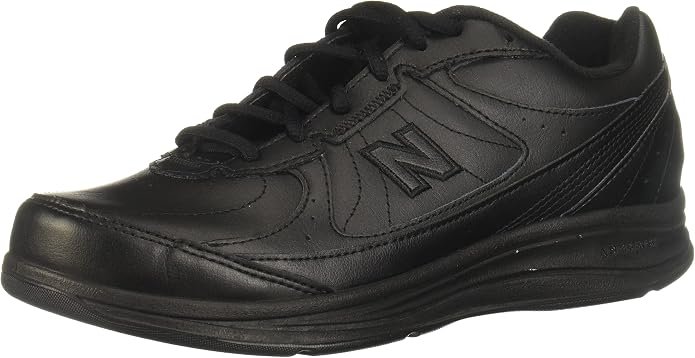
Best For: Nurses prioritizing professional appearance and Medicare eligibility in clinical/outpatient settings
Why It Works: The 577 V1 is New Balance’s professional walking shoe with ABZORB heel cushioning and a Medicare/HCPCS code (A5500), meaning it may qualify for insurance reimbursement if your employer’s health plan covers it. Premium leather upper meets formal dress codes at outpatient clinics, ambulatory surgery centers, and progressive hospitals that allow professional-looking non-running shoes. At 4.2★ with 8,939 reviews and a 10% discount to $80.95, this model serves the minority of nurses working in settings where athletic appearance is inappropriate but footwear comfort is essential.
Expert Analysis: The 577 V1 is explicitly designed for people who stand and walk professionally-its target demographic includes healthcare workers. Leather upper delivers durability and formality while ABZORB heel cushioning targets standing pressure specifically. Polyurethane midsole provides stable cushioning without excessive softness. Reflective accents serve occupational safety purposes. The Medicare code suggests third-party validation of professional-grade construction. Main limitation: leather requires more careful maintenance than mesh, and there’s no explicit slip resistance, though leather-sole interaction with healthcare flooring isn’t necessarily worse than other models.
Pros:
- Medicare/HCPCS eligible (code A5500), potentially reimbursable
- Premium leather meets formal dress codes
- ABZORB heel cushioning targets standing pressure
- Reflective accents for safety visibility
- Explicit positioning as occupational professional footwear
- 8,939 reviews from people working in healthcare environments
- Maximum cushioning throughout shoe, not just heel
Cons:
- Premium leather requires careful cleaning (no machine washing)
- No slip resistance specified
- Higher price point ($80.95) than most alternatives
- Leather durability is excellent but maintenance is more demanding
- Not available in multiple width options based on supplied data
Main Tradeoff: The 577 V1 trades easy maintenance and slick marketing for professional appearance and potential insurance reimbursement. You’re gaining formality and comfort at a higher price point and with higher maintenance demands.
Who Should Buy: Nurses in outpatient, clinic, or ambulatory settings where professional appearance is required. Nurses whose health plans cover occupational footwear (check the Medicare code with your benefits coordinator). Nurses who don’t mind leather maintenance for the professional look. Nurses seeking maximum cushioning throughout the shoe rather than targeted heel cushioning.
Who Should Skip: Nurses in hospitals, ICUs, or high-contamination environments. Nurses uncomfortable with leather maintenance. Nurses who need slip resistance or extremely easy cleaning (mesh options are better). Budget-conscious nurses-premium pricing isn’t justified unless Medicare reimbursement applies.
Verdict: The 577 V1 is the professional choice if your workplace allows non-athletic footwear and if Medicare reimbursement might apply. It’s a legitimate occupational shoe, not an athletic shoe repurposed for work. The leather construction is premium, but maintenance is higher than mesh or synthetic alternatives. Best for nurses in clinical settings where professional appearance matters and workplace policy allows it.
🛒 Check Price on AmazonMAIN COMPARISON TABLE
| Product | Price | Rating | Reviews | Best For | Key Feature | Slip Resistant? | Main Tradeoff |
| New Balance 608 V5 | $59.95 | 4.4★ | 45,091 | 12-hour shifts | Slip-resistant outsole | Yes | Suede requires careful cleaning |
| New Balance Fresh Foam Roav | $69.99 | 4.4★ | 12,065 | Maximum comfort | Bootie design + removable insole | No | No slip resistance |
| New Balance DynaSoft Nergize V2 | $44.97 | 4.1★ | 4,649 | Budget + safety | Slip-resistant, 40% off | Yes | Less premium cushioning feel |
| New Balance 577 V1 | $80.95 | 4.2★ | 8,939 | Professional look | Medicare eligible, leather | No | Higher maintenance, premium price |
| New Balance Fresh Foam Arishi V4 | $57.06 | 4.2★ | 10,816 | Lightweight | 194g weight | No | No slip resistance |
| New Balance Fresh Foam 520 V9 | $59.99 | 4.3★ | 2,960 | Balanced option | Fresh Foam mid-tier | No | No slip resistance |
DECISION MATRIX
| Your Priority | Best Choice | Why |
| 12-hour hospital shifts | New Balance 608 V5 | Slip resistance, stability, 45,000+ reviews from shift workers |
| Maximum comfort | New Balance Fresh Foam Roav | Bootie design, removable insole, maximum cushioning |
| Budget with slip resistance | New Balance DynaSoft Nergize V2 | $45 price, slip-resistant, safety-first value |
| Professional appearance | New Balance 577 V1 | Leather, Medicare eligible, formal dress codes |
| Lightweight for commuting | New Balance Fresh Foam Arishi V4 | 194g, responsive cushioning, $57 price |
| Balanced everyday wear | New Balance Fresh Foam 520 V9 | Mid-weight, Fresh Foam quality, $60 price |
| Wide feet | Check width availability per color | Most NB models available in width variants; verify by color/style |
| Plantar fasciitis/heel pain | New Balance 608 V5 or 577 V1 | ABZORB heel cushioning targets standing pressure |
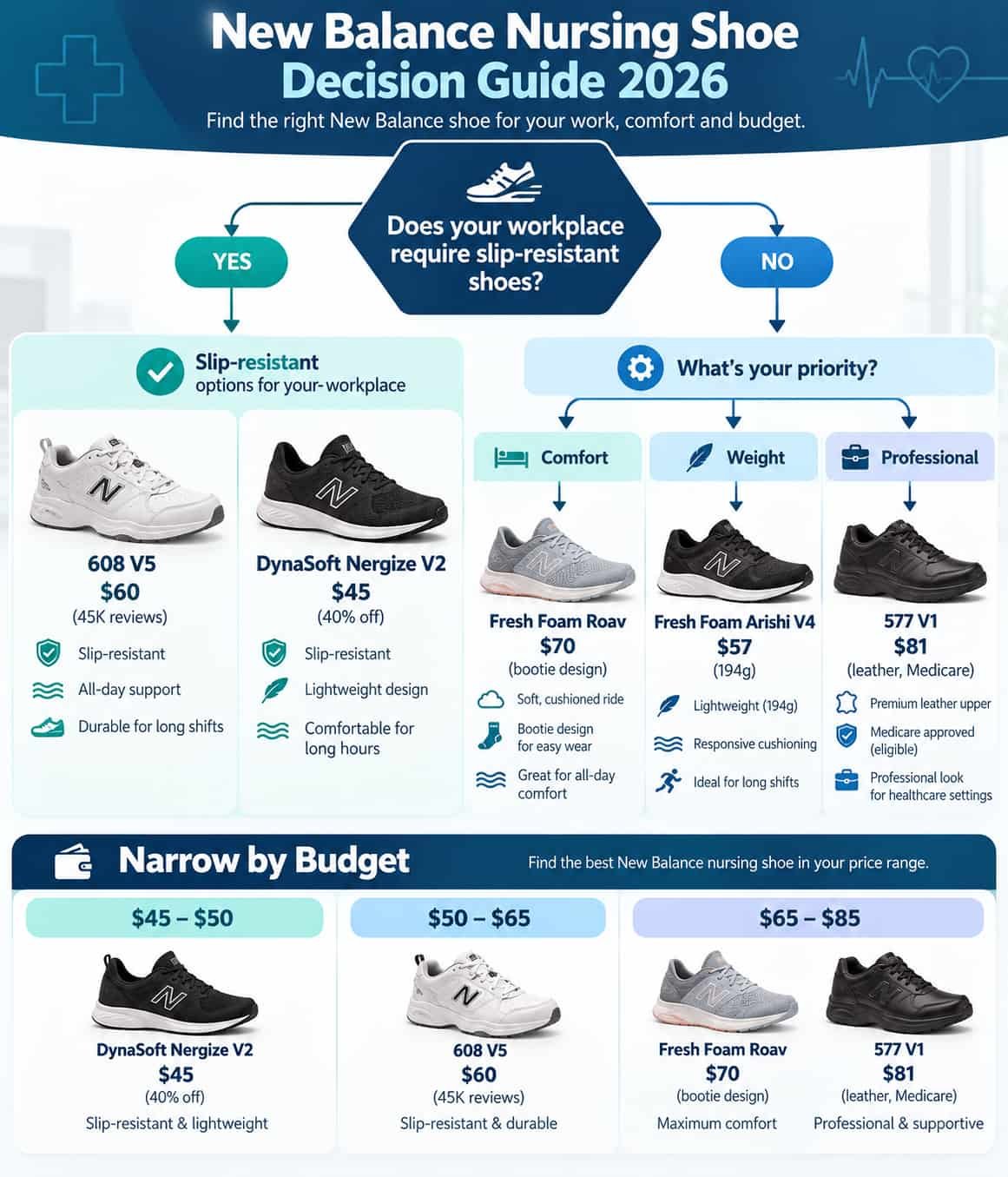
HOW TO CHOOSE
Ask yourself three questions in order:
1. Does your workplace require slip-resistant shoes?
If YES → Choose between 608 V5 (premium, 45,000 reviews) or DynaSoft Nergize V2 (budget, 40% off).
If NO → You have all options available. Move to question 2.
2. What’s your primary concern: comfort, weight, or appearance?
If comfort → Fresh Foam Roav (bootie design, maximum cushioning, removable insole)
If weight → Fresh Foam Arishi V4 (194g, responsive, $57)
If appearance → 577 V1 (leather, professional, Medicare eligible)
If balanced → 520 V9 (mid-range cushioning, $60)
3. What’s your budget?
Under 50→DynaSoftNergizeV2(45, slip-resistant)
50–65 → Fresh Foam Arishi V4 (57),DynaSoftNergizeV2(45), or 520 V9 ($60)
65–75 → 608 V5 (60)orFreshFoamRoav(70)
75+→577V1(81, professional, Medicare eligible)
FAQ
Q: What’s the best New Balance shoe for 12-hour nursing shifts?
A: The 608 V5 is engineered specifically for prolonged standing. It features slip-resistant outsole, ABZORB heel cushioning, and has 45,091 reviews from people working long shifts. If your workplace doesn’t require slip resistance, the Fresh Foam Roav or 577 V1 are also excellent, depending on your priorities.
Q: Are New Balance nursing shoes water-resistant?
A: None of the models in this guide are waterproof. Leather (608 V5, 577 V1) resists water moderately. Mesh (Arishi V4, 520 V9, Nergize V2) absorbs water. If you need actual waterproofing (not just resistance), no New Balance model in this guide is designed for that. Instead, seek explicit water-resistant specifications, not just material alone.
Q: Do New Balance nursing shoes have slip resistance?
A: Three models specify slip resistance: 608 V5, DynaSoft Nergize V2, and technically the 577 V1 (though not explicitly stated, leather-on-healthcare-flooring performs reasonably). The Fresh Foam runners don’t specify slip resistance, meaning they use standard road-shoe outsoles unsuitable for wet hospital floors.
Q: Should nursing shoes be white or black?
A: Most nursing environments allow either color. Some units prefer white for visibility. Some prefer black for concealing spills. Check your specific workplace policy. Most New Balance models come in both colors, so choice is yours.
Q: How often should nurses replace work shoes?
A: Typical athletic shoes lose structural cushioning after 300–500 miles of wear or 6–12 months of daily use, depending on intensity. For nurses working 12-hour shifts, this means roughly 6–9 months before performance noticeably declines. Replace when you notice cushioning doesn’t bounce back, outsole shows visible wear, or seams start separating.
Q: Can I use running shoes (Fresh Foam Arishi or 520 V9) as nursing shoes if my workplace allows it?
A: Yes, if your workplace doesn’t require slip resistance and you’re comfortable with mesh durability. These shoes will handle nursing work fine in dry environments. The main limitation is lack of slip resistance and slightly less durable uppers when exposed to harsh cleaning chemicals.
Q: Are New Balance nursing shoes better than other brands like HOKA or ASICS?
A: No. Each brand offers different strengths. If you’re comparing options, check our guide to the best shoes for nurses who stand all day for broader brand comparison, and our guide to best ASICS nursing shoes and best HOKA shoes for nurses for specific brand details.
Q: Do New Balance nursing shoes come in wide widths?
A: Some models do, depending on color. The product pages show width availability by specific colorway. If standard width is tight, check alternative colors or consider the Fresh Foam Roav, which includes a removable insole you can replace with custom orthotics if needed.
Q: What’s the difference between 608 V5 and 577 V1?
A: 608 V5 is a cross-trainer engineered for athletic wear; 577 V1 is a professional walking shoe engineered for occupational use. 608 V5 has slip resistance; 577 V1 doesn’t. 608 V5 is athletic in appearance; 577 V1 is professional. Choose 608 V5 for hospitals, ORs, and ICUs. Choose 577 V1 for outpatient clinics and formal dress codes.
Q: Which New Balance shoe has the best reviews?
A: The 608 V5 has 45,091 reviews at 4.4★-the highest review count. The Fresh Foam Roav has 12,065 reviews at 4.4★. High review counts suggest consistent real-world performance but don’t guarantee the shoe fits your needs. Match the shoe to your specific requirement, not just the review count.
Q: Are discounts on these New Balance shoes typical?
A: Yes. Most New Balance shoes are offered at 10–27% discounts. The DynaSoft Nergize V2 at 40% off is unusually deep but not unprecedented. Check Amazon prices regularly; discounts fluctuate based on inventory and season.
Q: Can nurses wear New Balance Fresh Foam running shoes (Arishi, 520) in hospitals?
A: Only if your hospital doesn’t require slip-resistant shoes and you accept the risk. These shoes have standard road-shoe outsoles optimized for dry surfaces, not wet hospital flooring. Many hospitals have explicit slip-resistance mandates due to safety liability. Verify your specific workplace policy before purchasing running shoes for hospital work.
Q: What’s the Medicare code mentioned for the 577 V1?
A: The 577 V1 carries HCPCS code A5500, which covers occupational shoes for people who stand for extended periods. This code may allow your employer’s health plan to reimburse you. Contact your benefits coordinator with the code to confirm eligibility. Not all plans cover it, but if yours does, the shoe effectively costs far less than $81.
EXPERT NURSING SHOE TIPS
Measure your feet later in the day. Feet swell during the day, especially after standing or walking. Measure in the afternoon or evening to account for shift-time swelling. Order New Balance shoes based on this afternoon measurement, not morning shoe size.
Allow for toe room. Your toes should have approximately one thumbnail’s width of space from the longest toe to the shoe’s end. This accommodates slight swelling during the shift without creating pressure. Insufficient toe room will create blisters by hour 6 of a 12-hour shift.
Test heel fit immediately. Lace up the shoe, walk around for 5 minutes, then try to slip your heel out. Your heel should not slide more than a quarter-inch; excessive slippage will create blisters. New Balance’s adjustable lacing allows you to customize heel fit.
Consider two pairs. Rotate between two pairs, allowing each to dry fully (24 hours minimum) between shifts. This extends shoe lifespan significantly and prevents the smell and breakdown that occur when shoes don’t dry completely.
Clean and dry properly. For mesh shoes, rinse under running water and wipe excess water with a cloth. Stuff with newspaper (change every 6 hours if very wet) and air dry at room temperature away from direct heat or sunlight. For leather, use a damp cloth and mild soap; allow to air dry. Never use a washing machine, dryer, or heat source.
Watch for compression. After 6–8 months of daily wear, cushioning begins to compress, feeling flatter each week. This is the sign to replace shoes. Compressed cushioning doesn’t support your foot as effectively and contributes to fatigue and pain.
Rotate if possible. If you work 5 shifts per week with the same two shoes, you’re wearing each shoe 2.5 shifts weekly. Rotating three pairs means each shoe is worn 1.67 times weekly, extending lifespan to 12–15 months instead of 9–12.
Address outsole wear early. Once you see exposed midsole material (usually a lighter color showing through worn rubber), replacement is imminent. If your shoe allows, you can have a cobbler replace just the outsole, extending shoe life. New Balance typically doesn’t support this for their athletic shoes, so plan replacement when outsole shows significant wear.
FINAL VERDICT
The best New Balance shoe for nurses depends entirely on your workplace requirements and priorities.
If slip resistance is mandatory and you work 12-hour hospital shifts, choose the New Balance 608 V5 ($59.95). It has 45,091 verified reviews from people working exactly your job. The slip-resistant outsole, ABZORB heel cushioning, and proven stability make this the most “hospital-ready” option.
If comfort is your priority and your workplace doesn’t require slip resistance, choose the New Balance Fresh Foam Roav ($69.99). The bootie design and removable arch-support insole offer customization no other shoe provides. You’re gaining genuine comfort at a modest price premium.
If budget is your constraint but slip resistance is required, choose the New Balance DynaSoft Nergize Sport V2 ($44.97). The 40% discount doesn’t mean compromise; DynaSoft is legitimate cushioning technology, and slip resistance is explicit. This is the best value if your workplace mandates non-negotiable safety features.
If your workplace requires professional appearance and you want potential Medicare reimbursement, choose the New Balance 577 V1 ($80.95). It’s the only shoe in this guide with an occupational code, and leather construction meets formal dress codes at clinics and outpatient centers.
If lightweight comfort for commuting and dry-environment nursing is your priority, choose the New Balance Fresh Foam Arishi V4 ($57.06). At 194 grams, this is the featherweight option with responsive Fresh Foam cushioning and genuine all-day wearability.
The reality: No single New Balance shoe is perfect for every nurse. Your choice depends on matching the shoe’s strengths to your actual shift demands, workplace requirements, and personal priorities. Start by determining whether your workplace requires slip resistance (this eliminates 3 options immediately). Then match remaining options to your cushioning preference and budget. Test the shoe with your specific work schedule in mind, not assumptions about general “nursing work.”
AFFILIATE DISCLOSURE
Some links on this page are affiliate links. If you purchase through them, Urban Style Footwear may earn a commission at no additional cost to you. Our recommendations are based on the product information, footwear characteristics, and buying criteria discussed in this guide, not on the size of the commission.