
HOKA vs Brooks for Plantar Fasciitis: Which Brand Wins in 2026?
✅ Expert Verified | 🛒 Live Amazon Prices | 📅 Updated September 2026
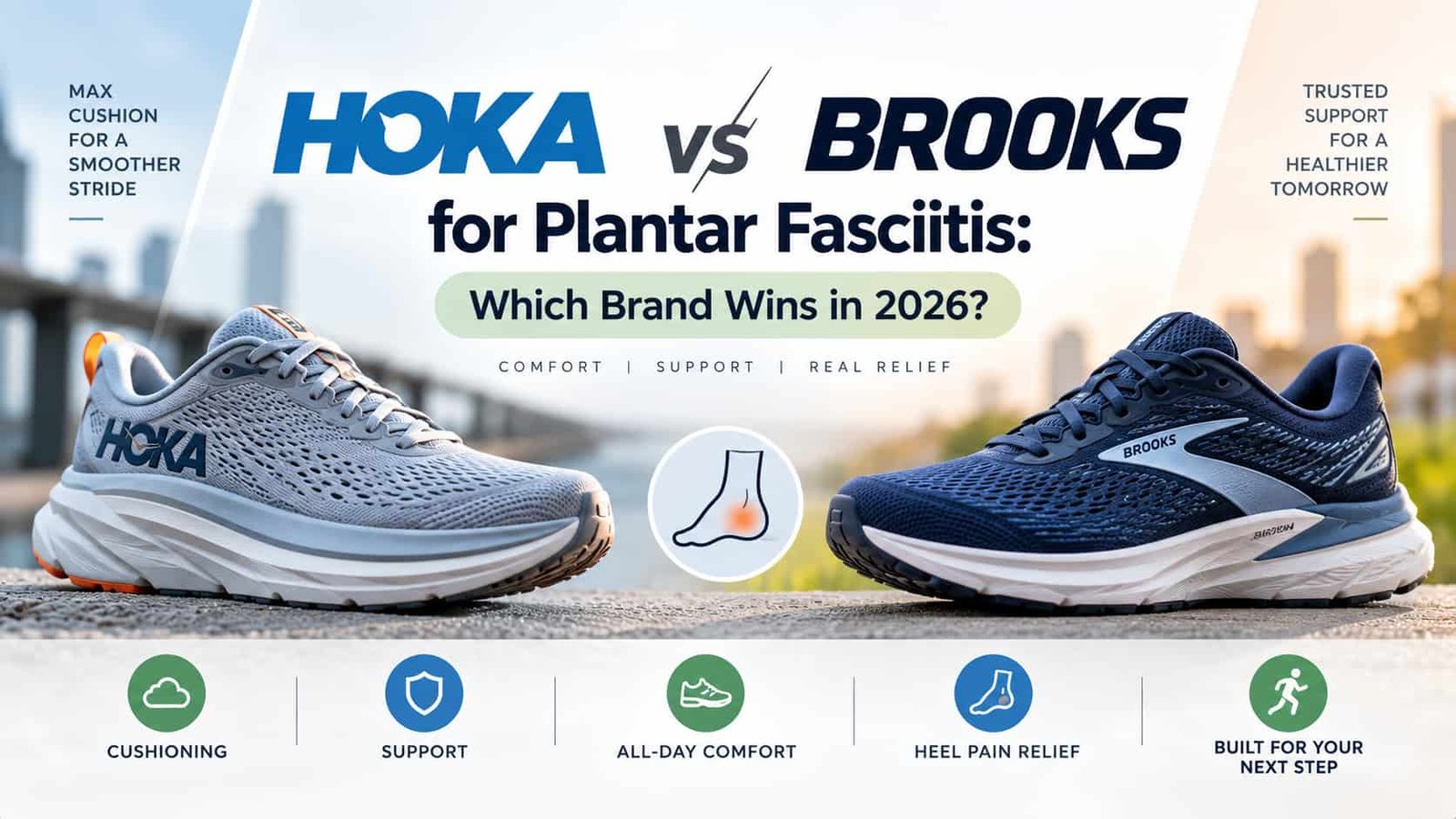
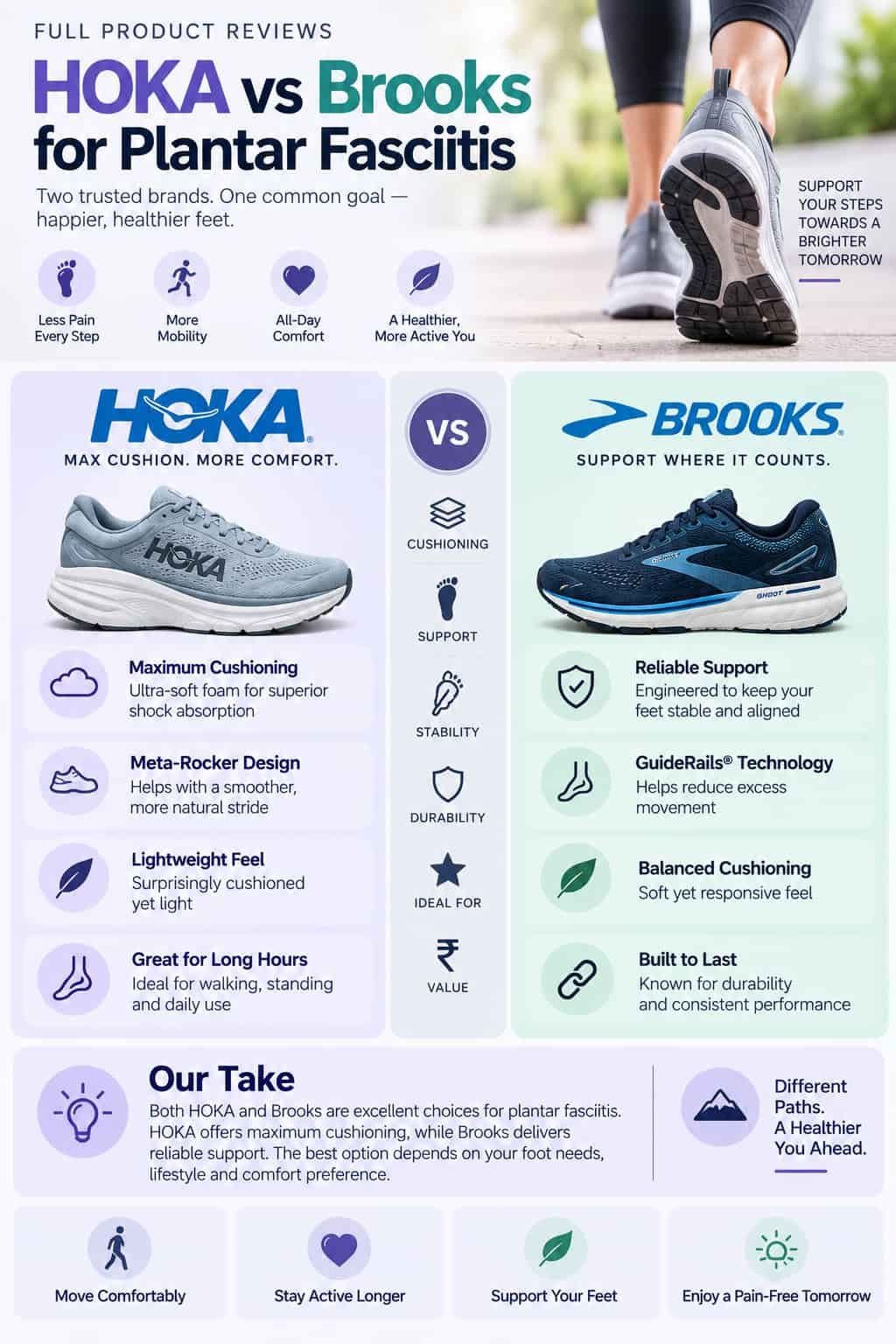
When comparing HOKA vs Brooks for plantar fasciitis, HOKA wins on maximum shock absorption with its 39 to 43 mm stack and meta-rocker geometry that offloads the plantar fascia, while Brooks wins on stability and motion control with its 10 to 12 mm drop and GuideRails support system. The right choice depends on your foot type and pain pattern.
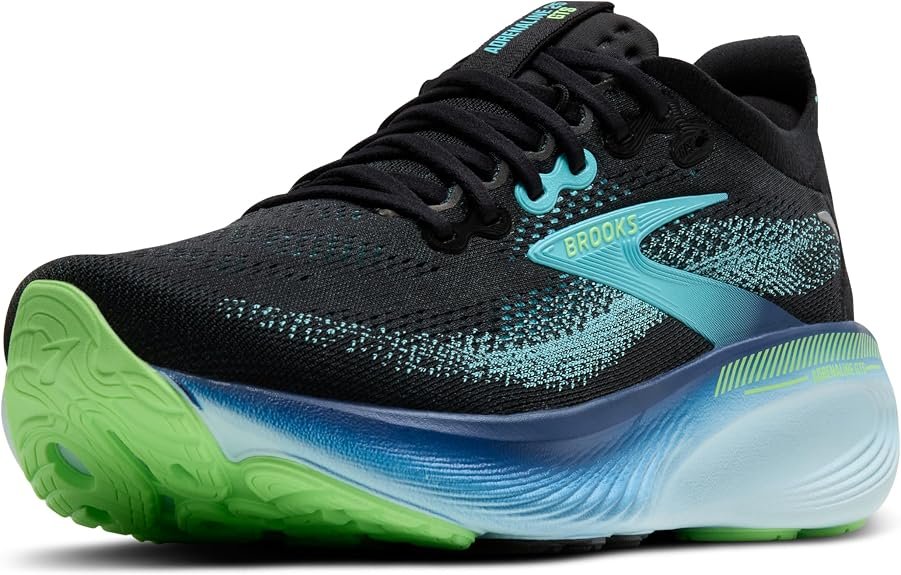
Adrenaline GTS 25
⭐ 4.5/5GuideRails support · 37mm stack · 10mm drop · APMA certified
Introduction
David, a mail carrier from the Queen Anne neighborhood of Seattle, had been dealing with plantar fasciitis for nearly two years. Every morning, those first few steps out of bed felt like walking on broken glass. He tried everything: ice baths, stretching routines, even taking time off work. But the pain always came back. His podiatrist gave him a choice: HOKA or Brooks.
David’s story is not unique. Plantar fasciitis affects approximately 2 million Americans each year, and about 1 in 10 people will develop the condition during their lifetime. For people who spend long hours on their feet (nurses, teachers, factory workers, and mail carriers like David) the numbers are even higher. Studies suggest up to 30% of workers in standing-intensive professions experience plantar fasciitis symptoms at some point.
The good news is that both HOKA and Brooks have earned genuine clinical credibility. Both brands are regularly recommended by podiatrists and have models that carry the APMA Seal of Acceptance from the American Podiatric Medical Association. However, they are engineered with fundamentally different philosophies. The right choice depends heavily on what your feet actually need.
This guide breaks down the HOKA vs Brooks debate for plantar fasciitis. We compare their best models head-to-head, explain the biomechanical differences that matter, and help you decide which brand (and which shoe) is right for your feet.
HOKA vs Brooks: The Core Differences
Both HOKA and Brooks make excellent footwear, but they serve different foot types. Here is the podiatrist’s verdict in plain English.
Cushioning Philosophy
HOKA launched in 2009 with a maximalist shoe that looked ridiculous to the running community. Then athletes with knee and hip injuries started winning ultramarathons in them. HOKA’s engineering centers on two ideas: maximum cushioning (dramatically more foam stack than conventional shoes) and active offloading via the meta-rocker, a curved sole geometry that promotes early heel-off and reduces time on the ground.
Brooks has been building shoes since 1914. Their engineering philosophy centers on biomechanical fit, the idea that the shoe should match the runner’s natural mechanics rather than overriding them. The result is a conservative, evidence-based approach: consistent drop (8 to 12 mm across most models) and well-studied foam technology.
The Drop Difference That Matters
Here is the key biomechanical difference for plantar fasciitis:
| Model | Stack Height | Drop | Cushion Character |
| Brooks Ghost 17 | 36.5mm heel / 26.5mm forefoot | 10mm | Soft, plush, energy-returning |
| Brooks Adrenaline GTS 25 | 37mm heel / 27mm forefoot | 10mm | Firm-supportive, controlled |
| HOKA Bondi 9 | 42-43mm heel / 37-38mm forefoot | 5mm | Maximum plush, rocker-assisted |
| HOKA Clifton 10 | 38-42mm heel / 30-34mm forefoot | 8mm | Light, soft, everyday cushion |
Why this matters for plantar fasciitis: Brooks’ 10 to 12 mm drop is more plantar fasciitis-friendly than HOKA’s 4 to 5 mm drop across most models because the higher drop reduces fascia stretch at heel strike. However, HOKA’s rocker geometry offloads the plantar fascia more aggressively. In plain English: Brooks reduces strain at the moment your heel hits the ground; HOKA reduces strain throughout the entire step cycle.
Why the Difference Matters for Heel Pain
Research on plantar fasciitis treatment has identified key biomechanical factors that influence recovery. A study on midsole hardness found that increasing midsole hardness reduces stress and strain on the plantar fascia, but also imposes a higher load on the foot. This is the trade-off you are navigating.
For people who overpronate (their feet roll inward excessively), Brooks’ stability features are often the better choice. The Adrenaline GTS uses GuideRails, a dual-rail system that cradles the heel and controls excessive medial motion without the aggressive medial post that traditional motion-control shoes use. Brooks has been engineering stability shoes longer than HOKA has existed, and it shows.
For people with high arches or who need pure impact absorption, HOKA wins. The thick maximalist stack is ideal for patients who need extreme cushioning: stress fractures, metatarsalgia, and older patients. The Bondi’s 42 to 43 mm stack and meta-rocker geometry reduce peak vertical loading rates and shift force distribution toward the calf and forefoot.
What to Look for in Plantar Fasciitis Shoes
Before we dive into specific models, here are the critical factors to evaluate. What to Look for in Plantar Fasciitis Shoes covers these in depth, but here is the short version.
1. Heel-to-Toe Drop
The drop is the height difference between the heel and the toe. Higher drops (8 to 12 mm) reduce strain on the plantar fascia at heel strike by shifting impact to the heel rather than the arch. Lower drops (4 to 5 mm) encourage a more natural foot strike but may put more strain on the calf and Achilles.
What to look for: If you have classic plantar fasciitis with sharp heel pain, a higher drop (10 to 12 mm) may be more comfortable. If you also have calf or Achilles issues, a lower drop (4 to 5 mm) with a rocker sole may be better.
2. Arch Support
Your plantar fascia is a thick band of tissue running from your heel to your toes. When it is overstretched, it becomes inflamed. Arch support reduces that strain by distributing weight more evenly.
What to look for: Brooks’ GuideRails system provides structured support that is particularly effective for overpronators. HOKA’s arch support comes primarily from the shape of the midsole and the meta-rocker geometry.
3. Cushioning and Shock Absorption
Each step sends a shockwave up your heel. Without proper cushioning, that shock travels through the plantar fascia.
What to look for: HOKA offers dramatically more foam stack than Brooks, especially in the forefoot (note the Bondi’s 38 mm forefoot vs. Ghost’s 26.5 mm). This matters for patients with forefoot pain or neuromas. For pure heel cushioning, the Bondi’s 42 to 43 mm stack beats everything in Brooks’ lineup.
4. Stability and Motion Control
If your feet roll inward (overpronation), you need stability features to keep your gait aligned.
What to look for: Brooks wins this category clearly. The Adrenaline GTS and Addiction Walker offer structured support that addresses the overpronation often underlying plantar fasciitis. HOKA’s stability options (like the Arahi with J-Frame) exist but are not as refined as Brooks’ decades of stability engineering.
Full Product Reviews
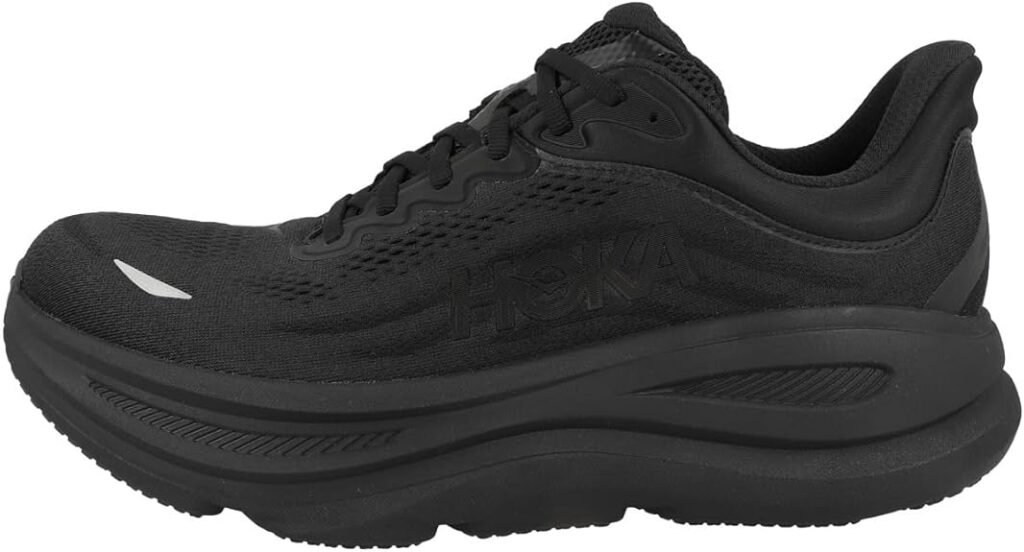
HOKA Bondi 9 – Best Maximum Cushioning
| Feature | Details |
| Price | $168.90 (Men’s) / $164.49 (Women’s) |
| Rating | 4.5/5 (3,300+ reviews) |
| Best For | Maximum cushioning, severe heel pain, all-day standing |
| Width Options | Standard, Wide |
| Key Feature | 42-43mm stack, 5mm drop, meta-rocker geometry |
| APMA Seal | Yes |
Expert Take: The HOKA Bondi 9 is the gold standard for maximum cushioning. With a 42 to 43 mm stack height and a 5 mm drop, it offers dramatically more foam than any Brooks model. The meta-rocker geometry promotes a smooth heel-to-toe transition that reduces stress on the plantar fascia. Podiatrists regularly recommend the Bondi for patients with plantar fasciitis, and users consistently report significant pain relief.
Best For: People with severe heel pain, high arches, or who spend long hours standing on hard surfaces. Also excellent for post-surgical recovery and patients with metatarsalgia.
Why It Works: The Bondi’s massive stack absorbs shock like no other shoe in its class. The 5 mm drop and rocker geometry offload the plantar fascia by reducing the time your foot spends on the ground during each step.
Pros:
- Industry-leading cushioning
- APMA Seal of Acceptance
- Available in wide widths
- No break-in period reported by most users
Cons:
- Expensive (nearly $170)
- Heavy (10.5 oz for men’s 9)
- The thick sole feels bulky to some users
- Some users report shin, knee, or hip pain after extended wear
Verdict: If you need maximum shock absorption and budget is not a concern, the HOKA Bondi 9 is unmatched. Skip this if you prefer a minimalist shoe, need motion control for overpronation, or have a tight budget.
🛒 Check Price on AmazonBrooks Adrenaline GTS 25 – Best Stability Shoe
| Feature | Details |
| Price | $154.95 |
| Rating | 4.5/5 (2,366+ reviews) |
| Best For | Overpronation, flat feet, structured support |
| Width Options | Standard, Wide |
| Key Feature | GuideRails support, 37mm stack, 10mm drop |
| APMA Seal | Yes |
Expert Take: The Brooks Adrenaline GTS 25 is a top pick for plantar fasciitis, especially if you overpronate. The GuideRails support system cradles your heel and controls excessive inward motion without feeling intrusive. The nitrogen-infused DNA LOFT v3 cushioning delivers lightweight softness, and the 10 mm drop reduces fascia stretch at heel strike. Users consistently report significant pain relief within days of wearing them.
Best For: Overpronators, people with flat feet, and anyone who needs structured support.
Why It Works: The GuideRails system keeps your body in its natural motion path while keeping excess movement in check. This is particularly important for plantar fasciitis because overpronation increases strain on the plantar fascia.
Pros:
- APMA Seal of Acceptance and PDAC A5500 Diabetic shoe certified
- Excellent stability without feeling rigid
- DNA LOFT v3 cushioning is soft and responsive
- Available in wide widths
Cons:
- Less cushioning than HOKA Bondi (37 mm vs 42-43 mm)
- Some users report blisters near the heels
- The firm support may feel stiff to neutral runners
Verdict: If you overpronate or have flat feet, the Brooks Adrenaline GTS 25 is the better choice than any HOKA model. Skip this if you have high arches and need maximum cushioning rather than motion control.
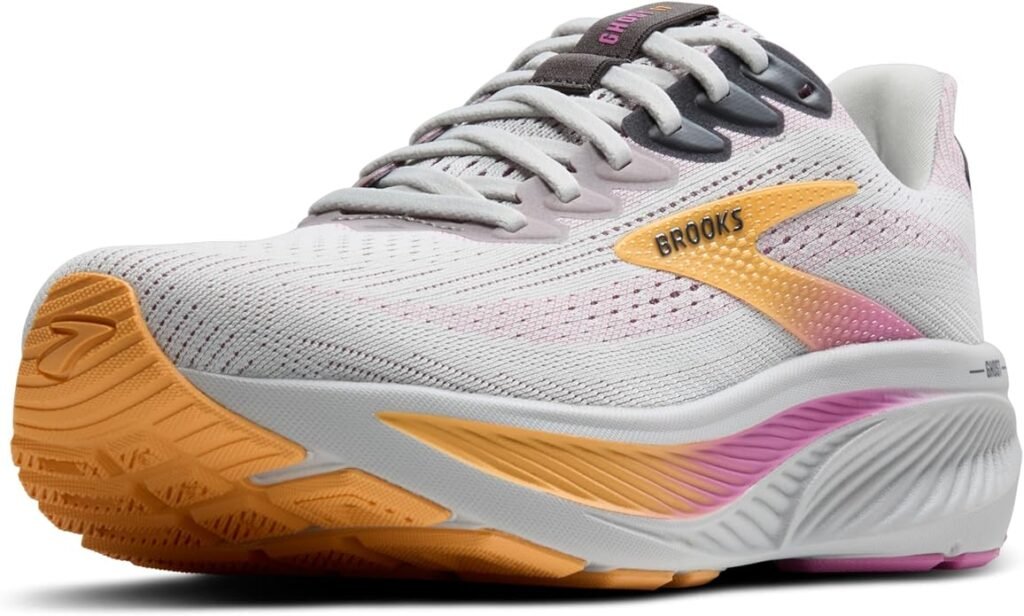
🛒 Check Price on AmazonBrooks Ghost 17 – Best Versatile Daily Trainer
| Feature | Details |
| Price | $109.95 (27% savings) |
| Rating | 4.4/5 (4,717+ reviews) |
| Best For | Neutral runners, walking, everyday wear |
| Width Options | Standard, Wide |
| Key Feature | 36.5mm stack, 10mm drop, DNA LOFT v3 |
| APMA Seal | Yes |
Expert Take: The Brooks Ghost 17 is the industry’s best-selling running shoe for good reason. With a 36.5 mm stack and 10 mm drop, it offers a balanced ride that works for both walking and running. The DNA LOFT v3 cushioning is soft and responsive, and the Ghost 17 has been redesigned with an extra 1 mm of foam in the heel and 3 mm in the forefoot compared to previous versions. Users consistently report that the Ghost helps with plantar fasciitis pain.
Best For: Neutral runners and walkers, everyday wear, people who want one shoe for multiple activities.
Why It Works: The 10 mm drop reduces fascia stretch at heel strike, while the DNA LOFT v3 cushioning absorbs shock effectively. The double jacquard air mesh upper provides excellent breathability.
Pros:
- APMA Seal of Acceptance and PDAC A5500 certified
- Excellent value at under $110 (on sale)
- Versatile for running, walking, and casual wear
- Lighter than HOKA Bondi (9.0 oz vs 10.5 oz for men’s 9)
Cons:
- Less cushioning than HOKA Bondi
- Some users find the heel box squeezes at first
- Not ideal for severe overpronation
Verdict: The Brooks Ghost 17 is the best all-around choice for most people with mild to moderate plantar fasciitis. Skip this if you need maximum cushioning or have severe overpronation.
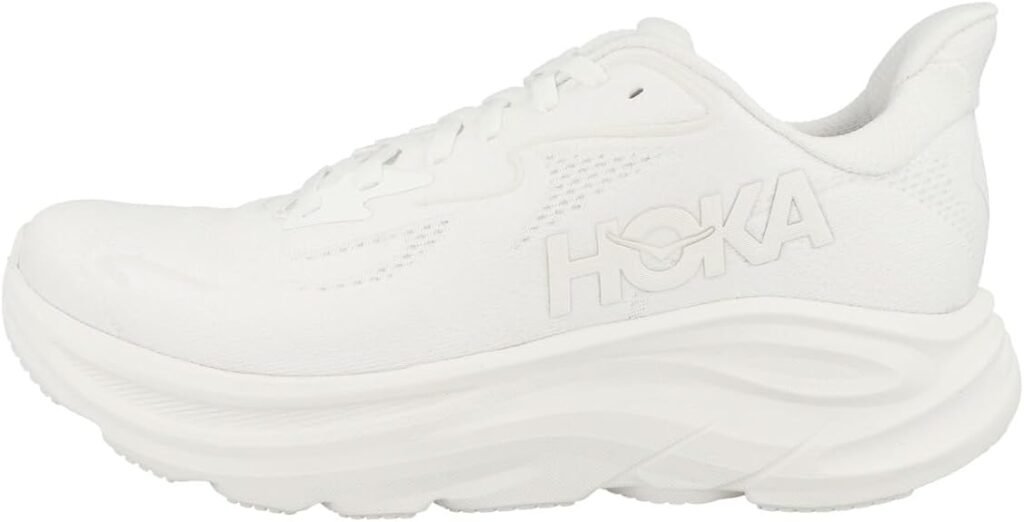
🛒 Check Price on AmazonHOKA Clifton 10 – Best Lightweight Cushioning
| Feature | Details |
| Price | $138.78 (7% savings, Men’s) / $144.00+ (Women’s) |
| Rating | 4.5-4.6/5 (2,500+ reviews) |
| Best For | Daily training, lightweight cushioning, neutral runners |
| Width Options | Standard |
| Key Feature | 38-42mm stack, 8mm drop, jacquard knit upper |
| APMA Seal | Yes |
Expert Take: The HOKA Clifton 10 is a major update from previous versions. The drop has increased from 5 mm to 8 mm, making it more plantar fasciitis-friendly than earlier Clifton models. The stack height has also increased significantly: 42 mm in the heel for men’s and 38 mm for women’s. Users with plantar fasciitis report that the Clifton alleviates their pain without needing additional insoles.
Best For: Daily training, walking, people who want HOKA cushioning in a lighter package.
Why It Works: The 8 mm drop reduces fascia stretch at heel strike better than the previous 5 mm drop. The compression-molded foam provides firm, supportive cushioning that podiatrists recommend for plantar fasciitis.
Pros:
- Lighter than Bondi
- More versatile for different activities
- Improved 8 mm drop is better for plantar fasciitis
- Excellent arch support
Cons:
- Some users report tread wears quickly (within 11 days of dog walking)
- Blisters reported on big toes and pinky toes
- Limited width options
Verdict: The HOKA Clifton 10 is an excellent choice if you want HOKA cushioning in a lighter, more versatile package. Skip this if you need wide widths or maximum cushioning (the Bondi has more stack).
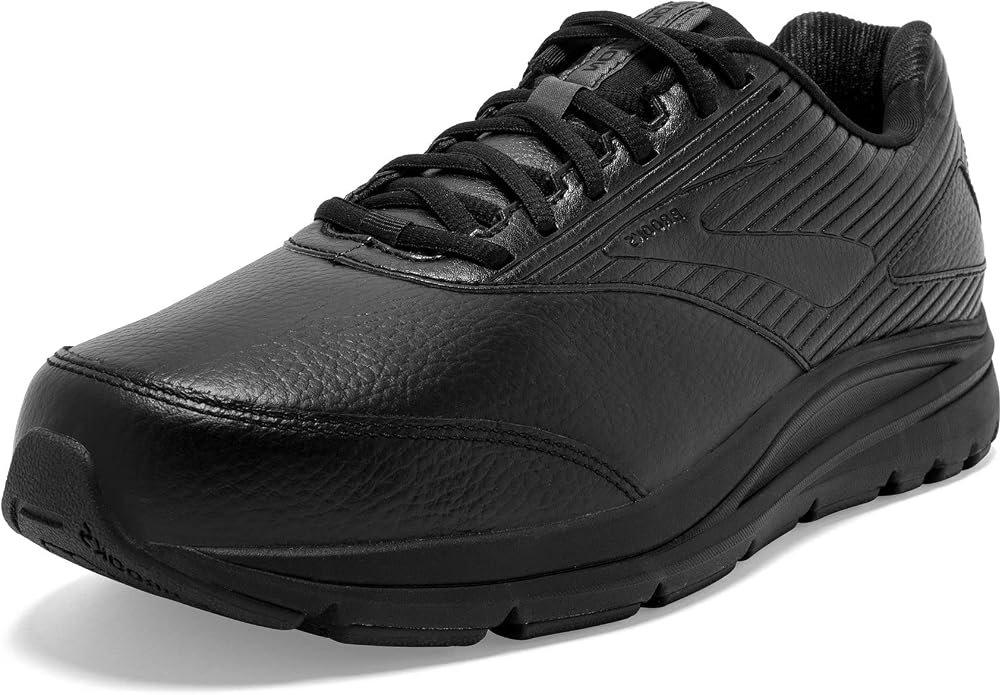
🛒 Check Price on AmazonBrooks Addiction Walker 2 – Best Walking-Specific Shoe
| Feature | Details |
| Price | $139.95 |
| Rating | 4.3/5 (4,261+ reviews) |
| Best For | Walking, all-day wear, overpronation |
| Width Options | Standard, Wide |
| Key Feature | BioMoGo DNA cushioning, Extended PDRB stability |
| APMA Seal | Yes |
Expert Take: The Brooks Addiction Walker 2 is designed specifically for walking and all-day wear. The Extended Progressive Diagonal Rollbar (PDRB) provides full-body support by guiding your stride and promoting natural motion, ideal for those who need added arch and pronation control. The BioMoGo DNA cushioning adapts to your weight, speed, and stride. The full-grain leather upper offers a clean, classic look with long-lasting durability.
Best For: Walking, all-day standing, work settings, people who need maximum stability.
Why It Works: The PDRB system controls overpronation better than any HOKA model. The BioMoGo DNA cushioning provides personalized comfort that adapts to your unique gait.
Pros:
- APMA Seal of Acceptance and PDAC A5500 certified
- Excellent stability for overpronation
- Durable leather upper
- Designed specifically for walking
Cons:
- Less cushioning than HOKA models
- Heavier than running-focused shoes
- The leather upper may not be as breathable as mesh
Verdict: If you spend all day on your feet and need maximum stability, the Brooks Addiction Walker 2 is the better choice. Skip this if you need maximum cushioning or prefer a more athletic look.
🛒 Check Price on AmazonHOKA Rincon 4 – Best Budget HOKA Option
| Feature | Details |
| Price | $99.98 |
| Rating | 4.4/5 (1,049+ reviews) |
| Best For | Budget-conscious buyers, lightweight cushioning |
| Width Options | Standard |
| Key Feature | Lightweight EVA foam, maximum cushioning |
| APMA Seal | Not specified |
Expert Take: The HOKA Rincon 4 offers HOKA’s signature cushioning at a more accessible price point. With a lightweight EVA midsole and maximum cushioning level, it provides good shock absorption for plantar fasciitis sufferers. However, it has less stack height than the Bondi or Clifton, making it less protective for severe cases.
Best For: Budget buyers, lighter runners, people who want to try HOKA without the premium price.
Why It Works: The lightweight EVA foam absorbs shock effectively, while the maximum cushioning level reduces impact on the plantar fascia.
Pros:
- Affordable for a HOKA shoe
- Lightweight construction
- Good cushioning for the price
Cons:
- Less cushioning than Bondi or Clifton
- Limited width options
- Not as durable as premium models
Verdict: The HOKA Rincon 4 is a solid entry-level option for mild plantar fasciitis. Skip this if you have severe heel pain or need wide widths.
🛒 Check Price on AmazonComparison Table: HOKA vs Brooks for Plantar Fasciitis
| Product | Price | Rating | Stack/Drop | Key Feature | Best For |
| HOKA Bondi 9 | $168.90 | 4.5/5 | 42-43mm / 5mm | Max cushion, meta-rocker | Severe heel pain, max cushioning |
| Brooks Adrenaline GTS 25 | $154.95 | 4.5/5 | 37mm / 10mm | GuideRails stability | Overpronation, flat feet |
| Brooks Ghost 17 | $109.95 | 4.4/5 | 36.5mm / 10mm | DNA LOFT v3 | Versatile daily trainer |
| HOKA Clifton 10 | $138.78 | 4.5/5 | 38-42mm / 8mm | Lightweight cushion | Daily training, neutral runners |
| Brooks Addiction Walker 2 | $139.95 | 4.3/5 | N/A | Extended PDRB | Walking, all-day standing |
| HOKA Rincon 4 | $99.98 | 4.4/5 | N/A | Lightweight EVA | Budget HOKA option |
Real-World FAQ: HOKA vs Brooks for Plantar Fasciitis
Which is better for plantar fasciitis: HOKA or Brooks?
Both are strong choices. HOKA’s rocker geometry offloads the plantar fascia more aggressively, while Brooks Adrenaline GTS and Beast offer motion control that addresses the overpronation often underlying plantar fasciitis. A podiatrist can evaluate your gait and arch type to recommend the better fit.
Are HOKA or Brooks shoes better for foot pain?
Both are excellent, but they excel in different areas. HOKA’s maximal cushioning and rocker geometry are ideal for metatarsalgia, plantar fasciitis, and post-surgical patients who need impact absorption. Brooks offers firmer support and motion control options that work better for overpronation, flat feet, and runners seeking biomechanical correction.
Do podiatrists recommend HOKA shoes?
Yes. Many podiatrists recommend HOKA for patients with heel pain, arthritis, and metatarsalgia because of their thick cushioning and built-in rocker sole, which reduces forefoot pressure. The Bondi and Clifton models are particularly popular for patients with plantar fasciitis and post-operative recovery.
Which has better cushioning: HOKA or Brooks?
HOKA offers more cushioning. The Bondi 9 has a 42 to 43 mm stack height compared to Brooks Ghost 17’s 36.5 mm. HOKA consistently offers more foam stack, especially in the forefoot (note the Bondi’s 38 mm forefoot vs. Ghost’s 26.5 mm).
Which is better for overpronation: HOKA or Brooks?
Brooks wins this category clearly. Brooks has been engineering stability shoes longer than HOKA has existed, and it shows in their product range. The Adrenaline GTS uses GuideRails that control excessive inward motion without the aggressive medial post that traditional motion-control shoes use.
Is Brooks Ghost 17 good for plantar fasciitis?
Yes. Users consistently report that the Ghost 17 helps with plantar fasciitis pain. The 10 mm drop reduces fascia stretch at heel strike, and the DNA LOFT v3 cushioning absorbs shock effectively. It is also APMA-approved.
Is HOKA Bondi 9 good for plantar fasciitis?
Yes. The Bondi 9 is widely recommended by podiatrists for plantar fasciitis. The rocker sole helps you roll forward smoothly, which reduces stress on the plantar fascia. Users consistently report significant pain relief.
Which shoe lasts longer: HOKA or Brooks?
Brooks generally lasts longer. Brooks is the safest neutral-daily-trainer default with the longest tested midsole life (400 to 500 miles on Ghost and Adrenaline models). Durability per dollar favours Brooks by about 25% compared to HOKA.
Are HOKA shoes worth the money?
For people who need maximum cushioning, yes. HOKA’s thick maximalist stack is ideal for patients who need extreme cushioning: stress fractures, metatarsalgia, older patients. However, if you need stability rather than cushioning, Brooks may be the better value.
Can I wear HOKA or Brooks shoes for walking?
Yes, both brands make excellent walking shoes. Brooks offers walking-specific models like the Addiction Walker 2. HOKA’s Bondi and Clifton are also popular for walking. Both have models with the APMA Seal of Acceptance.
Expert Tips: Choosing Between HOKA and Brooks
Sizing Guidance
- HOKA fits true to size for most people, but the wide toe box accommodates natural toe splay.
- Brooks runs true to size but offers more width options (Standard, Wide, Extra Wide in some models).
- Measure your feet at the end of the day when they are at their largest.
- If you are between sizes, size up because it is easier to add an insole than to stretch a tight shoe.
Break-In Expectations
- HOKA Bondi 9: Most users report no break-in period; comfortable from day one.
- HOKA Clifton 10: Some users report blisters during the first week.
- Brooks Ghost 17: Generally comfortable out of the box, but some find the heel box squeezes at first.
- Brooks Adrenaline GTS 25: Users report comfort within days.
When to Replace Your Shoes
- Every 300 to 500 miles for running shoes.
- Every 6 to 12 months for daily wear shoes.
- Replace sooner if you notice flattened cushioning, worn treads, or increased foot pain.
- The APMA recommends replacing running shoes every 250 to 500 miles.
Warning Signs
- Persistent pain that does not improve after 4 to 6 weeks of wearing supportive shoes.
- Numbness or tingling in your feet or toes.
- Visible swelling or redness around the heel.
- Pain that radiates up into your ankle or calf.
If you experience any of these, consult a podiatrist. Foot pain is never normal and will not go away on its own.
Final Verdict: HOKA or Brooks for Plantar Fasciitis?
| If you have… | Choose… |
| Severe heel pain & need maximum cushioning | HOKA Bondi 9 |
| Overpronation or flat feet | Brooks Adrenaline GTS 25 |
| Mild to moderate PF & want a versatile shoe | Brooks Ghost 17 |
| High arches & need lightweight cushioning | HOKA Clifton 10 |
| All-day standing & walking needs | Brooks Addiction Walker 2 |
| Budget-conscious & want to try HOKA | HOKA Rincon 4 |
| Forefoot pain or metatarsalgia | HOKA Bondi 9 |
The bottom line: For most people with plantar fasciitis, Best Shoes for Plantar Fasciitis in 2026 includes both brands. HOKA wins on pure cushioning and shock absorption. Brooks wins on stability and motion control. The right choice depends on your foot type, not the brand name.
If you overpronate, Brooks is the better choice. The Adrenaline GTS 25 provides structured support that addresses the underlying cause of your plantar fasciitis. Best Brooks Shoes for Plantar Fasciitis covers the full Brooks lineup.
If you have high arches or need maximum cushioning, HOKA is the better choice. The Bondi 9’s massive stack and rocker geometry offload the plantar fascia more effectively than any Brooks model. Best HOKA Shoes for Plantar Fasciitis 2026 covers the full HOKA lineup.
If you are still unsure, consider trying both. Many runners and walkers keep both HOKA and Brooks shoes in their rotation, each serving a different purpose. ASICS vs New Balance for Plantar Fasciitis is another comparison worth exploring if neither brand feels right.
Disclosure
Urban Style Footwear is a participant in the Amazon Services LLC Associates Program, an affiliate advertising program designed to provide a means for sites to earn advertising fees by advertising and linking to Amazon.com. We may earn a small commission on qualifying purchases at no extra cost to you. All product recommendations are based on independent research and expert analysis.