
Best Birkenstock for Plantar Fasciitis 2026
✅ Expert Verified | 🛒 Amazon US Picks | 📅 Updated August 2026
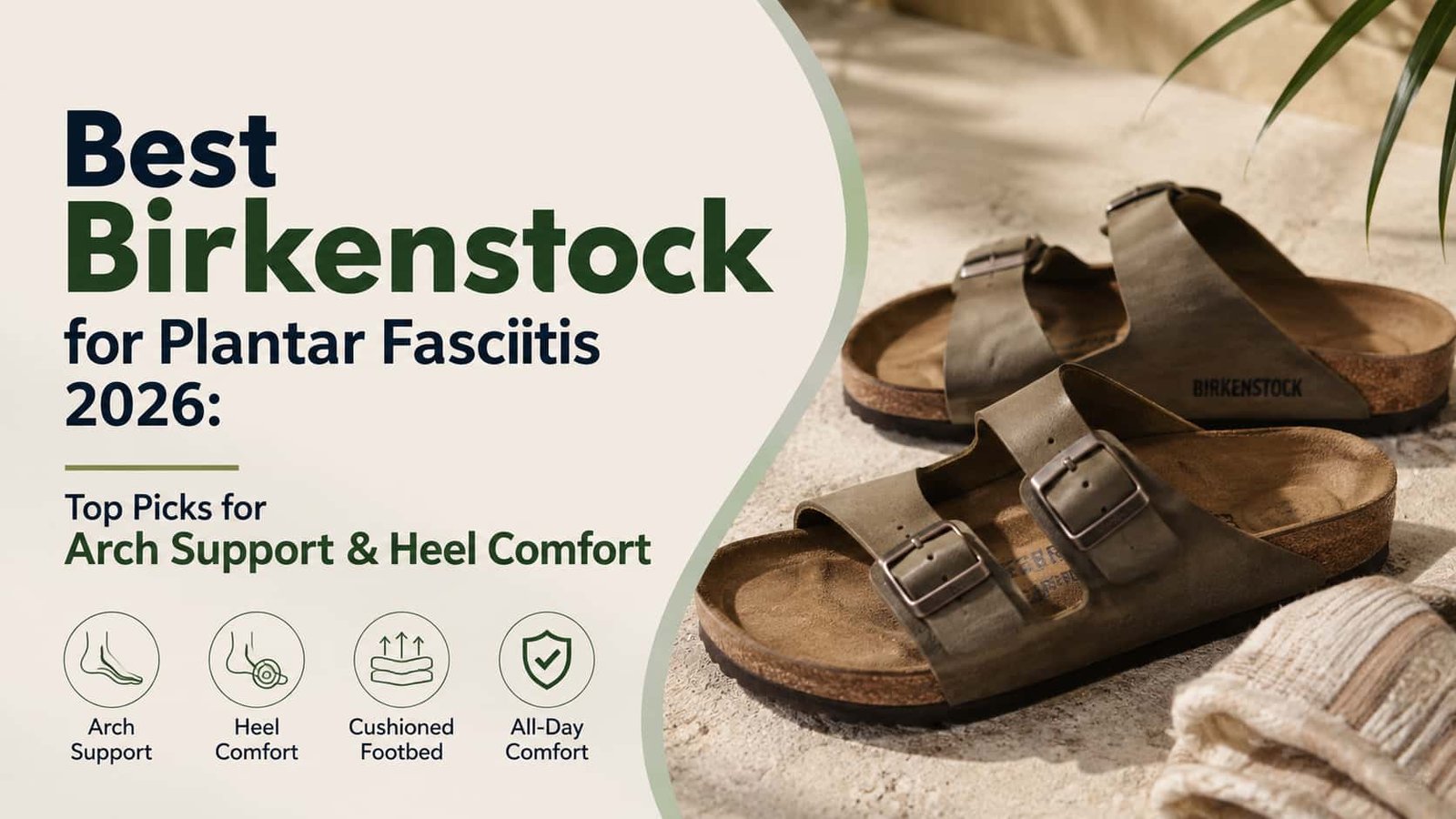
The best Birkenstock for plantar fasciitis is usually a model with Birkenstock’s anatomically shaped footbed, supportive arch contour, defined heel cup, and enough room for natural toe movement. For most shoppers, the Arizona Soft Footbed is the strongest starting point, while the Boston is better when you want more coverage. Fit and gradual break-in matter because the firm footbed can feel very different from a soft-cushion sandal.
Quick Picks for the Best Birkenstock for Plantar Fasciitis
⚡ Top Picks – Best Birkenstock for Plantar Fasciitis 2026
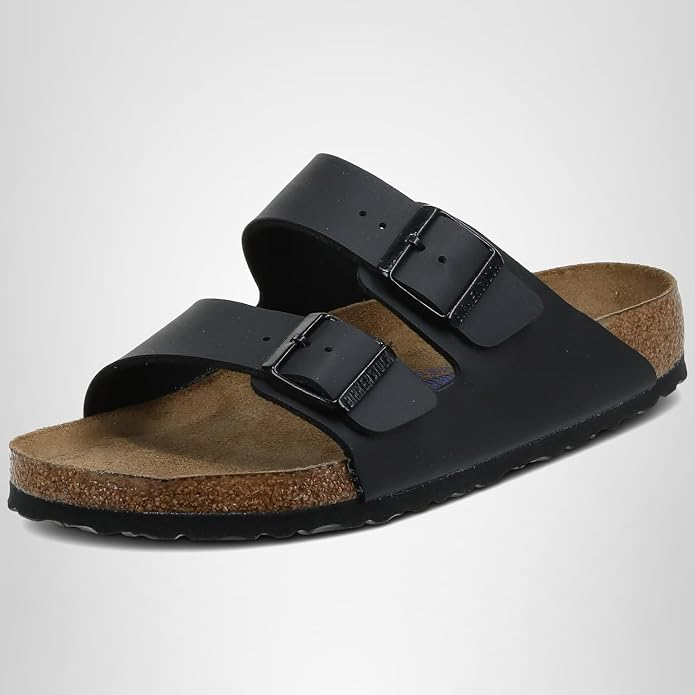
Birkenstock Arizona Soft Footbed
A strong everyday choice for shoppers who want Birkenstock’s structured cork-latex footbed with a softer feel. The two adjustable straps also make it easier to fine-tune the fit around the midfoot.
🛒 Check Price on Amazon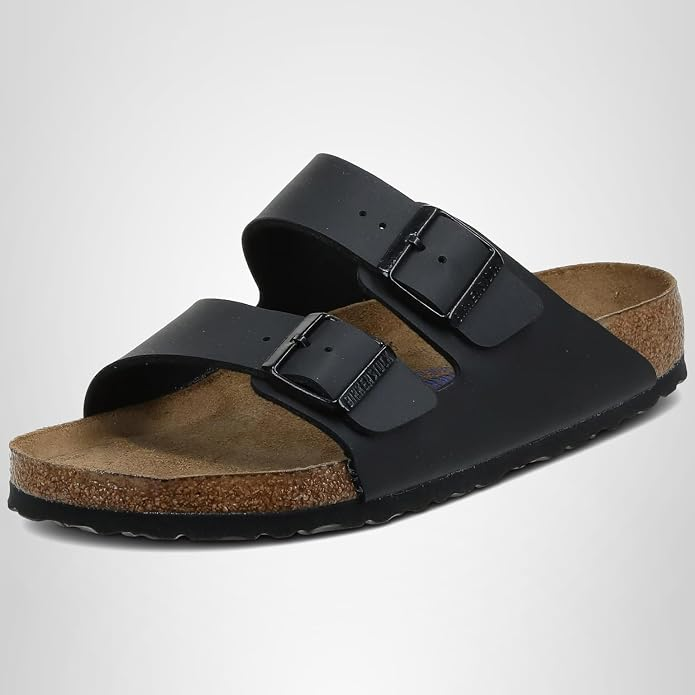
Birkenstock Arizona Classic
The straightforward Arizona option for shoppers who prefer the traditional Birkenstock footbed. Its adjustable straps and supportive footbed make it practical for casual walking and everyday wear.
🛒 Check Price on Amazon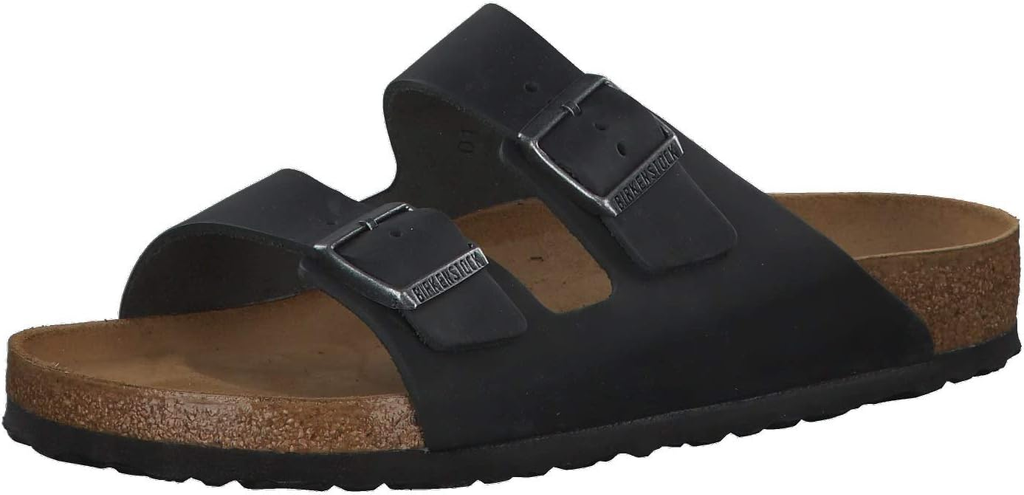
Birkenstock Women’s Arizona Leather Sandals
A versatile Arizona design with an anatomically shaped footbed and individually adjustable straps. It’s a good fit for shoppers who want to control how securely the sandal holds the midfoot.
🛒 Check Price on Amazon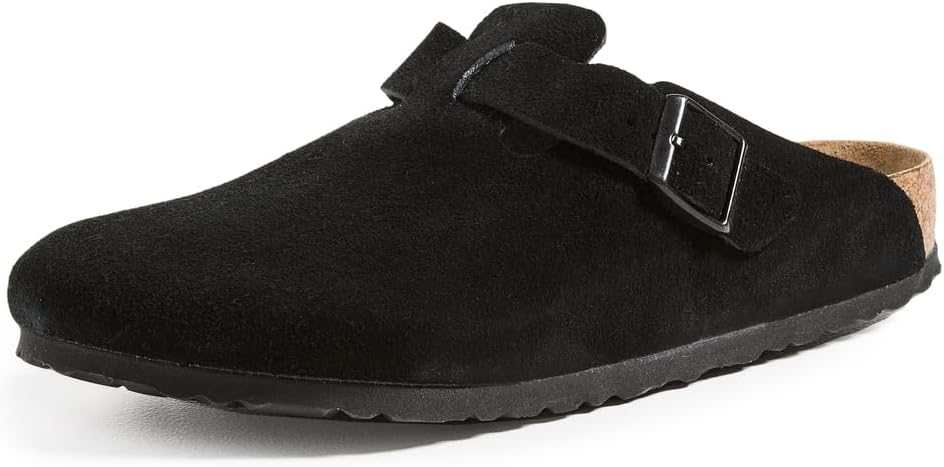
Birkenstock Boston Suede Clogs
The Boston makes more sense when you want Birkenstock’s structured footbed in a closed-toe clog. It offers more coverage than the Arizona, although the suede upper isn’t the best choice for wet conditions.
🛒 Check Price on AmazonWhy Birkenstock Can Work for Plantar Fasciitis
Plantar fasciitis can make ordinary sandals surprisingly uncomfortable. A flat flip-flop may feel fine for five minutes, then leave the heel aching after a trip through a grocery store, a walk around the neighborhood, or several hours standing at work.
That is where Birkenstock gets interesting.
Instead of relying mainly on a thick layer of soft foam, Birkenstock footwear uses a shaped footbed designed to support several areas of the foot. The footbed has a defined heel cup, an arch contour, a metatarsal area, and a toe bar that can encourage a more structured stance.
For someone dealing with plantar heel discomfort, that structure can be useful because the foot isn’t simply sitting on a completely flat platform.
I’ve found that the biggest mistake shoppers make is assuming that more cushioning automatically means better plantar fasciitis support. It doesn’t always work that way. A very soft sandal can feel wonderful when you first put it on, but it may not provide the shape or stability your foot prefers during longer periods of walking.
Birkenstock takes the opposite approach. Its traditional footbed feels relatively firm under the foot, especially when compared with a plush running shoe. Some people immediately appreciate that firm support. Others need time to adapt.
For example, someone walking around Lincoln Park in Chicago may want an everyday sandal that can handle errands, restaurants, and casual walks without feeling like a completely flat slide. A person in Phoenix may want the same footbed for everyday summer wear but place more importance on ventilation and easy adjustment.
This guide looks at the Birkenstock models supplied for this review, with particular attention to arch support, heel comfort, footbed shape, fit, coverage, materials, and everyday walking use.
If you need a broader selection beyond Birkenstock, our guide to Best Shoes for Plantar Fasciitis in 2026 compares supportive footwear across different shoe categories.
What Makes a Birkenstock Footbed Different?
A traditional Birkenstock footbed isn’t shaped like the completely flat base found in many inexpensive sandals.
The construction is designed around the natural contours of the foot. The heel area is cupped, the arch region is raised, and the forefoot area includes shaping intended to give the foot a more defined platform.
The important point is that arch support isn’t simply a bump placed underneath the middle of the foot.
Good support depends on where that contour sits relative to your own arch. If the contour matches your foot reasonably well, it can feel supportive. If the shape is wrong for you, the same feature can feel intrusive.
Birkenstock’s cork-latex footbed is particularly important in the classic Arizona models. The footbed is firm rather than pillow-soft, and the material can gradually conform somewhat with use.
The outsole also matters. EVA is lightweight and provides shock absorption without making the sandal excessively heavy. The result is a different walking sensation from a traditional foam flip-flop.
This distinction is important for plantar fasciitis shoppers.
You aren’t necessarily buying a Birkenstock because it is the softest sandal available. You’re buying it because the combination of footbed shape, heel containment, arch contour, adjustable straps, and outsole construction may provide a more supportive environment for walking.
Is the Birkenstock Arizona Good for Plantar Fasciitis?
Yes, the Arizona can be a strong choice for plantar fasciitis when its footbed shape and width work for your feet.
The two-strap design is particularly useful because each strap can be adjusted independently. That lets you secure the sandal without depending on one loose strap to control the entire foot.
The Arizona is also one of the easiest Birkenstock models to use for everyday summer walking.
The footbed provides a defined heel cup and arch contour, while the open design allows plenty of airflow. That’s useful in hot climates such as Texas, Florida, Arizona, and Southern California.
The main catch is the break-in period.
If you’ve spent years wearing highly cushioned sneakers, your first few walks in a firm Birkenstock footbed may feel unusual. The arch contour can feel pronounced, and the cork footbed may not immediately feel soft.
Start with shorter periods.
Wear them around the house or for a short errand rather than immediately taking them on a two-hour sightseeing walk. This gives your feet time to adapt to the footbed.
For a shopper with plantar heel pain, this gradual approach is much more sensible than judging the sandal after one uncomfortable afternoon.
Birkenstock Arizona Soft Footbed vs. Classic Footbed
The Soft Footbed version adds a cushioning layer within the footbed while retaining the basic Birkenstock shape.
That makes it an interesting middle ground for plantar fasciitis shoppers.
The classic footbed gives you the traditional firm Birkenstock sensation. The Soft Footbed version feels somewhat more forgiving when you first step into it.
For someone who likes structured arch support but doesn’t enjoy a very firm initial feel, the Soft Footbed can be easier to accept.
The Arizona Soft Footbed supplied for this guide is listed with an anatomically shaped cork-latex footbed and an EVA sole. The model also uses two independently adjustable buckles.
That combination makes it one of the strongest options in this group for shoppers who want a supportive everyday sandal.
The downside is that the additional softness doesn’t turn the Arizona into a plush recovery sandal. If you specifically want maximum cushioning under the heel, another type of footwear may suit you better.
Best Birkenstock for Plantar Fasciitis: Product Picks
Birkenstock Arizona Soft Footbed
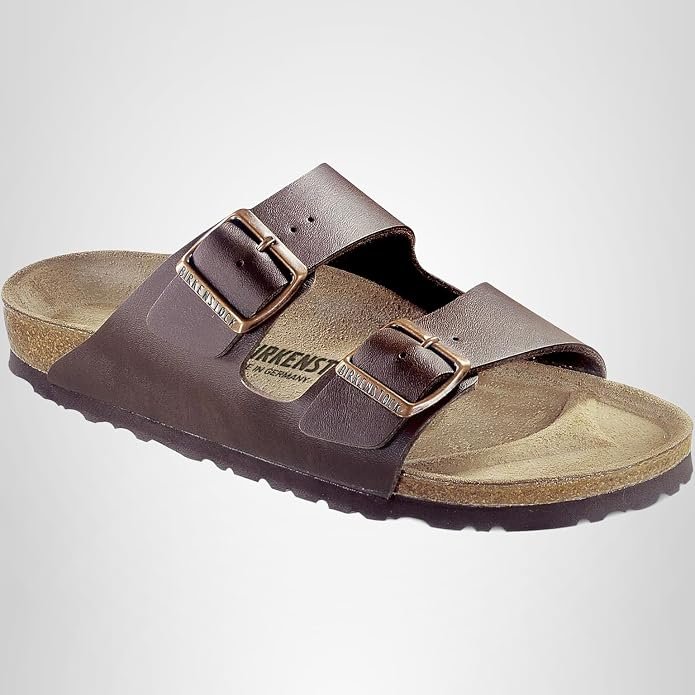
Best for: Everyday walking and shoppers who want a supportive sandal with a slightly softer footbed feel
The Arizona Soft Footbed is the model I would start with for most plantar fasciitis shoppers in this group.
The two-strap configuration is practical because you can adjust the forefoot and instep independently. That’s especially useful when your feet swell during the day or when you have a higher instep.
The anatomically shaped cork-latex footbed is the main reason this sandal stands out. It provides a defined heel area and arch contour instead of leaving the foot completely unsupported.
The EVA outsole keeps the sandal relatively light and provides a degree of shock absorption.
Why it works
The footbed provides structure beneath the heel and arch while the adjustable straps help keep the foot positioned over that structure. For walking, that combination is more useful than simply adding a large amount of soft foam.
Pros
- Anatomically shaped footbed
- Adjustable two-strap design
- EVA outsole
- Supportive arch contour
- Suitable for everyday casual walking
Cons
- Firm feel may require a break-in period
- Open design provides less protection than a closed shoe
- Not the best choice if you want maximum plush cushioning
Skip this if: You strongly dislike firm footbeds or need a highly cushioned sandal immediately out of the box.
Verdict: The Arizona Soft Footbed is the best overall starting point when your priority is structured support with a little more underfoot comfort than the traditional footbed.
🛒 Check Price on AmazonBirkenstock Arizona Classic
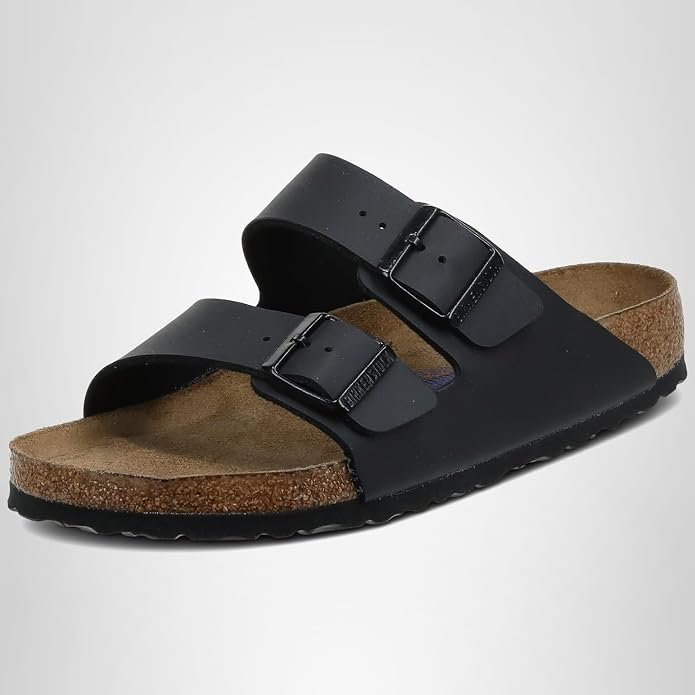
Best for: Shoppers who prefer the traditional Birkenstock footbed
The classic Arizona remains one of the most practical Birkenstock options for people who want an open sandal with substantial footbed structure.
The supplied listing shows a cork footbed, adjustable buckles, and a synthetic sole. The Arizona’s two-strap layout gives you more control over fit than a basic slip-on sandal.
That matters when walking with heel discomfort.
A sandal that moves around under the foot can create repeated gripping and stabilizing movements. An adjustable design allows you to find a more secure fit without overtightening the straps.
The Arizona is also a reasonable option for people who spend much of the year in warm weather.
Why it works
The combination of a shaped cork footbed and adjustable straps gives the foot a defined platform. The heel cup and arch contour are particularly relevant when replacing flat sandals that offer little structural support.
Pros
- Traditional Birkenstock footbed
- Adjustable straps
- Cork construction
- Open and breathable design
- Good everyday versatility
Cons
- Firm initial feel
- Requires proper sizing
- Not waterproof
- Less protective than a closed shoe
Skip this if: You need a soft, cushioned sensation immediately or spend most of your day on very hard surfaces and prefer a more cushioned shoe.
Verdict: A dependable choice for people who specifically want the classic Birkenstock walking experience.
🛒 Check Price on AmazonBirkenstock Women’s Arizona Leather Sandals
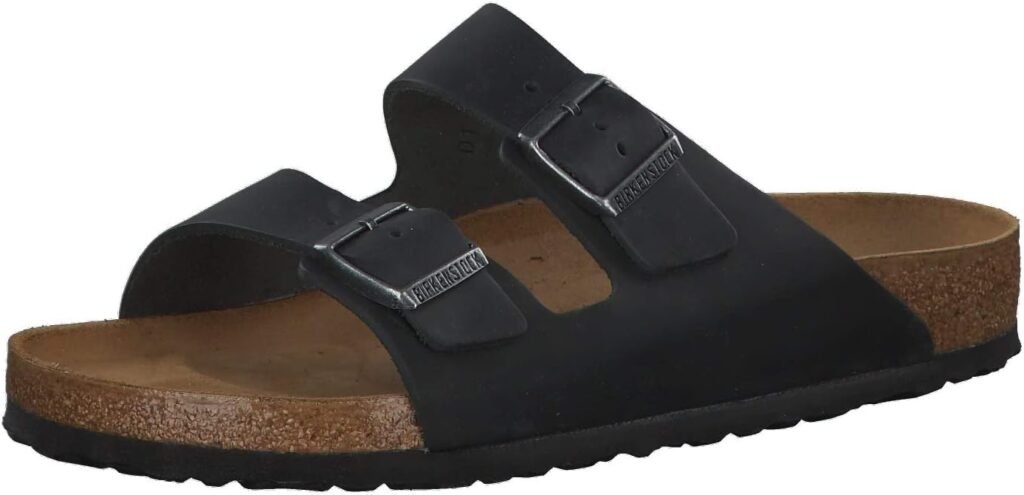
Best for: Everyday casual wear with a classic two-strap design
The supplied Amazon listing for this Arizona variant shows a 4.6-star rating from 2,226 reviews at the time of the supplied product data, with a listed price of $102.53 and a 6% savings indication.
The construction combines a shaped footbed with an EVA sole and adjustable straps. The two-strap format remains one of the biggest advantages for everyday use.
For plantar fasciitis, the value here isn’t the Arizona name alone. It’s the way the sandal keeps the foot over a shaped support platform.
Someone walking around downtown Seattle, for example, may use these for casual errands and shorter outdoor walks, while someone in Miami may wear them much more frequently because sandals are practical for year-round warm weather.
Why it works
The structured footbed gives the arch and heel a defined surface to work against, while the adjustable straps help customize the fit.
Pros
- 4.6-star supplied rating
- More than 2,000 supplied reviews
- Adjustable straps
- EVA sole
- Structured footbed
Cons
- Firm footbed
- Not ideal for wet conditions
- Open design leaves the toes exposed
Skip this if: You need waterproof footwear or substantial cushioning.
Verdict: A strong everyday option when you want the recognizable Arizona design and a structured footbed.
🛒 Check Price on AmazonBirkenstock Boston Suede Clogs
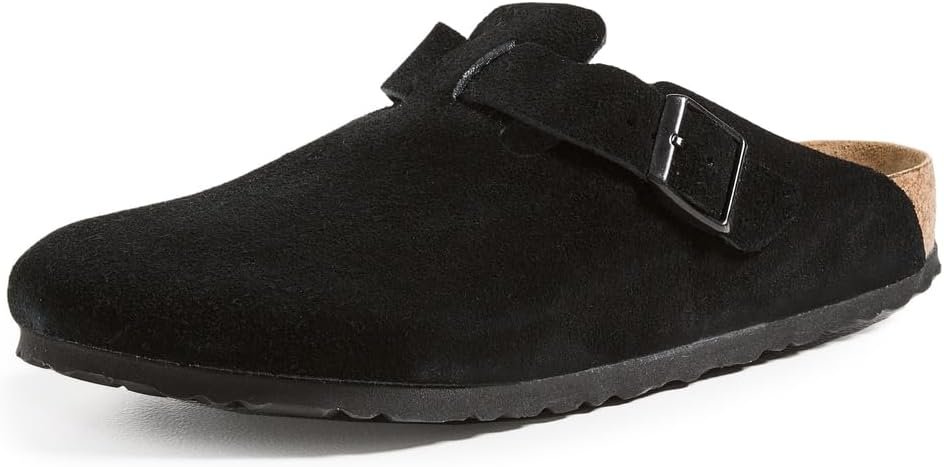
Best for: People who want more foot coverage than a sandal
The Boston is a different proposition from the Arizona.
Instead of leaving most of the foot open, the clog covers the toes and much of the forefoot. That makes it more useful when you want a Birkenstock footbed but don’t want to wear an open sandal.
The supplied listing shows a suede upper, signature Birkenstock footbed, adjustable strap, and shock-absorbing sole. The supplied price is $130.88 with a 17% savings indication, and the listing shows a 4.4-star rating from 4,471 reviews.
The additional coverage can make the Boston more practical for transitional seasons or indoor work.
For example, someone working in a hospital system in Boston or Philadelphia may prefer a covered clog for indoor use rather than an open sandal, although workplace requirements and individual comfort should always come first.
Why it works
The supportive footbed remains the key feature. The covered upper simply gives you a different way to use that footbed when sandals aren’t practical.
Pros
- More foot coverage
- Suede upper
- Adjustable strap
- Structured Birkenstock footbed
- Useful beyond summer
Cons
- More expensive than some Arizona variants
- Suede isn’t ideal for wet conditions
- Can feel warm in hot climates
Skip this if: You specifically want a breathable summer sandal.
Verdict: The Boston is the better Birkenstock choice when you want support with greater coverage and versatility.
🛒 Check Price on AmazonBirkenstock Arizona Stone Birkibuc
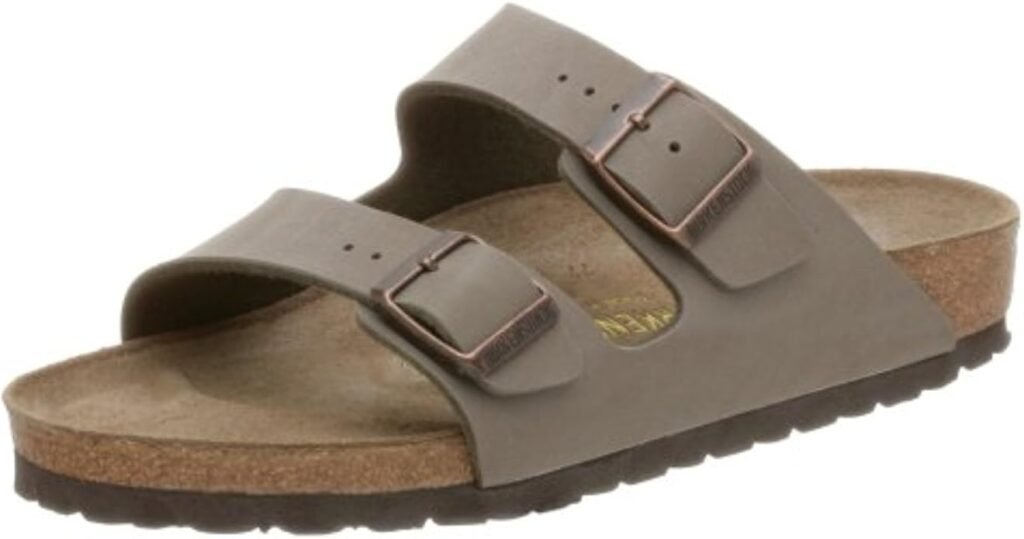
Best for: Shoppers who want the Arizona shape in a Birkibuc upper
The supplied Stone Birkibuc Arizona listing has a 4.6-star rating from 470 reviews and a listed price of $120.42.
The product description identifies an anatomically correct cork footbed, adjustable buckles, medium width, and a Birkibuc upper.
The biggest attraction is the familiar Arizona construction combined with a leather-like synthetic upper.
The medium-width specification is worth paying attention to. Plantar fasciitis doesn’t automatically mean you need a wide shoe, but squeezing the forefoot into an undersized sandal can make walking less comfortable.
Why it works
The cork footbed provides the structured foundation, while the adjustable buckles allow the sandal to be secured around the foot.
Pros
- 4.6-star supplied rating
- Anatomically shaped cork footbed
- Adjustable buckles
- Lightweight construction
- Easy everyday styling
Cons
- Listed as medium width
- Not waterproof
- Firm footbed may need adaptation
Skip this if: You already know that medium-width Birkenstock models don’t give your toes enough room.
Verdict: A good Arizona alternative for shoppers who like the Birkibuc finish and want a structured cork footbed.
🛒 Check Price on AmazonBirkenstock Men’s Arizona Leather Slide Sandals
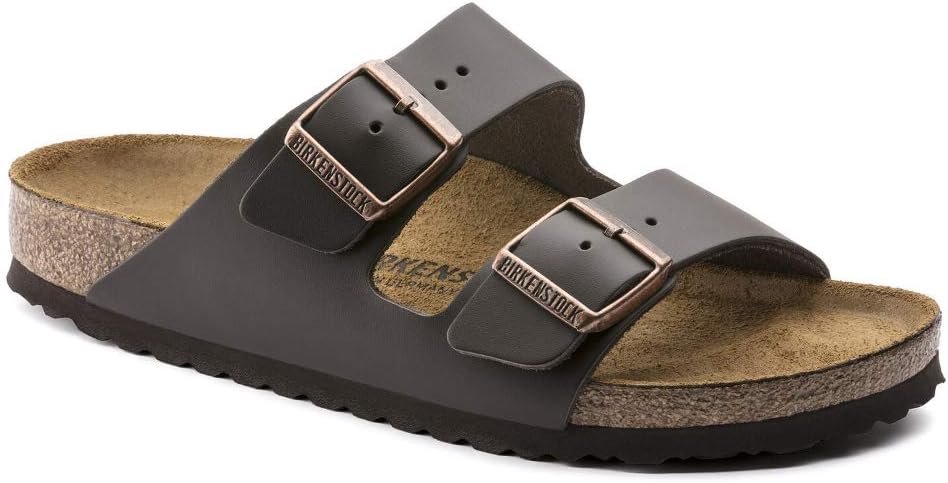
Best for: Men looking for a structured everyday Arizona sandal
The supplied listing shows a 4.5-star rating from 500 reviews and a listed price of $123.90.
The sandal uses an Arizona-style two-strap construction with adjustable buckles and a cork, leather, EVA, and suede-related material combination in the supplied product information.
The biggest reason to consider it for plantar fasciitis is still the footbed rather than the leather upper.
A supportive sandal needs to keep the foot reasonably stable while allowing normal movement. Adjustable straps are useful because men’s feet can vary significantly in width and instep height.
Why it works
The Arizona shape provides a defined platform under the heel and arch, while the adjustable straps allow a closer fit than a loose slide.
Pros
- 4.5-star supplied rating
- Adjustable straps
- Structured footbed
- Suitable for walking
- Classic Arizona profile
Cons
- Firm underfoot sensation
- Open toe leaves the foot exposed
- Not designed for wet conditions
Skip this if: You need a waterproof sandal for poolside or beach use.
Verdict: A sensible choice for men who want the Arizona footbed and adjustable two-strap fit for everyday casual walking.
🛒 Check Price on AmazonHow Should You Choose Birkenstock Arch Support for Plantar Fasciitis?
Look for a footbed that supports your arch without creating a sharp pressure point.
Birkenstock’s arch contour is one of its defining features, but the correct amount of support is personal. A high-arched shopper may appreciate a pronounced contour, while someone with a flatter arch may need more time to adapt.
The key is to distinguish supportive contact from painful pressure.
When you stand in the sandal, your heel should sit securely in the heel cup, your toes shouldn’t be cramped, and the arch contour shouldn’t feel like a hard object pressing into one small spot.
A useful test is to walk slowly for several minutes rather than simply standing in the sandal.
Pay attention to whether your heel stays positioned correctly and whether you find yourself gripping the sandal with your toes.
Toe gripping is a particularly important warning sign. If you constantly curl your toes to keep a slide attached, the sandal may not be fitting correctly.
How Much Break-In Time Does a Birkenstock Need?
Most people should approach a new firm-footbed Birkenstock gradually rather than wearing it for an entire day immediately.
The traditional footbed can feel noticeably firm when compared with cushioned sneakers. Your feet need time to become accustomed to the contour.
Start with short sessions.
Wear the sandal around your home, then use it for a short errand. If that feels comfortable, gradually increase walking time.
Don’t assume that significant pain is a normal part of breaking in footwear.
Mild unfamiliar pressure is different from sharp heel pain, burning, numbness, or persistent soreness. Those symptoms are reasons to stop and reassess the fit.
This is especially important if you’re already experiencing plantar fasciitis symptoms.
Are Birkenstock Heel Pain Sandals Worth Buying?
They can be, especially if your current sandals are completely flat and lack meaningful footbed structure.
A heel pain sandal should provide a stable platform and avoid making the foot work excessively to keep the footwear attached.
Birkenstock’s heel cup and shaped footbed can provide more structure than a conventional flip-flop.
However, Birkenstock isn’t automatically the best choice for every person with heel pain.
Some people do better in a cushioned walking shoe, especially when walking long distances on concrete. Others prefer a supportive sandal for summer errands but use a closed shoe for longer walks.
If you need more options, see our guide to Best Sandals for Plantar Fasciitis 2026, which covers supportive sandal choices beyond Birkenstock.
What Should You Look for in a Birkenstock for Plantar Fasciitis?
A defined heel cup
The heel should sit securely rather than sliding from side to side.
A properly positioned heel makes it easier for the foot to stay aligned with the shaped portion of the footbed.
A supportive arch contour
The arch area should make contact with your foot without creating a painful pressure point.
Support should feel distributed rather than concentrated in one tiny area.
Enough toe room
Your toes need room to move naturally.
Don’t buy a smaller size simply because the sandal looks cleaner when the foot is tightly contained.
Adjustable straps
Two adjustable straps are one of the Arizona’s biggest practical advantages.
You can control the fit over different parts of the foot rather than relying on one fixed strap.
A suitable width
Width is just as important as length.
A sandal can have the correct numerical size and still be too narrow for your forefoot. If your toes extend beyond the footbed edges or your foot spills noticeably over the sides, reconsider the size or width.
For help converting measurements and US shoe sizes, use our Shoe Size Conversion Chart and Calculator before ordering.
Birkenstock Plantar Fasciitis Comparison
| Product | Price | Rating | Key Feature | Width | Best For | Reviews |
| Arizona Soft Footbed | $123.38 | 4.5 | Soft cork-latex footbed | Listed variant dependent | Everyday support | 1,652 |
| Arizona Classic | $114.00 | 4.4 | Original cork footbed | Medium listed | Traditional support | 1,820 |
| Arizona Women’s | $102.53 | 4.6 | Two adjustable straps | Variant dependent | Casual walking | 2,226 |
| Boston Suede | $130.88 | 4.4 | Covered clog design | Variant dependent | More coverage | 4,471 |
| Arizona Stone Birkibuc | $120.42 | 4.6 | Anatomical cork footbed | Medium | Everyday use | 470 |
| Men’s Arizona | $123.90 | 4.5 | Arizona footbed | Variant dependent | Men’s walking | 500 |
Prices and ratings reflect the Amazon product information supplied for this article and can change.
What Are the Biggest Sizing Mistakes With Birkenstock?
The most common mistake is choosing a size based only on the length printed on another pair of shoes.
Birkenstock sizing can feel different from conventional American sneakers.
The second mistake is ignoring width.
Your heel should sit comfortably inside the heel cup, while the toes should have enough room to move without hanging over the front edge.
Don’t tighten the straps aggressively to compensate for a sandal that is too large.
The straps are there to fine-tune the fit, not to force the foot into the wrong size.
A third mistake is buying based entirely on appearance.
A slightly larger-looking footbed can sometimes provide a more comfortable walking platform than a sandal that leaves the toes crowded.
Can People With Flat Feet Wear Birkenstocks?
Yes, people with flatter arches can wear Birkenstocks, but the footbed contour may require an adjustment period.
The important question isn’t simply whether you have flat feet. It’s whether the footbed contour feels appropriate for your foot.
If the arch area feels supportive without producing a sharp pressure point, the design may work well.
If it feels excessively aggressive or painful, don’t assume you simply need to “break it in.”
Fit matters.
A shopper with a flatter arch in Austin may have a completely different comfort response from someone with a higher arch in New York City.
Are Birkenstocks Good for Standing All Day?
They can work for standing, but the answer depends on your foot shape, the surface, and how accustomed you are to the footbed.
Standing for eight hours on concrete is different from wearing sandals while moving around the house.
The structured footbed can be helpful for some people because the foot isn’t resting on a completely flat surface. However, if you need maximum shock absorption for long shifts, a cushioned closed shoe may be more appropriate.
Healthcare workers, retail employees, restaurant staff, and warehouse workers should also follow workplace footwear requirements.
If you spend most of your day walking rather than standing, you may want to compare Birkenstock with dedicated walking shoes. Our Best Running Shoes for Plantar Fasciitis 2026 guide is useful if you need a closed shoe for longer distances.
Can You Wear Birkenstocks Every Day With Plantar Fasciitis?
You can if your feet tolerate the footbed and the fit remains comfortable.
The key is not to assume that a supportive sandal has to be worn constantly.
If your heel is already irritated, increasing walking volume at the same time as introducing a new firm footbed isn’t a great strategy.
Start slowly and monitor how your feet feel later that day and the next morning.
Morning heel pain can be particularly noticeable with plantar fasciitis. If symptoms consistently worsen after wearing a particular sandal, reassess the footwear rather than forcing yourself to adapt.
Are Birkenstocks Better Than Flat Flip-Flops for Plantar Fasciitis?
For many people, yes.
The difference is the structure beneath the foot.
A traditional flat flip-flop generally provides minimal arch contour and heel containment. It may also require the toes to grip the sandal during walking.
A Birkenstock with a shaped footbed and adjustable straps offers considerably more structure.
That doesn’t mean every Birkenstock will outperform every flip-flop for every person. But from a footwear construction perspective, the Birkenstock approach is much more supportive than a completely flat sandal.
What If Birkenstock Feels Too Hard?
Give yourself a gradual adaptation period, but don’t ignore significant pain.
The traditional Birkenstock sensation is firm because the footbed is structured rather than built like a thick pillow.
If you’ve been wearing soft foam footwear for years, the difference can be substantial.
Try shorter sessions first.
If the footbed continues to cause sharp or concentrated pain even after reasonable adaptation, the model or fit may simply not be right for you.
You don’t get extra health benefits by forcing yourself through severe discomfort.
Birkenstock vs. Supportive Shoes for Plantar Fasciitis
Birkenstocks make the most sense when you want an open sandal or casual clog with a shaped footbed.
A closed walking or running shoe may be better when you need greater cushioning, heel security, weather protection, or long-distance comfort.
The choice also depends on where you are going.
A Birkenstock can make sense for a summer trip around Charleston, casual errands in Los Angeles, or walking around a neighborhood in Dallas.
A supportive closed shoe may make more sense for a long day at an amusement park, a major city walking tour, or several hours on hard concrete.
If you’re deciding between adding insoles and changing footwear, our guide to Plantar Fasciitis Insoles vs. Supportive Shoes explains the tradeoffs.
When Should You Stop Wearing a Birkenstock?
Stop using the sandal if it consistently causes worsening pain, numbness, tingling, blistering, or pressure that doesn’t improve with fit adjustments.
Also inspect the footbed and outsole as they age.
A supportive sandal doesn’t remain unchanged forever. Materials compress, surfaces wear, and the fit can change with regular use.
If the heel area becomes noticeably worn or the outsole loses substantial traction, it’s worth considering replacement.
The same principle applies if the footbed no longer feels supportive.
Expert Tips for Getting the Most From Birkenstocks
Start slowly. Give your feet time to adapt to the structured footbed.
Adjust each strap independently. The goal is secure contact without squeezing the foot.
Don’t buy too short. Your toes shouldn’t hang over the front edge.
Check your width. Side pressure is a sign that you may need a different width or model.
Don’t expect running-shoe softness. Birkenstock support comes largely from footbed shape and structure.
Rotate footwear when needed. A supportive sandal doesn’t have to replace every other shoe you own.
Watch morning symptoms. If your heel feels consistently worse after wearing a particular model, reconsider the fit or footwear choice.
Replace worn footwear. Excessive outsole wear or a substantially compressed footbed can change how the sandal performs.
Which Birkenstock Is Best for You?
If you want the best overall Birkenstock for plantar fasciitis, start with the Arizona Soft Footbed. Its shaped cork-latex footbed, adjustable two-strap design, and slightly softer feel make it the most balanced option in this group.
If you prefer the traditional firm Birkenstock feel, choose the Arizona Classic.
If you want a classic Arizona sandal for casual everyday use, the supplied Women’s Arizona is a strong choice based on its supplied 4.6-star rating and review volume.
If you want more foot coverage, choose the Boston Suede Clog.
If you want the Arizona shape with a Birkibuc upper, the Stone Birkibuc Arizona is worth considering.
If you’re shopping for a men’s Arizona, the supplied Men’s Arizona is the straightforward choice from this product group.
The biggest point is that plantar fasciitis comfort isn’t determined by the brand name alone. Footbed shape, width, strap adjustment, break-in, and your individual response all matter.
For readers who need footwear beyond Birkenstock, our guide to Best Slippers for Plantar Fasciitis 2026 is useful for indoor comfort, while our Best Crocs for Plantar Fasciitis 2026 guide covers another popular casual footwear category.
Final Verdict
The best Birkenstock for plantar fasciitis in 2026 is the Arizona Soft Footbed for most shoppers who want structured everyday support with a somewhat more forgiving underfoot feel.
The Arizona design makes sense because it combines a defined heel area, arch contour, adjustable straps, and a lightweight outsole. Those features address several problems found in completely flat sandals.
The Boston is the better choice when you want the same general footbed philosophy with more coverage.
The classic Arizona remains the better pick for shoppers who specifically want the traditional firm Birkenstock feel.
Don’t judge any of these models only by the first few minutes of wear. Start gradually, make sure your heel and toes are positioned correctly, and pay attention to how your feet feel later that day and the following morning.
And remember, footwear can help manage comfort, but persistent or severe heel pain deserves evaluation by a qualified healthcare professional.
Affiliate Disclosure
We may earn a commission when you purchase through qualifying Amazon links in this guide. This does not increase your purchase price. Product prices, availability, ratings, and review counts can change on Amazon, so check the current listing before buying.