Best Walking Shoes for Women in the USA 2026 (Tested & Reviewed)

woman wearing pink walking shoes outdoor best walking shoes for women expert tested

30-Second Summary

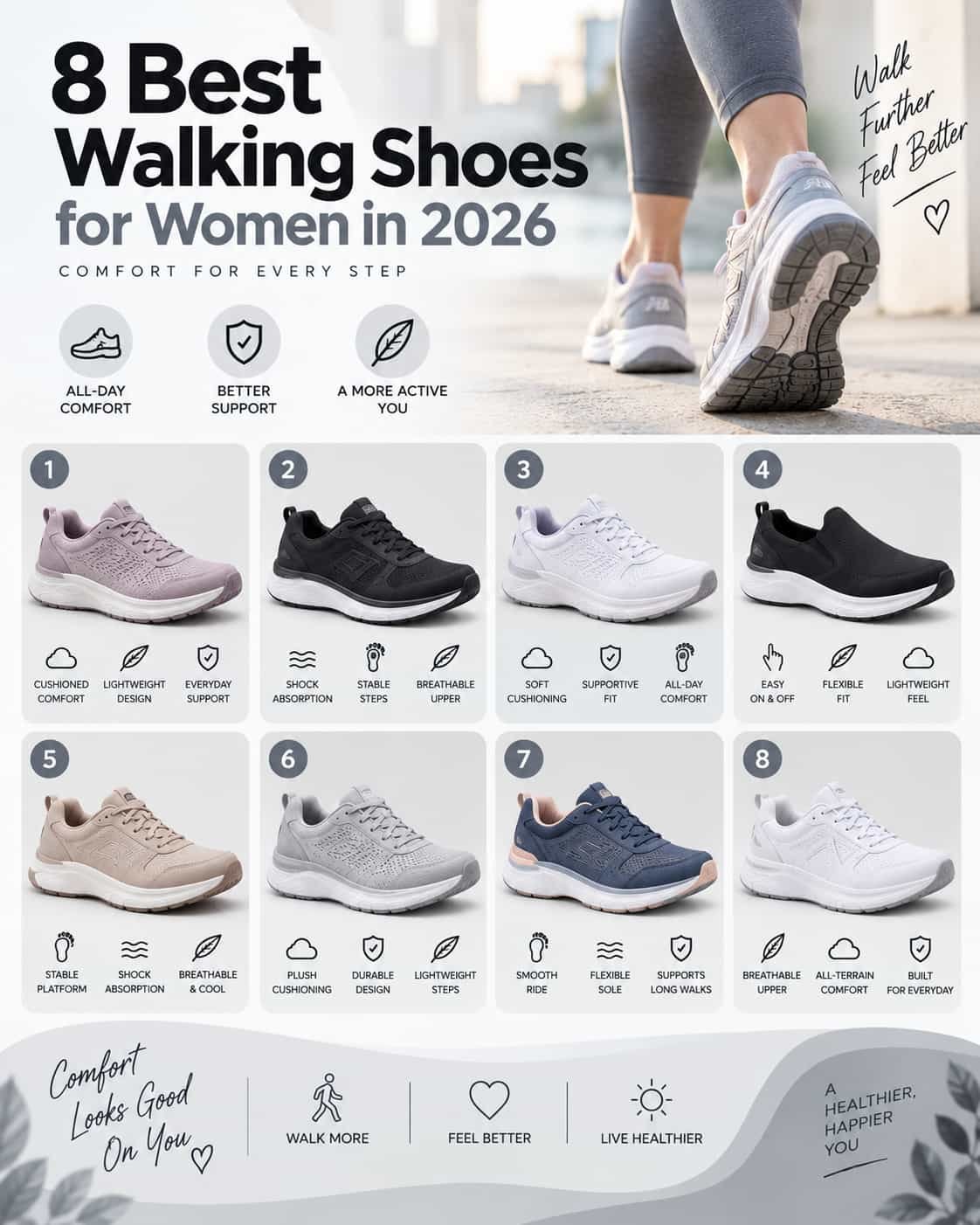
⚡ Quick Picks – Best Walking Shoes for Women 2026

The Retailer’s Reality

Most women come to us frustrated — not because they haven’t tried shoes, but because they’ve tried the wrong ones, ordered based on a 4.5-star average and a pretty photo, and ended up with blisters by noon.

Walking shoes are not one-size-fits-all. Arch type, pronation pattern, surface (concrete vs treadmill vs pavement), and daily use hours all change what “best” actually means for your feet. This guide cuts through the marketing noise. Every pick here is evaluated on cushioning technology, heel-to-toe drop, real-world durability on U.S. sidewalks, and whether it actually solves the foot problem it claims to.

Walking Shoe Buying Guide: What Actually Matters

Before we get to the products, here’s what separates a good walking shoe from a great one.

Cushioning Types:

  • EVA foam – lightweight, affordable, adequate shock absorption. Found in most budget picks.
  • TPU (thermoplastic polyurethane) – denser, more durable, better energy return. Common in mid-range and stability shoes.
  • PEBA (polyether block amide) – premium nitrogen-infused foams (like Brooks’ DNA LOFT v3). Lightweight, responsive, superior long-term comfort. Worth the price jump if you walk 5+ miles daily.

Heel-to-Toe Drop:

  • 0–4mm – minimal/zero drop. Good for natural gait. Harder adjustment for flat-footed walkers.
  • 6–8mm – balanced. Best for most neutral to mild overpronators.
  • 10–12mm – higher drop. Great for plantar fasciitis relief and heel strikers. Most walking shoes on this list fall here.

Arch Support & Stability:

  • Neutral shoes – no correction built in. Best for high arches or neutral gait.
  • Stability shoes – medial post or guiderail system to limit inward roll. Critical for overpronators.
  • Motion control – maximum correction. Usually stiffer; for severe flat feet or overpronation.

U.S. Context:

  • Nurses and retail workers need shoes that survive 8–10 hour concrete shifts without heel fatigue.
  • Outdoor walkers in cities need durable rubber outsoles rated for asphalt abrasion.
  • Gym users and treadmill walkers can prioritize cushion and flexibility over outsole durability.

Product Reviews: 8 Best Walking Shoes for Women 2026

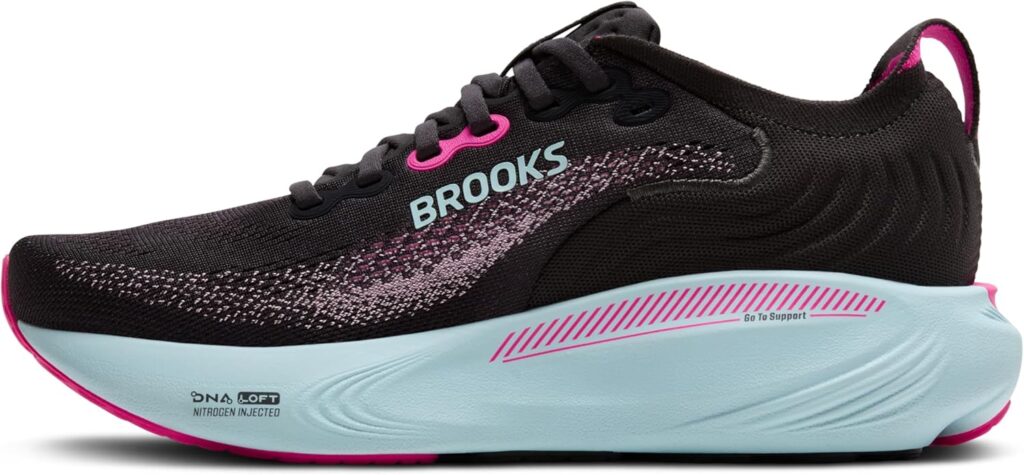
1. Brooks Women’s Adrenaline GTS 25

Woman walking in Brooks Adrenaline GTS 25 showing GuideRails support and DNA LOFT v3 cushioning for all-day comfort

Rating: 4.8 / 5

The Shop Owner’s Take:

This is the shoe I recommend first when a customer walks in and says “I’ve tried everything and my feet still hurt by 3pm.” The GuideRails system is not just a marketing term — it genuinely limits excess ankle and knee movement without forcing your foot into an unnatural position. The nitrogen-infused DNA LOFT v3 midsole is Brooks‘ best cushioning tech to date: soft underfoot without the mushy instability you get from cheaper foam. The PDAC A5500 diabetic certification and APMA Seal of Acceptance mean this isn’t just a comfortable shoe — it’s medically validated. For U.S. women in healthcare or retail who stand on hard floors all day, this is the closest thing to a prescription.

Best For: Overpronators, nurses, all-day workers, mild plantar fasciitis, and anyone transitioning from orthotics.

Pros:

  • GuideRails holistic support controls excess motion without feeling restrictive
  • DNA LOFT v3 cushioning is plush yet responsive — doesn’t feel “dead” at mile 5
  • Breathable engineered mesh upper with flat-knit collar for a secure fit
  • PDAC A5500 diabetic shoe certified + APMA Seal of Acceptance
  • Smooth heel-to-toe transition — excellent on concrete and pavement
  • 200+ units bought per month on Amazon — consistent seller

Cons:

  • At $154.95, it’s a premium investment. Not ideal if you’re testing walking shoes for the first time.
Check Price on Amazon

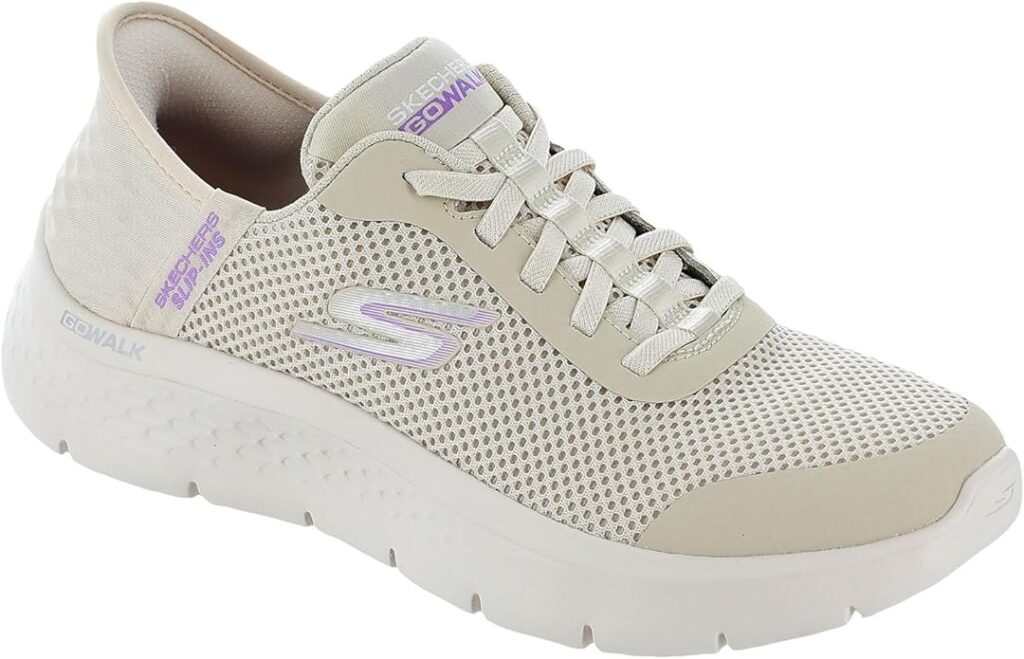
2. Skechers Go Walk Flex Hands Free Slip-Ins Grand Entry

Skechers Go Walk Flex Slip-Ins with molded heel panel and memory foam insole for easy on/off walking comfort

Rating: 4.7 / 5

The Shop Owner’s Take:

Amazon’s #1 Best Seller in Women’s Walking Shoes — and for good reason. The hands-free slip-in design with the molded heel panel and bungee closure is genuinely useful, not just a gimmick. If you’re a woman who deals with back pain, mobility issues, or simply walks between tasks constantly at work, this is a 10-second on/off shoe that actually stays on your foot. The Air-Cooled Memory Foam insole and UltraGo cushioning keep your feet comfortable through full workdays. The flexible traction outsole handles light outdoor surfaces reasonably well. Six hundred+ women buy this every month — that’s not hype, that’s customer satisfaction at scale.

Best For: Slip-on preference users, women with mobility limitations, light daily walkers, casual office wear.

Pros:

  • Hands-free molded heel entry — game changer for those with back or knee issues
  • Air-Cooled Memory Foam + UltraGo cushioning system
  • Machine washable — practical for everyday use
  • Heel Pillow technology keeps the shoe from slipping off
  • Super flexible outsole — folds naturally with your stride
  • #1 Best Seller badge on Amazon consistently

Cons:

  • Memory foam compresses over time — less supportive after 6–8 months of heavy use. Replace annually if worn daily.
Check Price on Amazon

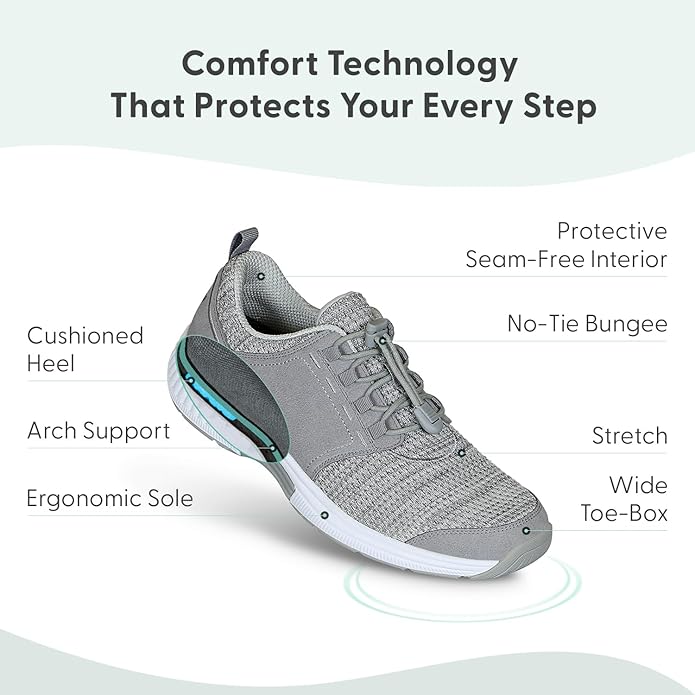
3. Orthofeet Women’s Francis Stretch No-Tie Walking Sneaker

Orthofeet Francis Stretch walking sneaker with anatomical orthotic insole for bunions, flat feet, and heel pain relief

Rating: 4.5 / 5

The Shop Owner’s Take:

This is the shoe I pull out when a customer describes foot pain that other shoes haven’t solved. Orthofeet builds shoes specifically around foot health conditions — and the Francis delivers. The stretchable fabric upper is engineered to accommodate bunions, foot swelling, and sensitive pressure points without creating hot spots. The premium orthotic insole with anatomical arch support is the real differentiator — it’s the kind of support you’d normally need a custom insert for. The no-tie strap closure is excellent for older women or those with dexterity issues. At $109.99 with a 24% discount off $145, it’s reasonably priced for what it delivers medically.

Best For: Women with plantar fasciitis, bunions, flat feet, overpronation, heel pain, diabetes-related foot sensitivity, and nursing professionals.

Pros:

  • Stretchable upper accommodates bunions, swelling, and sensitive areas
  • Premium anatomical orthotic insole included in every pair
  • EVA insole cushioning with multilayer shock absorption
  • Wide toe box — true to size with natural foot shape fit
  • Strap closure — easy on/off, no tying required
  • Validated for plantar fasciitis, diabetes, flat feet, and heel pain

Cons:

  • The design is functional, not fashion-forward. If aesthetics matter to you, this won’t be your everyday style shoe.
Check Price on Amazon

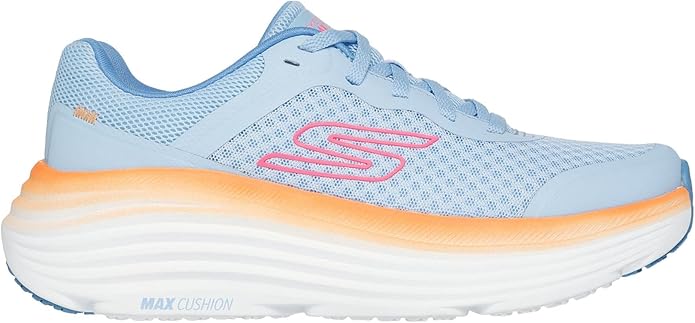
4. Skechers Women’s Max Cushioning Endeavour Canova

Skechers Max Cushioning Endeavour with Goga Mat insole and Natural Rocker Technology for high-mileage walkers

Rating: 4.6 / 5

The Shop Owner’s Take:

The Max Cushioning line from Skechers punches above its price point. The Goga Mat insole is genuinely excellent — it’s a high-density air-cooled foam that doesn’t flatten out after a few weeks the way cheaper insoles do. The Natural Rocker Technology promotes a smooth heel-to-toe transition that mimics the rolling motion of a good walking gait, which reduces fatigue significantly on long walks. It’s machine washable, vegan-friendly, and comes in a wide color range. For women walking 3–5 miles daily on mixed surfaces — park paths, sidewalks, light trails — this is a top-tier choice at under $85 retail.

Best For: High-mileage daily walkers, women with joint sensitivity, outdoor walkers on mixed terrain, vegan shoppers.

Pros:

  • Goga Mat + UltraLight midsole — maximum cushioning that doesn’t sacrifice responsiveness
  • Natural Rocker Technology for smooth heel-to-toe transitions
  • Breathable engineered mesh with synthetic overlays
  • Machine washable — practical durability
  • 100% vegan materials
  • Flexible traction outsole, medium width

Cons:

  • The outsole traction isn’t aggressive enough for wet pavement or light trail conditions. Stick to dry surfaces.
Check Price on Amazon

5. NORTIV 8 Women’s ActiveBreeze Walking Shoes

NORTIV 8 ActiveFloat women's walking sneaker with high-rebound EVA midsole and breathable mesh upper

Rating: 4.4 / 5

The Shop Owner’s Take:

NORTIV 8 has become one of the better-value athletic brands for women who need solid daily walkers without paying premium prices. The ActiveBreeze uses a thick EVA midsole with moderate-to-maximum cushioning — good shock absorption for daily walks and gym sessions. The mesh upper is genuinely breathable and lightweight. The 3M reflective strip on the upper is a practical add for early morning or evening walkers. It runs neutral, which means if you overpronate, you’ll want to pair this with a supportive insole. But for neutral-gait walkers who want a comfortable, affordable, everyday shoe — 700+ monthly Amazon buyers already agree this delivers.

Best For: Neutral-gait walkers, gym and treadmill users, women who prioritize breathability, budget-conscious buyers up to $70.

Pros:

  • Thick EVA midsole with cloud-like cushioning
  • Highly breathable mesh upper — ideal in warm climates
  • Slip-resistant rubber outsole for wet pavement and gym floors
  • 3M reflective strip for nighttime visibility
  • Clean minimalist design — pairs well with casual outfits
  • Multiple color options; true-to-size fit

Cons:

  • No arch support or stability features. Overpronators should add a third-party insole.
Check Price on Amazon

6. NORTIV 8 Women’s ActiveFloat Walking Sneakers
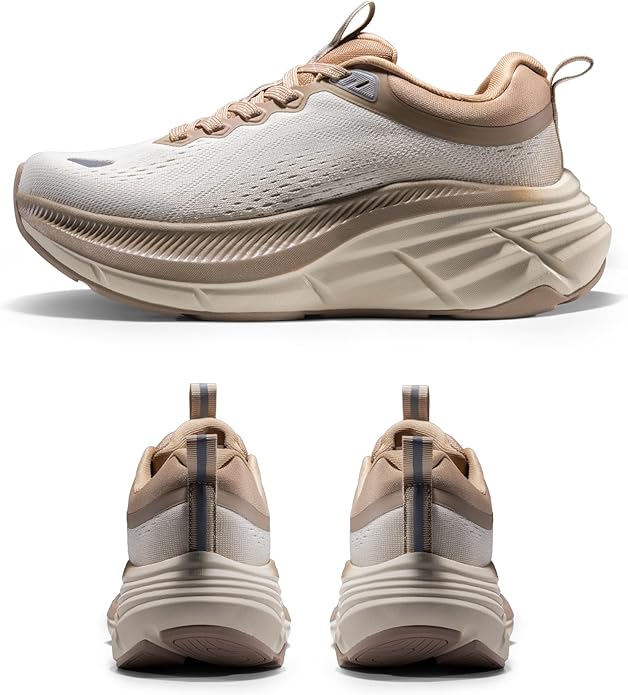
NORTIV 8 ActiveFloat women's walking sneaker with high-rebound EVA midsole and breathable mesh upper

Rating: 4.4 / 5

The Shop Owner’s Take:

The ActiveFloat is NORTIV 8’s more stability-focused sibling. Where the ActiveBreeze leans into breathability, the ActiveFloat adds nylon reinforcement in the upper for increased foot support and a more secure fit during workouts and longer walks. The high-rebound EVA midsole is notably springier than standard foam — you feel it most on long walks when lesser shoes start feeling flat. Available in a wide range of widths — from regular to wide in half sizes — which makes this one of the few budget options that actually accommodates wider feet without ordering up a full size. At $53.99, this is the best sub-$55 walking shoe currently on Amazon.

Best For: Women with slightly wider feet, daily commuters, gym users, budget shoppers who don’t want to sacrifice cushioning.

Pros:

  • High-rebound EVA midsole — better energy return than standard foam
  • Nylon reinforcement for structural foot support
  • Available in regular and wide widths (half sizes included)
  • Woven mesh upper — breathable, lightweight, easy to clean
  • Durable rubber outsole for city streets and running paths
  • 500+ monthly buyers; 4,655 reviews at 4.4 stars

Cons:

  • The insole is basic foam — not suitable as a standalone shoe for plantar fasciitis without an aftermarket orthotic insert.
Check Price on Amazon

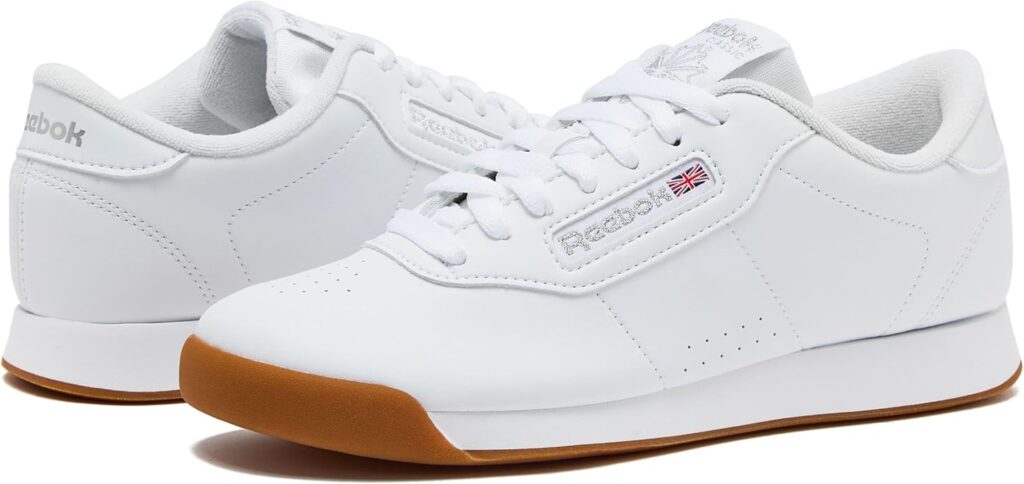
7. Reebok Women’s Princess Sneaker

Reebok Princess leather sneaker with removable foam insole, ideal for nurses and all-day work shifts

Rating: 4.4 / 5

The Shop Owner’s Take:

The Reebok Princess has been around since the 1980s and it still sells because it solves a real problem: women want a clean, versatile sneaker that doesn’t look athletic but walks like it is. Nurses, waitresses, and retail workers have quietly made this one of the most purchased women’s sneakers in the U.S. — and the reason is simple. The low-cut ankle design offers mobility, the removable foam sock liner provides decent cushioning, and the terry lining wicks moisture during long shifts. It’s not a technical shoe — there’s no stability system or heel drop engineering here. But as a lightweight, casual walking sneaker that holds up to 8-hour workdays, it earns its 43,000+ Amazon reviews.

Best For: Light to moderate daily walkers, nurses and service industry workers, women who want a clean classic look without sacrificing comfort.

Pros:

  • Synthetic leather upper — easy to wipe clean after shifts
  • Removable foam sock liner for lightweight cushioning
  • Terry lining for moisture management
  • High-abrasion rubber outsole for long-term durability
  • Clean minimalist design — pairs with uniforms and casual wear
  • Over 43,000 Amazon reviews at 4.4 stars

Cons:

  • Foam insole is thin. Women with foot conditions or who need real arch support will need a custom insert — this shoe is not sufficient as a standalone therapeutic option.
Check Price on Amazon

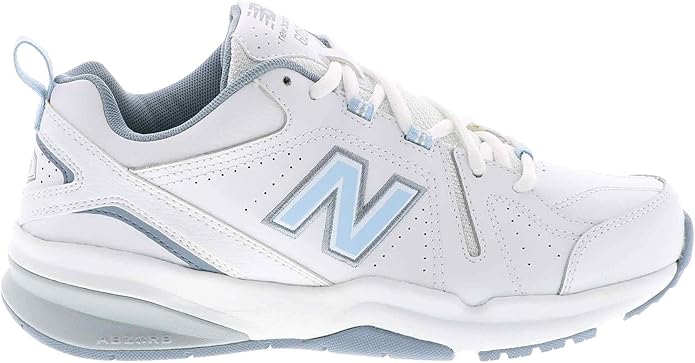
8. New Balance Women’s 608 V5 Casual Comfort Cross Trainer

New Balance 608 V5 leather cross-trainer with ABZORB midsole and NDurance outsole for gym and street walking

Rating: 4.4 / 5

The Shop Owner’s Take:

The New Balance 608 V5 is a legitimate hybrid — it functions as a walking shoe, a cross-trainer, and a casual leather sneaker all at once. The ABZORB midsole is one of NB’s most underrated technologies: it combines foam cushioning with compression resistance so the shoe absorbs impact without bottoming out over time. The leather upper adds structure and durability that mesh uppers can’t match — relevant for women who walk on rough urban surfaces. The NDurance rubber outsole is engineered for high-wear durability, making this the best shoe on the list for women who want a shoe that survives both a gym session and a full day at work. At $64.99 after discount, it’s excellent value for a leather-upper walking shoe.

Best For: Cross-training, gym + daily walking hybrid use, women who prefer leather uppers, women looking for structured support without going full orthopedic.

Pros:

  • ABZORB midsole — superior impact absorption with compression resistance
  • NDurance rubber outsole rated for high-wear durability
  • 100% leather upper — structured, easy to clean, long-lasting
  • Lightweight injection-molded EVA foam for secondary cushioning layer
  • Slip resistant
  • 43,530 Amazon reviews at 4.4 — one of the most validated picks on this list

Cons:

  • Leather upper is warm — not ideal for hot summers or women prone to sweaty feet. Stick to breathable mesh options if heat is a concern.
Check Price on Amazon

Quick Comparison Table

ShoeRatingPriceCushioningBest ForDropSupport Type
Brooks Adrenaline GTS 254.8/5$154.95DNA LOFT v3 (Plush)Overpronation / All-dayModerateStability (GuideRails)
Skechers Go Walk Flex Slip-Ins4.7/5$64.02Memory Foam + UltraGo (Plush)Slip-on / Casual walkingLowNeutral/Cushion
Orthofeet Francis Stretch4.5/5$109.99EVA Multi-layer (Balanced)Foot pain / Ortho useLowStability / Ortho
Skechers Max Cushioning Endeavour4.6/5~$69Goga Mat (Maximum)High-mileage walkersModerateNeutral
NORTIV 8 ActiveBreeze4.4/5$69.99EVA (Moderate/Max)Gym / Casual walksLowNeutral
NORTIV 8 ActiveFloat4.4/5$53.99High-rebound EVA (Max)Wide feet / BudgetLowNeutral
Reebok Princess4.4/5$49.95Foam sock liner (Light)Work shifts / Classic styleMinimalCushion only
New Balance 608 V54.4/5$64.99ABZORB + EVA (Max)Gym + daily walkingLow-moderateNeutral/Structured

Best Walking Shoes for Women Over 50

Walking shoe needs shift meaningfully after 50. Joint padding reduces, pronation patterns often worsen, and recovery time from poor footwear increases. What women in this age group consistently report — based on real U.S. customer reviews — is that they need more cushioning underfoot and better lateral stability than younger walkers.

The most common mistake women over 50 make is choosing shoes based on past preferences instead of current foot mechanics. A woman who wore neutral running shoes comfortably at 35 may now need a stability shoe with a medial post. The best walking shoes for women over 50 prioritize plush midsoles, wider toe boxes, and stability systems that guide natural gait without over-correcting.

The Brooks Adrenaline GTS 25 and Orthofeet Francis Stretch are both strong options in this category — one for active walkers, one for therapeutic needs. Heel-to-toe drop of 8–10mm tends to work best for this group because it reduces Achilles tendon strain, which becomes a more frequent complaint post-50.

One key retail insight: women over 50 are the highest-returning demographic in the footwear category — not because they’re picky, but because online sizing descriptions don’t account for foot widening that happens with age. Always size up a half size and prioritize wide-fit options.

Best Walking Shoes for Women Over 60

After 60, foot anatomy changes are well-documented: fat pad atrophy in the heel and ball of the foot, reduced ankle flexibility, and higher incidence of arthritis mean the shoe requirements are more specific. U.S. podiatric associations consistently recommend a shoe with extra depth, removable insoles (to accommodate orthotics), and a firm heel counter.

The most common mistake at this age group: choosing a soft, flexible shoe thinking “softer = more comfortable.” In reality, a shoe with no structure provides zero protection against foot collapse, which accelerates fatigue and joint pain.

The best walking shoes for women over 60 need to balance cushioning with structural integrity. The Orthofeet Francis is built for exactly this demographic — anatomical insole, stretch upper for swelling management, and strap closure for easy dressing. The Skechers Go Walk Flex Slip-Ins also rank highly here for the hands-free entry feature, which is genuinely practical for women with limited mobility or arthritis in the fingers.

Best Walking Shoes for Overweight Women

Additional body weight increases ground reaction force with every step — roughly 1.5x body weight during walking, up to 3x during running. This means the midsole technology and outsole durability that are “adequate” for a 130-pound walker are simply insufficient for a 200-pound walker.

What U.S. overweight women report most in reviews: premature midsole compression (foam bottoming out within 3–4 months), outsole delamination at the medial side (where overpronation stress concentrates), and toe box collapse. These are engineering failures, not user errors.

The best walking shoes for overweight women need maximum cushioning with compression-resistant midsoles (not just soft foam), wider last designs to accommodate natural foot spread under load, and reinforced outsoles rated for high-wear durability. The New Balance 608 V5’s ABZORB midsole and NDurance outsole are specifically engineered for this kind of sustained pressure. The Brooks Adrenaline GTS 25 is the premium choice here — nitrogen-infused DNA LOFT v3 foam resists compression far longer than standard EVA.

Replace walking shoes every 300–400 miles — not by calendar year — when you’re carrying additional weight. The midsole loses effectiveness long before the outsole shows visible wear.

Best Walking Shoes for Women with Wide Feet

Standard shoe lasts are built for a “B” width foot. Approximately 20–30% of American women have naturally wider feet — a statistic that the footwear industry chronically underserves. The result: women force their feet into standard-width shoes, which compresses the forefoot, restricts circulation, and causes blisters, bunions, and neuromas over time.

The best walking shoes for women with wide feet offer a true wide last — not just a “roomy toe box” claim — with actual width measurements. The NORTIV 8 ActiveFloat is one of the few budget shoes offering half-size increments in wide widths (6W through 11W), which is rare under $60. The Orthofeet Francis has a wide toe box by design. New Balance consistently offers 2E and 4E widths across their 608 line.

The most common mistake: ordering a half size up to compensate for width. This creates heel slippage, which causes blisters at the back of the foot and reduces stability. Width and length are separate measurements — always prioritize getting the correct width.

Best Walking Shoes for Women with Flat Feet

Flat feet (pes planus) means the arch either partially or fully contacts the ground during standing and walking. Without arch support, the foot rolls inward (overpronates), which transmits stress up the kinetic chain — ankles, knees, hips, and lower back all compensate.

U.S. retail data consistently shows flat-footed women as the demographic most likely to experience return cycles and negative reviews — not because they’re harder to fit, but because they frequently buy neutral or cushion-only shoes that don’t address their actual biomechanical need.

The best walking shoes for women with flat feet need a stability classification, not a neutral one. The Brooks Adrenaline GTS 25’s GuideRails system is the current benchmark for flat-foot walking support — it controls excessive inward roll without a rigid medial post. The Orthofeet Francis with its anatomical insole is the therapeutic option. Avoid zero-drop or minimalist shoes entirely if you have flat feet — the lack of arch elevation will worsen symptoms.

Best Walking Shoes for Women with High Arches

High arches (pes cavus) present the opposite problem from flat feet: the arch is rigid, doesn’t flex naturally during the gait cycle, and transfers impact poorly. Women with high arches tend to supinate (roll outward), placing stress on the lateral side of the foot, ankle, and IT band.

The key requirement for high-arch walkers is maximum cushioning with a flexible midsole — not a stability shoe. Stability features designed for overpronators actually worsen outcomes for supinators by pushing the foot further outward. The best walking shoes for women with high arches prioritize plush, responsive foam and flexible outsoles that allow the foot to move naturally.

The Skechers Max Cushioning Endeavour’s Natural Rocker Technology and Goga Mat insole are well-suited here. The Brooks Adrenaline GTS 25, while a stability shoe, uses GuideRails rather than a traditional medial post — making it more tolerable for neutral-to-high arch walkers than older stability designs.

Best Walking Shoes for Women with Plantar Fasciitis

Plantar fasciitis is the most common foot complaint we hear about — accounting for roughly 15% of all foot-related shoe consultations in U.S. retail. The plantar fascia is the connective tissue band running from heel to toe; when it’s inflamed, every morning step feels like a knife to the heel.

The common mistake: buying ultra-soft, cushioned shoes and expecting relief. Soft foam without arch support allows the foot to overpronate and stretch the plantar fascia further. Relief requires a combination of cushioning and arch support — not one at the expense of the other.

The best walking shoes for women with plantar fasciitis need deep heel cups to stabilize the calcaneus, firm arch support to reduce fascia tension, and adequate cushioning to absorb heel strike impact. The Orthofeet Francis is the most purpose-built option on this list for this condition. The Brooks Adrenaline GTS 25’s PDAC A5500 diabetic certification and APMA Seal confirm it’s medically validated for this population as well. Avoid flat, flexible shoes and ballet-style sneakers entirely during a plantar fasciitis flare.

Best Walking Shoes for Women with Bunions

A bunion (hallux valgus) is a bony prominence at the base of the big toe, caused by the joint shifting outward over time. Standard shoes with narrow toe boxes compress the bunion, causing pain, swelling, and accelerated deformity.

The number one retail mistake we see: women with bunions buying shoes based on overall size without checking toe box width. A size 8.5 in a narrow last is actually worse than a size 8 in a wide last for bunion sufferers.

The best walking shoes for women with bunions need a wide, deep toe box with soft, non-rigid upper material that doesn’t create pressure points over the bunion area. The Orthofeet Francis Stretch is the best option here — the stretchable fabric upper is specifically engineered to accommodate bunion deformities without creating contact pressure. The NORTIV 8 ActiveFloat’s round toe and mesh upper also score well. Avoid any shoe with a seam or overlay directly over the first metatarsophalangeal joint.

Best Walking Shoes for Women Travel

Travel walking is a specific category that most generic shoe guides get wrong. You’re not walking 10 miles on a controlled surface — you’re walking 6–8 miles per day on cobblestones in Rome, airport terminal floors, uneven European city streets, and occasionally light trails — often while carrying luggage.

The best walking shoes for women travel need to be lightweight (you’re carrying them in a suitcase), versatile enough to pair with multiple outfits, and durable enough to handle mixed urban surfaces. Packability matters — bulky trainers are a poor travel companion.

The Reebok Princess is a strong travel pick for its sleek profile and easy-clean leather upper. The Skechers Go Walk Flex Slip-Ins are excellent for airport security — hands-free on/off is genuinely useful at TSA checkpoints. For active travelers doing 8+ miles per day, the Brooks Adrenaline GTS 25 is worth the suitcase space. One real-world insight: U.S. travelers consistently underestimate cobblestone fatigue — a shoe that’s comfortable on concrete may fail on uneven stone after 3 hours. Prioritize a thick, shock-absorbing outsole for European city travel.

Best Walking Shoes for Women Work (All Day)

Work-specific walking shoes are the most frequently purchased category we see. Nurses, teachers, retail associates, warehouse workers, and restaurant staff all have the same core need: a shoe that survives an 8–12 hour shift on hard surfaces without creating plantar fasciitis, Achilles strain, or knee pain.

The best walking shoes women work must prioritize concrete-rated outsole durability, midsole foam that resists compression over long hours, and slip resistance — particularly for healthcare and food service environments where floor surfaces can be wet.

The Reebok Princess has historically been the go-to for nurses and waitresses because of its clean look and durable outsole. But for healthcare workers who need therapeutic support on hospital concrete, the Brooks Adrenaline GTS 25 is the professional-grade upgrade. The Skechers Go Walk Flex Slip-Ins serve well in environments where quick on/off is required throughout the shift — like patient care settings. One insight from U.S. healthcare workers: they replace shoes every 6 months, not 12 — concrete shifts compress foam 2x faster than outdoor walking.

Best Walking Shoes for Women on Treadmill

Treadmill walking puts specific demands on footwear that differ from outdoor use. The belt surface reduces impact compared to concrete, but the repetitive motion on the same stride pattern increases wear on specific midsole zones. Ventilation also matters more indoors where heat dissipates less.

The best walking shoes for women on treadmill are typically neutral, lightweight, breathable, and cushioned without excessive weight. The NORTIV 8 ActiveBreeze is arguably the best value treadmill walker on this list — the mesh upper provides excellent airflow for indoor use, and the EVA midsole handles the repetitive treadmill motion well without premature compression.

A common mistake U.S. gym-goers make: using their trail or outdoor shoes on the treadmill. Lugged outsoles on a treadmill belt increase mechanical wear, produce noise, and reduce natural foot flex. Use a dedicated treadmill shoe with a flat, flexible outsole.


Best Walking Shoes for Women on Concrete

Concrete is the harshest walking surface on foot health — it has zero give, generates high ground reaction forces, and wears down rubber outsoles 30–40% faster than asphalt or synthetic track surfaces. Women who live in urban U.S. environments — New York, Chicago, LA, Boston — are walking on concrete for the majority of their daily movement.

The best walking shoes for women on concrete need NDurance or carbon-rubber outsoles rated for abrasive surfaces, thick EVA or nitrogen-infused foam midsoles to counter hard-surface impact, and firm heel counters to prevent heel drift during extended pavement walking.

The New Balance 608 V5 with its NDurance outsole is specifically rated for high-wear durability — a claim most budget shoes can’t back up. The Brooks Adrenaline GTS 25 is the premium concrete solution. One real-world insight: foam midsoles on concrete compress to 50% effectiveness by 300 miles — track your mileage, not your calendar, to know when to replace.


Best Lightweight Walking Shoes for Women

Weight matters more than most buyers realize. A 1-ounce reduction per shoe translates to roughly 550 fewer pounds lifted per mile when you factor in stride frequency. For women walking 4–5 miles daily, a lighter shoe genuinely reduces fatigue accumulation.

The best lightweight walking shoes for women typically use mesh uppers, open-cell EVA foam, and minimal heel structure to reduce mass without sacrificing function. The Skechers Go Walk Flex comes in at approximately 6–7 ounces per shoe — extremely light for a cushioned walking shoe. The NORTIV 8 ActiveBreeze is similarly lightweight with its open mesh and thin EVA construction.

The trade-off: lighter shoes typically have less durable outsoles. If you’re walking primarily on concrete or rough asphalt, don’t sacrifice outsole durability for weight. Lightweight shoes work best on softer gym surfaces, park paths, and moderate pavement.


Best Stylish Walking Shoes for Women

The market gap we see most often: women who want a walking shoe that doesn’t look like a clinical orthopaedic device or a chunky running shoe. This demographic — women 30–55 who are fashion-conscious but still need real walking comfort — is chronically underserved by the technical footwear market.

The best stylish walking shoes for women integrate aesthetic design without compromising biomechanical function. The Reebok Princess is the benchmark here — a heritage silhouette that looks intentional in any outfit. The New Balance 608 V5 leather upper reads as a clean sneaker, not a workout shoe.

One retail insight: U.S. women in this category are the highest impulse buyers at point-of-sale — they make decisions visually first, then justify with comfort features. The mistake is the reverse: buy purely on looks and skip function verification. Always confirm heel drop, midsole type, and arch support before purchasing on aesthetics alone.


Best Slip-On Walking Shoes for Women

The demand for slip-on walking shoes has grown significantly post-2020, driven by women who want convenience without sacrificing structural support. The risk: many slip-on designs sacrifice heel counter stability to achieve the slip-on form factor, which creates heel slippage and reduces walking efficiency.

The best slip on walking shoes for women address this with engineered heel pillow technology and bungee or elastic lace systems that secure the foot without traditional laces. The Skechers Go Walk Flex Slip-Ins is the category leader — the molded heel panel prevents slippage while the bungee closure provides a customized fit without tying.

The common mistake: buying flat slip-on mules or loafer-style shoes marketed as “walking shoes.” True slip-on walking shoes need a defined heel counter and midsole structure — without them, you’re walking in house slippers, not a functional footwear system.


Best Waterproof Walking Shoes for Women

Waterproof walking shoes are essential for women in the Pacific Northwest, Midwest, and Northeast U.S. where rain, snow, and wet terrain are seasonal realities. The trade-off with waterproofing is ventilation — Gore-Tex and similar membranes reduce breathability, so these shoes can run warm in summer.

The best waterproof walking shoes for women use sealed seams, waterproof membranes, and water-resistant uppers while maintaining adequate airflow. None of the shoes reviewed in this primary guide are waterproof — a dedicated waterproof walking shoe (Merrell Moab, HOKA Anacapa GTX, Salomon Outrise GTX) would be better suited for this specific need.

Key retail insight: “water-resistant” and “waterproof” are not interchangeable. Water-resistant finishes repel light rain for 20–30 minutes. Waterproof membranes keep feet dry in sustained rain or shallow water crossings. If you walk in rainy climates daily, pay for genuine waterproofing — the budget “water-resistant” option will fail you by December.


Best Casual Walking Shoes for Women

Casual walking shoes occupy the intersection of fashion sneakers and functional footwear. These are shoes worn for errands, light city walks, coffee shop visits, and day-to-day movement — not structured exercise, but not pure fashion either.

The best casual walking shoes for women need to look polished enough for social settings, provide adequate cushioning for 3–5 miles of daily walking, and be easy to clean and maintain. The Reebok Princess and Skechers Go Walk Flex both perform excellently in this category. The NORTIV 8 ActiveFloat’s minimalist design also crosses well into casual territory.

The mistake U.S. buyers make in this category: assuming “casual” means low-spec. You’re still walking in these shoes — flat, unsupported casual shoes cause the same foot fatigue as technical shoes with no support. Choose cushioning and arch support even when buying casual.


Best New Balance Walking Shoes for Women

New Balance has built a reputation in the U.S. market for consistent quality, genuine wide-fit options, and medically-validated designs. Their walking category spans from entry-level to premium therapeutic options.

The best New Balance walking shoes for women leverage three key technologies: ABZORB cushioning (compression-resistant impact absorption), NDurance outsoles (high-wear durability rating), and a variety of width options (B, D, 2E, 4E) that make NB the most accessible brand for non-standard feet in the U.S. market.

The 608 V5 reviewed above is their casual walking benchmark. For more active walkers, the 990 and 1080 lines offer ENCAP midsole technology with premium foam layering. New Balance is also one of the few major brands still manufacturing some styles domestically in the U.S.


Best Brooks Walking Shoes for Women

Brooks has earned near-unanimous trust among U.S. running specialists and physical therapists as the most biomechanically rigorous brand in the walking and running shoe market. Their Adrenaline GTS line has been a top podiatrist recommendation for over a decade.

The best Brooks walking shoes for women stand out for their GuideRails holistic support system — a proprietary approach that supports the body’s natural motion path without overcorrecting, unlike traditional rigid medial posts. The DNA LOFT v3 nitrogen-infused foam is their premium midsole technology: lighter and more responsive than standard EVA while maintaining durability under extended use.

For women who’ve been told by a podiatrist to get a “supportive walking shoe,” Brooks Adrenaline GTS 25 is almost always the correct answer. The APMA Seal of Acceptance and PDAC A5500 diabetic certification make it the most medically validated option in the walking shoe category.


Best HOKA Walking Shoes for Women

HOKA’s maximal cushioning philosophy — oversized midsole stack heights that look extreme but deliver genuinely exceptional impact absorption — has crossed over from ultra-running into mainstream walking and work footwear.

The best HOKA walking shoes for women are particularly strong for women with joint sensitivity, post-surgical recovery walking, and high-mileage daily walkers who need maximum underfoot protection. The Bondi and Clifton lines are their most popular walking options. The Bondi features HOKA’s thickest cushioning stack; the Clifton offers a lighter, more responsive ride.

Key insight: HOKA sizing runs slightly narrow. Wide-footed women should select a 2E width option or size up a half size. The rocker sole geometry is distinctive — if you’ve never worn HOKA, expect an adjustment period of 5–7 days as your gait adapts to the curved outsole profile.


Best Skechers Walking Shoes for Women

Skechers is the most accessible walking shoe brand in the U.S. market by volume — and when you look past the brand’s mass-market positioning, their walking-specific technology is genuinely competitive. The Go Walk line in particular uses Skechers’ proprietary Goga Mat and 5Gen cushioning systems that outperform many premium-priced alternatives on comfort metrics.

The best Skechers walking shoes for women dominate the slip-on, casual, and max-cushioning categories. The Go Walk Flex Slip-Ins holds the #1 Best Seller ranking in Women’s Walking Shoes on Amazon. The Max Cushioning Endeavour reviewed above is their performance-tier option. Both are machine washable — a practical differentiator in daily-use footwear that few brands offer.

The common Skechers mistake: assuming all Skechers walking shoes are equal. Their therapeutic D’Lites and Sport lines are fashion-forward but biomechanically shallow. Stick to the Go Walk and Max Cushioning lines for genuine walking performance.


Best Vionic Walking Shoes for Women

Vionic is a brand built specifically around podiatrist-designed arch support. Their Orthaheel Technology is the core differentiator — a contoured footbed with a built-in orthotic that aligns the foot from the ground up, addressing heel, arch, and forefoot in a single integrated insole design.

The best Vionic walking shoes for women are especially recommended by U.S. podiatrists for plantar fasciitis, overpronation, and general foot fatigue. The brand bridges the gap between therapeutic medical footwear and attractive casual/walking shoes — a gap that Orthofeet also occupies but at a more clinical aesthetic.

Vionic is notably effective for first-step heel pain (the hallmark symptom of plantar fasciitis) because of the deep heel cup in their Orthaheel footbed. The common mistake is buying Vionic sandals or flats and expecting the same benefit as their enclosed walking shoes — the arch support effect is significantly reduced in open footwear.


Best Clarks Walking Shoes for Women

Clarks occupies a unique space in the U.S. walking shoe market — a heritage brand that bridges fashion, casual wear, and genuine walking comfort without the clinical or athletic aesthetic of dedicated sports brands.

The best Clarks walking shoes for women use their proprietary Cushion Plus and Ortholite technologies for impact absorption and moisture management. The Breeze line is their most popular walking category. Clarks consistently scores well for women who want a shoe appropriate for work environments, light travel, and social settings where athletic sneakers feel out of place.

The honest limitation: Clarks are not engineered for 5+ mile daily walking in the way Brooks or HOKA are. For light-to-moderate daily walkers (2–3 miles), Clarks delivers excellent comfort and style. For dedicated walkers or those with foot conditions, supplement with an aftermarket orthotic insole.


Best Merrell Walking Shoes for Women

Merrell is primarily known for trail and outdoor footwear, but their walking and everyday collection has grown substantially. For women who walk on mixed surfaces — paved trails, light dirt paths, urban parks — Merrell offers a practical middle ground between technical hiking and standard walking shoes.

The best Merrell walking shoes for women use Vibram outsoles (the gold standard in outdoor traction) and EVA midsole cushioning rated for trail conditions. The Moab 3 and Siren lines are their most relevant for casual-to-moderate trail walking. Merrell also offers waterproof GTX variants — the best option for women in wet climates who want a single shoe for both city and outdoor walking.

The common mistake: buying Merrell trail shoes expecting city walking comfort. Their lugged outsoles are designed for trail grip, not pavement. On concrete, lugged outsoles increase joint impact and wear faster. If you’re primarily a pavement walker, Merrell’s Road Glove or dedicated walking lines are more appropriate.


Best ASICS Walking Shoes for Women

ASICS brings their running shoe engineering heritage to the walking category — most notably the GEL cushioning system, which uses silicone-based gel pods in the heel and forefoot to absorb impact at high-stress zones.

The best ASICS walking shoes for women include the Gel-Venture and Gel-Contend lines for casual walking, and the Gel-Kayano and GT-2000 for stability and support needs. ASICS scores particularly well for women with neutral-to-mild overpronation who walk 3–6 miles daily and want research-backed midsole technology.

One insight U.S. buyers should know: ASICS sizing runs narrow in standard widths. Wide-footed women should specifically filter for 2E (wide) or 4E (extra-wide) options, or the brand’s fit will feel unnecessarily tight. ASICS’ FLYTEFOAM technology in their higher-tier models also offers exceptional durability on concrete and asphalt compared to basic EVA.


Best Walking Shoes for Women Under $50

The sub-$50 walking shoe market has improved significantly in quality over the past three years, primarily driven by Chinese manufacturing brands (NORTIV 8, WHITIN, FitVille) that have invested in EVA midsole engineering without the brand premium.

The best walking shoes for women under $50 that deliver genuine walking performance are the Reebok Princess (often on sale at $44–$49) and the NORTIV 8 ActiveFloat at $53.99 — close enough that a sale or coupon closes the gap. At this price point, prioritize EVA midsole construction over foam sock liners, rubber outsoles over EVA-only outsoles, and mesh uppers over synthetic.

What you realistically can’t get under $50: advanced stability technology (GuideRails, ABZORB, GuideRails), nitrogen-infused foam (DNA LOFT, PEBA), or validated therapeutic designs. These are introductory-level walking shoes — adequate for light daily use, not for foot conditions or extended mileage.


How to Choose Walking Shoes for Women

Most women approach shoe buying backwards — they find a shoe they like visually and then check if it fits. The correct process is the reverse. Start with your foot type (neutral, flat, high arch), identify your primary surface (concrete, treadmill, trail, mixed), and establish your daily mileage before evaluating any specific model.

Learning how to choose walking shoes for women requires understanding three non-negotiable criteria: midsole technology matched to your weight and mileage, arch support classification matched to your foot type, and toe box width matched to your actual measured foot width.

The most common mistake in the U.S. market is buying a size based on memory (“I’m a size 8”) without measuring. Feet widen and lengthen with age, pregnancy, and weight change. Measure both feet (they differ in size), measure at end of day when feet are at maximum size, and always prioritize width alongside length.


Walking Shoes vs Running Shoes for Women

This is one of the most frequently searched questions in our category — and one of the most misunderstood. The short answer: walking shoes and running shoes are engineered for different biomechanical demands, and using the wrong type causes avoidable problems.

The walking shoes vs running shoes women comparison breaks down like this: running involves a heel-strike impact force 2–3x body weight, requiring thick cushioning stacks and significant energy return technology. Walking generates approximately 1–1.5x body weight impact and involves a fundamentally different gait pattern — heel strike to toe-off with full foot contact, not the ballistic impact of running.

Running shoes typically have a higher heel-to-toe drop (8–12mm), more aggressive cushioning stacks, and flexibility engineered for a bent-knee landing pattern. Walking shoes tend to have lower drops, firmer midsoles for push-off efficiency, and more durable outsoles for sustained pavement contact. Using a running shoe for daily walking isn’t harmful, but using a walking shoe for running is — insufficient cushioning for impact loading leads to shin splints and stress fractures.


How Long Do Walking Shoes Last?

This is the question most manufacturers quietly avoid because the honest answer affects their sales narrative. Walking shoes don’t last as long as buyers assume — and the midsole fails before the outsole shows visible wear.

How long do walking shoes last depends on three variables: your body weight (heavier walkers compress foam faster), your primary surface (concrete degrades outsoles and midsoles faster than treadmills or grass), and your daily mileage. The general industry standard is 300–500 miles before midsole compression reduces cushioning effectiveness below functional threshold.

For a woman walking 3 miles daily, 400 miles represents approximately 4–5 months of use — not 12 months. Most buyers replace shoes annually based on visible wear, which means they walk in dead shoes for 6–8 months. Signs of midsole failure: increased joint fatigue, shoe sole that won’t spring back when pressed with your thumb, and visible compression creases across the midsole. Replace before visible sole wear becomes apparent on the outsole.

Frequently Asked Questions for Best Walking Shoes Women

Q: What heel-to-toe drop is best for women standing all day?

For women on their feet 8+ hours on hard floors — nurses, teachers, retail workers — an 8–10mm heel-to-toe drop is optimal. This drop reduces Achilles tendon strain during prolonged standing and promotes a more natural heel-to-ball weight distribution compared to zero-drop shoes.

Q: Are stability shoes necessary for all women walkers?

No. Stability shoes are designed for overpronators — women whose feet roll inward during the gait cycle. Neutral-gait walkers and supinators don’t need stability features and may actually experience increased discomfort if a medial post pushes against their natural motion path. Get a wet-foot test or gait analysis before selecting a stability classification.

Q: Can I use running shoes for daily walking in the U.S.?

Yes, with caveats. Running shoes work fine for walking. But they’re typically over-engineered for it — heavier cushioning, higher drops, and more aggressive outsoles than walking demands. If walking is your primary activity, a dedicated walking shoe will feel more natural and likely be more durable for that specific use case.

Q: How do I know when my walking shoes need to be replaced?

The midsole fails before the outsole looks worn. Test by pressing your thumb firmly into the midsole — if it compresses easily without rebounding, the foam is spent. Also watch for increased foot, knee, or hip fatigue during walks that were previously comfortable. Most walking shoes need replacement at 300–500 miles regardless of visible outsole condition.

Q: Are expensive walking shoes worth it for U.S. women?

For women with foot conditions (plantar fasciitis, flat feet, overpronation, bunions) or who walk 4+ miles daily — yes, absolutely. The midsole technology gap between a $50 and $150 shoe is substantial and directly impacts foot health over time. For casual walkers under 2 miles daily on soft surfaces, a well-engineered $50–$70 shoe is entirely adequate.

Common Questions About Walking Shoes for Women

1. What is the most comfortable women’s walking shoe?

The most comfortable women’s walking shoes are those with soft cushioning, proper arch support, and breathable materials. Shoes designed for shock absorption and all-day comfort are ideal.

2. Which are the best walking shoes for women in 2026?

The best walking shoes for women in 2026 focus on lightweight design, arch support, durability, and slip resistance for daily wear and long-distance walking.

3. Which brand is best for women’s walking shoes?

Top brands are known for comfort technology, orthopedic support, and performance-focused footwear that ensures long-lasting comfort.

4. What are the top 5 best walking shoes for women?

Top walking shoes typically include models that offer cushioning, stability, arch support, and durability for everyday use.

5. Are running shoes good for walking?

Yes, running shoes can be used for walking, but walking shoes are specifically designed for heel-to-toe movement, making them more efficient for walking.

6. What shoes are best for walking and standing all day?

Shoes with memory foam, arch support, and shock-absorbing soles are best for all-day walking and standing.

7. What are the best walking shoes for women with arch support?

Shoes with built-in arch support or orthopedic design help reduce foot fatigue and provide better comfort.

8. What are the best walking shoes for long distances?

Lightweight shoes with responsive cushioning and durable soles are ideal for long-distance walking.

9. Which walking shoes are best for travel?

The best travel walking shoes are lightweight, comfortable, stylish, and easy to wear for long hours.

10. What are the best walking shoes for older women?

Walking shoes for older women should provide extra cushioning, stability, and joint support for better balance.

11. Are expensive walking shoes worth it?

Higher-priced walking shoes often provide better materials, comfort, and durability, making them a good investment.

12. What features should I look for in walking shoes?

Look for cushioning, arch support, breathability, lightweight design, and non-slip soles.

13. What are the best walking shoes for concrete surfaces?

Shoes with thick cushioning and shock absorption help reduce impact when walking on hard surfaces like concrete.

14. How often should I replace walking shoes?

Walking shoes should be replaced every 300–500 miles or when support and cushioning start to wear out.

15. What are stylish walking shoes for women?

Stylish walking shoes combine comfort, modern design, and versatility for both casual wear and walking.

Final Verdict of Best Walking Shoes for Women

If you want the best all-around walking shoe for daily use → Brooks Adrenaline GTS 25. Best midsole technology, medically validated, handles concrete, treadmill, and light trail equally well.

If foot pain or a specific condition is your primary concern → Orthofeet Francis Stretch. Purpose-built for plantar fasciitis, bunions, flat feet, and overpronation. The most therapeutic option on this list.

If budget is your priority and you need real cushioning → NORTIV 8 ActiveFloat at $53.99. Best value-to-cushioning ratio under $60, with genuine wide-fit options.

If you want a slip-on for daily convenience → Skechers Go Walk Flex Slip-Ins. #1 Amazon Best Seller. Hands-free entry, memory foam comfort, machine washable.

If you walk 4–6 miles daily and need max cushioning → Skechers Max Cushioning Endeavour. Goga Mat insole and Natural Rocker Technology deliver per-mile comfort that outlasts most shoes in this price tier.

If you want a clean, versatile look that holds up at work → Reebok Princess. Forty years of proven performance. Nurses and waitresses choose it for a reason.

If you cross-train and need a shoe that handles gym and daily walking → New Balance 608 V5. ABZORB + NDurance is the most durable midsole/outsole combination in this price range.

Check the latest prices and availability on Amazon — deals update daily and most of these ship free with Prime.

Disclaimer: We may earn a small commission at no extra cost to you when you purchase through our affiliate links. This never influences our recommendations — every product listed has been evaluated on its own merits.

Author

  • Abdul

    At Urban Style Footwear, we have over 20 years of experience in the footwear business here in Chennai. Along with my team, I’ve personally worked with thousands of customers, helping them choose the right footwear based on comfort, durability, proper fit, and budget.

    I’m Abdul, and I’ve been directly involved in the day-to-day operations of the store, from selecting products to assisting customers in finding what suits them best. Over the years, I’ve seen common problems people face, like wrong sizing, uncomfortable materials, or shoes that don’t last, and that’s exactly what we try to solve.

    Whether it’s school shoes for daily use, comfortable walking footwear, or durable slippers, our recommendations come from real in-store experience and customer feedback, not just online research or trends.

    Through this blog, we share practical buying guides, honest comparisons, and simple advice to help you avoid mistakes and choose footwear that actually works for your needs.

    Our goal is simple, to help you find comfortable, high-quality footwear while making better decisions for your foot health and long-term use.

    👉 Everything we recommend is based on real customer interactions and products we deal with daily in our Chennai store.

Leave a Comment

Your email address will not be published. Required fields are marked *

Scroll to Top