
How to Restore Old Birkenstocks: The Ultimate 2026 DIY Guide to Refurbish Worn Sandals
There is a universal truth in the footwear world: nothing fits your foot quite like a pair of Birkenstocks that have been worn every day for two years. But there is a second, slightly grosser truth—those same sandals probably look like they survived a trek through a mudslide.
If you spend any time on the r/Birkenstocks subreddit or scrolling through TikTok footwear hacks, you’ll regularly see the famous “footprint of shame”—that dark, shiny, sweat-stained footprint embedded into the suede lining. You’ll also see people posting pictures of crumbling cork, asking, “Are these dead?”
Most of the time, they aren’t. As someone who has inspected, repaired, and sold thousands of pairs of shoes over the last two decades, I can confidently tell you that tossing your perfectly molded sandals into the trash is a massive waste. You don’t need to endure the painful break-in period of a brand-new pair just yet.
Whether you use them for global travel, long hours at the office on casual Fridays, or daily walking, learning how to restore old Birkenstocks is a skill that saves money and saves your favorite shoes.
TL;DR: Quick Answer Box
To restore old Birkenstocks, you need to clean the suede footbed with a baking soda and water paste, condition the leather or suede uppers, and most importantly, apply a specialized cork sealer to the exposed cork edges to prevent crumbling. If the EVA soles are heavily worn down, take them to a cobbler for a simple resole before the damage reaches the cork.
Why This Topic Matters (And What Experience Reveals)
Worldwide, buyers make the same critical mistake with premium sandals: they treat them like cheap, disposable flip-flops.
Online shopping has made it easier than ever to grab a new pair of shoes, but it has also created a throwaway culture. What most people regret after buying cheap shoes online is the total lack of arch support and longevity. Birkenstocks are different; they are an investment in foot health.
In our physical shop, we constantly see customers bringing in sandals that are visually exhausted but structurally sound. The biggest challenge isn’t the shoe’s failure; it’s the owner’s lack of basic maintenance. When you understand how to refurbish Birkenstocks, you extend their life by years. A $15 investment in cleaning supplies can save you $150 on a replacement pair.
How to Restore Old Birkenstocks: The Step-by-Step Framework
Ready to bring those tired sandals back to life? Here is the exact, step-by-step process we recommend for a complete overhaul.
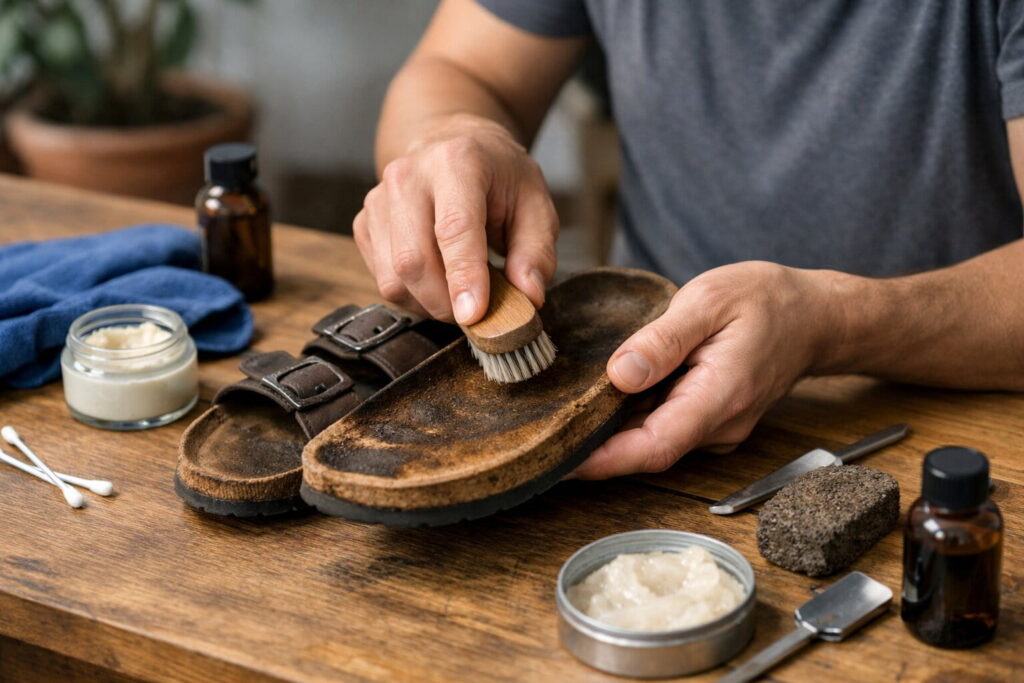
Step 1: Deep Cleaning the Dark Footbed
That dark footprint isn’t just dirt; it’s a combination of dead skin cells, natural oils, and sweat.
- The Fix: Create a paste using two parts water and one part baking soda. Gently scrub the suede footbed using an old toothbrush. Wipe it clean with a damp cloth and let it dry in a cool, shaded place.
- The Finish: Once completely dry, use a suede brush to restore the “nap” (the fuzzy texture) of the leather.
Step 2: How to Restore Cork Footbed Integrity
This is the most critical step. The cork-latex blend is the heart of the shoe, providing that custom orthopedic support. Over time, heat and dry climates cause the cork to dry out, crack, and chip away.
- The Fix: If the cork has lost its shine and feels dry to the touch, you need to apply a cork sealer (Kelly’s Cork Renew or Birkenstock’s own brand are excellent choices).
- Application: Paint a thin layer of the sealant onto the exposed cork. It will dry clear, leaving a protective, flexible shell that locks in moisture and prevents crumbling.
Step 3: Reviving the Uppers
Whether your straps are made of full-grain leather, suede, or Birko-Flor (synthetic), they need hydration.
- Leather: Wipe down with a damp cloth, let dry, and apply a high-quality leather conditioner.
- Suede/Nubuck: Use a suede eraser to rub out stains, followed by a vigorous brushing with a suede brush.
- Birko-Flor: Simply wipe down with mild soap and water.
Step 4: Fix Worn Birkenstocks at the Soles
Take a look at the bottom of your sandals. Are the heels worn down almost to the cork?
- The Fix: The outsoles are made of EVA (Ethylene-Vinyl Acetate), which is lightweight and shock-absorbing but prone to heel drag. If the tread is flat, a cobbler can easily sand down the old EVA and glue on a brand new sole. Do not wait until the cork starts rubbing on the pavement!
Material Deep-Dive: What Are You Actually Restoring?
To truly understand how to fix them, you need to know what you are working with. The unique comfort vs. durability trade-off of this footwear comes down to its anatomy.
- EVA (Ethylene-Vinyl Acetate): Used for the outsole. It’s incredibly light and absorbs shock beautifully for all-day wear, but it wears out faster than heavy rubber.
- Cork & Latex Core: The magic layer. It molds to your foot’s unique shape. It requires regular sealing to stay flexible.
- Jute: There are two layers of jute fiber (one above the sole, one below the suede lining) that provide strength and wick away moisture.
- Suede Lining: The top layer your foot touches. It is highly breathable but acts like a sponge for foot oils.
“Is restoring them actually worth it for all-day wear compared to buying new?” Absolutely. A newly restored footbed retains the custom molding of your foot, meaning you get Day-1 aesthetics with Day-500 comfort.
Pro-Tip Section: Retailer-Only Insights
After handling countless pairs over two decades, here are the insider secrets most buyers miss:
- The Bend Test: If you bend the sandal and the cork visibly cracks deeply down the middle, the structural integrity is compromised. A surface sealant won’t fix a broken spine.
- The Heat Death: The fastest way to destroy this footwear is leaving them in a hot car or drying them next to a radiator. Direct heat shrinks the EVA sole and turns the cork to dust.
- The Smell Check: If baking soda doesn’t remove the odor, you might have bacterial build-up in the jute layer. In extreme cases, a cobbler can entirely replace the suede footbed liner while keeping your molded cork intact.
DIY Restoration vs. Professional Cobbler
When should you do it yourself, and when should you hand it over to a professional?
| Task | DIY Feasibility | Estimated Cost | Best For |
|---|---|---|---|
| Cleaning Suede Footbed | Extremely Easy | $5 – $10 (Cleaning kits) | Routine seasonal maintenance. |
| Sealing the Cork | Very Easy | $10 – $15 (Cork Sealer) | Preventing cracks; do this twice a year. |
| Fixing Straps/Hardware | Moderate | Varies | Replacing a lost buckle or rivet. |
| Replacing EVA Outsole | Do Not Attempt | $40 – $65 | When tread is gone or heel is heavily dragged. |
| Full Footbed Replacement | Do Not Attempt | $60 – $80 | When cork is completely shattered or heavily rotted. |
Common Mistakes to Avoid
- Putting them in the washing machine: This will instantly ruin the glue, destroy the cork, and warp the leather. Never submerge them in water.
- Using standard shoe polish on Birko-Flor: Synthetic uppers don’t absorb polish like leather does; it will just create a sticky, messy film.
- Ignoring the heel drag: Allowing the rubber to wear down until you are walking directly on the cork will ruin the shoe beyond repair.
- Using direct heat to dry: Always let them air dry at room temperature.
Upgrade Your Restoration Kit (Expert Recommendations)
If you are ready to bring your sandals back to life, you’ll need the right tools. Check today’s best-rated shoe restoration supplies on Amazon or compare prices from leading online stores. * Premium Cork Sealer: Essential for locking in moisture.
- Suede Cleaning Kit: Includes the eraser and brass-bristle brush.
- Leather Conditioner: To keep straps supple and prevent cracking. (Note: Using high-quality, trusted brands for your cleaning supplies ensures you don’t accidentally stain the materials).
PAA-Style Questions (People Also Ask)
Can you use clear nail polish to seal Birkenstock cork? No, clear nail polish is too rigid and will crack as the shoe bends. Always use a flexible, latex-based cork sealer designed for footwear.
How do you get the smell out of Birkenstocks? Make a paste of baking soda and water, scrub the footbed gently, wipe clean, and let it dry completely in a well-ventilated area out of direct sunlight.
Is it worth resoling Birkenstocks? Yes. If the cork and uppers are in good condition, paying a cobbler $40-$60 for a new EVA outsole is much cheaper than buying a new $150 pair.
Can Birkenstocks get wet? While the EVA models are waterproof, classic cork and leather Birkenstocks should not be submerged. If they get wet, air dry them away from direct heat.
Why did my Birkenstock footbed turn black? The black color is a natural accumulation of sweat, natural foot oils, and dirt reacting with the suede lining over time.
FAQs
1. How often should I apply cork sealer to my sandals? You should apply a thin layer of cork sealer whenever the cork starts to look dull or feels dry to the touch. For frequent wearers, this is usually once every 4 to 6 months.
2. Can I replace the footbed of my Birkenstocks entirely? Yes. A skilled cobbler can remove the old cork footbed and replace it with a brand new one while keeping your beautifully broken-in leather uppers.
3. What is the best way to clean Birko-Flor straps? Birko-Flor is a durable synthetic material. The best way to clean it is simply wiping it down with a damp cloth and a drop of mild dish soap. Do not use harsh leather chemicals.
4. How do I fix a crack in the cork footbed? If the crack is minor, you can fill it with a heavy application of cork sealer or specialized cork repair glue. If the crack goes all the way through the sole, the footbed needs professional replacement.
5. Why are my leather straps feeling stiff and hurting my feet? Leather loses its natural oils over time, causing it to dry and stiffen. Applying a quality leather conditioner will soften the straps and prevent them from causing blisters.
6. Can I use baby wipes to clean the suede footbed? It is not recommended. Baby wipes often contain lotions, alcohol, or fragrances that can leave a residue on the suede and flatten the nap. Stick to baking soda and water or a dedicated suede cleaner.
7. How do you fix worn Birkenstocks that have lost their grip? When the EVA tread wears flat, the shoes become slippery. You cannot fix the grip at home; you must take them to a cobbler to have the outsole sanded off and a new EVA sheet applied.
8. Will cleaning the footbed change the shape of the shoe? No, surface cleaning with a damp brush and baking soda will not alter the molded shape of the cork. Only excessive water soaking or high heat will warp the structure.
9. Can I use a wire brush to clean the footbed? Avoid heavy wire brushes as they can tear the delicate suede lining. Use a soft nylon brush, an old toothbrush, or a specialized brass-bristle suede brush applied with very gentle pressure.
10. How long does a restored pair of Birkenstocks last? If you maintain the cork, condition the leather, and replace the EVA sole before it wears through, a well-restored pair can easily last another 3 to 5 years of regular global travel and daily walking.
At Urban Style Footwear, we believe in the perfect balance of comfort, style, and longevity. Taking care of your shoes isn’t just about aesthetics; it’s about supporting your health from the ground up.