
How to Deep Clean Birkenstocks at Home 2026: The Ultimate Guide to Wash Cork Footbeds Safely
If there’s one universal truth in the footwear world, it’s that a well-loved pair of Birkenstocks eventually develops that infamous, dark, shiny footprint. It’s the badge of honor of a comfortable shoe, but let’s be honest—it can get a little gross.
Between work commutes, summer travel, and daily errands, your sandals absorb sweat, street dirt, and natural skin oils. The result? A compressed, slippery footbed and a lingering odor. Just the other day, I saw a viral TikTok of someone literally pressure-washing their Boston clogs. I nearly dropped my phone. Please, don’t do that.
Running a physical shoe shop for over two decades—and dealing with the intense humidity of a coastal city like Chennai—has taught me exactly how natural materials react to moisture, heat, and dirt. We’ve handled thousands of customer repairs, and the number one issue is people destroying their premium footwear with terrible cleaning hacks.
Today, we’re going to walk through exactly how to deep clean Birkenstocks at home using safe, effective methods that protect your investment and keep your feet happy.
TLDR: Quick Answer Box for Deep Cleaning Birkenstocks
To deep clean Birkenstock footbeds safely at home, mix two tablespoons of water with one tablespoon of baking soda to form a paste. Gently scrub the suede footbed using an old toothbrush in circular motions. Wipe clean with a damp cloth, dry away from direct heat for 24 hours, and brush the suede to restore its nap.
Why This Topic Matters (And Why Your Sandals Deserve Better)
There’s a running joke on Reddit’s r/Birkenstocks that your sandals aren’t truly yours until the footbed looks like a prehistoric fossil. But leaving that layer of grime isn’t just an aesthetic issue; it’s a structural one.
When you spend $130+ on a pair of ergonomic sandals, you’re paying for the biomechanical support of cork and natural latex. Sweat and salt buildup actually degrade the latex binder over time, causing the cork to crumble.
Common mistakes buyers make worldwide include:
- The Washing Machine Sin: Submerging them in water dissolves the glue holding the EVA sole, cork, and leather together.
- The “Sun-Bake” Drying Method: Leaving wet sandals in direct sunlight shrinks the leather and cracks the cork instantly.
- Using Harsh Chemicals: Bleach or heavy laundry detergents strip the natural oils from the suede and leather uppers.
Whether you bought your shoes from a boutique or grabbed them during a late-night online shopping spree, taking care of them is non-negotiable if you want them to last.
The Ultimate Home Cleaning Method for Birks
Before we start, let’s understand the materials. A classic Birkenstock consists of an EVA (Ethylene-Vinyl Acetate) outsole, a cork-latex core, jute layers for moisture management, and a suede leather lining. Because you are dealing with organic materials, a delicate touch is required.
Here is the step-by-step framework to get them looking (and smelling) fresh.
Step 1: Prep and Dry Brush
Never introduce water to loose dirt. Use a stiff bristle shoe brush to rigorously brush the suede footbed and the leather/suede uppers. This removes the top layer of dried dust, pet hair, and loose grit.
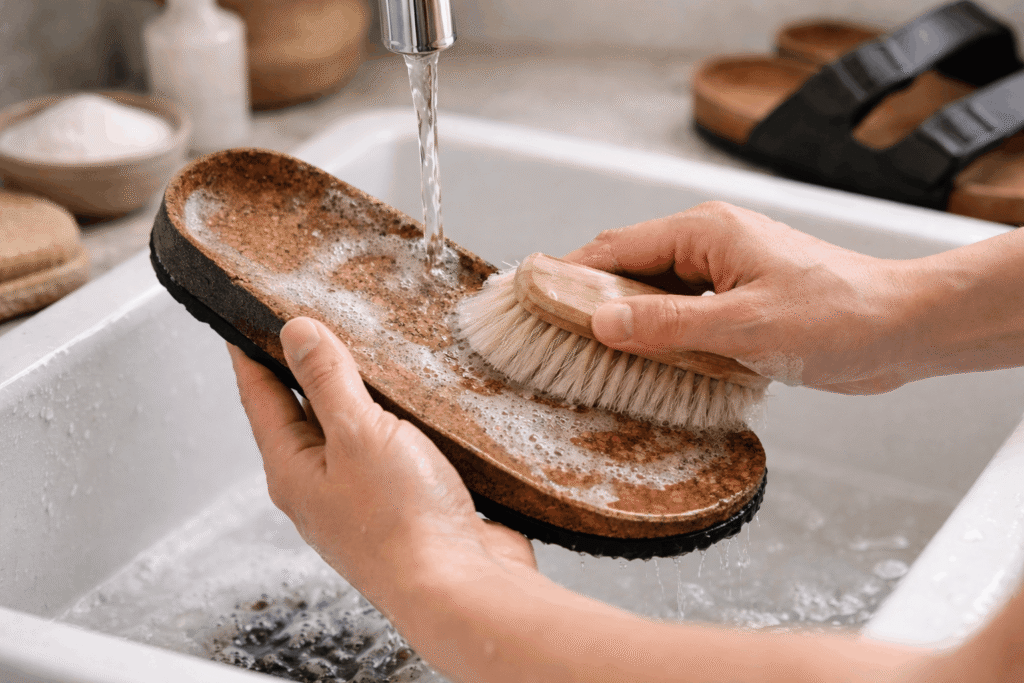
Step 2: How to Wash Cork Footbeds Safely
This is the core of the home cleaning method.
- Make the Paste: Mix a simple paste of baking soda and water (about a 2:1 ratio). It should have the consistency of toothpaste.
- Apply and Scrub: Using an old, soft-bristled toothbrush, apply the paste to the dark footbed. Gently scrub in small circular motions. You’ll notice the foam turning brown as it lifts the deeply embedded grime.
- Wipe, Don’t Rinse: Take a microfiber cloth dampened with lukewarm water and wipe the paste away. Do not hold the sandal under a running faucet. 4. Dry Properly: Stuff the straps with a little newspaper to hold their shape and let the sandals dry in a cool, well-ventilated room for at least 24 hours.
Step 3: Restoring the Suede Nap
Once completely dry, the suede footbed might feel a bit stiff or crunchy. This is normal. Take a suede eraser or a stiff suede brush and vigorously brush the footbed. This breaks up the matted fibers and restores that plush, velvety feel.
“Is this actually comfortable for all-day wear after washing?” Absolutely. Once you brush the nap back out, the footbed softens up almost immediately upon your next wear, returning to its custom-molded comfort.
Deep Cleaning Birkenstock Sandals: Tackling the Uppers
Different uppers require completely different care strategies. What works for an EVA waterproof sandal will ruin a natural leather one.
- Suede Uppers (e.g., Boston, Zurich): Keep water away. Use a specialized suede eraser to rub out stains, followed by a suede brush to restore the texture. If you spill oil on them, sprinkle cornstarch on the stain overnight to draw the oil out before brushing.
- Oiled Leather (e.g., Arizona, Milano): Wipe down with a slightly damp cloth. Once dry, massage a high-quality leather conditioner or saddle soap into the leather. This prevents the “dry rot” cracking that online shoppers frequently complain about after a year of heavy use.
- Birko-Flor / Birkibuc (Synthetic): These are the easiest. A simple wipe down with mild soapy water and a damp cloth will make them look brand new.
Pro-Tip Insight: Retailer Secrets to Shoe Longevity
Handling shoes day in and day out, you learn a few shortcuts and quality checks that the average buyer misses. Here are a few insider tips:
- The Squeeze Test for Cork Hydration: Give the exposed cork edge of your sandal a gentle squeeze. If it feels brittle or you see tiny flakes dropping off, the cork is drying out. You need to apply a layer of cork sealer immediately. Most people ignore the sealant, which is why their sandals split at the flex points.
- Baby Shampoo over Detergent: If your suede footbed is exceptionally stained and baking soda isn’t cutting it, skip the dish soap. Use a drop of mild baby shampoo mixed with water. It’s pH-balanced and won’t strip the natural dyes from the suede lining.
- Odor Management: If the smell is the main issue, don’t just mask it with Febreze. Lightly mist the footbed with a 50/50 mix of distilled white vinegar and water, then let it air dry. The vinegar neutralizes the odor-causing bacteria without damaging the leather. Check out Foot Health Facts to learn more about how bacteria thrives in unventilated footwear.
DIY Cleaning vs. Commercial Products
Should you buy the official care kits, or stick to the pantry? Here’s a factual breakdown based on value and function.
| Cleaning Component | DIY / Home Cleaning Method | Premium Commercial Alternative | Verdict |
|---|---|---|---|
| Footbed Cleaner | Baking Soda + Water Paste | Birkenstock Cleaner & Refresher | Tie. Baking soda is cheaper and works just as well for heavy grime. |
| Upper Stain Removal | Pencil eraser (for suede) | Nubuck/Suede Eraser Block | Commercial. Specialized erasers crumble at the right consistency to lift stains safely. |
| Cork Protection | None (PVA glue diluted is risky) | Dedicated Cork Sealer | Commercial. Do not skimp here. A proper cork sealer prevents the shoe from falling apart. |
| Leather Conditioning | Coconut Oil (can darken leather) | Neutral Leather Conditioner | Commercial. Shoe-specific conditioners absorb better and don’t turn rancid. |
Common Mistakes to Avoid (Don’t Ruin Your Investment)
What do most people regret after buying premium casual shoes online? Assuming they are indestructible. Avoid these routine killers:
- Choosing Convenience over Care: Throwing them in the dryer or leaving them in a hot car trunk will literally melt the EVA sole and shrink the leather.
- Ignoring the Sole Composition: If you wear down the EVA tread until you are walking directly on the cork, the shoe is dead. Get them resoled before you hit the cork layer.
- Over-Saturating: Suede acts like a sponge. If you use too much water during your deep clean, the moisture will get trapped in the jute layer, leading to mold and a foul, damp odor that you can never get rid of.
PAA-Style Questions (People Also Ask)
Can I wash my Birkenstocks in the washing machine? No. The agitation and submersion will break down the natural cork, dissolve the glue, and permanently ruin the sandals.
Does baking soda ruin the leather footbed? When used properly as a paste and thoroughly wiped away, baking soda safely lifts dirt without damaging the suede liner. Avoid leaving it on for more than 15 minutes.
How do I make the inside of my Birkenstocks stop smelling? A light mist of equal parts white vinegar and water neutralizes bacteria. Allow them to dry completely in a well-ventilated area away from the sun.
How often should I clean my Birkenstock footbeds? For daily summer wear, deep clean them once every two months. Brush the footbed dry with a stiff brush every couple of weeks to prevent grime buildup.
Can I use Dawn dish soap to wash cork footbeds safely? While effective on grease, heavy dish soaps can strip the natural oils from the suede. Mild baby shampoo is a much safer alternative for footwear.
Top Recommendations for Footwear Care
If you want to maintain the perfect balance of comfort, style, and durability, having the right tools makes all the difference. You don’t need a massive kit, just a few reliable items.
Ready to upgrade your shoe care game or grab a fresh pair for the season? * Check today’s best-rated shoe care kits on Amazon to find highly-reviewed suede erasers and brushes.
- Compare prices on replacement Birkenstocks from leading online stores if your current pair is past the point of no return.
- See top-reviewed comfort walking shoes for supportive alternatives during your travel days.
(Note: Purchasing through our links supports our editorial team at no extra cost to you, allowing us to keep sharing expert footwear advice.)
FAQs
1. What is the fastest home cleaning method for Birkenstocks? The fastest method is using a stiff suede brush to remove dry dirt, followed by a quick wipe-down with a damp, lint-free cloth.
2. Can I use baby wipes to clean the footbed? It’s not recommended. Many baby wipes contain moisturizers or alcohol that can leave a slick residue on the suede footbed or dry it out over time.
3. How do you fix a hardened Birkenstock footbed? If the suede has become hard from sweat or after washing, vigorously brushing it with a wire suede brush will break up the matted fibers and restore softness.
4. Why is the cork on my sandals cracking? Cork cracks when it dries out due to heat exposure or age. Applying a thin layer of liquid cork sealer every few months prevents this drying and crumbling.
5. How do you clean the white EVA soles? For the foam bottoms or full EVA Birkenstocks, a magic eraser or an old toothbrush with mild soapy water easily scrubs away scuffs and dirt.
6. Is hydrogen peroxide safe for cleaning sandals? No. Hydrogen peroxide is a mild bleach and can discolor the natural suede lining and weaken the structural integrity of the jute layers.
7. How long do Birkenstocks take to dry after washing? They usually require 24 to 48 hours to dry completely at room temperature. Never speed up the process with a hairdryer or radiator.
8. Can I wear my Birkenstocks while they are slightly damp? Do not wear them damp. The damp cork and suede will compress abnormally under your body weight, ruining the custom mold you’ve created.
9. What should I do if my sandals got soaked in the rain? Wipe off excess water, stuff the straps with newspaper to absorb moisture from the inside, and let them dry naturally in a shaded, breezy area.
10. Do Birkenstocks shrink if left in the sun? Yes. Direct, intense sunlight will cause the natural leather uppers to shrink and harden, and the EVA outsoles can warp and curl upwards.
Author Note: At Urban Style Footwear, we believe in extending the life of your favorite shoes. With a little maintenance and the right home cleaning method, your sandals can easily last for years of comfortable walking.