
Yonex vs Li-Ning Badminton Shoes India 2026 – Which Brand Wins?
30-Second Summary — TL;DR Quick Verdict
- Best Overall: Li-Ning Ranger Force – balanced grip, cushioning and durability for everyday indoor badminton.
- Best Value: Yonex Blaze-4i – proper Yonex court shoe at a lower price point than the flagship V-series.
- Best for Competitive/Long Rallies: Yonex V100-i / Yonex V200-i – TRU Cushion and Hexagrip built specifically for badminton footwork.
- Best for Speed & Fast Footwork: Li-Ning Ultra Speed – responsive cushioning for quick lateral movement.
The Retailer’s Reality: Why This Comparison Confuses Most Buyers
I’ve had this exact conversation across my counter more times than I can count — a customer walks in, foot sore from playing in running shoes, asking “Yonex ya Li-Ning, kaunsa better hai?” Online, it’s worse: inconsistent Indian sizing, ratings that don’t tell you about grip on a wooden court versus a synthetic one, and reviews written by people who’ve played twice.
In my shop, I’ve sold and re-soled hundreds of pairs from both brands across badminton clubs in India. Here’s the honest comparison — no brand loyalty, just what actually holds up on Indian courts.
Buying Guide: What Actually Matters in a Badminton Shoe
Midsole (EVA vs PU/TPU): Most Yonex and Li-Ning badminton shoes use EVA-based cushioning (Yonex calls theirs Power Cushion or TRU Cushion). EVA is lighter and more responsive for lateral badminton movement than the firmer PU/TPU foams you’ll find in running shoes — badminton needs quick rebound, not long-distance shock absorption.
Non-Marking Sole: This is non-negotiable for indoor Indian courts. Most clubs and academies in Mumbai, Delhi and Chennai won’t let you on court without a non-marking rubber sole — it protects the wooden/synthetic flooring and, more importantly, gives you the grip you need for sudden stops and lunges without sliding.
Arch Support & Heel Stability: Badminton involves constant direction changes, so heel lock and medial support matter more here than in a straight-line running shoe. If you overpronate or have wider Indian forefeet, look for shoes with a wider toe box rather than forcing a narrow fit.
One honest note: don’t fall for “limited time” discount countdowns on listings — always check the price on the day you buy rather than trusting a promised future discount.
For a broader look at how badminton-specific cushioning compares to running shoe tech, see our trail running shoes guide and our ASICS vs New Balance comparison.
Yonex vs Li-Ning: The Brand-Level Difference
Yonex is the more badminton-specialised brand — nearly its entire India shoe range is built around court sports, and its Power Cushion / TRU Cushion tech is genuinely tuned for badminton’s stop-start footwork. You pay a bit of a premium for that specialisation, and fit tends to run slightly narrow.
Li-Ning plays a broader indoor-sports game — badminton, but also general indoor training. In my experience their shoes tend to have a slightly roomier toe box (better for wider Indian feet) and sharper pricing, though long-term sole durability on rough synthetic courts can vary more pair to pair than Yonex’s.
Yonex vs Li-Ning Badminton Shoes India 2026: Grip, Comfort & Stability
1. Yonex Lumio 3 Power Cushion (Tennis/All-Court Shoes)
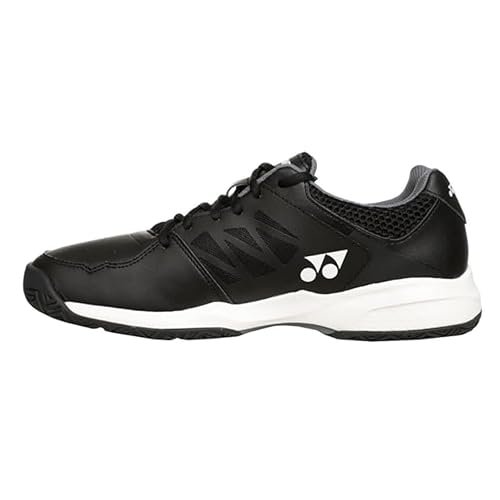
The Shop Owner’s Take: Straight up — this is a tennis/all-court shoe, not a dedicated badminton shoe, even though it sits in Yonex’s court range. It carries Power Cushion shock absorption and a durable all-court outsole, which works fine for casual or recreational badminton, but it’s not built with the Hexagrip or badminton-specific lateral support you get in the V-series. I’d only recommend this if you’re playing badminton occasionally on a mixed-use court, not for regular club play.
Best For: Recreational players who split time between tennis and casual badminton.
Pros:
- Good shock absorption for general court movement
- Lightweight and breathable
- Durable outsole for multi-surface use
Cons:
- Not built for badminton’s sharp lateral lunges — grip isn’t as sticky as the Hexagrip models
2. Yonex Blaze-4i
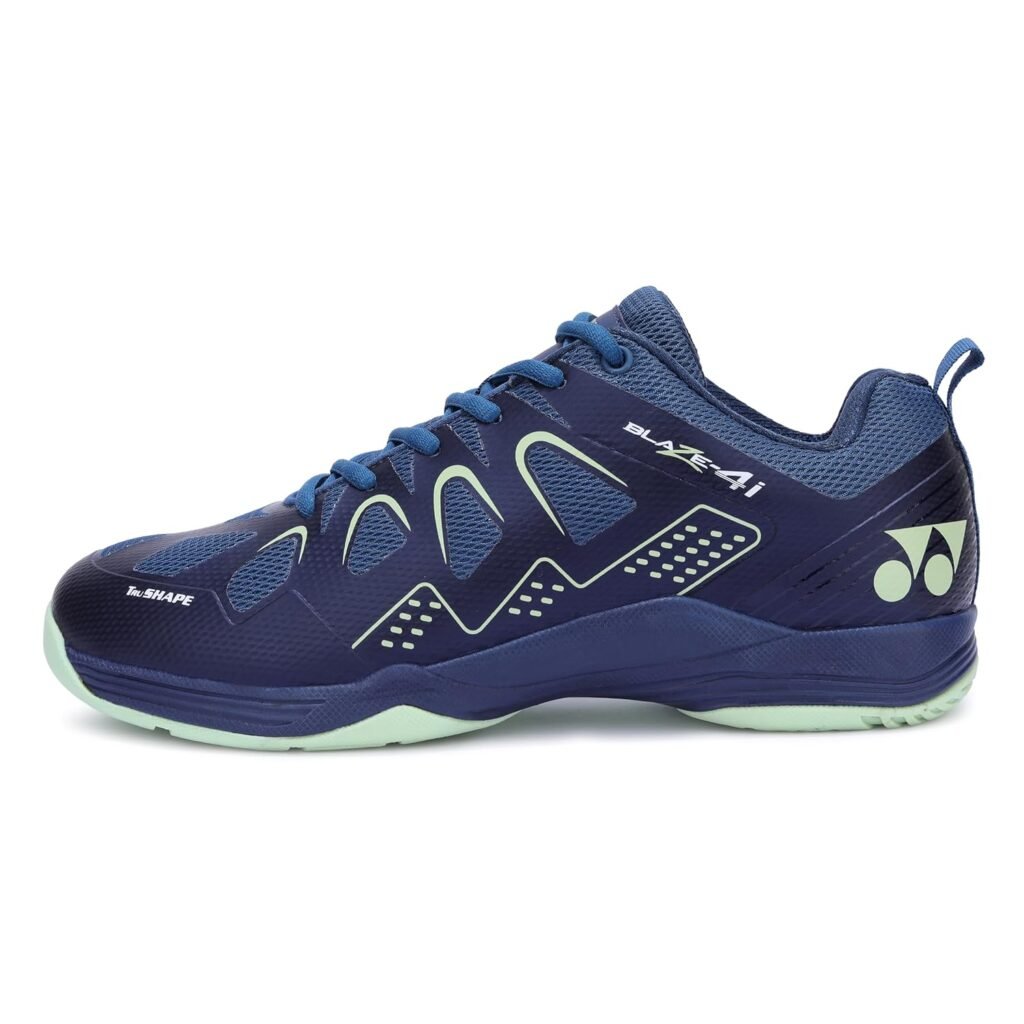
The Shop Owner’s Take: This is where Yonex’s badminton DNA actually shows up. Lightweight build, non-marking sole, and a Hexagrip-style outsole that holds well on indoor wooden and synthetic courts. Shock-absorbing cushioning handles jump-smashes reasonably well for a shoe at this price point. Fit runs slightly narrow — true to most Yonex badminton shoes.
Best For: Club-level players wanting genuine Yonex court performance without paying V-series pricing.
Pros:
- Non-marking sole with strong indoor grip
- Lightweight for quick footwork
- Good cushioning for the price
Cons:
- Narrow fit — not ideal if you have a wider Indian forefoot
3. Yonex V100-i Junior
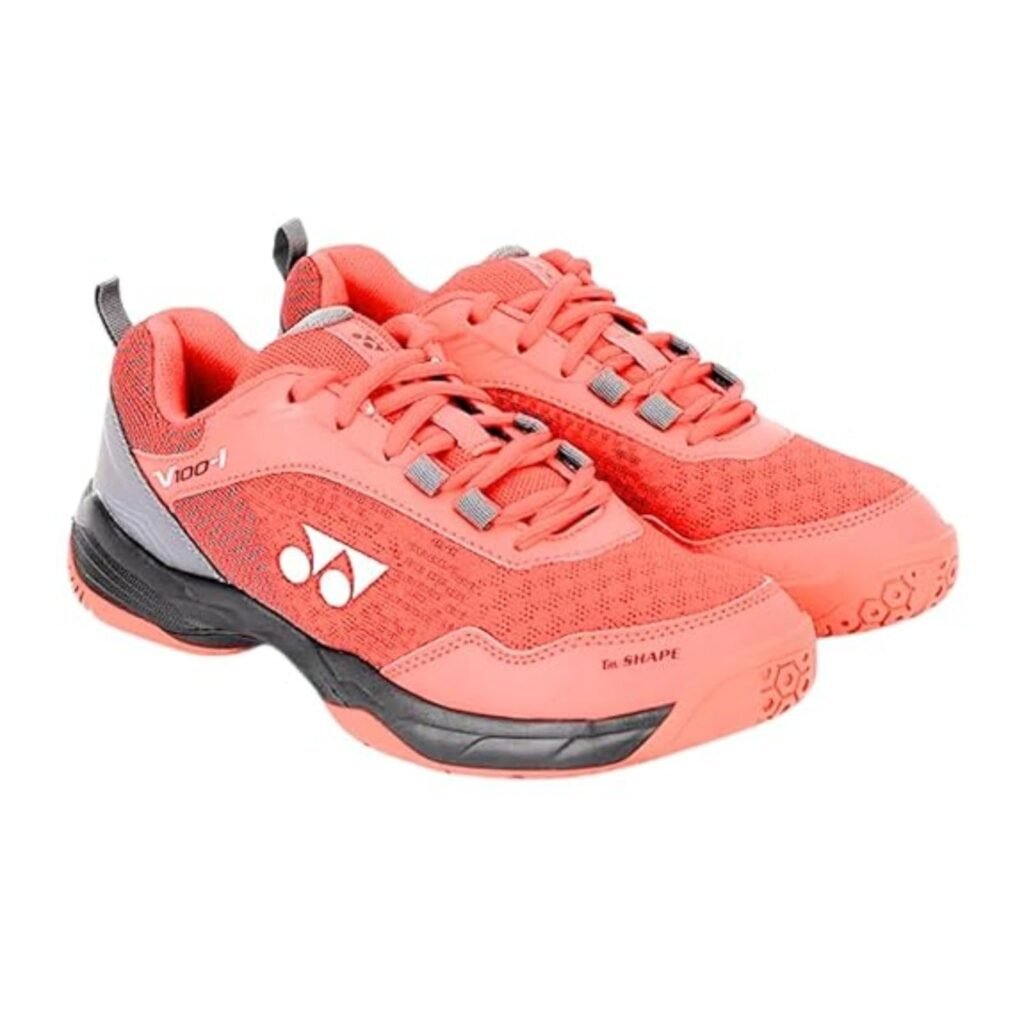
The Shop Owner’s Take: Made in India and it shows in the pricing — this is the one I recommend most to parents at academies. TRU Cushion plus Ergo Shape gives young players proper impact protection without an adult-shoe weight penalty, and the Hexagrip sole works across badminton, squash and table tennis, so it’s not a one-sport purchase for growing feet.
Best For: Junior players and academy students across multiple indoor sports.
Pros:
- Genuinely multi-sport (badminton, squash, TT, volleyball)
- Made in India — easier warranty/replacement experience
- Good cushioning for a junior-focused shoe
Cons:
- Sizing runs slightly small — order half a size up for growing feet
4. Yonex V200-i
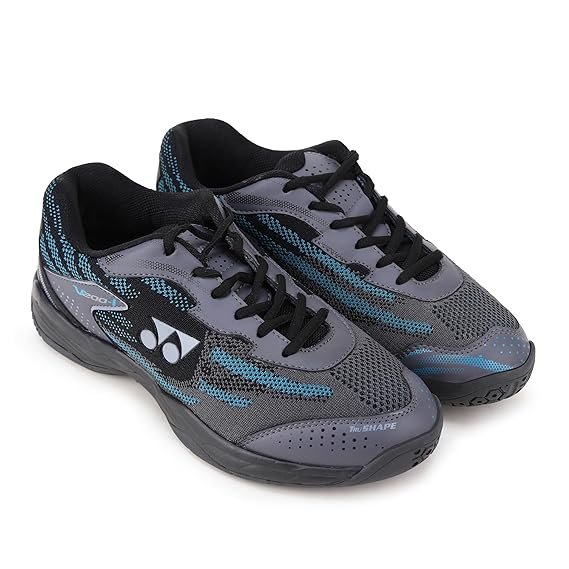
The Shop Owner’s Take: On paper this looks like a step up from the V100-i — high-grip sole, stable heel — but in-store feedback has been mixed, and the rating reflects that. It’s a solid, breathable everyday badminton shoe, just don’t expect the same cushioning refinement as the higher-end Yonex range.
Best For: Budget-conscious club players who want a dedicated (not multi-sport) badminton shoe.
Pros:
- Solid heel stability for lateral movement
- Breathable mesh upper
- Non-marking sole
Cons:
- Cushioning feels average compared to V100-i and the Blaze series at similar price
Li-Ning Badminton Shoes Reviewed
5. Li-Ning Ranger Force
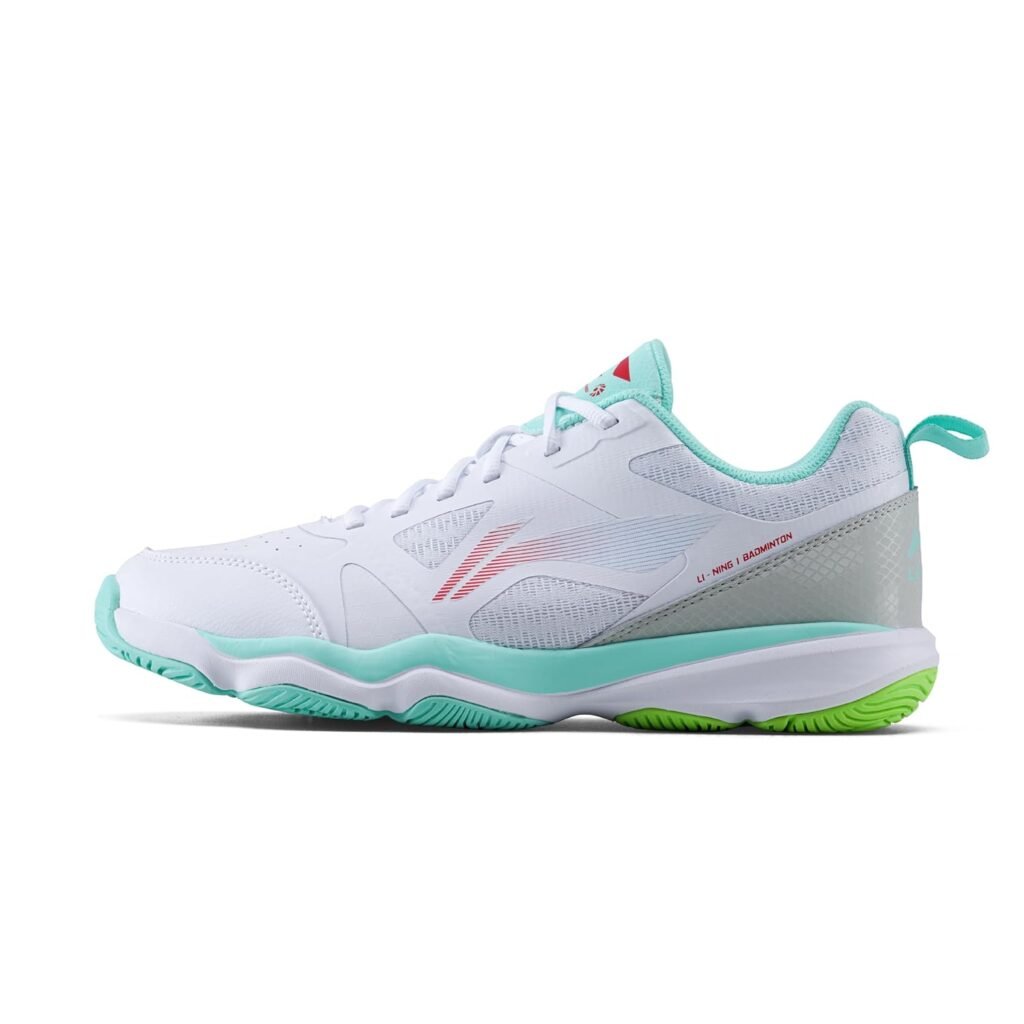
The Shop Owner’s Take: This is my go-to Li-Ning recommendation across most academies. Non-marking outsole with dependable court-focused traction, breathable upper that copes reasonably with Indian humidity, and it holds up well through a full training season. Fit is roomier than Yonex — good news if you’ve struggled with narrow toe boxes before.
Best For: Regular club/academy players wanting an all-round dependable shoe.
Pros:
- Reliable grip and durability for regular training
- Roomier fit for wider feet
- Good breathability for humid Indian conditions
Cons:
- Cushioning is decent but not as plush as Yonex’s Power Cushion at similar price
6. Li-Ning Halberd Strike
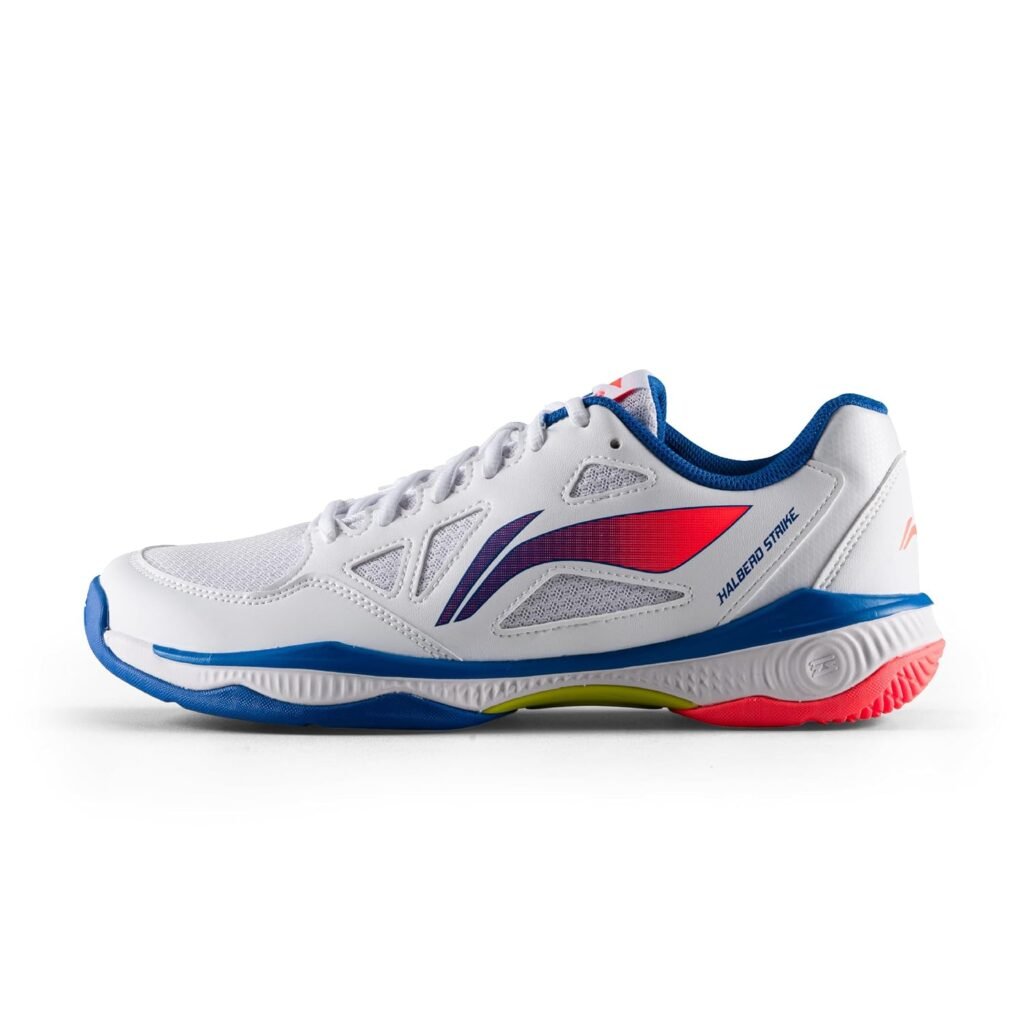
The Shop Owner’s Take: Similar profile to the Ranger Force — non-marking rubber, high-grip outsole — but this one’s marketed unisex and tends to run slightly wider through the midfoot. Good traction during rapid direction changes, which is what most rally-heavy Indian club players actually need.
Best For: Mixed-gender clubs, players who want a wider midfoot fit.
Pros:
- Strong grip during rapid direction changes
- Comfortable for long sessions
- Unisex sizing gives more fit flexibility
Cons:
- Nearly identical to Ranger Force on paper — hard to justify buying both
7. Li-Ning All Round Non-Marking
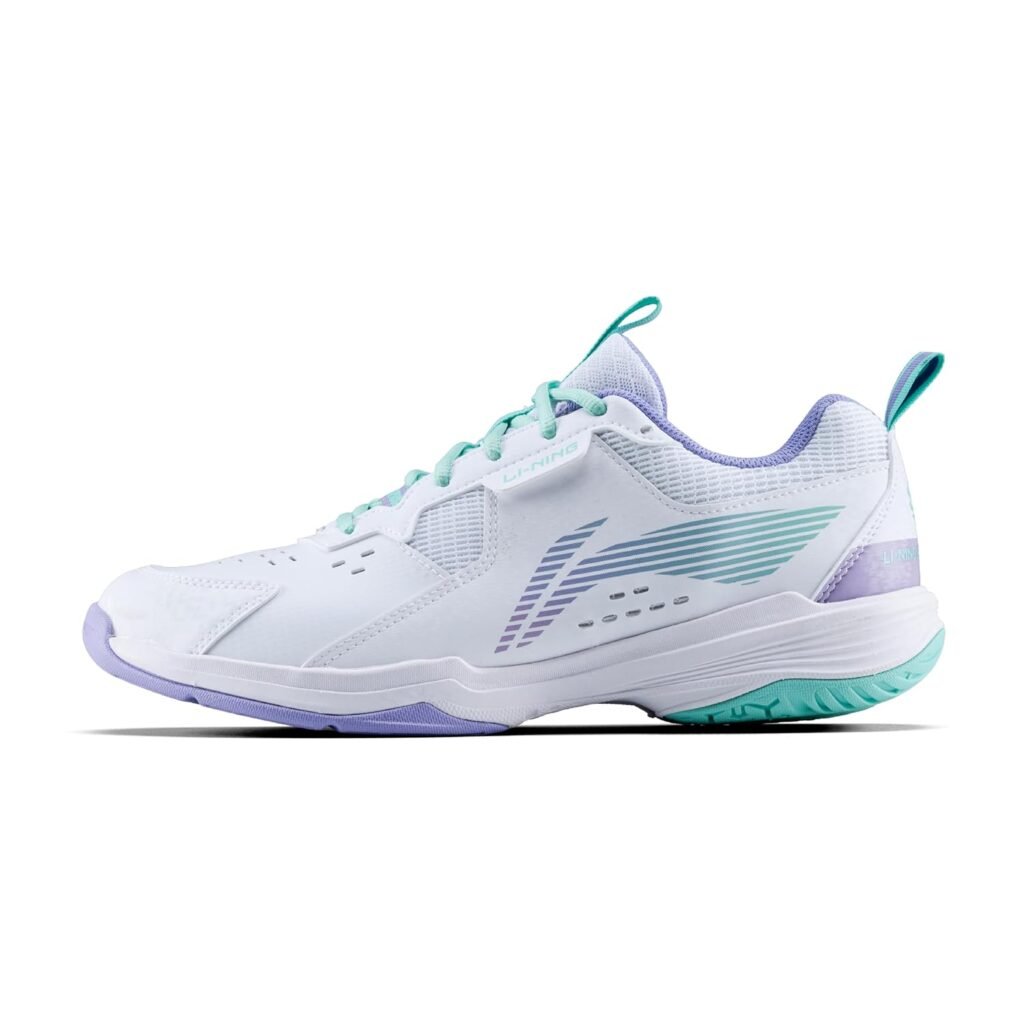
The Shop Owner’s Take: The high-rebound cushioning genuinely stands out here — noticeably springier underfoot than the Ranger Force, which helps on jump-smashes and lunges. Add the stable heel support and this is one of the better Li-Ning picks for players who jump a lot during rallies.
Best For: Attacking players who jump-smash frequently.
Pros:
- High-rebound cushioning absorbs jump impact well
- Stable heel for landing control
- Good all-round grip
Cons:
- The extra cushioning adds a touch more weight than the Ranger Force
8. Li-Ning Ultra Speed
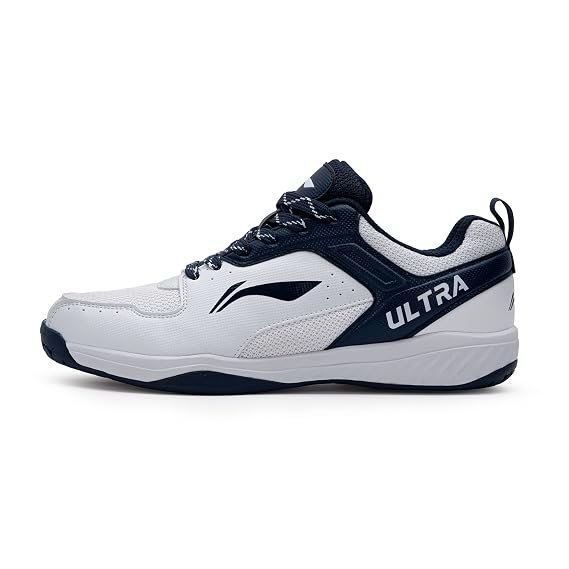
The Shop Owner’s Take: True to the name — this is the lightest-feeling shoe in the Li-Ning lineup here, with responsive cushioning that rewards fast footwork over raw impact protection. If your game is speed and quick returns rather than heavy jump-smashes, this is the pick.
Best For: Fast, footwork-heavy players prioritising speed over cushioning depth.
Pros:
- Very lightweight, agile feel
- Reliable indoor traction
- Responsive cushioning for quick starts and stops
Cons:
- Less cushioning depth — not ideal if you jump-smash often or have joint concerns
Head-to-Head Comparison Table
| Shoe | Rating |
Arch/Heel Support | Best Use Case |
|---|---|---|---|
| Yonex Lumio 3 | 3.9/5 | Moderate (all-court) | Casual/recreational, mixed tennis-badminton use |
| Yonex Blaze-4i | 4.0/5 | Good, narrow fit | Club-level badminton on a budget |
| Yonex V100-i Junior | 4.2/5 | Good, Ergo Shape | Junior players, multi-sport indoor use |
| Yonex V200-i | 3.7/5 | Good heel stability | Everyday dedicated badminton, budget |
| Li-Ning Ranger Force | 4.3/5 | Solid, roomier fit | Regular academy/club training |
| Li-Ning Halberd Strike | 4.3/5 | Solid, wider midfoot | Mixed clubs, wider feet |
| Li-Ning All Round | 4.2/5 | Strong heel support | Attacking, jump-smash players |
| Li-Ning Ultra Speed | 4.3/5 | Moderate, lightweight | Speed and footwork-focused players |
For price and current stock, always check each product’s Amazon.in page directly — live prices change and can’t be guaranteed in this post.
best badminton shoes india Real-World FAQ
1. Yonex or Li-Ning which brand is better for Indian badminton players?
Neither wins outright. Yonex edges ahead on badminton-specific cushioning tech (Power Cushion/TRU Cushion); Li-Ning edges ahead on fit for wider Indian feet and value pricing.
2. Are Yonex badminton shoes worth the extra price over Li-Ning?
If you play competitively 4+ times a week, yes — the cushioning tech holds up better. For casual/recreational play, Li-Ning gives comparable performance for less.
3. Do badminton shoes really need a non-marking sole?
Yes. Most Indian indoor courts and academies require it — it protects flooring and gives you the stop-start grip a running shoe sole can’t.
4. Can I use running shoes for badminton instead?
Not recommended. Running shoes are built for forward motion, not the lateral lunges and quick pivots badminton demands — you risk ankle rolls and poor court grip.
5. Which is better for wider Indian feet Yonex or Li-Ning?
Li-Ning generally runs roomier through the toe box and midfoot. Most Yonex badminton shoes fit narrower.
6. How often should I replace my badminton shoes?
For regular players (3–4 sessions/week), every 6–8 months, or sooner if the outsole tread or midfoot cushioning visibly flattens.
7. Are these shoes good for humid or monsoon conditions in cities like Mumbai or Chennai?
Both brands’ mesh uppers breathe reasonably well, but store shoes away from damp bags after monsoon sessions — trapped moisture breaks down EVA foam faster.
8. Is the Yonex Lumio 3 a proper badminton shoe?
Not really — it’s a tennis/all-court shoe. Fine for casual badminton, but a dedicated Yonex badminton model (Blaze/V-series) is the better choice for regular play.
9. What’s the difference between Power Cushion and TRU Cushion in Yonex shoes?
Both are Yonex’s shock-absorption tech; TRU Cushion tends to appear on the more badminton-focused V-series and junior models, tuned closer to court-specific movement than the broader Power Cushion line.
10. Are expensive badminton shoes actually worth it for recreational players in India?
Not always. Mid-range options like the Blaze-4i or Ranger Force cover 90% of recreational needs — spend more only once you’re training competitively and stressing the shoe regularly.
Final Verdict
If you want the most badminton-specific cushioning and don’t mind a narrower fit → go with the Yonex V100-i or Blaze-4i.
If you want a roomier fit, solid all-round durability, and slightly better value → go with the Li-Ning Ranger Force.
If you jump-smash often → the Li-Ning All Round with its high-rebound cushioning is worth the look.
If you’re buying for a junior player → the Yonex V100-i Junior is the more versatile, Made-in-India pick.
Check the latest prices and stock on Amazon.in before deciding — availability and pricing shift often.
Related reading: Nike vs Adidas Running Shoes India | Skechers vs Nike Running India | ASICS vs New Balance India | Best Trail Running Shoes India | Best Puma Running Shoes India