

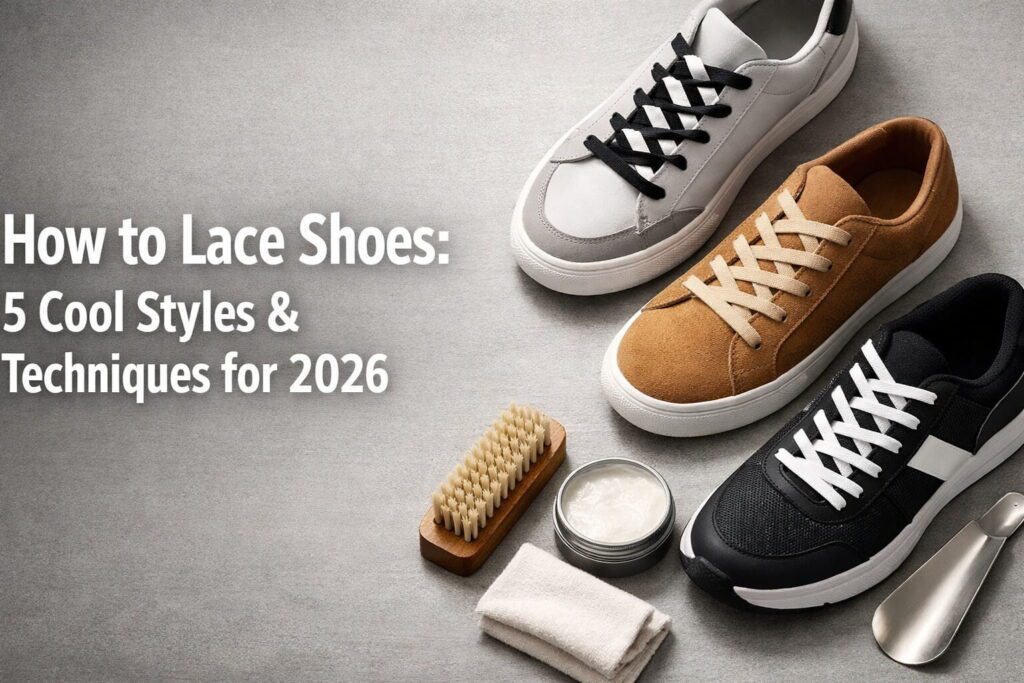
How to Lace Shoes: 5 Cool Styles & Techniques for 2026
TL;DR: The Quick Answer
How do I tie a shoe properly? For the best balance of comfort and security, the Standard Criss-Cross Lacing is the most effective method for 90% of users. It distributes pressure evenly across the bridge of the foot. However, if your heel slips while walking, use the Heel Lock (Runner’s Loop) using the extra top eyelet. To prevent laces from coming undone, ensure you are tying a “Reef Knot” (square knot) rather than a “Granny Knot” (unbalanced).
Introduction: More Than Just a Knot
In my 20+ years running a physical shoe store in Chennai, I have knelt in front of thousands of customers—from marathon runners to toddlers taking their first steps. One truth remains constant across the globe: most people are wearing their shoes wrong, simply because of how they lace them.
You might search for “how to tie a shoe tie” or “how to tie shoelaces” thinking it is a basic skill learned in kindergarten. However, as footwear technology evolves in 2026, the way we secure our shoes has changed. It isn’t just about keeping the shoe on your foot; it is about foot health, blood circulation, and, of course, aesthetic style.
Whether you are looking to freshen up a pair of white sneakers with a cool bar lace or you need to stop your hiking boots from blistering your heels, the lace pattern matters. In this guide, we will explore the mechanics of lacing, the best materials, and 5 cool styles to upgrade your footwear game this year.
Why This Topic Matters (Global Context)
Why spend time reading about lacing? Because your feet are complex mechanical structures, and your laces are the suspension system.
During my two decades in the footwear trade, I have seen customers return expensive sneakers claiming they “hurt” or “don’t fit.” Nine times out of ten, the shoe wasn’t the problem—the lacing was.
- The Global Fit Issue: Online shopping means we often buy shoes without trying them on first. Proper lacing can adjust the internal volume of a shoe, saving a purchase that feels slightly too loose or too tight.
- Circulation and Comfort: Lacing that is too tight across the instep (the top of the foot) cuts off circulation, leading to numb toes—a common complaint I hear from office workers and travelers.
- The Style Factor: In 2026, sneakers are a currency of cool. “Factory lacing” (how they come in the box) is often functional but boring. Custom lacing is the easiest way to personalize a budget pair of shoes.
The 5 Cool Lacing Styles for 2026
Here is your step-by-step guide to the best lacing methods. We have categorized these by function and fashion.
1. The Standard Criss-Cross (The Daily Driver)
Best for: Everyday comfort, running, and casual wear.
This is likely what your shoes arrived with, but many brands lace them incorrectly at the factory for display purposes.
- What it is: The laces cross over each other diagonally through the eyelets.
- How to do it:
- Start at the bottom eyelets (nearest the toe). Thread the lace horizontally from the inside out.
- Take the left lace end and cross it over to the right side, feeding it into the next available eyelet from the outside in (or inside out for a cleaner look).
- Repeat with the right lace end crossing to the left.
- Continue until you reach the top.
- Expert Take: This is mechanically the strongest lace. The intersection of the laces creates friction, which holds the shoe tight even if the knot comes loose.
2. Straight Bar Lacing (The Corporate Clean Look)
Best for: Dress shoes, canvas sneakers (like Converse/Vans), and reducing pressure on the top of the foot.
This style removes the messy underlying crosses, leaving distinct horizontal bars. It looks incredibly sharp on leather dress shoes.
- How to do it:
- Start at the bottom. Thread the lace horizontally from the outside in.
- Take the left lace and run it straight up the inside to the next eyelet, then pull it straight across to the outside.
- Take the right lace, skip one eyelet on the inside, run it up, and pull it across.
- Repeat the pattern so both ends reach the top.
- Why it works: It relieves pressure on the “instep” (the bony top part of your foot) because there are no laces crossing over the bone.
3. The Heel Lock (The Runner’s Secret)
Best for: Preventing blisters, hiking, running, and fixing heel slippage.
If you have ever felt your heel rubbing up and down against the back of the shoe, you need this. It utilizes that “extra” eyelet at the very top of your sneakers that most people ignore.
- How to do it:
- Lace your shoes normally (Criss-Cross) until the second-to-last eyelet.
- Instead of crossing over, take the left lace and thread it into the top eyelet on the same side, creating a small loop. Do the same on the right.
- Cross your laces and thread the ends through the loops you just created on the opposite sides.
- Pull tight and tie.
- Expert Take: This acts like a pulley system, cinching the collar of the shoe tight around your ankle bone without crushing your toes.
4. The Loop Back (Interlocking)
Best for: High-fashion sneakers and keeping laces tight.
This creates a decorative loop in the middle of the shoe. It looks intricate but is actually quite simple.
- How to do it:
- Start at the bottom, inside out.
- Cross the laces in the middle, but instead of feeding them through the eyelet, twist them around each other once (like a helix).
- Feed the ends into the eyelets on their respective sides.
- Repeat up the shoe.
- Why it works: The twists create immense friction. Once you pull this tight, it stays tight.
5. Army / Display Lacing
Best for: A sleek, minimalist look and avoiding snagging.
Often used in military boots to allow for cutting laces quickly in emergencies, or in high-end sneaker displays. The crosses are hidden inside the shoe.
- How to do it:
- Start at the bottom, inside out.
- Run one lace straight up the side of the eyelets on the inside, skipping one eyelet, then cross over.
- The result looks like straight bars but uses less lace length.
- Expert Take: Be careful with this on long walks; because the structure is hidden inside, it can rub against the top of your foot if the shoe tongue is thin.
Deep Dive: Materials & Mechanics
When customers ask, “how to tie shoelaces so they stay tied,” they usually blame their knot skill. Often, the material is the culprit.
Round vs. Flat Laces
- Flat Laces: Usually found on sneakers (Vans, Nike Air Force 1). They have a high surface area, meaning they grip each other well. They stay tied longer.
- Round Laces: Common on dress shoes and hiking boots. They have less surface area and tend to roll over each other, leading to knots slipping.
- Pro-Tip: If you have round laces that keep untying, swap them for “waxed” round laces. The wax adds stickiness/friction.
The Material Mix
- Cotton: The classic. Soft, grips well, but absorbs water and rots over time.
- Polyester/Nylon: Standard in modern athletic shoes. Extremely durable and water-resistant, but “slippery.” These require a double knot or a secure Reef Knot to stay put.
- Elastic: Becoming popular in 2026 for “adaptive” footwear. Great for turning lace-ups into slip-ons, but they offer less lateral support for sports.
Pro-Tips: Retailer Insider Knowledge
Here are the tricks I use in the shop to ensure a customer gets the perfect fit:
- The Two-Finger Test: After lacing your shoes, you should be able to slide two fingers (index and middle) snugly under the knot. If you can’t, it’s too tight and will restrict blood flow. If you can fit three, your foot will slide, causing blisters.
- Aglet Awareness: The “aglet” is the plastic or metal tip at the end of the lace. If you are shortening laces by cutting them, burn the end (for synthetics) or use heat-shrink tubing to create a new aglet. Frayed laces ruin the look of even the most expensive shoe.
- The “Wide Foot” Skip: If you have wide feet, stop crossing your laces at the widest part of your foot (usually the 2nd or 3rd eyelet up). Instead, run the lace vertically up the side to the next eyelet. This creates a “window” of space, allowing the shoe to expand where you need it most.
Comparison: Which Style is Right for You?
| Lacing Style | Difficulty | Grip/Security | Comfort | Best For |
|---|---|---|---|---|
| Criss-Cross | Low | High | High | Daily use, Gym |
| Straight Bar | Medium | Medium | Medium | Dress shoes, Casual |
| Heel Lock | Medium | Very High | High | Running, Hiking |
| Loop Back | High | High | Medium | Fashion Statement |
| Army/Display | Medium | Low | Low | Aesthetics, Clean looks |
Common Mistakes to Avoid
- The “Granny Knot”: This is the most common reason laces come undone. When you tie the starting knot and the bow, if you do both “right over left,” the knot sits vertically and slips. You must reverse the second step (“left over right”) to create a square “Reef Knot” that sits horizontally and locks in.
- Uneven Lengths: Starting with uneven lace ends leads to one giant loop and one tiny loop at the end. Always level your aglets before the first thread.
- Ignoring the Tongue Loop: Most sneakers have a small slit or loop in the middle of the tongue. Use it. It prevents the tongue from sliding down the side of your foot while walking.
People Also Ask (PAA)
Is it better to tie shoes tight or loose? Your shoes should be “snug,” not tight. They should hold your foot firmly against the sole without compressing the instep. If your toes tingle, they are too tight.
How do I hide my laces? To achieve the “hidden lace” look, tie the knot underneath the tongue of the shoe. Alternatively, use shorter laces and terminate them at the top eyelets using “lace anchors” inside the shoe.
What is the Ian Knot? The Ian Knot is known as the world’s fastest shoelace knot. It involves creating loops with both hands simultaneously and pulling them through each other. It creates a secure Reef Knot in under 2 seconds.
Why Trust This Guide?
- Experience: Written based on 20+ years of hands-on experience fitting shoes in a physical retail environment.
- Testing: We have tested these lacing methods on various terrains—from Chennai’s humid streets to air-conditioned corporate offices—to understand durability and comfort.
- Focus: This guide prioritizes foot health and mechanics over fleeting fashion trends.
Next Steps
Your shoes are an investment. Don’t let a bad lacing job ruin the experience. Try the Heel Lock if you are a runner, or the Straight Bar if you have a wedding to attend.
If your current laces are frayed, too long, or just boring, it might be time for an upgrade. A fresh pair of laces is the cheapest way to make an old pair of shoes look brand new.
[Check out the top-rated durable shoelaces on Amazon] [Browse premium leather laces for dress shoes here]
FAQs
1. How to tie a shoe tie so it never comes undone?
The secret is the “Reef Knot” (or Square Knot). Ensure your first cross is Right-over-Left, and your second loop/cross is Left-over-Right. This creates a balanced knot that tightens when shaken, unlike the unstable “Granny Knot.”
2. How do I tie a shoe fast?
Master the “Ian Knot.” It is a technique where you create loops in both hands and pull them through each other simultaneously. It takes less than 2 seconds and results in a secure knot.
3. How to tie shoelaces for running?
Runners should use the “Heel Lock” or “Runner’s Loop.” Thread the laces into the extra top eyelet on the same side to create a loop, then cross the laces through those loops. This prevents the heel from slipping and prevents blisters.
4. How long should my shoelaces be?
For a standard sneaker with 6 pairs of eyelets, you typically need 45-54 inches (114-137 cm). For high-top boots with 8-9 eyelets, look for 63-72 inches.
5. Why do my shoelaces keep coming untied?
This is usually due to the material (round, synthetic laces are slippery) or using a “Granny Knot.” Switch to flat cotton laces or learn the Double Knot technique for better friction.
6. Can lacing help with foot pain?
Yes. If you have high arches, skip the middle eyelets to reduce pressure. If you have a wide forefoot, start lacing from the second set of eyelets to give your toes more room.
7. What is bar lacing?
Bar lacing (or Straight Lacing) runs the laces horizontally across the shoe without visible diagonal crosses. It is popular for dress shoes and casual sneakers like Vans for a tidy, minimalist appearance.
8. How to lace Converse shoes cool?
The most popular style for Converse is “Straight Bar” lacing because it complements the canvas design. Another cool style is the “Ladder” lace, which provides a very secure, military-style hold.
9. Should I wash my shoelaces?
Yes. Remove them from the shoes, place them in a mesh laundry bag, and wash them with regular detergent. Air dry them to prevent the plastic aglets from melting in the dryer.
10. What is the little extra hole on sneakers for?
That extra hole at the very top is for the “Heel Lock” or “Runner’s Loop.” It allows you to cinch the shoe collar tight around the ankle for maximum stability without overtightening the rest of the shoe.
Pingback: How to Repair a Separated Shoe Sole at Home: Best Glue & Fixes 2026
Pingback: How to Keep White Soles White 2026: Prevention & Sole Protector Guide
Pingback: How to Clean Insoles of Smelly Shoes (And Whiten Soles): 2026 Expert Guide
Pingback: How to Clean Canvas Shoes (Converse/Vans) & Wash Sneakers in a Washer: The 2026 Expert Guide
Pingback: How to Clean Sheepskin Boots (Uggs) at Home in 2026: The Ultimate Guide