

How to Clean Sheepskin Boots (Uggs) at Home in 2026: The Ultimate Suede Brush & Care Guide
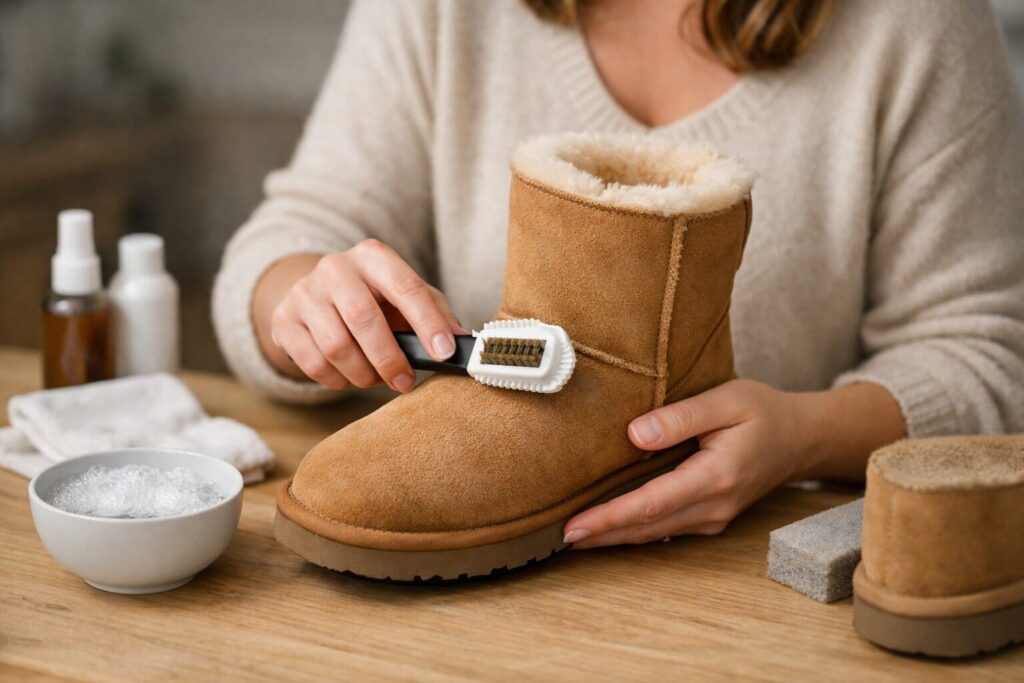
If you own a pair of sheepskin boots—whether they are iconic Uggs or another premium brand—you already know the universal footwear problem they present. They offer unmatched warmth, incredible comfort, and a cozy global lifestyle appeal perfect for travel, working from home, or running daily errands. But the moment you step into a puddle, splash coffee on them, or encounter winter slush, that plush exterior turns into a nightmare.
Over the last 20+ years of running a physical shoe store and handling thousands of customer interactions, I’ve seen countless ruined sheepskin boots. People treat them like canvas sneakers or standard full-grain leather, tossing them into washing machines or scrubbing them with harsh household chemicals.
In this comprehensive guide, we are going to walk through the exact, professional-grade steps to rescue your footwear using the right tools, including a dedicated suede cleaning kit, so you can protect your investment and keep your boots looking fresh season after season.
TL;DR: Quick Answer Box
How do you safely clean sheepskin boots and Uggs? To safely clean sheepskin boots, lightly dampen the entire surface with cold water, apply a specialized suede cleaner using a damp sponge, and gently scrub in a circular motion. Stuff the boots with plain paper to hold their shape, let them air dry away from direct heat for 24 hours, and finish by brushing the nap in one direction using a dedicated ugg suede brush to restore the soft texture.
Why This Topic Matters: A Global Footwear Perspective
Look, sheepskin boots are an investment. Whether you’re a commuter dealing with unpredictable city streets or someone looking for maximum foot comfort during long-haul flights, these boots are a staple. But here is what 20 years of hands-on shop experience reveals: most buyers completely misunderstand the materials they are wearing.
A common online shopping challenge is that brands sell you on the look and feel of the boots, but rarely provide a realistic education on maintenance. Consequently, buyers make fatal mistakes. They assume a heavy-duty scrub will remove a stain, not realizing that aggressive friction permanently destroys the delicate nap of sheepskin. They assume heat will dry them faster, only to watch the natural skin shrink, crack, and permanently alter the fit of the boot.
This guide matters because extending the life of your footwear isn’t just about aesthetics; it’s about maintaining the structural integrity that supports your foot health and getting the maximum value out of your hard-earned money.
Understanding the Anatomy of Your Boots
Before you start scrubbing, you need to understand what you are actually working with.
Suede vs. Twin-Face Sheepskin
Most high-quality Uggs and similar boots use “twin-face sheepskin.” This means it’s a single piece of material: fleece on the inside for insulation and temperature regulation, and a treated, suede-like finish on the outside.
Because the exterior is essentially a heavily buffed skin, it is incredibly porous. It absorbs oils, water, and dirt almost instantly. This is why a standard shoe brush won’t work. You need a specialized suede cleaning kit for shoes to lift the dirt without tearing the fragile fibers.
The Soles: EVA vs. TPR
While you focus on the upper, don’t ignore the soles. Most lightweight sheepskin boots utilize EVA (Ethylene-Vinyl Acetate) soles for cloud-like comfort, while more durable, weather-resistant models might use TPR (Thermoplastic Rubber).
- Why does this matter for cleaning? Harsh chemical cleaners or bleach can eat away at EVA foam, causing the sole to compress prematurely and ruining the shoe’s shock absorption. Always keep your cleaning solutions strictly on the suede upper.
The Essential Toolkit: What You Actually Need
If you want to do this right, you need the proper tools. Do not substitute these with things under your kitchen sink.
- A Premium Suede Brush: Specifically, you want a brush with soft brass wire bristles wrapped in synthetic or natural hair. An ugg suede brush or a similarly branded equivalent is designed to provide just enough friction to lift the nap without gouging the leather.
- A Suede Eraser: Think of this as a pencil eraser for scuffs and dry stains.
- Specialized Suede/Sheepskin Cleaner: Never use laundry detergent or dish soap.
- A Clean, Damp Sponge: For even application.
- Plain Paper or Shoe Trees: For stuffing the boots so they retain their shape while drying.
Step-by-Step: How to Clean Your Sheepskin Boots
Step 1: The Dry Brush (Preparation)
Before any liquid touches your boots, you must remove the loose surface dirt. Take your suede brush and gently brush the entire boot in a single direction. This opens up the nap and removes dried mud, dust, and debris.
Real-World Shop Story: I once had a customer bring in boots that looked permanently stained with mud. Instead of a wet clean, we simply spent 10 minutes with a high-quality dry brush. The dirt had dried on the surface and hadn’t penetrated the skin. A wet sponge would have pushed that mud deep into the leather, ruining them forever.
Step 2: Spot Treat with a Suede Eraser
For isolated scuffs, water lines, or small greasy spots, use your suede eraser. Rub it directly onto the spot as you would erase pencil on paper. Brush away the rubber shavings.
Step 3: Evenly Dampen the Surface
Here is the most critical step where most people fail. If you only wet the stained area, you will create a permanent water ring. You must evenly dampen the entire boot. Dip a clean sponge in clean, cold water. Wring it out so it’s damp, not dripping. Gently dab the entire exterior of the boot until the color darkens uniformly.
Step 4: Apply the Cleaner
Apply a small amount of your specialized cleaner to the damp sponge (never apply cleaner directly to the boot). Gently scrub the boot in circular, light motions. Let the cleaner do the work; don’t use aggressive elbow grease.
Step 5: Rinse the Sponge and Wipe
Rinse your sponge completely clean of soap. Wring it out, and gently wipe away the soapy residue from the boots. You may need to do this two or three times.
Step 6: Stuff and Air Dry
Stuff the toes and shafts of the boots with plain, unprinted paper (newsprint will transfer ink to the wet interior fleece) or a well-fitting shoe tree. Crucial Rule: Let them dry naturally for 24 to 48 hours in a cool, well-ventilated area. Never place them near a radiator, under a hair dryer, or in direct sunlight.
Step 7: Restore the Nap
Once the boots are 100% bone dry, they will feel stiff and look a bit flat. Take your suede cleaning kit brush and gently brush the entire boot in one uniform direction. This fluffs the fibers back up, restoring that buttery soft texture.
Pro-Tip Section: Retailer-Only Insights
After examining the aftermath of thousands of DIY shoe-cleaning disasters, here are a few insider secrets most brands won’t tell you:
- The Chalk Trick for Grease: If you drop a french fry or spill oil on your boots, immediately cover the spot with plain white chalk powder or cornstarch. Leave it overnight. The powder absorbs the oil out of the porous leather. Brush it off the next day.
- The “Scratch Test” for Quality: Before buying an expensive suede cleaning kit, check the brush on the back of your hand. If the bristles scratch your skin painfully, they are too stiff for premium sheepskin and will cause “balding” on your boots.
- Deodorizing the Fleece: Never spray chemical deodorizers inside the boot. Instead, sprinkle two tablespoons of baking soda into the dry boot, shake it around to coat the fleece, leave it overnight, and vacuum it out the next morning.
Comparison Table: DIY Methods vs. Proper Kits
| Feature | Household DIY (Dish Soap + Toothbrush) | Dedicated Suede Cleaning Kit |
|---|---|---|
| Material Safety | Low (Harsh surfactants dry out natural oils) | High (pH balanced for animal skins) |
| Nap Restoration | Poor (Toothbrushes mat the fibers down) | Excellent (Multi-texture bristles lift fibers) |
| Color Fading | High Risk (Chemicals strip natural dyes) | Low Risk (Formulated to preserve color) |
| Cost | “Free” | $15 – $30 (A small price to save $150 boots) |
| Long-Term Durability | Degrades stitching and glue over time | Prolongs the lifespan of the upper |
Common Mistakes to Avoid
- Machine Washing: This is the quickest way to ruin the glue binding the upper to the sole and permanently deform the leather.
- Using Direct Heat: Artificial heat causes the natural sheepskin to shrink rapidly, resulting in a tight, uncomfortable fit and cracked leather.
- Wrong Size Assumptions Post-Wash: People panic when their boots feel tight after a proper wash and dry. Don’t worry; sheepskin naturally tightens slightly when exposed to water but will relax and stretch back to your foot shape after an hour of wear.
- Skipping the Protector Spray: Cleaning is only half the battle. Once dry and brushed, always apply a water-and-stain repellent designed specifically for suede.
People Also Ask
Can I put my Uggs in the washing machine? No. Machine washing will destroy the glue holding the shoe together, warp the shape of the boot, and strip the natural oils from the sheepskin.
How do you get water stains out of sheepskin? To remove a water stain, you must dampen a sponge and lightly wet the entire boot surface uniformly to blend the stain, then let it air dry.
Is baby powder safe for grease stains on Uggs? Yes, baby powder or cornstarch is highly effective. Apply a mound of powder over the fresh grease stain, leave it for 24 hours to absorb the oil, and brush it away.
Do I need a specific Ugg suede brush? While it doesn’t have to be the official brand name, you absolutely need a brush specifically designed for suede, which features softer bristles that won’t tear the delicate nap.
How long do sheepskin boots take to dry? Depending on the humidity of your environment, sheepskin boots typically take between 24 and 48 hours to air dry completely at room temperature.
Can you use baking soda to deodorize Uggs? Yes. Sprinkle baking soda onto the dry inner fleece, let it sit overnight to absorb moisture and odors, and vacuum it out with a hose attachment the next day.
Moving Forward: Maintain Your Investment
You don’t need to be a cobbler to keep your footwear looking pristine. By understanding the limitations of twin-face sheepskin and utilizing a proper suede cleaning kit, you can easily double the lifespan of your favorite winter boots.
Remember, prevention is always cheaper than a cure. Clean your boots at the end of every season before storing them away, and treat them with a high-quality protector spray before their first wear.
Ready to upgrade your shoe care routine? Check today’s best-rated suede cleaning kits on Amazon or compare prices from trusted online footwear care stores to find the perfect tools for your collection.
FAQs
1. What is the best way to clean sheepskin boots? The best way is to lightly dampen the entire boot, apply a pH-balanced suede cleaner with a soft sponge, air dry for 24 hours, and brush the nap to restore softness.
2. Can I use dish soap on suede or sheepskin? No. Dish soaps contain heavy degreasers designed for pots and pans. They will strip the natural oils from the sheepskin, causing it to dry out, crack, and lose its color.
3. How do I restore the softness of my Uggs after cleaning? Once the boots are 100% dry, vigorously but carefully brush the exterior in a single direction using a dedicated suede brush. This separates the matted fibers.
4. What’s inside a standard suede cleaning kit for shoes? A quality kit usually contains a specialized soft-bristle brush, a rubber suede eraser for dry stains, and a gentle, foaming cleaning solution.
5. How often should I clean my sheepskin boots? For daily wearers, a deep clean once a season is sufficient. However, you should dry-brush them weekly to prevent surface dust from settling deep into the material.
6. How do I remove white salt stains from Uggs? Mix equal parts cold water and white vinegar. Lightly dab the solution onto the salt stains using a sponge, let it air dry, and then brush the nap.
7. Why did my sheepskin boots turn stiff after I washed them? Stiffness occurs when the leather fibers dry and bind together. This is normal. Brushing the dry boots with a suede brush will break that tension and restore the soft feel.
8. Can I use a toothbrush instead of a suede brush? It is not recommended. Nylon toothbrush bristles are often too abrasive and closely packed; they tend to mat the suede down rather than lifting the individual fibers.
9. Does waterproofing spray change the color of sheepskin? High-quality, silicone-free suede protectors will temporarily darken the boot while wet, but the material will return to its original color once completely dry.
10. How to clean the fleece inside Ugg boots? Wipe the inside fleece with a damp cloth lightly dipped in a mixture of water and gentle wool detergent. Do not soak the interior. Air dry completely before wearing.
Pingback: How to Straight Bar Lace Dress Boots: The Expert Guide (2026)