
Best Hiking Boots for Seniors: 7 Comfort-First Picks, Stability Notes and Who Should Skip Each

Quick answer: The Merrell Moab 3 is the easiest place to start for older hikers, the KEEN Targhee IV and Orthofeet Dakota give a roomy forefoot, and the Salomon X Ultra 5 is the light pick. SectionHiker says stiffer platforms and trekking poles help with stability.
You also get a price category for each boot and who should skip each pick.
The 7 Best Hiking Boots for Seniors at a Glance
Seven boots that independent outlets recommend or list for older hikers. Tap a photo or the button to see the boot on Amazon. For the general list, see our best hiking boots guide.
| Boot | Best for | Price category | Named by | Buy |
|---|---|---|---|---|
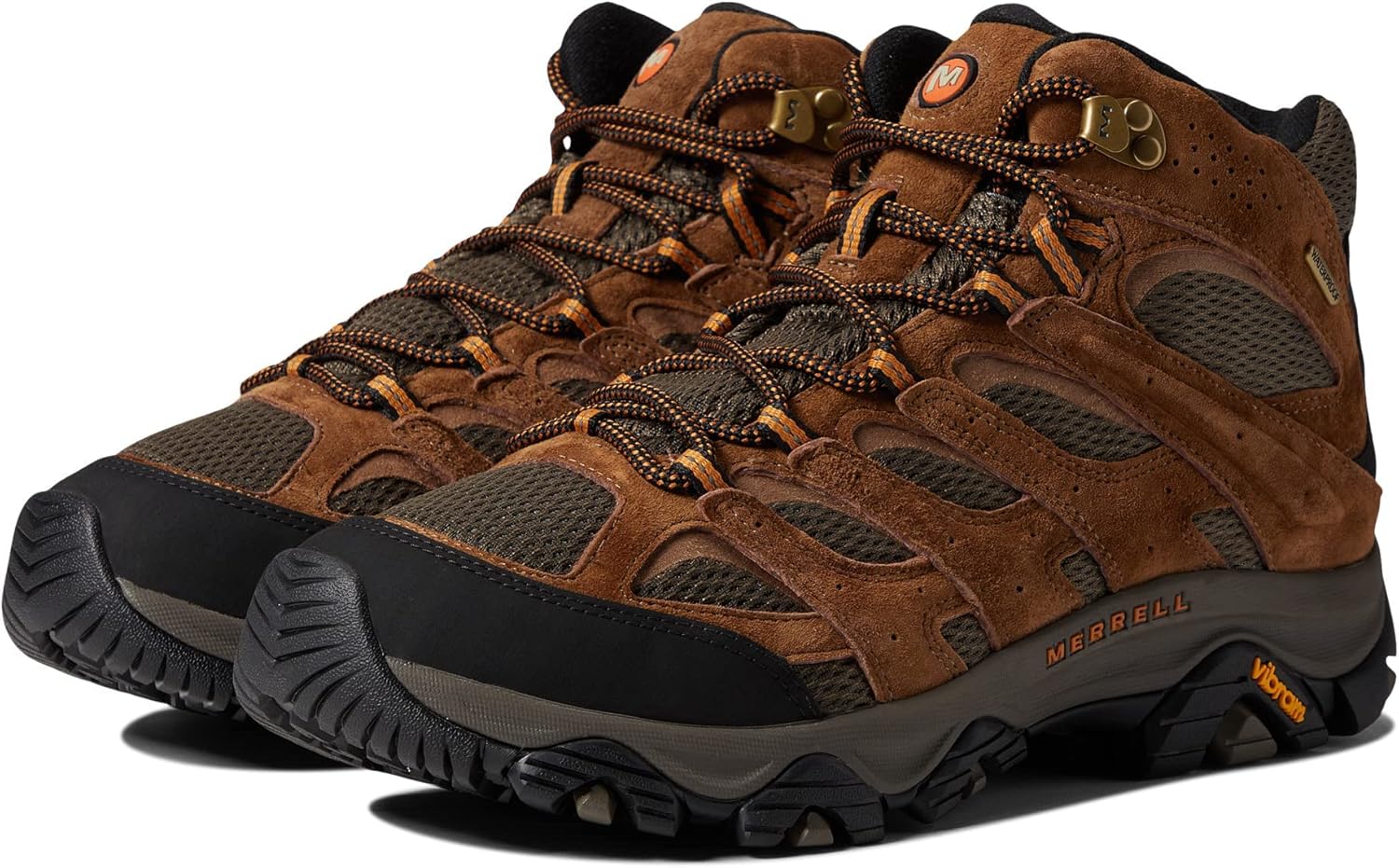 Merrell Moab 3 Mid Waterproof | No break-in, wide offered | Budget | AARP Ethel, SectionHiker, Outdoor Life, CleverHiker, GearJunkie | Check on Amazon |
 KEEN Targhee IV Mid Waterproof | Roomy and grippy | Mid-range | AARP Ethel, SectionHiker, CleverHiker | Check on Amazon |
 Salomon X Ultra 5 Mid GTX | Light, high collar | Mid-range | AARP Ethel, CleverHiker, Treeline Review | Check on Amazon |
 Orthofeet Dakota Hiking Boot | Orthotic comfort | Mid-range | AARP Ethel | Check on Amazon |
 Merrell Speed Solo Mid Waterproof | Light and low-cost | Budget | AARP Ethel | Check on Amazon |
 HOKA Anacapa 2 Mid GTX | Cushioned day hikes | Mid-range | GearJunkie | Check on Amazon |
 Oboz Bridger Mid B-DRY | Firm, protective | Premium | REI, Treeline Review | Check on Amazon |
Price category reflects current US listings: budget is roughly under $150, mid-range roughly $150 to $200, premium above $200. Prices change, so confirm on the product page.

Which Boot for Which Hiker (and Who Should Skip Each)
| If you want | Look at | What the sources say |
|---|---|---|
| No break-in and easy care | Merrell Moab 3 | AARP Ethel says it comes broken in and in wide widths. |
| A roomy forefoot | KEEN Targhee IV, Orthofeet Dakota | AARP Ethel lists a roomy forefoot for the Targhee IV and a wide toe box for the Dakota. |
| A light boot | Salomon X Ultra 5, Merrell Speed Solo | AARP Ethel lists the X Ultra 4 under two pounds per pair and the Speed Solo at about 1 lb 3.8 oz per pair. |
| Cushioning | HOKA Anacapa 2 | GearJunkie lists it at 2 lb 4 oz. |
| Firm support on rough trails | Oboz Bridger | REI recommends it for long miles on technical terrain. |
Who should skip each boot
| Boot | Skip it if | Because |
|---|---|---|
| Merrell Moab 3 | You plan technical terrain | GearJunkie says it is too bulky for technical terrain |
| KEEN Targhee IV | You have narrow feet | GearJunkie says it is not suitable for narrow feet |
| Salomon X Ultra 5 | You want maximum ankle support | CleverHiker lists less ankle support |
| Orthofeet Dakota | You want a technical outdoor boot | Only AARP Ethel covers it |
| Merrell Speed Solo | You carry a heavy pack | It is a light, less protective build |
| HOKA Anacapa 2 | You want a low, stable platform | GearJunkie says the heel can snag |
| Oboz Bridger | You want a light boot | Treeline Review lists it as slightly heavier |
Best Comfort-First Hiking Boots for Seniors
Comfort-first boots that need little or no break-in.
Merrell Moab 3 Mid Waterproof
Best for: easy and moderate trails with no break-in
Merrell Moab 3 Mid Waterproof
Price category: Budget
A leather and mesh waterproof mid hiking boot from Merrell.
Check it on AmazonAARP Ethel lists the Moab 3 Mid Waterproof with a reinforced heel cushion, extra shock absorption and a contoured footbed for arch support, comes broken in and in wide widths. SectionHiker lists the Moab 3 among its hiking shoe examples. Outdoor Life names it Best Overall for beginners at 1 lb 10 oz, praising comfort and a good fit for wider feet. CleverHiker and GearJunkie both name it Best Budget.
What this means for you: a comfortable boot that is easy to live with.
Fit and sizing: Standard and wide are offered per GearJunkie and AARP Ethel.
Men’s and women’s versions: A women’s version is lighter per CleverHiker.
Watch for: GearJunkie says it is too bulky for technical terrain. OutdoorGearLab says off-trail traction lacks bite.
Skip it if: you plan technical or off-trail terrain.
KEEN Targhee IV Mid Waterproof
Best for: a roomy forefoot and reliable traction
KEEN Targhee IV Mid Waterproof
Price category: Mid-range
A waterproof mid hiking boot from KEEN with a wide toe box.
Check it on AmazonAARP Ethel lists it with a roomy forefoot, a durable all-terrain outsole and strong traction, and notes reviewers praise its grip. SectionHiker lists the Targhee IV WP among hiking shoe examples. CleverHiker names it Best Wide-Fit.
What this means for you: a roomy, grippy choice if your feet need space.
Fit and sizing: GearJunkie says it runs large, so consider a half size down.
Watch for: GearJunkie says it runs significantly large and is not suitable for narrow feet. CleverHiker lists weaker steep traction and less ankle support.
Skip it if: you have narrow feet.
Orthofeet Dakota Hiking Boot
Best for: wide or sensitive feet that want orthotic support
Orthofeet Dakota Hiking Boot
Price category: Mid-range
An orthopedic waterproof hiking boot from Orthofeet.
Check it on AmazonAARP Ethel lists the Dakota with a wide toe box, adjustable arch support and orthotic insoles, in sizes from standard to extra-wide. The article says it suits foot issues such as plantar fasciitis and bunions.
What this means for you: a comfort-first option. Only AARP Ethel covers it among our sources, so it has less cross-checking. Orthofeet also sells a men’s hiking boot called the Dalton.
Fit and sizing: AARP Ethel says sizes range from standard to extra-wide.
Men’s and women’s versions: Women’s Dakota version.
Watch for: We did not find independent hiking outlets that review it, and a boot with a built-in orthotic may not suit everyone. If you have a foot condition, ask your doctor or a podiatrist (general advice).
Skip it if: you want an outdoor-brand technical boot reviewed by hiking outlets.
Best Lightweight Hiking Boots for Seniors
Lighter boots and shoes for easier trails.
Salomon X Ultra 5 Mid GTX
Best for: a light boot with a high ankle collar
Salomon X Ultra 5 Mid GTX
Price category: Mid-range
A lightweight GORE-TEX mid hiking boot with a grippy outsole.
Check it on AmazonAARP Ethel lists the earlier X Ultra 4 Mid GORE-TEX with a sturdy toe bumper and high ankle collar, weighing under two pounds per pair. CleverHiker names the current X Ultra 5 Best Hiking Boots Overall at 1 lb 15 oz, citing minimal break-in and excellent traction. Treeline Review names it best lightweight.
What this means for you: light on the foot with good grip. AARP Ethel covered the X Ultra 4, so its notes describe the earlier version.
Fit and sizing: CleverHiker says the forefoot runs narrow and sizing a little small.
Men’s and women’s versions: See our best hiking boots for women guide for women’s options.
Watch for: GearJunkie says it is too pliable for steep side-hilling, CleverHiker lists less ankle support, and NBC Select finds it too warm above 65 degrees.
Skip it if: you want maximum ankle support or hike in warm weather.
Merrell Speed Solo Mid Waterproof
Best for: light, short hikes and comfort-first walks
Merrell Speed Solo Mid Waterproof
Price category: Budget
A light waterproof mid hiking shoe from Merrell.
Check it on AmazonAARP Ethel lists the Merrell Speed Solo at about 1 lb 3.8 oz per pair, saying reviewers with plantar fasciitis, neuroma or bunions recommend it for comfort and stability.
What this means for you: a light, low-cost option. AARP Ethel covers the Speed Solo shoe.
Fit and sizing: Not stated by the source.
Men’s and women’s versions: A women’s Speed Solo Mid is also sold.
Watch for: Only one of our sources covers it, and it is a lighter, less protective build than a leather boot.
Skip it if: you carry a heavy pack or hike rough ground.
HOKA Anacapa 2 Mid GTX
Best for: cushioned, joint-friendly day hikes
HOKA Anacapa 2 Mid GTX
Price category: Mid-range
A cushioned GORE-TEX mid hiking boot from HOKA.
Check it on AmazonGearJunkie lists the Anacapa 2 Mid GTX at 2 lb 4 oz, saying it runs a bit large and the swallowtail heel can snag.
What this means for you: a well-cushioned boot, but its tall stack may feel less stable on technical ground. SectionHiker is cautious about high stack on technical trails in its comments, which are not the article’s own guidance.
Fit and sizing: GearJunkie says it runs a bit large.
Men’s and women’s versions: GearJunkie reviewed the men’s boot.
Watch for: GearJunkie says the heel can snag.
Skip it if: you want a low, stable platform for technical ground.
Best Supportive Hiking Boot for Rough Trails
A firmer boot for rough ground.
Oboz Bridger Mid B-DRY
Best for: rough trails where firm support matters
Oboz Bridger Mid B-DRY
Price category: Premium
A B-DRY waterproof mid hiking boot from Oboz with firm support.
Check it on AmazonREI recommends it for long miles on technical terrain in cooler temperatures. Treeline Review calls it a traditional sturdy boot with out-of-the-box comfort, a generous toe box and a heel cup that keeps your foot in place.
What this means for you: a firm, protective boot, if you can carry the weight.
Fit and sizing: Regular and wide per Treeline Review.
Watch for: Treeline Review lists it as slightly heavier than other models. REI notes thick socks can eat up toe space.
Skip it if: you want a light boot.
What the Sources Say About Older Hikers
SectionHiker is one of the few outlets that addresses older hikers directly, so here is what it says.
| Topic | What the source says |
|---|---|
| Stability | Hiking shoes, low or mid-cut, have stiffer platforms that reduce trip risk and foot fatigue, especially with balance issues or past ankle sprains. |
| Ankle roll | Hiking shoes reduce ankle roll and missteps when fatigue sets in or on uneven surfaces. |
| Trail runners | They have no ankle coverage and minimal torsional stiffness, so they can feel unstable on rough ground. |
| Joints | Hikers with sensitive knees, hips or plantar fascia may do better with a stiffer platform. |
| Poles | Trekking poles can improve balance and lessen the severity of ankle rolls. |
AARP Ethel adds buying advice for older walkers: aim for under two pounds per pair, look for cushioning, arch support, a wide toe box and a sturdy sole with a higher cut for stability, and expect to pay about $150 for boots and $100 for shoes.
Our Senior Hiking Boot Evaluation Framework
We score each boot on five questions using only what the named outlets published.
- Source agreement. How many outlets list it?
- Break-in. How quickly it feels comfortable.
- Stability. Ankle collar and platform.
- Weight. Published weights.
- Recurring drawbacks. Complaints the outlets raise.
| Boot | Source agreement | Break-in | Stability | Weight | Main drawback |
|---|---|---|---|---|---|
| Merrell Moab 3 | 5 outlets, high | Comes broken in | Mid-cut | 1 lb 10 oz | Technical terrain |
| KEEN Targhee IV | 3 outlets, medium | Short | Mid-cut | 2 lb 8.2 oz | Narrow feet |
| Salomon X Ultra 5 | 3 outlets, medium | Minimal | High collar (X Ultra 4) | 1 lb 15 oz | Ankle support |
| Orthofeet Dakota | 1 outlet, limited | Not stated | Orthotic support | Not stated | Limited review coverage |
| Merrell Speed Solo | 1 outlet, limited | Not stated | Low-profile | About 1 lb 3.8 oz per pair | Light build |
| HOKA Anacapa 2 | 1 outlet, limited | Not stated | Tall stack | 2 lb 4 oz | Heel can snag |
| Oboz Bridger | 2 outlets, limited | Comfortable at once | Firm | 2 lb 6 oz | Weight |
Source agreement counts outlets that name the boot or its earlier version. Weights come from the outlet noted in each product section and use different bases.
How to Choose Hiking Boots as an Older Hiker
- Choose stability first. SectionHiker says stiffer platforms reduce trip risk and fatigue.
- Keep the weight down. AARP Ethel says to aim for under two pounds per pair.
- Look for a wide toe box and arch support. See our best hiking boots for wide feet guide.
- Consider trekking poles. SectionHiker says they improve balance.
- General advice: if you have a foot, knee or balance concern, ask your doctor or a podiatrist before choosing footwear.
Where the Expert Reviews Disagree
Trail runners versus hiking shoes. SectionHiker says hikers with solid balance can still use trail runners, but it generally favors hiking shoes for stability and protection.
Targhee sizing. GearJunkie says the Targhee IV runs significantly large, while another outlet, The Gone Goat, says the earlier Targhee III runs a half to full size small.
Weight. AARP Ethel suggests under two pounds per pair, while boots like the Targhee IV list at about 2 lb 8 oz each per GearJunkie, so check which basis a weight uses.
Questions About Hiking Boots for Seniors, Answered
“What is the best hiking boot for seniors?”
No outlet names a single best. AARP Ethel lists the Moab 3, Targhee IV, Orthofeet Dakota and X Ultra 4, and the Moab 3 is also named Best Overall for beginners by Outdoor Life.
“Are hiking shoes better than boots for older hikers?”
SectionHiker says hiking shoes, low or mid-cut, are generally better than trail runners for stability. AARP Ethel says boots give more protection but need a break-in period, while shoes need little break-in.
“How light should the boots be?”
AARP Ethel suggests under two pounds per pair.
“Do I need trekking poles?”
SectionHiker says poles can improve balance.
“How do I care for them?”
See our hiking boot cleaning guide.
Mistakes to Avoid When Buying
- Choosing flexible shoes for rough trails. SectionHiker says stiffer platforms reduce trip risk.
- Ignoring weight. Extra weight adds up over a day on the trail.
- Skipping the fit check. Try boots on with the socks you hike in.
How we checked this
- UrbanStyleFootwear compared eight outlets: SectionHiker, AARP Ethel, Outdoor Life, REI, CleverHiker, Treeline Review, GearJunkie and OutdoorGearLab.
- Few outlets rank boots specifically for older hikers, so we used the two that address them directly, SectionHiker and AARP Ethel, and added outlets that rank the same boots overall. We scored each boot on source agreement, break-in, stability, weight and recurring drawbacks. Every weight and drawback is attributed to the outlet that published it.
- Weights use different bases. Price categories reflect current US listings. This is not medical advice.
Frequently Asked Questions
What is the best hiking boot for seniors?
No outlet names one best. The Merrell Moab 3 appears most often.
Are hiking shoes better than boots?
SectionHiker says hiking shoes are generally better than trail runners for stability. AARP Ethel says boots give more protection but need break-in.
How light should the boots be?
AARP Ethel suggests under two pounds per pair.
Do trekking poles help?
SectionHiker says they can improve balance.
Do I need a wide toe box?
AARP Ethel lists a wide toe box among key features.
Which boot needs no break-in?
AARP Ethel says the Moab 3 comes broken in.
Should I talk to a doctor first?
If you have a foot, knee or balance concern, yes. This is general advice.
How do I clean hiking boots?
Follow our hiking boot cleaning guide.
The Short Version
Start with stability, low weight and a roomy toe box. The Merrell Moab 3 is the easy first look, the KEEN Targhee IV and Orthofeet Dakota add room, and the Salomon X Ultra 5 keeps the weight down. Trekking poles help too.
Keep Reading
Sources
- SectionHiker: Trail runners vs hiking shoes by age
- AARP Ethel: Comfort shoes for older women who like to walk
- Outdoor Life: Best hiking shoes for beginners
- REI: The best hiking boots
- CleverHiker: Best hiking boots for men
- Treeline Review: Best hiking boots
- GearJunkie: Best hiking boots
- OutdoorGearLab: Best hiking boots for men