

How to Clean Hiking Boots: What Seven Care Guides Say

Quick answer: remove laces and insoles, brush off dry mud, wash with a footwear cleaner and running water, clean the outsoles, then dry slowly at room temperature away from heat. Never use the washing machine. Reproof when water stops beading.
We compare seven guides and answer the questions hikers ask most.
How to Clean Hiking Boots: Seven Guides Compared
We read seven care guides: REI (two articles), Salomon, KEEN, The North Face, Garmont and T3. They agree on removing laces and insoles, cleaning soon after a hike, air drying and never using the washing machine. They split on detergent, sun drying, soaking and how to condition leather.
| Topic | Salomon | KEEN | The North Face | Garmont |
|---|---|---|---|---|
| Cleaner | A footwear wash made for Gore-Tex, fabric, suede, nubuck or leather. Soft brush or sponge. | Light detergent and water, or a boot cleaner, wiped on the non-leather sections. | A cleansing agent on a cloth after a warm water rinse. Check the care label first. | Water and a soft brush or cloth. Avoid chemical detergents. |
| Machine washing | Do not. It might damage the shoes. | Not covered. | Not covered. | Do not machine wash boots. |
| Drying | Room temperature, well ventilated, out of direct sun and away from radiators. Newspaper speeds it up. | Air dry. Sun drying can help non-leather shoes shed moisture and odour. | Room temperature, low humidity, with a fan. No hair dryers, fireplaces or heaters. | Dry, ventilated spot. Keep away from direct sun, heaters and stoves, since heat can make leather brittle. |
| Waterproofing | A re-waterproofing treatment for Gore-Tex or leather. | Not covered. | Many boots are already waterproof. Silicone-based agent for non-waterproof leather. | Reapply regularly. Spray for Gore-Tex, wax or cream for full-grain leather. |

| Topic | REI care guide | REI waterproofing post | T3 (Ben Darby, Trekitt) |
|---|---|---|---|
| Cleaner | Boot cleaner, saddle soap or mild dish soap and water. Avoid bar soap and detergents, whose additives can harm leather or membranes. | A technical footwear cleaner worked to a light foam, with a stiff nylon brush for very dirty boots. | A footwear cleaner plus washing-up liquid, with a soft nylon brush. |
| Soaking | Soak caked-on outsoles, then hose them off. | Rinse, apply cleaner, rinse well. | Soak laces for 15 to 20 minutes. Never soak or submerge leather boots. |
| Heat | No fireplace, campfire, stove, radiator or heater. High heat weakens adhesives and ages leather. | Not covered. | Keep away from sun and heat sources, since heat can crack leather and loosen glue. |
| Reproofing | When water no longer beads. Apply while boots are still wet. | At the start of the season or when very dirty, applied while damp. | Sprinkle water on dry boots. If it soaks in, dampen and apply a proofer. |
Salomon, KEEN, The North Face and Garmont sell boots, so their advice covers their own materials. The REI waterproofing post was written by Nikwax North America’s president and promotes Nikwax products. None of the seven publishes lab tests of cleaned boots.
Why Cleaning Hiking Boots Matters
REI says dirt works into leather and fabric as boots flex, acting like sandpaper, and that mud pulls moisture out of leather as it dries, which makes it stiffer and ages it faster. Salomon says dried mud forms a crust that stiffens fabric and weakens it at the creases. T3 says mud left on boots can dry out fabrics and rot stitching. Clean outsoles also grip better: KEEN says mud-caked lugs are not very grippy, and REI adds that clean outsoles help avoid carrying invasive species between trail areas.
Garmont gives one more reason to look inside after a hike: small stones are the most common cause of damage to the Gore-Tex membrane.
Step by Step: Cleaning Hiking Boots After a Hike
The shared method, with who says what:
- Clean soon. Salomon says to remove mud early, even by dunking boots in a stream, and to bang the soles together to knock mud out of the lugs. Garmont says to clean after every hike. REI says to clean after hiking, or the next day if you are too tired.
- Remove laces and insoles. REI, Salomon, KEEN and The North Face all say so. Garmont says to check the boot for stones and sand while the insole is out.
- Brush off dry dirt. REI and The North Face suggest a boot brush, an old vegetable brush or a toothbrush.
- Wash the uppers. Use running water and a cleaner suited to your boot materials (REI), or a footwear wash (Salomon, T3). REI says to rinse thoroughly afterwards.
- Clean the outsoles. REI says to scrub vigorously and pry out stuck pebbles, and for caked-on dirt to soak the outsoles then hose them off.
- Clean the inside. T3 says to clean the interior with a soft brush, since stiff brushes can damage the lining and waterproof membrane.
- Dry slowly. See the drying section below.
- Reproof and condition only if needed. See the next sections.

Check the care label first. The North Face and Garmont both say the wrong product can damage boots.
Cleaning Hiking Boots by Material
What suits full-grain leather does not suit fabric or suede, so match the product to the upper:
| Upper | What the sources say | Who says so |
|---|---|---|
| Full-grain leather | Condition when it looks dry or cracked, sparingly, since too much makes boots soft and reduces support. Do not use mink oil or similar industrial boot oils, which over-soften dry-tanned hiking leather. Use a wax or cream. | REI, Garmont, KEEN |
| Suede or nubuck | No conditioner needed. Use a cleaner made for them. | REI, Salomon |
| Fabric or synthetic | Wipe with light detergent or a boot cleaner. Sun drying can help shed moisture and odour. | KEEN |
| Gore-Tex or waterproof membrane | Clean off dirt that wears the water-repellent coating, then reactivate with a spray. Check for stones inside. Use soft brushes inside. | Garmont, T3, Salomon |
For suede and nubuck uppers, see our nubuck guide. For conditioning leather in general, see our leather conditioning guide.
How to Dry Hiking Boots
Every source says to dry boots slowly and away from heat:
- Room temperature and low humidity (REI, The North Face), in a ventilated spot such as a porch (Garmont).
- No heat source: REI lists fireplace, campfire, wood stove, radiator and heater, and says high heat weakens adhesives and prematurely ages leather. The North Face adds hair dryers. Garmont says heat can make leather brittle.
- Newspaper: it speeds drying (REI, Salomon, Garmont). REI says to swap it whenever it gets damp. T3 says packing it too tightly can distort wet boots. The North Face suggests removing the stuffing partway through so the insides dry fully.
- Fan: REI and The North Face say a fan speeds drying.
- Insoles: dry them separately (REI, Salomon) and reinsert them only when the boots are fully dry (Salomon, The North Face).

When and How to Reproof Hiking Boots
When to reproof. REI says new boots are usually waterproof already and that reproofing is needed once water no longer beads on the surface. T3’s Ben Darby gives a test: sprinkle water on dry boots, and if it soaks in, lightly dampen the boots and apply a proofer, then wipe off the excess. The Nikwax-authored REI post says to reproof at the start of the hiking season or when boots are particularly dirty, and to apply the treatment while the boots are still damp. REI’s care guide also says to reapply while boots are still wet. Garmont says to reapply regularly because mud, dirt and weather degrade the membrane’s water resistance and breathability.
Why cleaning comes first. T3 says waterproof boots rely on a durable water-repellent coating, and that dirt and grime speed up its wear.
Which product. Garmont says to use a spray for Gore-Tex boots and a wax or cream for full-grain leather. The North Face recommends a silicone-based waterproofing agent for leather boots that are not already waterproof. Always check the maker’s guidance for your boot, since a mismatch can damage it.
Storage, Laces, Insoles and Odour
Dry boots completely before storing (KEEN, Garmont). Store them somewhere cool and dry with moderate, stable temperatures. REI says to avoid attics, garages and car trunks. Garmont says to avoid basements, which are too cold, and recommends 18 to 20 degrees Celsius with a closet as a good spot. Salomon says to store shoes in open air rather than in a bag, and to avoid plastic bags or airtight boxes. Garmont also says to wear boots regularly to keep the sole material active and help prevent hydrolysis, and to replace the sole when the tread wears down, with a repair shop able to resole them.
Laces and insoles. Garmont says to check laces before each hike and carry spares, and to clean insoles with lukewarm water and a brush, not a washing machine. KEEN says laces and insoles wear out and can be replaced.
Odour and mould. Salomon says airing boots with the insoles out after each hike is usually enough to prevent odour, with a disinfectant spray inside if odour or moisture persists. For mould, REI says to mix 80 percent water with 20 percent vinegar.
Where the Sources Disagree
Detergent. REI says to avoid bar soap and detergents because additives can harm leather or membranes. Garmont says to avoid chemical detergents. KEEN says a light detergent mixed with water is fine on the non-leather sections, and T3 uses washing-up liquid with a footwear cleaner. General advice: use a cleaner made for footwear first, and use plain mild dish soap only on non-leather parts.
Sun. KEEN says sun drying can help non-leather shoes shed moisture and odour. Salomon says to keep shoes out of direct sun. Garmont and T3 say to keep boots away from direct sunlight. General advice: shade is safer, especially for leather.
Soaking. REI says to soak caked-on outsoles. T3 says leather boots should never be soaked or fully submerged. General advice: soak the outsoles, not the uppers.
Conditioning. KEEN and Garmont recommend conditioning or a cream on full-grain leather. REI says to use it sparingly and to avoid mink oil. Salomon does not mention conditioning. General advice: a thin coat on dry full-grain leather, and nothing on suede, nubuck or fabric.
Questions Hikers Ask, Answered
“Can I put my hiking boots in the washing machine?”
No. REI says it can damage them, Salomon says it might damage them, and Garmont says not to machine wash boots. The other sources describe hand cleaning only.
“My boots are caked in mud. What should I do first?”
Salomon says to remove mud early, even by dunking them in a stream, and to bang the soles together. Do not let it dry on the boot: Salomon says dried mud forms a crust that stiffens fabric and weakens it at the creases.
“My boots smell. How do I fix it?”
Salomon says airing them with the insoles out after each hike usually prevents odour, and a disinfectant spray inside helps if odour persists. KEEN says sun drying can help non-leather shoes shed odour. REI’s vinegar mix (80 percent water, 20 percent vinegar) is for mould.
“Do I need to condition leather hiking boots?”
Only full-grain leather, and only when it looks dry or cracked (REI). Use it sparingly and avoid mink oil. Suede and nubuck do not need it.
“How do I know if my boots need waterproofing again?”
REI says when water no longer beads on the surface. T3’s test is to sprinkle water on clean, dry boots.
“Can I dry my boots by the fire or on a radiator?”
No. REI, Salomon, The North Face, Garmont and T3 all warn against heat. REI says it weakens adhesives and ages leather.
“Should I clean the outsoles?”
Yes. REI says clean outsoles restore traction and help prevent carrying invasive species between trail areas. KEEN says mud-caked lugs are not very grippy.
“How do I keep boots from going stiff after drying?”
REI says mud pulls moisture out of leather as it dries and that high heat ages leather prematurely, so clean early and dry at room temperature. Condition full-grain leather sparingly when it looks dry.
Mistakes to Avoid
- Washing machine. REI, Salomon and Garmont all say no.
- Heat. Radiator, fire, stove or hair dryer. REI says high heat weakens adhesives.
- Letting mud dry on. Salomon says it forms a crust, and T3 says it can rot stitching.
- Stiff brushes inside. T3 says they can damage the lining and waterproof membrane.
- Mink oil. REI says it over-softens the dry-tanned leather in hiking boots.
- Overpacking newspaper. T3 says it can distort wet boots.
- Plastic bags for storage. Salomon and Garmont say to avoid them.
- Soaking leather uppers. T3 says to only dampen the areas being cleaned.
How we checked this
- Steps come from REI, Salomon, KEEN, The North Face, Garmont and T3. We name who says each thing.
- The sources differ on detergent, sun drying, soaking and conditioning, so we show each side. Our own reading is labelled general advice.
- The REI waterproofing post was written by Nikwax North America’s president, and Salomon, KEEN, The North Face and Garmont sell boots. None gives test data. We have not tested any of these methods.
Hiking Boot Care Helpers
A technical cleaner, a proofer for leather and fabric boots and a brush kit cover the steps the sources describe. These are listed on Amazon.

Nikwax Footwear Cleaning Gel
A cleaning gel for footwear, including waterproof membrane boots.
Check it on Amazon
Nikwax Fabric & Leather Footwear Cleaning and Waterproofing Duo-Pack
A cleaner and a waterproofing treatment for fabric and leather footwear.
Check it on Amazon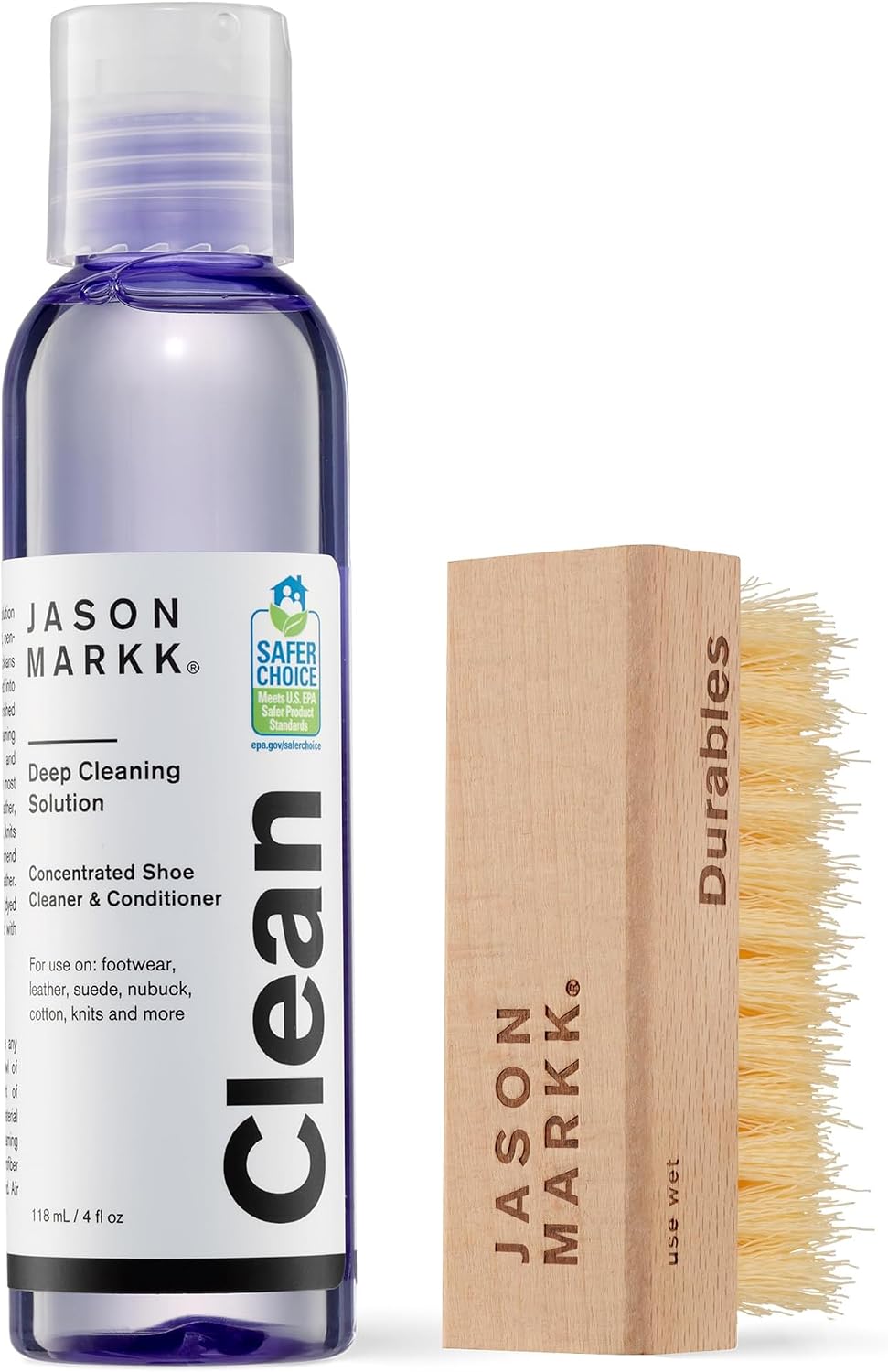
Jason Markk Essential Shoe Cleaning Kit
A shoe cleaner with a brush and microfiber towel.
Check it on AmazonFrequently Asked Questions
How do you clean hiking boots?
Remove laces and insoles, brush off dry mud, wash with a footwear cleaner and running water, clean the outsoles and dry at room temperature (REI, Salomon, T3).
Can you wash hiking boots in the washing machine?
No. REI says it can damage them, Salomon says it might, and Garmont says not to machine wash boots.
How do you dry hiking boots?
At room temperature in a ventilated, low-humidity spot, with a fan or loosely stuffed newspaper. Avoid radiators, fires and direct sun (REI, Salomon, Garmont).
How often should you clean hiking boots?
Garmont says after every hike. REI says after hiking, or the next day. Salomon says airing them out after each hike is usually enough unless they are muddy.
How do you waterproof hiking boots?
Clean them first, then apply a proofer while they are damp (REI, Nikwax post). T3 says to test by sprinkling water on dry boots.
Should you condition leather hiking boots?
Only full-grain leather, when it looks dry or cracked, and sparingly. REI says to avoid mink oil. Suede and nubuck do not need it.
How do you get the smell out of hiking boots?
Air them with insoles out after each hike (Salomon) and use a disinfectant spray if odour persists. REI uses 80 percent water and 20 percent vinegar for mould.
How should you store hiking boots?
Fully dry, in a cool, dry place, in open air rather than plastic bags (Salomon, REI, Garmont).
The Short Version
Clean soon, dry slowly, keep heat and the washing machine away, and reproof when water stops beading.
Keep Reading
Sources
- REI: How to clean hiking boots
- REI: How to waterproof hiking boots
- Salomon: How to clean and care for your hiking shoes
- T3: How to clean your hiking boots in five simple steps
- KEEN: Shoe care tips for hiking shoes and boots
- The North Face: How to clean and care for your hiking boots
- Garmont: How to care for hiking boots


