
10 Best Cricket Shoes in India 2026: Grip, Spikes & Durability
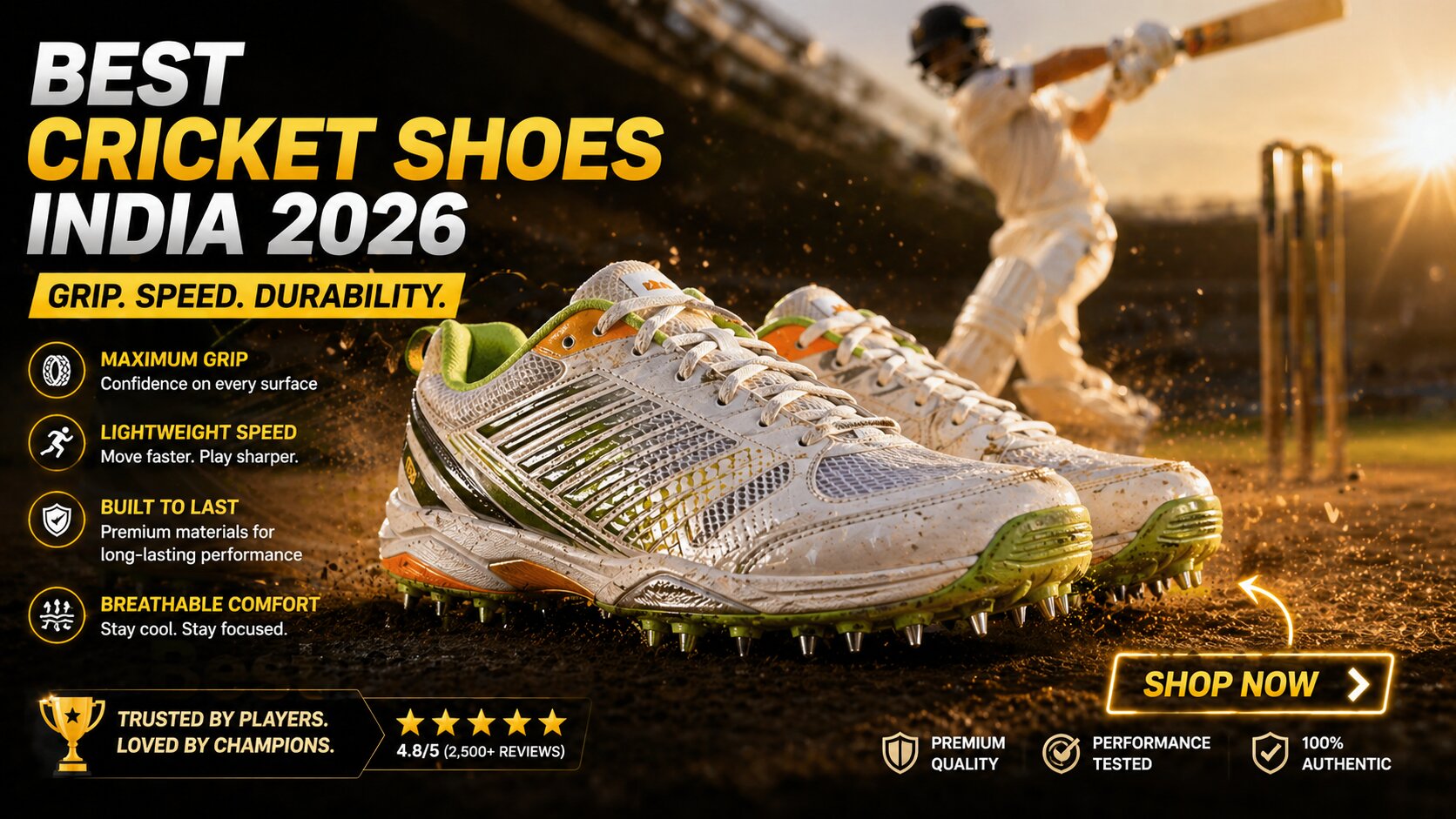
Best cricket shoes in India 2026 depend on where you play, how you play, and whether you need rubber studs, metal spikes, or a more versatile outsole. We compare 10 popular options for batting, bowling, fielding, turf, matting, hard pitches, practice and budget use.
30-Second Quick Picks
What Are the Best Cricket Shoes in India in 2026?
The best cricket shoes in India are not necessarily the most expensive pair. The right choice depends primarily on your playing surface.
For matting wickets, hard grounds and many practice nets, rubber-stud or rubber-outsole cricket shoes are generally the practical choice. For natural grass and suitable turf conditions, cricket shoes with metal spikes can provide stronger traction.
Current cricket footwear ranges reflect this split. PUMA, for example, currently describes its 24 FH Rubber model as being designed for hard-wicket surfaces and lists an EVA midsole, rubber outsole, pivot point and wide fit.
Adidas also currently offers separate spikeless, spike and performance cricket footwear categories in India, showing how much the choice depends on playing conditions rather than brand alone.
If you regularly play at different grounds, the most useful question is not simply “Which cricket shoe is best?”
It is:
Which cricket shoe matches the surface I play on most often?
How Should You Choose Cricket Shoes for Indian Pitches?
Start With the Playing Surface
Your pitch should determine the outsole before colour, brand or appearance.
Hard ground and cement practice
Choose a durable rubber outsole or rubber-stud cricket shoe. A hard surface needs predictable traction without relying on metal spikes.
Matting wickets
Rubber studs are usually the more practical choice because they work with synthetic matting and can also handle training surfaces.
Synthetic turf
Look for an outsole designed for artificial surfaces, with enough traction for lateral movement and quick changes of direction.
Natural grass or soft turf
Metal spikes can make sense when the ground and competition rules allow them. Check the competition or ground rules before buying.
A current Indian cricket-footwear guide similarly separates hard ground, matting, turf and indoor surfaces when recommending outsole types.
Rubber Studs vs Metal Spikes vs Spikeless
| Type | Best For | Main Advantage | Main Limitation |
|---|---|---|---|
| Rubber studs | Matting, hard ground, training | Versatile grip | Less aggressive on soft grass |
| Metal spikes | Natural turf | Strong traction | Poor choice for hard indoor surfaces |
| Spikeless | Training and versatile use | Comfortable and easy to use | Less bite on soft turf |
| Multi-stud rubber | Mixed recreational cricket | Good balance | Not a specialist turf option |
If you only play weekend cricket on matting wickets and hard grounds, you probably do not need an expensive metal-spike shoe.
If you are a fast bowler playing regular grass-turf cricket, the outsole requirements are very different.
What Should You Look for in the Best Cricket Shoes?
Cushioning
Cricket involves repeated running, stopping, batting, fielding and bowling movements.
A reasonable midsole can make long sessions more comfortable, but softer is not automatically better. Excessively soft foam can feel unstable when you make aggressive lateral movements.
Look for cushioning that gives you impact protection without making the shoe feel unstable.
Grip
Grip should match the ground.
A shoe with aggressive traction can be excellent on turf but unnecessary on a hard indoor surface. Likewise, a lightweight training shoe may feel comfortable but lack the bite needed during a bowling run-up.
Heel Stability
Fast bowlers and players who make repeated lateral movements should pay particular attention to heel lockdown.
A secure heel counter and well-fitting upper help keep the foot from sliding around inside the shoe.
Toe Protection
Batters spend long periods at the crease and can also experience repeated contact with the front of the shoe during movement.
A reinforced toe area is useful, especially for regular cricket rather than occasional casual practice.
Weight
Light shoes can feel quicker during fielding and running between wickets.
However, the lightest shoe is not automatically the best shoe. If reducing weight means sacrificing cushioning, stability or outsole durability, the trade-off may not be worthwhile.
Breathability
Indian cricket often means warm conditions, long practice sessions and sweaty feet.
Mesh panels and perforated uppers can improve airflow. Synthetic uppers can provide better durability but may feel warmer.
PRODUCT REVIEWS (ALL 10 PRODUCTS)
1. DSC Jaffa 22 Cricket Shoes (Men & Boys)
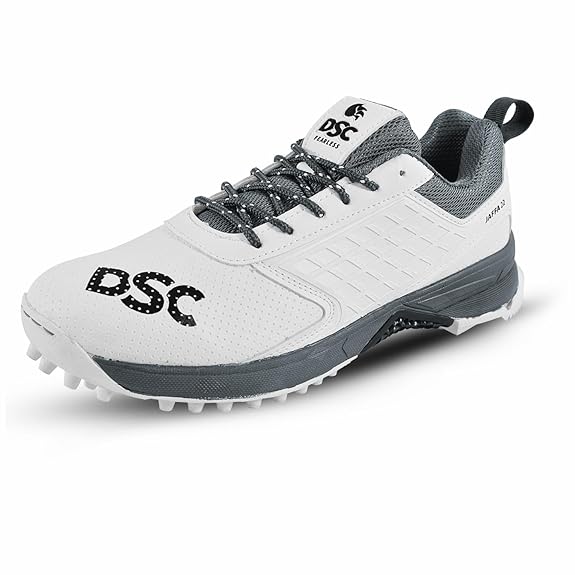
⭐ 4.5/5 | *Amazon’s Choice – 5,139+ ratings*
The Shop Owner’s Take:
This is the Maruti Suzuki Swift of cricket shoes – reliable, comfortable, and sells like crazy. The breathable mesh upper keeps feet dry even in Kolkata humidity. Rubber outsole with rounded lugs grips dusty pitches well. At 950g, it’s not the lightest, but the EVA midsole and TPU shank reduce foot fatigue during long innings.
Best For: All-rounders, batsmen, and weekend warriors.
Pros:
- Excellent multi-directional traction.
- TPU midfoot shank reduces fatigue.
- True to UK size (buy your exact size).
Cons:
- Flaw: Heavy (950g) – not for speedsters.
- White color gets dirty fast on red soil.
2. Puma Mens Cricket Square Cricket Shoe
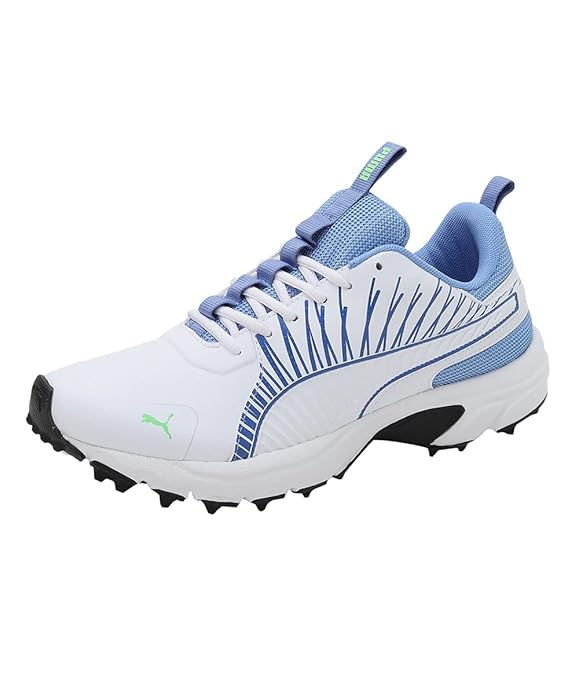
⭐ 4.0/5 | *Top Brand – 1,120+ ratings*
The Shop Owner’s Take:
You pay for the logo, but you get quality. The synthetic upper is durable, and the flat heel is great for batsmen needing a stable base. However – and this is important – the toe box is narrow. If you have wide Punjabi feet, skip this. The rubber sole is stiff initially but loosens after 2-3 net sessions. Good for cement pitches.
Best For: Batsmen with narrow feet playing on matting or cement.
Pros:
- Premium brand finish.
- Excellent lateral stability for cuts and pulls.
- Lightweight at 700g.
Cons:
- Flaw: Very narrow fit – not for wide Indian feet.
- Less breathable than mesh competitors.
3. BAS Vampire 001 Cricket Shoes (Lightweight)
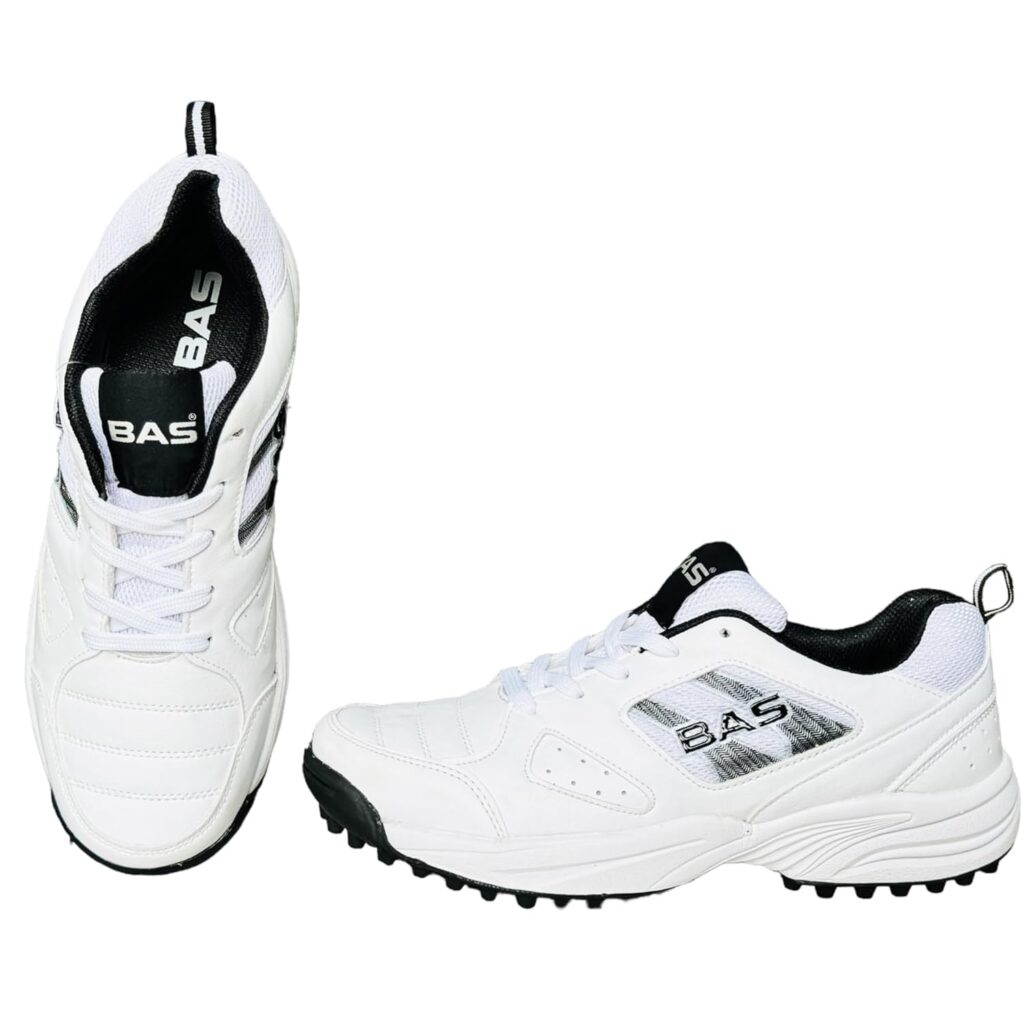
⭐ 4.2/5 | *Limited Time Deal – 1,344+ ratings*
The Shop Owner’s Take:
BAS is the underdog that delivers. The molded EVA midsole feels harder than DSC but lasts longer on abrasive surfaces (think rough concrete practice pitches). The rubber outsole is genuinely durable – I’ve seen these survive two full seasons for junior players. The heel counter is stiff initially, but that’s a plus for stability. Wear thick socks for the first week.
Best For: Junior players, coaches, and budget-conscious buyers.
Pros:
- Very durable rubber compound.
- Excellent heel stability.
- Great price-to-performance.
Cons:
- Stiff heel counter requires break-in.
- Average arch support.
4. Vector X CKT-200 Full Spike Cricket Shoes
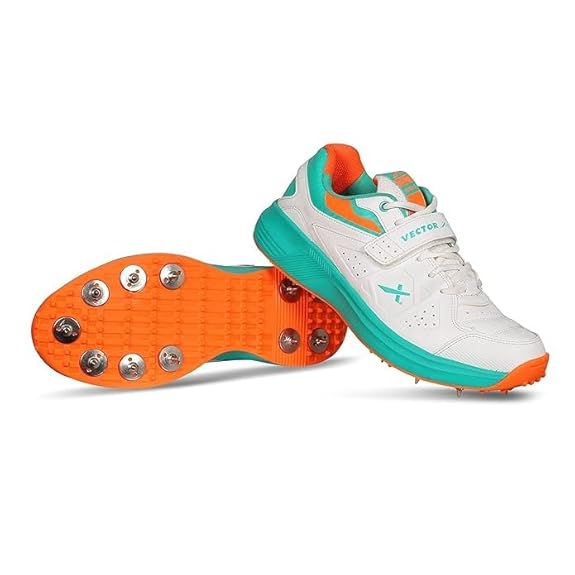
⭐ 4.8/5 | New & Highly Rated (only 2 ratings but promising)
The Shop Owner’s Take:
This is a full metal spike shoe for serious turf players. PU upper with breathable mesh, padded ankle collar, and a midfoot support strap – features you rarely see under ₹2,500. The strobel construction gives a soft underfoot feel. However, full spikes are not for concrete or hard soil – you will slip. Only buy if your home ground is soft turf.
Best For: Turf specialists (bowlers and batsmen on grass pitches).
Pros:
- Full metal spike configuration.
- Midfoot strap for extra lockdown.
- Padded collar prevents heel slippage.
Cons:
- Flaw: Dangerous on hard surfaces / tiled floors.
- Very few ratings – slightly risky.
5. Boldfit Cricket Shoes (Men & Boys)
⭐ 4.2/5 | *Amazon’s Choice – 913+ ratings*
The Shop Owner’s Take:
Usually “under ₹1,200” means cardboard with laces. The Boldfit surprised me. The moisture-wicking mesh actually works – my feet stayed dry in Mumbai’s 90% humidity. Cushioning is basic EVA, but the outsole grip on tiled floors is surprisingly good. Don’t expect TPU shanks or premium foam. Expect a solid, lightweight practice shoe. For match day, spend a bit more.
Best For: Net practice, school cricket, backup pair.
Pros:
- Unbeatable price (₹1,149 after 62% off).
- Very breathable mesh.
- Secure lace lockdown.
Cons:
- Flaw: Zero arch support (flat feet will hurt).
- Midsole compresses after 2 months of heavy use.
6. Hundred HyperTurf Cricket Shoes
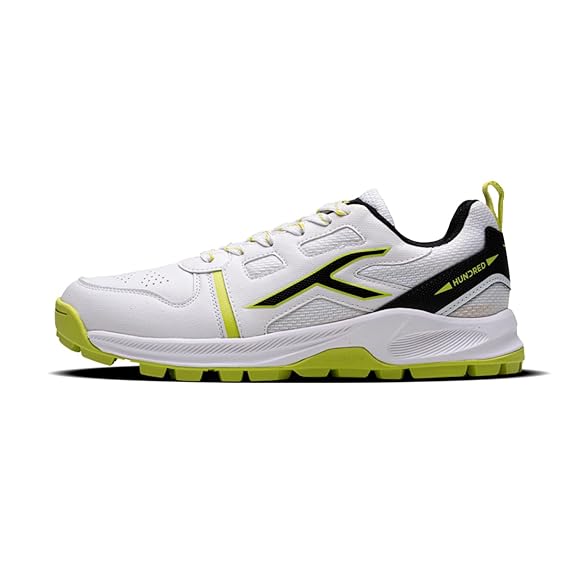
⭐ 4.6/5 | *Lightweight King – 438+ ratings*
The Shop Owner’s Take:
At only 330g, this is the lightest shoe on this list. The HexaFoam midsole is soft – almost too soft for bowlers over 80kg. The TerraSpike outsole pattern is genius for synthetic turf (ghallah). Vegan leather upper looks premium and cleans easily. If you play on astroturf or concrete, your legs will thank you after a 4-hour tournament.
Best For: Openers, wicketkeepers, and turf specialists.
Pros:
- Ultra-lightweight (330g).
- Embedded stability plate prevents midfoot twist.
- Breathable and dries quickly.
Cons:
- Flaw: HexaFoam wears faster on rough concrete.
- Not supportive for overpronators (ankle rollers).
7. DSC Jaffa Neo Cricket Shoes
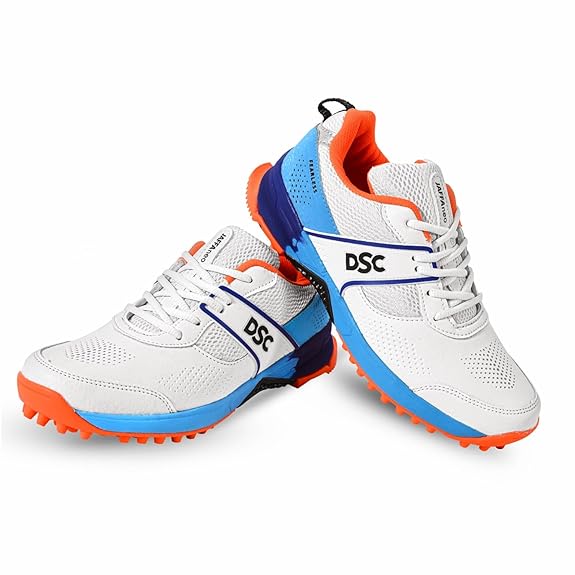
⭐ 4.3/5 | *Upgraded Comfort – 379+ ratings*
The Shop Owner’s Take:
Think of the Jaffa Neo as the “air-conditioned” version of the Jaffa 22. It has silicon patches around the ankle for extra support and a much softer EVA sockliner. The anti-torsion shank stops the shoe from twisting when you plant your foot for a big shot. The rubber outsole is slightly softer = better grip, slightly less durability. Perfect for spin bowlers who pivot aggressively.
Best For: Spin bowlers and aggressive batsmen.
Pros:
- Excellent ankle padding.
- Anti-torsion shank for safety.
- Plush, premium sockliner.
Cons:
- Flaw: Rubber wears 20% faster than Jaffa 22.
- PVC upper isn’t very breathable in peak summer.
8. RXN Victor Bowling Metal Spike Cricket Shoes
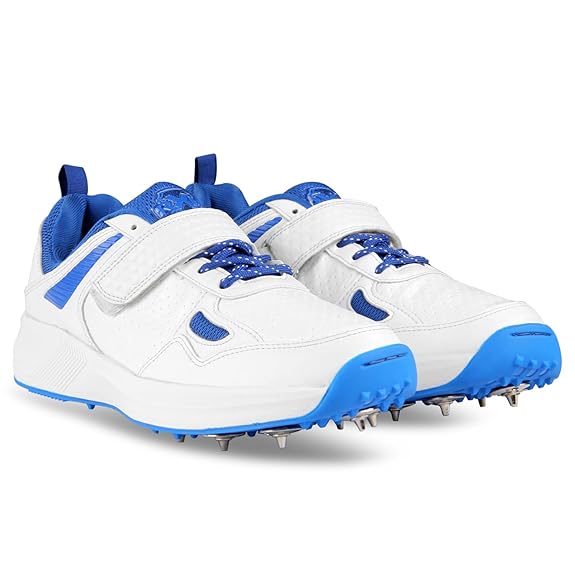
⭐ 4.4/5 | *Serious Bowler’s Choice – 16+ ratings (but solid)*
The Shop Owner’s Take:
Most club bowlers wear rubber spikes. If you are a fast or leg-spinner needing ankle lock, get this. The Phylon sole is denser – it won’t compress after 10 matches. The TPU outsole takes the impact of a 20-yard run-up. Bonus: it comes with extra metal nails and a tightening key – very thoughtful. But never wear these to the team dinner; walking on tiles is a slipping hazard.
Best For: Fast bowlers and leg-spinners on soft turf.
Pros:
- Superior ankle support.
- Metal spikes provide unbeatable push-off.
- Extra spikes and key included.
Cons:
- Flaw: Very slippery on tiles/marble.
- Heavy (800g).
9. Nivia Crick-1000 2.0 Cricket Shoes
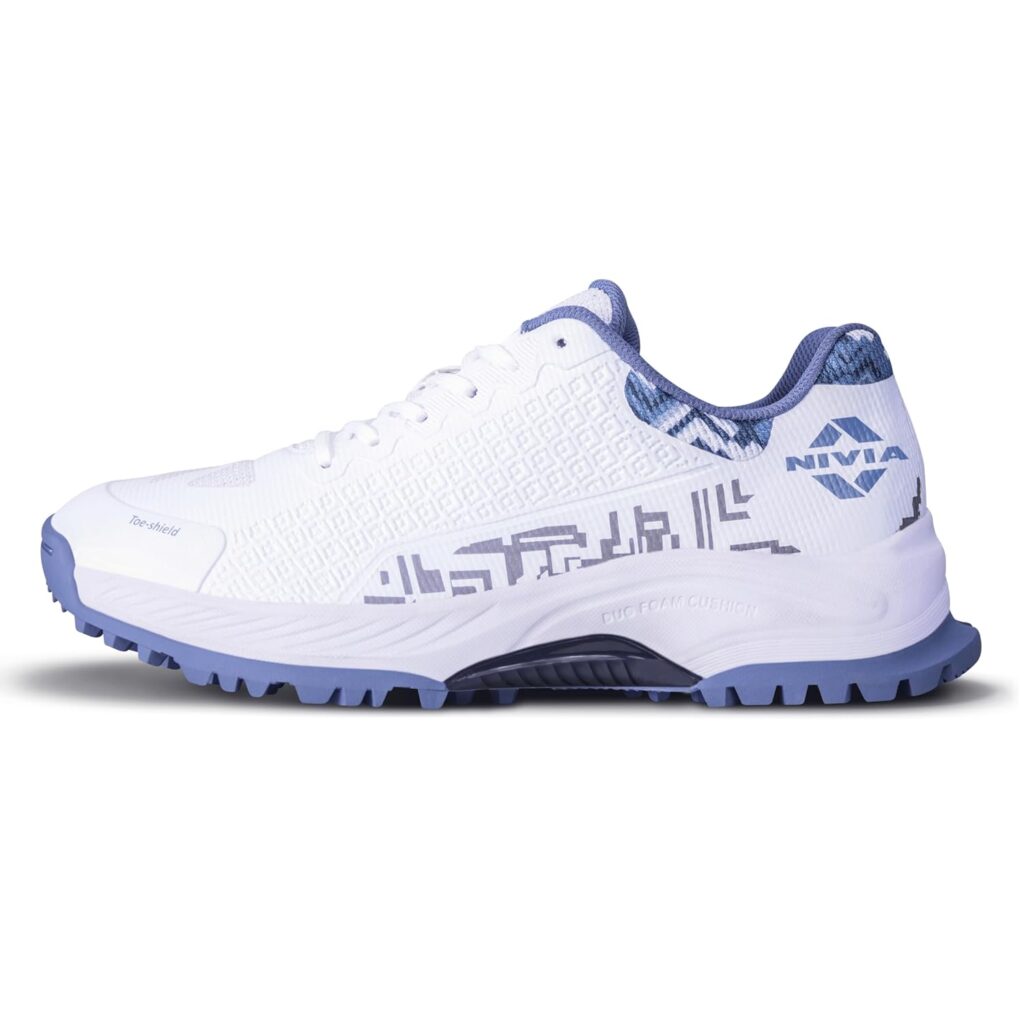
⭐ 4.1/5 | *Reliable Workhorse – 481+ ratings*
The Shop Owner’s Take:
Nivia is a trusted Indian brand. The Crick-1000 2.0 uses TPU Fusion Technology upper – more durable than plain mesh. The reinforced toe area is a lifesaver for batsmen facing pacers. The removable “Sportho Foot Bounce” sockliner is surprisingly plush. The outsole stitching on the sole lip prevents peeling – a common failure in cheap shoes. Not flashy, but built to last.
Best For: Batsmen who face fast bowling on rough pitches.
Pros:
- Excellent toe protection.
- Removable, cushioned sockliner.
- Outsole stitching adds durability.
Cons:
- Flaw: Slightly stiff outsole – needs break-in.
- Heavier than advertised (approx 850g).
10. Hundred TerraField Cricket Shoes
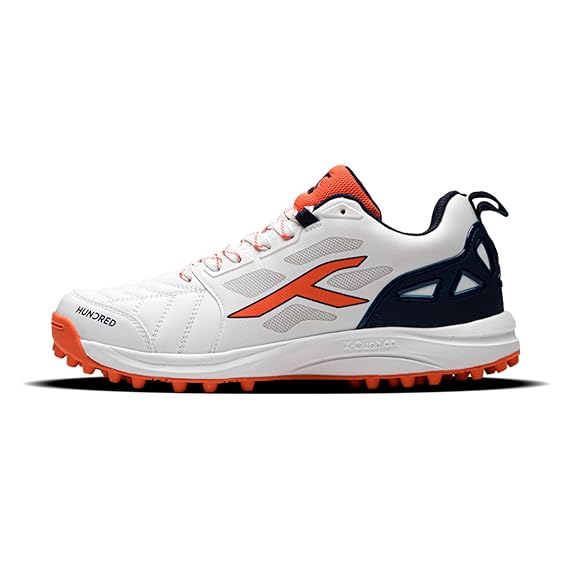
⭐ 4.3/5 | *Premium Rubber Spike Option – 148+ ratings*
The Shop Owner’s Take:
Think of TerraField as the premium older brother of HyperTurf. It has X-Cushion technology (better impact protection), TPU heel support, and a padded upper front to protect against ball hits. Vegan leather upper is ethical and durable. The Hexafoam midsole is thicker than HyperTurf, making it better for heavy players. Ideal for those who play 3+ times a week.
Best For: Regular players (3+ matches/week) on hard or turf surfaces.
Pros:
- X-Cushion absorbs impact better than basic EVA.
- TPU heel support prevents Achilles issues.
- Padded upper front protects against ball strikes.
Cons:
- Flaw: Slightly expensive at ₹2,449.
- Not as breathable as mesh shoes.
HEAD-TO-HEAD COMPARISON TABLE (ALL 10)
| Shoe Name | Weight | Arch Support | Price (₹) | Best Use Case | Rating |
|---|---|---|---|---|---|
| DSC Jaffa 22 | 950g | Medium | 1,789 | All-rounder / Hard pitch | 4.5 |
| Puma Square | 700g | Low (narrow) | 2,589 | Batsman (narrow feet) | 4.0 |
| BAS Vampire 001 | ~700g | Medium-High | 1,499 | Juniors / Rough surfaces | 4.2 |
| Vector X CKT-200 | 970g | High | 2,299 | Turf (full spike) | 4.8 |
| Boldfit | ~450g | Low (none) | 1,149 | Net practice / Backup | 4.2 |
| Hundred HyperTurf | 330g | Medium | 1,439 | Turf / Keeper | 4.6 |
| DSC Jaffa Neo | 800g | Medium | 1,875 | Spin bowling / Pivoting | 4.3 |
| RXN Victor | 800g | High | 2,327 | Fast bowling (soft turf) | 4.4 |
| Nivia Crick-1000 2.0 | ~850g | Medium | 2,149 | Batsman (toe protection) | 4.1 |
| Hundred TerraField | 340g | Medium-High | 2,449 | Heavy users / Premium | 4.3 |
Which Cricket Shoes Are Best for Different Playing Roles?
Best Cricket Shoes for Batsmen
For batsmen, prioritize:
- Comfortable cushioning
- Stable lateral movement
- Secure heel lockdown
- Reasonable weight
- Grip suitable for your wicket
Best picks from this list: DSC Jaffa 22, Nivia Crick-1000 2.0 and Hundred HyperTurf.
The lightest option is not always the best. If you play long innings, comfort and stability can matter more than saving a few grams.
Best Cricket Shoes for Fast Bowlers
Fast bowlers should pay closer attention to:
- Outsole traction
- Heel lockdown
- Forefoot cushioning
- Stable delivery stride
- Playing surface
For suitable turf, a dedicated spike model can make sense.
Best specialist pick: RXN Victor.
For players who mostly train on hard or mat surfaces, a rubber-stud cricket shoe is generally more practical.
Best Cricket Shoes for Spinners
Spinners need reliable traction while rotating and changing direction.
A shoe with a secure upper and stable outsole can be more useful than simply buying the most aggressive spike.
Best options: DSC Jaffa Neo and DSC Jaffa 22.
Best Cricket Shoes for Wide Feet
Do not assume that every cricket shoe has the same width.
PUMA’s current 24 FH Rubber Wide Fit, for example, is explicitly listed as a wide-fit model.
For your own pair, check:
- Toe-box width
- Midfoot pressure
- Heel lockdown
- Whether your toes can spread naturally
- Manufacturer sizing information
If the sides of your foot bulge over the outsole, the shoe is not giving you enough usable width.
What Are the Best Cricket Shoes Under ₹2,000?
If your budget is around ₹2,000, the strongest options from this list are:
| Shoe | Approx. Price | Best For |
| Boldfit Cricket | ₹1,149 | Practice |
| Hundred HyperTurf | ₹1,439 | Lightweight movement |
| BAS Vampire 001 | ₹1,499 | Juniors and budget use |
| DSC Jaffa 22 | ₹1,789 | All-round cricket |
| DSC Jaffa Neo | ₹1,875 | More supportive feel |
The current Indian market also has other sub-₹3,000 models from brands such as SG, Nivia, DSC and Vector X, so buyers should compare the outsole and playing surface rather than automatically choosing the cheapest shoe.
How Do You Choose Between Rubber and Metal Cricket Spikes?
Choose rubber studs if you play:
- Mat wickets
- Hard grounds
- Practice nets
- Indoor or semi-indoor surfaces
- Multiple surfaces
Choose metal spikes if you regularly play:
- Natural grass
- Suitable soft turf
- Competitive cricket where spikes are permitted
Do not buy metal spikes simply because they look more professional.
The correct spike is the one that matches the ground.
How Should Cricket Shoes Fit?
Your cricket shoes should feel secure without squeezing the foot.
Check these five things before keeping the pair
1. Heel: Your heel should not lift excessively when walking.
2. Toes: Your toes should not hit the front of the shoe.
3. Width: Your little toe should not be compressed against the upper.
4. Midfoot: The laces should secure the foot without creating pressure points.
5. Movement: Walk, stop and make a controlled lateral movement before deciding that the fit is correct.
If you wear cricket socks, test the shoes with the socks you actually intend to use.
How Do You Clean and Maintain Cricket Shoes?
Cricket shoes last longer when they are cleaned according to their material.
After a muddy match
- Remove loose dirt with a soft or medium brush.
- Wipe the upper with a damp cloth.
- Remove the insole if the construction allows it.
- Let the shoes dry naturally.
- Keep them away from direct high heat.
- Clean the outsole so accumulated mud does not harden around the studs.
Do not put every cricket shoe into a washing machine. Check the manufacturer’s care instructions first.
For metal spikes, periodically inspect the spike tips and fastening system.
When Should You Replace Cricket Shoes?
Do not replace cricket shoes simply because they look old.
Replace them when the performance-related parts start to deteriorate.
Look for:
- Worn-out outsole tread
- Loose or damaged spikes
- Cracked rubber
- Compressed cushioning
- Heel counter deformation
- Torn upper
- Poor heel lockdown
- Noticeably reduced traction
A shoe that looks acceptable but has lost its outsole grip is no longer doing the job it was purchased to do.
Frequently Asked Questions
Which are the best cricket shoes in India in 2026?
For most recreational players, the DSC Jaffa 22 is the strongest all-round option from this list. Players who need specialist turf traction should look at spike models, while practice-focused buyers can save money with options such as Boldfit.
Which cricket shoes are best for hard pitches?
Rubber-stud or rubber-outsole cricket shoes are generally more practical for hard pitches and matting than metal-spike shoes. The exact choice should depend on the surface, traction pattern and amount of cricket you play.
Are metal spikes better than rubber cricket shoes?
Metal spikes are not universally better. They can provide stronger traction on suitable natural turf, while rubber shoes are usually more versatile for hard ground, matting and training.
Which cricket shoes are best for fast bowlers?
Fast bowlers should prioritize traction, heel stability, cushioning and surface compatibility. The RXN Victor is the specialist metal-spike option in this list, while rubber-stud shoes make more sense for bowlers who mostly train on hard or matting surfaces.
Which cricket shoes are best for batting?
A batting shoe should offer stable lateral movement, secure fit, comfortable cushioning and appropriate traction. DSC Jaffa 22 and Nivia Crick-1000 2.0 are two practical options from this list.
Are lightweight cricket shoes better?
Not necessarily. Lightweight shoes can feel faster and less tiring, but cushioning, stability and outsole durability still matter. Hundred HyperTurf is attractive for players who prioritize low weight, while heavier models may suit players wanting more structure.
What cricket shoes should beginners buy?
Beginners usually benefit from a versatile rubber-stud cricket shoe rather than immediately buying metal spikes. DSC Jaffa 22 and Boldfit are sensible starting points at different budgets.
What are the best cricket shoes under ₹2,000?
The strongest choices in this list include Boldfit, BAS Vampire 001, Hundred HyperTurf, DSC Jaffa 22 and DSC Jaffa Neo. Your playing surface should determine the final choice.
Can I use cricket shoes for running?
It is better to use cricket shoes for cricket-specific movement rather than treating them as general running shoes. Their outsole and construction are designed around cricket movement and surfaces.
How often should cricket shoes be replaced?
There is no universal replacement schedule. Inspect the outsole, cushioning, upper and heel support regularly. Replace the shoes when traction, stability or cushioning has noticeably deteriorated.
Are cricket shoes with arch support necessary?
Not every player needs the same level of support. Comfort, fit and stability are more important than choosing a shoe simply because it advertises a particular support feature.
Should I buy cricket shoes one size bigger?
Usually, no. A cricket shoe should provide enough room for the toes without allowing the foot to slide around. Use the manufacturer’s size chart and test the fit with your normal cricket socks.
Final Verdict: Which Cricket Shoes Should You Buy?
There is no single cricket shoe that wins on every pitch.
Choose DSC Jaffa 22 if:
You want the best overall balance of price, comfort and everyday cricket use.
Choose Boldfit if:
You need a low-cost practice or school cricket shoe.
Choose Hundred HyperTurf if:
Your priority is light weight and quick movement.
Choose RXN Victor if:
You are a bowler who regularly plays on suitable soft turf and needs metal spikes.
Choose DSC Jaffa Neo if:
You want more structured support for regular cricket and pivoting movements.
Choose Nivia Crick-1000 2.0 if:
You want a durable everyday batting and practice shoe.
Choose Hundred TerraField if:
You play frequently and want more cushioning and structure.
The biggest lesson is simple:
Buy for your pitch first, your playing role second, and your budget third.
A ₹1,500 rubber cricket shoe that matches your matting wicket can be a better purchase than a ₹10,000 metal-spike shoe designed for natural turf.
If you are comparing cricket footwear with other sports footwear, our guide to the best sports shoes in India can help you understand where cricket-specific shoes fit into your wider sports footwear choices.
For a broader understanding of how we assess footwear construction, durability and fit, see our shoe testing methodology.
Check Current Prices Before Buying
Prices and stock can change quickly on Amazon India and other retailers.
Before purchasing, compare:
- Current selling price
- Size availability
- Return policy
- Spike type
- Playing-surface compatibility
- Customer reviews
- Manufacturer sizing information
👉 Check the current cricket-shoe selection on Amazon India
Disclosure: This article contains affiliate links. If you purchase through qualifying links, Urban Style Footwear may earn a commission at no additional cost to you.
Product prices, ratings and availability are subject to change. Product specifications should be confirmed on the retailer or manufacturer’s current listing before purchase.