

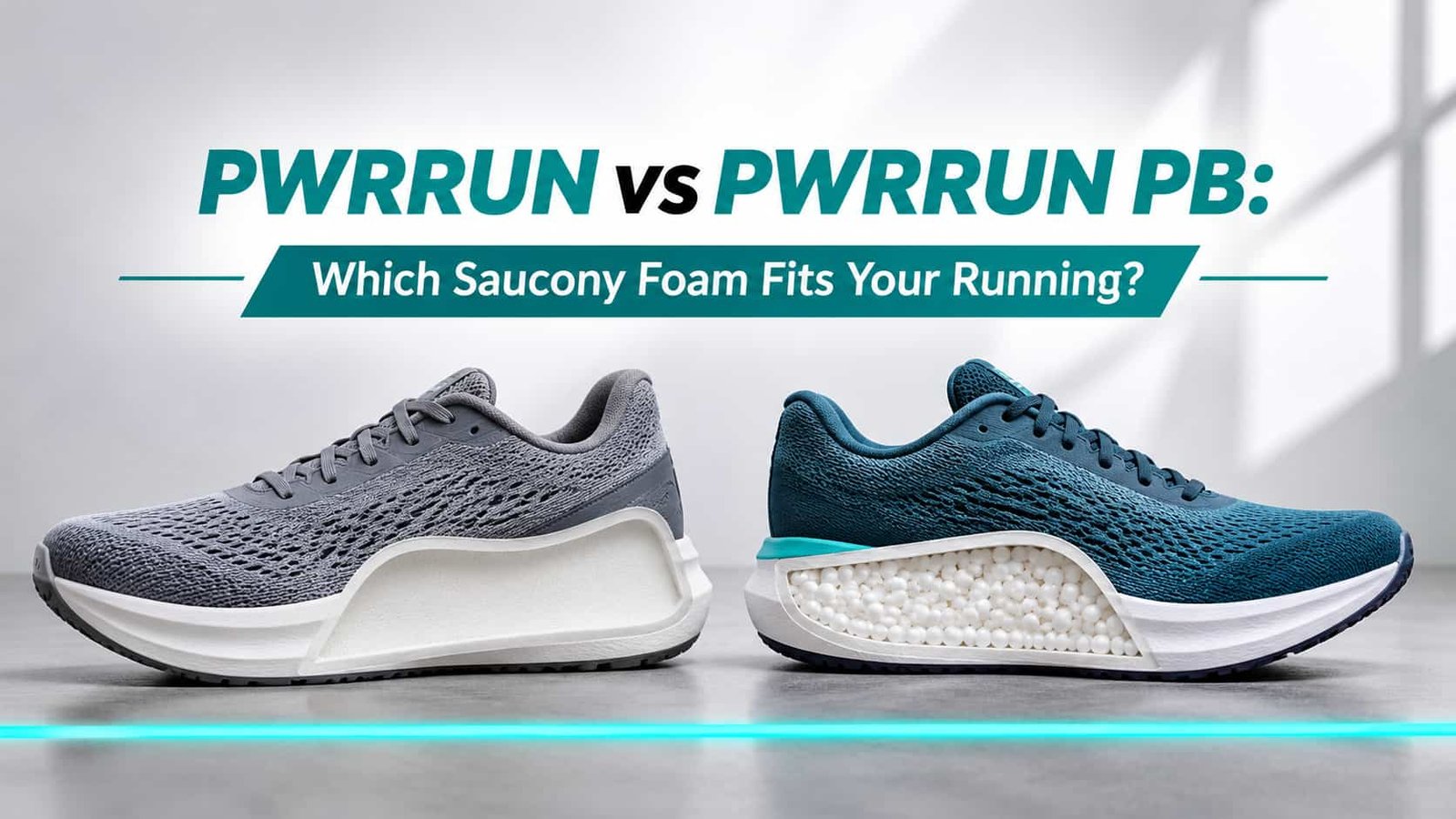
PWRRUN vs PWRRUN PB: Which Saucony Foam Fits Your Running?
Summarise this guide with AI
Open your preferred assistant and submit the prefilled request. The assistant only reads this page after you submit it.
- What PWRRUN (EVA) and PWRRUN PB (PEBA) are
- How they differ in feel, weight and energy return
- Which runs and shoes suit each foam
PWRRUN is Saucony’s blended EVA foam, built for dependable, everyday cushioning. PWRRUN PB is a PEBA beaded foam that Saucony describes as light, lively and energy-returning, aimed at tempo runs, workouts and fast days. Choose PWRRUN for steady training miles and comfort. Choose PWRRUN PB when you want quicker turnover and a more responsive ride.
Key Takeaways
- The two foams are built differently. PWRRUN is an EVA blend; PWRRUN PB is a PEBA foam formed from beads. That chemistry drives most of the difference in feel, weight and rebound.
- PWRRUN PB is the livelier foam. Saucony describes it as famed for exceptional energy return, and reviewers and lab testers generally place it well above standard EVA on rebound.
- Weight claims vary between sources. Third-party guides give different figures for how much lighter PB is than standard PWRRUN, so compare the actual shoe weights for your size.
- Durability favours EVA for high mileage. PEBA foams can lose their bounce sooner, so many runners rotate PB shoes with a PWRRUN trainer.
- Shoe choice matters as much as foam name. Stack height, plate, upper and fit all shape how each foam feels in a specific model.
What Is Saucony PWRRUN?
PWRRUN is the foam most runners will meet first in the Saucony range, and it is the least flashy of the family. Saucony’s foam technology page describes it as a proprietary EVA foam blend that delivers cushioning with high shock absorbency, aimed at protecting joints and tendons across many miles. The brand lists it under the heading “Dependable All-Around Comfort,” which is a good way to think about its role.
EVA, short for ethylene-vinyl acetate, has been a running shoe staple for decades. It is affordable, light enough for everyday use and generally durable. Compared with PEBA, EVA is less bouncy. It absorbs impact well but returns less energy on push-off. That trade-off is why it suits steady training rather than race-day speed.
Saucony names several shoes that use PWRRUN as their backbone, including the Guide 18, Kinvara 16, Peregrine 15 and Echelon 10. Those models span neutral, lightweight and trail-leaning styles, which shows how flexible an EVA blend can be when the shoe around it changes.
If you want a broader view of how EVA compares with other cushioning materials, our EVA foam explainer covers the material in more depth. Our running shoe foam overview places PWRRUN alongside other common foams.
What Is Saucony PWRRUN PB?
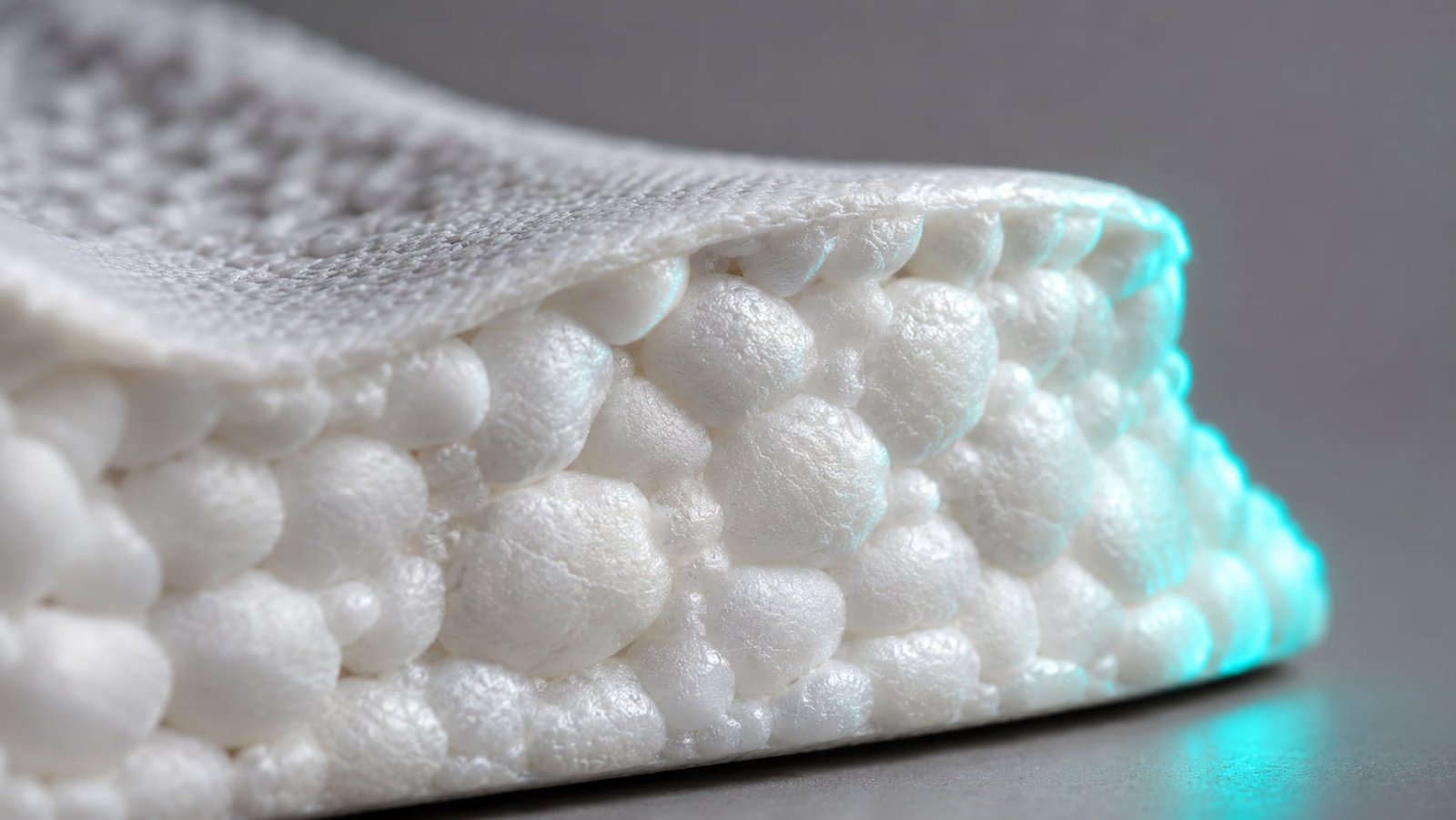
PWRRUN PB is the headline foam in Saucony’s more performance-oriented range. Saucony’s foam page lists its foam type as PEBA, short for polyether block amide, a thermoplastic elastomer used in many high-rebound racing shoes. The page describes PWRRUN PB as formulated with a special type of PEBA foam, famed for exceptional energy return, and engineered with foam beads to feel more responsive and cushioned at speed. The brand adds that it is lightweight and performs consistently across temperatures.
The bead structure is the key idea. Instead of a single block of foam, PWRRUN PB is built from many expanded particles fused together in a mould. The result is a midsole with a visible texture and a different feel from a solid block. Solereview, examining the foam in detail, noted that PWRRUN PB uses a moulding method similar to the one behind Saucony’s earlier e-TPU foam, with hundreds of PEBA globules joined together. That structure gives the foam its characteristic bounce and its distinctive surface.
Saucony’s technology blog describes PWRRUN PB as all about energy return, lightweight, lively and responsive, designed for workouts, tempo runs and fast running. It names the Endorphin Speed 5 and Endorphin Azura as examples. The foam now appears in a broader range than the Endorphin racers, including the Triumph 23, Tempus 2 and Hurricane 25, according to Saucony’s own foam page.
PWRRUN PB also sits within a family that includes PWRRUN HG and PWRRUN+. HG is a firmer, supercritical PEBA variant used in top racing shoes, and PWRRUN+ is a TPU foam that Saucony describes as exceptionally durable over long distances. Understanding where PB sits in that family helps you choose the right shoe.
PWRRUN vs PWRRUN PB: Main Differences
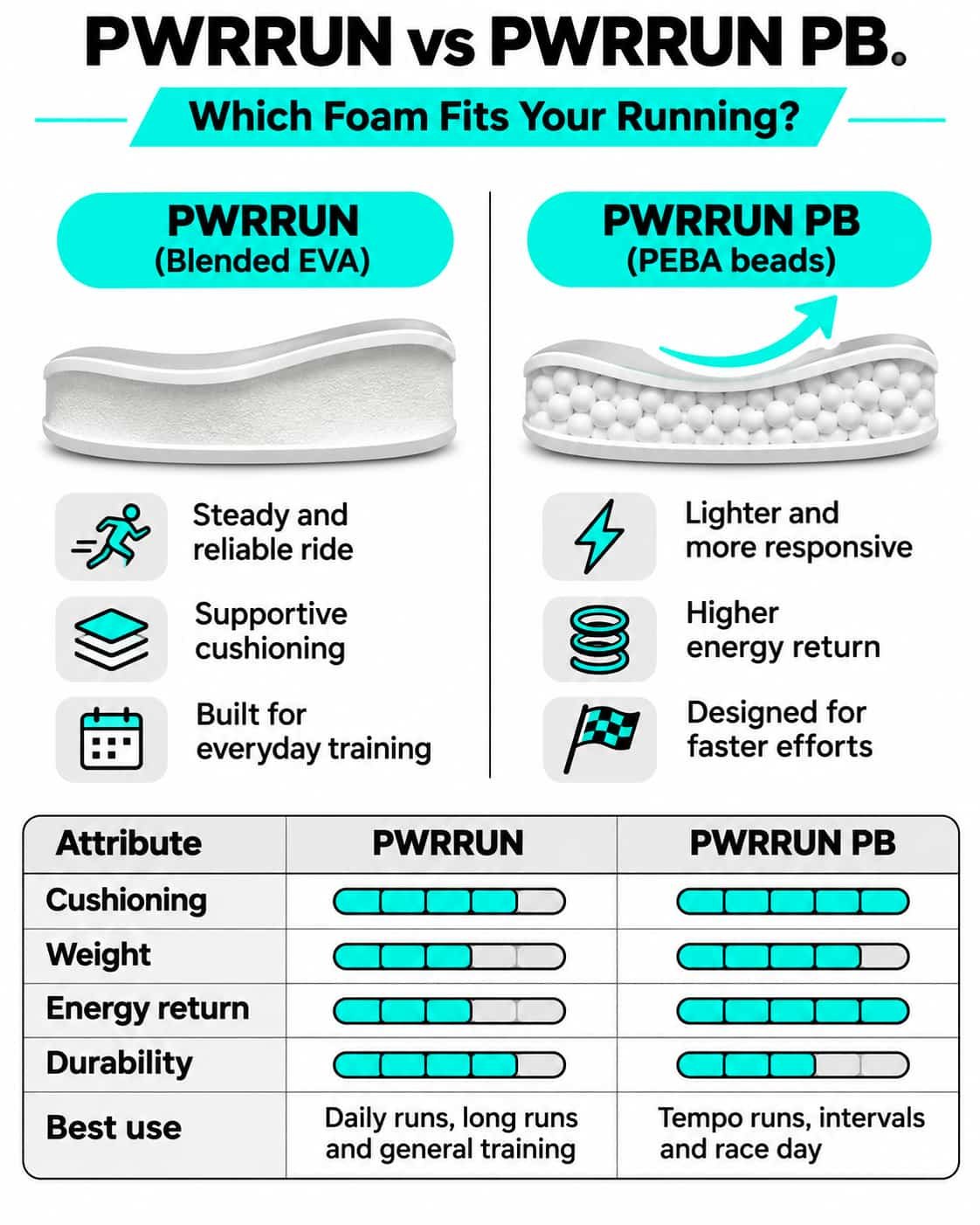
The two foams share a brand and a goal, which is to help you run comfortably and efficiently. Their character is quite different, and the table below sets out the key attributes using Saucony’s own positioning and independent reporting.
| Feature | PWRRUN | PWRRUN PB |
|---|---|---|
| Foam type | Blended EVA | PEBA, moulded from beads |
| Feel underfoot | Cushioned, steady, supportive | Soft yet springy, lively |
| Energy return | Moderate | High; Saucony emphasises exceptional return |
| Durability | Strong for high mileage | Can lose bounce sooner at high mileage |
| Best match | Easy and daily miles | Workouts, tempo runs and race day |
The table is a guide rather than a rulebook. Shoe design, stack height and fit can change how either foam feels in practice.
Cushioning and Underfoot Feel
Cushioning is where the two foams feel most different, and the difference is easy to notice within a few steps.
PWRRUN feels planted and dependable. It absorbs impact with a steady, predictable response, which suits runners who want their shoes to fade into the background. Saucony’s description of PWRRUN as the foam that protects joints and tendons over many miles fits this experience. It is a good match for the miles that should feel calm.
PWRRUN PB feels softer on landing and more buoyant at push-off. Reviewers often describe PEBA as having a springy, almost trampoline-like quality, and the beaded structure contributes to that. Weartesters, reviewing the Triumph 22 after its switch to PB, found that the foam did not deliver the same squish and bounce they expected from a PEBA shoe in the Endorphin range. That experience is a useful reminder that a foam’s feel depends on the shoe around it as well as the material itself.
The Triumph 22 is an instructive example of the trade-off. Its update swapped the older PWRRUN+ TPU for PWRRUN PB, and reviewers were divided. Some found the result plush and resilient. Others felt the upgrade did not transform the ride the way the foam name suggested. The lesson is that a high-end foam name does not guarantee a dramatic change in every model.
For many runners, the best test is simple. Put on each shoe, jog a few hundred metres and notice whether you feel settled or lifted. A settled feel points to PWRRUN. A lifted feel points to PWRRUN PB.
Weight and Responsiveness
Weight affects how a shoe feels over a session, especially when the pace rises. Lighter shoes ask less of your legs on each step, which is one reason PEBA has become popular in racing and workout shoes.
Third-party guides give different figures for how much lighter PWRRUN PB is. SneakerLens states that PB is about 40% lighter than the standard PWRRUN in one of its articles, and about half the weight of EVA in another. The discrepancy is a good reason to focus on the shoe weights you can check directly, rather than a percentage that may not reflect the shoe you are buying.
Responsiveness is the other half of the story. PWRRUN PB is designed to return energy quickly, which makes it feel responsive when you pick up the pace. A responsive shoe can help you maintain a quick cadence, and that benefit is most noticeable during tempo efforts and the final kilometres of a hard run.
PWRRUN is responsive in its own way. It feels more secure and controlled, with less spring but a more even and predictable response. For runners who find very bouncy shoes hard to settle into on slow miles, that steadiness can be a real advantage.
Think about your typical session. If most of your running is slow and steady, the calmer response of PWRRUN may be more comfortable. If your week includes workouts and quicker efforts, PWRRUN PB’s responsiveness may suit you better.
Energy Return and Rebound
Energy return is one of the most cited foam claims, and it deserves careful reading. The term describes how much of the energy you put into compressing a foam comes back during the next push-off. Higher return means a livelier feel. It does not guarantee a faster time, because pace depends on fitness, technique and training.
Saucony’s own foam page does not publish a numerical energy-return figure for PWRRUN PB. Figures reported by third-party guides come from brand claims or lab tests, and they should be read with that in mind. SneakerLens reports an 88% energy-return figure for PWRRUN PB, which it attributes to Saucony’s claims. RunRepeat’s independent lab testing found the Endorphin Speed 5, which uses PWRRUN PB, delivered 78.2% forefoot rebound in its test. Those numbers come from different methods, so they are not directly comparable, but both point to a foam that returns a large share of energy.
RunRepeat’s guide also makes a useful point about softness. Some runners assume that a softer shoe must return more energy, but the guide notes that softness and energy return are not closely linked. A foam can feel soft and still lose energy if it compresses too much or rebounds slowly. Judging rebound by feel alone can be misleading.
PWRRUN HG, the firmer PEBA variant, illustrates the same caution. Saucony has promoted HG with a 95% energy-return figure, and reviewers such as Doctors of Running reported its resilience in the Endorphin Elite. RunRepeat’s lab, however, found that HG did not outperform PB in its own tests. Brand figures and independent lab results do not always line up, which is why a balanced reading is worth the effort.
For practical purposes, PWRRUN PB is a foam that feels bouncy and returns energy well. PWRRUN is more about comfort and steadiness. Both are good choices, but for different sorts of running.
Durability and Long-Term Wear
Durability is often the trade-off that catches runners out. PEBA foams are light and lively, but many guides suggest they lose their peak bounce sooner than EVA. EVA is the more forgiving long-term option.
RunRepeat’s guide suggests that premium foams can maintain performance for up to about 300 miles, although results vary with body weight, pace and surface. It notes that many of these foams lose their most lively feel within 100 to 200 miles and then continue to perform adequately for training. For that reason, it advises against racing in premium foam shoes once they have accumulated more than about 200 km of use.
Research on PEBA and EVA shoes has produced mixed findings, which is worth knowing. RunRepeat summarises a 2023 study by Rodrigo-Carranza and colleagues that found a clear running-economy advantage for PEBA over EVA early in use, but performance became nearly indistinguishable after about 450 km. A 2024 study by Burns and Joubert, also cited by RunRepeat, presented contrary evidence, suggesting PEBA can maintain its characteristics across extensive use. Taken together, the research suggests that PEBA’s durability depends on the specific foam and how it is used, and that the answer is not a simple yes or no.
Saucony describes PWRRUN+ as exceptionally durable over long distances, and third-party guides often describe PWRRUN PB as more durable than traditional EVA in general terms. Those are useful pointers, but they are not a substitute for knowing how long a specific pair will last for you.
Practical steps can extend the life of both foams. Rotate pairs so each shoe has recovery time, avoid using race-day shoes for every run, and store shoes at room temperature rather than in hot cars. Our guide to how long running shoes last covers the signs of worn cushioning. For cleaning and care, see our shoe maintenance guide.
Which Is Better for Daily Running?
For most runners who cover a few easy miles each day, PWRRUN is the more practical choice. It offers steady cushioning, good shock absorption and a foam that is generally regarded as a dependable everyday material. If your priority is consistency and value over many months, EVA-based shoes give you that balance.
PWRRUN PB can still work for daily running, especially for runners who enjoy a lively ride. Saucony’s own positioning includes PB in everyday and speed shoes, and models such as the Triumph 23 use it for plush daily cushioning. If you choose a PB shoe for daily miles, expect a softer, springier feel and plan to replace it sooner than a PWRRUN trainer if you run high volumes.
A common and sensible approach is to use a PWRRUN trainer for most runs and a PB shoe for workouts or longer quality sessions. That rotation lets each foam do what it does best. It also gives your legs variety in impact and response, which many runners find comfortable.
If you only buy one pair, match the shoe to your typical week. Mostly easy running points toward PWRRUN. Regular tempo work and fast running point toward PWRRUN PB.
Which Saucony Shoes Use PWRRUN?
PWRRUN is Saucony’s most widely used foam, and it sits under many of the brand’s daily trainers. According to Saucony’s foam page, models built around PWRRUN include:
- Guide 18, a support-oriented trainer that is widely used in the Guide line
- Kinvara 16, a lighter, more minimal-feeling daily shoe
- Peregrine 15, a trail-leaning shoe that uses the same blended EVA
- Echelon 10, a neutral daily trainer
These shoes show how a single foam can support different ride characters. The Guide is more structured, the Kinvara lighter and more fluid, and the Peregrine built for uneven ground. When comparing shoes, check the stack height, drop and upper design as well as the foam, because they all influence the final feel.
Saucony’s PWRRUN+ is a related TPU foam that the brand highlights for durability. It appears in the Ride 18, which Saucony names among its long-distance favourites. If durability is your top priority, PWRRUN+ shoes are worth comparing alongside standard PWRRUN.
Which Saucony Shoes Use PWRRUN PB?
PWRRUN PB has moved from race shoes into a wider range. Saucony’s foam page lists these models as using PWRRUN PB:
- Endorphin Speed 5, a lightweight speed shoe that RunRepeat tested with a 78.2% forefoot rebound figure
- Triumph 23, a plush daily cushioning shoe that Saucony positions for comfort with a responsive edge
- Tempus 2, a supportive shoe built for training
- Hurricane 25, which Saucony presents as a PB-based option in its range
Reviewers have also tested the Triumph 22, which replaced the earlier PWRRUN+ TPU with PB. Fleet Feet described the switch as a surprising change, and Weartesters found the ride less dramatic than the Endorphin shoes. The Triumph 22 is a useful case study in how a foam change can be expected to transform a shoe, while the actual difference depends on the full design.
Saucony’s blog also names the Endorphin Azura as a PWRRUN PB shoe. The Endorphin family is the brand’s clearest home for PEBA-based speed and tempo work. Because the family includes different foams, including HG and incrediRUN in the Elite and Pro lines, check the specific model’s midsole before buying.
PWRRUN PB vs ZoomX: Key Differences
Many runners compare PWRRUN PB with Nike’s ZoomX, because both are associated with PEBA and high energy return. The comparison is useful, but the two foams are not identical.
Both are PEBA-based. Nike’s ZoomX is often described as a Pebax-based foam, and RunRepeat notes that Pebax is a trademarked form of PEBA. Saucony also has an agreement with the same supplier, Arkema, to use Pebax, but RunRepeat says PWRRUN PB uses a different formulation and a different format. PWRRUN PB is made from pellets or beads, while ZoomX is typically moulded from a more solid form. That difference in structure can affect the feel, the surface texture and how the foam behaves over time.
Nike has also changed ZoomX across versions. RunRepeat describes the first generation as very soft but less durable, and later versions as firmer and more durable, with some versions tuned differently between models. Because the foam name can hide different formulas, comparing a specific Saucony shoe with a specific Nike shoe is more useful than comparing the two foam names alone.
RunRepeat’s independent view is that PWRRUN PB is a strong all-rounder that sits slightly behind the top-performing premium foams in its tests. That is a reasonable place for a foam that is widely available and often sold at a lower price than the most expensive racers.
If you are choosing between the two, consider the shoe’s fit, price, intended use and how long you expect it to last. A ZoomX shoe may suit a race-focused runner. A PWRRUN PB shoe may suit a runner who wants a responsive ride across a broader range of training.
How to Choose the Right Saucony Foam
Use these questions to narrow your choice before you shop.
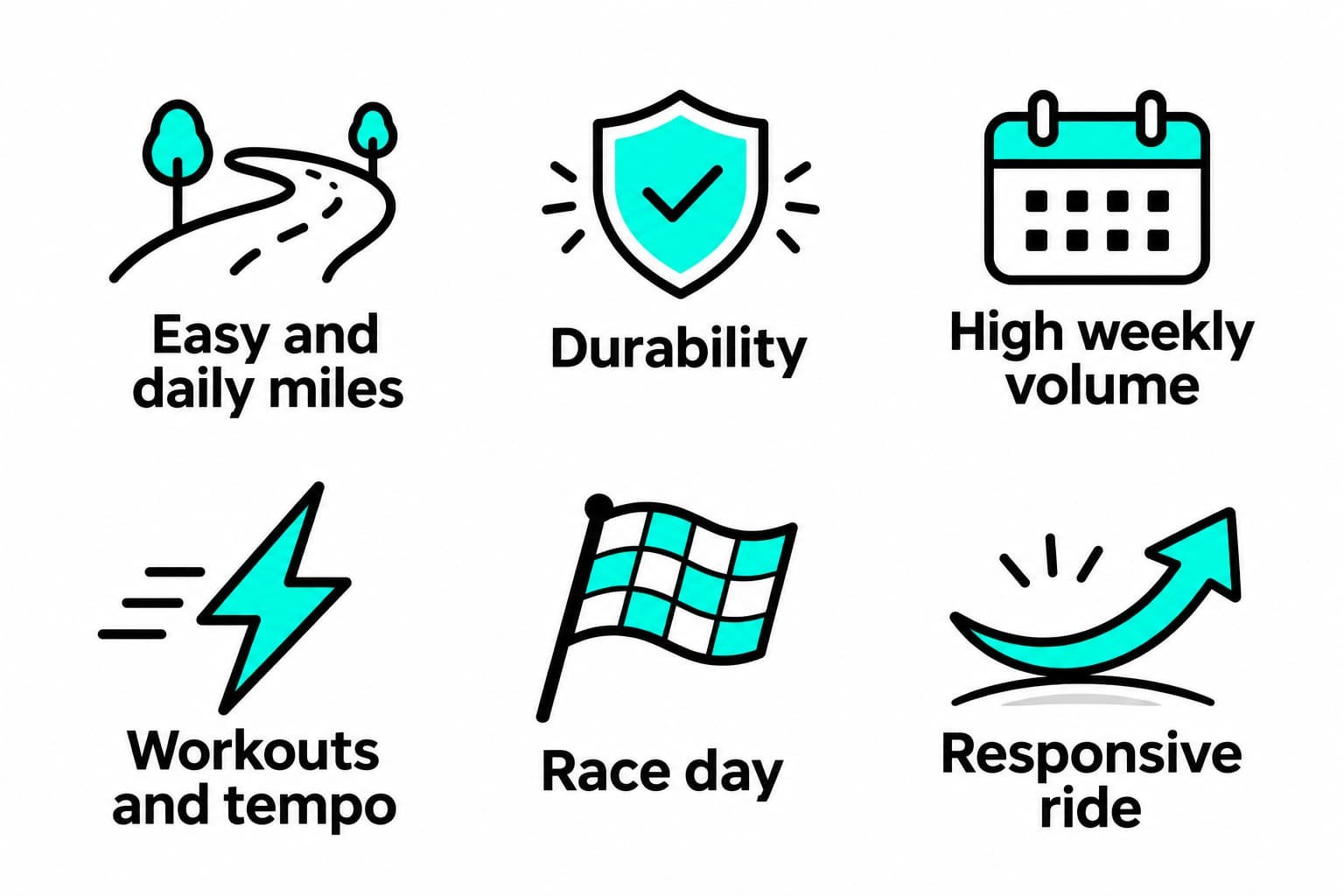
1. What is your main type of run? Easy and steady running suggests PWRRUN. Workouts, tempo runs and races suggest PWRRUN PB.
2. How many miles do you cover each week? High weekly volume favours PWRRUN or PWRRUN+ for durability. Lower volume with quality sessions suits PWRRUN PB.
3. What feel do you want? Choose PWRRUN for steady, planted cushioning. Choose PWRRUN PB for a lively, springy ride.
4. How do your legs feel at the end of a hard session? If you feel worn down, a comfortable trainer may help. If you want more propulsion, a responsive shoe may suit you better.
5. Do you need stability? Check the specific model’s support features and design. The foam is only one part of the shoe.
6. What is your budget and replacement plan? PB shoes often cost more and may need replacing sooner at high mileage. Plan for that before you buy.
7. Have you tried the fit? Width and length vary between models. Walk and jog in the shoe, and choose the one that feels secure and comfortable.
If you are unsure, consider owning a PWRRUN trainer for most runs and a PWRRUN PB shoe for quality sessions. That combination covers the widest range of training. For help narrowing down options, our shoe finder can filter by use case, and our footwear knowledge hub collects guides on materials and fit. To see how comparison guides on this site are built, read our methodology.
Common Myths About PWRRUN and PWRRUN PB
Myth: PWRRUN PB is always the better foam. Not for every runner. PB is livelier and lighter, but PWRRUN may suit runners who want steady cushioning and long-term durability.
Myth: Energy return guarantees faster running. Energy return describes how a foam behaves, but pace depends on fitness, training and technique. Treat it as one factor among many.
Myth: Softer foam always returns more energy. As RunRepeat points out, softness and energy return are not the same thing. A foam can feel soft and still lose energy.
Myth: A high-end foam name means a dramatic change in every shoe. The Triumph 22 shows that a foam change can produce a different result depending on the full shoe design.
Myth: PEBA shoes are only for racing. Saucony now uses PWRRUN PB in daily and training shoes as well as racers. Still, PEBA foams tend to suit runners who value responsiveness and accept a shorter lifespan.
Frequently Asked Questions
Is PWRRUN PB better than PWRRUN?
It depends on what you need. PWRRUN PB is lighter and more responsive, which suits workouts and fast running. PWRRUN is a dependable EVA blend that suits steady and everyday training.
What is PEBA foam?
PEBA stands for polyether block amide, a thermoplastic elastomer. It is used in many high-rebound running foams because it is light and returns energy well. Our reading of the sources is that its durability can be shorter than EVA’s, depending on the foam and how it is used.
What is PWRRUN+?
PWRRUN+ is a TPU foam that Saucony describes as exceptionally durable over long distances. It is a separate foam from PWRRUN and PWRRUN PB, and it appears in models such as the Ride 18.
Is PWRRUN HG the same as PWRRUN PB?
No. HG is a firmer, supercritical PEBA variant used in top racing shoes. Saucony has promoted HG with a 95% energy-return figure, but RunRepeat’s lab testing found that HG did not outperform PB.
Can I use a PWRRUN PB shoe every day?
You can, but expect a softer, lighter feel and plan to replace the shoe sooner if you run high mileage. Rotating with a PWRRUN trainer is a common approach.
Is PWRRUN PB similar to Nike ZoomX?
Both are PEBA-based and both are associated with high energy return. They are not identical. PWRRUN PB uses a beaded format, while ZoomX is typically moulded differently, and each brand adjusts its foam across models.
How long do PWRRUN PB shoes last?
Public data is limited and varies by runner. Third-party guides suggest many PEBA shoes lose their peak bounce within roughly 100 to 300 miles. Track your mileage and watch for changes in feel.
Final Verdict
PWRRUN and PWRRUN PB serve different needs within the same brand. PWRRUN is the dependable EVA blend for steady, everyday miles. PWRRUN PB is the lighter, livelier PEBA foam for workouts, tempo runs and fast days.
If you run mostly easy miles and value longevity, start with a PWRRUN trainer. If your week includes quality sessions and you enjoy a responsive ride, a PWRRUN PB shoe is worth trying. Many runners benefit from owning both. Before buying, check the current model’s specs, read more than one review and try the shoe on if you can. The right foam is the one that matches the runs you actually do.
Sources
- Saucony. “Saucony Foam Technologies for Cushioned Shoes.” https://www.saucony.com/en/foam-technologies/
- Saucony. “Running shoe tech blog: PWRRUN cushioning explained.” https://www.saucony.com/en/blog-running-shoe-tech/
- RunRepeat. “The Ultimate Guide to Running Shoe Foams” (updated October 2025). https://runrepeat.com/guides/running-shoe-foams-guide
- SneakerLens. “Saucony PWRRUN, SPEEDROLL & FORMFIT Explained.” https://www.sneakerlens.com/saucony-pwrrun-speedroll-formfit-explained/
- SneakerLens. “What Is Saucony PWRRUN PB Foam?” https://www.sneakerlens.com/blog/what-is-saucony-pwrrrun-pb-foam/
- SoleReview. “Pwrrun PB foam analysis.” https://www.solereview.com/?p=14426
- Road Trail Run. “Saucony Triumph 22 Review: Supercritical Foam Cruiser.” https://www.roadtrailrun.com/2024/04/saucony-triumph-22-review-supercritical.html
- Fleet Feet. “Saucony Triumph 22 Review: A Triumphant Return.” https://www.fleetfeet.com/blog/saucony-triumph-22-review-a-triumphant-return
- WearTesters. “Saucony Triumph 22 Performance Review.” https://weartesters.com/saucony-triumph-22-performance-review
- Doctors of Running. “Saucony Endorphin Elite Review (2023).” https://www.doctorsofrunning.com/2023/01/saucony-endorphin-elite-review-2023.html
- Arkema. Pebax and PEBA material information. https://www.arkema.com/global/en/
- Rodrigo-Carranza et al. (2023), running economy of PEBA and EVA shoes, Scandinavian Journal of Medicine & Science in Sports. https://onlinelibrary.wiley.com/doi/10.1111/sms.14526
- Burns, G.T. and Joubert, D.P. (2024), International Journal of Sports Physiology and Performance. https://journals.humankinetics.com/view/journals/ijspp/aop/article-10.1123-ijspp.2023-0446/article-10.1123-ijspp.2023-0446.xml


