
How to remove creases from shoes (Iron Method) & Prevention Guide 2026
There is a specific kind of heartbreak known only to sneakerheads and footwear enthusiasts. It happens when you look down at your fresh, crisp white leather sneakers—perhaps a classic Air Force 1 or a pristine Jordan—and see it: the “Grand Canyon” of creases running right across the toe box.
In my 20+ years of running a physical shoe store and handling thousands of pairs of shoes—from budget beaters to high-end collectibles—I’ve seen customers genuinely distressed by this. We often think creases are the end of a shoe’s lifespan, a sign that they are now “beaters.”
But here is the truth I’ve learned from two decades on the shop floor: Leather is skin. Just like skin, it wrinkles. And just like skin, with the right heat and hydration, it can be smoothed out.
In this guide, I’m going to teach you the “Iron Method“—the gold standard for sneaker restoration. We will look at how to fix the damage, and more importantly, how to use a shoe crease protector to stop it from coming back.
TL;DR: The Rapid Fix for remove creases from shoes
Can you iron creases out of sneakers? Yes. Here is the safest method to restore shape:
- Stuff the shoe: Pack the toe box tightly with socks or a shoe tree until the leather is stretched flat and the crease disappears.
- Prepare the barrier: Dampen a clean, white cotton towel or washcloth. It should be moist, not dripping wet.
- Heat application: Set your iron to a medium setting (no steam). Place the damp towel over the creased area.
- Iron: Gently iron over the towel in circular motions for 10–15 seconds at a time. Check the leather frequently.
- Cool down: Leave the stuffing inside until the shoe cools completely to set the shape.
Pro Tip: To prevent future damage, insert a shoe crease protector immediately after the shoe cools down.
Why This Topic Matters (The Retailer’s Perspective)
Why do we care so much about creases? In my shop, I’ve noticed a pattern. Buyers often blame the quality of the shoe for creasing, assuming that “real leather” shouldn’t wrinkle.
Actually, the opposite is true. High-quality full-grain leather will crease because it is soft and flexible. Synthetic plastic-coated leather might resist creasing for a while, but when it finally gives, it cracks.
The problem isn’t usually the material; it’s the geometry of walking. When you step, your foot flexes at the metatarsal heads (the ball of your foot). Your shoe has to bend with you. If there is excess space in the toe box (a common issue with sizing), the material folds deeply over onto itself.
After selling footwear for over 20 years, I’ve realized that most people don’t hate the crease itself—they hate that it makes the shoe look old before its time. Learning the iron method isn’t just about vanity; it’s about extending the lifecycle of your investment.
The Iron Method: A Step-by-Step Masterclass
This isn’t just about pressing a hot metal plate against your shoe. That is a recipe for disaster (and melted soles). This is the safe, controlled method we recommend to keep your kicks looking factory-fresh.
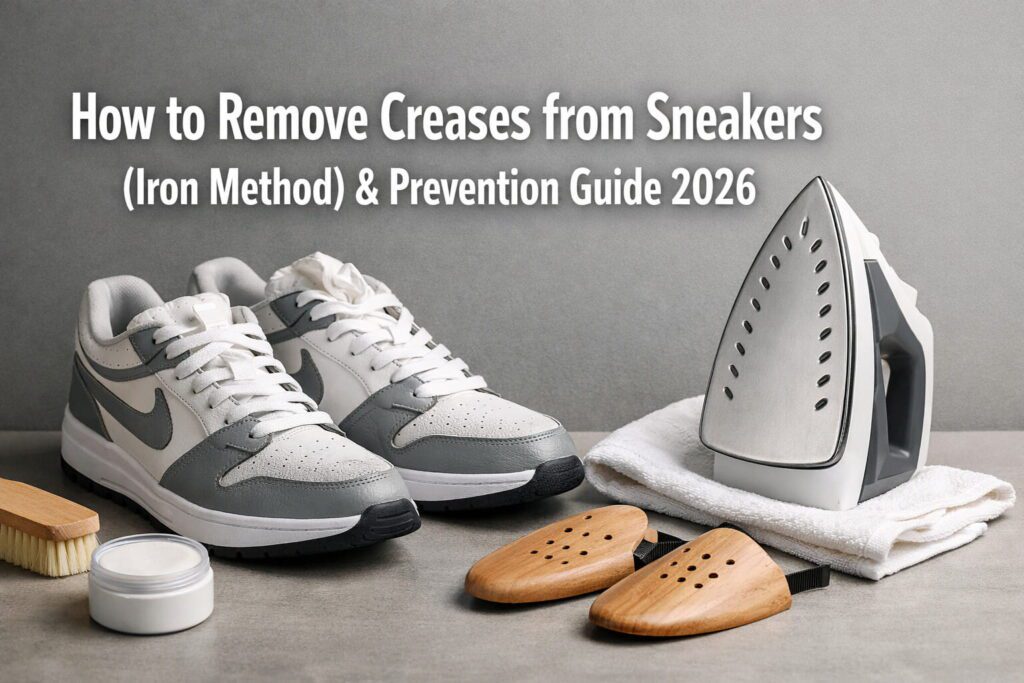
What You Need
- An iron (standard household iron is fine).
- A white washcloth or small towel (colored towels might bleed dye onto white stitching).
- Water.
- Old socks, packing paper, or a rigid shoe tree.
Step 1: The “Deep Clean” Pre-Check
Do not iron a dirty shoe. If there is dirt or grit in the crease, the heat will bake that dirt into the pores of the leather. Give the toe box a quick wipe-down with a leather cleaner or mild soapy water and let it dry.
Step 2: The Stuffing Strategy
This is where 90% of people fail. You need to stuff the shoe so tightly that the crease is physically pushed out from the inside.
- The Shop Trick: Use a wooden shoe tree if you have one, but frankly, tightly packed old socks work better for ironing because you can mould them specifically into the corners of the toe box. The surface needs to be rock hard.
Step 3: The Damp Barrier
Take your white cloth and wet it. Wring it out until it is damp. You want to create steam, not a puddle.
- Why this matters: You are essentially steaming the leather through the cloth. The moisture relaxes the collagen fibers in the leather, allowing them to realign.
Step 4: The Heat Application
Place the damp cloth over the toe box. Set your iron to the mid-range (usually the “Wool” or “Cotton” setting).
- The Technique: Press down gently. Keep the iron moving. Do not hold it in one spot. Iron the specific creased area for 10-second intervals.
- The Check: Lift the towel. Is the leather hot? Good. Is the crease fading? Great. If the leather feels dry, re-wet your towel.
Step 5: The Cool Down
Once the creases are gone, do not remove the stuffing. The leather is currently hot and pliable. If you take the stuffing out now, it will slump back into its old shape. Let the shoes sit for at least 30 minutes until they are cool to the touch.
Prevention: The Role of the Shoe Crease Protector
You have successfully ironed your shoes. They look brand new. But the moment you take your next step, that crease is going to try to return. This is where modern footwear accessories come into play.
If you are serious about sneaker culture, you need to understand the shoe crease protector.
What is a Shoe Crease Protector?
A shoe crease protector (sometimes called a crease guard or shield) is a plastic or foam insert that sits inside the toe box, specifically between your toes and the upper material of the shoe.
When you walk, the protector acts as a scaffold. It forces the shoe to stay flat, preventing the material from folding deeply.
How to Choose the Right Protector
In my experience seeing customers try these on in-store, there is a major trade-off: Rigidity vs. Comfort.
- Hard Plastic Shells:
- Pros: Maximum protection. The crease literally cannot form.
- Cons: Can dig into your toes. If you have wide feet, these can be brutal.
- Best for: Jordan 1s, Dunk Highs, boots.
- Soft Foam/TPR Hybrids:
- Pros: Much more comfortable. You can often cut them to size.
- Cons: They eventually break down and offer slightly less support than hard plastic.
- Best for: Running shoes, softer leather casuals, daily wear.
Retailer Insight: If you buy a shoe crease protector, you often need to loosen your laces slightly. The protector takes up volume inside the shoe. If your shoes are already tight, a protector might make them unwearable.
CTA: [Check out the top-rated Shoe Crease Protectors on Amazon]
Material Deep Dive: Does This Work on All Shoes?
Not all materials react to heat the same way. Here is a breakdown based on the materials I’ve analyzed over the years.
1. Full-Grain Leather (The Best Candidate)
This is the skin of the hide. It has natural oils and fibers.
- Iron Method: Works perfectly. The heat redistributes the oils.
- Outcome: 90-95% restoration.
2. Synthetic / “Vegan” Leather (PU)
This is fabric coated with polyurethane.
- Iron Method: Risky. High heat can melt the plastic coating.
- Expert Advice: Use a thicker towel and lower heat. Do not over-iron.
- Outcome: 70% restoration. Be careful—synthetic creases often turn into cracks, which cannot be fixed.
3. Suede and Nubuck
- Iron Method: WARNING. Direct water and iron pressure can flatten the “nap” (the fuzzy texture) of suede, ruining the look.
- Alternative: Use a steamer from a distance (don’t touch the shoe) and use a suede brush to lift the fibers. Do not iron directly.
4. Mesh and Knit (Primeknit/Flyknit)
- Iron Method: Generally unnecessary. These materials are designed to stretch and bounce back. Ironing them creates a risk of melting the nylon fibers.
Pro-Tips: Insider Secrets from the Shop Floor
After years of checking returns and helping customers with fit issues, here are a few secrets the brands won’t tell you.
- The “Half-Size” Rule: The number one cause of excessive creasing isn’t “cheap leather”—it’s buying shoes that are too big. If there is too much empty space in the toe box, the shoe folds in on itself. If you are between sizes, go half a size down for leather sneakers to minimize creasing.
- The Rotation Strategy: Never wear the same pair of leather sneakers two days in a row. Leather absorbs moisture from your foot sweat. Wet leather creases faster and deeper. Give them 24 hours to dry out and rest.
- The Cardboard Trick: Don’t have a shoe crease protector handy? In a pinch, keep the cardboard inserts that came with the shoes. Cut them down and slide them back in when you aren’t wearing the shoes. It’s a free way to maintain shape while they sit on the shelf.
Comparison: Ironing vs. Other Methods
Is the iron method really the best? Let’s look at the data.
| Method | Effectiveness | Risk Level | Cost | Best For |
|---|---|---|---|---|
| The Iron Method | High (Immediate Results) | Moderate (Heat damage) | Free | Leather & Synthetic |
| Steamer | Medium | Low | $$ | Suede & Nubuck |
| Shoe Crease Protector | High (Preventative) | Low (Discomfort) | $ | Prevention (All Shoes) |
| Blow Dryer | Low | High (Uneven heat) | Free | Quick touch-ups |
Common Mistakes to Avoid
Even with the best intentions, I’ve seen people ruin limited edition shoes. Avoid these errors:
- Skipping the Water: Ironing dry leather is like ironing dry skin—it burns. The moisture is the vehicle for the heat.
- Using a Colored Towel: I once saw a guy iron a white Air Force 1 with a red towel. His shoes turned pink. Always use white cotton.
- Impatience: Ironing for 2 minutes straight without checking. You need to check every 15 seconds to ensure the glue holding the sole hasn’t started to soften.
- Ignoring the Heel: While we focus on toes, the heel counter can also get crushed (usually from stomping your foot in without a shoehorn). The iron method works there too, but requires careful stuffing.
FAQs
1. Will ironing sneakers damage the glue? Excessive heat can soften the glue connecting the upper to the sole. This is why you must focus the iron only on the upper leather and avoid touching the rubber midsole or the seam where they meet.
2. How long does the iron method last? It isn’t permanent. Without a shoe crease protector, creases will return within 1-3 wears. Ironing resets the clock; it doesn’t stop time.
3. Do shoe crease protectors hurt? They can be uncomfortable initially. I recommend buying protectors made of softer foam or cutting the hard plastic ones to better fit your specific foot shape.
4. Can I iron creases out of patent leather (shiny leather)? Be extremely careful. Patent leather has a high-gloss plastic finish. Heat can cloud this finish or cause it to peel. It is safer to use a steamer for patent leather.
5. Does walking differently stop creasing? Some people do the “penguin walk” to save their shoes. Honestly? It’s not worth the back pain. Buy good shoes, use a protector, and walk normally.
6. Can I use a blow dryer instead of an iron? You can, but it is less effective. An iron provides pressure and heat, which presses the leather flat against the stuffing. A blow dryer only provides heat.
7. Why do my shoes crease immediately? This usually indicates the shoe is too large or the leather is of lower quality (corrected grain) which folds sharply rather than rolling gently.
8. Can you fix cracked leather creases? No. Once the material has physically cracked or the paint has split, ironing will not fix it. You would need leather filler and paint to restore that.
9. Are shoe trees better than socks for ironing? For storage, yes. For ironing, socks are often better because you can pack them tighter into specific odd shapes inside the toe box to provide a firm backing for the iron.
10. Is it better to buy expensive shoes to avoid creases? Not necessarily. High-end, soft Italian leather often creases more than cheap, stiff synthetic leather. However, high-end leather creases look more natural and “distinguished” compared to the sharp, plastic-looking folds of cheap shoes.
Final Thoughts
Sneakers are meant to be worn. A crease tells a story of where you have walked and what you have done. However, there is a fine line between “character” and “sloppy.”
Using the iron method is a fantastic skill to have in your arsenal. It keeps your rotation looking fresh and extends the life of your favorite pairs. But remember, the best offense is a good defense. Invest in a quality shoe crease protector and a cedar shoe tree, and your future self will thank you.
Ready to protect your investment? [Browse top-rated shoe care kits and protectors here].
- Best Crocs for Nurses 2026: ASTM-Certified Work Clogs & Reviews
- Best Dansko Nursing Shoes 2026: Professional Clogs Guide
- Best CNA Shoes 2026: 9 Comfortable Picks for Long Shifts
- Best Shoes for Pharmacy Technicians 2026 – Comfort & Slip Resistance
- 11 Best Shoes for Healthcare Workers in 2026: Hospital & Clinical Picks