

How to Clean Work Boots: What Eight Care Guides Say

Quick answer: dry brush off the dirt, clean the leather with a leather cleaner or mild soap on a damp cloth, remove all residue, air dry away from heat, then condition when the leather looks dry. Skip the washing machine.
We compare eight guides and answer the questions workers ask most.
How to Clean Work Boots: Eight Guides Compared
We read eight care guides from Red Wing (two pages), Timberland, Danner, Chippewa, Wolverine, BootWorld and Wilco Farm Stores. They agree on brushing first, cleaning with a leather cleaner or mild soap, air drying and conditioning. They differ on how often to condition, which oil to use and how to handle drying.
| Topic | Red Wing | Timberland | Danner |
|---|---|---|---|
| Cleaning | After each use, remove loose dirt with a soft brush or damp cloth. For grime, use leather cleaner or mild soap on a damp cloth. Heavy soil: foam leather cleaner, wiped off with a damp cloth. | Brush off dirt, apply cleaner on a damp cloth, rinse with water and dry with a clean cloth. | Brush often. Deep clean with a cleaning foam, weekly for heavy use or every 1 to 2 months for light to moderate use. |
| Conditioning | Boot oil, leather cream or mink oil chosen by boot type. A small amount, soaked overnight, then wipe off the excess. No set frequency. | A waxed leather protector rubbed over the boot, dry at least 10 minutes before wearing. | About every couple of months for regular wear, weekly for heavy use. Boot wax or dressing on full-grain leather. |
| Drying | Air dry at room temperature. Avoid radiators and hair dryers. | Not covered beyond the steps. | Use a boot dryer after each wear if boots are wet inside. Avoid fires and sunlit cars, because drying too quickly can damage leather and rubber. |
| Protection | Leather protector spray. Reapply every few weeks or after heavy rain or mud. | A balm proofer spray, dry at least 24 hours before wearing. | Waterproofing conditioner spray for suede and nubuck. |

| Topic | Chippewa | Wolverine | BootWorld and Wilco |
|---|---|---|---|
| Cleaning | Brush dirt from creases and seams. Work in leather cleaner or saddle soap with a slightly damp cloth and wipe all residue off. Never let cleaner dry on the leather. | Remove laces and wipe with a damp cloth, paying attention to stitching. Brush leather with a horsehair brush. | BootWorld: dry brush, lightly wet scrub, then use leather cleaner or soapy water, and remove all soap. Wilco: cleaning gel and a nylon brush for oil-based dirt. |
| Conditioning | A small amount, soaked about 15 minutes, then wipe off the excess. Cream or paste polish. Polish every 4 to 6 weeks on regularly worn boots. | Condition leather at least 1 to 2 times a month. No oils or conditioners on suede or nubuck. Avoid silicone or alcohol products. | BootWorld: match the oil to the leather, with heavier work leather taking mink oil or leather grease. |
| Drying | Air dry completely before conditioning. An electric boot dryer helps after work. | Air dry. “Do not use heat.” Rest boots a day between wears and use shoe trees. | BootWorld: no heat. Wilco: no fireplace, since heat can harm leather and adhesives. Remove laces and insoles first. |
| Avoid | Over-polishing, which can crack leather. Untested products. | Leaving dirt on boots, which abrades stitching and leather. | BootWorld: too much water, soap residue. Rotate at least two pairs. Wilco: sweat salt can crack leather from inside. |
All of these makers and retailers sell boots, care products or both, so some product advice is tied to their own range. None publishes lab tests of cleaned boots.
Step by Step: Cleaning Leather Work Boots
The shared method, with who says what:
- Remove loose dirt first. BootWorld says to remove loose dirt and debris by hand because it is abrasive to leather, then dry brush with a soft brush or cloth. Red Wing says to brush after each use. Chippewa says to focus on creases and seams.
- Take out the laces. Wolverine says to remove the laces and wipe the upper and outsole with a damp cloth, with close attention to the stitching.
- Clean the leather. Red Wing: leather cleaner or mild soap on a damp cloth. Chippewa: leather cleaner or saddle soap. BootWorld: a leather cleaner, soapy water or a diluted soap and vinegar solution. Timberland: its boot cleaner on a damp cloth.
- Remove every trace of soap. Chippewa says never to let cleaner dry on the leather. BootWorld says all soap needs to be removed.
- Clean the oily and greasy dirt. Wilco says to use a cleaning gel and nylon brush for oil-based dirt and excess wax. Danner warns that its stiff nylon cleaning brush can scuff soft leather, so test first.
- Dry fully, away from heat. See the drying section.
- Condition, then protect. See the next sections.

Test any new product on a hidden spot first. Chippewa and Wolverine both say so.
Sweat, Smell and Rotation
The inside. Wilco says sweat salt soaks through the lining and can dry out and crack the leather, and suggests cleaning the inside with mild detergent and rinsing thoroughly. BootWorld sprays undiluted white vinegar inside and lets the leather air dry completely, then sprinkles baking soda inside overnight and shakes it out in the morning. Danner says to dry boots with a boot dryer after each wear if they are wet inside from weather or sweat, to limit odour-causing bacteria. Chippewa also recommends an electric boot dryer after work.
Rotation. BootWorld says to avoid wearing the same pair every day and to rotate at least two pairs so each dries out. Wolverine says to give boots a day to rest and breathe between wears and to use shoe trees to keep shape and absorb moisture and odour.
How to Dry Work Boots
Every source that mentions drying says to avoid heat:
- Red Wing: avoid direct heat sources like radiators or hair dryers, which can dry out the leather. Storage should avoid direct sunlight and damp spots.
- Wolverine: “Do not use heat.” Let wet boots air dry thoroughly before wearing them again.
- Danner: avoid fires and cars in direct sunlight. Drying too quickly can prematurely damage leather and rubber.
- Wilco: excessive heat causes irreversible damage to leather and can harm the adhesives and cements holding the boot together.
- BootWorld: avoid speeding up drying with heat or absorbent materials.
- Boot dryers: Danner, Chippewa and Wilco all name an electric boot dryer as a safe way to dry from the inside. Wilco says to let boots dry for 24 hours after treatment.

How and How Often to Condition Work Boots
This is where the sources differ most:
| Source | How often | What to use | Warnings |
|---|---|---|---|
| Red Wing | No set frequency. | Boot oil, leather cream or mink oil, chosen by boot type. | Apply a small amount, soak overnight, wipe off the excess. |
| Danner | Every couple of months for regular wear, about weekly for heavy use. | Boot wax or dressing on full-grain leather. | Dressing is not recommended on suede or nubuck. |
| Wolverine | At least 1 to 2 times a month. | A conditioner covering all leather surfaces, including a leather outsole. | Test first because it may darken some leathers. Avoid silicone or alcohol. None on suede or nubuck. |
| Chippewa | Polish every 4 to 6 weeks for regularly worn boots. | Conditioner soaked about 15 minutes, then cream or paste polish. | Over-polishing can crack leather. |
| BootWorld | Once boots are clean and dry. | Match the oil to the leather. Heavier work leather takes heavier oil such as mink oil or leather grease. | Dyed leather does not need polish. |
For leather conditioning in general, see our leather conditioning guide. For suede and nubuck work boots, see our nubuck guide.
Waterproofing and Protection
Red Wing says to reapply its leather protector every few weeks or after heavy rain or mud, and that prolonged moisture can still degrade leather even on waterproof boots. Timberland uses a proofer spray and says to let boots dry for at least 24 hours before wearing. Chippewa says to apply waterproofing right after purchase, even if the boots are already waterproof. BootWorld says rub-on waxes or oils last longer but take more effort, while spray-on products are quicker but wear off sooner. Wolverine says to apply an edge sealer, wax or polish on leather boots with a leather-edge outsole.
Resoling and Steel Toe Boots
Wolverine says Goodyear welt boots can be resoled or re-heeled when needed, but if they are worn too long they may not be repairable. Wolverine also says not to keep wearing worn boots without repair.
Steel and safety toes. The guides above do not give steel-toe-specific cleaning steps. General advice: clean and condition the leather the same way, and keep conditioner and water off any exposed metal edges.
Where the Sources Disagree
How often to condition. Danner says every couple of months, or weekly for heavy use. Wolverine says at least 1 to 2 times a month. Chippewa polishes every 4 to 6 weeks. Red Wing gives no schedule. General advice: condition when the leather looks dry, and more often in wet or heavy-duty use, since Danner ties frequency to use.
Which oil. Red Wing lists mink oil as an option. BootWorld says heavier work leather takes mink oil or leather grease. Wolverine says to avoid silicone or alcohol products. General advice: check what leather you have first, because oil suited to oil-tanned leather is not suited to every boot.
Soap. Red Wing allows mild soap. Chippewa allows saddle soap. BootWorld allows soapy water or diluted soap and vinegar but stresses removing every trace. Danner uses a foam cleaner. General advice: rinse or wipe thoroughly, since residue is the one warning that repeats.
Drying aids. BootWorld warns against absorbent materials to speed up drying. Wilco and Danner recommend a boot dryer. General advice: a boot dryer moves air without high heat, so use the lowest setting.
Questions Workers Ask, Answered
“How often should I clean my work boots?”
Red Wing says after each use, remove loose dirt with a brush or damp cloth. Danner says to deep clean weekly for heavy use or every 1 to 2 months for light to moderate use.
“Can I use saddle soap?”
Chippewa says yes, worked in with a slightly damp cloth and wiped off completely. Red Wing names leather cleaner or mild soap and does not mention saddle soap.
“Can I use mink oil?”
Red Wing lists it as one conditioner choice by boot type. BootWorld says heavier work leather takes mink oil or leather grease. Danner and Wolverine do not recommend oils on suede or nubuck.
“My boots smell. What helps?”
BootWorld sprays undiluted white vinegar inside, then uses baking soda overnight. Danner says a boot dryer after each wear limits odour-causing bacteria.
“My boots got soaked. How do I dry them?”
Air dry at room temperature (Red Wing, Wolverine). Use an electric boot dryer if you have one (Danner, Chippewa, Wilco). Avoid fires, radiators and hair dryers.
“Can I put work boots in the washing machine?”
None of the eight care guides recommends it. They all describe cleaning by hand with a brush, damp cloth and leather cleaner. General advice: skip the machine, because water and agitation are what leather care is trying to avoid.
“Do I need to waterproof boots that are already waterproof?”
Chippewa says to apply waterproofing right after purchase even if they are already waterproof. Red Wing says prolonged moisture can degrade leather even on waterproof boots.
“When should I resole instead of replacing?”
Wolverine says Goodyear welt boots can be resoled or re-heeled, but boots worn too long may not be repairable.
Mistakes to Avoid
- Heat drying. Red Wing, Wolverine, Danner and Wilco all warn against it.
- Leaving soap or cleaner on the leather. Chippewa and BootWorld both warn about it.
- Too much water. BootWorld says it can cause water stains.
- Over-polishing. Chippewa says it can crack leather.
- Silicone or alcohol conditioners. Wolverine says to avoid them.
- Oils on suede or nubuck. Wolverine and Danner say no.
- Plastic bag storage. Red Wing says leather needs to breathe.
- Wearing the same pair daily. BootWorld says to rotate at least two pairs.
How we checked this
- Steps come from Red Wing, Timberland, Danner, Chippewa, Wolverine, BootWorld and Wilco Farm Stores. We name who says each thing.
- The sources differ on conditioning frequency, oils, soap and drying aids, so we show each side. Our own reading is labelled general advice.
- Most sources sell boots or care products. None gives test data. We have not tested any of these methods.
Work Boot Care Helpers
A cleaning gel, a leather proofer and a brush kit cover the steps the sources describe. These are listed on Amazon.


Nikwax Fabric & Leather Footwear Cleaning and Waterproofing Duo-Pack
A cleaner and a waterproofing treatment for fabric and leather footwear.
Check it on Amazon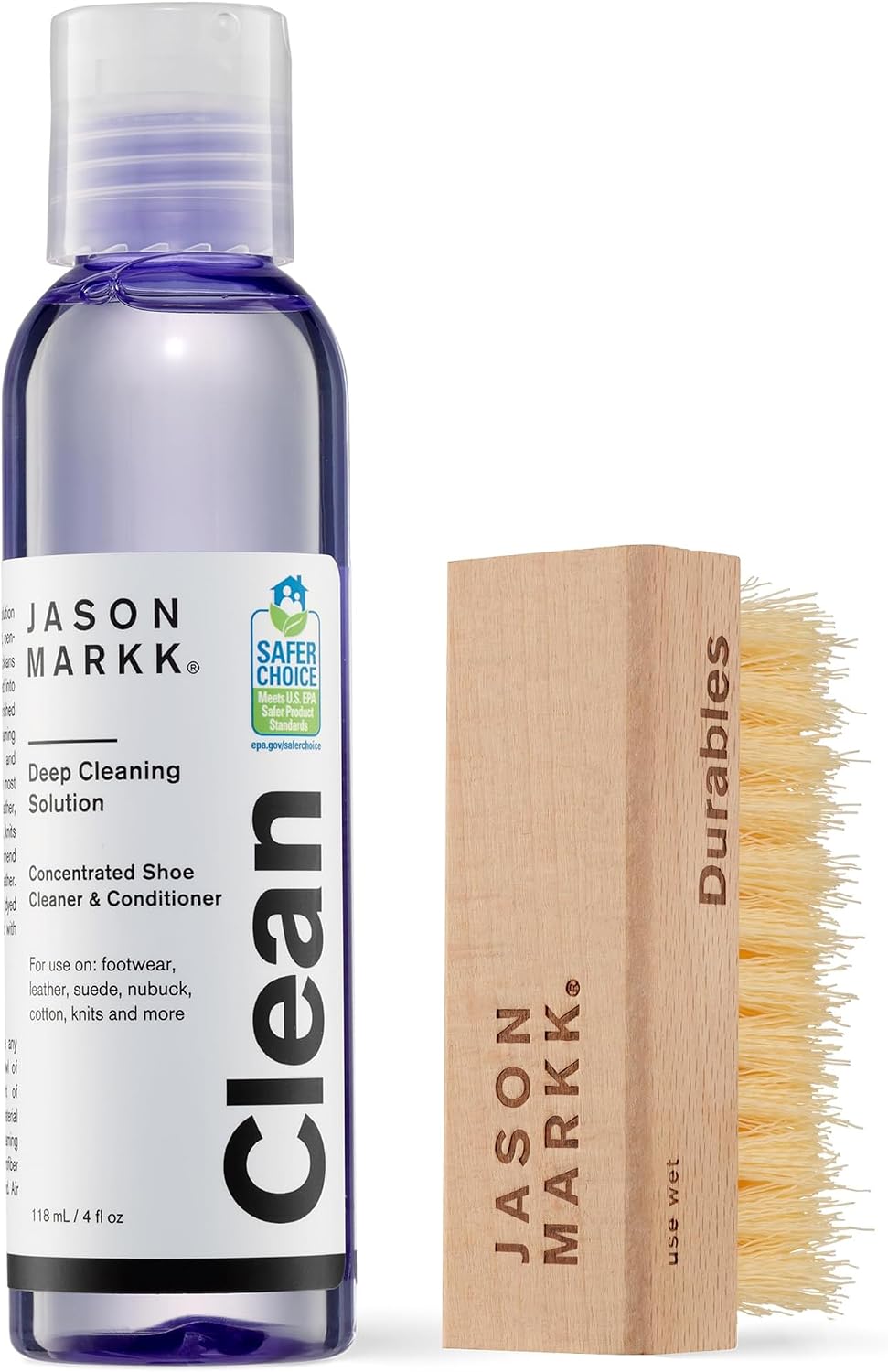
Jason Markk Essential Shoe Cleaning Kit
A shoe cleaner with a brush and microfiber towel.
Check it on AmazonFrequently Asked Questions
How do you clean work boots?
Dry brush off dirt, clean the leather with a leather cleaner or mild soap on a damp cloth, remove all residue, air dry and condition (Red Wing, Chippewa, BootWorld).
How do you clean steel toe boots?
The guides give no steel-toe-specific steps, so clean and condition the leather the same way and keep water off any exposed metal.
How often should you clean work boots?
Red Wing says after each use with a brush or damp cloth. Danner says a deep clean weekly for heavy use or every 1 to 2 months for light use.
How often should you condition work boots?
Danner says every couple of months, weekly for heavy use. Wolverine says at least 1 to 2 times a month. Chippewa polishes every 4 to 6 weeks.
How do you dry wet work boots?
At room temperature, with a boot dryer if you have one. Avoid fires, radiators and hair dryers (Red Wing, Wolverine, Danner).
How do you get the smell out of work boots?
BootWorld sprays undiluted white vinegar inside and uses baking soda overnight. Danner recommends a boot dryer after each wear.
Can you use mink oil on work boots?
Red Wing lists it as an option by boot type, and BootWorld says heavy work leather takes it. Do not use oils on suede or nubuck (Wolverine, Danner).
Can you wash work boots in the washing machine?
None of the eight guides recommends it. They describe hand cleaning with a brush, damp cloth and leather cleaner.
The Short Version
Brush first, clean gently, remove all residue, dry slowly away from heat, and condition by how dry the leather looks and how hard you work the boots.
Keep Reading
Care guides
- Best hiking boots 2026
- How to Clean Clarks Desert Boots
- How to clean ski boots
- How to clean rain boots
- How to clean Doc Martens
- How to clean Timberland boots
- How to clean dress shoes
- How to clean leather shoes
- How to condition leather shoes
- How to clean hiking boots
- How to clean nubuck
- How to polish shoes
- The complete shoe cleaning guide
Sources
- Red Wing: How to properly care for your Red Wing boots
- Red Wing: Oil-tanned leather care
- Timberland: A step-by-step guide to cleaning your Timberland boots
- BootWorld: Tips on how to clean Timberland boots
- Danner: Footwear care
- Chippewa: Boot care
- Wolverine: Shoe care
- Wilco Farm Stores: How to care for your work boots


