

How to Clean Ski Boots: Shells, Liners and Off Season Storage

Quick answer: Take out the liners, wipe the shells, dry the liners at room temperature for a day or more, and store the boots dry with the buckles loose. Check your liner instructions before washing them.
We compare ski brands and retailers and show where they disagree.
How to Clean Ski Boots: Sources Compared
Ski boots have two parts to clean, a plastic shell and a soft liner, and the sources split on the liner. We read Salomon, Blizzard-Tecnica and HEAD (the makers), Decathlon (a retailer with its own boots), Buckman’s, SNOW-HOW and SnowBrains, plus a hiking group, the Washington Trails Association, for odor. They agree on removing liners, drying at room temperature and avoiding strong heat. They differ on washing liners, buckles in storage and where to store.
| Source | Shell | Liners | Storage |
|---|---|---|---|
| Salomon | Wipe with a damp cloth if needed, air dry. | Remove and dry 24 to 48 hours, away from sun and strong heat. For odor, spray the insides with disinfectant and dry fully. | Dry, well-ventilated place, avoid damp garages and cellars. Buckle lightly. |
| Blizzard-Tecnica | Wipe off dirt or grease. | Not covered in text. | Dry, cool spot. Avoid extreme heat such as an attic, and cold or damp places. Buckle loosely. |
| HEAD | Wipe inside and out and disinfect for odor. | Wipe with a damp cloth, not a washing machine, since they could warp. | Boot bag in a dry, shaded, well-ventilated place. Fasten buckles lightly. |
| Decathlon | Brush off snow, wipe mud with soapy cloth, rinse and dry. | Remove after every session. Hand wash is best. A cold machine cycle may work under 400 rpm. No tumble dryer. Air dry several days. | Warm, dry place with a protective cover. Do not close the hooks tightly. |
| Buckman’s | Rag, water and mild soap such as dish soap. | Wipe with a damp cloth. Check the care instructions first since machines can damage liners. | Close buckles and tighten laces. Consistent temperature, boot bag. |
| SNOW-HOW | Damp cloth, mild solution for stubborn dirt, check sole plates. | Dry fully after each trip. Skipped drying can cause odors that may only be fixed with new liners. | Dry, dark, preferably cool place, ideally in a boot bag. |
| SnowBrains | Not covered. | Clean following the maker instructions and dry fully. Take liners out and dry after each day. | Do not store in a cool dark spot while liners are damp. |
| Washington Trails Association | Not covered. | Soak in Gear Aid Revivex (1 teaspoon per 2 gallons), do not rinse, air dry fully, no heat. | Not covered. |
Salomon, Blizzard-Tecnica, HEAD and Decathlon sell ski gear, and Buckman’s is a retailer, so their advice reflects their own products. None of the sources gives lab test data. We have not tested any of these methods.
Step by Step: Cleaning Ski Boots
The method the sources share, with who says what:
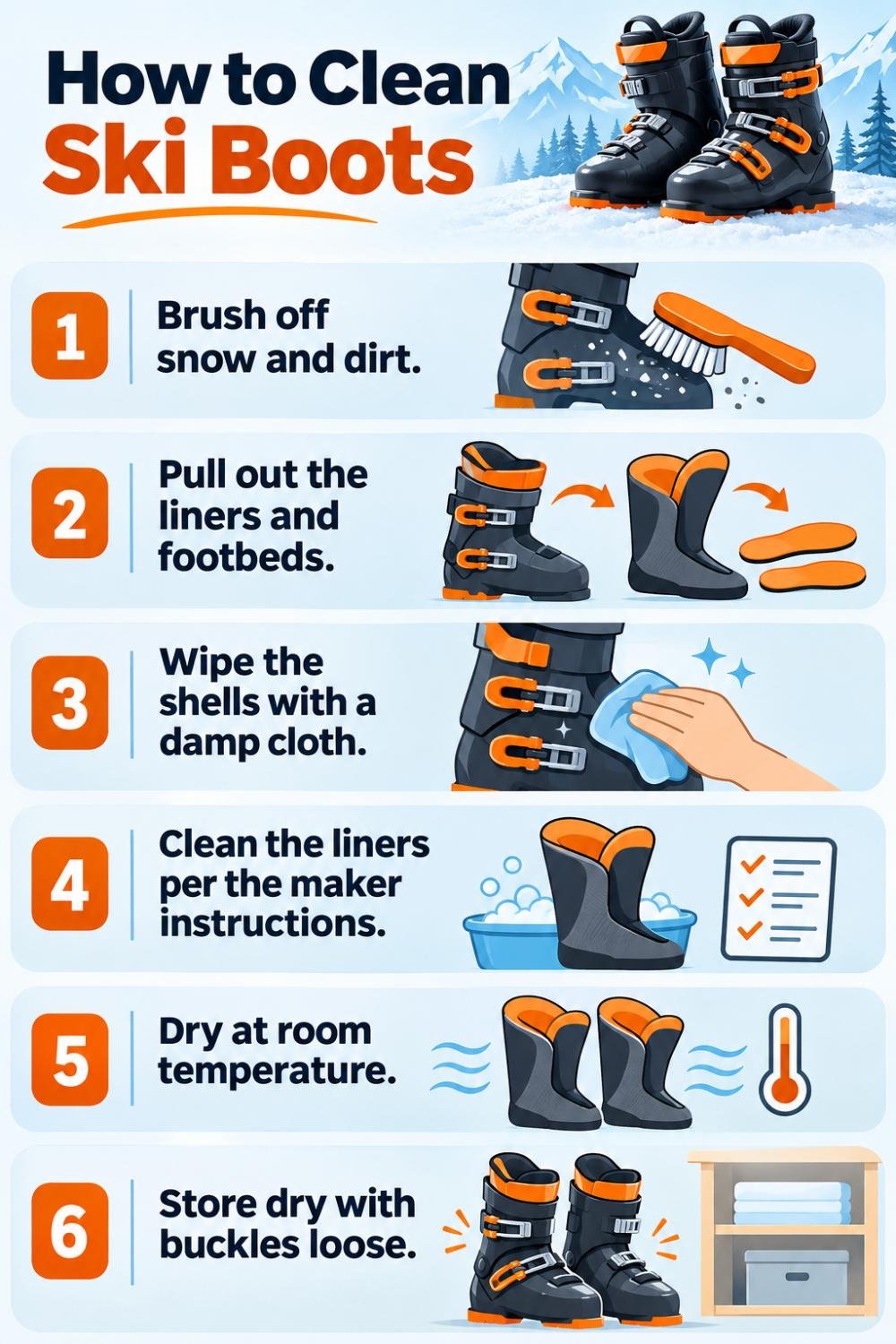
- Brush off snow and dirt. Decathlon says a soft brush or cloth and not to knock boots together.
- Take out the liners and footbeds. Salomon, HEAD, Buckman’s, Decathlon and SNOW-HOW all say so. Decathlon says after every session.
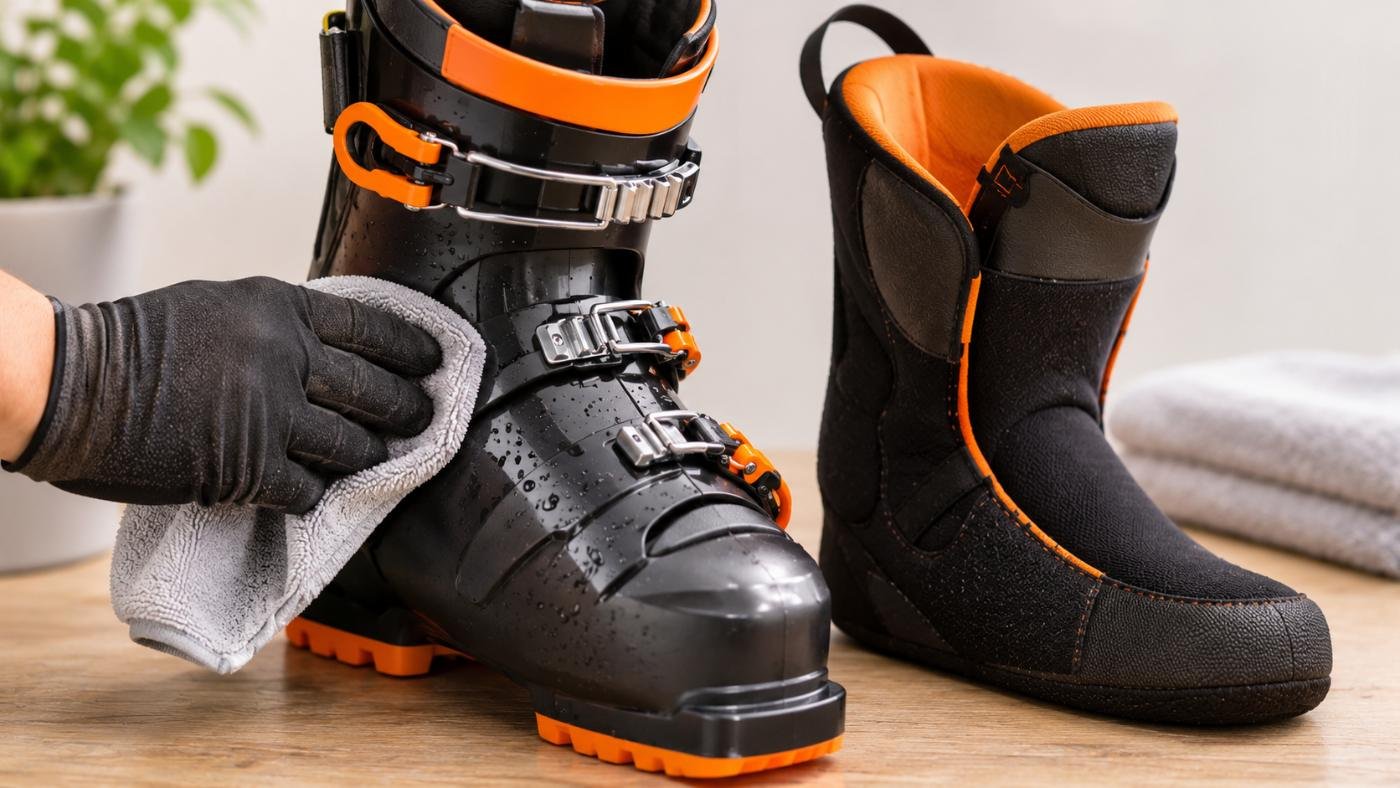
- Wipe the shell. Damp cloth (Salomon, HEAD, SNOW-HOW). Mild soap for mud (Decathlon, Buckman’s).
- Clean the liners. A damp cloth (HEAD, Buckman’s) or the maker instructions (SnowBrains). Decathlon prefers hand washing.
- Dry at room temperature. Salomon says 24 to 48 hours. Decathlon says several days for liners.
- Reassemble and check wear. Salomon and HEAD say check the shells, buckles and soles.
SNOW-HOW says sole plates matter for walking and for correct binding release, so have worn ones replaced at a ski shop. HEAD says take cracks and torn velcro to a service shop before summer.
Washing Ski Boot Liners
- Damp cloth only: HEAD says do not use a washing machine because liners could warp.
- Hand wash: Decathlon says hand washing is best.
- Cold machine cycle: Decathlon says it may work if the spin stays under 400 rpm. Buckman’s says check the liner care instructions first because machines can damage liners.
- Soak: The Washington Trails Association soaks liners in Gear Aid Revivex, 1 teaspoon per 2 gallons, does not rinse and air dries without heat. It is a hiking boot source, so check your liner instructions.
- Heat: Decathlon says no tumble dryer or radiators. Salomon, HEAD and Buckman’s say away from strong heat.
General advice: heat-moldable liners are the case where we would check the maker page first, since the sources do not distinguish liner types.
Ski Boot Odor
SnowBrains says liners and socks hold heat and sweat, which gives bacteria a warm damp place to grow. Fixes the sources name:
- Dry after every day: SnowBrains, Decathlon, SNOW-HOW.
- Disinfectant: Salomon sprays the insides and dries fully. HEAD disinfects.
- Baking soda: Decathlon sprinkles it in the liners for a few hours, or uses an antibacterial deodorizer.
- Enzyme deodorizer: Washington Trails Association.
- Feet and socks: SnowBrains says clean dry socks and a fresh pair midday if feet sweat heavily. Decathlon says wash your feet before putting the boots on.
SNOW-HOW warns that skipped drying can cause odors that may only be fixed by buying new liners.
Drying and Off Season Storage
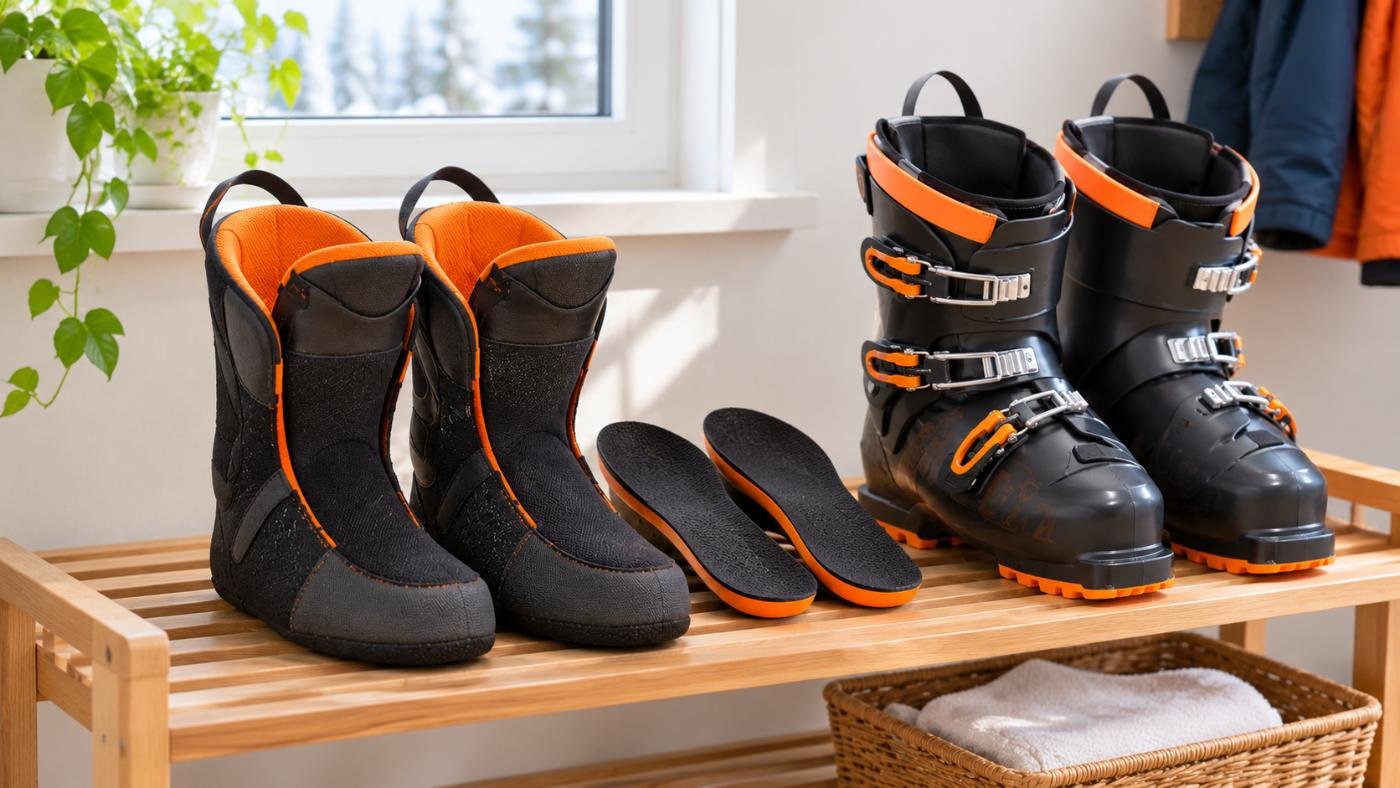
- Dry first. Every source that covers storage says dry them fully before putting them away.
- Buckles: Salomon, HEAD and Blizzard-Tecnica say lightly or loosely. Decathlon says not tightly. Buckman’s says close buckles and tighten laces.
- Where: Salomon says dry and ventilated, not a damp garage or cellar. Blizzard-Tecnica says cool and dry, not an attic. SNOW-HOW says dark and cool. Decathlon says warm and dry.
- Cover: A boot bag (HEAD, Salomon, Buckman’s, SNOW-HOW) or protective cover (Decathlon).
- Lifespan: SNOW-HOW says boots usually last four to eight years and that makers recommend a maximum of eight.
Where the Sources Disagree
Washing liners. HEAD says wipe only. Decathlon says hand wash, with a cold machine cycle possible. Buckman’s says check the label. The Washington Trails Association soaks. General advice: follow the maker instructions for your pair.
Buckles in storage. Four sources say loosely or lightly. Buckman’s says close them.
Where to store. Cool (Blizzard-Tecnica, SNOW-HOW) versus warm (Decathlon). The shared ground is dry, ventilated and away from extremes.
Boot dryers. Buckman’s and SNOW-HOW suggest them. Salomon, HEAD and Decathlon say away from strong heat.
Questions About Cleaning Ski Boots, Answered
“Can you wash ski boot liners in the washing machine?”
HEAD says no. Decathlon says hand washing is best, and a cold cycle under 400 rpm may work. Buckman’s says check the care instructions.
“How do you dry ski boots?”
Take out the liners and dry at room temperature. Salomon says 24 to 48 hours.
“How do you get the smell out of ski boots?”
Dry after every day, and use disinfectant (Salomon), baking soda (Decathlon) or an enzyme deodorizer (Washington Trails Association).
“Can you use a boot dryer?”
Buckman’s and SNOW-HOW suggest one. Other sources say avoid strong heat.
“How do you clean the shells?”
A damp cloth, with mild soap for mud.
“How should you store ski boots for summer?”
Clean and dry, liners back in, buckled lightly, in a bag in a dry ventilated place.
“Why do ski boots stink?”
Sweat and heat give bacteria a place to grow (SnowBrains).
“How long do ski boots last?”
Four to eight years, per SNOW-HOW.
Mistakes to Avoid
- Radiators and tumble dryers for liners. Decathlon, Buckman’s.
- Machine washing without checking the label. HEAD, Buckman’s.
- Storing while damp. SnowBrains, Decathlon.
- Damp garages, cellars and attics. Salomon, Blizzard-Tecnica.
- Knocking boots together. Decathlon.
- Ignoring worn soles, buckles or cracks. SNOW-HOW, HEAD.
How we checked this
- Steps come from Salomon, Blizzard-Tecnica, HEAD, Decathlon, Buckman’s, SNOW-HOW, SnowBrains and the Washington Trails Association. We name who says each thing.
- The sources differ on washing liners, buckles and storage temperature, so we show each side. Our own reading is labelled general advice.
- Several sources sell ski gear. None gives lab test data. We have not tested any of these methods.
Ski Boot Care Helpers
An enzyme deodorizer, a boot dryer and a boot bag cover what the sources below describe. These are listed on Amazon.

Gear Aid Revivex odor eliminator
The enzyme-based deodorizer the Washington Trails Association names for boot and liner odor.
Check it on Amazon
DryGuy Travel Dry DX boot dryer
An electric boot dryer. Check the maker instructions for liner use.
Check it on Amazon
Frequently Asked Questions
Can you machine wash ski boot liners?
HEAD says no. Decathlon says a cold cycle under 400 rpm may work. Check your liner label.
How long should liners dry?
Salomon says 24 to 48 hours. Decathlon says several days.
How do you clean the shell?
A damp cloth, with mild soap for mud.
How do you remove ski boot odor?
Dry after every day, plus disinfectant, baking soda or an enzyme deodorizer.
Can you use a boot dryer?
Buckman’s and SNOW-HOW suggest one. Other sources say avoid strong heat.
Should buckles be closed in storage?
Salomon, HEAD and Blizzard-Tecnica say lightly or loosely. Buckman’s says close them.
Where should you store ski boots?
Dry and ventilated, not a damp garage, cellar or attic.
How long do ski boots last?
Four to eight years (SNOW-HOW).
The Short Version
Pull the liners, wipe the shells, dry everything at room temperature and store the boots dry and loosely buckled.
Keep Reading
Sources
- Salomon: How to store your ski gear at the end of the season
- Blizzard-Tecnica: Drying and storing your ski boots
- HEAD: How to store ski gear at the end of the season
- Decathlon: Looking after and repairing your ski boots
- Buckman’s: How to clean, dry and store ski and snowboard boots
- SNOW-HOW: Care and durability of ski boots
- SnowBrains: Why ski boots stink
- Washington Trails Association: How to deodorize boots, insoles and liners


