
Best HOKA Shoes for Nurses 2026: Cushioned Comfort
✅ Verified Product Data | 🛒 Amazon US Options | 📅 Updated October 2026
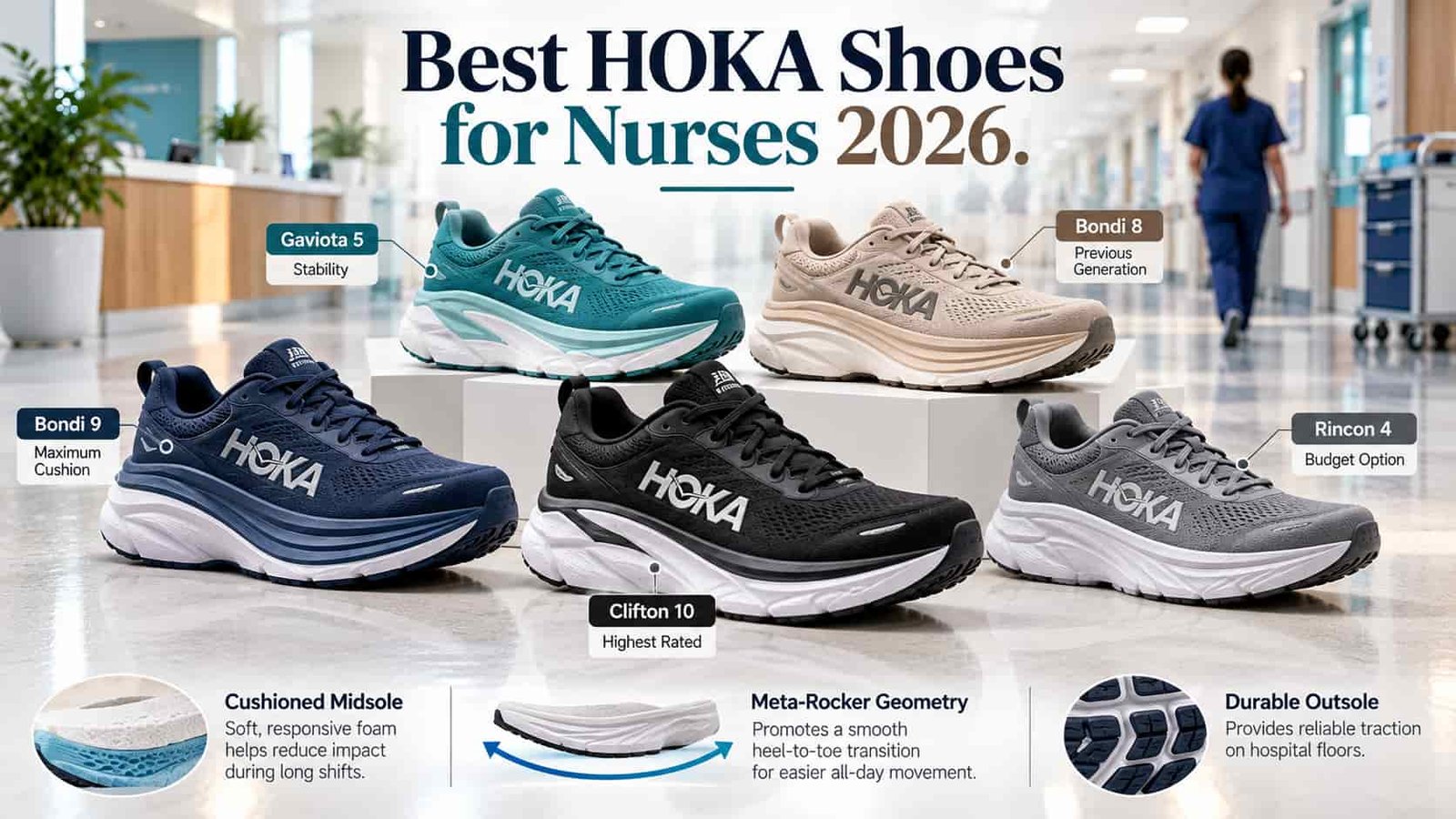
HOKA specializes in maximum-cushion running shoes with meta-rocker geometry designed to reduce joint stress during high-impact activities. For nurses, models like the Clifton 10, Bondi 9, and Rincon 4 provide plush cushioning and lightweight construction ideal for long shifts, though they lack slip-resistant outsoles. Best for dry-environment nursing settings prioritizing comfort over explicit safety features.
⚡ Best HOKA Shoes for Nursing
Compare five HOKA options based on cushioning, stability, weight, fit and value for long nursing shifts.
HOKA Clifton 10
A lightweight cushioned option for nurses who want a softer underfoot feel for walking-heavy shifts.
🛒 Check Price on AmazonHOKA Bondi 9
A highly cushioned HOKA option for nurses who prefer a soft, substantial platform during long shifts.
🛒 Check Price on AmazonHOKA Rincon 4
A lighter HOKA choice for nurses who prefer cushioning without the bulk of a maximum-cushion model.
🛒 Check Price on AmazonHOKA Gaviota 5
A stability-oriented HOKA option for nurses who prefer additional guidance and cushioning during active shifts.
🛒 Check Price on AmazonHOKA Bondi 8
A previous-generation Bondi model that retains the highly cushioned feel of the Bondi line and may suit shoppers comparing older and newer versions.
🛒 Check Price on AmazonINTRODUCTION
Walking into a 12-hour hospital shift requires shoes built to take a beating. Your feet will absorb impact with every step across hard flooring-tile, polished concrete, industrial linoleum. You’ll stand motionless during procedures, then walk 4+ miles through corridors. Your feet will swell. The pressure points that felt neutral at 6 a.m. will feel acute by 2 p.m.
HOKA, a brand built on maximum cushioning and rocker geometry, has become popular among nurses not because the shoes are marketed specifically for healthcare work, but because their design philosophy directly addresses what nurses need: plush, responsive cushioning that maintains performance through extended wear, and engineered materials that tolerate repeated cleaning and disinfectant exposure.
HOKA shoes are premium-priced (99–190), which means your decision should be informed rather than aspirational. This guide evaluates which HOKA models actually serve nursing work, how their cushioning technology compares to competitors, and what tradeoffs accompany the premium positioning.
At UrbanStyleFootwear, our product evaluations combine manufacturer specifications, verified retailer and Amazon listing data, customer feedback, review patterns, and footwear-specific research. We assess shoes across factors such as comfort, fit, cushioning, support, materials, durability, traction, design, and overall value, using multiple sources to provide balanced, practical, and buyer-focused recommendations.
WHAT IS HOKA TECHNOLOGY AND HOW DOES IT WORK?
HOKA (founded 2009) specializes in maximum-cushion footwear with proprietary meta-rocker geometry-a design that combines an oversized midsole with a curved sole that promotes a smooth, rolling gait. Unlike traditional minimalist shoes that emphasize ground feel, or standard running shoes that balance cushioning with responsiveness, HOKA prioritizes cushioning volume and shock absorption.
The brand’s signature technology:
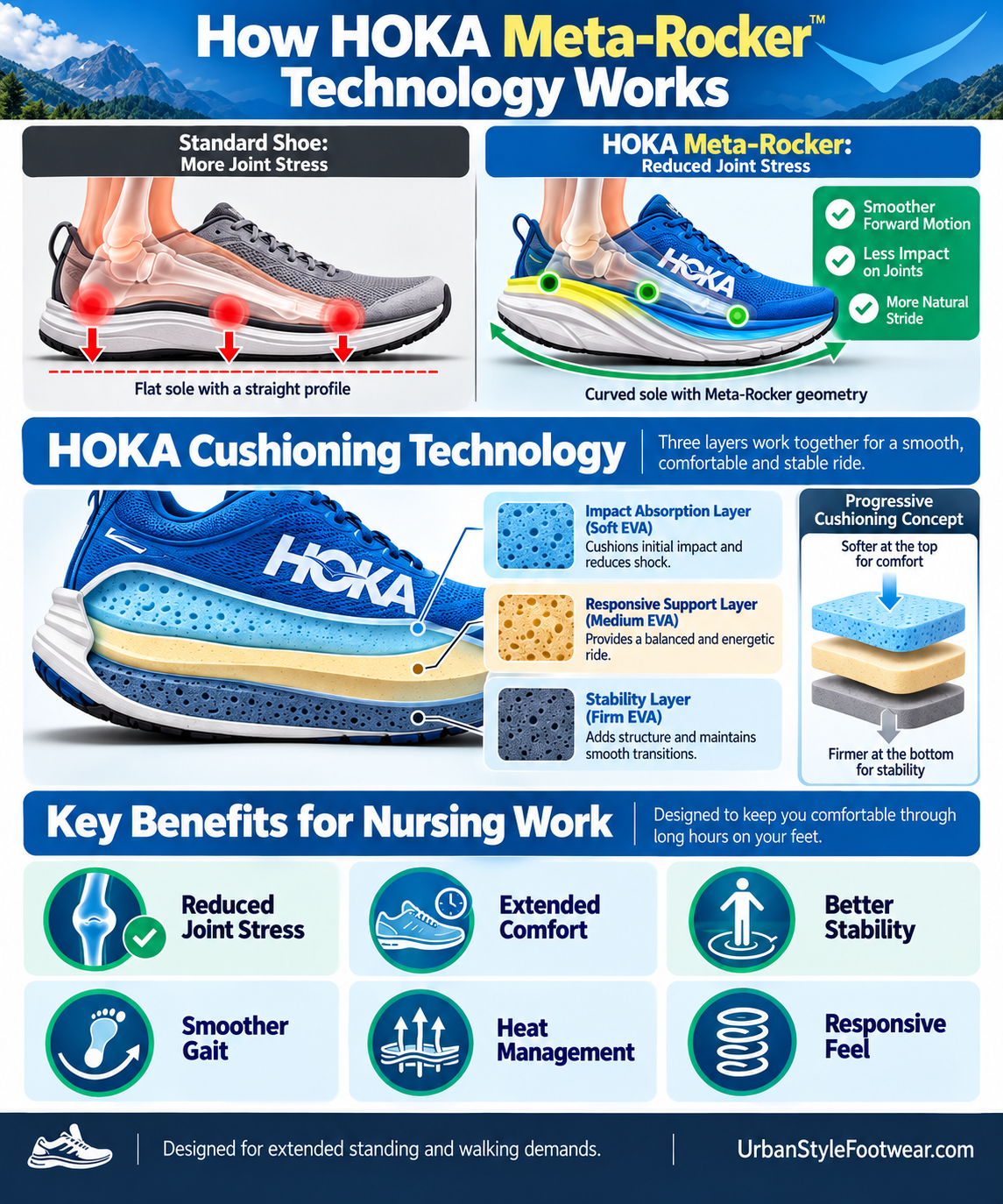
Plush EVA foam- ethylene vinyl acetate foam that’s lighter and more responsive than standard polyurethane cushioning used in traditional athletic shoes. HOKA layers multiple densities of EVA to create progressive cushioning: soft for impact absorption, firmer for stability feedback.
Meta-rocker geometry– The sole curves from heel to toe, promoting a smooth rolling motion that reduces stress on joints and ankle mobility requirements. This is useful for people spending extended periods standing or walking but can feel “slow” to runners accustomed to snappier platforms.
Wide toe box options– HOKA generally offers wider forefoot space compared to traditional running shoes, accommodating the foot swelling that occurs during 12-hour shifts.
Engineered upper materials– Mesh and jacquard knit uppers prioritize breathability over durability. This is important for moisture management during long shifts but means uppers require careful cleaning if exposed to harsh fluids.
WHY DO HOKA SHOES MATTER FOR NURSES?
HOKA’s engineering philosophy directly addresses the standing-and-walking demands of nursing work. Most running shoes are designed for continuous forward motion with a specific cadence (stride rate). Nursing work is different: standing in one spot, then rapid movement through corridors, then standing again. This irregular movement pattern creates different stress points than steady-pace running.
Maximum cushioning reduces foot fatigue during standing. Hospital work isn’t motion-based activity like running. It’s prolonged static standing where your foot bears full body weight without momentum assistance. HOKA’s oversized midsole and plush EVA foam absorb pressure from static loading better than minimal-cushioning shoes.
Meta-rocker geometry reduces joint stress- the curved sole promotes smooth motion with less ankle and knee motion compensation. For nurses standing for 12 hours with little ankle movement, this means reduced strain on stabilizing muscles and tendons.
Breathability prevents foot swelling complications– Hospital environments are warm. Feet swell in poorly ventilated shoes. HOKA’s mesh and engineered uppers provide airflow that reduces heat buildup and swelling compared to leather or synthetic uppers.
Responsive cushioning maintains comfort at hour 11– Maximum-cushion shoes can feel flat by mid-shift if cushioning compresses permanently. HOKA’s EVA foam resists compression better than standard foams, maintaining cushioned feel through extended wear.
Wide toe box accommodates shift-time swelling- your foot is smallest at 6 a.m. and largest at 2 p.m. HOKA’s generous forefoot space prevents the toe pressure that develops in tighter shoes as feet swell.
The main limitation: HOKA models reviewed here do not include slip-resistant outsoles. If your workplace requires explicit slip resistance (many hospitals mandate this), HOKA nursing options are limited. However, in dry-environment settings (clinics, outpatient surgery centers, offices), HOKA delivers comfort advantages that slip-resistant shoes may not match.
WHAT SHOULD NURSES LOOK FOR WHEN CHOOSING HOKA SHOES?
HOKA’s model lineup is smaller than competitors like New Balance or ASICS, so your choice is more about understanding the differences between their four main nursing-suitable models rather than comparing dozens of options.
1. Cushioning Level: Maximum vs. Responsive
HOKA offers two cushioning philosophies: maximum (Bondi series) and responsive (Clifton, Rincon series).
Maximum cushioning (Bondi 9, Bondi 8)- The Bondi line is HOKA’s flagship plush shoe. EVA foam is integrated throughout the entire shoe, providing uniform cushioning from heel to toe. This approach maximizes comfort but increases weight and can feel “slow” during rapid movement. Best for nurses prioritizing comfort above all else.
Responsive cushioning (Clifton 10, Rincon 4)- The Clifton and Rincon models use less foam overall but engineer it more strategically, with firmer layers underneath softer layers. This creates a responsive feel-your foot “feels the ground” more compared to the Bondi-while still maintaining plush cushioning. Best for nurses who want cushioning without the “marshmallow” sensation.
Who needs it most: Nurses with heel pain, plantar fasciitis, or previous foot injuries benefit from maximum cushioning. Nurses comfortable with moderate cushioning but wanting a more responsive feel benefit from Clifton or Rincon.
Tradeoff: Maximum cushioning is heavier and slower-feeling. Responsive cushioning is lighter but may feel less plush during the first few hours of wear.
2. Meta-Rocker vs. Neutral Geometry
HOKA’s meta-rocker geometry is engineered into all models, but the degree varies.
Strong meta-rocker (Bondi series, Gaviota)- Pronounced curve from heel to toe promotes maximum smooth rolling motion. This reduces ankle and knee strain significantly but feels “bouncy” or “slow” to runners accustomed to traditional platforms. Hospital workers who don’t run appreciate this; nurses who also run might find it limiting.
Moderate meta-rocker (Clifton, Rincon)- Subtle curve that promotes rolling without the pronounced “bouncy” feel. Bridges the gap between traditional running shoes and ultra-rocker designs.
Who needs it most: Nurses with knee pain or ankle stiffness benefit from strong meta-rocker geometry. Nurses comfortable with standard running shoe geometry prefer moderate rocker.
Tradeoff: Strong rocker reduces propulsion efficiency (you feel slower) compared to traditional platforms. This doesn’t matter for nursing work but matters for running.
3. Breathability and Upper Construction
HOKA uses engineered mesh and jacquard knit uppers rather than leather or heavy synthetics. This prioritizes breathability but sacrifices durability under harsh conditions.
Engineered mesh (Clifton, Bondi 9, Gaviota)- Lightweight, breathable, but can pill or be damaged if exposed to repeated scrubbing or harsh chemicals. Tolerates standard hospital cleaning but not autoclave exposure.
Canvas and jacquard blend (Bondi 8, Rincon)- More durable than engineered mesh but less breathable. Better for nurses exposed to contaminated materials; worse for hot environments.
Who needs it most: Nurses in hot climates or those prone to foot swelling need maximum breathability. ICU or OR nurses handling contaminated materials need more durable uppers.
Tradeoff: Breathable materials are lighter and cooler but less durable. Durable materials are heavier and hotter.
4. Fit and Width Options
HOKA’s general philosophy is a wider forefoot compared to traditional running shoes. However, heel fit and width grading vary by model.
Available data: Most HOKA models come in standard width only based on supplied data, though different colorways may offer width variants. The Bondi series, Clifton, and Rincon are available in men’s and women’s versions, which affects fit profile (women’s versions are narrower overall with different arch profiles than men’s).
Who needs it most: Nurses with narrow heels but wide forefeet (a common foot shape) benefit from HOKA’s toe-box generosity but may experience heel slippage. Nurses with consistently wide feet should verify width availability by specific color before purchasing.
Tradeoff: Wide forefoot accommodates swelling but may feel loose in the heel if you have a narrow heel structure.
5. Weight and Responsiveness
HOKA models vary significantly in weight depending on cushioning volume.
Heavier models (Bondi 9, Gaviota)- Maximum cushioning means more material, resulting in heavier shoes (exact weight not specified in supplied data, but 200+ grams is typical). This increases support but can accelerate foot fatigue during rapid movement.
Lighter models (Clifton, Rincon)- Responsive cushioning with strategic material placement results in lighter shoes. Better for commuting and rapid movement but may feel less supportive during static standing.
Who needs it most: Nurses alternating between standing and movement throughout shifts benefit from lighter models. Nurses spending most of their shift standing benefit from heavier, more supportive models.
Tradeoff: Heavier shoes provide more support but increase cumulative fatigue from lifting your feet with each step.
NURSING WORKPLACE CONSIDERATIONS
Slip-resistant mandate check: Verify with your employer whether slip-resistant shoes are required. Most hospitals, ICUs, and ORs mandate slip resistance due to safety and liability. HOKA models reviewed here use standard rubber outsoles optimized for road/treadmill surfaces, not explicitly for wet healthcare flooring. If slip resistance is required, HOKA is not your best option; consider our guide to the best shoes for nurses who stand all day for models with explicit slip-resistant outsoles.
Dress code alignment: HOKA models are athletic in appearance and suitable for casual healthcare environments (clinics, outpatient centers, home health). More formal settings may require non-athletic footwear; our best nursing shoes for women and best shoes for male nurses guides include professional-looking options if needed.
Autoclave and harsh chemical exposure: HOKA’s mesh uppers tolerate standard hospital disinfectant cleaning but may not withstand repeated autoclave cycles or prolonged exposure to harsh chemicals. If your role includes autoclave sterilization of equipment or frequent exposure to strong disinfectants, verify your specific workplace practices before purchasing.
Weight and movement demands: If your role includes rapid movement (ER, urgent care, trauma center), HOKA’s heavier models (Bondi) may feel sluggish. Lighter models (Clifton, Rincon) provide better responsiveness for quick movement while maintaining cushioning.
PRODUCT REVIEWS
HOKA Clifton 10
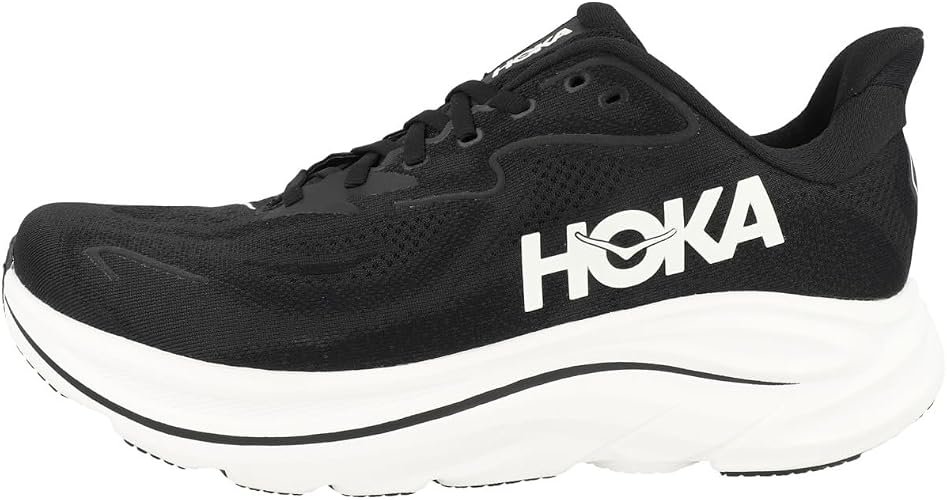
Best For: Balanced cushioning with responsive feel, ideal for nurses mixing standing and movement
Why It Works: The Clifton 10 is HOKA’s highest-rated model (4.6★, 2,623 reviews) because it balances HOKA’s cushioning philosophy with responsiveness that doesn’t feel “marshmallow-like.” Plush EVA cushioning provides comfort; moderate meta-rocker geometry provides smooth rolling without the pronounced “bouncy” feel of maximum-rocker shoes. Jacquard knit upper offers breathability without sacrificing durability compared to standard mesh. 100+ monthly purchases indicate consistent preference among people working long shifts.
Expert Analysis: The Clifton 10 splits the difference between comfort-maximization (Bondi) and speed-optimization (Rincon). The engineering uses layered EVA foam with different densities: softer layers near the foot for cushioning, firmer layers underneath for stability feedback. This is significantly more engineering complexity than simply filling a shoe with soft foam. The jacquard knit upper is a smart material choice for healthcare: it breathes better than canvas but resists damage better than delicate engineered mesh. The meta-rocker is present but subtle enough that runners appreciate it; nurses appreciate the joint-stress reduction without sacrificing their ability to move quickly if needed.
Pros:
- Highest HOKA nursing rating at 4.6★ from 2,623 verified reviews
- Balanced cushioning: plush without “marshmallow” feel
- Moderate meta-rocker provides smooth motion without extreme “bouncy” sensation
- Jacquard knit upper balances breathability and durability
- 100+ monthly purchases demonstrate consistent demand
- Versatile enough for both standing and movement-heavy shifts
Cons:
- Premium pricing at $140 compared to budget alternatives
- No slip-resistant outsole; unsuitable for wet hospital floors
- Jacquard upper requires careful cleaning vs. tougher leather
- Moderate cushioning is less plush than Bondi for nurses prioritizing maximum comfort
- Not available in wide widths based on supplied data
Main Tradeoff: The Clifton 10 sacrifices maximum-cushioning comfort and the pronounced rocker feel in exchange for responsiveness and balanced versatility. You’re gaining performance across all factors without extreme specialization toward comfort or speed.
Who Should Buy: Nurses working in dry-environment settings who alternate between standing and movement throughout shifts. Nurses who want HOKA’s cushioning reputation without the “slow” or “marshmallow” feel. Nurses seeking the highest-rated option among people with similar work demands.
Who Should Skip: Nurses working in wet environments requiring slip resistance (choose alternatives from our best shoes for nurses who stand all day guide). Nurses prioritizing maximum cushioning over balanced performance. Budget-conscious nurses-premium pricing limits accessibility.
Verdict: The Clifton 10 is HOKA’s best nursing option. The 4.6★ rating from 2,623 reviews isn’t a coincidence; this model has proven itself to people working demanding shifts. The engineering is sound (layered foam, moderate rocker), the material choices are thoughtful (jacquard knit), and the performance is balanced (not specialized, which means it works well for variable shift demands). Best for nurses in clinics, outpatient centers, or non-slip-required hospital settings who want premium cushioning without the “bouncy” feel.
🛒 Check Price on AmazonHOKA Bondi 9
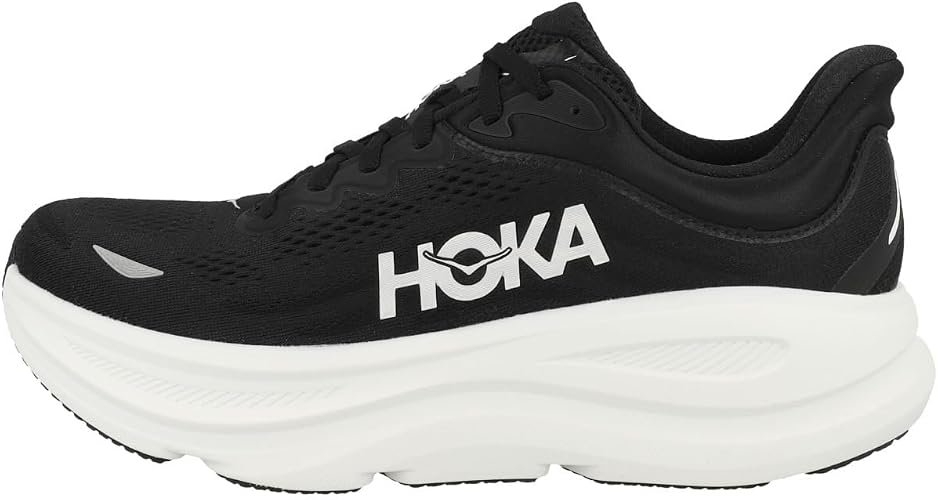
Best For: Maximum comfort during 12-hour shifts, nurses prioritizing plush cushioning above all
Why It Works: The Bondi 9 is HOKA’s signature maximum-cushion shoe with EVA foam interstain throughout the entire shoe. This means cushioning consistency from heel to toe: no transition zones where you feel the ground more. For nurses with foot pain conditions, previous injuries, or simply a strong preference for maximum softness, the Bondi 9 delivers. Available in men’s (3,427 reviews, 4.5★) and women’s (3,252 reviews, 4.5★) fits with identical engineered mesh upper and maximum cushioning. 4.5★ rating demonstrates consistent satisfaction among people prioritizing comfort.
Expert Analysis: The Bondi 9 represents HOKA’s “all-in” on maximum cushioning. EVA foam interstain means the entire shoe sole (not just the midsole) is cushioning material, resulting in an unusually plush platform. The engineered mesh upper is lighter than jacquard but more delicate; it prioritizes breathability at the cost of durability. The strong meta-rocker is pronounced here-expect a “bouncy” feel during movement, which some nurses love (smooth, effortless motion) and others dislike (feels slow, inefficient). The tradeoff is inherent to the design: maximum comfort through maximum cushioning, at the cost of weight and responsiveness.
Pros:
- Maximum EVA cushioning throughout entire shoe delivers plush comfort
- Available in men’s and women’s fits with identical cushioning technology
- 4.5★ rating from 3,400+ reviews indicates consistent comfort delivery
- Strong meta-rocker reduces joint stress during static standing
- Engineered mesh upper provides excellent breathability
- Best choice for nurses with foot pain conditions or injury history
Cons:
- Premium pricing at $170 makes this a significant investment
- No slip-resistant outsole; unsuitable for wet hospital environments
- Heavier than Clifton or Rincon due to maximum foam volume
- Strong meta-rocker feels “bouncy” to nurses accustomed to traditional shoes
- Engineered mesh upper is delicate and requires careful cleaning
- Responsive feel is slower than lighter alternatives
Main Tradeoff: The Bondi 9 maximizes cushioning comfort at the cost of weight, responsiveness, and upper durability. You’re gaining plush all-day comfort but sacrificing the ability to move quickly or cleanly without that “squishy” sensation.
Who Should Buy: Nurses with foot pain, plantar fasciitis, heel pain, or previous foot injuries. Nurses prioritizing comfort above all else. Nurses working in dry environments without slip-resistance requirements. Nurses who can verify their workplace doesn’t require rapid movement or who work mostly standing shifts.
Who Should Skip: Nurses in slip-resistant-mandate environments. Nurses uncomfortable with the “bouncy” feel. Budget-conscious nurses. Nurses working in high-contamination environments where mesh durability is a concern. Nurses who value responsiveness over maximum plush comfort.
Verdict: The Bondi 9 is HOKA’s ultimate comfort choice if your workplace allows it. The plush cushioning throughout the entire shoe delivers unmatched all-day comfort, and the 4.5★ rating from 3,400+ reviews proves this isn’t marketing-it’s real performance. Main limitation: premium pricing ($170) is the highest in this guide, and lack of slip resistance eliminates it from hospitals with safety mandates. Best for nurses in clinics, outpatient centers, or offices where comfort is the primary concern and slip resistance isn’t required.
🛒 Check Price on AmazonHOKA Rincon 4
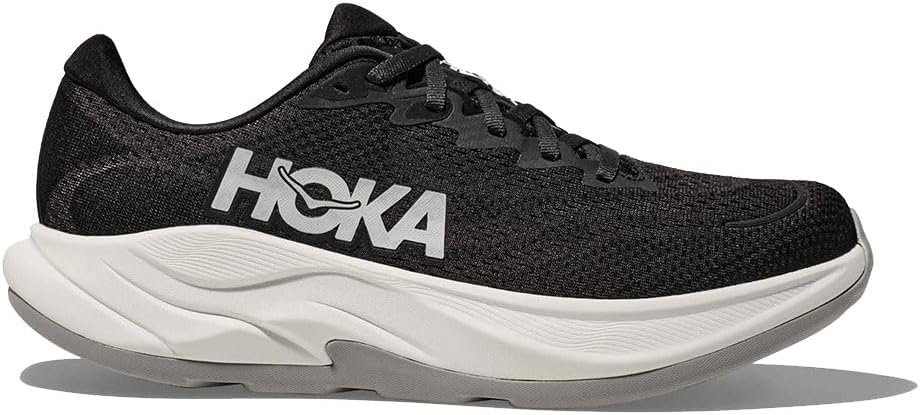
Best For: Budget-conscious nurses seeking HOKA cushioning at accessible pricing
Why It Works: At $99.98, the Rincon 4 is HOKA’s entry point-the model that makes the brand accessible without requiring a $170 investment. Despite the lower price, the Rincon doesn’t sacrifice core HOKA philosophy: maximum cushioning with responsive feel. Lightweight foam construction (lower volume than Bondi or Clifton) keeps weight down while maintaining plush cushioning. Canvas upper offers durability compared to delicate mesh. 4.4★ from 1,093 reviews indicates solid real-world satisfaction at this price point. 50+ monthly purchases demonstrate steady demand.
Expert Analysis: The Rincon 4 achieves lower pricing through material efficiency: less foam overall, strategic placement rather than interstain throughout, and canvas upper rather than engineered mesh. This doesn’t mean “cheap”-it means engineered differently. Canvas is heavier than mesh but more durable. The foam is responsive rather than plush, meaning you feel more ground contact than the Bondi but still get significant cushioning. Polyurethane midsole provides stable feel. The meta-rocker is present but subtle. This is HOKA’s most “normal” shoe; it feels less specialized than the Bondi or Clifton because it’s designed for accessibility, not performance-maximization.
Pros:
- Lowest price at $99.98-most accessible HOKA option
- Lightweight foam provides responsive cushioning without weight penalty
- Canvas upper is durable and tolerates cleaning better than mesh
- 4.4★ rating from 1,000+ reviews demonstrates budget value
- Meta-rocker geometry provides joint-stress reduction at entry price
- 50+ monthly purchases show consistent demand among cost-conscious buyers
Cons:
- No slip-resistant outsole; unsuitable for wet hospital environments
- Canvas upper is less breathable than mesh or jacquard, potentially causing heat buildup
- Foam is less plush than Bondi-expect to “feel the ground” more
- Responsive cushioning may feel insufficient for nurses with foot pain conditions
- Fewer reviews (1,000) compared to Bondi (3,400) suggests lower market penetration
- Not available in women’s size range based on supplied data
Main Tradeoff: The Rincon 4 trades plush cushioning and premium engineering for accessible pricing and durability. You’re gaining affordability but accepting less specialized comfort compared to higher-priced HOKA models.
Who Should Buy: Budget-conscious nurses seeking HOKA cushioning without premium pricing. Nurses building a multi-shoe rotation without large budget. Nurses wanting to test HOKA before investing in premium models. Nurses prioritizing durability over maximum plushness. First-time nursing footwear buyers testing what they need.
Who Should Skip: Nurses with foot pain conditions-responsive cushioning may feel insufficient. Nurses requiring slip resistance. Nurses in hot climates or prone to foot swelling-canvas breathability is limited compared to mesh options. Nurses uncomfortable with “feeling the ground” through responsive cushioning.
Verdict: The Rincon 4 is HOKA’s best value proposition. At $100, you’re getting legitimate HOKA cushioning and meta-rocker geometry without the premium pricing of the Bondi or Clifton. The canvas upper is practical, the responsive foam is fine for people without foot pain, and the overall execution delivers value. Not a “downgrade”-just engineered toward accessibility rather than maximum specialization. Best for budget-conscious nurses and anyone testing HOKA before investing in premium models.
🛒 Check Price on AmazonHOKA Gaviota 5
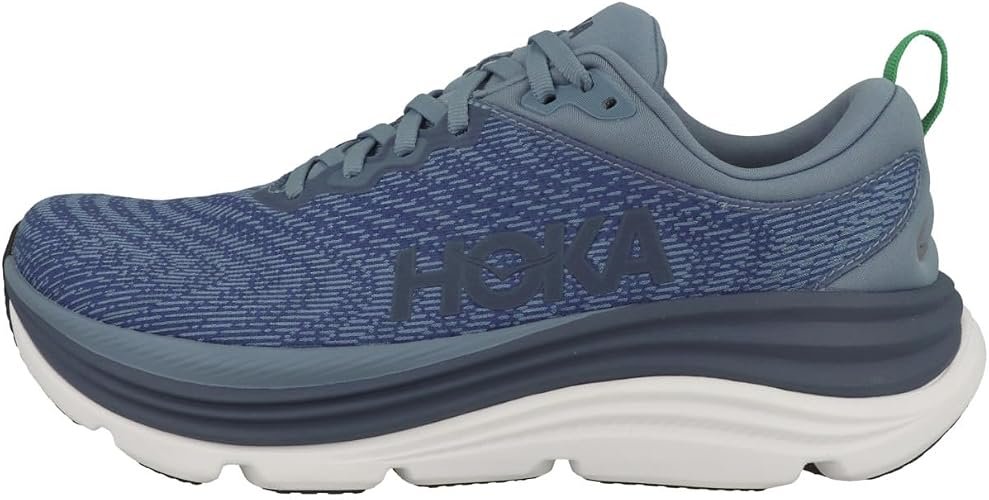
Best For: Nurses with overpronation or whose feet roll inward during movement
Why It Works: The Gaviota 5 is HOKA’s only model designed for overpronation-the tendency of your foot to roll inward excessively during the gait cycle. Most HOKA models (Bondi, Clifton, Rincon) are neutral, meaning they provide no corrective support. The Gaviota adds stability features to plush EVA cushioning, creating a “stability shoe” rather than a pure cushion-focus shoe. 4.4★ from 370 reviews indicates solid satisfaction, though the smaller review count reflects the niche positioning (only nurses with overpronation issues need this).
Expert Analysis: Overpronation support works through stiffer materials and asymmetrical cushioning placement on the medial (inner) side of the midsole. This creates resistance to inward foot roll without being visible from the outside. The Gaviota combines this with HOKA’s plush EVA cushioning and meta-rocker geometry, making it a stability shoe rather than a “motion control” shoe (which typically feel restrictive). Engineered mesh upper matches the Clifton and Bondi 9 in breathability. The tradeoff is that if you don’t have overpronation issues, the stability features add weight and cost without benefit.
Pros:
- Only HOKA option for nurses with overpronation
- Combines plush EVA cushioning with stability features
- Meta-rocker geometry plus stability creates smooth, supported motion
- 4.4★ rating from verified reviews shows consistent satisfaction among those needing support
- Engineered mesh upper provides breathability
- Premium build quality (cost reflects engineering complexity)
Cons:
- Premium pricing at $190-highest price in this guide
- No slip-resistant outsole; unsuitable for wet hospital environments
- Stability features add weight compared to neutral models
- Only useful for nurses with diagnosed overpronation; others won’t benefit
- Fewer reviews (370) suggest limited market penetration
- Engineered mesh upper requires careful cleaning
Main Tradeoff: The Gaviota 5 adds stability support at a premium price, benefiting only nurses with overpronation. Nurses with normal pronation won’t benefit from the stability features and are paying extra for nothing.
Who Should Buy: Nurses with overpronation (confirmed by a podiatrist, not self-diagnosis) seeking HOKA cushioning with corrective support. Nurses experiencing inward ankle roll or medial foot stress during long shifts. Anyone whose feet roll significantly inward during walking.
Who Should Skip: Nurses with neutral or supinated (outward-rolling) feet. Budget-conscious nurses-premium pricing limits accessibility. Nurses in slip-resistant-mandate environments. Nurses who aren’t certain whether they overpronate (get professional assessment first).
Verdict: The Gaviota 5 is a niche option for a specific problem: nurses with overpronation who want HOKA’s cushioning. It’s well-engineered and highly rated by people who need stability support. However, if you don’t have overpronation issues, choose another model. This is an example of a shoe designed for a specific foot type, not a universal option.
🛒 Check Price on AmazonHOKA Bondi 8
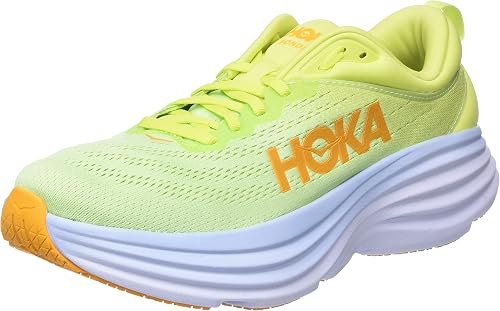
Best For: Maximum cushioning at lower price than Bondi 9 for budget-conscious comfort seekers
Why It Works: The Bondi 8 is the previous generation of the Bondi 9. Construction is nearly identical (EVA foam interstain throughout, maximum cushioning), but the price is lower ($149 vs. $170) because it’s no longer the current model. At 4.3★ from 1,270 reviews, it delivers the same Bondi experience at reduced cost. Available in limited colorways and sizes compared to the Bondi 9, but this is the value play for nurses prioritizing maximum Bondi cushioning without paying current-generation pricing.
Expert Analysis: Bondi 8 vs. Bondi 9 differences are minor: the Bondi 9 has slightly updated upper materials and cosmetic refinements, but the cushioning philosophy and performance are nearly identical. Choosing the Bondi 8 is an economic decision, not a performance compromise. EVA foam interstrain is unchanged, meta-rocker geometry is the same, and durability is identical. The only real limitation is availability-as the 9 becomes more dominant, the 8 gets lower stock in some colors and sizes.
Pros:
- Same maximum cushioning as Bondi 9 at $149 vs. $170
- EVA foam interstrain throughout entire shoe provides uniform plush comfort
- 4.3★ from 1,270 reviews shows solid real-world satisfaction
- Excellent value option for nurses prioritizing Bondi cushioning without premium pricing
- Meta-rocker geometry provides smooth motion and joint-stress reduction
- Previous-gen pricing makes Bondi-level comfort more accessible
Cons:
- Limited color and size availability compared to Bondi 9 (currently produced model)
- No slip-resistant outsole; unsuitable for wet hospital environments
- Same weight and “marshmallow” feel as Bondi 9-slower responsiveness
- Upper material may be slightly different from Bondi 9 (minor durability difference)
- Smaller review count (1,270) than Bondi 9 suggests lower current market interest
- May become harder to find as inventory ages
Main Tradeoff: The Bondi 8 offers Bondi 9 comfort at lower cost by choosing the previous generation. You’re gaining savings but accepting limited availability and potentially shorter time before discontinuation.
Who Should Buy: Budget-conscious nurses wanting maximum HOKA cushioning. Nurses willing to accept limited color options in exchange for $20–30 savings. Anyone prioritizing plush comfort over current-generation features.
Who Should Skip: Nurses wanting guaranteed long-term availability and support. Nurses working in slip-resistant-mandate environments. Nurses uncomfortable with limited color selection.
Verdict: The Bondi 8 is a value option for anyone wanting maximum Bondi cushioning without Bondi 9 pricing. The engineering is proven (1,270 reviews, 4.3★), the performance is the same, and the savings are real. Only limitation is availability-if the exact color you want isn’t in stock, you’re forced to the Bondi 9 or another model. Best for nurses who find their perfect fit in available Bondi 8 colors and want to save $20–30.
🛒 Check Price on AmazonMAIN COMPARISON TABLE
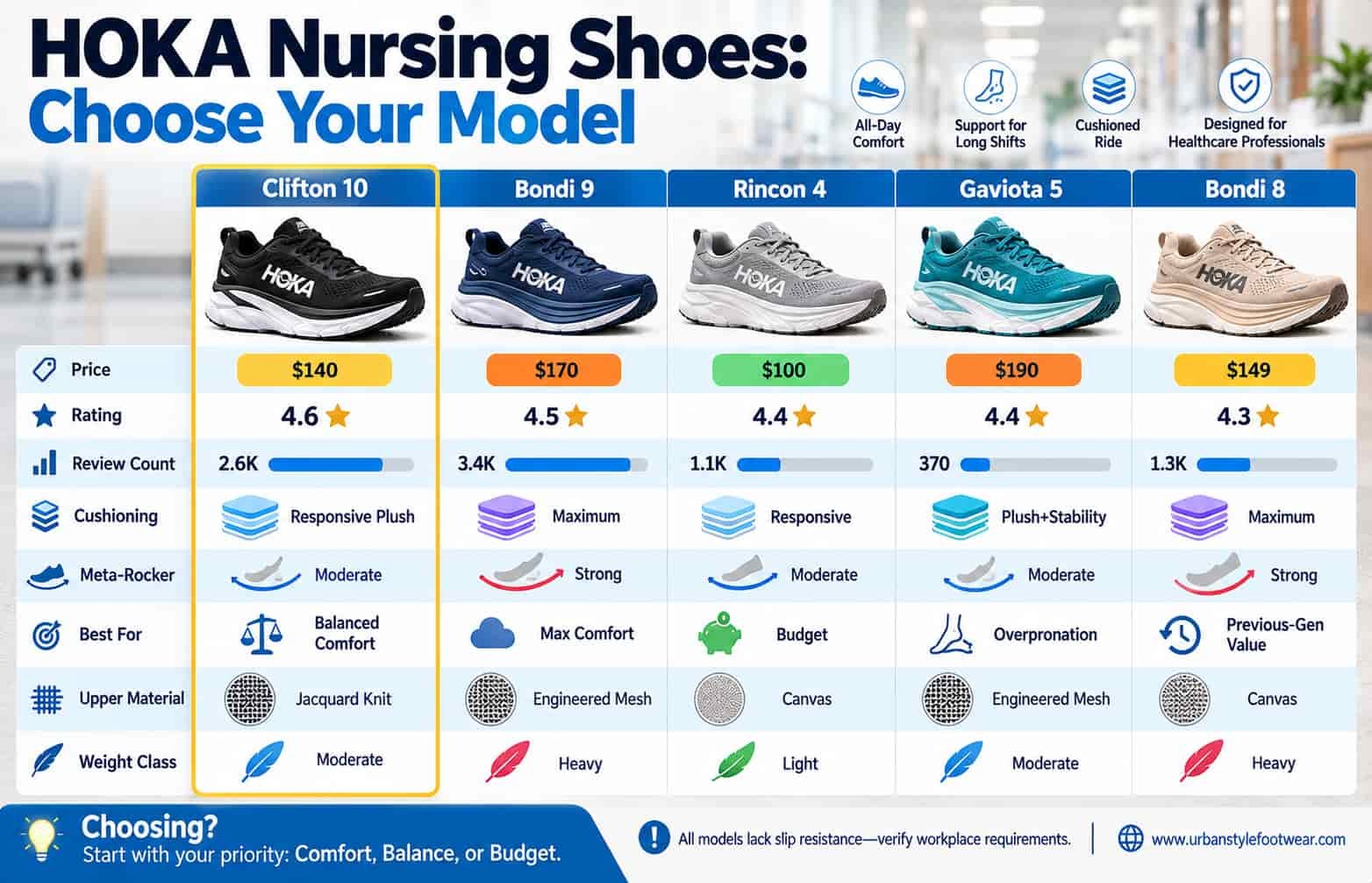
| Product | Price | Rating | Reviews | Best For | Cushioning | Meta-Rocker | Slip Resistant? | Main Tradeoff |
| HOKA Clifton 10 | $140 | 4.6★ | 2,623 | Balanced cushioning | Responsive plush | Moderate | No | Premium pricing for balanced approach |
| HOKA Bondi 9 | $170 | 4.5★ | 3,427 | Maximum comfort | Maximum | Strong | No | Heavy, slower feel, expensive |
| HOKA Rincon 4 | $100 | 4.4★ | 1,093 | Budget option | Responsive | Moderate | No | Less plush than Bondi |
| HOKA Gaviota 5 | $190 | 4.4★ | 370 | Overpronation | Plush | Moderate | No | Only for overpronators, highest price |
| HOKA Bondi 8 | $149 | 4.3★ | 1,270 | Previous-gen value | Maximum | Strong | No | Limited availability, older model |
DECISION MATRIX
| Your Priority | Best Choice | Why |
| Balanced cushioning + responsiveness | HOKA Clifton 10 | Highest rating (4.6★), proven performance, engineered for mixed standing/movement |
| Maximum comfort | HOKA Bondi 9 | Plush EVA throughout, strong meta-rocker, consistent 4.5★ rating from 3,400+ reviews |
| Budget without compromise | HOKA Rincon 4 | $100 price point, 4.4★ rating, responsive cushioning, durable canvas |
| Overpronation support | HOKA Gaviota 5 | Only HOKA option designed for inward foot roll, plush with stability |
| Previous-gen value | HOKA Bondi 8 | Bondi cushioning at $149 vs. $170, limited availability, 4.3★ rating |
| 12-hour standing shifts | HOKA Bondi 9 | Maximum cushioning holds performance through extended wear |
| Commuting + clinic work | HOKA Clifton 10 | Responsive cushioning prevents fatigue during movement between locations |
| Foot pain/injuries | HOKA Bondi 9 or Clifton 10 | Plush cushioning addresses pain; pair with professional guidance |
HOW TO CHOOSE
Answer these questions in order:
1. Is slip resistance required by your workplace?
If YES → HOKA isn’t your best option. Check our guide to the best shoes for nurses who stand all day for slip-resistant alternatives.
If NO → Continue to question 2.
2. What’s your primary concern: maximum comfort, balanced performance, or budget?
If maximum comfort → HOKA Bondi 9 ($170, 4.5★)
If balanced performance → HOKA Clifton 10 ($140, 4.6★, highest rating)
If budget → HOKA Rincon 4 ($100, 4.4★)
3. Do you have overpronation (confirmed, not self-diagnosed)?
If YES → HOKA Gaviota 5 ($190, 4.4★, stability support)
If NO → Stick with your answer from question 2.
4. Price sensitivity:
Under 110→Rincon4(100)
110–150 → Bondi 8 (149)ifavailable,elseClifton10(140)
150–175 → Clifton 10 (140)orBondi9(170)
175+→Gaviota5(190, only if overpronation applies)
FAQ
Q: Are HOKA shoes good for 12-hour nursing shifts?
Yes, if your workplace doesn’t require slip-resistant shoes. HOKA’s maximum cushioning and meta-rocker geometry are engineered for extended standing and walking. The Clifton 10 and Bondi 9 have 4.5–4.6★ ratings from 2,600+ reviews from people working demanding shifts. Main limitation: no slip-resistant outsoles, unsuitable for wet hospital floors.
Q: What’s the difference between HOKA Bondi 9 and Clifton 10?
Bondi 9 prioritizes maximum plush cushioning (EVA foam interstrain throughout entire shoe); Clifton 10 prioritizes balanced cushioning with responsiveness (layered foam with strategy placement). Bondi feels slower and heavier but more cushioned. Clifton feels faster and lighter but still plush. Bondi costs $170; Clifton costs $140.
Q: Do HOKA shoes have slip resistance?
No. All models reviewed here use standard rubber outsoles optimized for road/treadmill surfaces, not explicitly for wet healthcare flooring. If slip resistance is required by your workplace, HOKA is not your best option.
Q: Are HOKA shoes waterproof?
No. None of the models reviewed have waterproof construction. Mesh and fabric uppers absorb water. If you need actual waterproofing, choose explicit water-resistant shoes rather than relying on material alone.
Q: Which HOKA shoe is lightest for commuting?
The Rincon 4 is likely the lightest due to responsive cushioning with less foam volume overall. However, HOKA doesn’t publish exact weights in supplied data, so direct comparison isn’t possible. The Clifton 10 is also light compared to the heavier Bondi series.
Q: Can I wear HOKA running shoes as nursing shoes if they’re not designed specifically for nursing?
Yes, in dry-environment settings without slip-resistance requirements. HOKA models are running shoes repurposed for nursing work, not specialist nursing shoes. The cushioning and meta-rocker are beneficial for nursing demands (prolonged standing, walking). Limitations: no slip resistance and no specialized healthcare features.
Q: How often should I replace HOKA nursing shoes?
Typical athletic shoes lose structural cushioning after 300–500 miles of wear or 6–12 months of daily use. For nurses working 12-hour shifts (roughly 2–4 miles per shift), this means 4–8 months before noticeable cushioning loss. Replace when cushioning doesn’t bounce back, outsole shows visible wear, or seams separate.
Q: Do HOKA shoes come in wide widths?
Based on supplied data, most HOKA models come in standard width only. Different colorways may offer width variants-check specific color pages on Amazon. The Bondi series is noted for a wider forefoot compared to traditional running shoes, even in standard width.
Q: Which HOKA shoe is best for nurses with flat feet?
The Clifton 10 or Bondi 9, depending on priority. Flat feet benefit from cushioning that prevents arch stress. The Gaviota 5 would be worse because its overpronation support is designed for outward rolling foot structures, not flat feet. Consult a podiatrist before choosing if you have significant flat-foot symptoms.
Q: Are expensive HOKA shoes worth the premium price?
Yes, if you’re in a compatible environment. The Bondi 9 at $170 costs $70 more than the Rincon 4, but the 4.5★ rating from 3,400+ reviews demonstrates proven comfort for people with similar work demands. The question isn’t “is HOKA worth $170” but “is maximum cushioning worth $70 more than responsive cushioning.” If your priority is comfort, yes. If budget is primary, no.
Q: Can I compare HOKA shoes to other brands like New Balance or ASICS?
Yes, check our guides to best New Balance shoes for nurses, best ASICS nursing shoes, and best shoes for nurses for brand-specific and cross-brand comparisons. Each brand has different strengths: HOKA emphasizes cushioning, New Balance emphasizes slip resistance, ASICS emphasizes stability.
EXPERT NURSING SHOE TIPS
Measure feet later in the day – Hospital shifts cause foot swelling. Your foot is smallest at 6 a.m. and largest around 2 p.m. Measure in the afternoon to size accurately for shift conditions. Order based on swollen-foot measurements, not morning measurements.
Account for HOKA’s wider forefoot – HOKA generally offers wider toe-box space compared to traditional running shoes. If you have a narrow heel and wide forefoot (common foot structure), this works in your favor. If you have consistently narrow feet, standard HOKA width may feel loose.
Test heel fit immediately – Lace up, walk for 5 minutes, then try to slip your heel out. Your heel should not slide more than a quarter-inch. Adjust lacing if needed; excessive slippage will create blisters within 6 hours of a shift.
Expect the “marshmallow” feel in Bondi models – The Bondi’s strong meta-rocker and maximum cushioning create a pronounced bouncy sensation during movement. This feels slow to runners; most nurses appreciate it for standing comfort. Test this sensation before committing to a full-price purchase if possible.
Clean carefully – HOKA’s mesh uppers are breathable but delicate. Rinse under cool running water and wipe excess moisture with a cloth. Stuff with newspaper (change every 6 hours if very wet) and air dry at room temperature away from direct heat. Never use washing machines or dryers.
Rotate between two pairs – Each shoe needs 24 hours of full drying between shifts. Rotating extends shoe lifespan from 6–9 months to 9–12 months and prevents the breakdown that occurs when shoes don’t dry completely.
Monitor for cushioning compression – After 4–6 months of daily wear, HOKA’s EVA foam begins to compress, feeling flatter with each week. This is the sign to replace shoes. Compressed cushioning doesn’t support your foot as effectively.
Verify slip-resistance requirements early – If your workplace is still deciding on slip-resistance mandates (some hospitals are implementing new policies), check with your manager before purchasing HOKA. Buying non-slip-resistant shoes then having them mandated wastes your investment.
FINAL VERDICT
The best HOKA shoe for nurses depends on your workplace environment and comfort priorities.
If slip resistance is required (most hospitals, ICUs, ORs), HOKA is not your best option. Check our guide to best shoes for nurses who stand all day for slip-resistant alternatives.
If your workplace allows non-slip-resistant shoes and comfort is your priority, choose based on your specific needs:
Maximum comfort during 12-hour shifts → HOKA Bondi 9 ($170, 4.5★ from 3,427 reviews). Plush EVA cushioning throughout the entire shoe maintains comfort through hour 11. Strong meta-rocker reduces joint stress. The tradeoff: premium pricing and “marshmallow” feel during movement. Best for nurses whose shifts are mostly standing with minimal rapid movement.
Balanced cushioning and responsiveness → HOKA Clifton 10 ($140, 4.6★ from 2,623 reviews, highest rating in this guide). Engineered layered foam provides cushioned comfort without the slow feel of maximum-rocker shoes. Moderate meta-rocker works for mixed standing and movement. Best for nurses working in environments requiring quick movement between locations (commuting, clinic work with multiple patient rooms).
Budget without compromise → HOKA Rincon 4 ($100, 4.4★ from 1,093 reviews). Responsive cushioning with lightweight foam construction. Canvas upper offers durability. Meta-rocker geometry at entry price. Best for budget-conscious nurses and anyone testing HOKA before investing in premium models.
Overpronation support → HOKA Gaviota 5 ($190, 4.4★ from 370 reviews). Only HOKA option designed for inward foot roll. Plush cushioning combined with stability features. Best for nurses with confirmed overpronation seeking HOKA’s comfort with corrective support.
The reality: HOKA excels at cushioning comfort but lacks the slip-resistance features many hospitals require. Your choice depends on verifying whether slip resistance is actually required at your specific workplace and then matching HOKA’s comfort strengths to your comfort priorities and budget.
AFFILIATE DISCLOSURE
Some links on this page are affiliate links. If you purchase through them, Urban Style Footwear may earn a commission at no additional cost to you. Our recommendations are based on the product information, footwear characteristics, and buying criteria discussed in this guide, not on the size of the commission.