
What Is an MCR Slipper? Benefits, Uses and How to Choose One
If you have searched for MCR slippers, MCR chappals, diabetic footwear or cushioned slippers for heel pain, you may have wondered what “MCR” actually means and whether this type of footwear is right for you.
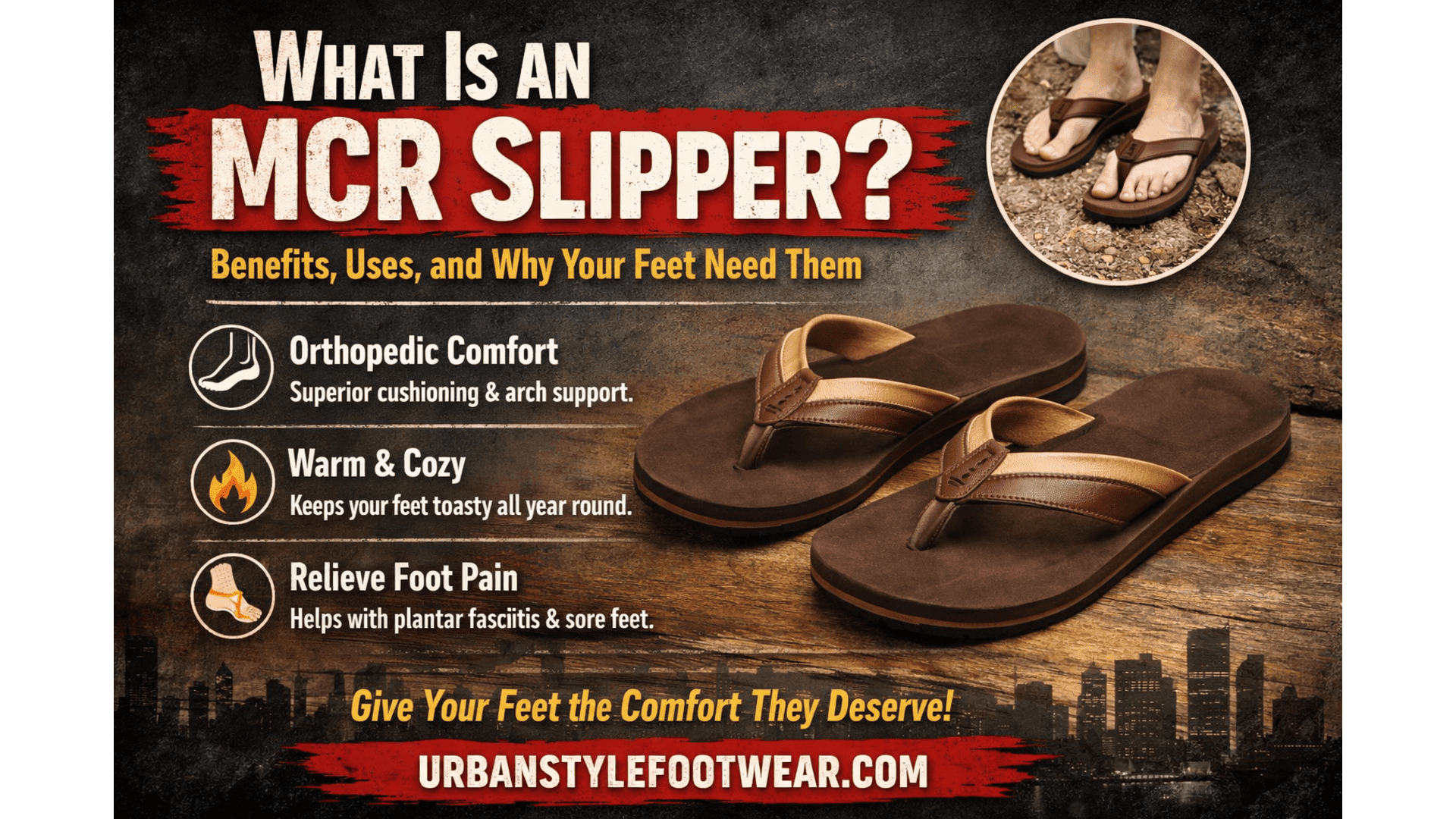
MCR stands for Micro Cellular Rubber. It is a lightweight, cellular rubber material used in certain comfort, orthopedic and diabetic-footwear designs. Its structure can provide cushioning and help reduce the feel of impact compared with a hard, flat sole.
However, an MCR slipper is not automatically a medical treatment, and not every MCR slipper is suitable for every foot condition. Material, fit, sole design, strap placement, cushioning and pressure distribution all matter.
In this guide, we’ll explain what MCR footwear is, its potential benefits, who may find it useful, how MCR compares with regular slippers and MCP footwear, and what to check before buying.
Quick Answer: What Is an MCR Slipper?
An MCR slipper is footwear made with Micro Cellular Rubber, a cellular rubber material designed to provide a combination of cushioning, flexibility and lightweight comfort.
MCR footwear is commonly found in orthopedic and diabetic-footwear categories because soft, cushioned and pressure-conscious footwear can be useful for people who need additional foot protection.
The important point is that MCR refers to the material, not a guarantee of medical performance.
Two slippers can both be made from MCR but provide very different levels of support depending on their:
- Sole thickness
- Footbed shape
- Strap design
- Heel stability
- Grip
- Fit
- Pressure distribution
- Overall construction
For people with diabetes, neuropathy, foot deformities or existing ulcers, footwear should be selected with appropriate professional guidance rather than relying on the word “MCR” alone. The American Diabetes Association recommends properly fitted footwear and advises people with diabetes to discuss therapeutic shoes or inserts with their healthcare team when appropriate.
What Does MCR Stand For?
MCR means Micro Cellular Rubber.
Unlike a completely solid rubber construction, micro-cellular rubber contains a cellular structure that makes the material relatively lightweight and compressible.
This gives MCR footwear several characteristics that people often look for in comfort footwear:
- Cushioning
- Lightweight construction
- Flexibility
- Shock-absorbing characteristics
- A softer underfoot feel
- Reduced harshness compared with very hard soles
MCR has been used in specialized footwear designs for people who require softer, pressure-conscious footwear. Indian diabetic-footwear resources also describe microcellular rubber and related materials as components used in footwear designed around pressure distribution and foot protection.
Is MCR the Same as Normal Rubber?
No.
A conventional rubber slipper can be relatively firm and dense, while MCR has a cellular structure that can make it lighter and more cushioning.
But don’t assume that every MCR product will feel identical.
The quality and performance of the finished slipper depend on the material formulation and the complete footwear design, not just the MCR label.
How Do MCR Slippers Work?
Which MCR Slipper Features Should You Prioritize?
Tell us how you plan to use your footwear and we’ll show you the features worth checking before you buy.
This tool provides general footwear-selection guidance. It does not diagnose or treat a medical condition. If you have diabetes, neuropathy, an ulcer, significant foot pain or a foot deformity, seek appropriate professional advice.
When you place your foot on a cushioned MCR sole, the material compresses under load and helps soften the sensation of impact.
A well-designed footbed can also help spread pressure across a larger area of the foot.
This can be useful for people who spend long periods:
- Standing
- Walking on hard floors
- Doing household work
- Working in shops or workplaces
- Moving around at home
However, cushioning alone is not the same as medical support.
A slipper can be soft but still have:
- Poor grip
- Poor heel stability
- An uncomfortable strap
- Insufficient width
- Poor fit
- Inadequate support for a particular foot condition
That is why comfort, fit and construction should be evaluated together.
Benefits of MCR Slippers
1. Cushioned Underfoot Feel
One of the main reasons people choose MCR footwear is its softer underfoot feel.
Compared with a hard, thin slipper, a cushioned sole can make standing and walking feel more comfortable, particularly on hard indoor surfaces.
This is one reason MCR-style footwear is commonly found in orthopedic and comfort-footwear categories.
2. Lightweight Construction
MCR is valued in footwear partly because it can provide cushioning without requiring an excessively heavy sole.
For people who prefer lightweight footwear, this can make daily walking more comfortable.
This may be especially useful for:
- Older adults
- People who stand for long periods
- Household workers
- People who prefer lightweight slippers
3. Helps Reduce the Harsh Feel of Hard Floors
Tile, concrete, granite and other hard surfaces provide little natural cushioning.
A softer sole can create a more comfortable barrier between the foot and the floor.
This doesn’t mean MCR footwear will prevent joint or heel problems, but it can make walking and standing feel less harsh for some users.
4. Can Be Useful in Pressure-Conscious Footwear
Footwear designed for people with diabetes or sensitive feet often focuses on reducing friction, pressure points and unnecessary irritation.
The National Medical Journal of India describes footwear features such as soft materials, MCR insoles, adjustable straps and appropriate footwear construction in the context of diabetic-foot protection.
However, the MCR material alone does not make a slipper diabetic-safe.
The complete design and fit matter.
5. Comfortable for Everyday Indoor Use
A well-fitting MCR slipper can be a practical option for people who prefer cushioned footwear around the home.
This can be particularly useful if you spend many hours standing on hard floors.
For people with diabetes, the American Diabetes Association also recommends avoiding barefoot walking and choosing footwear that fits properly without pinching or rubbing the feet.
Who May Benefit From MCR Slippers?
MCR slippers are not exclusively for people with medical conditions.
They can be considered by anyone looking for cushioned everyday footwear.
People Who Stand for Long Periods
If your daily routine involves prolonged standing, a cushioned sole may make your footwear feel more comfortable.
People Who Prefer Softer Slippers
Some people simply prefer a softer, more cushioned walking experience than traditional hard rubber chappals provide.
Older Adults
Lightweight footwear with a comfortable fit can be easier to manage than heavy footwear.
However, older adults should also consider grip and stability. A very soft or unstable slipper may not be appropriate for someone at risk of falls.
People With Sensitive Feet
A smooth, appropriately designed upper and cushioned footbed may reduce some sources of friction.
But if you have neuropathy or reduced sensation, don’t rely on comfort alone. Inspect your feet regularly and seek professional footwear advice when needed.
People With Diabetes
Diabetes can increase the importance of properly fitted footwear because neuropathy can reduce the ability to notice injuries.
The American Diabetes Association recommends properly fitting footwear and advises people with diabetes to work with their healthcare team when special therapeutic footwear or inserts are needed.
MCR can be one component of diabetic footwear, but “MCR” by itself does not mean a product is medically appropriate for every person with diabetes.
People With Heel Discomfort
Cushioned footwear may feel more comfortable for some people with heel pain.
However, persistent or severe heel pain needs evaluation because causes can differ.
If you have ongoing pain, swelling, numbness, an injury or difficulty walking, speak with a qualified healthcare professional rather than relying on footwear alone.
Are MCR Slippers Good for Heel Pain?
They may provide cushioning that feels more comfortable for some people with heel pain, particularly when hard surfaces aggravate discomfort.
But MCR slippers should not be described as a cure for plantar fasciitis, heel spurs or other medical conditions.
For heel pain, the right footwear may depend on:
- Where the pain occurs
- How long you’ve had it
- Your foot shape
- Your walking pattern
- Arch characteristics
- Activity level
- Whether the pain is caused by an injury or another condition
If your heel pain continues despite changing footwear, seek professional assessment.
You can also read our guide on heel pain when walking for additional footwear-related information.
Are MCR Slippers Good for Diabetic Feet?
MCR material can be used in footwear designed for people with diabetes, but not every MCR slipper is automatically suitable for diabetic feet.
For diabetic footwear, look beyond the material.
Important features may include:
- Correct size and width
- Adequate toe room
- Smooth interior surfaces
- Minimal friction points
- Secure but non-restrictive straps
- Appropriate cushioning
- Good grip
- Stable construction
- Suitable pressure distribution
The American Diabetes Association recommends checking that footwear fits properly and does not pinch or rub the feet. It also recommends inspecting the feet regularly for injuries.
If you have neuropathy, an ulcer, a history of diabetic foot problems or significant foot deformity, ask your healthcare professional whether you need therapeutic footwear.
MCR vs Regular Rubber Slippers
| Feature | MCR Slippers | Regular Rubber Slippers |
| Material structure | Cellular rubber | Can be solid or conventional rubber |
| Underfoot feel | Usually softer and more cushioned | Depends on construction |
| Weight | Often lightweight | Varies |
| Cushioning | Usually a key design feature | May be limited |
| Pressure management | Depends on footbed design | Usually basic |
| Medical use | Used in some orthopedic/diabetic designs | Usually general-purpose |
| Best for | Comfort and specialized footwear designs | Everyday basic use |
| Important consideration | Fit and construction | Fit and grip |
The key takeaway is simple:
MCR is a material. It is not a medical certification.
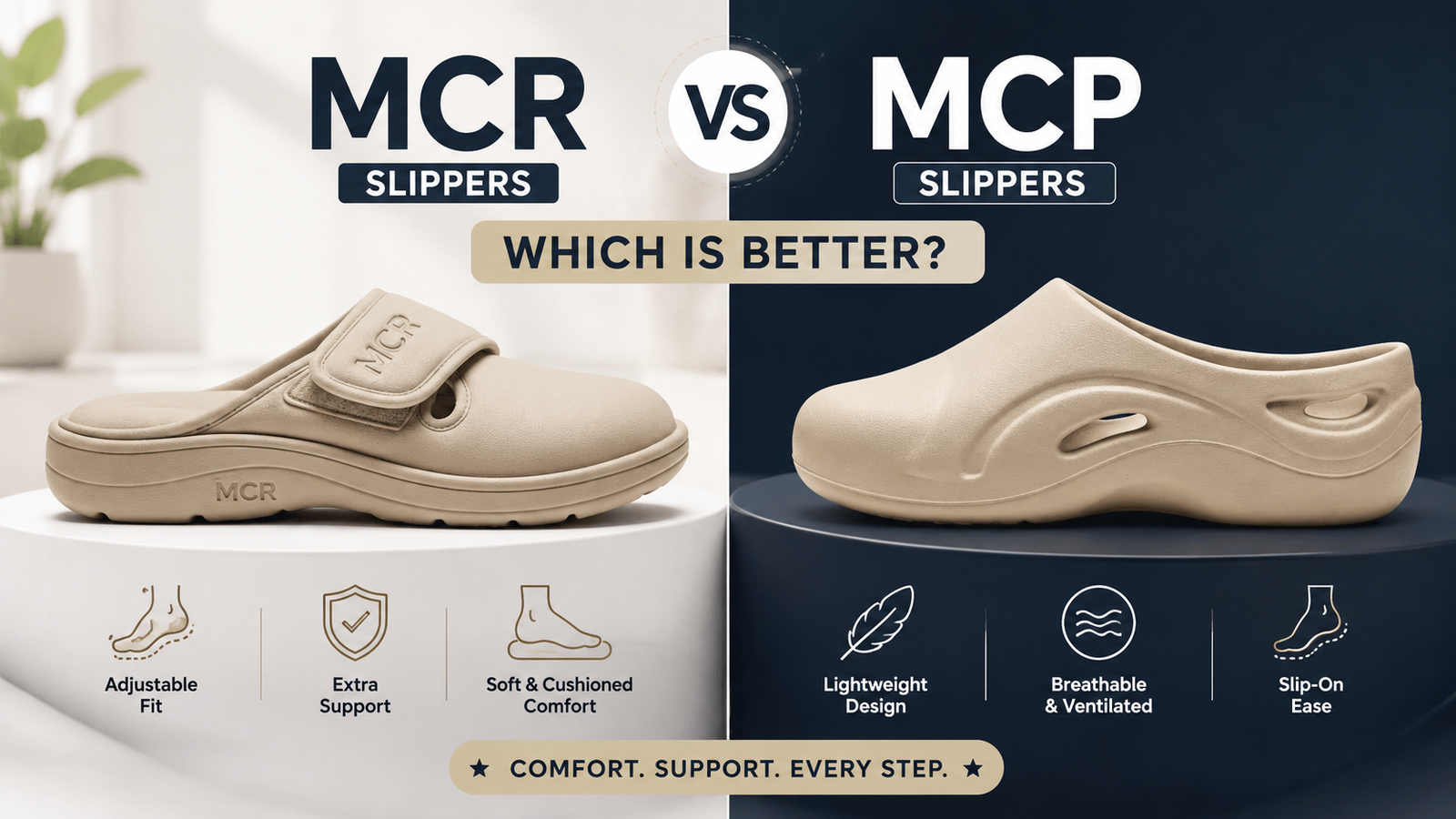
MCR vs MCP: What Is the Difference?
MCR and MCP are often discussed together in orthopedic and diabetic footwear.
MCR
MCR = Micro Cellular Rubber
It is a cellular rubber material used in various footwear applications.
MCP
MCP = Micro Cellular Polymer
MCP refers to a different polymer-based cellular material used in some specialized footwear and insole applications.
The exact properties depend on the specific formulation and manufacturer.
Some footwear manufacturers now use MCP or EVA-based materials because of their lightweight, cushioning and pressure-management characteristics. Industry sources also distinguish MCR and MCP by material composition and performance characteristics.
So when comparing MCR and MCP footwear, don’t choose based only on the abbreviation.
Compare:
- Material
- Density
- Cushioning
- Footbed shape
- Durability
- Grip
- Fit
- Intended use
How to Choose the Right MCR Slipper
Buying an MCR slipper should involve more than pressing the sole with your thumb.
Use this checklist.
1. Check the Fit
Your toes should not be pushed against the front edge.
Your foot should also not slide excessively from side to side.
For people with diabetes or reduced sensation, proper fit is particularly important. The ADA recommends footwear that fits comfortably without pinching or rubbing.
2. Check the Width
The slipper should accommodate the natural width of your foot.
Avoid straps that press into:
- Toes
- Top of the foot
- Sides of the foot
- Swollen areas
3. Check the Strap
Look for:
- Smooth edges
- Comfortable contact
- Secure positioning
- Adjustable features where appropriate
For sensitive feet, avoid straps that create obvious pressure points.
4. Check the Footbed
A soft sole is useful, but the footbed should also feel stable.
Walk around for a few minutes.
Ask yourself:
- Does my heel stay in place?
- Does my foot slide?
- Does the arch area feel comfortable?
- Does the strap rub?
- Does the sole feel stable?
5. Check the Outsole Grip
Cushioning is only one part of a good slipper.
A slipper with poor traction can be uncomfortable or unsafe on smooth floors.
Look for a properly textured outsole appropriate for your intended use.
6. Check the Heel Stability
For older adults or anyone who has balance concerns, consider a secure design rather than an extremely loose slip-on.
A back strap or heel-supporting construction may provide more stability depending on the individual.
7. Check the Construction
Look for:
- Clean finishing
- Secure straps
- Even sole construction
- No sharp edges
- No exposed adhesive
- No rough areas touching the foot
MCR Slippers for Men vs. Women
The material itself does not determine whether a slipper is suitable for men or women.
The important factors are:
- Foot length
- Foot width
- Shape
- Fit
- Strap position
- Intended use
MCR slippers for men
Men’s MCR footwear often comes in wider size ranges and designs suited to daily walking or indoor use.
MCR slippers for women
Women’s MCR footwear is available in different shapes and strap designs, including options intended for household use and everyday walking.
Don’t choose solely by gender category.
Choose based on your actual foot dimensions and how the footwear feels when walking.
Are MCR Slippers Good for Senior Citizens?
They can be useful when the design provides adequate cushioning, grip and stability.
However, older adults should avoid assuming that the softest slipper is automatically the safest.
If someone has balance problems, a very loose slipper can increase the risk of slipping or tripping.
For seniors, prioritize:
- Secure fit
- Good outsole grip
- Stable construction
- Comfortable cushioning
- Easy-to-use straps
- Appropriate width
Can You Wear MCR Slippers at Home?
Yes.
MCR slippers are commonly used indoors because their cushioning can make hard floors more comfortable.
If you have diabetes, however, don’t choose indoor footwear simply because it is soft.
The American Diabetes Association recommends wearing appropriate footwear even indoors and checking that footwear does not cause rubbing or pressure.
Can You Wear MCR Slippers Outside?
Some MCR slippers are designed for outdoor use, while others are better suited to indoor wear.
Before wearing them outside, check:
- Outsole grip
- Sole thickness
- Strap security
- Water exposure
- Surface type
- Overall durability
A soft indoor slipper may wear faster on rough roads or concrete.
If you regularly walk outside, choose a design specifically intended for outdoor use.
MCR Slippers for Chennai Homes
MCR footwear can be particularly practical for people who prefer cushioned indoor footwear on hard floors.
Many homes use surfaces such as:
- Granite
- Marble
- Ceramic tile
- Concrete
If you spend several hours standing or walking indoors, a cushioned slipper can feel more comfortable than walking barefoot or wearing a very thin, hard sole.
However, don’t assume that hard flooring itself causes a specific medical condition.
If you have persistent heel or foot pain, identify the underlying cause rather than simply changing slippers.
MCR Slippers and Chennai’s Hot Weather
In hot weather, footwear comfort depends on more than the sole material.
Look at:
- Upper design
- Ventilation
- Strap coverage
- Moisture management
- Fit
- Sock use
A cushioned sole does not automatically make a slipper breathable.
If your feet sweat heavily, allow footwear to dry between uses and maintain good foot hygiene.
Common MCR Slipper Myths
Myth 1: Every MCR slipper is medical footwear
Fact: MCR describes a material. The overall design determines whether a slipper is intended for general comfort, orthopedic use or diabetic-foot applications.
Myth 2: MCR slippers cure plantar fasciitis
Fact: Cushioning may make footwear more comfortable, but MCR slippers should not be considered a cure.
Myth 3: MCR slippers automatically prevent diabetic ulcers
Fact: Appropriate footwear can help reduce pressure and friction, but no slipper guarantees ulcer prevention. People with diabetes should follow their healthcare professional’s foot-care recommendations.
Myth 4: The softer the slipper, the better it is
Fact: Excessive softness can compromise stability. The right balance of cushioning, support, grip and fit matters.
Myth 5: MCR and MCP are exactly the same
Fact: They refer to different material categories. Their performance depends on formulation, construction and the specific footwear design.
Myth 6: MCR slippers last forever
Fact: Cushioning materials can wear and compress with use. Replace footwear when the sole loses its cushioning, grip or structural integrity.
How to Clean and Maintain MCR Slippers
Always check the manufacturer’s care instructions first.
For routine cleaning:
- Remove loose dirt.
- Wipe the slipper with a damp cloth.
- Use mild soap if needed.
- Avoid harsh solvents and unnecessary soaking.
- Rinse or wipe away soap residue.
- Allow the slipper to dry naturally.
- Keep it away from prolonged high heat.
Do not assume that putting MCR footwear in a washing machine is safe.
If the material becomes cracked, excessively compressed, slippery or structurally damaged, consider replacing the pair.
When Should You Replace MCR Slippers?
Replace them when you notice:
- Permanently flattened cushioning
- Cracks
- Peeling
- Severe sole wear
- Loss of grip
- Loose straps
- Deformation
- Uneven wear
- Persistent discomfort
For people with diabetes or reduced foot sensation, inspect footwear more carefully because damage may create pressure or friction that is not immediately noticeable.
MCR Slipper Buying Checklist
Before purchasing, ask:
Material
- Is it actually MCR?
- What is the footbed made from?
Fit
- Is the width comfortable?
- Is there enough toe room?
- Does the heel stay stable?
Comfort
- Does the sole cushion without feeling unstable?
- Is the strap rubbing anywhere?
Safety
- Does the outsole provide adequate grip?
- Are there rough edges or seams?
Purpose
- Is it for indoor use?
- Outdoor walking?
- General comfort?
- A medically recommended footwear need?
If you have a diagnosed foot condition, don’t choose footwear solely from an online description. Your foot shape, pressure points and medical needs may require a more specific solution.
Frequently Asked Questions About MCR Slippers
What is an MCR slipper?
An MCR slipper is footwear made using Micro Cellular Rubber, a cellular material used in various cushioned and specialized footwear designs. It is known for its lightweight and cushioning characteristics.
What does MCR stand for in footwear?
MCR stands for Micro Cellular Rubber.
Are MCR slippers good for heel pain?
They may provide cushioning that feels comfortable for some people with heel pain, especially on hard surfaces. However, they are not a guaranteed treatment or cure for plantar fasciitis, heel spurs or other causes of heel pain.
Are MCR slippers good for diabetic feet?
MCR can be used as part of diabetic-footwear designs, but not every MCR slipper is suitable for every person with diabetes. Proper fit, pressure distribution, smooth interiors, secure construction and professional advice are more important than the material name alone.
What is the difference between MCR and MCP slippers?
MCR means Micro Cellular Rubber, while MCP generally refers to Micro Cellular Polymer. They are different material categories and can have different characteristics depending on the manufacturer and formulation.
Are MCR slippers good for flat feet?
MCR can provide cushioning, but cushioning alone does not correct flat feet. If you have significant discomfort or require arch support, ask a qualified professional whether a specific footbed or orthotic is appropriate.
Can MCR slippers be worn outside?
Some can. Check the outsole grip, construction and manufacturer’s intended use before using them outdoors.
Can MCR slippers be washed?
Follow the manufacturer’s care instructions. In general, wiping with a damp cloth and mild soap is safer than prolonged soaking or harsh cleaning.
How long do MCR slippers last?
There is no universal lifespan. Durability depends on material formulation, construction, body weight, walking surface, frequency of use and care. Replace them when cushioning, grip or structural integrity has noticeably deteriorated.
Are MCR slippers good for elderly people?
They can be comfortable because of their lightweight and cushioned construction, but older adults should prioritize grip, stability and secure fit rather than softness alone.
Can pregnant women wear MCR slippers?
A comfortable, properly fitting slipper may be suitable during pregnancy, but swelling and changes in foot comfort can occur. Choose a secure, adjustable fit and consult a healthcare professional if you develop significant pain, swelling or other concerning symptoms.
Do MCR slippers cure foot pain?
No. MCR footwear may improve comfort for some people, but it should not be described as a cure for an underlying medical condition.
Should I wear MCR slippers all day?
That depends on the footwear design and your individual needs. If you experience pain, numbness, pressure or rubbing, stop using the footwear and seek appropriate advice.
Final Verdict: Are MCR Slippers Worth Buying?
MCR slippers can be a good option if you want lightweight, cushioned everyday footwear and choose a pair that fits properly.
The biggest mistake is focusing only on the word MCR.
A good pair should also provide:
- Comfortable fit
- Adequate toe room
- Appropriate cushioning
- Secure straps
- Good grip
- Suitable stability
- Smooth contact surfaces
- Construction appropriate for your intended use
For general comfort, MCR can be a practical choice.
For diabetes, neuropathy, ulcers, significant foot deformities or persistent pain, footwear should be selected more carefully and, when appropriate, with guidance from a qualified healthcare professional.
If you want a deeper comparison of MCR footwear, models, materials and buying considerations, continue to our complete MCR slippers guide.
If heel discomfort is your main concern, you can also read our guide on heel pain when walking.
For questions about footwear selection or sizing, you can also contact Urban Style Footwear.