
Vans Shoe Size Chart: US, UK, EU & Foot Length Guide
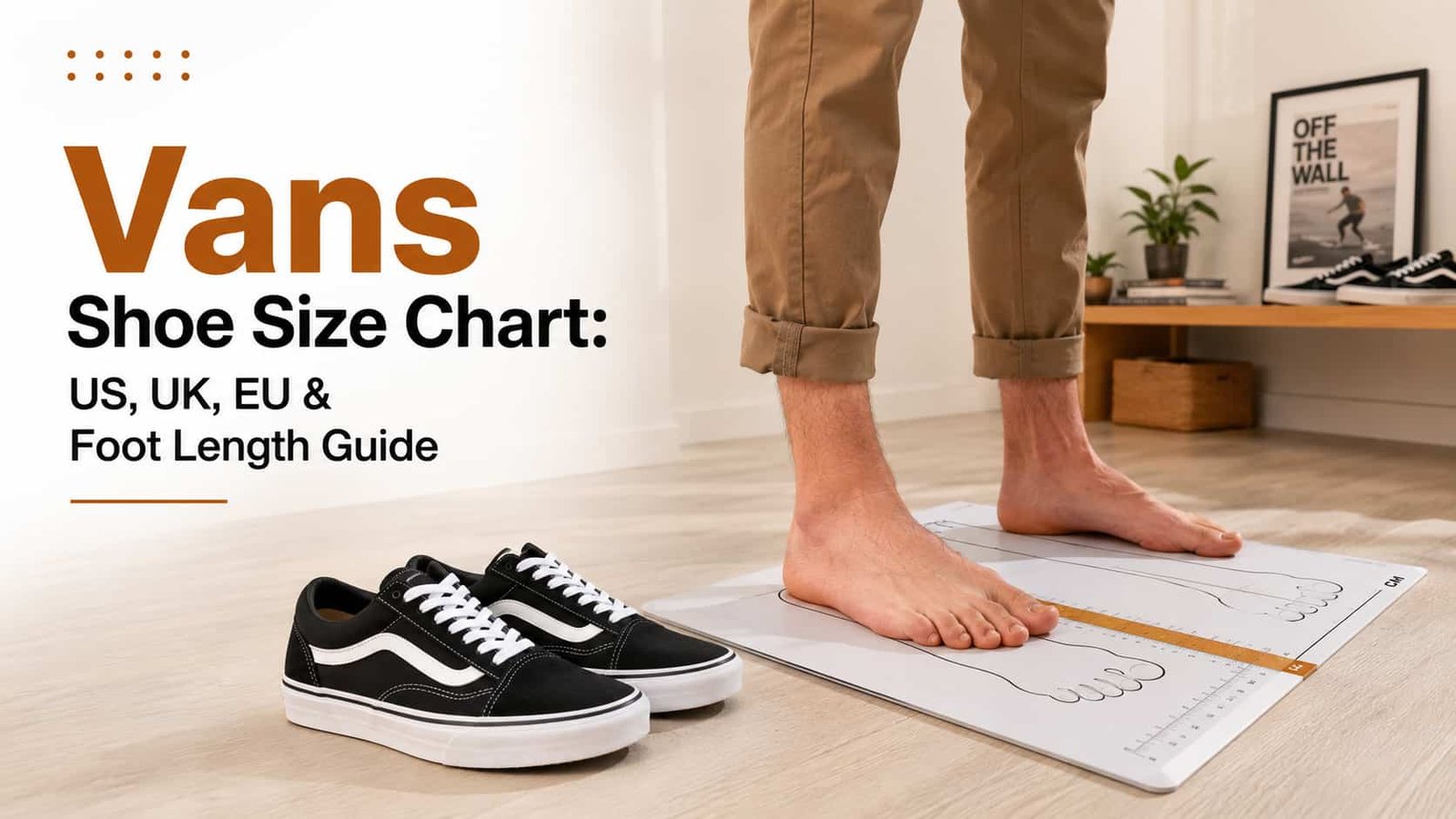
The best Vans size is the one that matches your actual foot length rather than the size you normally wear in another brand. Vans’ current unisex shoe chart provides US, UK, EU, JP and foot-length measurements, making foot length the most useful starting point when buying online.
- Measure both feet before ordering.
- Use the larger foot when your measurements differ.
- Compare your measurement with the Vans chart.
- Remember that fit can vary between Vans styles and constructions.
- Check the specific product information when available.
If you are searching for a Vans shoe size chart, the most reliable approach is simple: measure your foot, compare the measurement with the Vans size chart, then check the corresponding US, UK or EU size.
Vans currently publishes its adult/unisex shoe sizing with US Men, US Women, UK, EU, JP and foot-length measurements. Vans also recommends measuring from the heel to the tip of the longest toe, noting that the longest toe is not always the big toe.
This matters because your usual sneaker size is not always enough when buying online. A US 9 in one brand may not feel exactly the same as a US 9 in another, and even different Vans styles can have different shapes and padding.
The good news is that a few minutes with a ruler can make the decision much easier.
Vans Shoe Size Chart
The table below follows the current Vans unisex shoe sizing information and shows the relationship between UK, EU, US Men’s, US Women’s, JP and foot length measurements.
| UK | EU | US Men | US Women | JP | Foot Length (in) |
| 2.5 | 34.5 | – | 5 | 21.5 | 8.5 |
| 3 | 35 | – | 5.5 | 22 | 8.7 |
| 3.5 | 36 | – | 6 | 22.5 | 8.9 |
| 4 | 36.5 | – | 6.5 | 23 | 9.1 |
| 4.5 | 37 | – | 7 | 23.5 | 9.3 |
| 5 | 38 | – | 7.5 | 24 | 9.4 |
| 5.5 | 38.5 | 6.5 | 8 | 24.5 | 9.6 |
| 6 | 39 | 7 | 8.5 | 25 | 9.8 |
| 6.5 | 40 | 7.5 | 9 | 25.5 | 10.0 |
| 7 | 40.5 | 8 | 9.5 | 26 | 10.2 |
| 7.5 | 41 | 8.5 | 10 | 26.5 | 10.4 |
| 8 | 42 | 9 | 10.5 | 27 | 10.6 |
| 8.5 | 42.5 | 9.5 | 11 | 27.5 | 10.8 |
| 9 | 43 | 10 | 11.5 | 28 | 11.0 |
| 9.5 | 44 | 10.5 | – | 28.5 | 11.2 |
| 10 | 44.5 | 11 | – | 29 | 11.4 |
| 10.5 | 45 | 11.5 | – | 29.5 | 11.6 |
| 11 | 46 | 12 | – | 30 | 11.8 |
| 12 | 47 | 13 | – | 31 | 12.2 |
| 13 | 48 | 14 | – | 32 | 12.6 |
| 14 | 49 | 15 | – | 33 | 13.0 |
| 15 | 50 | 16 | – | 34 | 13.4 |
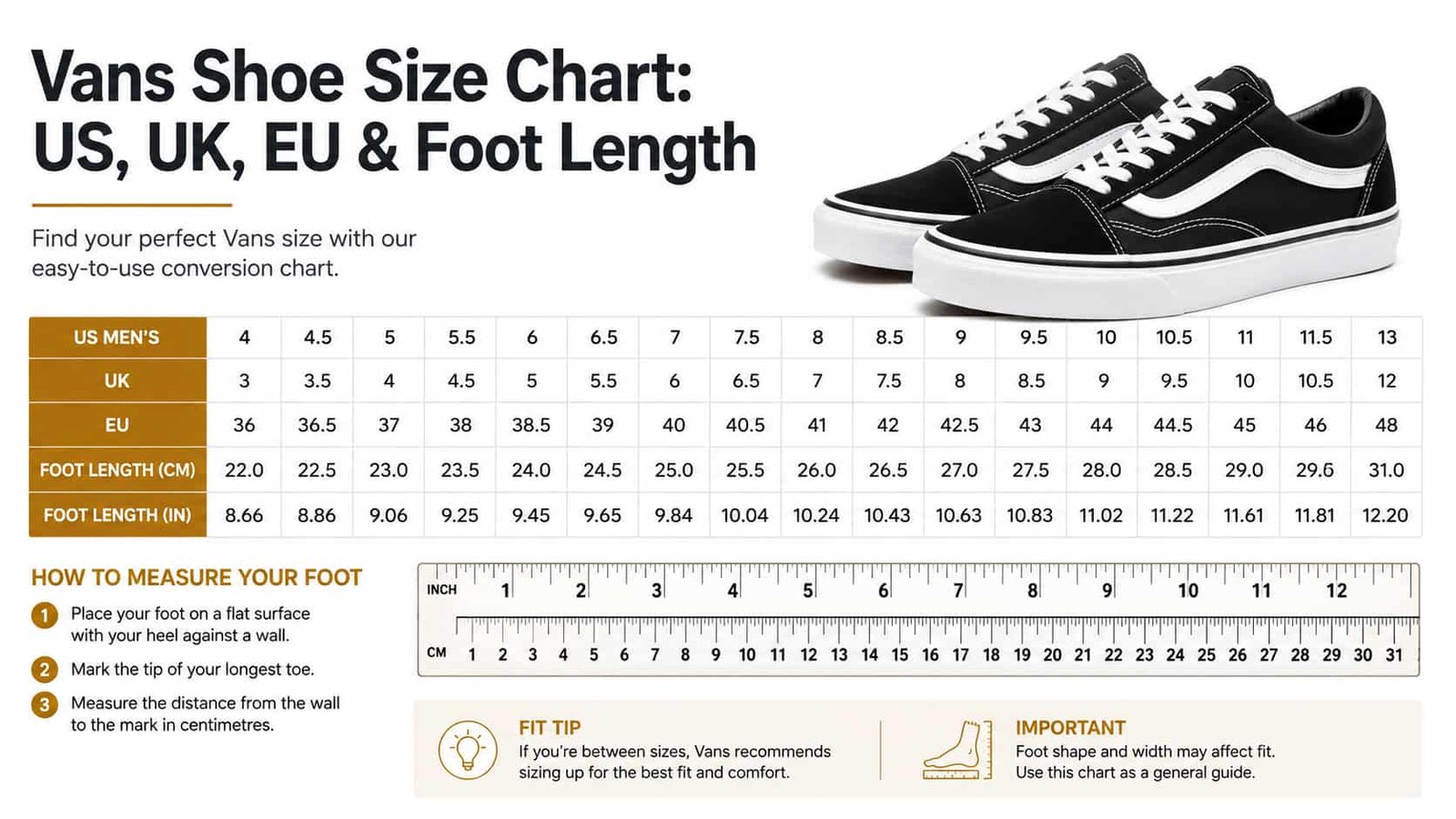
Important: Vans’ chart is a conversion and measurement reference, not a guarantee that every shoe will feel identical. The best choice combines foot length with the shape and construction of the particular shoe.
If you regularly buy different brands, our men’s shoe size chart can help you compare general men’s sizing before moving to the Vans-specific chart.
Vans Size Finder: Enter Your Foot Length
If you already know your foot length, this simple tool can give you a quick reference point using the Vans chart.
📏 Vans Size Quick Finder
Enter your foot length in inches. This tool compares your measurement with the Vans size reference used in this guide.
Reference tool only. Always compare your measurement with the current Vans product size information before ordering.
How to Read the Vans Size Chart
The Vans chart becomes much easier to use once you understand what each column means.
US Men is the US men’s sizing reference.
US Women is the corresponding US women’s size shown for Vans unisex shoes.
UK is the UK shoe size.
EU is the European size.
JP represents the Japanese sizing measurement in centimetres.
Foot Length gives the approximate foot length associated with the listed size.
For example, according to the current Vans chart, a US Men’s 9 corresponds to UK 8, EU 42, JP 27 and a foot length of about 10.6 inches.
That makes foot length especially useful when you are unsure whether your usual size will work.
💡 Expert Tip
Do not start with your favourite sneaker size and automatically order the same number in Vans. Start with your foot measurement, then use the Vans chart to confirm the size.
Are Vans True to Size?
For many popular Vans styles, ordering your usual size is a reasonable starting point, but “true to size” should not be treated as a universal rule for every Vans model.
Vans itself notes that shoe sizes can vary by style and brand, which is one reason its sizing guide recommends using measurements when choosing a size online.
For example, Vans’ own Old Skool product guide says Old Skool styles tend to fit true to size for most designs. It also notes that people with wider feet may prefer additional room or a wide-sizing option in certain versions.
So, if someone asks, “Are Vans true to size?”, the practical answer is:
Usually, your normal size is a useful starting point, but foot measurement and the specific Vans style are more reliable than assuming every Vans shoe fits exactly the same.
How to Measure Your Feet for Vans Shoes
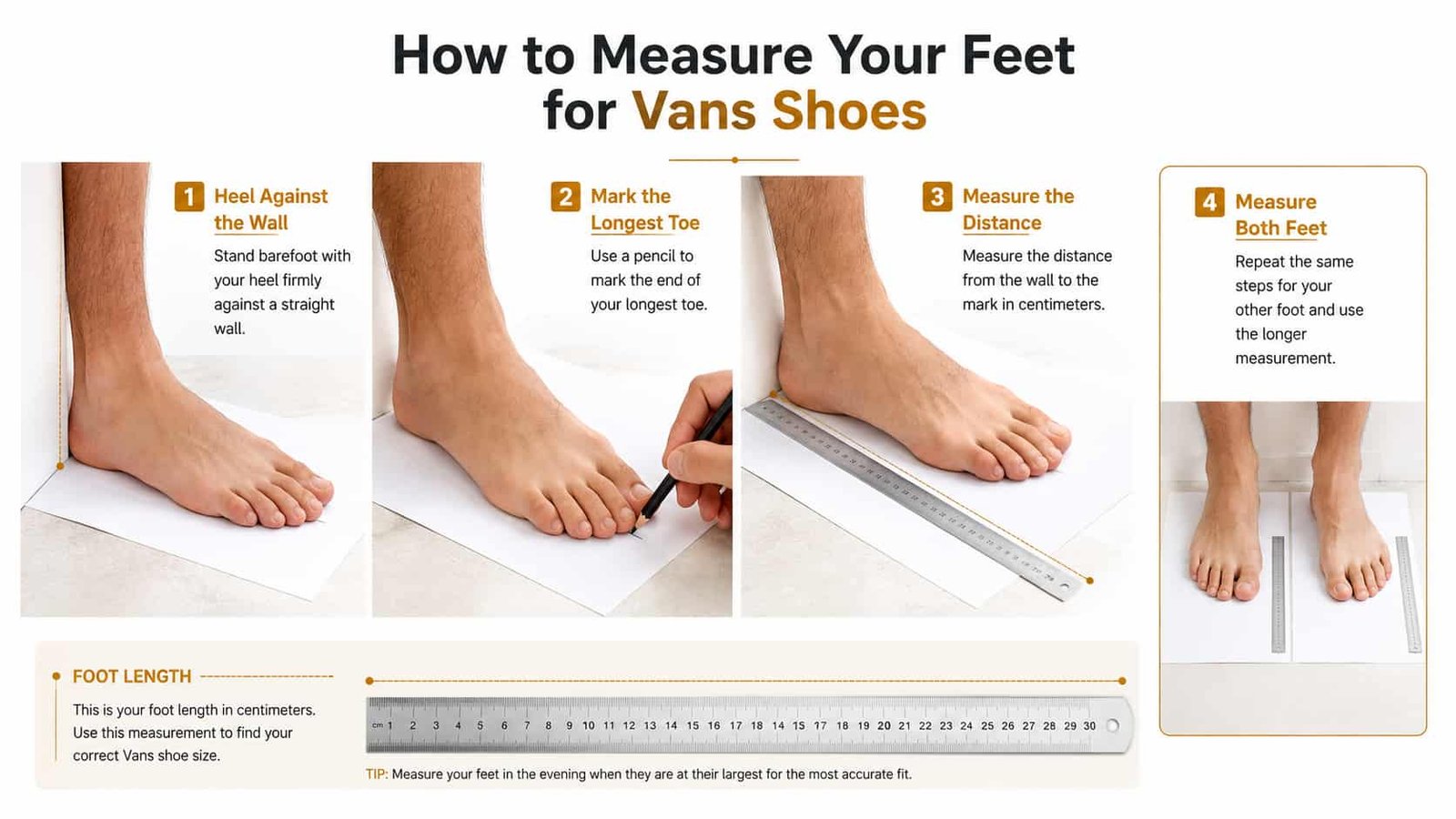
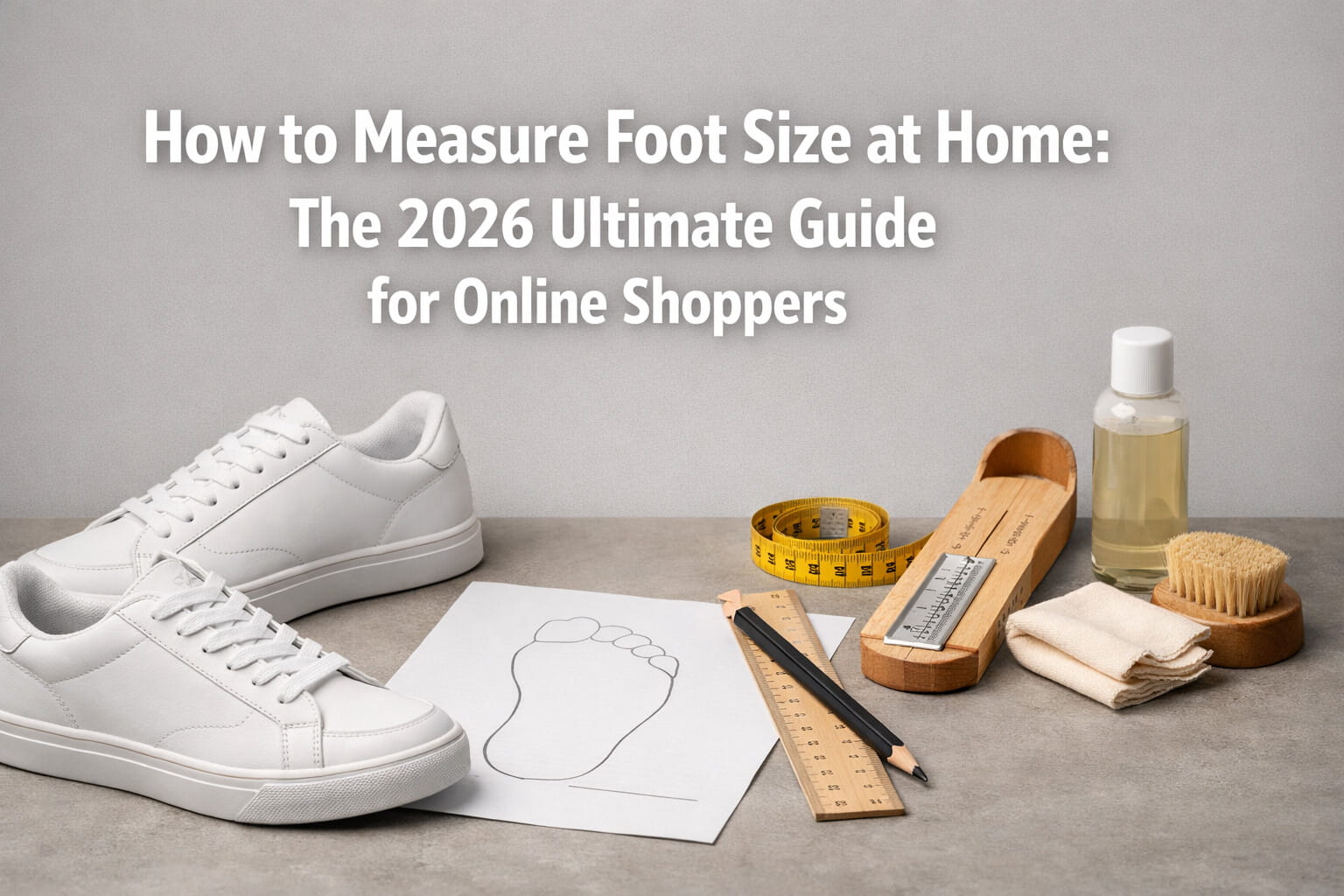
Measuring your foot at home is one of the easiest ways to reduce sizing mistakes.
Vans recommends placing your foot on a flat surface with your heel against a wall or straight edge and measuring from the heel to the tip of your longest toe.
What you need
- A piece of paper
- A pencil
- A ruler or measuring tape
- The socks you normally wear with the shoes
The easiest method
Place the paper on a hard, flat floor.
Stand naturally with your heel touching a wall.
Keep your weight evenly distributed rather than sitting down.
Mark the end of your longest toe.
Measure the distance from the wall edge to the mark.
Record the measurement in inches or centimetres.
Repeat the process with your other foot.
Use the larger measurement when the two feet are different.
This method follows the same basic measurement principle recommended by Vans.
📏 Your Vans Measurement Checklist
- Measure both feet.
- Stand naturally while measuring.
- Keep your heel against a wall.
- Measure to your longest toe.
- Wear the socks you normally use.
- Record the larger foot measurement.
For a more detailed general measurement method, you can also follow our guide on how to measure foot size at home.
Why Your Two Feet May Not Be the Same Size
It is completely normal for one foot to be slightly longer or wider than the other.
That is why measuring only one foot can lead to an uncomfortable purchase.
Imagine your left foot measures 10.5 inches while your right foot measures 10.7 inches. Choosing a size based only on the smaller measurement could leave the larger foot feeling cramped.
The better approach is to measure both and use the larger foot as your reference.
This is particularly useful when buying shoes online because you do not have the opportunity to try multiple sizes before placing the order.
Vans Size Conversion: US to UK and EU
Vans size conversion is useful when shopping across international websites.
If you normally use US sizing but a retailer lists only UK or EU sizes, use the Vans chart rather than relying on a generic conversion chart.
For example:
| US Men’s | UK | EU | Approx. Foot Length |
| 6.5 | 5.5 | 38.5 | 9.6 in |
| 7 | 6 | 39 | 9.8 in |
| 7.5 | 6.5 | 40 | 10.0 in |
| 8 | 7 | 40.5 | 10.2 in |
| 8.5 | 7.5 | 41 | 10.4 in |
| 9 | 8 | 42 | 10.6 in |
| 9.5 | 8.5 | 42.5 | 10.8 in |
| 10 | 9 | 43 | 11.0 in |
| 10.5 | 9.5 | 44 | 11.2 in |
| 11 | 10 | 44.5 | 11.4 in |
| 11.5 | 10.5 | 45 | 11.6 in |
| 12 | 11 | 46 | 11.8 in |
| 13 | 12 | 47 | 12.2 in |
| 14 | 13 | 48 | 12.6 in |
| 15 | 14 | 49 | 13.0 in |
| 16 | 15 | 50 | 13.4 in |
These conversions are based on the current Vans unisex chart.
If you frequently switch between US, UK and EU sizing, our global shoe size converter can make the comparison easier.
What If You Are Between Two Vans Sizes?
Being between sizes is one of the most common reasons people become unsure when ordering shoes online.
Do not automatically choose the larger size simply because it gives you more room.
First, look at your actual foot measurement and then consider how the shoe is constructed.
A lace-up Vans shoe gives you more control over how securely the upper holds your foot. A slip-on style can feel different because there is no traditional lacing system to adjust the fit.
Your foot width also matters.
If the length is correct but the shoe feels tight around the forefoot, going longer may not solve the underlying problem. You may need a style with a roomier shape or a wide-fit option where available.
⚠ Common Mistake
Going up a full size just because the shoe feels narrow can create a length problem. If the length is already correct, look at width and shoe construction before changing sizes.
How Should Vans Shoes Fit?
A well-fitting Vans shoe should feel secure without creating painful pressure.
Your heel should remain reasonably stable when you walk.
Your toes should have enough space to sit naturally rather than being forced against the front of the shoe.
The upper should not create uncomfortable pressure across the widest part of your foot.
Your foot should not slide excessively from side to side.
You should also be able to walk naturally without constantly adjusting the shoe.
Fit is not simply about whether your toes touch the front. A shoe can have the correct length and still feel wrong if its width, upper or internal shape does not suit your foot.
How Do Vans Fit Wide Feet?
Wide feet require more attention than simply choosing a longer size.
Vans offers wide-width options in selected products. Vans states that its wide-width sizing provides a bottom width that is 5 mm wider and a ball girth that is 10 mm longer than regular-width versions.
That distinction is important.
If your foot is wide, moving up in length may create unnecessary space in front of your toes without giving you the right amount of width around the forefoot.
When available, a wide version can be a better solution.
Some Vans models may also feel different because of their upper materials, padding and construction.
Vans Old Skool Sizing
The Old Skool is one of the most recognisable Vans styles, and its sizing is a common search query.
Vans’ own Old Skool product guide says the style generally fits true to size for most designs. Vans also points out that people with wider feet may want to consider going up slightly or choosing a wide-sizing option in applicable versions, particularly for tapered designs.
The important takeaway is not to assume that every Old Skool variation has exactly the same feel.
Materials, padding, construction and foot shape can all affect how the shoe feels.
If you already own a comfortable pair of Old Skools, measuring that pair and comparing it with your foot measurement can also provide a useful personal reference.
Vans Knu Skool Sizing
The Knu Skool has a different visual and construction profile from the traditional Old Skool.
Vans describes the Knu Skool as having a more padded tongue and collar, which can make it feel different even when the length is correct. Vans also says the style generally fits true to size in length.
This is a good example of why “Vans true to size” should not be treated as a one-size-fits-all statement.
Two shoes can have the same labelled size while creating a different feeling around the foot.
If you have narrow feet, the extra padding may make a Knu Skool feel roomier. If you have wider feet, that construction may feel more comfortable.
Vans UltraRange Sizing
UltraRange shoes are designed differently from classic Vans skate silhouettes.
The current UltraRange 2.0 uses features such as a heel-lock design, UltraCush Lite cushioning and an improved toe box. Vans describes the UltraRange 2.0 as having a true-to-size fit.
That means it is worth considering the model before comparing it directly with a traditional canvas Vans shoe.
A size that feels right in an Old Skool does not automatically guarantee the same sensation in an UltraRange.
When comparing Vans models, look at:
- Foot length
- Foot width
- Toe-box shape
- Padding
- Upper material
- Cushioning
- Heel hold
- Intended use
Vans Slip-On Sizing
Slip-on shoes deserve special attention because you cannot adjust the fit with conventional laces.
The shoe should hold your foot securely without creating uncomfortable pressure.
If the slip-on is too loose, your foot may move excessively as you walk.
If it is too tight, the upper can create uncomfortable pressure around the top or sides of your foot.
For slip-ons, your foot measurement is particularly useful because you cannot depend on lacing to fine-tune the fit.
How Much Space Should You Have in Vans Shoes?
There is no single universal “extra space” number that guarantees a perfect adult shoe fit.
The goal is comfortable functional space, not a large gap.
Your toes should not be compressed against the front of the shoe when standing or walking.
At the same time, excessive space can cause your foot to move around inside the shoe.
Pay attention to how the shoe feels when you stand and walk, not just when you are sitting down.
One quick test is to walk normally and notice whether your heel lifts excessively, whether your toes feel compressed, or whether you instinctively tighten the laces to keep the shoe on.
Those clues can tell you more than the size label alone.
What Should You Check Before Buying Vans Online?
Before clicking the purchase button, check these points:
Foot measurement: Know the length of both feet.
Sizing system: Confirm whether the retailer is displaying US, UK or EU sizing.
Men’s or women’s reference: Check which sizing column is being used.
Style: Make sure you know whether you are buying Old Skool, Knu Skool, UltraRange, Slip-On or another model.
Width: Consider whether you need a wide option.
Socks: Think about what you will normally wear with the shoe.
Return policy: Check the retailer’s current return and exchange conditions before ordering.
Vans itself notes that sizing can vary by style and provides size information to help shoppers make the right choice.
👟 Quick Vans Fit Check
Before ordering, ask yourself:
- Do I know my actual foot length?
- Did I measure both feet?
- Am I using the correct US, UK or EU column?
- Which Vans model am I buying?
- Do I need more width rather than more length?
- Will I wear thin or thick socks?
- Have I checked the current return policy?
Common Vans Sizing Mistakes to Avoid
Choosing the same number as another sneaker brand
A familiar size is useful as a starting point, but it should not replace measurement.
Measuring while sitting
Your foot can behave differently when it is bearing weight. Measure while standing naturally.
Measuring only one foot
The other foot may be longer.
Confusing US and UK sizing
A US 9 and UK 9 are not the same size reference.
Ignoring width
A longer shoe is not necessarily a wider shoe.
Assuming every Vans model fits identically
Old Skool, Knu Skool, UltraRange and Slip-On constructions can create different fit sensations.
Buying based only on the label
The number printed inside the shoe does not tell the entire story. Your foot shape and the shoe construction matter too.
⭐ A Shoe-Fitting Rule Worth Remembering
The best shoe size is not necessarily the size you usually buy. It is the size that gives your actual foot the right combination of length, width, stability and comfort.
When Should You Consider a Different Vans Size?
Consider another size when the current one creates a clear fit problem.
If your toes are pressed against the front, the shoe may be too short.
If your heel repeatedly slips despite appropriate lacing, the shoe may be too large or the shape may not suit your foot.
If the sides feel painfully tight while the length is correct, the issue may be width rather than length.
If you need to tighten the laces excessively just to keep the shoe secure, reassess the size and shape.
If your toes feel restricted after normal walking, do not assume the shoe will become comfortable simply because you have worn it several times.
A good fit should feel comfortable from the beginning.
Does Vans Sizing Differ Between Men’s and Women’s Shoes?
Vans’ current unisex shoe chart provides both US Men’s and US Women’s references for the same shoe sizing system.
This is useful when a product is listed as unisex but the retailer displays different US size references.
For example, the Vans chart pairs certain US Men’s sizes with corresponding US Women’s sizes. Rather than using a generic conversion formula from another website, check the Vans chart for the specific conversion.
This is especially important when purchasing a gift for someone who normally shops in a different sizing system.
Can You Convert Your Existing Shoe Size to Vans?
Yes, but conversion should be treated as a starting point rather than a guarantee.
Suppose you normally wear a US Men’s 9 in another sneaker brand.
You can start by checking the US Men’s 9 position on the Vans chart, which corresponds to UK 8, EU 42 and approximately 10.6 inches of foot length in the current Vans reference.
Then compare that with your actual foot measurement.
This two-step approach is much safer than simply assuming that every brand’s US 9 has the same internal dimensions.
For more general conversions, you can also use our shoe size conversion chart and calculator.
How Often Should You Recheck Your Shoe Size?
Adults do not normally need to measure their feet every few weeks, but it is worth rechecking when something changes.
Measure again if:
- Your shoes suddenly feel tight.
- You notice a new pressure point.
- You have started wearing thicker socks.
- You are switching to a different Vans model.
- Your usual size suddenly feels loose.
- You are buying shoes from a different sizing region.
- You have not checked your foot measurement for a long time.
The point is not to obsess over measurements.
It is simply to avoid assuming that an old size label is always the right answer.
Vans Shoe Size Chart: The Simple Buying Process
When ordering Vans online, keep the process straightforward.
Measure both feet.
Write down the longer measurement.
Find that measurement on the Vans chart.
Identify the corresponding US, UK or EU size.
Check the Vans model you want.
Consider width and construction.
Review the retailer’s current return or exchange conditions.
Then order.
This takes only a few minutes and can save much more time than returning an incorrectly sized pair.
Frequently Asked Questions About Vans Shoe Sizes
Are Vans shoes true to size?
Many Vans shoes can be worn in your usual size, but “true to size” varies by model, foot shape and personal preference. Vans’ own guidance notes that sizing can vary by style and recommends using its size chart and foot measurements. For example, Vans says Old Skool styles generally fit true to size for most designs.
How do I know my Vans shoe size?
Measure your foot from the heel to the tip of your longest toe while standing naturally. Measure both feet and compare the larger measurement with the Vans size chart. Vans specifically recommends this measurement method for choosing shoe size.
What is a US Men’s 9 in Vans?
According to the current Vans unisex chart, a US Men’s 9 corresponds to UK 8, EU 42, JP 27 and an approximate foot length of 10.6 inches.
What is a US Men’s 10 in Vans?
A US Men’s 10 corresponds to UK 9, EU 43, JP 29 and an approximate foot length of 11.0 inches on the current Vans chart.
Do Vans run small or large?
There is no single answer for every Vans shoe. Many styles work well in a person’s usual size, while differences in construction, padding, width and foot shape can change how the shoe feels. Checking the measurement chart and specific model is more reliable than assuming Vans always run small or large.
Are Vans good for wide feet?
Some Vans shoes are available in wide-width versions. Vans says its wide-width products provide a wider bottom platform and increased ball girth compared with regular-width sizing. If your foot is wide, look for an appropriate wide option instead of automatically choosing a longer size.
Should I size up in Vans?
Not automatically. If your shoe is too short, a larger size may help. But if the length is correct and the shoe feels tight across the forefoot, choosing a longer size may create unnecessary space at the toes. Check whether the issue is length, width or the shoe’s construction.
How do Vans Old Skool shoes fit?
Vans says Old Skool styles generally fit true to size for most designs. The brand also notes that people with wider feet may want to consider additional room or a wide option in applicable versions.
How do Knu Skool Vans fit?
Vans says Knu Skool shoes generally fit true to size in length, while their extra padding around the tongue and collar can make them feel different from slimmer Vans designs. People with narrow feet may notice more room, while wider feet may appreciate the added space.
How do Vans UltraRange shoes fit?
The current UltraRange 2.0 is described by Vans as having a true-to-size fit, with features including a heel-lock design and an improved toe box. Because UltraRange construction differs from classic Vans styles, it is better to assess the model individually rather than assume every Vans shoe feels identical.
Can I use my Nike or Adidas size to choose Vans?
Your Nike or Adidas size can provide a starting point, but it should not be treated as an exact Vans conversion. Different brands and shoe constructions can fit differently. Measure your foot and compare that measurement with the Vans chart for a more dependable result.
Is Vans sizing the same in the US, UK and EU?
No. US, UK and EU sizing use different numerical systems. Vans provides conversion information across these systems in its unisex shoe chart, so use the brand’s chart rather than assuming that the same number means the same size everywhere.
Final Takeaway
Finding the right Vans size does not have to be a guessing game.
Start with your feet, not the label.
Measure both feet, record the longer measurement and compare it with the current Vans size chart. Then consider the specific style you are buying, because an Old Skool, Knu Skool, Slip-On and UltraRange can create different fit sensations.
If your usual size matches your foot measurement, that is a good starting point. If it does not, trust the measurement rather than automatically choosing the size you normally wear.
For shoppers comparing different brands, our men’s shoe size chart provides a broader reference. If you are switching between international sizing systems, our global shoe size converter can also help.
Measure first. Compare carefully. Then choose the Vans size that actually fits your feet.