
How to Clean Oiled Leather Birkenstocks: 2026 Ultimate Guide to Care & Conditioning
If you own a pair of oiled leather Birkenstocks, you already know they are an investment in foot health and daily comfort. Whether you are navigating airport terminals, commuting to the office, or just running errands, these sandals mold to your feet like a second skin.
But there is a universal footwear problem: life gets messy. Between sweat, street dust, and the occasional coffee spill, that beautiful, rugged oiled leather can quickly start looking dry, dull, and neglected.
I was browsing r/Birkenstocks on Reddit the other day, and I saw a post from a panicked user who had scrubbed their brand-new Arizonas with harsh dish soap and a kitchen sponge. The leather was stripped, the color was ruined, and the cork was crumbling. It’s a struggle I see all the time online—and one I’ve dealt with firsthand over years of running a physical footwear shop. People buy premium shoes but use budget, destructive cleaning methods.
In this guide, we are going to walk through exactly how to clean oiled leather Birkenstocks the right way, preserving that rich patina while ensuring your sandals last for years.
TLDR: The Quick Answer Box
To quickly clean oiled leather Birkenstocks, brush off loose dirt with a horsehair brush, gently wipe the straps with a slightly damp microfiber cloth, and apply a specialized leather wax or heavy-duty conditioner. Never use heat to dry them, and always reseal the exposed cork edges with cork renew to prevent cracking.
Why This Topic Matters: The Global Footwear Context
When you buy a high-quality walking sandal, you aren’t just paying for the brand name; you’re paying for the biomechanical support. But common mistakes buyers make worldwide often cut the lifespan of these shoes in half.
Over the years handling thousands of footwear interactions—including seeing how shoes hold up in heavily humid, coastal environments like Chennai—I’ve learned that the environment absolutely destroys natural materials if left untreated. Online shopping challenges make this worse. People order expensive sandals, assume they are indestructible, and ignore basic maintenance.
If you want your footwear to actually be comfortable for all-day wear, year after year, you have to treat the materials with respect.
Understanding Your Sandals: What is Oiled Leather?
Before you can effectively clean leather Birkenstocks, you need to understand the material.
Oiled leather (sometimes called waxy leather) is full-grain or top-grain leather that has been heavily treated with oils and waxes during the tanning process.
- The Pros: It is incredibly durable, highly water-resistant, and develops a beautiful, unique patina over time. Scuffs actually add to its character.
- The Cons: It attracts dust, and if the oils dry out, the leather can crack, stiffen, and cause brutal blisters.
Material Deep-Dive: Anatomy of a Birkenstock
To maintain oiled leather sandals properly, you have to look at the whole shoe.
- The Upper (Oiled Leather): Requires moisture and wax.
- The Footbed Liner (Suede): Absorbs sweat. Needs brushing, not heavy liquids.
- The Core (Cork-Latex): Provides the shock absorption. Needs to stay sealed so it doesn’t dry rot.
- The Outsole (EVA): Ethylene-Vinyl Acetate. It’s lightweight and flexible. While some heavy-duty shoes use TPR (Thermoplastic Rubber) or PU (Polyurethane) for extreme durability, Birkenstock uses EVA for that perfect comfort vs. durability trade-off. However, EVA wears down faster on concrete, so keeping the upper in good shape ensures the shoe survives long enough to be resoled.
How to Clean Oiled Leather Birkenstocks: Step-by-Step
Here is the exact framework we recommend for global travelers and daily wearers alike to restore their sandals.
Step 1: The Dry Brush (Daily/Weekly Maintenance)
Never apply water to dirty leather. You will just create mud that sinks deeper into the pores.
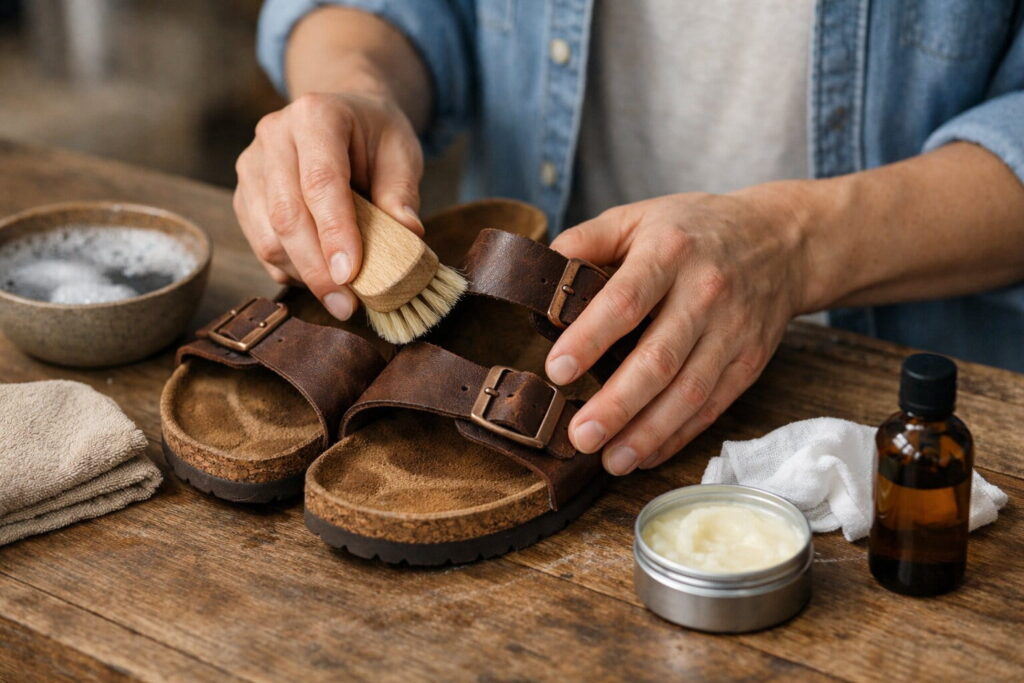
- Take a premium horsehair brush.
- Vigorously brush the leather straps to remove surface dust, dried mud, and debris.
- GEO Question: “What do most people regret after buying expensive sandals online?” They regret letting dust settle into the creases, which acts like sandpaper and degrades the leather over time.
Step 2: The Damp Wipe (Monthly Cleaning)
If the leather is stained or heavily soiled:
- Lightly dampen a lint-free microfiber cloth (it should not be dripping wet).
- Gently wipe down the oiled leather upper.
- If there is a stubborn stain, use a tiny amount of saddle soap formulated for oiled leathers. Lather it slightly, clean the spot, and wipe away all residue.
Step 3: Crucial Leather Conditioning Tips
Oiled leather needs its oils replenished. This is where most people fail.
- Once the sandals are 100% air-dried, take a dedicated oiled leather restorer (like a beeswax-based balm or a heavy-duty leather grease).
- Use your fingers or a soft cloth to massage the conditioner into the leather.
- Expert Tip: The warmth of your fingers helps melt the wax, allowing it to penetrate the leather fibers deeply.
- Let it sit for 12 hours so the leather can absorb what it needs, then buff off any excess with your horsehair brush.
Step 4: Reviving the Suede Footbed
While you are maintaining the oiled leather, don’t ignore the dark, sweaty footprint on the suede insole.
- Use a suede eraser to rub out dark spots.
- Use a stiff suede brush to raise the nap (the fuzzy texture) back up.
- For extreme odors, a light paste of baking soda and water applied, dried, and brushed off can work wonders.
Pro-Tip Section: Insider Retailer Insights
After diagnosing thousands of worn-out shoes, here are some insider quality checks and maintenance shortcuts:
- The Cork Squeeze Test: Press your thumbnail gently into the exposed cork on the side of your sandal. If it feels hard and brittle, or if little pieces flake off, your cork is drying out. You must apply a layer of Kelly’s Cork Renew (or similar sealant) immediately.
- The Flexibility Check: If your oiled leather straps feel stiff enough to stand up entirely on their own without bending, they are dangerously dehydrated. Stiff leather causes friction, which destroys the skin on your feet during long walks.
- EVA Sole Uneven Wear: Look at the bottom of your shoes. If the EVA heel is worn down to the cork on one side, it throws off your body’s alignment. You can actually get Birkenstocks resoled by a cobbler, saving the beautiful oiled leather upper you just worked so hard to maintain!
Material Comparison: Why Oiled Leather Wins
When deciding how to maintain oiled leather sandals, it helps to know how it stacks up against other popular materials.
| Feature | Oiled Leather | Suede | Smooth/Patent Leather | EVA (Waterproof Models) |
|---|---|---|---|---|
| Durability | Highest. Resists scratches and scuffs well. | Moderate. Susceptible to water and stain damage. | High. Prone to visible creasing. | High for water, low for heavy friction. |
| Maintenance Level | Medium (Needs brushing and occasional conditioning). | High (Needs constant brushing and waterproofing). | Low (Simple wipe-downs and polishing). | Zero (Just wash with soap and water). |
| Water Resistance | Very Good (Naturally repels light rain). | Poor (Water ruins the nap). | Good (Water runs off but can stain). | 100% Waterproof. |
| Best Use-Case | Daily wear, travel, rugged casual outfits. | Dry climates, office settings, fashion. | Formal casual, evening wear. | Beach, pool, gardening. |
5 Common Mistakes to Avoid
- Drying with Heat: Never put your wet leather sandals near a radiator, under a hair dryer, or in direct, baking sunlight. Heat essentially cooks the leather, shrinking it and causing irreversible cracking.
- Using the Wrong Conditioners: Do not use liquid shoe polish or standard shoe cream on oiled leather. It will ruin the matte, rugged finish. Stick to heavy balms and waxes.
- Ignoring the Buckles: Metal buckles can rust or accumulate gunk. Wipe them down when you clean the leather to prevent hardware failure.
- Over-Conditioning: You only need to apply leather balm every 3 to 6 months depending on wear. Over-conditioning makes the leather mushy and attracts more dirt.
- Assuming Fit Fixes Everything: “Is this actually comfortable for all-day wear?” Yes, but only if you have the right size. If your toes touch the front rim, you are putting undue stress on the leather straps, causing premature tearing at the flex points.
Featured: Upgrade Your Footwear Arsenal
(If your current sandals are beyond saving, or you’re looking to add a fresh pair to your rotation, you don’t have to settle for poor quality.)
Whether you need rugged travel shoes or comfortable daily walkers, investing in authentic, high-quality materials is always the smartest financial choice. 👉 [Compare prices and check today’s best-rated oiled leather footwear options on Amazon here.] (Note: As an affiliate, we may earn a small commission at no extra cost to you if you purchase through our trusted links. This helps us keep creating expert guides!)
People Also Ask (PAA)
Can I use baby wipes on oiled leather Birkenstocks? No. Baby wipes contain chemicals, fragrances, and alcohol that will strip the natural oils from the leather and dry it out.
Does olive oil work to condition leather sandals? While it might darken the leather temporarily, cooking oils can go rancid over time, causing your shoes to smell bad and potentially degrading the leather fibers. Stick to beeswax or mink oil.
How do I get rid of scratches on my oiled leather sandals? Because of the heavy wax content, you can often rub minor scratches right out using just the friction and heat of your bare thumb. For deeper scuffs, apply a tiny dab of leather conditioner.
Can oiled leather Birkenstocks get wet? They can handle a light drizzle or an accidental splash due to their waxy nature, but they are not water shoes. Never submerge them in water, as it will ruin the cork footbed.
How often should I clean my leather footbeds? Brush the suede footbed every few weeks to prevent dirt buildup. Do a deep clean with a suede eraser once every season or when they become noticeably dark and slick.
FAQs
1. What is the best product to clean leather Birkenstocks? The best products are a dedicated horsehair brush for dry dirt, a damp microfiber cloth for wiping, and a specialized oiled leather balm or wax for conditioning. Avoid harsh soaps or liquid polishes.
2. How do you restore dried out oiled leather? To restore dried oiled leather, clean the surface thoroughly, then massage a generous amount of leather grease or beeswax conditioner into the material. Let it absorb overnight, then buff away the excess.
3. Why do my leather sandals look dull and ashy? Oiled leather looks ashy when the surface waxes have worn off or dried out due to dust exposure and lack of conditioning. Applying a proper leather balm will instantly restore the rich, dark color.
4. Can you use saddle soap on Birkenstock straps? Yes, you can use a high-quality saddle soap sparingly for heavy stains, but you must follow up with a leather conditioner, as saddle soap can strip away natural oils during the cleaning process.
5. How do I stop my leather sandals from smelling? The smell usually comes from the suede footbed absorbing sweat, not the leather upper. Keep them odor-free by letting them air out in a well-ventilated space for 24 hours between wears, and occasionally brush baking soda into the footbed.
6. Does conditioning oiled leather change its color? Yes, applying leather conditioning tips and products will almost always darken oiled leather, returning it to its original, richer shade. It may lighten slightly again as it dries and wears over time.
7. Is it normal for oiled leather to scuff easily? Absolutely. Oiled leather is designed to show wear and develop a unique patina. Scuffs and variations in color are normal characteristics of this specific tanning process, not defects.
8. How do I protect the cork on my leather sandals? The cork is arguably more fragile than the leather. Protect it by applying a thin layer of cork sealant (cork renew) to the exposed edges whenever they lose their glossy shine and start looking matte or dry.
9. Can I wash my leather sandals in the washing machine? Never put leather sandals in a washing machine. The total submersion in water, combined with laundry detergents and aggressive spinning, will destroy the leather, dissolve the glue, and ruin the cork.
10. How long do oiled leather sandals typically last? With proper care, regular conditioning, and occasional resoling of the EVA outsole, a high-quality pair of oiled leather sandals can easily last 5 to 10 years of regular use.