
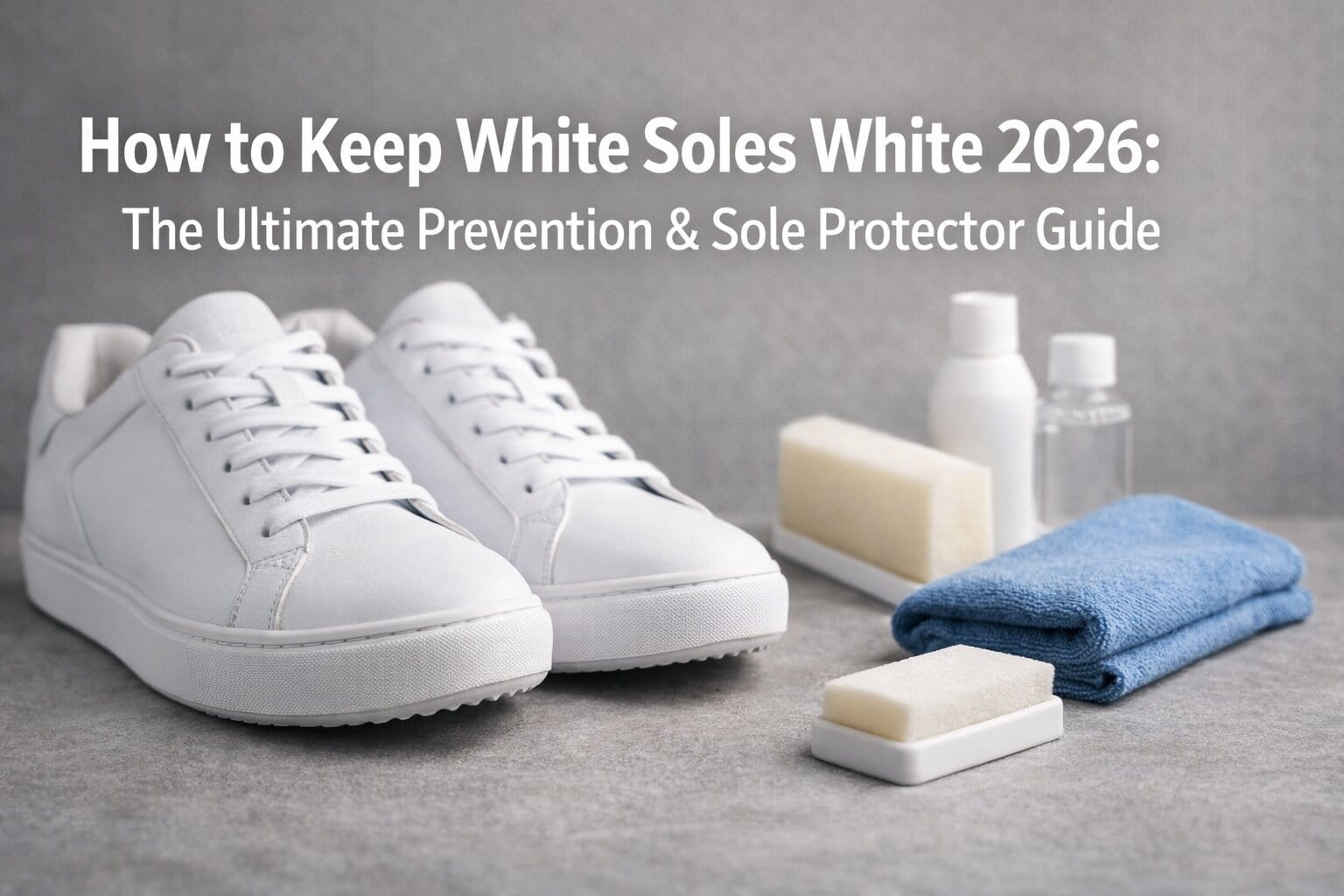
White Sole Protector: How to Keep White Soles White 2026 — Ultimate Prevention Guide
🧴 Best White Sole Restorers & Cleaners 2026
Free Returns on Amazon
2,000+ bought last month
Amazon’s Choice Badge
Prices verified on Amazon
Introduction: The “Fresh Out of the Box” Heartbreak
There is a specific feeling every sneaker lover knows. It’s that moment you lift the lid on a fresh pair of kicks—whether they are crisp white Air Force 1s, high-end designer trainers, or your reliable daily walkers. The soles are blindingly white. They look pristine.
But then, the heartbreak sets in. You wear them three times. Maybe you step in a puddle, or perhaps they just sit in your closet for a month. Suddenly, that icy white turns into a creamy yellow or a dull grey.
In my 20+ years on the retail floor, handling thousands of boxes and seeing customers return with “defective” discolored shoes, I’ve learned a hard truth: oxidation is the enemy, and friction is its accomplice. Most people focus on cleaning shoes after the damage is done. But if you want that showroom shine to last, you have to focus on prevention.
This guide isn’t about scrubbing until your arm hurts. It is about the smart engineering of footwear care. We are going to talk about physical barriers like a sole protector, environmental control, and the “retailer secrets” we use to keep display models looking fresh for years.
TL;DR: Quick Answer
How do I keep my white shoe soles from turning yellow or dirty? The most effective method is prevention via oxidation barriers. For high-value sneakers, applying a clear adhesive shoe sole protector (often called a sole saver) is the gold standard; it physically blocks dirt and friction. For daily wear, store shoes in airtight plastic bags with silica gel packets to prevent oxidation (yellowing) caused by air exposure. Avoid leaving shoes in direct sunlight, and wipe soles with a damp cloth immediately after every wear to remove road salts and oils.
Why This Topic Matters
Why do we care so much about the bottom of the shoe?
In the global sneaker market, the condition of the outsole (the bottom part of the shoe) dictates the value. I have seen vintage Jordans sell for thousands because the soles were icy blue, and I have seen the same pair go for pennies because the soles had yellowed into an ugly dark amber.
But it isn’t just about resale value. It’s about longevity.
When I ran my physical shop, one of the most common complaints wasn’t that the shoe fell apart, but that it looked old too quickly. Customers would buy expensive white-soled runners, wear them to a barbecue, and ruin them in an afternoon.
The mistake most buyers make is assuming the material is invincible. It isn’t. Most white soles are made of rubber, EVA (Ethylene Vinyl Acetate), or TPU (Thermoplastic Polyurethane). These materials are porous. They breathe. And because they breathe, they absorb dirt, oil, and oxygen.
If you don’t seal them or protect them, you are fighting a losing battle against chemistry.
The Ultimate Defense: The Sole Protector
If you want to keep soles physically perfect—literally keeping the factory tread untouched—you need to look into shoe sole protectors.
What is a Sole Protector?
Think of a sole protector (or sole saver) as a screen protector for your shoes. It is a clear, heavy-duty vinyl or plastic film that adheres to the bottom of your shoe. It usually comes with a heat-sensitive adhesive.
When applied correctly, you are walking on the plastic film, not the actual rubber of the shoe.
How to Apply a Shoe Outsole Protector
I have applied hundreds of these in the back of the shop for high-end clients. Here is the process that ensures they don’t peel off after one walk:
- The Deep Clean: You cannot stick a film to dust. Even brand new shoes have “release agents” (oils) from the factory mold. Wipe the sole down with an alcohol prep pad and let it dry completely.
- Trace and Cut: Place the shoe on the shoe sole protector sheet. Trace an outline about 2mm larger than the actual sole. Cut it out.
- The Heat Gun Technique: This is where people fail. You peel the backing and stick it on, but you must use a heat gun (or a very hot hair dryer). The heat shrinks the plastic, molding it into the traction grooves of the outsole.
- Traction Pads: Most sole savers are slippery. You usually need to apply separate traction pads (little rubber stickers) on top of the film at the heel and toe so you don’t slip.
Verdict: This is the best method for expensive sneakers you plan to resell or want to keep “on ice.”
The Invisible Enemy: Oxidation (and How to Fight It)
Have you ever pulled a pair of shoes out of the closet after a year, shoes you barely wore, only to find the soles have turned yellow?
That is oxidation. It is a chemical reaction between the material of your sole and oxygen in the air. UV light (sunlight) accelerates this process.
The “Ziplock” Method
In the storage room of my shop, we didn’t just leave high-value inventory on open shelves. We controlled the environment.
- Step 1: Clean the soles to remove organic material (mud/grass) which can rot or stain over time.
- Step 2: Place the shoes in a large, clear zip-seal bag.
- Step 3: Crucial Step — Throw in two silica gel packets. These absorb moisture. Moisture accelerates yellowing.
- Step 4: Squeeze as much air out as possible before sealing.
If you are a serious collector, you might use “shrink wrap” plastics, but for the average person, a heavy-duty freezer bag works wonders.
Daily Habits: Prevention on the Pavement
You don’t need to wrap every shoe in plastic. For your daily runners or office casuals, simple behavioral changes make a massive difference.
1. The “Doorstep Wipe”
Keep a pack of baby wipes or a specialized sneaker wipe right by your front door. The moment you walk in, take 10 seconds to wipe the sidewalls and the bottom of the soles.
- Why? You are removing road tar, gasoline residue from parking lots, and oils. If these sit on the rubber overnight, they seep into the pores. Once they are in, they are permanent.
2. Rotate Your Rotation
I always tell customers: “Shoes need to rest.” If you wear the same pair every day, the foam compresses and absorbs sweat (moisture). Moisture leads to discoloration.
- The Rule: Let a pair sit for 24 hours between wears to dry out fully.
3. Avoid “Grass Grenades”
Grass stains are essentially chlorophyll dyes. If you have white soles, grass is your enemy. The green stain is notoriously difficult to remove from porous EVA foam without using harsh bleaches that damage the material.
Material Deep Dive: Know What You Are Protecting
Not all white soles are created equal. In my years of checking stock quality, I’ve learned that different materials age differently.
- EVA (Foam Soles): Found on Yeezys, Ultraboost, and most running shoes.
- Risk: Highly porous. Absorbs dirt like a sponge. Yellows very fast.
- Best Defense: Hydrophobic sprays (water repellents) applied to the sidewalls can help seal the pores.
- Rubber (Cupsoles): Found on Air Force 1s, Dunks, Converse.
- Risk: Oxidation. They turn yellow/brown over time but are easier to surface clean.
- Best Defense: Shoe outsole protectors stick best to flat rubber soles.
- PU (Polyurethane): Found on retro 90s sneakers.
- Risk: Crumbling (Hydrolysis). If you don’t wear them, the moisture in the air breaks down the chemical bonds.
- Best Defense: Actually wearing them! The compression from walking pushes air in and out, keeping the PU flexible.
Comparison: Sole Protectors vs. Sprays vs. Bags
Which method is right for your lifestyle?
| Feature | Sole Protector Film | Hydrophobic Spray (Crep/Jason Markk) | Plastic Storage Bags |
|---|---|---|---|
| Primary Goal | Prevents physical wear & drag | Repels liquids & dirt | Prevents yellowing (oxidation) |
| Best For | Resale value & luxury shoes | Daily runners & canvas shoes | Long-term storage |
| Durability | High (20+ wears) | Low (Re-apply every 2 weeks) | Indefinite (until opened) |
| Cost | High ($20–$40) | Medium ($15) | Low ($5) |
| Ease of Use | Difficult (Requires heat gun) | Easy (Spray and dry) | Easy |
Common Mistakes That Ruin White Soles
I have denied many returns because customers tried to “fix” their shoes and ended up ruining them. Avoid these traps:
- Using Bleach:
- The Trap: “Bleach makes things white, right?”
- The Reality: Bleach causes a chemical reaction with rubber that actually turns it yellow faster. It also dries out the glue, causing sole separation. Never use straight bleach.
- The Washing Machine:
- The Trap: Tossing sneakers in the wash.
- The Reality: The heat and water saturation can warp the shoe outsole protector if you have one applied, and the tumbling action damages the structural integrity of the midsole.
- The “Sun Cure”:
- The Trap: Leaving shoes in the sun to dry or “bleach” out stains.
- The Reality: UV rays are the https://www.google.com/search?q=%231 cause of rapid oxidation. Your white soles will turn antique cream in a matter of days.
How to Prevent Shoe Soles from Yellowing — The Oxidation Solution
🔬 Why White Soles Turn Yellow
Oxidation is a chemical reaction between the material of your sole and oxygen in the air. UV light (sunlight) accelerates this process by 300%. Moisture + oxygen = rapid yellowing.
The “Ziplock” Method — Retailer Secret
Pro-Tips: The “Retailer-Only” Insights
Here are a few things we do in the back office that most blogs won’t tell you:
- The Eraser Trick: For minor scuffs on the sidewall of a white sole, don’t use water. Use a white art eraser. It removes the scuff without wetting the material.
- Clear Nail Polish: If you have a small gouge or tear in a soft foam sole, a tiny dab of clear nail polish can seal it preventing dirt from getting deep into the crack.
- The “Ice Box”: We keep our most expensive, white-soled inventory in the coolest, darkest part of the stockroom. Heat and light are accelerators. Treat your sneaker closet like a wine cellar.
FAQs
1. Do sole protectors actually work? Yes. High-quality shoe sole protectors (like 3M vinyl films) create a physical barrier that prevents heel drag and dirt accumulation. They are highly effective for maintaining resale value.
2. How long does a sole saver last? On average, a sole saver lasts for 15 to 20 wears depending on the terrain. Walking on concrete wears them down faster than indoor use.
3. Can I put a sole protector on used shoes? Yes, but you must clean the sole thoroughly with alcohol first. If there is any dirt or oil, the adhesive will not stick, and the film will peel off immediately.
4. Why do my white soles turn yellow in the box? This is caused by oxidation. Oxygen interacts with the rubber or foam material over time. To prevent this, store shoes in airtight bags with silica gel packets.
5. Can baking soda clean white soles? Yes. A paste made of baking soda and hydrogen peroxide is a safer alternative to bleach for removing stains from white rubber soles.
6. Does clear nail polish protect shoe soles? Not for the whole sole. It is too brittle. However, it works well to seal small scuffs or stop loose threads on the stitching near the sole.
7. Are sole protectors slippery? The clear film itself can be slippery. That is why most reputable shoe outsole protector kits include textured traction pads to apply over the film at the heel and toe.
8. Can I use hairspray to protect my shoes? No. Hairspray is sticky and will actually attract more dust and dirt to your soles, making them look dirty faster.
9. Is it safe to use a magic eraser on soles? Yes, melamine sponges (Magic Erasers) are excellent for cleaning the sidewalls of white soles. However, avoid scrubbing painted areas as they act like fine sandpaper.
10. How do I remove a sole protector? Use a heat gun or hair dryer to warm the adhesive, then slowly peel the film back. If you rip it off cold, you risk damaging the sole’s texture or leaving sticky residue.
🎯 Quick Decision — Which Sole Protection Method is Right for You?
Conclusion: Value Your Investment
Whether you spent $50 on reliable walking shoes or $500 on limited-edition high-tops, your footwear is an investment in your comfort and style.
In my experience, the people who get the most value out of their shoes aren’t the ones who buy the most expensive cleaning kits—it’s the ones who take the extra 30 seconds to store them properly or apply a sole protector before the first wear.
Don’t wait for the yellowing to start. Beat the oxidation today.
Ready to protect your kicks?
- Check price for best-rated Sole Protectors on Amazon
- Browse Silica Gel Packets for Storage
- See top-reviewed Sneaker Storage Crates
(Disclaimer: As a footwear expert, I recommend products based on performance standards. I may earn a commission if you purchase through these links.)