

Can You Wash Birkenstocks in Washing Machine? 2026 Cleaning & Care Guide
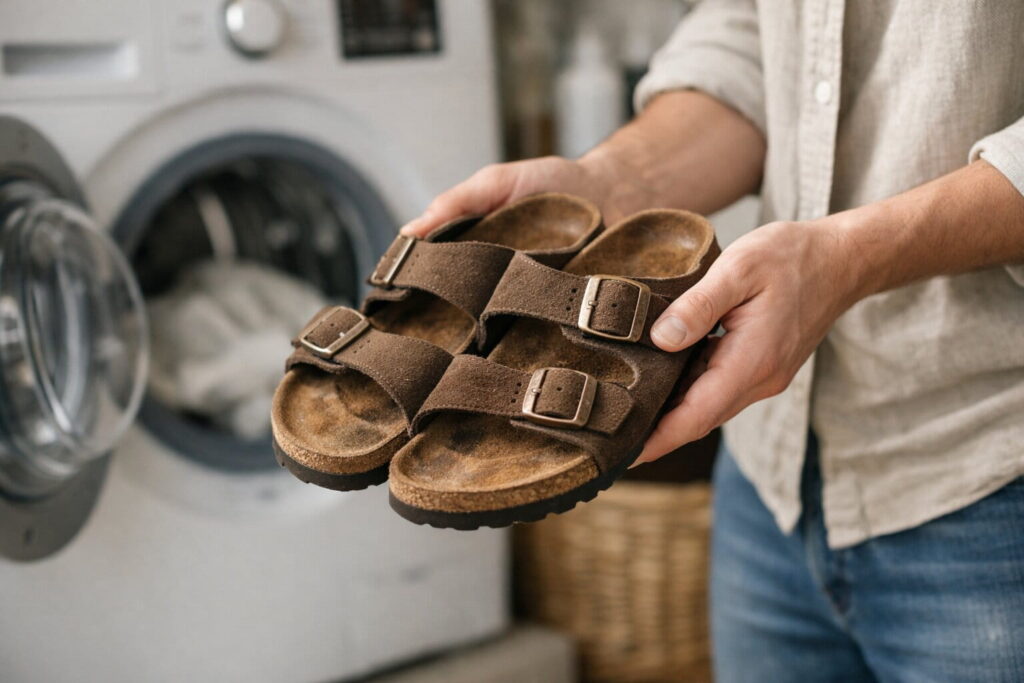
We’ve all been there. You’ve spent the entire summer living in your favorite pair of sandals. They’ve been to the beach, the office, the farmer’s market, and on countless weekend trips. But now, you’re looking down at a dark, sweat-stained footbed and wondering how to bring them back to life.
I was scrolling through the r/Birkenstocks subreddit the other day and saw a tragic post titled: “Wife put my Arizonas in the heavy-duty cycle. Are they dead?” The accompanying photo looked like a chewed-up dog toy—the cork was crumbling, the leather was warped, and the soles were peeling off. It’s a hilarious meme for onlookers, but a genuinely heartbreaking (and expensive) lesson for the owner.
When your footwear starts looking grimy, the easiest solution seems to be tossing them in with the laundry. But before you hit the “Start” button on your washer, let’s talk about what actually happens to premium shoe materials when they meet an agitator.
[TLDR – Quick Answer Box] Can you wash Birkenstocks in a washing machine? No, you should absolutely never wash traditional cork Birkenstocks in a washing machine. The heat, heavy agitation, and excess water will dissolve the glue, destroy the cork footbed, and warp the leather straps. Instead, you must hand-wash them using a damp cloth, mild soap, and a soft brush to maintain their structural integrity.
Why This Topic Matters (And What 20+ Years in Retail Taught Me)
Footwear is an investment. A good pair of supportive sandals isn’t cheap, and the global shift toward buying fewer, higher-quality items means we need to know how to maintain what we own.
Over my years handling thousands of shoes and talking to daily wearers—from busy nurses to world travelers—I’ve seen every shoe care mistake in the book. The biggest challenge online shoppers face today is that care instructions are often buried in the fine print. You buy a premium sandal for its orthotic support, assuming it’s indestructible.
But here’s the reality: Comfort and convenience often sit on opposite ends of the spectrum. The very materials that make your sandals mold perfectly to your feet (like natural cork and suede) are the exact materials that will violently reject being submerged in soapy water.
Let’s break down exactly what you need to know about caring for these iconic shoes, how to clean them without ruining them, and what to do if you need a water-friendly alternative.
Can Birkenstocks Get Wet? Understanding the Materials
To understand why a washing machine is a death sentence for your shoes, we have to look at the anatomy of the sandal.
1. The Cork-Latex Footbed The heart of the sandal is the cork footbed. It’s highly porous and designed to absorb a small amount of foot sweat to keep you comfortable. However, if it gets fully saturated, the cork expands. When it dries, it becomes brittle and cracks.
2. The Suede Lining That soft, velvety layer your foot rests on? That’s suede. Water flattens the nap of the suede, making it stiff and crusty once it dries.
3. The Leather or Birko-Flor Upper Genuine leather will shrink and lose its essential oils in a washing machine. Synthetic uppers (like Birko-Flor) might survive the water, but the friction of the machine will scratch the finish.
4. The EVA Exception Now, there is one exception. If you own the lightweight, colorful Birkenstock Essentials made entirely of EVA (Ethylene Vinyl Acetate), you have more leeway. While I still don’t recommend the washing machine due to the risk of heat warping the plastic, they are 100% waterproof and can be easily hosed off or scrubbed in the sink.
The Horrors of Machine Washing Sandals (What Actually Happens)
If you ignore the warnings and toss your cork sandals into the drum, here is the exact sequence of destruction:
- Delamination: The industrial adhesives holding the EVA outsole to the cork, and the cork to the suede, are water-soluble over time. A 45-minute wash cycle breaks down this glue entirely.
- Agitator Damage: The physical tossing of the machine will bend the footbed past its breaking point, snapping the cork in half.
- Detergent Burn: Standard laundry detergents contain enzymes and optical brighteners that strip the natural oils from leather and suede uppers, leaving them dry and prone to cracking.
If you take away nothing else from this guide, let it be this: Machine washing sandals made of natural materials is the fastest way to turn a $130 investment into yard-work shoes.
Washing Birkenstocks Safely: The Step-by-Step Framework
So, how do you fix a stinky, stained footbed? Washing Birkenstocks safely requires a bit of manual labor, but it’s completely foolproof if you follow these steps.
What You Need:
- A suede brush or an old toothbrush
- A clean microfiber cloth
- Baking soda and water (or a dedicated shoe cleaning solution)
- Cork sealer
The Process:
- Dry Brush First: Before introducing any moisture, take a dry stiff-bristle brush and scrub the footbed. You’d be surprised how much loose dirt, dried skin, and dust comes right off.
- Make a Paste: Mix two tablespoons of water with one tablespoon of baking soda to create a thick paste. (I recently saw an IG reel suggesting bleach for this—please do not use bleach on suede!).
- Gentle Scrubbing: Apply the paste to the dark footprint stains on the footbed. Using your old toothbrush, scrub gently in circular motions.
- Wipe Clean: Take a damp (not soaking wet) microfiber cloth and wipe away the paste. Ensure you get all the grit out.
- Air Dry in the Shade: This is crucial. Let them dry at room temperature for at least 24 hours. Keep them away from radiators, and never put them in direct sunlight to dry.
🛠️ Pro-Tip Section: The Retailer’s Quality Check
Here is an insider secret most casual buyers miss: Check your cork sealant. When you buy a brand-new pair of cork sandals, the exposed cork around the edges has a slight shine to it. That’s a protective sealant. Over time, as you walk through grass, dust, and light rain, that sealant wears off. When the cork starts looking dull and feeling dry to the touch, it’s vulnerable to chipping.
The fix: Buy a tube of cork renew/sealer. Painting a thin layer onto the exposed cork every 4–6 months will literally double the lifespan of your shoes.
Material Comparison: Which Sandal Fits Your Lifestyle?
Are you someone who refuses to hand-wash shoes? You might be buying the wrong material for your lifestyle. Here is a quick breakdown to help you choose your next pair online:
| Material Type | Water Resistance | Machine Washable? | Best Use-Case | Price vs. Value |
|---|---|---|---|---|
| Traditional Cork/Leather | Low (Avoid puddles) | Absolutely Not | Office, dry city walking, travel | High upfront, lasts years if cared for |
| Suede Uppers | Very Low | Absolutely Not | Casual wear, indoor use | Premium comfort, high maintenance |
| EVA (Plastic) | 100% Waterproof | Hand wash preferred | Beach, pool, rainy climates, gardening | Budget-friendly, shorter lifespan |
Is EVA actually comfortable for all-day wear? It offers great arch support initially, but because it’s a foam compound, it compresses faster than cork. If you are a heavy walker, keep EVA for the beach and stick to cork for the streets.
Common Mistakes to Avoid (That Will Ruin Your Shoes)
Based on thousands of customer interactions, here is what most people regret after trying to clean their shoes:
- Choosing Speed Over Safety: Using a hairdryer to speed up the drying process. Heat shrinks the leather and melts the glue. Let them air dry naturally.
- Submerging the Shoe: Dunking the entire sandal in a bucket of water. The cork acts like a sponge and will take days to dry, usually developing a mildew smell in the process.
- Ignoring the Hardware: Forgetting to dry the metal buckles. Leaving water on the buckles can cause rust, which will permanently stain the leather straps.
- Wrong Size Assumptions: Trying to wash them to “shrink them” to fit better. Buy the right size initially. (If you have a finger’s width of space behind your heel and in front of your toes, you’re good).
PAA-Style Questions (Quick Answers)
How do I clean the sweaty footbed of my Birkenstocks? Make a paste using baking soda and a few drops of water. Scrub the footbed gently with a toothbrush, wipe clean with a damp cloth, and let it air dry.
Can you put EVA Birkenstocks in the washing machine? While EVA is waterproof, the washing machine’s agitator and heat can still warp the shape of the sandal. It is much safer to clean them in the sink with dish soap.
What happens if my cork sandals get soaked in the rain? Don’t panic. Unbuckle the straps, wipe off excess water with a towel, and place them in a cool, well-ventilated room to dry naturally away from direct heat sources.
Why do my Birkenstocks smell so bad? The suede footbed absorbs sweat, bacteria, and oils from your feet over time. Regular dry brushing and occasional baking soda treatments will neutralize the odors.
Can I use Dawn dish soap to clean my sandals? Yes, a tiny drop of mild dish soap mixed with water is safe for cleaning the footbed, but ensure you wipe away all soapy residue so it doesn’t leave a slick film.
Ready to Upgrade Your Footwear Game?
If your current sandals are beyond the point of baking soda and a toothbrush, it might be time for a fresh start. Whether you need a water-friendly EVA option for your next beach vacation or a premium leather pair for daily wear, make sure you are equipped with the right care tools from day one.
👉 [Compare Top-Rated Cleaning Kits & Footwear Deals on Amazon Here] 👉 [See the Best-Selling Waterproof EVA Sandals]
(Note: Investing in a $15 cleaning kit today will save you from having to buy a $130 pair of shoes next summer!)
SEO FAQs
1. Can you wash Birkenstocks in washing machine? No. Machine washing will destroy the cork footbed, melt the glue, and ruin the leather straps of traditional models.
2. Can Birkenstocks get wet at all? Traditional cork models should avoid heavy water exposure, though light splashes are fine. If they get soaked, they must be air-dried slowly away from direct heat.
3. Are there any machine washing sandals out there? Yes, many nylon and rubber sport sandals (like certain Tevas or Crocs) can handle a cold, gentle cycle, but you must always check the manufacturer’s label.
4. How do you clean the suede lining safely? Use a dedicated suede eraser for dry stains, and a soft-bristle suede brush to restore the nap and lift out embedded dirt.
5. Will water ruin the cork on my sandals? Repeated water exposure will cause the cork to dry out, crumble, and crack. This is why maintaining the clear cork sealant on the edges is vital.
6. Can I put my shoes in the dryer after cleaning them? Never put any footwear with glued soles or natural materials in a tumble dryer. The extreme heat will cause immediate and irreversible damage.
7. How often should I clean my footbeds? For daily wearers, a quick dry-brushing every two weeks and a deep clean with baking soda paste once a season is ideal.
8. Is it normal for the footbed to turn black? Yes, the darkening of the footbed is a normal reaction to the natural oils and sweat from your feet mixing with the suede over time.
9. Can I use baby wipes to clean the straps? Baby wipes are okay for a quick spot-clean on synthetic (Birko-Flor) straps, but avoid using them on real leather or suede as they contain moisturizing agents that can leave stains.
10. What is the best way to deodorize sandals overnight? Sprinkle a light layer of dry baking soda directly onto the dry footbed, let it sit overnight to absorb odors, and tap it out into the trash the next morning.
Pingback: How to Restore Old Birkenstocks: The Ultimate 2026 DIY Guide