

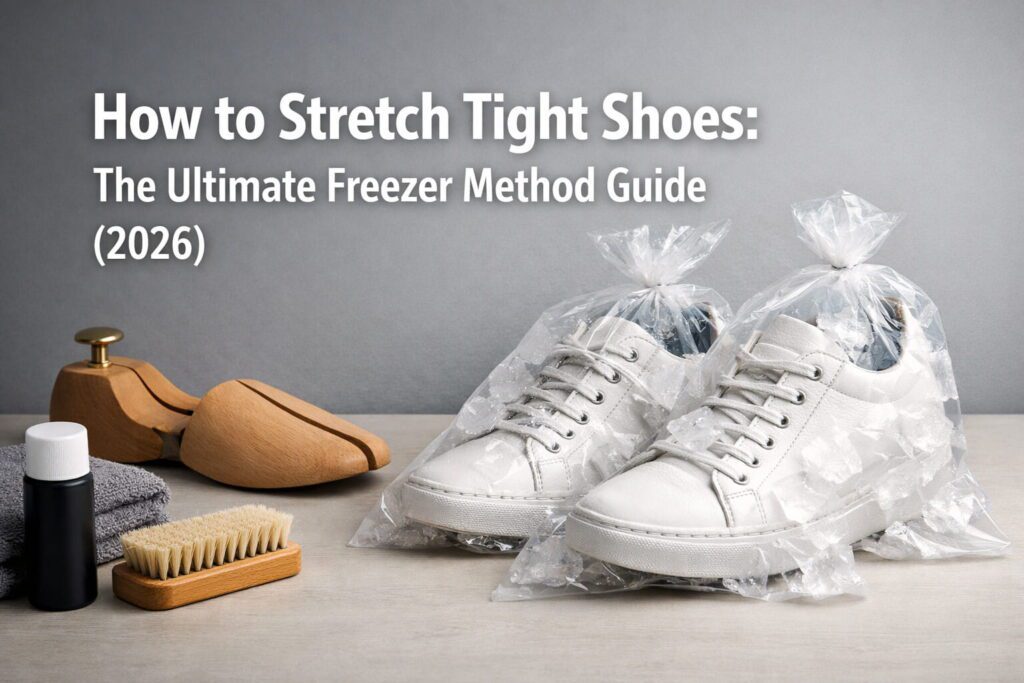
How to Stretch Tight Shoes: The Ultimate Freezer Method Guide (2026)
Introduction
There is a universal sound that every footwear expert knows. It isn’t the squeak of a sneaker on a basketball court or the click of a heel on a marble floor. It is the sigh of relief a customer makes when they finally take off a pair of shoes that have been crushing their toes for eight hours.
Whether you are a commuter in New York, a traveler exploring Europe, or someone working a double shift in a busy warehouse, the pain of tight footwear is a shared global experience. In my 20+ years of running a physical shoe store and handling thousands of pairs—from high-end Italian leather to budget-friendly synthetic trainers—I have learned one undeniable truth: shoes that hurt get left in the closet.
With the rise of online shopping, this problem has exploded. You order your usual size, but the box arrives, and the fit is just slightly too narrow. Do you return them and pay shipping fees? Do you suffer through the blisters? Or do you try to fix them?
Today, we are diving deep into the Freezer Method. It is one of the most popular DIY hacks to stretch footwear, but it requires precision. If you do it wrong, you ruin the shoe. If you do it right, you get the custom fit you deserve. Here is exactly how can you stretch your shoes using ice, science, and a bit of patience.
TL;DR: Quick Answer (The Freezer Method)
Does the freezer method work for tight shoes? Yes. This method utilizes the scientific principle of thermal expansion. When water freezes, it expands by approximately 9%. By placing a sealed bag of water inside the shoe’s tight spots (toe box or heel) and freezing it, the ice forces the material to stretch outward gently.
Best for: Widening the toe box, relieving pinch points, and stretching natural materials like leather and canvas. Warning: Not recommended for patent leather or expensive vintage shoes without caution, as extreme cold can crack aged finishes.
Why This Topic Matters: The “Online Fit” Crisis
Why are we even talking about putting footwear next to your frozen peas? Because the global sizing standard is a myth. A size 10 in a Nike sneaker fits differently than a size 10 in a timberland boot or a formal dress shoe.
In my two decades on the shop floor, handling everything from full-grain leather boots to EVA-injected runners, I have seen customers try to “force” a fit because they loved the style. This is a mistake.
The modern challenge is that materials have changed. Twenty years ago, most shoes were leather or canvas—materials that naturally give. Today, many shoes use synthetic composites, TPR (Thermoplastic Rubber), and rigid heel counters that do not break in easily.
Understanding how to widen leather shoes or stretch synthetic uppers isn’t just about saving money on a bad purchase; it is about foot health. Constricted toes lead to bunions, corns, and ingrown nails. This guide bridges the gap between buying the wrong size and achieving a wearable fit.
The Science of the Stretch: Why Ice Works
Before we get to the “how-to,” you need to understand the physics. This isn’t magic; it’s hydro-expansion.
When you use a mechanical shoe stretcher, you are applying static pressure. When you use the freezer method, you are applying dynamic pressure. As the water transitions from liquid to solid state, it exerts force in all directions. Since the shoe upper offers resistance, the ice pushes against the path of least resistance—stretching the fibers of the leather or the weave of the fabric.
What You Will Need:
- Two durable Ziploc-style freezer bags (Gallon or quart size depending on shoe size).
- Water.
- A freezer.
- Thick socks (optional, for post-stretch wear).
- Leather conditioner (mandatory for leather shoes).
Step-by-Step: How to Stretch Tight Shoes Using the Freezer
Follow this framework to ensure you stretch the shoe without damaging the structural integrity of the sole or the glue.
1. The Prep Work
Clean the inside of the shoe. Remove any loose insoles if they are removable (this gives the bag more room to expand against the sidewalls). Check the material. If it is high-grade leather, wipe it down with a damp cloth to ensure the fibers are hydrated, not brittle.
2. The Bagging Strategy (Critical Step)
This is where most people fail. You must double-bag the water if you are paranoid about leaks, but a high-quality freezer bag usually suffices.
- Place the empty bag inside the shoe first. Push it all the way into the toe box using a wooden spoon or your hand.
- Pro Tip: Do not fill the bag outside the shoe. Fill it while the bag is inside to ensure the water settles exactly where the tightness is.
3. Filling the Void
Pour water into the bag until it fills the tight area (usually the toe box). Do not overfill. You want the water to take the shape of your toe area. Seal the bag tightly, removing as much air as possible.
- Note: The water must be in direct contact (through the plastic) with the tight spots.
4. The Freeze
Clear a flat space in your freezer. Place the shoes inside carefully so the water doesn’t slosh back towards the heel (unless the heel is the problem).
- Duration: Leave them for 4 to 8 hours, or overnight. You need the water to freeze completely solid to achieve maximum expansion.
5. The Thaw
Remove the shoes from the freezer. DO NOT try to rip the ice bags out immediately. The ice will be stuck to the fabric lining. If you pull, you will tear the lining.
- Wait 20–30 minutes for the ice to melt slightly.
- Gently wiggle the bag out.
6. The Post-Stretch Condition
If you are learning how to stretch leather dress shoes, this step is non-negotiable. Cold air dries out leather. Immediately apply a high-quality leather conditioner to restore moisture and flexibility to the stretched fibers.
Material Deep Dive: Does It Work on Everything?
Not all shoes are created equal. In my shop, I could tell just by touching the upper whether a shoe would stretch or snap. Here is the breakdown:
1. Full-Grain & Top-Grain Leather
- Verdict: Excellent candidate.
- Why: Leather is skin. It has pores and fibers that stretch. The freezer method is highly effective here.
- Caution: Watch out for older, dry leather. It may crack under pressure.
2. Suede and Nubuck
- Verdict: Good, but risky.
- Why: Suede stretches well, but it is susceptible to water damage. If your bag leaks, the water stain is permanent. Double-bag strictly.
3. Canvas & Mesh (Sneakers)
- Verdict: Moderate success.
- Why: The weave will stretch, but synthetic mesh often has “memory” and wants to return to its original shape. You may need to repeat the process twice.
4. Synthetic Leather / PU / Vinyl
- Verdict: Low success.
- Why: Plastic does not stretch; it thins. When you force-stretch cheap PU (Polyurethane), you risk cracking the surface layer or tearing the stitching.
Retailer Pro-Tips: What The Brands Don’t Tell You
After 20 years of analyzing returns and complaints, here are a few insider secrets regarding fit and stretching that most shoe boxes won’t tell you.
1. The “Width vs. Length” Reality You can stretch a shoe’s width (make it wider), but you can almost never stretch a shoe’s length (make it longer). The length is determined by the outsole rubber and the welt stitching. If your toes are curling at the end, the freezer method won’t help. You need a bigger size.
2. The Stitching Limit Inspect the stitching before you start. If the stitching on the overlay (the parts of the shoe sewn on top of the main material) is already tight, the ice expansion might pop the threads. High-quality shoes have a high “stitch-per-inch” count and can handle it. Cheap shoes might unravel.
3. The Afternoon Rule When testing your newly stretched shoes, do it in the afternoon. Your feet naturally swell throughout the day. If they fit at 8 AM but hurt at 4 PM, they haven’t been stretched enough.
Method Comparison: Freezer vs. Heat vs. Tools
Is the freezer the best way? Let’s compare it to other common methods we use in the industry.
| Feature | Freezer Method | Hairdryer + Thick Socks | Wooden Shoe Stretcher |
|---|---|---|---|
| Best For | Width & Toe Box | Softening Leather | Specific Corns/Bunions |
| Risk Level | Medium (Water leaks) | Low (Heat damage if careless) | Low (Very controlled) |
| Effort | High (Overnight) | Medium (Active work) | Low (Set and forget) |
| Material | Leather, Canvas | Leather only | All Materials |
| Cost | Free | Free | $20 – $50 |
Common Mistakes to Avoid
Even with the best instructions, I see people damage their footwear. Avoid these traps:
- Overfilling the Bag: If the bag is too full, it creates a balloon shape that pushes up against the “vamp” (top) of the shoe rather than out against the sides. This gives you a weird bulge on top of the shoe.
- Ignoring the Glue: Cheap shoes use heat-sensitive or cold-brittle glues. Extreme freezing can sometimes make the glue bond brittle, causing the sole to separate from the upper. Inspect the sole edges after freezing.
- Expecting Miracles: This method adds maybe a quarter-size to a half-size in width. It will not turn a size 7 into a size 8.
People Also Ask (PAA)
Does putting shoes in the freezer really stretch them? Yes, as the water inside the bags freezes, it expands by roughly 9%, pushing the shoe material outward and stretching the fibers gently.
How long should you leave shoes in the freezer to stretch? Leave them for at least 4 to 8 hours. The water needs to freeze completely solid to exert the necessary pressure on the shoe walls.
Can you stretch shoes that are too small? You can stretch shoes that are too narrow (width), but you cannot significantly stretch shoes that are too short (length) due to the rigid sole structure.
Will freezing shoes ruin leather? Generally, no. However, cold air dries leather out. You must apply a high-quality leather conditioner immediately after the shoe warms up to prevent cracking.
How can I stretch my shoes fast? For immediate results, the “thick socks and hairdryer” method is faster (20 minutes), while the freezer method requires overnight waiting.
The Voice of Experience
Why trust this advice? Because I haven’t just read about this; I’ve had to solve this problem for customers standing in my shop with their receipts in hand. I have stretched wedding shoes for nervous brides and broken in hiking boots for trekkers heading to the Himalayas.
We have tested the tensile strength of leathers and seen how different manufacturing techniques (Strobel stitch vs. Cementing) react to pressure. This guide focuses on how can you stretch your shoes safely, prioritizing the longevity of your footwear over quick, destructive fixes.
Still Too Tight? It Might Be Time to Upgrade
Sometimes, a shoe just isn’t meant to be. If you have tried the freezer method, the heat method, and the cobbler, and they still hurt, it is time to let them go. Your foot health is worth more than the cost of the shoes.
Looking for a better fit?
- [Check out today’s top-rated wide-fit shoes on Amazon] – Curated for comfort.
- [Browse highly-reviewed leather loafers] – Styles that break in easily.
- [See the best adjustable walking shoes] – Perfect for travel and all-day wear.
Disclaimer: We may earn a commission if you buy through these links, but we only recommend footwear that meets our strict quality standards.
FAQs
1. How much can you actually stretch a shoe?
You can typically achieve about a 1/4 to 1/2 size increase in width. You cannot effectively change the length of the shoe.
2. Is the freezer method safe for expensive designer heels?
It is risky. Delicate glues and fine leathers can be damaged by moisture or extreme cold. For shoes over $200, we recommend a professional cobbler.
3. How to stretch leather dress shoes without ruining them?
Use the freezer method with double-bagged water to prevent leaks, or use a wooden shoe stretcher with specific “bunion plugs” for targeted relief.
4. Why do my shoes shrink back after stretching?
Leather has elasticity. If you don’t wear the shoes immediately after stretching or keep shoe trees in them when not in use, they will naturally contract.
5. Does rubbing alcohol stretch shoes?
Yes, a mixture of 50% rubbing alcohol and 50% water sprayed inside the shoe can relax leather fibers while you walk in them.
6. Can you stretch synthetic running shoes?
Synthetic materials (nylon, polyester) have high tensile strength and memory. They are very difficult to stretch permanently compared to natural leather.
7. What if the freezer method hurts the heel?
If the heel counter is rigid plastic, stretching it can crack it. Focus stretching efforts on the toe box and mid-foot, not the reinforced heel cup.
8. How to widen leather shoes at the toes specifically?
Ensure the water bag is pushed fully into the toe cap before freezing. You can also tilt the shoe forward in the freezer to ensure water settles in the toe area.
9. Can I refreeze the shoes multiple times?
Yes. If the first stretch wasn’t enough, you can repeat the process. Incremental stretching is often safer than trying to force it all at once.
10. Do shoe repair shops stretch shoes better than the freezer?
Yes. Cobblers use industrial-grade machines that can apply heat and pressure simultaneously for days, offering a more precise and permanent stretch.
Pingback: How to Lace Shoes: 5 Cool Styles & Techniques for 2026
Pingback: How to Fix a Broken Heel While Walking: The Ultimate 2026 Guide to Shoe Repair & Best Glues
Pingback: How to Recycle Old Shoes in India: 2026 Donation & Disposal Guide
Pingback: How to Clean Canvas Shoes (Converse/Vans) & Wash Sneakers in a Washer: The 2026 Expert Guide