

How to Clean Cycling Shoes: What Cycling Brands Recommend
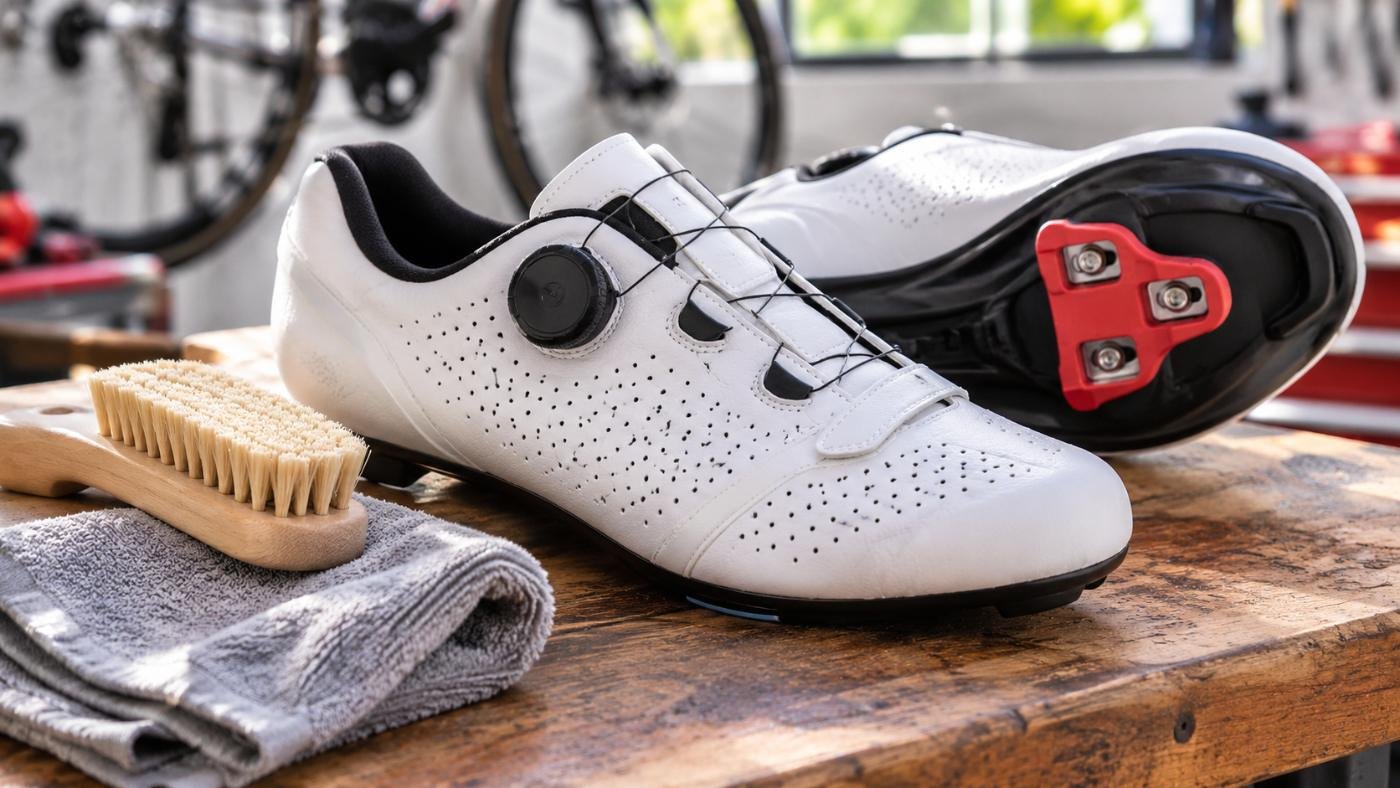
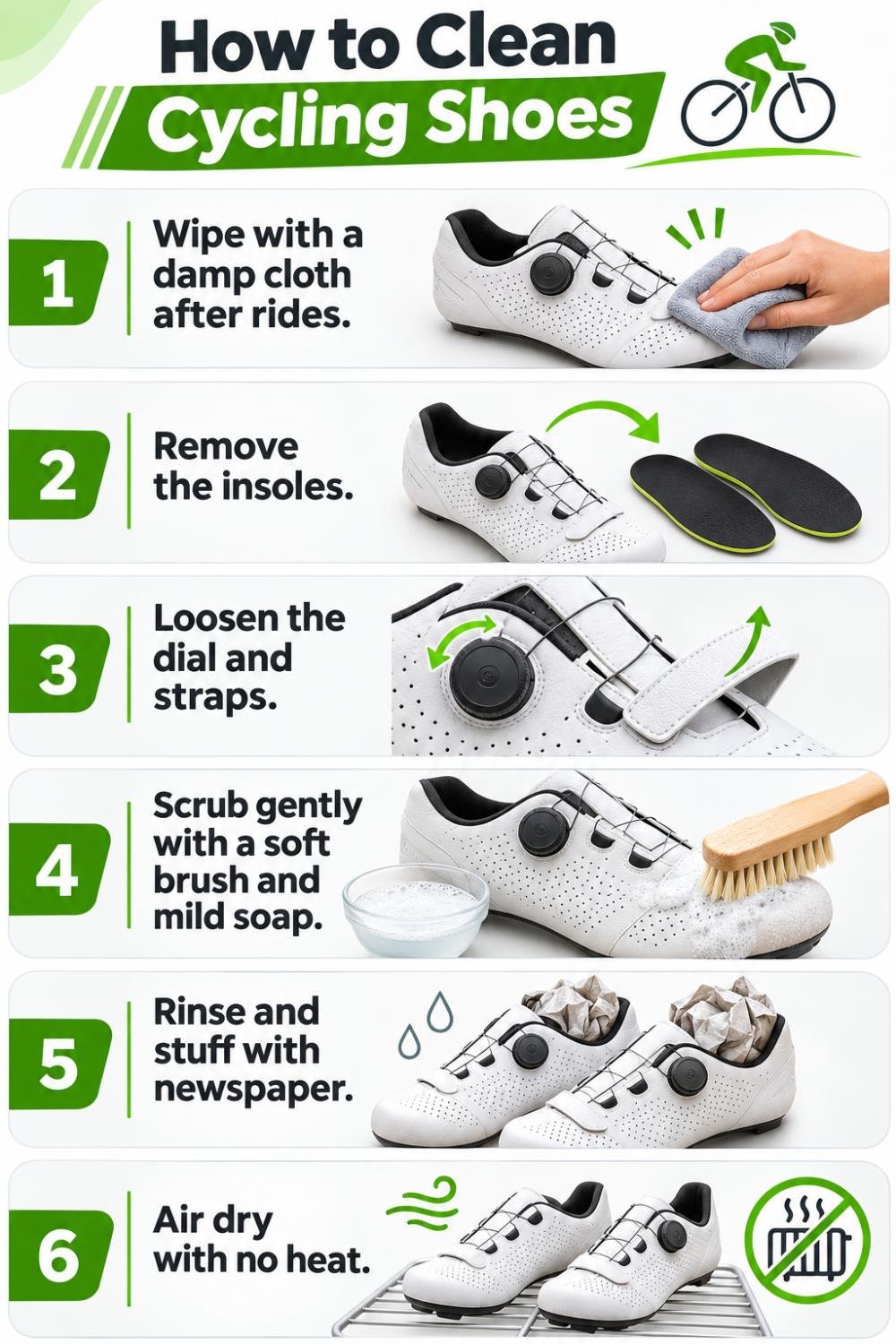
Quick answer: Wipe with a damp cloth after rides. For a deep clean, take out the insoles, use mild soap and a soft brush, rinse, stuff with newspaper and air dry. No heat, and keep lubricants off the BOA dial.
We compare cycling brands and show where they disagree.
How to Clean Cycling Shoes: Sources Compared
Cycling shoes have stiff soles, a closure system such as a BOA dial and cleats that carry a small amount of mechanical risk, so the general rules for sneakers only half apply. We read Trek, Liv, Lake Cycling and Condor (shoe and bike makers or sellers), BOA (the dial maker), BIKE Magazin and Road Bike Rider. They agree on a damp cloth after rides, no heat and stuffing with newspaper. They differ on soaking, washing machine use and what to put on the leather.
| Source | After each ride | Deep clean | Drying |
|---|---|---|---|
| Trek | Wipe with a damp cloth. | Remove insoles, loosen straps and buckles, dunk in water with a little mild dish soap, scrub gently with a soft brush on buckles and cleats, rinse in cool water. | Stuff with newspaper and air dry. Never in the dryer or near a heat source. |
| Liv | Wipe with a damp cloth, brush mud off cleats, check cleat bolts. | Start with a wet rag. Mild dish soap, soft brush, baking soda paste for soft areas, Magic Eraser for hard white surfaces. Warns chemical detergent can blemish synthetics. Shoes need not be fully submerged. | Loosen straps, blot, stuff with newspaper. A boot dryer only with heat off. |
| Lake Cycling | Wipe off dirt, clean BOA dials, scrub soles with a soft brush and damp cloth. | Not covered beyond this. | Stuff with dry rags or newspaper, room temperature, no heat or sun. A room fan can help. |
| BOA | Remove debris with a damp cloth or soft brush. | Flush grit with clean running water while turning the dial. Soap and water, baking soda and water, or vinegar and water are listed as approved. | Air dry fully before reassembling. Do not rush. |
| Condor | Not covered. | 1 to 2 teaspoons of non-bio detergent in warm water with a soft toothbrush. Circular strokes on suede. | Tumble dryer sheets inside to help with moisture and odor. |
| BIKE Magazin | Not covered. | Insoles in a laundry net at 60 degrees C. Shoes soaked in a solution, then dried. | Crumpled newspaper, replaced two or three times while damp. |
Trek, Liv, Lake and Condor sell cycling products, so their advice reflects their own shoes. BOA makes the dial, not the shoe. None of the sources gives lab test data. We have not tested any of these methods.
Step by Step: Cleaning Cycling Shoes
The method the sources share, with who says what:
- Wipe after rides. Damp cloth (Trek, Liv, Lake). Brush mud off cleats (Liv).
- Only deep clean when needed. Liv says start with a wet rag and stop when they look clean enough.
- Remove the insoles and loosen the closure. Trek and Liv say so.
- Soft brush and mild soap. Trek and Liv say mild dish soap. Condor says non-bio detergent.
- Rinse well. Cool water (Trek). Liv says no soap residue should remain.
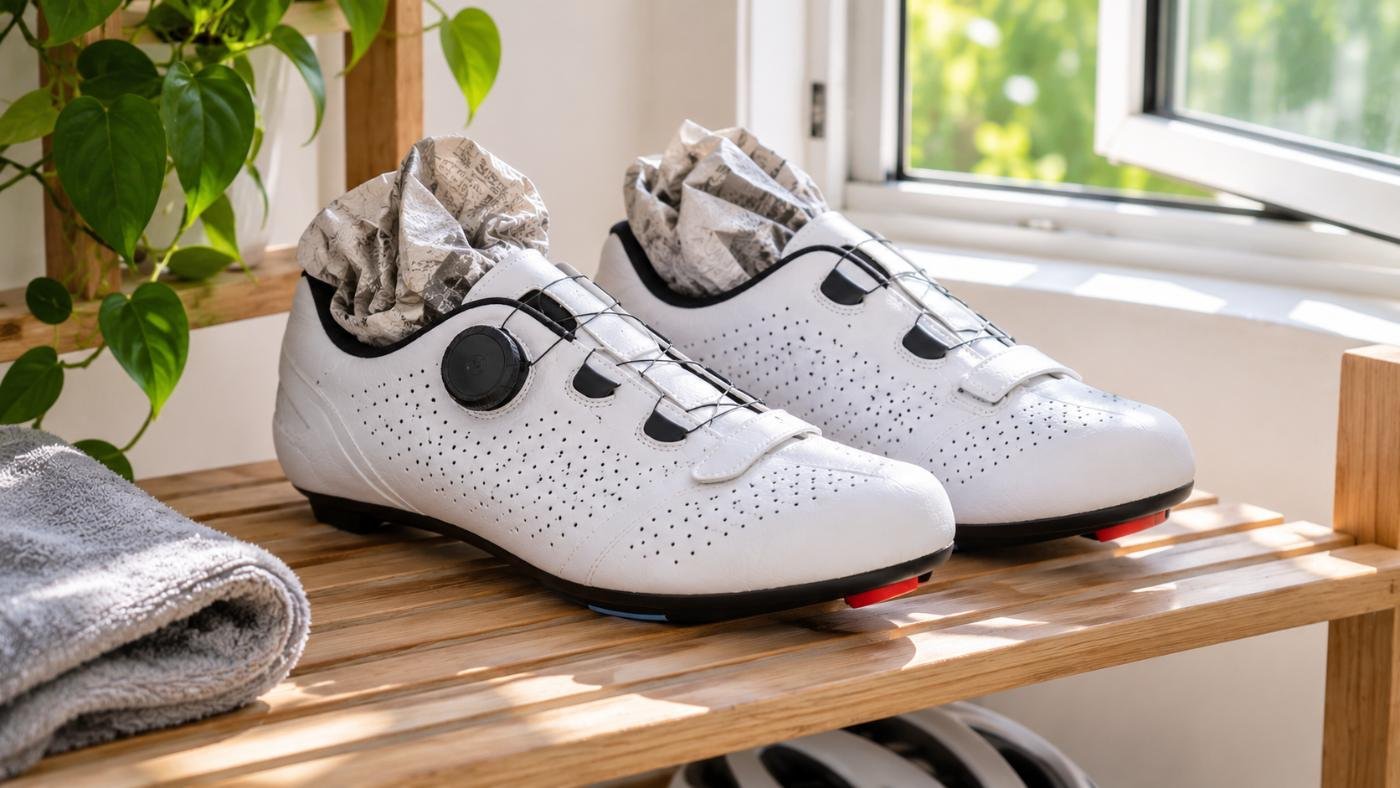
- Blot, stuff and air dry. Trek, Liv, Lake and BIKE Magazin all say newspaper or dry rags.
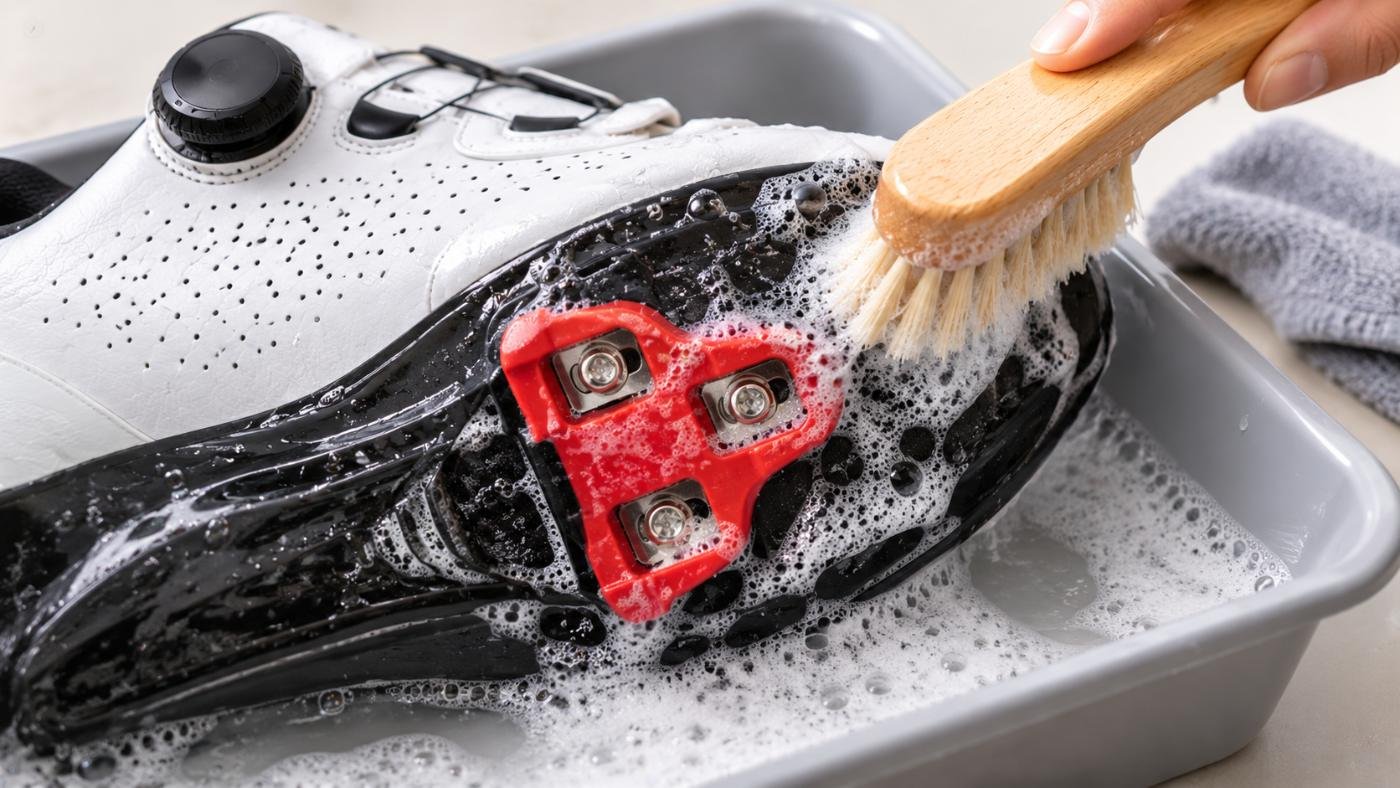
Liv notes any chemical detergent can blemish synthetic materials, so test somewhere hidden first. That is Liv’s caution for its own shoes.
BOA Dials, Straps and Laces
- Flush: BOA says run clean water through the system while turning the dial or opening and closing the laces to remove grit and sand.
- Approved cleaners: alcohol-based, citric and peroxide cleaners, soap and water, baking soda and water, vinegar and water.
- Avoid: waxes, creams, conditioners and polishes on the dial. Aerosols such as sunscreen. Phenol-based disinfectants, solvents, bleach, ammonia and lye soap.
- No lubricants: BOA advises against lubricants, sprays or degreasers on the system.
- Dry fully before reassembling.
- Dirt buildup: Lake says it wears materials down and can separate BOA cables from their coating.
Check the BOA guide for the model you own, and see our shoelace guide if your shoe laces up.
Cleats and Soles
- Check often: Trek says check cleats and fasteners every few rides. Signs of wear are a change in how easily you twist out and more play between pedal and cleat.
- Bolts: Liv says check they are tight. Road Bike Rider says check for loosening.
- Replace before they fail: Road Bike Rider says keep spares and compare a new cleat to the old one.
- Walking: Road Bike Rider says rubber cleat covers extend cleat life and that walking in stiff-soled shoes can peel soles off the uppers.
- Rust: Lake says wipe a small amount of oil on metal cleats after drying.
- Soles: Road Bike Rider says to reglue loose areas with a contact adhesive such as Shoe Goo. Lake says brush soles with a damp cloth. See our shoe sole guide.
Cycling Shoe Odor
- Dry them fully. Liv says storing damp shoes causes odor and extra wear.
- Dryer sheets: Condor puts tumble dryer sheets inside.
- Insoles: BIKE Magazin washed them at 60 degrees C in a laundry net and says the smell was gone. Check the insole label first. It also says its team found no method fully satisfactory, and that freezing did not last.
- Coffee grounds or essential oils overnight: BIKE Magazin.
These are single-publication tests, not lab data. See our running shoe guide for more on odor.
Leather, Suede and Plastic Parts
- Leather: Lake applies its own cleaning lotion and oil after drying. It says the lotion is not for suede and the oil and dressing are not for Action Leather or suede.
- Suede and mesh: Condor uses a soft toothbrush in circular motions to avoid scratching.
- Plastic parts: Condor sprays furniture polish and buffs. No other source says this.
- Water repellent: Condor sprays one after cleaning. See our leather conditioning guide.
Where the Sources Disagree
Soaking. Trek says dunk in a bucket. Liv says shoes need not be fully submerged and to start with a wet rag. General advice: start with the lighter method.
Detergent. Trek and Liv say mild dish soap. Condor says non-bio detergent. Liv warns chemical detergent can blemish synthetics.
Boot dryer. Liv allows one with heat off. Trek and Lake say no heat sources.
Machine washing. Only the insole wash at 60 degrees C (BIKE Magazin) and Condor’s lace wash use a machine. Trek, Liv and Lake do not.
Oils on leather. Lake says use its own product. BOA says keep creams and conditioners off the dial.
Questions About Cleaning Cycling Shoes, Answered
“Can you wash cycling shoes?”
By hand, yes. Trek and Liv use mild soap and a soft brush. None of the shoe makers recommend the washing machine.
“Can you put cycling shoes in the washing machine?”
Not the shoes. BIKE Magazin washed the insoles at 60 degrees C in a laundry net. Check your insole label first.
“How do you clean the BOA dial?”
Flush with clean water while turning, and avoid lubricants and creams (BOA).
“How do you dry cycling shoes?”
Stuff with newspaper and air dry at room temperature. No heat (Trek, Lake, Liv).
“How often should I check my cleats?”
Every few rides, per Trek.
“How do you get the smell out?”
Dry fully, then dryer sheets (Condor) or an insole wash (BIKE Magazin).
“Can you use a Magic Eraser?”
Liv uses one on stubborn marks on hard surfaces of white shoes and wipes off residue.
“Should I wear cleat covers when walking?”
Road Bike Rider says they extend cleat life.
Mistakes to Avoid
- Dryers, heaters and sun. Trek, Liv, Lake.
- Leaving shoes wet. Lake, Liv.
- Lubricants, creams or bleach on the BOA dial. BOA.
- Leaving soap residue. Liv.
- Walking long distances in cleats. Road Bike Rider.
- Ignoring worn cleats. Trek, Road Bike Rider.
How we checked this
- Steps come from Trek, Liv, Lake Cycling, BOA, Condor, BIKE Magazin and Road Bike Rider. We name who says each thing.
- The sources differ on soaking, detergent and heat, so we show each side. Our own reading is labelled general advice.
- Several sources sell cycling gear. None gives lab test data. We have not tested any of these methods.
Cycling Shoe Care Helpers
A soft brush kit, a melamine sponge and cleat covers cover what the sources below describe. These are listed on Amazon.
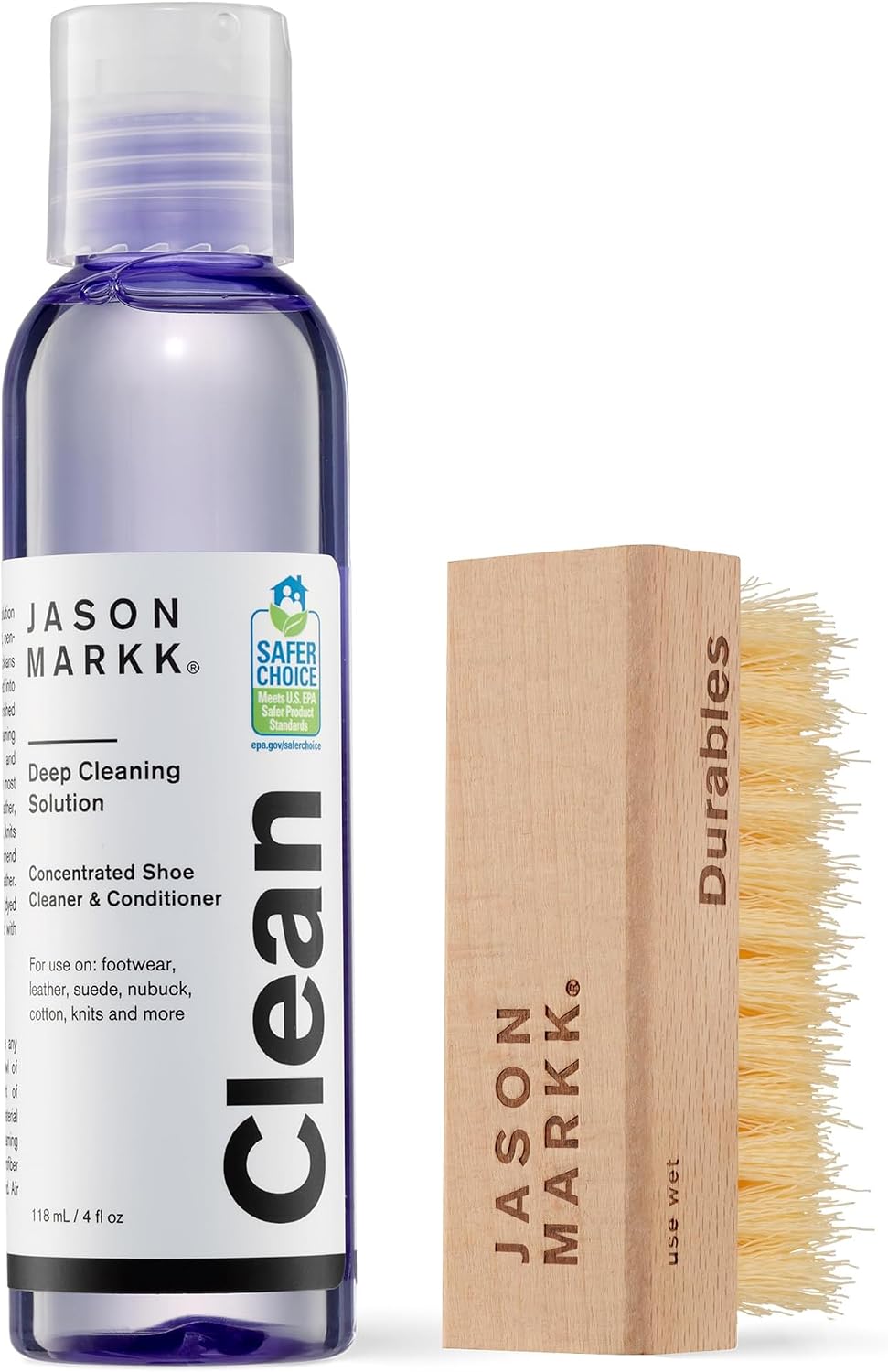
Jason Markk Essential Shoe Cleaning Kit
A soft brush and cleaner kit for uppers, buckles and soles.
Check it on Amazon
Mr. Clean Magic Eraser
The melamine sponge Liv suggests for stubborn marks on hard surfaces of white shoes.
Check it on Amazon
Bike cleat rubber cover set
Cleat covers for walking, which Road Bike Rider says extend cleat life. Check the fit for your cleat type.
Check it on AmazonFrequently Asked Questions
Can you wash cycling shoes?
By hand with mild soap and a soft brush (Trek, Liv).
Can they go in the washing machine?
No shoe maker recommends it. BIKE Magazin washed only the insoles.
How do you clean a BOA dial?
Flush with clean water while turning it. No lubricants (BOA).
How do you dry them?
Stuff with newspaper, air dry, no heat.
How often should you check cleats?
Every few rides (Trek).
How do you stop the smell?
Dry fully, then dryer sheets (Condor) or an insole wash (BIKE Magazin).
Can you use a Magic Eraser?
Liv does, on hard surfaces of white shoes.
Do cleat covers help?
Road Bike Rider says they extend cleat life when walking.
The Short Version
Wipe after rides, deep clean gently when needed, keep heat and lubricants away and check the cleats.


