
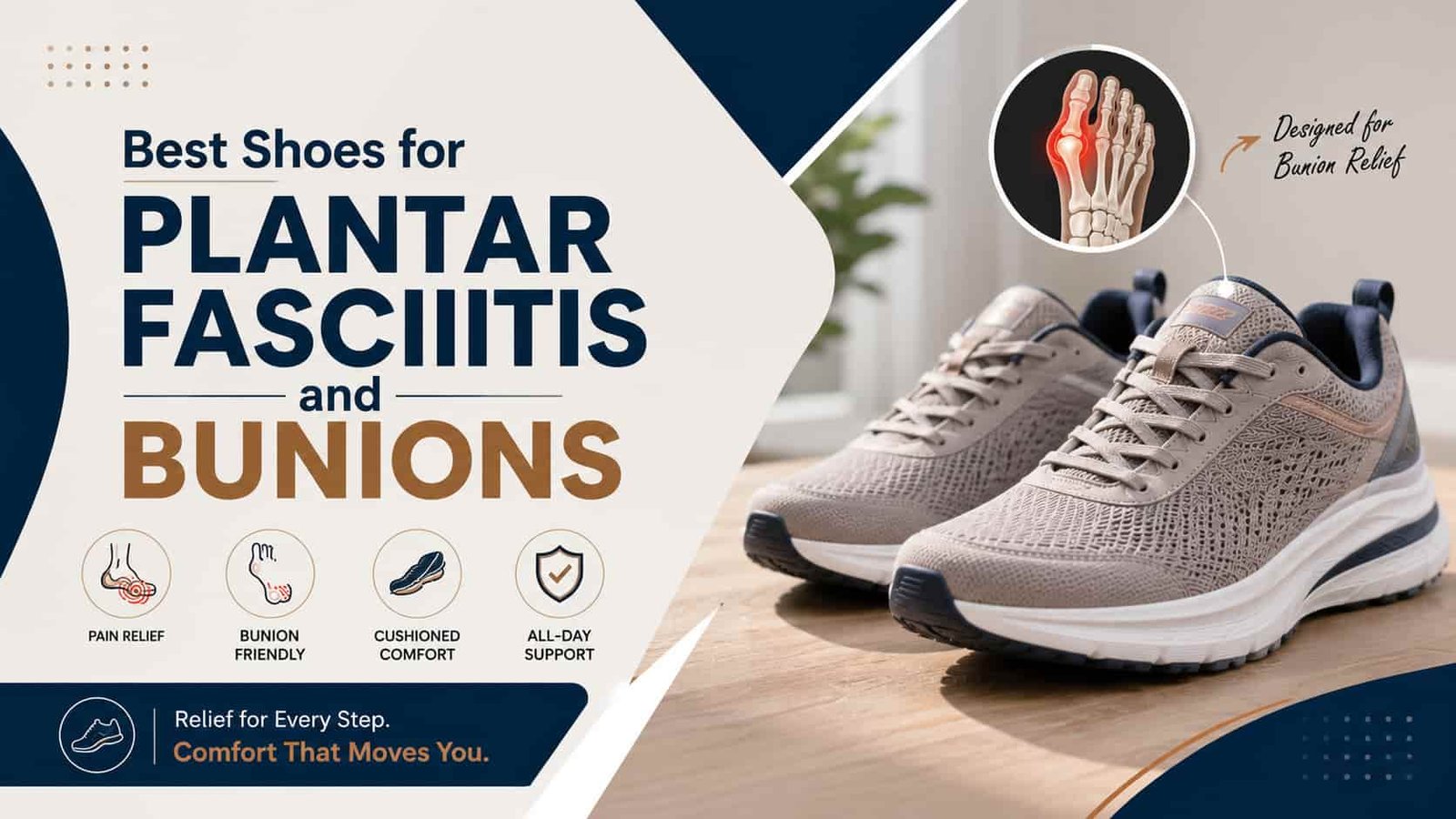
Best Shoes for Plantar Fasciitis and Bunions
✅ Expert Verified | 🛒 Live Amazon Prices | 📅 Updated September 2026
The best shoes for plantar fasciitis and bunions give the forefoot enough room to avoid squeezing the bunion while providing cushioning and support under the heel and arch. Look for a foot-shaped toe box, flexible or stretchable upper, secure heel, and removable or supportive insole. Orthofeet Francis is our top women’s pick, while FitVille Stepease V2 leads the men’s options.
If you have both plantar fasciitis and bunions, the most important shoe characteristic is not simply maximum cushioning. You need enough forefoot room to avoid compressing the bunion while the heel and arch receive enough cushioning and support for repeated walking.
- Best overall women’s choice: Orthofeet Francis
- Best men’s extra-wide choice: FitVille Stepease V2
- Best orthopedic men’s option: Orthofeet Lava
- Best budget women’s athletic option: BRONAX S71
- Best wide-toe-box design: JACKSHIBO
- Best for hands-free use: FitVille Stepease V1
- Best for long work shifts: Orthofeet Edgewater
- Best casual men’s option: ASITVO Wide Loafers
Best Shoes for Plantar Fasciitis & Bunions
Our top footwear picks for shoppers who need a wider, more comfortable fit around bunions while also looking for cushioning, arch support, heel comfort, and everyday walking support.
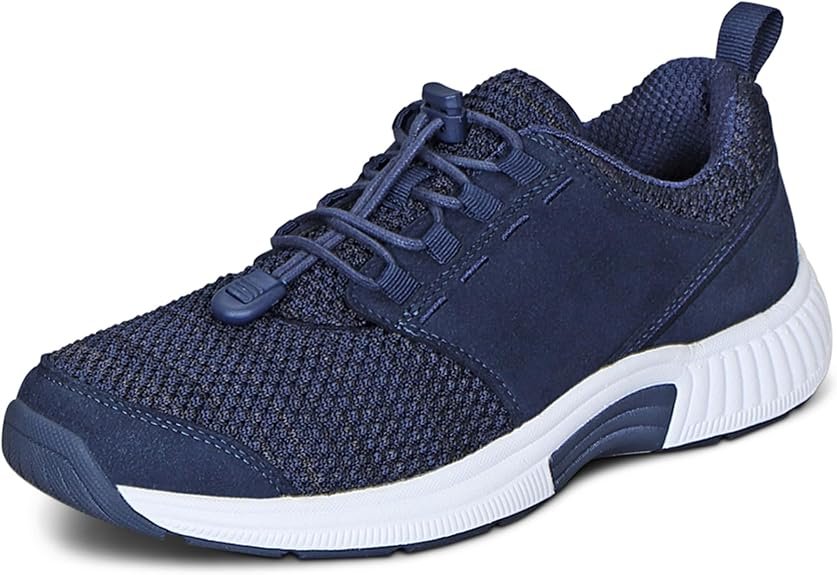
Orthofeet Francis Women’s Walking Shoes
A strong overall choice for women who need a bunion-friendly fit with a wide toe box, cushioning, anatomical arch support, and a design suited to everyday walking and long periods on the feet.
Check Price on Amazon →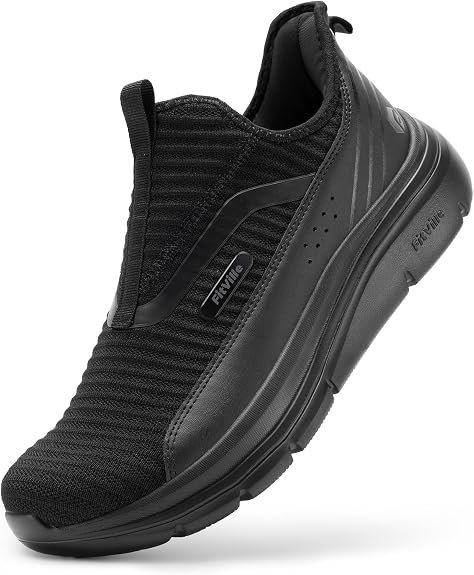
FitVille Men’s Stepease V2
Built around a roomy platform and high-instep design, this is a practical option for men who find standard shoes restrictive around the forefoot and need additional everyday walking space.
Check Price on Amazon →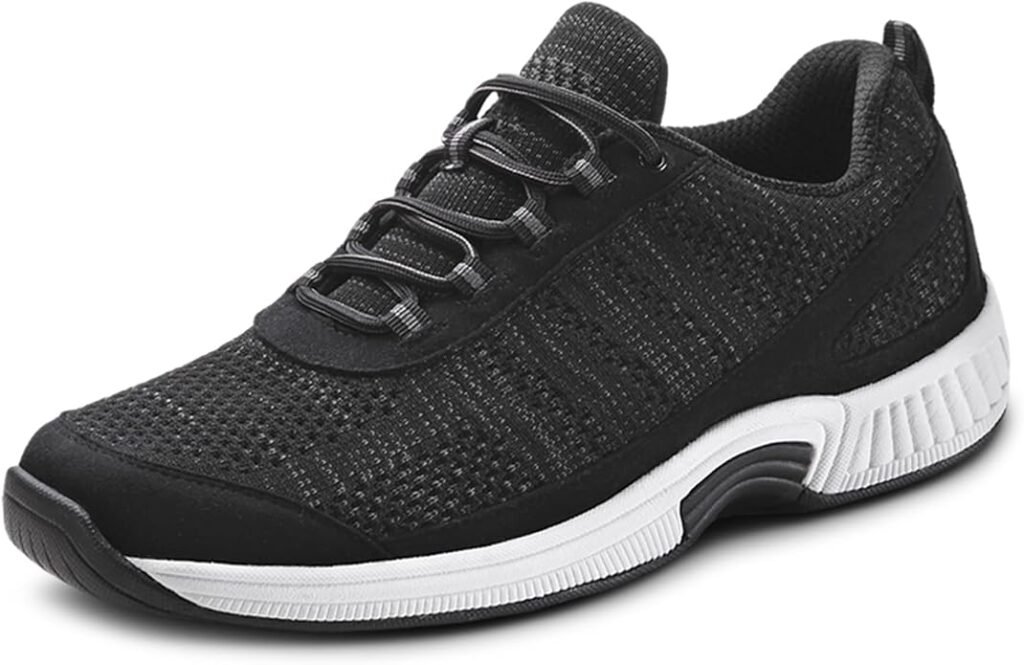
Orthofeet Lava
Designed for men who want more room around the forefoot, the Lava combines a wide toe area, extra depth, cushioning, and anatomical arch support for walking and everyday wear.
Check Price on Amazon →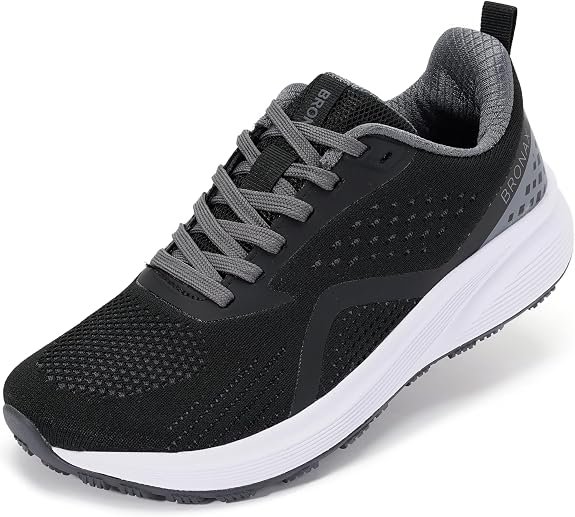
BRONAX Women’s S71
A lower-cost athletic option with a wide toe box, removable insole, cushioned EVA midsole, and breathable upper for walking, everyday activity, and light running.
Check Price on Amazon →JACKSHIBO Women’s Wide Toe Box Shoes
FitVille Men’s Stepease V1
Orthofeet Edgewater Men’s Walking Shoes
ASITVO Men’s Wide Loafers
Introduction
A bunion changes the fit problem before you even take the first step. The enlarged joint at the base of the big toe needs room, while plantar fasciitis can make the heel and underside of the foot sensitive to repeated impact. A shoe that solves one problem but squeezes the other isn’t a good compromise.
Consider a hypothetical example: Sarah spends most of her workday walking through a hospital in Chicago. By lunchtime, her heel feels sore, but the bigger problem is the pressure across the bunion when her forefoot swells. Going up another half size gives her extra length but doesn’t necessarily give her the width she actually needs.
That’s why wide toe-box shape matters as much as cushioning for this particular combination of foot problems.
For this guide, we looked at eight Amazon-listed shoes across men’s and women’s categories. The selection includes orthopedic walking shoes, extra-wide slip-ons, athletic trainers, zero-drop footwear, and casual loafers. Prices and ratings are based on the product information supplied for this article and can change on Amazon.
If your main concern is plantar fasciitis rather than bunion pressure, our 2026 plantar fasciitis shoe guide covers the broader range of cushioning, support, and everyday footwear choices.
What Are Shoes for Plantar Fasciitis and Bunions?
Shoes for plantar fasciitis and bunions are footwear designed to address two separate fit and comfort requirements at the same time: protective underfoot cushioning and reduced pressure around the forefoot.
The plantar fascia runs along the bottom of the foot and helps support the arch. A bunion, meanwhile, creates a prominent area around the big-toe joint that can become irritated when the shoe upper or toe box presses against it.
That means the ideal construction isn’t necessarily the softest shoe you can find.
You want a shoe with:
- Enough toe-box width for natural toe positioning
- A rounded or foot-shaped forefoot
- A flexible or stretchable upper when the bunion is sensitive
- Adequate heel cushioning
- A secure heel fit
- Arch or insole support appropriate to your foot
- Enough interior volume for swelling or custom inserts
- A removable insole when orthotic compatibility matters
The supplied Orthofeet and FitVille products are particularly interesting because they address the accommodation side of the problem rather than simply adding more foam.
Why Does the Combination of Bunions and Plantar Fasciitis Change Your Shoe Choice?
The combination changes your priorities because width and cushioning solve different problems.
A cushioned shoe can feel comfortable under the heel but still press against a bunion. A very wide shoe may give the toes room but lack the midsole or heel construction you need for long walking.
The best compromise depends on where your pressure occurs.
If the bunion is the main problem, prioritize:
toe-box shape → forefoot width → upper flexibility → cushioning.
If heel pain is dominant, prioritize:
heel cushioning → secure heel → midsole behavior → forefoot fit.
If both are equally troublesome, you need a shoe that gets the two systems right together.
What Should You Look for in Bunion-Friendly Shoes for Heel Pain?
1. Toe-box shape and actual forefoot width
The toe box should allow the big toe and neighboring toes to sit without being pushed inward by the upper.
A common mistake is buying a longer shoe because the toes feel compressed. Length doesn’t automatically create usable width at the bunion area.
Expert observation: Stand in the shoe before judging the fit. Your forefoot spreads under body weight, so a shoe that looks spacious when you’re sitting may feel much tighter after several hours.
Look for:
- Rounded or anatomical forefoot
- Wide toe box
- Stretch material over the bunion
- Minimal seam pressure
- No visible bulging around the bunion
2. Upper flexibility
The upper is particularly important when a bunion is prominent.
A rigid leather or synthetic panel can push directly against the joint. A stretch fabric can accommodate the shape of the foot more naturally.
This is one reason Orthofeet Francis and Orthofeet Lava rank highly here. Their supplied descriptions specifically emphasize stretchable materials and accommodation for bunions and sensitive areas.
A flexible upper doesn’t mean the entire shoe should be floppy. You still want enough structure around the heel and midfoot.
3. Heel cushioning and midsole behavior
Plantar fasciitis often makes the heel more sensitive to repeated loading.
Look for a midsole that provides protection without making the shoe excessively unstable. EVA is common because it can provide cushioning without adding excessive weight.
BRONAX uses a high-rebound EVA midsole, while several Orthofeet and FitVille models combine cushioning with supportive insoles.
Expert observation: A shoe can feel wonderfully soft for five minutes and still be tiring after three hours. Long-duration comfort depends on how the whole platform behaves, not just how soft the foam feels initially.
4. Removable insoles and interior volume
A removable insole can be valuable if you already use an orthotic.
It also gives you a way to adjust interior volume. This matters because bunions, swelling, and custom inserts can make an otherwise comfortable shoe feel too shallow.
BRONAX, for example, is supplied with a removable insole, while FitVille Stepease V1 is also described with a removable arch-support insole.
Before ordering, check whether the replacement insole leaves enough vertical room for your foot.
Best Shoes for Plantar Fasciitis and Bunions: Reviews
#1 Orthofeet Francis Women’s Walking Shoes: Best Overall
Rating supplied: 4.2/5 from 2,647 reviews
Price supplied: $104.99
Savings supplied: 28%
Expert take
Orthofeet Francis is our strongest women’s choice because it addresses the forefoot accommodation problem without ignoring plantar-fascia comfort.
The supplied product information describes a stretchable fabric upper, wide toe box, anatomical arch-supporting orthotic insole, cushioning, and a design intended for walking and long periods on your feet. Those characteristics make the shoe particularly relevant when bunion pressure and heel pain occur together.
The stretch upper is the biggest reason it ranks first. A rigid toe box can make a bunion uncomfortable even when the outsole and midsole are well cushioned.
Best for
- Women with bunions and heel pain
- Walking-heavy routines
- Nursing and healthcare shifts
- Sensitive forefeet
- People wanting an orthopedic-style fit
Why it works
The combination of wide toe box + stretchable upper + anatomical insole tackles the two main fit issues from different directions.
The toe box gives the forefoot more space, while the insole provides a more supportive platform under the foot.
Pros
- Stretchable upper
- Wide toe box
- Anatomical arch support
- Cushioned construction
- Strong review volume
Cons
- $100+ price is higher than budget athletic options
- Orthopedic styling won’t appeal to everyone
- The stretch upper may feel less structured than a conventional performance trainer
Skip this if…
Skip Francis if you want a firm, performance-oriented running shoe or strongly prefer a traditional athletic silhouette.
Verdict: Best overall for women who need bunion accommodation first without giving up plantar-fascia-focused cushioning and support.
🛒 Check Price on Amazon#2 FitVille Men’s Stepease V2: Best Extra Wide
Rating supplied: 4.4/5 from 2,610 reviews
Price supplied: $39.89
Savings supplied: 13%
Expert take
For men, FitVille Stepease V2 is the most compelling option when forefoot room and high instep accommodation are major concerns.
The supplied listing describes a wide-toe and high-instep design, breathable stretch mesh, cushioned wide platform, heel support, and anatomical ArchCore insole. That gives it a useful combination of space and underfoot support.
The hands-free pull-on construction is another advantage for anyone who finds traditional lacing inconvenient.
Best for
- Men with broad feet
- Bunions and hammertoes
- High insteps
- Long standing
- Easy on/off
Why it works
The wide platform provides a more stable base than simply stretching a standard-width shoe.
Its stretchable upper also allows more room for the foot to change shape during the day.
Pros
- Wide toe design
- High-instep construction
- Cushioned platform
- Arch-supporting insole
- Low supplied price
Cons
- Casual appearance
- Not a performance running shoe
- Pull-on design provides less micro-adjustment than traditional laces
Skip this if…
Skip it if you need a precise locked-in fit for fast running or court sports.
Verdict: The best men’s value choice when extra room matters more than athletic performance.
🛒 Check Price on Amazon#3 Orthofeet Lava: Best Orthopedic Support for Men
Rating supplied: 4.3/5 from 4,398 reviews
Price supplied: $84.99
Savings supplied: 41%
Expert take
Orthofeet Lava is one of the more accommodation-focused men’s shoes in the group.
The supplied information highlights a stretchable breathable upper, extra-depth interior, wide toe box, anatomical arch-supporting orthotic insole, and cushioning. Those are useful characteristics when the foot needs more room than a conventional trainer provides.
Its extra-depth construction is particularly useful when swelling or an insert makes a normal shoe feel shallow.
Best for
- Men with bunions
- Wide feet
- Extra interior volume
- Orthotic users
- Walking and daily wear
Why it works
The important distinction is depth as well as width.
A shoe can be wide across the forefoot but still press down on a bunion. Extra interior space gives the foot more vertical freedom.
Pros
- Wide toe box
- Extra-depth design
- Stretchable upper
- Orthotic insole
- Large review base
Cons
- Less sporty than a running trainer
- Supplied price is higher than FitVille V2
- May feel more substantial than lightweight athletic footwear
Skip this if…
Skip Lava if you’re primarily looking for a lightweight running shoe with a performance-oriented ride.
Verdict: A strong choice for men who need more room, more depth, and a more accommodating orthopedic-style interior.
🛒 Check Price on Amazon#4 BRONAX Women’s S71: Best Budget Athletic Option
Rating supplied: 4.1/5 from 7,141 reviews
Price supplied: $47.48
Savings supplied: 27%
Expert take
BRONAX S71 is the product I’d consider first when the budget is closer to $50 but you still want an athletic shoe with useful forefoot room.
The supplied listing includes a wide toe box, removable insole, 10mm drop, high-rebound EVA midsole, rubber outsole, and breathable upper.
It doesn’t have the same accommodation-focused construction as Orthofeet, but the combination is appealing for everyday walking and general activity.
Best for
- Budget-conscious women
- Walking
- Light training
- Everyday errands
- Shoppers wanting a removable insole
Why it works
The 10mm drop gives the shoe a traditional running-shoe geometry, while the EVA midsole adds cushioning.
The removable insole also gives you some flexibility if the stock footbed isn’t ideal.
Pros
- Lower price
- Wide toe box
- EVA cushioning
- Removable insole
- 7,141 supplied reviews
Cons
- Neutral pronation design
- Not as accommodation-focused as Orthofeet
- Less specialized for significant bunion deformity
Skip this if…
Skip it if the bunion is very prominent and you need extra depth or a highly stretchable upper.
Verdict: One of the best budget compromises in this list.
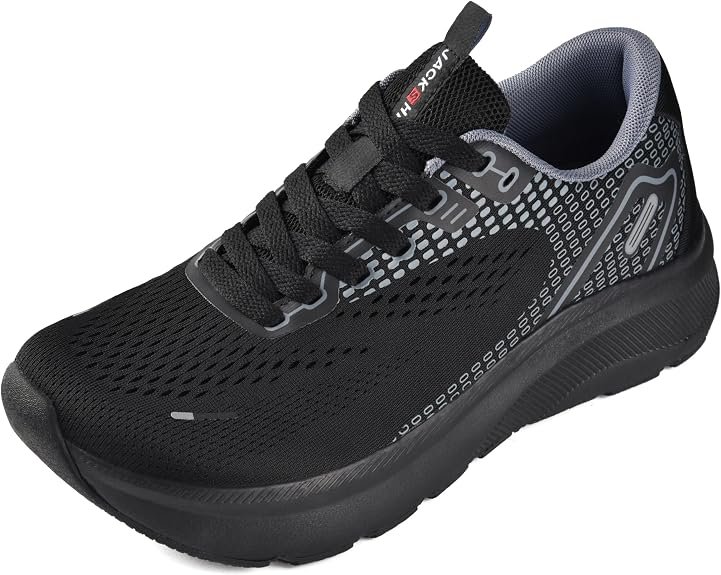
🛒 Check Price on Amazon#5 JACKSHIBO Wide Toe Box Shoes: Best for Forefoot Room
Rating supplied: 4.0/5 from 2,003 reviews
Price supplied: $35.99
Savings supplied: 28%
Expert take
JACKSHIBO is the most interesting choice if your first question is, “Which shoe gives my toes the most freedom?”
The supplied listing emphasizes a wide toe box, zero-drop platform, 1.57-inch foam midsole, 3D arch support, EVA/TPR sole, and mesh upper.
The zero-drop construction is the major difference from the BRONAX and many conventional athletic shoes.
Best for
- Wide forefeet
- Bunion pressure
- People who prefer zero drop
- Walking
- Gym and casual activity
Why it works
The wider forefoot is useful because bunion discomfort often comes from direct lateral or dorsal pressure, not lack of heel cushioning.
The zero-drop platform is a preference rather than an automatic benefit. Some feet adapt well to it, while others prefer a conventional heel-to-toe offset.
Pros
- Wide toe box
- Zero drop
- Thick foam midsole
- 3D arch support
- Low price
Cons
- 4.0 rating is lower than the top picks
- Zero-drop geometry isn’t ideal for everyone
- Less traditional feel than conventional walking shoes
Skip this if…
Skip it if you’re accustomed to traditional higher-drop shoes and don’t want to adapt to a flatter platform.
Verdict: Best when bunion pressure and toe freedom are more important than conventional shoe geometry.
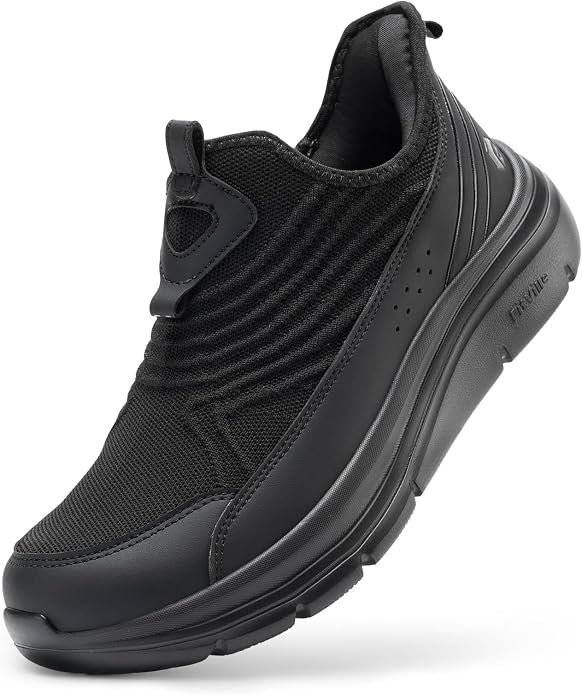
🛒 Check Price on Amazon#6 FitVille Men’s Stepease V1: Best Hands-Free Option
Rating supplied: 4.3/5 from 1,779 reviews
Price supplied: $45.89
Expert take
Stepease V1 is a sensible choice for men who want wide-foot accommodation without dealing with laces.
The supplied listing describes a wide toe box, high-instep design, stretchable mesh upper, cushioned platform, arch-support insole, and hands-free slip-on construction.
That makes it particularly useful for everyday walking and standing.
Best for
- Men wanting slip-on convenience
- Wide feet
- High insteps
- Casual walking
- Daily standing
Why it works
The combination of a soft upper and wide platform gives the forefoot room while the insole adds support underneath.
Pros
- Hands-free entry
- Wide toe box
- High-instep design
- Removable insole
- Cushioning
Cons
- Less adjustable than lace-up footwear
- Not designed as a performance running shoe
- Slip-on fit may not suit narrow heels
Skip this if…
Skip it if your heel is narrow and tends to slip in pull-on footwear.
Verdict: Choose V1 when easy entry and forefoot accommodation are more important than precise athletic lockdown.
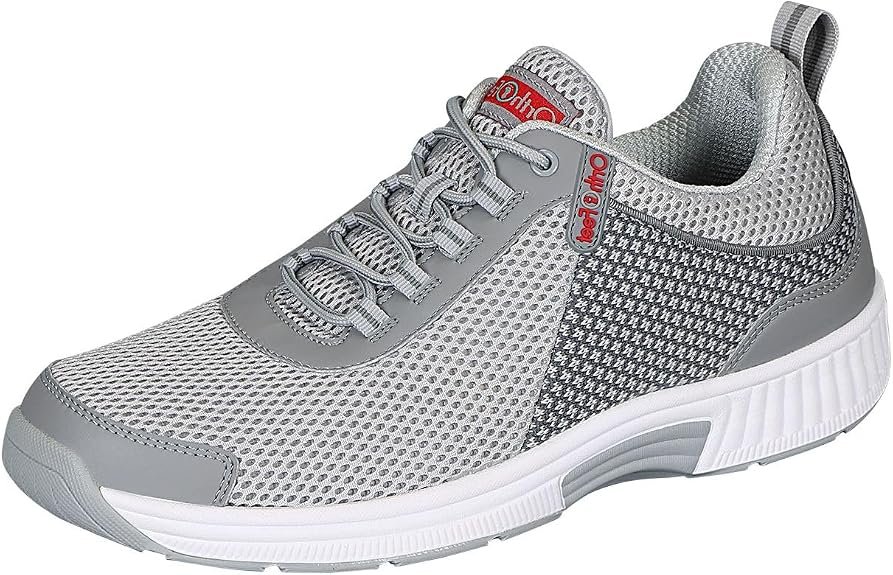
🛒 Check Price on Amazon#7 Orthofeet Edgewater: Best for Long Work Shifts
Rating supplied: 4.3/5 from 3,354 reviews
Price supplied: $119
Expert take
Edgewater is a strong candidate for men who spend most of the day walking or standing.
The supplied listing emphasizes a stretch knit upper, extra depth, cushioning, anatomical arch support, and wide toe box, with the product specifically positioned for walking and occupational use.
That’s relevant to workers who may spend eight to twelve hours on hard flooring.
Best for
- Nurses
- Healthcare workers
- Retail employees
- Long walking shifts
- Wide or sensitive feet
Why it works
The stretch knit upper helps reduce pressure around irregular areas of the foot, while the cushioning protects against repeated contact with hard surfaces.
Pros
- Stretch upper
- Wide toe box
- Extra depth
- Anatomical support
- Work-friendly construction
Cons
- Highest supplied price in the men’s group
- Less athletic-looking than BRONAX or JACKSHIBO
- Not water resistant according to the supplied listing
Skip this if…
Skip Edgewater if you want a lightweight gym trainer or a shoe for wet outdoor conditions.
Verdict: A particularly strong option for men whose feet hurt most after long shifts rather than short workouts.
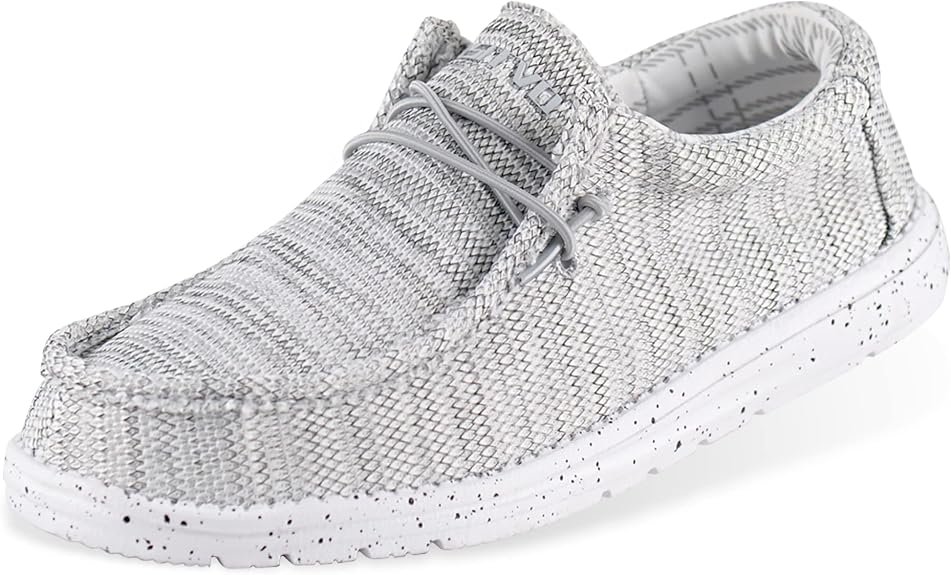
🛒 Check Price on Amazon#8 ASITVO Men’s Wide Loafers: Best Casual Option
Rating supplied: 4.4/5 from 2,530 reviews
Price supplied: $65.99
Expert take
ASITVO is the most casual option here and makes sense when you don’t want to wear an athletic or orthopedic-looking shoe with everyday clothing.
The supplied listing describes a wide toe design, removable moisture-wicking insole, EVA sole, cushioning, flexibility, and slip-on construction.
Best for
- Office wear
- Casual walking
- Travel
- Wide feet
- Men who dislike athletic styling
Why it works
The wide toe construction gives the forefoot more space while the EVA sole adds cushioning.
The removable insole is useful if you want to test another footbed.
Pros
- Casual appearance
- Wide toe design
- Removable insole
- EVA cushioning
- Slip-on construction
Cons
- Less structured than orthopedic walking shoes
- Limited suitability for high-impact activity
- Casual outsole isn’t the main reason to buy it for plantar fasciitis
Skip this if…
Skip it if you spend most of your day walking long distances or need maximum orthopedic support.
Verdict: A useful casual alternative when appearance matters alongside forefoot room.
🛒 Check Price on AmazonBest Shoes for Plantar Fasciitis and Bunions Compared
Compare price, rating, width, support, and intended use before choosing the right pair for bunion comfort and plantar fasciitis support.
| Product | Price | Rating | Key Feature | Width / Fit | Best For | Reviews | Check Price |
|---|---|---|---|---|---|---|---|
| Orthofeet Francis Best Overall | $104.99 | Stretch upper + anatomical support | Wide toe box | Women with bunions | 2,647 | View Deal → | |
| FitVille Stepease V2 Best Extra Wide | $39.89 | Wide platform + high instep | Extra wide design | Men with broad feet | 2,610 | View Deal → | |
| Orthofeet Lava Best Support | $84.99 | Extra depth + orthotic insole | Wide toe box | Men needing accommodation | 4,398 | View Deal → | |
| BRONAX S71 Best Budget | $47.48 | EVA + removable insole | Wide toe box | Budget athletic use | 7,141 | View Deal → | |
| JACKSHIBO Wide Toe Box Wide Toe Box | $35.99 | Zero-drop + wide forefoot | Wide toe box | Maximum toe freedom | 2,003 | View Deal → | |
| FitVille Stepease V1 Easy Wear | $45.89 | Hands-free + high instep | Wide toe design | Easy daily wear | 1,779 | View Deal → | |
| Orthofeet Edgewater Long Shifts | $119.00 | Stretch knit + extra depth | Wide toe box | Long work shifts | 3,354 | View Deal → | |
| ASITVO Wide Loafers Best Casual | $65.99 | Wide toe + EVA sole | Wide toe design | Casual wear | 2,530 | View Deal → |
Are Wide Toe Box Shoes Worth It for Bunions and Plantar Fasciitis?
Yes, when the forefoot is genuinely being compressed. A wide toe box can reduce direct pressure around the bunion, but it shouldn’t be used as a substitute for appropriate heel cushioning and support.
The important detail is where the shoe is wide.
A shoe can have a generous-looking front while still being narrow across the ball of the foot. Conversely, some shoes simply become longer as you size up without giving you the forefoot shape you need.
That’s why sizing up isn’t automatically the answer.
For a bunion-sensitive foot, check the shoe while standing and wearing the socks you normally use. The upper shouldn’t leave a hard pressure point over the bunion. If your foot is broad beyond the bunion area, compare these recommendations with our guide to shoes for plantar fasciitis and wide feet before deciding whether you need a standard, wide, or extra-wide construction.
How Much Room Should You Have in a Shoe for Bunions?
A practical starting point is around 3/8 to 1/2 inch of space in front of the longest toe, while the forefoot should have enough width for the toes to sit naturally without being pushed together.
Don’t confuse toe length with bunion width.
If your toes have plenty of length but the bunion is pressing against the sidewall, buying a longer size may simply cause heel movement without fixing the actual problem.
For sizing across US, UK, and EU measurements, your shoe size conversion chart and calculator can provide a useful reference, but actual foot measurement should still determine the final size.
Should You Size Up for Bunions?
Not automatically. If the problem is width rather than length, sizing up can create more heel movement without solving the pressure around the bunion.
This is one of the most common mistakes in this category.
A better sequence is:
- Measure both feet while standing.
- Identify the longer foot.
- Check the forefoot width.
- Compare available width options.
- Check toe-box shape.
- Only then consider changing length.
If the bunion sits against the upper, width and shape are more important than simply adding half a size.
Are Orthopedic Shoes Better for Bunions and Plantar Fasciitis?
They can be, particularly when you need extra depth, a wider forefoot, stretchable materials, or removable orthotic-friendly insoles. They aren’t automatically better for every person.
Orthopedic-style shoes tend to prioritize accommodation.
That’s valuable for someone whose foot doesn’t fit comfortably inside conventional athletic footwear.
Orthofeet Francis, Lava, and Edgewater are good examples from this list because their supplied descriptions emphasize wide toe boxes, stretchable materials, anatomical support, cushioning, or extra depth.
If appearance or lightweight athletic performance is more important, a conventional trainer may be preferable.
Can Plantar Fasciitis Insoles Help If You Have Bunions?
They can help with underfoot support, but an insole cannot make a narrow toe box wider.
This distinction matters.
If your heel hurts but your shoe already fits correctly around the bunion, an appropriate supportive insole may improve the underfoot experience.
If the shoe is pressing directly against your bunion, adding another insole can sometimes reduce interior volume and make the fit worse.
Before buying a separate insert, compare the differences between plantar fasciitis insoles and supportive shoes so you’re solving the correct problem.
Women’s vs. Men’s Shoes for Bunions and Plantar Fasciitis
Women’s and men’s footwear shouldn’t be compared only by size.
The important differences are often in last shape, width availability, upper construction, and intended use.
In this selection, the women’s options lean more heavily toward athletic or women’s orthopedic designs, while the men’s group has several extra-wide and hands-free walking options.
For women, Orthofeet Francis is the strongest accommodation-first choice, while BRONAX provides a lower-cost athletic alternative.
For men, FitVille Stepease V2 is the best value choice for broad feet, while Orthofeet Lava offers more accommodation-focused construction. Women who want to compare additional women’s-specific options can also review our guide to women’s shoes for plantar fasciitis, especially when athletic footwear is preferred over an orthopedic walking shoe.
Real-World Fit Scenarios
A hypothetical example helps illustrate the difference.
Emily in Portland walks several miles around the city and has a bunion that becomes sensitive after a few hours. She should prioritize a stretchable upper and forefoot room rather than simply choosing the thickest sole.
Michael in Dallas spends most of his workday standing and needs extra width around a broad forefoot. A wide-platform FitVille is more logical than a standard-width athletic shoe.
Rachel in Boston wants a casual shoe for commuting and office wear. She may prefer a shoe like ASITVO over an orthopedic-looking walking sneaker, provided the fit gives her bunion enough room.
David in Houston works long shifts and needs a shoe that accommodates swelling. Extra depth and a stretch upper become more important than having the lightest shoe possible.
The right choice changes because the foot problem and daily environment change together.
Expert Tips for Getting the Fit Right
Measure at the end of the day
Feet can become slightly larger after hours of standing and walking.
If your bunion becomes painful in the afternoon, don’t judge a new shoe only from a morning measurement.
Don’t ignore width
If the shoe is too narrow, adding length isn’t a reliable fix.
Look for actual width choices or a naturally wider forefoot.
Test the bunion area first
Walk indoors for several minutes and pay attention to the exact location where the upper contacts the foot.
Repeated pressure in the same spot is a warning sign.
Test the heel separately
A shoe can have a wonderful toe box but still allow excessive heel movement.
If the heel slips repeatedly, the shoe may be too long, too loose, or simply the wrong last for your foot.
Break in gradually
Don’t wear a brand-new pair for an eight-hour shift on day one.
Start with shorter periods and assess your heel, arch, bunion, and forefoot afterward.
Watch the midsole
If the shoe starts feeling noticeably flatter or harsher after months of regular use, don’t assume your plantar fasciitis suddenly became worse.
The midsole may simply be losing its original cushioning behavior.
Know when to replace them
Replace footwear when you notice:
- Excessive outsole wear
- Uneven compression
- Persistent heel discomfort
- Heel instability
- Upper stretching that causes poor fit
- Loss of cushioning
- New pressure points
10 Common Questions About Shoes for Bunions and Plantar Fasciitis
What are the best shoes for plantar fasciitis and bunions?
Orthofeet Francis is our top women’s choice because its supplied features combine a wide toe box, stretchable upper, cushioning, and anatomical arch support. For men, FitVille Stepease V2 is the strongest value choice because it combines a wide-toe/high-instep design with a cushioned platform.
Are wide toe box shoes good for bunions?
Yes. A properly shaped wide toe box can reduce pressure around the bunion by giving the forefoot more room. The important point is that the width needs to occur where your foot actually needs it. Simply choosing a longer shoe doesn’t necessarily provide more usable forefoot space.
Can shoes make bunions worse?
Shoes that repeatedly compress the bunion can increase pressure and irritation. Narrow, pointed, or poorly fitting footwear is particularly problematic for a prominent bunion. Look for enough forefoot width, a rounded toe area, and an upper that doesn’t create a hard pressure point.
Are slip-on shoes good for plantar fasciitis and bunions?
They can be, especially when the upper is stretchable and the shoe has a stable heel and supportive platform. FitVille Stepease V1 and V2 are interesting options because they combine slip-on convenience with wide-foot accommodation. A loose heel, however, can create unwanted movement.
Is zero drop good for bunions?
Zero drop may work well for some people who prefer a flatter platform and more natural-feeling forefoot positioning, but it isn’t automatically better for plantar fasciitis. JACKSHIBO uses zero-drop construction, so it should be approached as a different geometry rather than a guaranteed pain-relief feature.
What is better, Orthofeet or FitVille for bunions?
Orthofeet is the stronger choice when you need accommodation-focused features such as extra depth, stretchable uppers, and anatomical insoles. FitVille is particularly attractive when wide-platform construction, high-instep room, and lower pricing are bigger priorities.
Should bunion shoes have arch support?
They can, but the arch support needs to suit your foot. A supportive insole may improve overall comfort when plantar fasciitis is present, but it won’t solve a toe-box problem. Forefoot width should be evaluated separately from arch support.
Can I wear running shoes if I have bunions?
Yes, provided the running shoe actually fits your forefoot. BRONAX S71 is a good example from this list because it combines athletic construction, a wide toe box, EVA cushioning, and a removable insole. A conventional running shoe can work if its shape doesn’t compress the bunion.
Are expensive bunion shoes always better?
No. The supplied FitVille Stepease V2 costs considerably less than Orthofeet Edgewater while still offering a wide platform, high-instep construction, and cushioning. The more expensive Orthofeet models justify their price primarily through accommodation-oriented construction rather than simply having more cushioning.
How should shoes fit with a bunion?
The shoe should hold the heel securely while leaving enough room around the bunion and toes. You shouldn’t feel concentrated pressure over the bunion when standing. Measure both feet and check width as well as length instead of automatically buying a larger size.
Can children use these shoes for bunions and plantar fasciitis?
This article is focused on adult footwear. Children’s feet require a different sizing approach because they change rapidly. Parents looking for basic sizing information can use the children’s shoe size by age chart, but actual foot measurement should guide the purchase.
For a deeper explanation of cushioning, support, heel fit, and construction, see our guide on what to look for in plantar fasciitis shoes before comparing individual models.
How to Choose: Simple Decision Guide
🏆 Which Shoe Should You Choose?
If you’re a woman with bunions and heel pain → choose Orthofeet Francis. Its stretchable upper, wide toe box, cushioning, and anatomical support make it the strongest overall match.
If you’re a man with very broad feet → choose FitVille Stepease V2. Its wide-toe and high-instep design gives you more room at a much lower supplied price.
If you need extra depth and orthopedic accommodation → choose Orthofeet Lava. It’s especially interesting when a standard sneaker feels shallow as well as narrow.
If you’re shopping on a budget → choose BRONAX S71. It gives you a wide toe box, EVA cushioning, removable insole, and athletic styling without reaching the price of premium orthopedic footwear.
If toe freedom is your biggest priority → consider JACKSHIBO. The zero-drop wide-toe design makes it distinct from the more traditional trainers in this list.
If you need hands-free footwear → choose FitVille Stepease V1. The pull-on construction makes it convenient for daily wear while retaining wide-foot features.
If you stand for long work shifts → consider Orthofeet Edgewater. Its stretch upper, cushioning, extra depth, and wide toe box are suited to prolonged wear.
If you want a casual men’s shoe → consider ASITVO Wide Loafers. It provides wide-toe construction and cushioning without the appearance of a traditional orthopedic sneaker.
Final Verdict
The best shoe for plantar fasciitis and bunions isn’t simply the shoe with the softest midsole. You need to solve the forefoot problem and the heel problem at the same time.
For women, Orthofeet Francis is the strongest overall recommendation because its stretchable upper and wide toe box directly address bunion pressure while its cushioning and anatomical insole address the underfoot side of the problem.
For men, FitVille Stepease V2 is the standout value. Its wide platform, high-instep construction, and cushioned base make it especially attractive when standard shoes feel restrictive.
Orthofeet Lava is the better choice when you need more depth and orthopedic-style accommodation. BRONAX S71 is the sensible budget athletic option, while JACKSHIBO is the most distinctive choice for shoppers who specifically want a wide toe box and zero-drop platform.
The biggest mistake is buying based on cushioning alone. If your bunion is rubbing against the upper, no amount of heel foam will fix the underlying fit problem.
Before ordering, measure both feet, check the forefoot width, look at the toe-box shape, and consider how your feet feel after several hours rather than only during the first few minutes.
If your plantar-fasciitis symptoms are the primary concern and bunion accommodation isn’t your main issue, use the broader 2026 plantar fasciitis shoe guide instead of assuming this specialized list is the best match for you.
Affiliate Disclosure: Urban Style Footwear may earn a commission when you purchase through qualifying Amazon links. This doesn’t affect the price you pay or our product selection. Prices, availability, ratings, and discounts can change on Amazon.