

Best Cleaner for Birkenstocks 2026: The Ultimate Care & Maintenance Guide
TL;DR: The Quick Answer
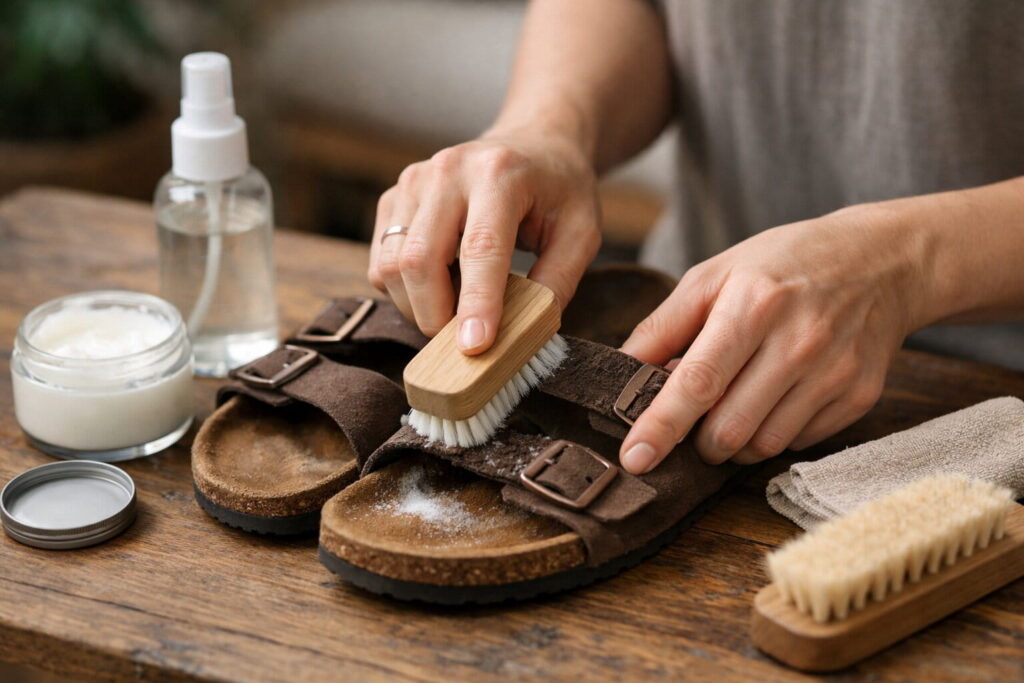
The best cleaner for Birkenstocks isn’t a single chemical—it’s a system. For the cork footbed, a paste of baking soda and water (2:1 ratio) or the official Birkenstock Cleaner & Refresher works best to lift oils. For suede straps, use a brass-bristle brush and a dedicated suede sandal cleaner (foam-based). Crucial Rule: Never saturate the cork. If the cork looks dull, it needs Kelly’s Cork Renew or a similar safe cork sealer immediately to prevent cracking.
Introduction
If you own a pair of Birkenstocks, you know “The Footprint.”
It starts as a faint shadow on the footbed. Six months later, it’s a dark, shiny, almost black impression of your toes and heel. In my 20+ years running a footwear store in Chennai, I’ve seen thousands of pairs come in for “rescue.” Customers often ask, “Is this mold? Did I ruin them?”
The answer is usually no. That dark stain is a combination of natural body oils, sweat, and dirt reacting with the leather or suede liner. It’s actually a sign of a well-loved shoe that has molded to your foot.
However, there is a fine line between a “broken-in” patina and a dirty, degrading sandal. The cork footbed—the heart of the shoe—is organic. If you neglect it, it dries out and crumbles. If you clean it wrong (like throwing them in the washing machine), you kill the glue.
This guide isn’t just about making them look pretty. It’s about structural integrity. Whether you’re a traveler backpacking through Europe or an office worker wanting your Arizonas to last another summer, this is exactly how we handle Birkenstock maintenance professionally.
Why This Topic Matters
Buying Birkenstocks is an investment. In the USA, UK, and Australia, a pair of Arizonas or Bostons can cost upwards of $130-$160. Yet, most online buyers ruin them in the first year due to three global mistakes:
- Heat Damage: Leaving them in a hot car (the glue melts, soles detach).
- Waterlogging: Wearing them in heavy rain or scrubbing them under a tap.
- Cork Neglect: Ignoring the exposed cork until it starts chipping away.
I’ve seen Reddit threads where users argue about “wet vs. dry” cleaning. I’ve seen Instagram hacks suggesting dishwashers (please, never do this). The truth lies in the middle: gentle, consistent care using the right materials.
Understanding Your Birkenstocks: Materials & Needs
Before grabbing a safe cleaner for cork footbed, you need to know what you are cleaning.
1. The Footbed (Suede over Cork)
This is the most sensitive part. It’s open-pore leather (suede) glued to natural cork latex. It absorbs everything.
- The Goal: Lift oils without soaking the cork.
- Best Cleaner: Foam cleaners (dry foam) or a baking soda paste.
2. The Upper (Straps)
- Suede/Nubuck: Soft, fuzzy finish. Needs a brush and eraser.
- Oiled Leather: Smooth, waxy feel. Needs leather conditioner.
- Birko-Flor (Synthetic): The easiest to clean—just a damp cloth works.
3. The Exposed Cork
The side of the sole. It comes shiny (sealed) from the factory. Over time, it turns matte and fuzzy. That means the sealant is gone, and rot can set in.
How to Choose the Best Cleaner for Birkenstocks
Option A: The DIY Route (Budget-Friendly)
You don’t need a fancy kit to get results. In our shop, we often use simple solutions for quick touch-ups.
- Baking Soda & Water: The classic. Mix into a paste. Excellent for removing oils from the footbed.
- Diluted White Vinegar: Good for killing bacteria and odors, but use sparingly.
- Gentle Dish Soap (e.g., Dawn): Good for spot cleaning grease on leather straps.
Option B: Commercial Kits (Best for Longevity)
If you want to ensure you don’t void warranties or damage the nap, commercial products are safer.
- Birkenstock Cleaning Kit: Includes a cleaner, protector, cork sealer, and brush. It’s foolproof.
- Saphir Médaille d’Or: For high-end oiled leather maintenance.
- Jason Markk: Great for the EVA soles (the bottom tread).
Step-by-Step Cleaning Guide
Phase 1: The Prep
- Open all buckles and straps.
- Use a stiff brush to knock off loose dried mud.
- Stuff the sandal with a small towel if you’re cleaning the straps to keep the shape.
Phase 2: Cleaning the Suede Footbed
This is the most searched query: “best cleaner for birkenstocks footbed.”
- The Method:
- Apply a small amount of suede sandal cleaner or your baking soda paste to an old toothbrush.
- Gently scrub in small circles. Do not saturate. The cork should get damp, not wet.
- Wipe away the dirty foam/paste with a clean, slightly damp microfiber cloth.
- Critical: Let them dry naturally away from sunlight for 24 hours.
- Once dry, use a suede brush to “fluff” the nap back up. If it feels hard, it’s because the leather fibers are matted down.
Phase 3: Resealing the Cork
If the cork sides look dull or feel dry to the touch, apply a thin layer of safe cleaner for cork footbed sealants (like Kelly’s Cork Renew). It paints on white and dries clear. This keeps the cork from drying out and crumbling.
Pro-Tip: The “Sandpaper Hack” (Retailer Insight)
Here is a trick we use in the shop that most blogs won’t tell you.
Sometimes, the footbed is just too far gone. The oils have turned the suede into a hard, black, shiny shell. No amount of soap will fix that.
The Fix: Take a piece of fine-grit sandpaper (180 or 220 grit). Very gently sand the black footprint inside the shoe. You are essentially buffing off the top layer of dirty, oil-soaked suede to reveal fresh leather underneath. Follow this up with a suede brush. It brings the softness back instantly. (Note: Do this sparingly—maybe once a year max.)
Comparison: DIY vs. Commercial Cleaners
| Feature | DIY (Baking Soda/Vinegar) | Commercial (Birkenstock/Specialty Kit) |
|---|---|---|
| Cost | Almost Free | $20 – $35 |
| Safety | Medium (Risk of wrong ratios) | High (Formulated for PH balance) |
| Effectiveness | High for stains/oils | High for general maintenance |
| Convenience | Low (Mixing required) | High (Spray and go) |
| Best For | Deep cleaning dirty footbeds | Routine maintenance & protection |
Common Mistakes to Avoid
I’ve seen these destroy perfectly good shoes. Please avoid them.
- The “Sunlight” Drying Method:
- The Mistake: Putting wet Birks in the direct sun to dry faster.
- The Result: The heat shrinks the leather and curls the toes up like a banana. The cork becomes brittle and cracks. Always dry in the shade.
- The Washing Machine:
- The Mistake: “I’ll just toss them in on gentle.”
- The Result: The water dissolves the water-soluble glue holding the cork and sole together. The shoe will literally fall apart.
- Over-Sealing:
- The Mistake: Getting cork sealer on the suede footbed.
- The Result: It hardens into a plastic-like lump that is uncomfortable to walk on. Keep the sealer strictly on the side cork!
People Also Ask (PAA)
Can I wash my Birkenstocks in the washing machine? No. Submerging them destroys the cork and dissolves the glue. Always hand clean them with a damp brush.
How often should I seal the cork on my Birkenstocks? Check them every few months. If the exposed cork looks dull or feels dry, apply a thin layer of cork sealer.
How do I get the smell out of Birkenstocks? Sprinkle baking soda on the footbed and let it sit overnight to absorb oils and odors, then brush it out.
What is the best cleaner for suede straps? A dedicated suede eraser block and a brass-bristle brush are best for removing dry surface dirt and water spots.
Can I use magic eraser on Birkenstock footbed? Use with extreme caution. It is abrasive and can sand away too much of the suede fibers if you scrub hard.
Why Trust This Guide?
- 20+ Years Experience: I have physically handled thousands of pairs of cork sandals in a hot, humid climate (Chennai), which is the ultimate stress test for footwear adhesives and materials.
- Material Science: We understand the difference between nubuck, oiled leather, and suede, and why treating them the same destroys them.
- Real-World Testing: The “sandpaper trick” and baking soda ratios mentioned here are methods we actually use to refurbish customer returns.
Where to Buy
If your Birks are past the point of no return, or you need the right tools to save them, check these options.
- For Maintenance: Look for “Birkenstock Care Kits” or “Kelly’s Cork Renew” on Amazon.
- For Replacement: If the cork is cracked through to the sole, it’s time for a new pair.
[Check Price of Birkenstock Care Kits on Amazon] [Browse Top-Rated Cork Sandals on Amazon]
FAQs
1. Is vinegar a safe cleaner for cork footbeds? Yes, if diluted (50/50 with water). Pure vinegar is too acidic and can dry out the leather. Use it damp, not soaking.
2. My Birkenstocks turned black on the inside. Is that bad? Not necessarily. It is a natural patina from body oils. If it feels sticky or smells, clean it. If it’s just dark and smooth, it’s fully broken in.
3. What is the best suede sandal cleaner for light colors? For light Taupe or Mink suede, use a dry cleaning kit (eraser block) first. Liquids can sometimes leave water rings on very light suede if not applied evenly.
4. Can I use saddle soap on the footbed? Avoid it. Saddle soap is meant for smooth leather and can clog the open pores of the suede footbed, making it feel slippery and greasy.
5. How do I clean the white soles? For the white EVA outsole, a “Magic Eraser” sponge works wonders. Just wet the sponge and wipe the sides of the tread.
6. Why are my Birkenstocks cracking on the sides? The cork has dried out. You missed the window to seal them. You can try filling small cracks with cork sealant, but structural cracks might be permanent.
7. Can I wear Birkenstocks in the rain? Avoid it. While the leather is tough, the cork acts like a sponge. If they get wet, air dry them slowly away from heat.
8. How long should Birkenstocks last? With proper cork maintenance and occasional re-soling (replacing the bottom rubber), the cork bed itself can last 5 to 10 years easily.
9. Do I need to waterproof them? Yes. Spray the upper straps (not the footbed) with a suede or leather water repellent spray to prevent rain spots.
10. Why do my feet turn black after wearing them? This happens with new pairs or freshly cleaned ones where the dye bleeds slightly. It usually stops after a week of wear.
Pingback: How to Remove Smell from Birkenstocks (2026 Expert Guide)
Pingback: How to Deep Clean Birkenstocks at Home (2026 Expert Guide)